
SUNWODA(300207)

Search documents
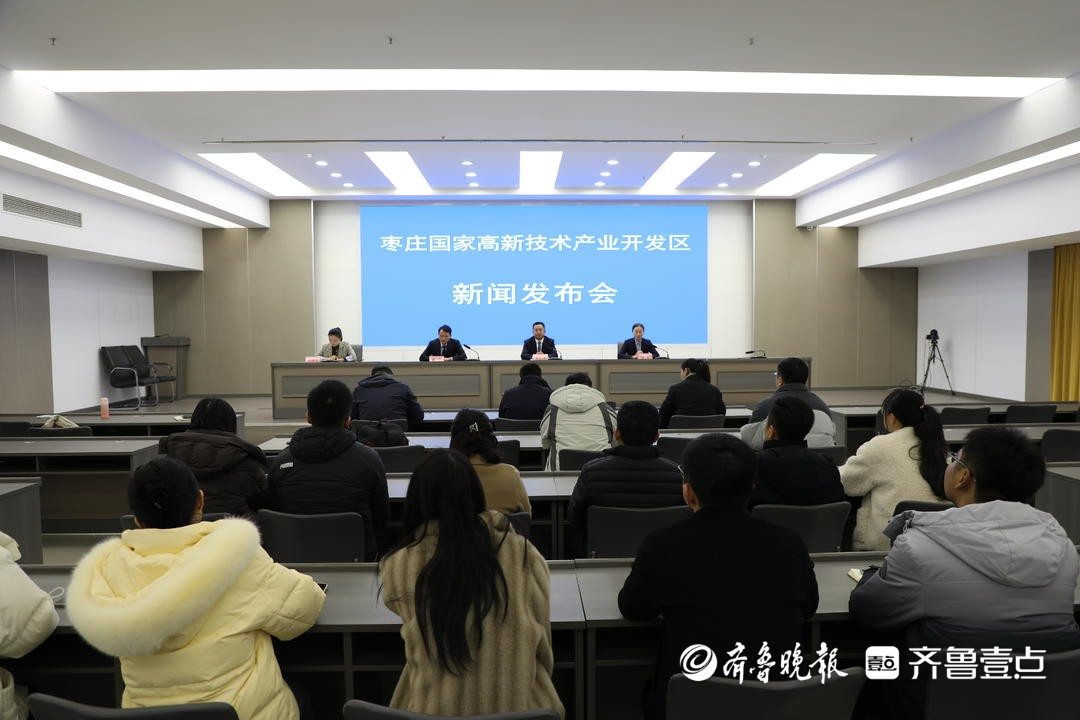
枣庄高新区:凝心聚力抓项目 积蓄高质量发展新动能
Qi Lu Wan Bao· 2025-12-31 08:59
Core Viewpoint - The Zaozhuang High-tech Zone is focusing on project construction to expand effective investment and strengthen the foundation for development, showing a stable and improving economic performance. Group 1: Project Construction and Investment Progress - The Zaozhuang High-tech Zone has planned 96 key projects at provincial, municipal, and district levels for 2025, achieving 115.3% of the annual investment target by November, exceeding the schedule by 23.6 percentage points [3][4] - Among these, 30 provincial and municipal key projects completed 112.6% of their annual investment plan, while district key projects reached 121%, significantly ahead of schedule, providing strong momentum for industrial growth [3][4] Group 2: Support and Service Efficiency - To ensure smooth project advancement, the Zaozhuang High-tech Zone has implemented a full lifecycle management service mechanism for key projects, assigning dedicated service teams for each of the 96 projects [4] - By the end of December, over 60 support activities were conducted, and 11 projects had 17 specific issues resolved through a high-level coordination mechanism, effectively addressing construction challenges [4] Group 3: Industrial Development and Ecosystem - The Zaozhuang High-tech Zone emphasizes both "expansion of existing capacity" and "emergence of new capacity," supporting leading companies like Keda Li and XWDA in expanding their operations while attracting upstream and downstream projects [5] - The establishment of a "Zero Carbon Smart Valley" has been recognized as a pilot zero-carbon park in Shandong Province, supporting the green development of the industry [5] Group 4: Economic Performance Indicators - The accelerated construction of key projects has significantly boosted the region's economic growth, with a GDP increase of 6.3% in the first three quarters, surpassing the averages of the city and province [6] - Industrial investment grew by 21.8%, with industrial output value increasing by 14.88% and the added value of industrial enterprises above designated size rising by 15%, placing several key industrial indicators among the top in the city [6] Group 5: Future Development Goals - Moving forward, the Zaozhuang High-tech Zone aims to lead the green and low-carbon transformation of resource-based cities, implementing strategies to strengthen industry and promote transformation [7] - The focus will be on integrating into the city's modern industrial system and enhancing the new quality of productivity through high-quality project construction [7]


超23亿元索赔案:新能源产业链合同的“法律缝隙”有多大?
Guan Cha Zhe Wang· 2025-12-31 07:45
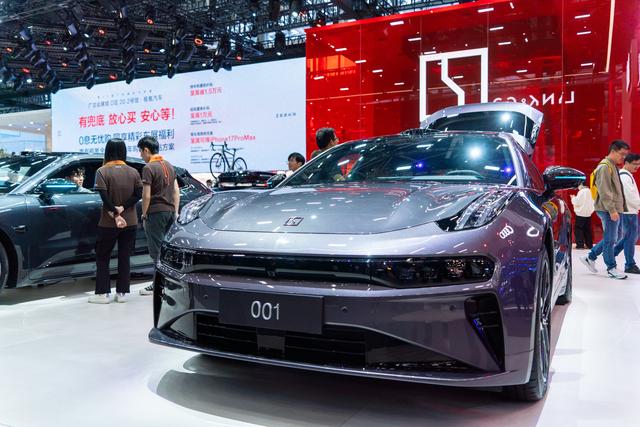
Core Viewpoint - The lawsuit between Geely's Zeekr battery company, Weirui, and the battery cell supplier, Xinwanda, over quality issues has raised significant concerns within the industry, highlighting legal gaps in long-term, high-performance component procurement contracts in the Chinese electric vehicle sector [1][10]. Group 1: Lawsuit Details - Weirui is suing Xinwanda for over 2.3 billion yuan, which is equivalent to nearly two years of Xinwanda's net profit, due to alleged quality issues with battery cells [1]. - The lawsuit reflects a broader concern regarding the compliance and collaborative development of the Chinese electric vehicle supply chain [1][10]. - The evidence required for Weirui to substantiate its claims includes a valid sales contract, quality issue reports, loss evidence, and documentation of communications regarding the quality issues [3][5]. Group 2: Defense Strategies - Xinwanda's defense may include arguments that the battery cells meet contractual and industry standards, were accepted by Weirui, and that any losses were not caused by the supplied cells [4][7]. - The complexity of determining the cause of quality issues in long-used battery cells poses challenges for judicial assessment and evidence collection [6][11]. Group 3: Financial Implications - Weirui's claimed losses may consist of direct costs related to replacing faulty battery packs, additional testing fees, and after-sales service costs, with potential indirect losses due to damage to brand reputation [5][10]. - The court's evaluation of such substantial claims will focus on the authenticity, reasonableness, foreseeability of losses, and the direct causal relationship with the alleged breach [5][10]. Group 4: Industry Impact - The case exposes significant legal risks in the procurement contracts for long-term, high-performance components in the electric vehicle industry, particularly in distinguishing between quality defects and normal wear and tear [10][11]. - The rapid technological evolution in battery technology complicates the identification of reliable expert witnesses and the feasibility of evidence collection [6][10].
固态电池行业深度报告:材料和工艺设备体系革新,固态电池产业化加速
Shanghai Aijian Securities· 2025-12-31 06:24
证券研究报告 行业研究 / 行业深度 2025 年 12 月 31 日 行业及产业 电力设备 一年内行业指数与沪深 300 指数对比走势: 资料来源:聚源数据,爱建证券研究所 相关研究 《数据中心供配电设备行业跟踪:海外云厂商 资本开支高增长,电力设备需求高企》 2025-12-30 《光储行业跟踪:11 月国内光伏装机同比增 长,双玻组件价格小幅上涨》2025-12-30 《锂电行业跟踪:动力和储能电池需求旺盛, 储能电芯和系统均价上涨》2025-12-30 《2026 年电新行业策略报告:新能源基本业务 向上+国家战略安全资产赋能有望成为最强主 线》2025-12-30 盛,锂电材料价格回升》2025-12-23 朱攀 S0820525070001 021-32229888-25527 zhupan@ajzq.com 联系人 陆嘉怡 S0820124120008 021-32229888-25521 lujiayi@ajzq.com ——固态电池行业深度报告 材料和工艺设备体系革新,固态电池产 业化加速 强于大市 投资要点: 固态电池电解质固态化是核心,具有能量密度和安全性优势,体型的硫化物全固态电池是趋 ...



动力和储能电池需求旺盛,储能电芯和系统均价上涨
Zhong Guo Neng Yuan Wang· 2025-12-31 03:05
Core Viewpoint - The lithium battery industry is experiencing significant growth in production and demand, with notable increases in both battery and phosphoric iron lithium cathode material output in November 2025 compared to the same period in 2024 [1][2]. Production - In November 2025, domestic battery production reached 176.3 GWh, marking a year-on-year increase of 49.66% and a month-on-month increase of 3.34% [1][2]. - The production of phosphoric iron lithium cathode materials in November 2025 was 26.89 million tons, reflecting a year-on-year growth of 29.43% and a month-on-month growth of 0.75%, with a capacity utilization rate of 62.53% [1][2]. Pricing - As of December 26, 2025, the price of industrial-grade lithium carbonate rose to 116,000 yuan per ton, with a weekly increase of 14.85% [3]. - The price of phosphoric iron lithium (power type) reached 45,100 yuan per ton on December 26, up over 15% from December 19 [3]. - Prices for lithium hexafluorophosphate remained stable at 180,000 yuan per ton as of December 27 [3]. - The average price of square phosphoric iron lithium energy storage batteries remained stable, with slight increases in specific models [3]. Demand - In November 2025, the monthly loading volume of phosphoric iron lithium batteries was 75.3 GWh, a year-on-year increase of 43.62% and a month-on-month increase of 11.56%, achieving a new high for the year [4]. - The monthly loading volume of ternary power batteries was 18.2 GWh, reflecting a year-on-year increase of 33.82% and a month-on-month increase of 10.30% [4]. - The new bidding capacity for domestic new energy storage projects in January to October 2025 was higher than in the same period of 2024, with November slightly lower [4]. - In November 2025, China's battery exports reached 21.2 GWh, a year-on-year increase of 69.60% and a month-on-month increase of 9.28% [4]. Investment Recommendations - The production of domestic batteries and phosphoric iron lithium cathode materials in January to November 2025 exceeded that of 2024, with stable raw material and cell prices, and an increase in monthly loading volumes and new energy storage bidding capacities [5]. - The industry is advised to focus on core enterprises in battery cells that lead in the collaborative layout of power batteries and energy storage, as well as those related to lithium battery materials [5]. - Recommended companies include CATL (300750), EVE Energy (300014), Xinwangda (300207), Hunan Youneng (301358), Rongbai Technology (688005), Tianci Materials (002709), and Dofluor (002407) [5].



欣旺达突遭天价索赔,市值蒸发47亿元,涉极氪001 WE 86车型
Hua Xia Shi Bao· 2025-12-30 12:53
Core Viewpoint - XINWANGDA (300207.SZ) experienced a significant stock price drop of 11.39% on December 29, following a lawsuit from its former partner, Weirui Electric Vehicle Technology (Ningbo) Co., Ltd., claiming damages of approximately 2.314 billion yuan due to alleged quality issues with battery cells supplied by XINWANGDA [2][3][4]. Group 1: Company Background and Financial Impact - XINWANGDA was selected as a designated supplier for Weirui's PMA platform project in April 2021, providing battery cells for various electric vehicle brands under Geely, including Zeekr and smart [4][5]. - In 2021, XINWANGDA's revenue from power batteries reached 2.933 billion yuan, a 584.67% increase from 2020's 428 million yuan [4]. - Following the lawsuit announcement, XINWANGDA's market capitalization dropped by over 60 billion yuan, reducing its total market value to 487 billion yuan [3][4]. Group 2: Legal and Market Reactions - The lawsuit claims that battery cells delivered by XINWANGDA from June 2021 to 2023 had quality issues, leading to significant losses for Weirui [5][10]. - Legal experts noted that while lawsuits over battery quality are not uncommon, claims involving such high amounts are rare, indicating potential for increased disputes as electric vehicle sales rise [2][6]. - On December 30, XINWANGDA's stock price showed a slight recovery, closing at 27.19 yuan per share, with a market capitalization of 502 billion yuan [2][4]. Group 3: Industry Context and Implications - The lawsuit highlights a growing trend of quality disputes between automakers and battery suppliers, although high-value claims remain infrequent [6][10]. - The impact of the lawsuit extends beyond financial implications, potentially affecting customer trust, supply qualifications, and brand reputation in the competitive electric vehicle market [10].
喜娜AI速递:今日财经热点要闻回顾|2025年12月30日
Xin Lang Cai Jing· 2025-12-30 11:38
Group 1: Precious Metals Market - The precious metals market experienced a significant drop on December 29, with spot gold falling over 4%, silver dropping over 9%, palladium plummeting over 15%, and platinum decreasing over 14% [2][7] - The decline was triggered by the CME Group's announcement to raise margin requirements for various metal contracts, leading to profit-taking by many traders [2][7] - There are rumors regarding a major bank facing a margin call on silver futures, although the authenticity of this claim is uncertain [2][7] Group 2: Tariff Adjustments - The State Council's Tariff Commission announced a tariff adjustment plan effective January 1, 2026, which will modify import duty rates and categories for key components, advanced materials, energy resources, and smart bionic robots [2][7] - Industry insiders believe this adjustment will positively support the transformation, innovation, and international market expansion of related industries [2][7] Group 3: Corporate Developments - WISCO Development announced plans for a major asset restructuring involving the acquisition of stakes in WISCO Mining and Luzhong Mining from its controlling shareholder, with stock trading suspended starting December 30 for up to 10 trading days [2][7] - Multiple gold jewelry brands in China have significantly adjusted their gold jewelry prices, reflecting the impact of the recent precious metals market crash [3][8] - Geely is suing Aoxinanda for 2.314 billion yuan over quality issues with battery cells delivered between 2021 and 2023, causing Aoxinanda's stock to drop by 15.97% [9] Group 4: Real Estate Market - Goldman Sachs predicts that the large-scale selling of homes by Chinese residents may end around 2026-2027, with property prices stabilizing in 2027, and suggests a stimulus plan of at least 8 trillion yuan to support the market [9]


23亿诉讼重创股价,欣旺达港股IPO平添“变数”?
Huan Qiu Lao Hu Cai Jing· 2025-12-30 11:30
Core Viewpoint - The company Xiwanda faces significant challenges due to a lawsuit related to product quality issues, which has led to a substantial drop in its stock price and may hinder its IPO process in Hong Kong [1][2][5]. Financial Impact - Xiwanda's stock price fell by 11.39% in a single day, resulting in a market value loss of over 6 billion yuan [1][2]. - The lawsuit involves a claim for 2.314 billion yuan, which is nearly equivalent to the company's projected net profit for 2023 and 2024 combined [3][5]. - Xiwanda's battery business revenue from 2021 to 2023 was reported at 2.933 billion yuan, 12.687 billion yuan, and 10.795 billion yuan respectively [1]. Business Strategy and Market Position - Xiwanda has adopted a low-price competition strategy, with its battery business gross margin at only 8.80% in 2024, down 2.42 percentage points from the previous year [1][7]. - The company has rapidly expanded its battery production capacity, with significant investments totaling nearly 100 billion yuan in 2021 and 2022 alone [6][7]. - Despite increasing production volume, Xiwanda's profitability has not improved, with cumulative losses reaching 6.859 billion yuan from 2021 to mid-2025 [8]. Customer Relationships and Partnerships - Xiwanda's key customer, Li Auto, has increased its procurement share to 30%, indicating a strong partnership despite the ongoing lawsuit [3][4]. - The lawsuit may damage customer trust and affect future procurement decisions, posing a risk to Xiwanda's market expansion [3]. IPO and Financing Challenges - Xiwanda's IPO process in Hong Kong may be significantly impacted by the lawsuit, which is seen as a major obstacle [5][10]. - The company has raised over 12 billion yuan in financing, attracting investments from notable firms, but the ongoing legal issues could deter future investment [5][10].
欣旺达(300207) - 关于全资子公司与专业投资机构共同投资的进展公告
2025-12-30 09:50
证券代码:300207 证券简称:欣旺达 公告编号:<欣>2025-106 欣旺达电子股份有限公司 关于全资子公司与专业投资机构共同投资的进展公告 本公司及董事会全体成员保证信息披露内容的真实、准确和完整,没有 虚假记载、误导性陈述或重大遗漏。 一、与专业投资机构共同投资概述 欣旺达电子股份有限公司(以下简称"公司")全资子公司深圳市前海弘盛 创业投资服务有限公司(以下简称"前海弘盛")与普通合伙人深圳市远致储能 私募股权基金管理有限公司(以下简称"远致储能")、有限合伙人深圳市新型 储能产业股权基金合伙企业(有限合伙)(以下简称"新型储能")、有限合伙 人港华能源投资有限公司(以下简称"港华能源")签署《深圳市远致港欣智慧 能源产业投资私募股权基金合伙企业(有限合伙)合伙协议》,共同投资深圳市 远致港欣智慧能源产业投资私募股权基金合伙企业(有限合伙)(以下简称"远 致港欣"或"合伙企业"),该合伙企业认缴出资总额为人民币30,000万元,其 中有限合伙人前海弘盛认缴出资额为人民币6,000万元,认缴比例为20%;有限合 伙人新型储能认缴出资额为人民币14,700万元,认缴比例为49%;有限合伙人港 华能源认 ...
中国汽车工业协会新能源汽车电池分会筹备工作会议在京成功召开
Zheng Quan Shi Bao Wang· 2025-12-30 09:27
Group 1 - The core viewpoint of the article is the establishment of the Battery Branch by the China Association of Automobile Manufacturers (CAAM) to enhance the development of the new energy vehicle industry in China and to serve as a bridge between government, automotive, and battery enterprises [1] - The meeting held on December 29 in Beijing included participation from 28 companies, such as CATL, FAW Group, BYD, Geely, and Sunwoda, indicating strong industry support for the initiative [1] - The formation of the Battery Branch aims to consolidate and expand China's advantages in the new energy vehicle sector and promote high-quality development across automotive and battery industries [1]
极氪美股退市仅3天即发起23亿天价索赔 吉利实施私有化前是否刻意隐瞒重大信息?
Xin Lang Cai Jing· 2025-12-30 07:33
Core Viewpoint - Geely's subsidiary Zeekr has filed a lawsuit against battery supplier Sunwoda, claiming damages of 2.314 billion yuan due to quality issues with battery cells supplied over a period of two years, raising questions about the timing and motivations behind the lawsuit following Zeekr's recent privatization and delisting from the U.S. stock market [1][2][11]. Group 1: Lawsuit Details - The lawsuit was filed by Weir Electric Vehicle Technology, a key subsidiary of Zeekr, which has been involved in the development and manufacturing of core components for electric vehicles since its establishment in 2017 [2]. - Weir Electric claims that the battery cells delivered by Sunwoda from June 2021 to December 2023 had quality issues, leading to significant financial losses, including the principal claim of 2.314 billion yuan plus interest and legal costs [2][3]. - The relationship between Weir Electric and Sunwoda began in April 2021, with the first Zeekr model equipped with Sunwoda cells delivered in October 2021 [2]. Group 2: Market Impact and Financial Losses - Zeekr's rapid delisting from the U.S. market occurred just 19 months after its IPO, resulting in a direct loss of approximately 3.5 billion yuan for Geely, which raised concerns about the company's financial health and strategic decisions [7][8]. - The IPO raised a total of 3.62 billion yuan, but after accounting for underwriting fees and other costs, the net external funding was only about 1.496 billion yuan [8]. - Geely's total cash outlay for the privatization was around 24 billion yuan, with a significant portion of shareholders opting for cash payouts, leading to a direct cash loss of about 5 billion yuan [8]. Group 3: Quality Issues and Customer Feedback - The battery cells in question were primarily used in the Zeekr 001 WE86 model, which saw over 70,000 units sold in 2022, with more than 60% of those being the WE86 version [3]. - Customers reported issues such as slow charging speeds and discrepancies in advertised range, with complaints escalating in 2023 regarding battery performance and safety concerns [3][4]. - By the end of 2023, Weir Electric began reducing purchases from Sunwoda, shifting to products from CATL and Geely's own battery company [4]. Group 4: Strategic Implications of the Lawsuit - If Zeekr wins the lawsuit, the compensation could significantly improve its financial metrics, including net profit and cash flow, as the claimed amount exceeds its losses for the first three quarters of 2025 [9]. - The lawsuit could also help restore Zeekr's brand reputation by establishing supplier accountability for quality issues, potentially enhancing its negotiating power in future supply chain discussions [10]. - The timing of the lawsuit, following the delisting, raises questions about whether Geely aimed to avoid disclosure obligations under U.S. regulations, allowing for a more strategic approach to litigation [11][12].