
ZHONGJI INNOLIGHT(300308)

Search documents
397股获融资买入超亿元,中际旭创获买入32.89亿元居首
Mei Ri Jing Ji Xin Wen· 2026-02-06 01:26
Core Insights - On February 5, a total of 3,769 stocks in the A-share market received financing funds, with 397 stocks having a buying amount exceeding 100 million [1] Group 1: Financing Buy Amount - The top three stocks by financing buy amount were Zhongji Xuchuang, Xinyi Sheng, and Zijin Mining, with amounts of 3.289 billion, 1.78 billion, and 1.312 billion respectively [1] - Four stocks had financing buy amounts accounting for over 30% of the total transaction amount on that day [1] Group 2: Financing Buy Proportion - The stocks with the highest financing buy amount proportion relative to total transaction amount were Shanxi Black Cat, Zhendede Medical, and Chengda Biology, with proportions of 61.97%, 36.14%, and 32.04% respectively [1] Group 3: Net Financing Buy Amount - Twenty stocks had a net financing buy amount exceeding 100 million, with Zhongji Xuchuang, Hikvision, and SMIC leading at 944 million, 253 million, and 180 million respectively [1]



光模块高位急跌被错杀?机构称业绩能见度仍高!中际旭创逆市止跌,资金借道159363连续吸筹
Xin Lang Ji Jin· 2026-02-06 00:32
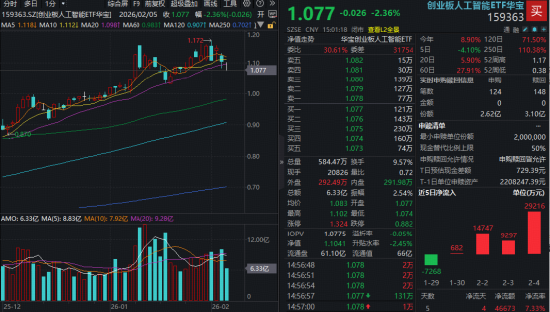
Core Viewpoint - The A-share market is experiencing a volume contraction and adjustment, particularly in the optical module and AI sectors, with significant declines in key stocks, while the long-term outlook for the optical module industry remains positive due to ongoing demand growth in the AI sector [1][3]. Group 1: Market Performance - On February 5, the A-share market saw a reduction in trading volume, with major declines in optical module stocks such as Chengshang Technology and Taicheng Light, both dropping over 10% [1]. - The leading optical module company, Zhongji Xuchuang, managed to stop its three-day decline and recorded a trading volume of 18 billion yuan, the highest in the A-share market [1]. - The ETF focused on optical modules, the ChiNext AI ETF (159363), fell by 2.36%, breaching the 20-day moving average, with a total trading volume of 633 million yuan for the day [1]. Group 2: Industry Insights - The recent volatility in the optical module sector is attributed to several factors, including profit-taking after high earnings forecasts for 2025, shareholder sell-offs, and concerns over AI technology potentially disrupting software companies [3]. - Despite short-term pressures, the long-term fundamentals for the optical module sector remain strong, driven by the ongoing development of the global AI industry and increased capital expenditures, which are expected to boost demand for computing power [3]. - Analysts from CITIC Securities highlight the robust growth in AI computing demand, with significant capital expenditures anticipated in North America, as evidenced by recent earnings reports from Microsoft and Meta [3]. Group 3: ETF and Investment Strategy - The ChiNext AI ETF (159363) is positioned to benefit from the commercialization of AI technologies, with approximately 60% of its portfolio allocated to computing power (optical module leaders and IDC leaders) and 40% to AI applications [4]. - The ETF is seen as a key player in the current market trend, with expectations of upward performance in both earnings and valuations due to a favorable liquidity environment [3][4].

开年险资调研忙 新质生产力受关注
Zhong Guo Zheng Quan Bao· 2026-02-05 22:23
Group 1 - The core viewpoint of the articles highlights the increasing interest of insurance capital in specific sectors and companies, particularly in regional banks and new productivity sectors, as indicated by their extensive research activities [1][2][3] - Since the beginning of 2026, over 300 A-share listed companies have been researched by insurance companies and asset management firms, with significant participation from 96 insurance companies and 32 asset management companies [2] - Key areas of focus for insurance capital include regional banks such as Shanghai Bank and Nanjing Bank, as well as sectors like electronic components, semiconductor materials, and devices [2][3] Group 2 - Insurance capital is increasingly favoring high-dividend stocks as a stable source of cash flow, particularly in a low-interest-rate environment, which drives the demand for equity assets [4] - The strategy of investing in high-dividend stocks is seen as a way to enhance returns and stabilize portfolios, with a focus on long-term holdings and dividend yields [4][5] - The shift towards high-dividend stocks is also a response to new accounting standards that increase profit statement volatility, making these investments more attractive [4] Group 3 - Insurance capital is aligning with the new productivity sector, which relies on technological innovation and strategic emerging industries, requiring long-term and stable capital support [5][6] - Investments are being directed towards technology leaders with clear business models and performance track records, while emerging tech sectors may be approached through industry-themed ETFs or funds to mitigate risks [6] - The focus on AI-driven technology and high-end manufacturing is expected to be central to future technological revolutions, with a commitment to direct investments in companies with strong competitive advantages [6]





近六成公司业绩改善 深市2025年度业绩预告传递多重积极信号
Shang Hai Zheng Quan Bao· 2026-02-05 17:52
Group 1 - As of January 31, 2026, 1,714 out of 2,886 companies in the Shenzhen market have pre-disclosed their 2025 performance, representing 59.39% of the total companies and 48.48% of the market capitalization [1] - Among the pre-disclosed companies, 987 are expected to see performance improvement, with 430 companies achieving continuous profitability and year-on-year growth, while 227 companies are expected to turn losses into profits [1] - The top 100 companies by market capitalization in the Shenzhen market that have pre-disclosed their 2025 performance are expected to achieve a combined net profit of approximately 2,056.27 billion yuan, a year-on-year increase of 66.51% [1] Group 2 - In the Shenzhen market, 307 out of 629 newly listed companies under the registration system have pre-disclosed their 2025 performance, with 183 companies expected to be profitable, which is 59.61% of the pre-disclosed companies [2] - The number of companies expected to incur losses is 124, indicating that the proportion of loss-making companies in the registration system may be below 20% [2] - Notably, companies like China Uranium Industry and Jiangbolong are expected to achieve profits exceeding 1 billion yuan [2] Group 3 - In the Shenzhen market, 18 out of 28 industries are expected to report positive net profits, with significant growth in sectors such as machinery and basic chemicals, which are projected to achieve net profits of 84.85 billion yuan and 123.51 billion yuan, respectively [3] - The electronics and communication sectors are expected to see a growth rate exceeding 50% for the second consecutive year, while industries like non-ferrous metals and textiles are expected to turn losses into profits [3] - The non-ferrous metals industry is projected to achieve a net profit of 328.30 billion yuan, indicating a turnaround from previous losses [3] Group 4 - The computer, communication, and electronics sectors in the Shenzhen market are expected to achieve a combined net profit of 760.33 billion yuan, reflecting a year-on-year growth of 155.32% [4] - Within these sectors, the consumer electronics industry is projected to achieve a net profit of 193.85 billion yuan, a growth of 36.11% [4] - The communication equipment sector is expected to see a significant increase in net profit, projected at 240.76 billion yuan, with a year-on-year growth of 212.39% [4]


捋一捋最近的光模块、CPO和NPO
傅里叶的猫· 2026-02-05 15:02
Core Viewpoint - The article discusses the ongoing debate between CPO (Co-Packaged Optics) and NPO (Near-Packaged Optics) technologies, highlighting their respective advantages and challenges in the optical module market [2][3]. Summary by Sections CPO and NPO Overview - CPO and NPO are two competing optical technologies, with CPO utilizing 3D packaging for integration, while NPO employs 2D packaging, allowing for easier maintenance and higher maturity [7]. - CPO's main drawbacks include low yield rates and maintenance issues, as failures in the optical engine require the entire switch to be replaced [4][5]. Technical Comparisons - A comparison table shows that CPO has a power consumption of approximately 10W, while NPO ranges from 10-15W, and traditional modules consume 20-30W. CPO also has lower loss (2-3dB) compared to NPO and traditional modules [5]. - CPO is theoretically cheaper, but practical challenges in yield and maintenance may affect its cost-effectiveness [5]. Industry Insights from Lumentum - Lumentum reported significant orders for high-performance laser systems supporting CPO applications, with expectations for substantial shipments by mid-2027 [9]. - The company anticipates a shift from copper to optical solutions for short-distance connections, with initial CPO shipments expected by the end of 2027 [9]. Market Reactions and Company Strategies - Following Lumentum's announcements, there was a notable market reaction, with companies like Xuchuang experiencing stock fluctuations and holding emergency calls to reassure stakeholders [10][11]. - Xuchuang emphasized that NPO remains the mainstream path forward, predicting strong demand for optical modules in 2027 and aiming to transition from a supplier to a full-stack optical connection solution provider [11]. Industry Attitudes Towards CPO and NPO - Major cloud service providers like Google favor NPO for its open ecosystem, while others like NVIDIA initially supported CPO but have shifted towards NPO as it matures [12]. - Chip manufacturers show varied stances, with some adapting to support both CPO and NPO based on market needs, indicating a coexistence of technologies in the future [12].


中际旭创:Pluggables first, new architecture later-20260206
Zhao Yin Guo Ji· 2026-02-05 10:24
Investment Rating - The report maintains a BUY rating on Innolight with a target price of RMB707, indicating a potential upside of 26.3% from the current price of RMB560 [3][7]. Core Insights - Innolight's share price has shown volatility due to market concerns regarding NPO/CPO adoption and upstream suppliers' capacity expansion, but the core investment theme remains that pluggable modules will dominate hyperscaler deployments through 2026-27E [1][7]. - The company is positioned as a key supplier of 1.6T pluggable modules, with expected shipment acceleration through 2026-2027, supported by strong demand for high-speed modules [7]. - Recent earnings from upstream suppliers like Lumentum and Coherent indicate a robust demand-driven industry backdrop, with significant capacity expansions underway [7]. Financial Summary - Revenue projections show substantial growth from RMB10,718 million in FY23A to RMB112,154 million in FY27E, with a YoY growth rate peaking at 122.6% in FY24A [2][11]. - Net profit is expected to increase from RMB2,174 million in FY23A to RMB38,357 million in FY27E, reflecting a remarkable YoY growth of 137.9% in FY24A [2][11]. - The gross margin is projected to improve from 33.0% in FY23A to 46.3% in FY27E, indicating a positive trend in profitability [2][11]. Market Position and Performance - Innolight's market capitalization stands at RMB622,216 million, with a significant average turnover of RMB18,922.1 million over the past three months [4]. - The company's share performance over the last month has been -8.2%, while it has seen a remarkable increase of 168.7% over the past six months [6]. - The shareholding structure shows that Shandong Zhongji Investment holds 10.9% and Wang Weixiu holds 6.3% of the shares, indicating a concentrated ownership [5].
「数据看盘」机构活跃度大幅降低,一线游资扎堆平潭发展
Sou Hu Cai Jing· 2026-02-05 10:23
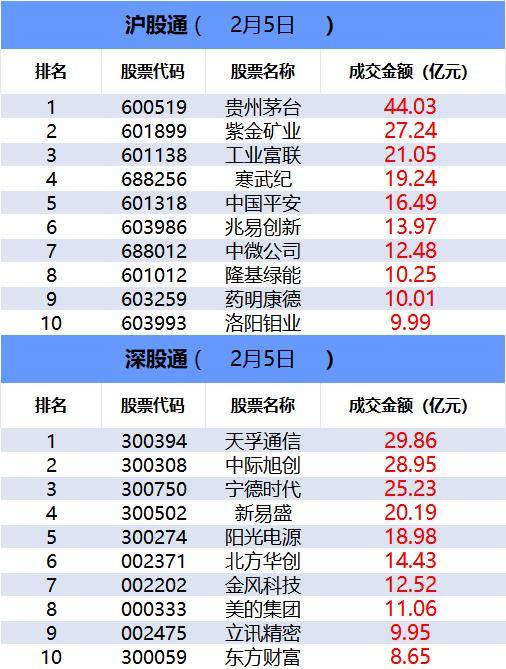
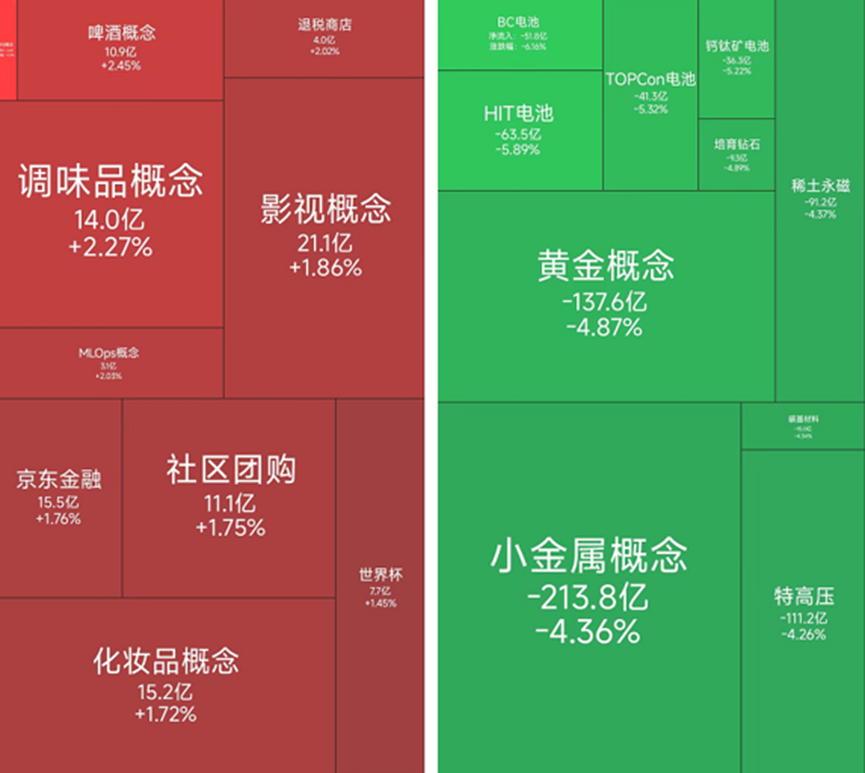
Key Points - The total trading amount for Shanghai Stock Connect today was 142.09 billion, while Shenzhen Stock Connect reached 146.84 billion [1] - The top traded stocks in Shanghai included Kweichow Moutai at 4.40 billion, Zijin Mining at 2.72 billion, and Industrial Fulian at 2.10 billion [2] - In Shenzhen, the leading stocks were Tianfu Communication at 2.99 billion, Zhongji Xuchuang at 2.89 billion, and CATL at 2.52 billion [3] Sector Performance - The sectors with the highest gains included film and television, tourism and hotels, and banking, while sectors with the largest declines were non-ferrous metals, electric grid equipment, and oil and gas [4] - The food and beverage sector saw a net inflow of 1.58 billion, while the film and television sector had a net inflow of 1.23 billion [5] - The electric new energy sector experienced a significant net outflow of 20.21 billion, followed closely by non-ferrous metals at 20.11 billion [6] Individual Stock Activity - The top individual stocks with net inflows included Pingtan Development at 1.29 billion, Wangsu Science and Technology at 0.76 billion, and N Beixin-U at 0.68 billion [7] - The stocks with the highest net outflows were Zijin Mining at -2.29 billion, Xinyi Technology at -1.76 billion, and Aerospace Development at -1.64 billion [8] ETF Trading - The top ETFs by trading amount included the Gold ETF at 20.06 billion, A500 ETF at 15.68 billion, and A500 ETF Huatai at 11.11 billion [9] - The ETFs with the highest growth in trading amount compared to the previous trading day were the Hong Kong Stock Connect Consumer ETF at 0.59 billion, and the S&P Consumer ETF at 0.50 billion [10] Futures Positioning - In the four major futures contracts, both long and short positions increased, with the IM contract seeing a significant increase in long positions [11] Institutional Activity - Institutional activity showed a notable decrease, with the number of stocks bought and sold and the net buying scale significantly reduced [12] - The stock Giant Lifting received 248 million from two institutions, while the stock Minexplosion Optoelectronics saw a sell-off of 81.16 million from one institution [12] Retail Investor Activity - Retail investors were active, with significant purchases in Pingtan Development and Tianfu Communication, indicating strong interest in these stocks [13] - Quantitative funds were also active, particularly in Zhejiang Wenlian, which saw intense trading activity [14]





调味品、影视概念走强,19位基金经理发生任职变动
Jin Rong Jie· 2026-02-05 08:09
Market Performance - On February 5, the A-share market indices collectively declined, with the Shanghai Composite Index falling by 0.64% to 4075.92 points, the Shenzhen Component Index dropping by 1.44% to 13952.71 points, and the ChiNext Index decreasing by 1.55% to 3260.28 points [1] Fund Manager Changes - On February 5, a total of 19 fund managers experienced changes in their positions, with 584 fund products having manager changes in the past 30 days [3][4] - The reasons for the changes included one manager leaving due to the end of an agency role and four managers departing due to job changes [3] Fund Manager Appointments - On February 5, 39 fund products announced new fund manager appointments, involving 14 fund managers [5] - Notably, Chen Xinyu from Guolian Fund has managed funds with a total asset scale of 1.579 billion, achieving a return of 85.05% on the Guolian Zhixuan Pioneer Stock A fund during his tenure [5] Fund Company Research Activity - In the past month (January 6 to February 5), Bosera Fund conducted the most company research, engaging with 62 listed companies, followed by Huaxia Fund with 56 and Southern Fund with 46 [6][7] - The chemical products industry was the most researched sector, with 216 instances of fund company inquiries, followed by the general equipment industry with 211 [7] Recent Fund Research Focus - In the last week (January 29 to February 5), Ying Tang Zhi Kong was the most researched company, receiving inquiries from 61 fund institutions, followed by Zhong Ji Xu Chuang and Jing Ke Neng Yuan with 59 and 49 inquiries, respectively [8][9]




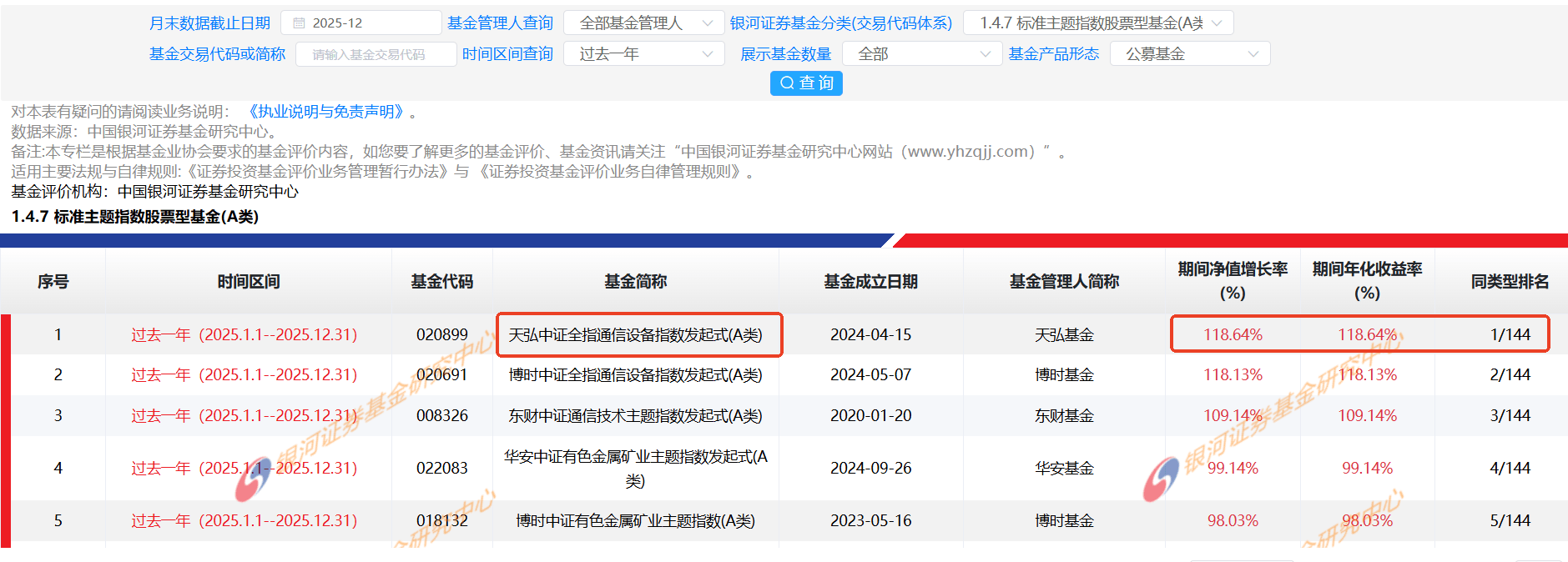
AI需求提振下,光通信龙头业绩指引超预期,天弘中证全指通信设备指数基金(A/C:020899/020900)捕捉CPO技术+AI算力双重机遇
Sou Hu Cai Jing· 2026-02-05 07:17
Group 1 - Lumentum's stock rose nearly 10% in pre-market trading, expected to reach a new historical high, driven by a significant revenue increase of 65% year-over-year to $665 million for the second quarter ending December 27, surpassing analyst expectations of $652 million [1] - The company's GAAP earnings per share (EPS) was $0.89, significantly above the analyst consensus of $0.49, while the adjusted EPS was $1.67, also exceeding the expected $1.41 [1] - The surge in AI computing power has created an extreme demand for high-speed connectivity, with CPO technology being a core solution to overcome bandwidth and power consumption bottlenecks [1] Group 2 - CITIC Securities noted that since 2025, both Chinese and American tech stocks have performed well, with the computing power sector leading the market, and there are emerging opportunities in models and applications [2] - Looking ahead to 2026, domestic computing power is expected to thrive, with performance elasticity and investment certainty, potentially replicating the long bull market seen in U.S. stocks since 2023 [2] - The urgency for domestic development of semiconductor equipment and AI chips has increased due to overseas restrictions, making localization a prevailing trend [2] Group 3 - The Tianhong CSI All-Share Communication Equipment Index Fund (A Class: 020899, C Class: 020900) achieved the highest annual return among similar themed index equity funds in 2025, reflecting the benefits of the AI computing power explosion [2] - The fund focuses on the optical communication sector, with its top ten weighted stocks heavily concentrated in leading optical communication companies, which are closely tied to the global AI computing supply chain [3] Group 4 - Fund manager Zhang Ge has a deep insight into the communication equipment sector, utilizing a dual-driven investment framework of "AI computing explosion + communication infrastructure upgrade" to guide fund operations [4] - The Tianhong CSI All-Share Communication Equipment Index Fund closely tracks the CSI All-Share Communication Equipment Index, which selects 50 listed companies involved in the communication equipment field to reflect the overall performance of this theme [4]

沪深两市今日成交额合计2.18万亿元,中际旭创成交额居首
Xin Lang Cai Jing· 2026-02-05 07:12
Core Viewpoint - The total trading volume of the Shanghai and Shenzhen stock markets on February 5 was 2.18 trillion yuan, reflecting a decrease of approximately 304.75 billion yuan compared to the previous trading day [1] Trading Volume Summary - The trading volume in the Shanghai market was 946.99 billion yuan, while the Shenzhen market recorded 1.23 trillion yuan [1] - The leading stock by trading volume was Zhongji Xuchuang, with a total of 18.01 billion yuan [1] - Other notable stocks included Kweichow Moutai at 14.18 billion yuan, New Yisheng at 14.17 billion yuan, Zijin Mining at 13.41 billion yuan, and Aerospace Development at 12.93 billion yuan [1]
