
ZHONGJI INNOLIGHT(300308)

Search documents
光模块的产业价值,开始改变了
新财富· 2026-03-18 09:06
Core Insights - Nvidia has officially announced that CPO technology will begin large-scale deployment in 2026, marking a new era in optical communication for global data centers [2] - The introduction of co-packaged optical CPO fundamentally disrupts the traditional independent form of optical modules, raising concerns about the potential end of the optical module industry's value chain [2] Investment and Supply Chain Dynamics - Nvidia has invested $2 billion each in Lumentum and Coherent, along with long-term procurement commitments, to secure high-end laser chip production capacity [3] - The global AI computing industry is entering a supply chain war focused on optical components, with Nvidia enhancing its dominance over the optical module supply chain [3] - The current global capacity for high-speed laser chips based on indium phosphide (InP) is extremely tight, with demand expected to rise significantly by 2026 [3][6] CPO Technology and Market Impact - CPO technology is crucial for driving 1.6T/3.2T optical modules, and any weaknesses in the supply chain could pose significant risks to Nvidia's revenue growth [6] - The first mass-produced co-packaged optical CPO switch, Quantum X800-Q3450, will have a total switching bandwidth of 115.2T and a material cost of approximately $70,000, with market prices exceeding $180,000 [8] - CPO technology offers at least a 30% reduction in power consumption, which is a significant opportunity for data center operations where electricity costs are substantial [10] Reliability and Economic Benefits - CPO technology has demonstrated superior reliability, with a link failure rate of only 0.34%, significantly lower than traditional optical modules [12] - Google estimates that a data center with 100,000 servers could save over $10 million annually in electricity costs by adopting CPO [12] - The shift to CPO technology is expected to fundamentally restructure the industry's power dynamics, transferring control from optical module manufacturers to switch chip giants and major cloud service providers [12][13] Challenges for Traditional Optical Module Manufacturers - Traditional optical module leaders like Zhongji Xuchuang and Newray must navigate a multi-dimensional challenge as CPO technology compresses the value chain [19] - The transition to CPO architecture may undermine existing advantages held by traditional manufacturers, as CPO requires silicon photonics, which cannot directly integrate with existing EML chips [19] - Market share erosion is anticipated, with Morgan Stanley predicting a dilution of optical module demand by approximately 3% in 2026 and 11% in 2027 due to CPO adoption [23] Future Market Dynamics - The demand for optical modules is expected to grow explosively, with global AI optical module demand projected to increase from approximately 41 million units in 2025 to around 100 million units by 2028 [23] - The initial applications of CPO will focus on ultra-high-speed scenarios above 3.2T, while traditional optical modules will continue to thrive in mid-to-low-end markets [30] - Domestic manufacturers may need to shift from selling modules to providing IP technology and collaborative services, adapting to the new CPO landscape [29][30]


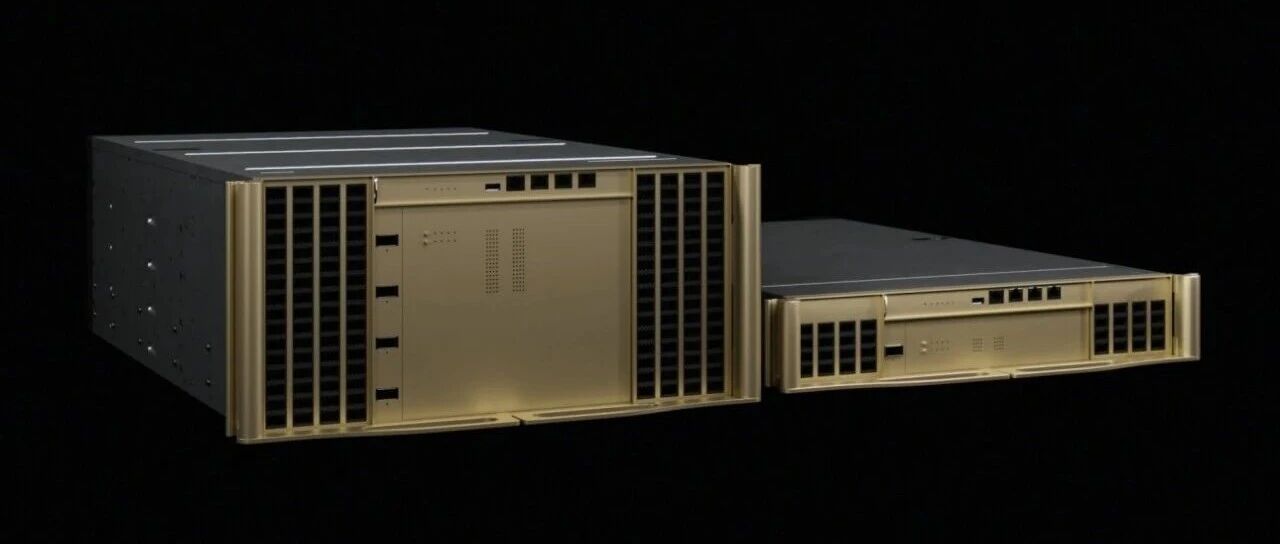
首次将光通信引入芯片间互联!英伟达Feynman架构助力CPO概念股走强,天孚通信涨超6%
Ge Long Hui· 2026-03-18 02:51
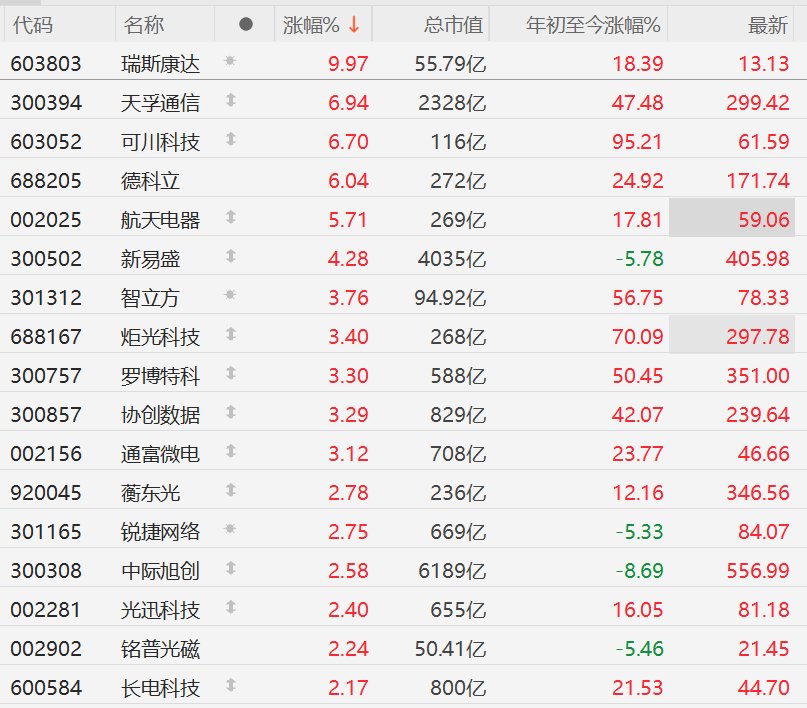
Core Viewpoint - The CPO concept stocks in the A-share market have shown strong performance, particularly following the announcement of NVIDIA's Feynman chip, which integrates optical communication to significantly reduce energy consumption in AI data center communications by over 70% [1]. Group 1: Stock Performance - Resconda (603803) saw a price increase of 9.97%, with a total market capitalization of 5.579 billion and a year-to-date increase of 18.39% [2]. - Tianfu Communication (300394) rose by 6.94%, with a market cap of 232.8 billion and a year-to-date increase of 47.48% [2]. - Kechuan Technology (603052) increased by 6.70%, with a market cap of 1.16 billion and a year-to-date increase of 95.21% [2]. - Dekeli (688205) experienced a 6.04% rise, with a market cap of 2.72 billion and a year-to-date increase of 24.92% [2]. - Aerospace Electric (002025) rose by 5.71%, with a market cap of 2.69 billion and a year-to-date increase of 17.81% [2]. - Xinyi Technology (300502) increased by 4.28%, with a market cap of 40.35 billion and a year-to-date decrease of 5.78% [2]. - Other notable stocks include Zhili Fang (301312) up 3.76%, Juguang Technology (688167) up 3.40%, and Luobotek (300757) up 3.30% [2]. Group 2: Market Trends - The overall trend in the CPO concept stocks indicates a positive market sentiment, driven by technological advancements in optical communication [1]. - The introduction of NVIDIA's Feynman chip is expected to have a significant impact on the energy efficiency of AI data centers, which may further boost investor interest in related stocks [1].


从OFC2026看算力网络投资机会(GenAI系列之72):与光为伴,算力基石,AI网络再掘金
Shenwan Hongyuan Securities· 2026-03-17 15:28
Investment Rating - The report indicates a positive investment outlook for the AI computing network industry, highlighting three key investment directions: optical communication, network equipment and chips, and AIDC computing infrastructure [4][8]. Core Insights - The evolution of AI computing networks is shifting from Scale-out to Scale-up, with significant advancements in optical communication technology and a rapid increase in demand. The report emphasizes the importance of hardware technology solutions and the ongoing domestic replacement of chips within the Ethernet ecosystem [5][8]. - The OFC 2026 event is expected to reveal critical trends in optical communication, including the emergence of NPO and XPO as new competitive arenas, and the full introduction of 400G/lambda technology, signaling the approach of the 3.2T era [37][38]. Summary by Sections 1. Review and Outlook: What Stage is the Industry and Investment At? - The AI-driven technological transformation, particularly in LLM training and inference, has propelled the optical communication industry into a new cycle, with a notable change in the supply-demand relationship compared to previous cycles [14]. - The current architecture is increasingly influenced by computing power, with a significant opening of domestic computing network space as solutions evolve from Scale-out to Scale-up [17][20]. 2. Domestic and International Computing Networks: Two Flowers Blooming - The report identifies key players in the optical communication sector, including Zhongji Xuchuang, Xinyi Sheng, and Tianfu Communication, as well as in computing equipment like Unisplendour and Ruijie Networks [8]. - The report discusses the competitive landscape of optical communication technologies, emphasizing the coexistence of various paths rather than a simple replacement scenario [10][43]. 3. The Debate on xPO: Where is Optical Communication Headed? - The report outlines the competitive dynamics of optical modules, highlighting the significance of pluggable optics and the expected dominance of 800G/1.6T pluggable modules in the AIDC optical interconnect market by 2026-2027 [47]. - It also discusses the potential of CPO (Co-Packaged Optics) and NPO (Near-Packaged Optics) as significant variables in the industry, with expectations for their deployment in the near future [57][60]. 4. Key Trends from OFC 2026 - The report notes that the introduction of 400G/lambda technology and the advancements in optical modules by leading Chinese manufacturers mark a pivotal moment for the industry, indicating a shift towards higher bandwidth and lower power consumption solutions [38][41]. - The report anticipates that the next few years will see a rapid evolution in optical communication technologies, with a focus on diverse paths and product forms, leading to extended opportunities across the industry chain [44][64].


云计算50ETF新华联接:聚焦AI技术周期下半场的核心环节
Changjiang Securities· 2026-03-17 11:12
Investment Rating - The report does not explicitly state an investment rating for the cloud computing industry or the specific ETFs mentioned. Core Insights - The AI technology innovation cycle is divided into two halves: the first half focuses on model and method innovation, while the second half emphasizes problem definition and the integration of AI into real-world applications, with a focus on application value [4][7]. - The CSI Cloud Computing 50 Index comprehensively covers the entire cloud computing industry chain, balancing hardware and software, and aims to capture both AI computing infrastructure benefits and software growth opportunities [4][9]. - The report highlights that the cloud is a core component in the second half of the AI technology cycle, where the focus shifts from training to inference, making cloud computing essential for AI applications [7][79]. Summary by Sections Cloud Computing Overview - Cloud computing is defined as the centralized management and dynamic allocation of resources via the internet, likened to utilities like water and electricity [18]. - The global cloud computing market reached a size of 586.4 billion yuan in 2023, with a growth rate of 19.4%, and is expected to exceed one trillion dollars by 2027 [20]. AI's Impact on Cloud Computing - AI is creating new demands in the IaaS and MaaS layers, particularly for large model calls and custom model needs, leading to a shift in cloud service architectures [8][82]. - The business model for cloud computing is anticipated to transition from resource pricing to value pricing, which could enhance gross margins for cloud resources in the long term [8][85]. CSI Cloud Computing 50 Index - The index includes companies providing IaaS, PaaS, and SaaS, selected based on liquidity, growth potential, and market capitalization, ensuring a balanced representation of the cloud computing sector [9][10]. - The index has shown strong performance compared to mainstream indices, indicating its long-term investment value [9]. New Investment Opportunities - The report emphasizes the growth potential in the AI large model solutions market and the MaaS market, both expected to experience rapid growth in the coming years [87][88]. - The integration of GPU, cloud, and AI is seen as a significant growth driver, allowing cloud providers to differentiate their services and enhance their competitive edge [8][94].


超4500股下跌
第一财经· 2026-03-17 07:47
Market Overview - A-shares experienced a collective decline with the Shanghai Composite Index down by 0.85%, Shenzhen Component Index down by 1.87%, and ChiNext Index down by 2.29% [3][4] - Over 4,500 stocks saw a decrease in value [3] Sector Performance - The insurance, precious metals, and banking sectors showed positive performance, while the real estate sector was notably active [6] - Specific real estate stocks such as Shijianhang, Jingneng Real Estate, and Jingtou Development reached their daily limit up [7] Notable Stock Movements - Shijianhang (002285) increased by 10.00% to 3.41, Jingneng Real Estate (600791) rose by 9.99% to 9.36, and Jingtou Development (600683) climbed by 9.96% to 10.60 [8] - In contrast, the CPO sector faced adjustments, with stocks like Juguang Technology dropping over 12% [9] Trading Volume - The total trading volume in the Shanghai and Shenzhen markets was 2.21 trillion yuan, a decrease of 117.5 billion yuan compared to the previous trading day [9] Capital Flow - Main capital inflows were observed in non-bank financials, public utilities, and banking sectors, while outflows were noted in electronics, communications, and machinery sectors [11] - Individual stocks such as Xiexin Integration and Huadian New Energy saw significant net inflows of 3.339 billion yuan and 1.669 billion yuan respectively [12] - Conversely, stocks like Xinyi Sheng and Zhongji Xuchuang experienced net outflows of 3.06 billion yuan and 1.356 billion yuan respectively [13] Institutional Insights - Huatai Securities highlighted that AI empowerment and product innovation will be key growth drivers for technology consumer companies in 2026 [14] - CITIC Securities noted that increased policy support could accelerate the industrialization of the hydrogen energy sector [15] - Industrial logic optimization in the gaming sector, along with AI applications, is expected to catalyze growth according to Industrial Securities [16]



关注GTC与OFC大会催化
HTSC· 2026-03-16 12:03
Investment Rating - The report maintains an "Overweight" rating for the communication sector and communication equipment manufacturing [8]. Core Insights - The upcoming GTC and OFC conferences are expected to catalyze developments in the communication sector, particularly in areas such as optical modules, liquid cooling technologies, fiber optics, and copper connections [1][2][11]. - The report emphasizes the importance of AI computing chain investment opportunities, suggesting a focus on companies that are well-positioned in this space [1][2]. Summary by Sections Market Overview - The communication index fell by 0.12% last week, while the Shanghai Composite Index decreased by 0.70%, and the Shenzhen Component Index increased by 0.76% [1][11]. Key Companies and Dynamics - The report identifies a primary investment theme in the communication industry as the AI computing chain, recommending companies such as Zhongji Xuchuang, Xinyi Sheng, and others. It also highlights two secondary themes: core assets (China Mobile, China Telecom) and new productive forces (commercial aerospace, low-altitude economy) [3]. - Specific companies recommended for investment include: - Wolong Huacai (002130 CH) with a target price of 43.21 and a "Buy" rating [34]. - China Telecom (601728 CH) with a target price of 9.11 and a "Buy" rating [34]. - China Mobile (600941 CH) with a target price of 126.20 and a "Buy" rating [34]. - Xinyu Sheng (300502 CH) with a target price of 476.71 and a "Buy" rating [34]. - Arista Networks (ANET US) with a target price of 166.30 and a "Buy" rating [34]. - Zhongji Xuchuang (300308 CH) with a target price of 626.68 and a "Buy" rating [34]. - Ruijie Network (301165 CH) with a target price of 102.51 and a "Buy" rating [34]. - Guanghuan Xinwang (300383 CH) with a target price of 18.87 and an "Overweight" rating [34]. Upcoming Events and Focus Areas - The report suggests monitoring developments in the following areas during the GTC and OFC conferences: 1. Optical modules: Focus on Nvidia's statements regarding CPO technology and the performance of NPO and XPO prototypes [2][12]. 2. Liquid cooling: Attention to advancements in the Feynman generation technology and domestic supply chain progress [2][13]. 3. Fiber optics: Updates on the commercialization of hollow-core fiber technology [2][14]. 4. Copper connections: The potential impact of LPU cabinet forms on the market perception of copper cable lifecycles [2][14].


光模块设备行业深度:AI发展带动光模块需求爆发,看好封装测试设备商充分受益
Soochow Securities· 2026-03-16 05:24
Investment Rating - The report maintains a positive investment outlook on the optical module equipment industry, highlighting significant growth potential driven by AI developments and technological upgrades in packaging and testing equipment [2]. Core Insights - The demand for optical modules is experiencing explosive growth due to the expansion of AI computing power, with a shift from 400G to 800G and accelerating towards 1.6T, indicating a high demand cycle for equipment [2][23]. - The core value segments in the optical module packaging process are die bonding, coupling, and testing, which together account for over 60% of the value, with increasing precision and automation requirements [2][58]. - Domestic substitution, automation upgrades, and the introduction of advanced packaging present structural opportunities for equipment manufacturers, particularly in high-precision areas still dominated by foreign suppliers [2][32]. Summary by Sections Section 1: AI Development and Optical Module Demand - AI advancements are driving a surge in optical module demand, with a transition towards higher specifications like CPO and OIO expected to shape future trends [4][23]. - The optical module market is projected to see significant growth, with 800G and 1.6T modules expected to reach over 52 million units shipped by 2026 [24][26]. Section 2: Core Packaging and Testing Equipment - The main processes in optical module packaging include die bonding, coupling, and testing, which are critical for ensuring high performance and reliability [53][55]. - The report emphasizes the importance of high-precision die bonding and coupling processes, which are essential for achieving optimal optical performance [70][74]. Section 3: Key Companies and Investment Recommendations - The report recommends focusing on companies such as Robotech (coupling equipment), Keri Technology (die bonding), and others that are well-positioned to benefit from the industry's growth [2][32]. - It highlights the potential of companies like Lumentum and Coherent, which are expanding their production capacities to meet rising demand [33][32].



通信行业研究:光模块大厂NPO方案发布在即,OpenClaw带动国产算力加速
SINOLINK SECURITIES· 2026-03-15 12:24
Investment Rating - The report suggests a positive outlook for the industry, particularly in sectors driven by AI development, such as servers and IDC, as well as overseas AI-driven sectors like servers and optical modules [5]. Core Insights - Broadcom has launched the industry's first 400G/channel DSP, laying the groundwork for 3.2T transceivers. Leading optical module manufacturers are set to unveil NPO solutions at the OFC conference. The NPO solution is expected to drive optical interconnects towards scale-up domains, expanding the total addressable market (TAM) for optical connections [1][2]. - Nvidia has formed a strategic partnership with Nebius to develop and deploy next-generation hyperscale cloud services for the AI market, investing $2 billion in the process. This indicates a strong commitment to supply chain investment [1][2]. - Major domestic tech companies, including Tencent, Baidu, Alibaba, ByteDance, Meituan, and JD, have released methods for deploying and accessing OpenClaw, indicating a rapid increase in domestic computing power demand [1][3]. - Oracle's remaining performance obligations (RPO) reached $553 billion in Q3, a 325% year-on-year increase, reflecting strong confidence in sustained AI demand [1][2]. - Applied Optoelectronics Inc. announced a bulk order exceeding $200 million for 1.6T data center transceivers from a large hyperscale customer, aimed at enhancing network bandwidth for AI workloads [1]. Summary by Sections Subsector Insights - **Servers**: The server index increased by 1.99% this week, with Oracle's Q3 revenue at $17.2 billion, a 22% year-on-year growth, exceeding market expectations. The RPO of $553 billion indicates a robust demand for AI computing power [2][7]. - **Optical Modules**: The optical module index rose by 6.17% this week. Broadcom introduced a 400G/channel optical DSP, and new products are expected to be showcased at OFC 2026, including TeraHop's 12.8Tbps XPO optical module [2][7]. Core Data Updates - The telecommunications business revenue is projected to reach 1.75 trillion yuan by 2025, with a year-on-year growth of 0.7%. The total telecommunications volume is expected to grow by 9.1% year-on-year [4][16]. - In December, China's optical module export value increased by 0.9% year-on-year, although the cumulative total for the year decreased by 16% [4][35]. Investment Recommendations - The report recommends focusing on sectors driven by domestic AI development, such as servers and IDC, as well as those influenced by overseas AI growth, including servers and optical modules [5].
通信行业周报:光模块大厂NPO方案发布在即,OpenClaw带动国产算力加速-20260315
SINOLINK SECURITIES· 2026-03-15 12:01
Investment Rating - The report suggests focusing on sectors driven by domestic AI development such as servers and IDC, as well as sectors driven by overseas AI development like servers and optical modules [5] Core Insights - Broadcom has launched the industry's first 400G/channel DSP, laying the foundation for 3.2T transceivers. Leading optical module manufacturers will unveil NPO solutions at the OFC conference. The NPO solution is expected to drive optical interconnects towards scale-up domains, expanding the total addressable market (TAM) for optical connections [1][2] - Oracle's remaining performance obligations (RPO) reached $553 billion, a year-on-year increase of 325%, indicating strong confidence in sustained AI demand. Oracle has raised its total revenue guidance for FY2027 to $90 billion, significantly higher than previous expectations [1][2] - Nvidia and Nebius have formed a strategic partnership to develop next-generation hyperscale cloud services for the AI market, with Nvidia investing $2 billion in Nebius [1][2] - Major domestic tech companies like Tencent, Baidu, Alibaba, ByteDance, Meituan, and JD have released methods for deploying and accessing OpenClaw, indicating a rapid increase in domestic computing power demand [1][3] Summary by Sections Subsector Insights - **Servers**: The server index increased by 1.99% this week, while it decreased by 0.64% this month. Oracle's Q3 revenue was $17.2 billion, a 22% year-on-year increase, exceeding market expectations. The RPO reached $553 billion, up 325% year-on-year. Nvidia's partnership with Nebius aims to address the growing global AI computing demand [2][7] - **Optical Modules**: The optical module index rose by 6.17% this week and 2.65% this month. Broadcom introduced the first 400G/channel optical DSP for next-generation AI networks. TeraHop plans to showcase the first 12.8Tbps XPO optical module at OFC 2026, while NewEase has joined the XPO MSA and released the first 12.8 Tbps liquid-cooled pluggable optical module [2][7] Core Data Updates - Telecom business revenue is projected to reach 1.75 trillion yuan in 2025, with a year-on-year growth of 0.7%. The total telecom business volume is expected to grow by 9.1% year-on-year at constant prices [4][16] - In December, China's optical module export value increased by 0.9% year-on-year, while the cumulative total for January to December decreased by 16% [4][35] Market Trends - The report indicates a robust upward trend in various sectors, including operators, optical modules, servers, switches, connectors, IDC, IoT, and liquid cooling, driven by advancements in technology and increasing demand for AI capabilities [15]
博通产业链:解耦的意义
GOLDEN SUN SECURITIES· 2026-03-15 11:37
Investment Rating - The report recommends a "Buy" rating for key companies in the Broadcom supply chain, including Zhongji Xuchuang, Xinyi Sheng, and Tianfu Communication [10]. Core Insights - Broadcom's collaboration with CSPs to develop customized ASIC/XPU breaks the closed monopoly of Nvidia's "GPU+InfiniBand" system, promoting an "open decoupled" network ecosystem, which is significant in the era of CSP-led capital expenditures [1][20]. - The importance of decoupling is highlighted as CSPs transition from "passive procurement" to "self-definition" of chips, allowing for better negotiation power and integrated design optimization [3][22]. - The report emphasizes the shift in the optical communication industry from reliance on a single giant to a dual market driven by both CSPs and Nvidia, expanding growth opportunities [11][23]. Summary by Sections Investment Strategy - The report suggests focusing on the Broadcom supply chain, particularly on companies like Zhongji Xuchuang, Xinyi Sheng, Tianfu Communication, and others in the optical communication sector [14][21]. Market Review - The communication sector has seen a decline, with quantum communication performing relatively well, indicating a mixed market sentiment [16][19]. Broadcom Supply Chain - Broadcom is positioned as a global leader in communication semiconductors, with significant partnerships in the XPU space, suggesting a robust growth trajectory for its partners [2][6]. CSP-led Capital Expenditure - The report outlines how CSPs are now defining their chip requirements, moving away from standardized products, which enhances their bargaining power and allows for tailored solutions [3][22]. Key Companies - The report identifies several key players in the optical communication space, including: - Zhongji Xuchuang: A leading global optical module manufacturer [2][21]. - Xinyi Sheng: Recognized as a core supplier of optical communication chips [22]. - Tianfu Communication: A leader in upstream optical devices [22]. - Other notable mentions include Youxun Co., Dongtian Micro, Shijia Photon, and Guangku Technology [2][21].
