ASML Holding(ASML)

Search documents
美股科技板块飙涨!美联储,重大利好!
Xin Lang Cai Jing· 2025-12-18 23:43
来源:中国基金报 兄弟姐妹们啊,今晚两大利好,美股尤其是科技板块暴涨,中国资产同步上涨,相信周五的市场不出意 外的话不会让人失望了。 早前美光科技的财报拯救了AI交易,今晚美国最新通胀数据,强化了美联储2026年降息的预期! 一起看看发生了什么事情。 美股飙涨 12月19日晚间,美股三大指数高开高走,道指涨超400点,纳斯达克涨近2%,标普500指数涨超1%。 中国资产方面,中概股指数涨1.5%。 | | 纳斯达克中国金龙指数(.HXC) 交易中 12-18 10:42:33 美东时间 | | | | | | | | | c | ( ) | | --- | --- | --- | --- | --- | --- | --- | --- | --- | --- | --- | --- | | 7613.96 | | | | | | | | | | | L1 3 | | +112.60 +1.50% | | | | | | | | | | | | | ਵੇ ਜੇ | | 7567.49 | 最 高 | | 7620.85 | | 成交量 | | | | ○股 | | 卧库 1 રિશ્ચ | | 7501.36 ...



Will EUV Adoption in Logic and DRAM Lift ASML's Margins Over Time?
ZACKS· 2025-12-18 15:11
Core Insights - ASML Holding's profitability is increasingly tied to the adoption rate of extreme ultraviolet (EUV) lithography tools in logic and DRAM manufacturing, which are more complex and expensive than traditional tools [1][10] Financial Performance - In Q3 2025, ASML's gross margins increased by 80 basis points year-over-year to 51.6%, driven by strong EUV demand and a growing installed base [2][10] - The company expects Q4 2025 revenues to range between €9.2 billion and €9.8 billion, representing a 26.3% sequential increase at the midpoint, with gross margins projected at 51-53% [5] - For the full year 2025, ASML anticipates a sales increase of around 15% and margins close to 52% [5] Market Dynamics - Logic customers are the primary revenue drivers, accounting for about two-thirds of system sales, with advanced logic nodes requiring multiple EUV layers, enhancing tool utilization and service demand [2][10] - The shift towards denser DRAM architectures and AI-related memory is increasing EUV adoption, which supports higher-value system demand and improves margins [3][4][10] Competitive Landscape - ASML is the sole provider of EUV lithography tools but operates within a broader semiconductor equipment ecosystem, competing with companies like Applied Materials and KLA Corporation [6][7] Valuation and Estimates - ASML's shares have increased by 33.3% over the past six months, outperforming the Zacks Computer and Technology sector's gain of 22.2% [8] - The forward price-to-earnings ratio for ASML is 33.76, significantly higher than the sector average of 27.76 [11] - Earnings estimates for 2025 and 2026 suggest a year-over-year increase of approximately 39.3% and 3.8%, respectively, with recent upward revisions for 2025 and downward revisions for 2026 [12]

美股科技股大跌,美联储最新发声
Qi Huo Ri Bao· 2025-12-18 10:16
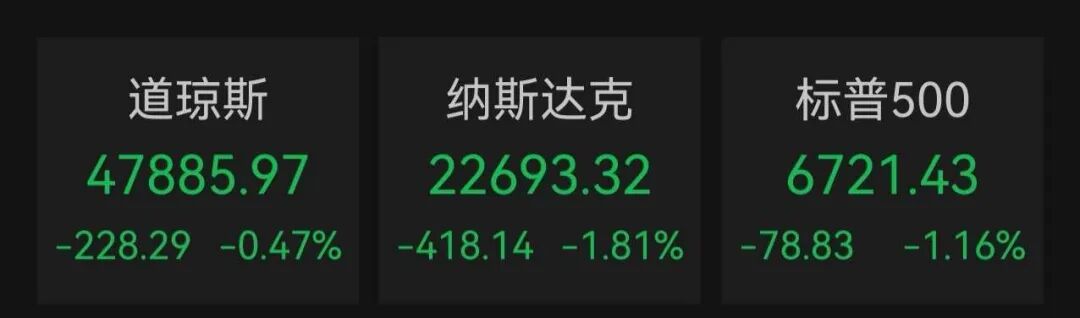
Market Performance - The three major U.S. stock indices closed lower on December 17, with the Dow Jones down 228.29 points (0.47%) at 47,885.97, the Nasdaq down 418.14 points (1.81%) at 22,693.32, and the S&P 500 down 78.83 points (1.16%) at 6,721.43 [1] Sector Performance - Technology stocks led the decline, with ASML, Oracle, and AMD dropping over 5%, while Tesla and Broadcom fell over 4%. Other notable declines included Nvidia, TSMC, Intel, and Google-A, which were down over 3%, and Qualcomm down over 2%. Meta, Apple, Amazon, Boeing, and Microsoft experienced slight declines, while Netflix saw a small increase [1] AI-Related Stocks - AI-related stocks generally fell, with Nvidia down 3.8%, Broadcom down 4.5%, AMD down 5.3%, Oracle down 5.4%, and Tesla down 4.6% [1] Chinese Stocks - Most popular Chinese stocks declined, with the Nasdaq Golden Dragon China Index down 0.73%. Notable declines included Huya, Pinduoduo, NIO, and Li Auto, which fell over 3%, while iQIYI, Tiger Brokers, and Xpeng dropped over 2%. Futu Holdings, Alibaba, NetEase, and Kingsoft fell over 1%, while Baidu and New Oriental saw slight increases, and Ctrip rose over 1% [1] Monetary Policy Insights - Federal Reserve Governor Christopher Waller expressed support for further interest rate cuts to return rates to neutral levels, indicating that current monetary policy rates are up to 100 basis points above neutral levels. He noted that this neutral rate would neither suppress growth nor elevate inflation [2]


对华封锁5年后,ASML急了:曾经看不起、如今追不上,欧洲技术已然掉队
Xin Lang Cai Jing· 2025-12-18 09:26
Core Viewpoint - ASML's CEO, Christoph Wouters, acknowledges a shift in demand from China, indicating a decline in orders due to the rise of local technology, marking a significant change in the company's outlook on the Chinese market [1][4]. Group 1: Market Dynamics - The demand from the Chinese market is transforming from "policy risk" to "order decline," with a forecasted significant drop in sales to China by 2026 [1]. - ASML's sales to China previously accounted for over one-third of its total revenue, but the competitive landscape is changing as local Chinese technology begins to erode this market share [1][5]. - Other Western companies, such as Applied Materials and Lam Research, are also expressing concerns about their reliance on the Chinese market, with significant portions of their revenues (37% for Applied Materials, 42% for Lam Research, and 44.4% for Tokyo Electron) coming from China [5]. Group 2: Technological Landscape - The narrative of Western technological superiority is being challenged as Chinese companies make significant strides in developing their own capabilities, moving away from a "copying" approach to a "system innovation" strategy [7][8]. - ASML's previous confidence in its technological edge is waning, as the gap in capabilities between Western and Chinese firms is narrowing, with the CEO indicating that the timeline for China to catch up is being compressed [8][11]. Group 3: Strategic Responses - ASML is attempting to maintain its market position by offering older technology models (like DUV equipment) to China, hoping to negotiate some leeway in the face of ongoing export restrictions [5][11]. - The company is caught in a dilemma between adhering to U.S. policies and maintaining trust with its largest customer, China, leading to a precarious balancing act [11].

对中国封锁5年后,阿斯麦CEO认清现实:中国对欧洲技术依赖正在消失
Xin Lang Cai Jing· 2025-12-18 08:34
Core Viewpoint - ASML's CEO, Christoph Wouters, emphasizes the challenges of balancing national security and industrial interests, particularly regarding export restrictions to China, which are shifting from "policy risks" to "order expectations" [1][2] Group 1: Market Dynamics - ASML anticipates a significant decline in demand from China starting in 2026, with current sales to China accounting for over one-third of total sales [1] - The company links the weakening demand from China to the enhancement of local supply capabilities, raising concerns about its market share in China [1] - ASML's primary model for deliveries to China is DUV, while EUV export licenses have not been approved since 2019 due to ongoing pressure from the U.S. [1] Group 2: Leadership Perspectives - The shift in ASML's leadership perspective over the years reflects a transition from confidence to anxiety regarding China's technological advancements [4][6] - Former CEO Peter Wennink's statements evolved from dismissing China's capabilities to acknowledging the rapid pace of Chinese innovation and the potential disruption to global supply chains [5][6] Group 3: Industry Concerns - Other semiconductor equipment companies, such as Applied Materials and Tokyo Electron, share similar anxieties about losing the Chinese market, which constitutes a significant portion of their revenue [7] - The competitive landscape indicates that while China has not yet caught up in photolithography equipment, it is advancing rapidly in other segments of the semiconductor supply chain [8] Group 4: Impact of Technology Restrictions - The U.S. strategy of tightening technology restrictions has not achieved its intended effect, as China is accelerating its domestic production capabilities in response [9] - ASML's strategy of offering older technology models to China is seen as a buffer to mitigate the risk of losing the market entirely [10] Group 5: Future Outlook - The perceived technological gap of "about ten years" between the West and China is increasingly questioned, as Chinese firms approach critical production milestones in DUV technology [12][13] - The future trajectory for ASML hinges on its ability to adapt to the rapidly changing competitive landscape in China, where local firms are gaining ground [14]

路透社报道中国EUV光刻机技术引争议
Xin Lang Cai Jing· 2025-12-18 06:16
Core Viewpoint - The article critiques a Reuters report on China's so-called "Manhattan Project" for semiconductor technology, suggesting that while the facts presented may not be false, the conclusions drawn are misleading and based on narrative manipulation rather than solid evidence [1][4]. Group 1: Narrative Techniques - Reuters employs a narrative style that combines real information with suggestive implications, leading readers to make unwarranted associations without direct evidence [1][2]. - The use of terms like "informed sources" and detailed descriptions creates an illusion of a verified evidence chain, despite the lack of substantial proof [1][2]. Group 2: Technical Misunderstandings - The emphasis on "reverse engineering" in the article is misleading, as it oversimplifies the complexities involved in high-tech industrial systems, where true innovation requires more than just disassembly [2][3]. - The article mentions key suppliers like Zeiss and advancements from institutions like the Chinese Academy of Sciences, but fails to provide new evidence that China has overcome critical technological barriers [3][4]. Group 3: Legal and Ethical Implications - The report insinuates illegal activities related to reverse engineering and espionage without presenting verifiable evidence, conflating attempts at technological advancement with unlawful actions [4][6]. - The notion that a successful technology path can be built on infringement and secrecy is fundamentally flawed, as it undermines trust and long-term viability in the global market [5][6].
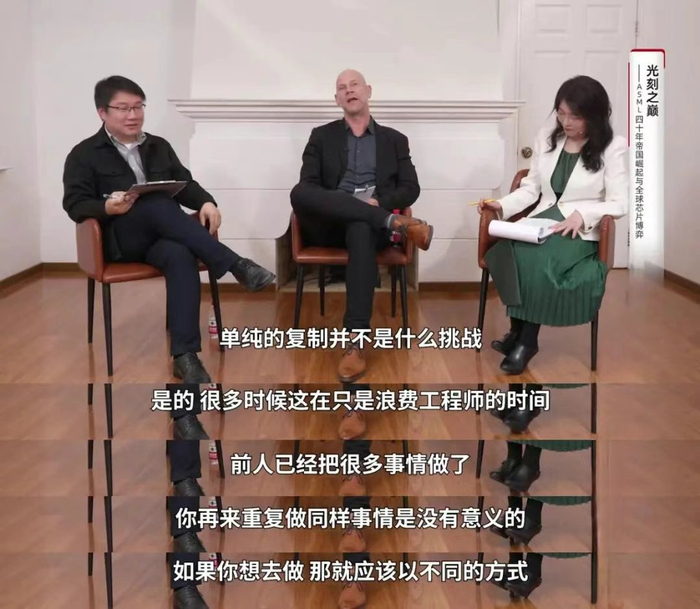
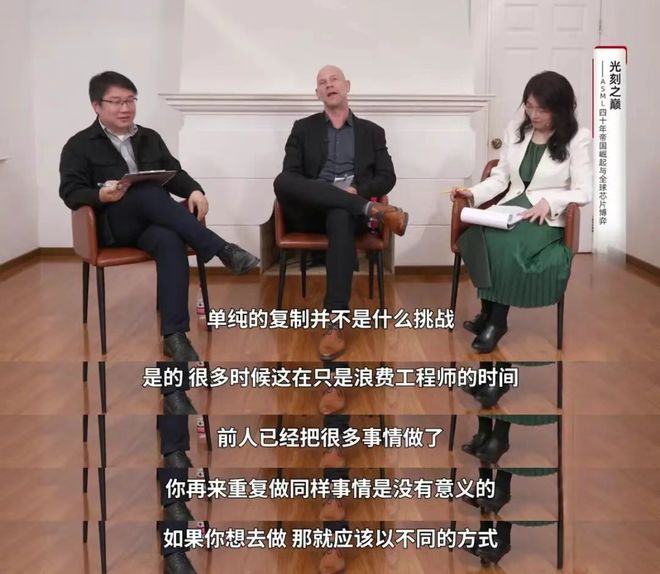
如何看待路透社的“中国版曼哈顿工程”?
Guan Cha Zhe Wang· 2025-12-18 05:13
Core Viewpoint - The article critiques a Reuters report on China's alleged "Manhattan Project" for semiconductor technology, suggesting that while the facts presented may not be false, the conclusions drawn are misleading and based on narrative manipulation rather than solid evidence [1][4]. Group 1: Narrative Techniques - The report employs a narrative style that uses terms like "informed sources" and "engineers familiar with the situation" to create an impression of a well-supported argument, despite the lack of direct evidence [1][2]. - The article suggests that the mention of personnel movements, such as Lin Nan's recruitment by Huawei, is designed to imply a connection to reverse engineering without providing concrete proof of such a relationship [2][4]. Group 2: Technical Misunderstandings - The emphasis on reverse engineering in the article is misleading, as it overlooks the complexities involved in high-end industrial systems, where critical knowledge cannot be obtained merely through disassembly [2][3]. - The report fails to acknowledge that even if prototype machines exist, significant challenges remain in achieving operational success, particularly regarding the high dependency on advanced components and supply chains [3][4]. Group 3: Legal and Ethical Implications - The article attempts to create a narrative of espionage and illegal activities surrounding ASML's technology, yet lacks substantial evidence to support claims of wrongdoing [4][6]. - It argues that any technological advancement based on infringement and secrecy cannot achieve long-term success in the global market, as trust and collaboration within the industry are essential for sustainable development [6].
X @Nick Szabo
Nick Szabo· 2025-12-18 03:19
Technological Advancement - China reportedly possesses the capability to manufacture advanced chipmaking machines [1] - This advancement is attributed to Chinese former engineers from ASML, a Dutch company, who returned to China after gaining expertise [1] Talent Strategy Implications - The strategy of brain draining China may have unintended consequences, as skilled individuals can return to their home country with acquired knowledge [1]
Micron Technology, Medline, Oracle, ASML And Arm Holdings: Why These 5 Stocks Are On Investors' Radars Today - ARM Holdings (NASDAQ:ARM), ASML Holding (NASDAQ:ASML)
Benzinga· 2025-12-18 01:41
Market Overview - The stock market faced a turbulent day with significant selloff in tech and AI-related stocks, leading to declines in major indices: Nasdaq down 1.8% to 22,693.32, Dow Jones down nearly 0.5% to 47,885.97, and S&P 500 down 1.16% to 6,721.43 [1] Micron Technology Inc. - Micron Technology shares fell 2.93% to close at $225.71, with an intraday high of $237.45 and a low of $221.69; after-hours trading saw a rise of nearly 8% to $243.74 [2] - The company reported first-quarter earnings with revenue of $13.64 billion, exceeding estimates of $12.83 billion, and adjusted earnings per share of $4.78, above the expected $3.95; this performance was driven by a 20.5% year-over-year revenue increase [3] Medline Inc. - Medline's stock surged 41.38% to close at $41, with trading between $34.92 and $41.25; the company is the largest supplier of medical-surgical products and supply chain solutions, valued at nearly $37 billion [3][4] - The IPO was notable as it opened at $35 from a $29 price, marking the biggest IPO since Rivian in November 2021 [4] Oracle Corporation - Oracle's stock dropped 5.40% to $178.46, with a high of $186.50 and a low of $177.07; the decline followed reports that Blue Owl Capital withdrew from a $10 billion deal for a new data center, raising concerns over Oracle's debt and AI spending [5] - The company is now seeking a new partner to replace Blue Owl for the planned facility [5] ASML Holding - ASML Holding's shares fell by 5.63% to close at $1,015.43, with an intraday high of $1,065.12 and a low of $1,010.01; after-hours trading saw a slight increase of 1.08% to $1,026.35 [6] - The CEO expressed confidence in the company's focus on extreme ultraviolet (EUV) lithography and long-term AI demand, emphasizing the importance of resolution, accuracy, and productivity for chipmakers [7] Arm Holdings Plc - Arm Holdings experienced a 5.38% decline, closing at $114.58, with a high of $121.63 and a low of $112.63; the drop was attributed to reports of China developing a prototype EUV lithography machine, which could challenge Western dominance in AI chip production [8]


美股全线下跌!特斯拉重挫超4%
Zhong Guo Zheng Quan Bao· 2025-12-17 23:37
Market Performance - The three major U.S. stock indices closed lower on December 17, with the Dow Jones down 0.47% at 47,885.97 points, the S&P 500 down 1.16% at 6,721.43 points, and the Nasdaq down 1.81% at 22,693.32 points [3]. - Major technology stocks collectively declined, with Tesla dropping over 4%, Nvidia nearly 4%, and Google over 3% [2][5]. Sector Performance - The Philadelphia Semiconductor Index fell by 3.78%, with significant declines in major chip stocks such as ASML, ARM, and AMD, each dropping over 5%, and Broadcom down over 4% [5]. - Chinese concept stocks mostly declined, with the Nasdaq Golden Dragon China Index down 0.73%. Notable declines included Century Internet and NIO, both down over 3%, while Dingdong Maicai surged over 22% [6]. Commodity Market - Precious metals futures saw a general increase, with COMEX gold futures rising by 0.9% to $4,371.40 per ounce and COMEX silver futures up 4.92% to $66.44 per ounce [6]. - Crude oil prices also increased, with light crude oil futures for January delivery rising by $0.67 to $55.94 per barrel (up 1.21%) and Brent crude for February delivery up $0.76 to $59.68 per barrel (up 1.29%) [8]. Monetary Policy - The Federal Reserve's monetary policy remains restrictive, with room for potential interest rate cuts in the future. Fed Governor Christopher Waller indicated that there is no urgency for rate cuts, suggesting a gradual approach towards neutral policy rates to address slowing inflation while maintaining economic resilience [9].