
Broadcom(AVGO)

Search documents
硅谷「芯片四杰」,一个月涨了5.5个拼多多
36氪· 2025-10-31 13:36
Core Insights - The article discusses the competitive landscape among AI chip giants, highlighting the blurred lines between competition and collaboration in the industry [4][44] - NVIDIA has expanded its reach beyond data centers into sectors like 6G, quantum computing, and biomedicine, indicating a strategic shift [4][6] - The market capitalization of major AI chip companies surged significantly in October, with NVIDIA's market cap reaching $5 trillion in just 113 days [7][14] Company Developments - NVIDIA's recent investment of $100 billion in OpenAI aims to establish a partnership that ensures a minimum of 10GW data center capacity using NVIDIA's new Vera Rubin platform [17][20] - AMD's strategic move to acquire a 10% stake in OpenAI and secure a significant computing order has positioned it as a strong competitor, with its stock price rising by approximately 60% [8][34] - Broadcom announced a collaboration with OpenAI to develop GPUs, further intensifying the competition in the AI chip market [12][14] Market Dynamics - The combined market capitalization of NVIDIA, AMD, Broadcom, and Qualcomm increased by $1 trillion in October, reflecting the intense competition in the AI chip sector [14][40] - NVIDIA's capital strategy has created a symbiotic ecosystem where downstream model developers and upstream computing infrastructure players are interconnected [27][43] - OpenAI's long-term plan includes building 250GW of computing power by 2033, with 10% already planned in a short timeframe [41][42] Competitive Strategies - AMD's approach involves offering "expectations" rather than direct financial investments, allowing it to secure significant orders while maintaining a competitive stance against NVIDIA [28][30] - OpenAI's strategy includes diversifying its computing sources, balancing costs, and mitigating risks associated with reliance on a single supplier [39][42] - The evolving relationships among these companies suggest a complex future where competition and collaboration will continue to shape the AI chip landscape [44]


This growth fund looks far beyond the Mag 7 to profit from AI
CNBC Television· 2025-10-31 11:36
Fund Strategy - The fund focuses on companies outside the "Magnificent Seven" (Mag 7) due to over-analysis and concentration risks in those stocks [1][3][8] - The fund seeks blue-chip compounding companies with better idiosyncratic growth profiles and valuations compared to the Mag 7 [4] Broadcom Analysis - Broadcom is a key holding, representing approximately 85% of the fund, similar to Nvidia's weight in the S&P 500 [1] - The market is underestimating the growth potential of Broadcom's non-AI portfolio, which includes software (VMware) and recovering semiconductor segments [4][5] - The market estimates Broadcom's non-AI portfolio to grow by virtually 0% next year, which the fund believes is too low [4] Fujikura and Fujitsu - The fund includes Japanese-listed stocks like Fujikura and Fujitsu to diversify away from the Mag 7 [5][6] - Fujikura is the dominant leader in ultra-high-density optical fiber cables, controlling 40% of the market [6] - Fujikura's growth is expected to be around 12% this year, slowing to 7-8% over the next two years [7] - Fujikura benefits from the AI boom, as its cables are essential for highly dense GPU clusters in data centers [6][7] Market Outlook - The fund sees low expectations for companies outside the Mag 7, particularly in areas like data center buildout [8] - The fund believes there is a divergence between reasonable valuations and the potential to beat expectations outside of US large-cap tech stocks [8]

Prediction: Berkshire Hathaway Will Be Worth More Than Broadcom by 2030
Yahoo Finance· 2025-10-31 10:47
Core Viewpoint - Berkshire Hathaway is not considered an exciting business in the context of rapidly evolving AI technology and high-flying stocks, but it has strong long-term potential due to its diverse portfolio and substantial cash reserves [1][2]. Group 1: Company Overview - Berkshire Hathaway owns a collection of strong businesses that are expected to perform well regardless of economic or political conditions [2]. - The company has a long history of smart investments that have consistently outperformed the market [2]. - Berkshire Hathaway holds an unmatched cash stockpile of $344 billion, providing significant flexibility to capitalize on market opportunities [2]. Group 2: Market Comparison - A bold prediction is made that by the end of 2030, Berkshire Hathaway will surpass Broadcom in market capitalization [3]. - Broadcom currently has a market cap exceeding $1.7 trillion and has seen a stock price increase of 108% over the past year [4]. - In contrast, Berkshire Hathaway's valuation is just over $1 trillion, and it is not characterized as a momentum stock [4]. Group 3: Valuation Insights - Broadcom's valuation appears disconnected from its growth potential, trading at 96 times earnings and 30 times trailing 12-month sales, despite a solid 22% year-over-year revenue growth [6]. - Berkshire Hathaway is viewed as a slow-and-steady compounding machine, with its operating businesses trading for less than 15 times earnings after accounting for cash and stock portfolio value [7]. - If Berkshire continues to deliver strong returns, it has the potential to surpass Broadcom by the end of 2030 [8].
突发!51:47,美参议院通过决议:终止特朗普“全球征税”!黄金上涨,美股全线下跌,科技股重挫,Meta市值蒸发超1.5万亿元
Mei Ri Jing Ji Xin Wen· 2025-10-31 01:05
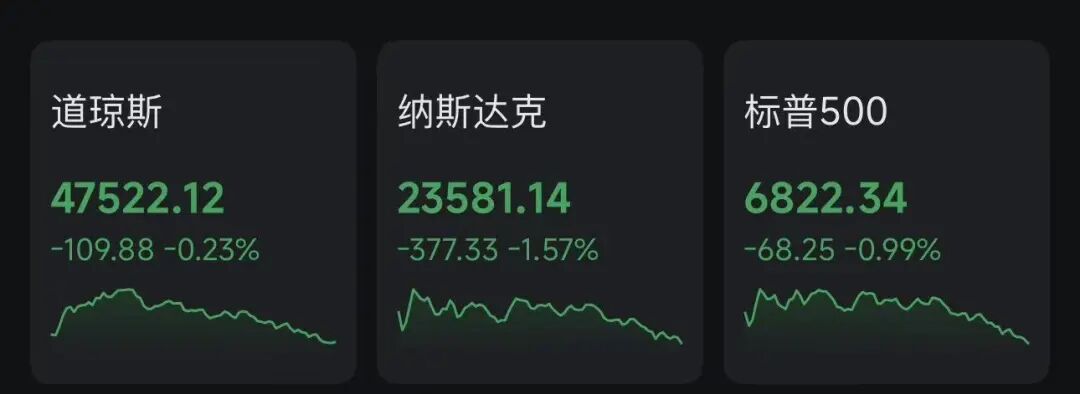
Group 1: U.S. Economic Policy Changes - The U.S. Senate voted to terminate President Trump's comprehensive tariff policy with a vote of 51-47, which includes ending the national emergency declared for global tariffs [1] - The Senate has also approved resolutions to cancel tariffs imposed on Canada and Brazil, but these resolutions face challenges in the House of Representatives [1] - The U.S. government shutdown has delayed the release of key economic data, including GDP, employment, and trade figures, leading to significant financial losses for businesses [2] Group 2: Stock Market Performance - On October 30, U.S. stock indices fell, with the Nasdaq down 377.33 points (1.57%), S&P 500 down 0.99%, and Dow Jones down 0.23% [3] - Meta Platforms saw a significant drop of over 11%, losing $214 billion in market value, marking its largest single-day decline in three years [3] - Tesla's market value decreased by $71.2 billion after a drop of over 4% in its stock price [3] Group 3: Company Earnings Reports - Amazon reported third-quarter net sales of $180.17 billion, exceeding expectations, but its operating profit fell short of forecasts [8] - Apple achieved fourth-quarter revenue of $102.47 billion, a 7.9% year-over-year increase, with net profit reaching $27.47 billion [10] - Apple's CFO announced significant investments in artificial intelligence and projected a gross margin of 47% to 48% for the upcoming quarter [11] Group 4: Market Reactions and Predictions - The market is reacting to the potential for a rate cut by the Federal Reserve, with a 74.7% probability of a 25 basis point cut in December [20] - Analysts suggest that the current economic conditions, including inflation and employment pressures, may lead to continued rate cuts [22] - The relationship between the Federal Reserve and the White House remains tense, with potential implications for monetary policy independence [22]





当理想变成市值:OpenAI的“自救时刻”
3 6 Ke· 2025-10-31 00:20
Core Insights - OpenAI, co-founded by Elon Musk, is preparing for an IPO, potentially valued at $1 trillion, marking a significant event in capital history [1] - The IPO is seen not just as a financial maneuver but as a "civilizational self-rescue," redefining the ownership of intelligence through commercial contracts and financial leverage [1][6] - OpenAI's financial struggles necessitate this move, as it faces a significant funding gap despite holding advanced AI models [2][3] Financial Situation - OpenAI's revenue for the first half of 2025 is projected at approximately $4.5 billion, while expenses are expected to exceed this, leading to a forecasted loss of at least $14 billion [2] - The company anticipates consuming $115 billion by 2029, highlighting a substantial funding shortfall [2] - OpenAI has signed infrastructure contracts totaling over $15 trillion, including a $500 billion data center plan and a $300 billion cloud computing agreement with Oracle [2] Structural Challenges - OpenAI's complex legal structure, with a non-profit parent company overseeing a for-profit subsidiary, has limited its fundraising capabilities [3][4] - The dual structure creates a conflict between the mission of benefiting humanity and the expectations of investors, complicating fundraising efforts [3] Governance and Reorganization - OpenAI has recently restructured to form OpenAI Group PBC, allowing for greater flexibility in financing and equity expansion while maintaining some non-profit oversight [4][6] - This restructuring is seen as a necessary step to align with capital market expectations while preserving a moral narrative [5][6] Market Context - The upcoming IPO is viewed as a pivotal moment for the AI sector, transitioning from a phase of excitement to one focused on profitability [7][9] - OpenAI's IPO is expected to serve as a "milestone" for the assetization of AI, allowing for the packaging of long-term costs and potential returns into a tradable capital model [9][10] Broader Implications - The IPO is not merely a financial event but a transformation of AI from a technological product to a public belief system, with OpenAI becoming a central figure in this shift [11][15] - This transition signifies a macroeconomic shift in capital from traditional sectors to AI and computational assets, with OpenAI's valuation potentially influencing the entire AI ecosystem [10][11]


深夜大跳水,暴跌11%,创三年来最大跌幅
Feng Huang Wang Cai Jing· 2025-10-30 23:00
Market Overview - The U.S. stock market faced pressure with all three major indices closing lower: Nasdaq down 1.57%, S&P 500 down 0.99%, and Dow Jones down 0.23%, primarily driven by declines in technology stocks [1] - Meta's stock fell 11.33%, marking its largest drop in three years, while Microsoft's stock decreased by 2.92%, as investors expressed concerns over rising expenditures in the AI sector [1] Semiconductor Sector - The semiconductor sector also experienced a downturn, with the Philadelphia Semiconductor Index dropping 1.53%, where 22 out of 30 component stocks declined, including AMD down 3.59%, Broadcom down 2.46%, and Nvidia down 2%, with its market value falling below $500 billion [2] - Analyst Matt Maley from Miller Tabak indicated that while this does not suggest an imminent AI bubble burst or a major market reversal, it does increase the likelihood of a short-term pullback [2] Chinese Stocks - Most popular Chinese stocks also saw declines, with notable drops including Xiaoma Zhixing down 6.79%, Baidu down 4.54%, Alibaba down 3.36%, Tencent Music down 3.23%, JD down 2.88%, Li Auto down 2.34%, NIO down 1.82%, Pinduoduo down 1.5%, and Xpeng down 0.99% [2] Economic Concerns - Ongoing debates regarding the U.S. economic fundamentals and policy direction were highlighted, with Goldman Sachs CEO David Solomon warning that if U.S. economic growth does not accelerate, rising debt levels could pose a "cleansing" risk to the economy [2] - Solomon noted that fiscal stimulus and aggressive fiscal operations have become deeply embedded in the U.S. and other economies, exacerbated by pandemic-related measures, and emphasized that the key to overcoming these challenges lies in growth [2] Recession Outlook - Solomon also stated that the likelihood of a recession in the near term is "low" and dismissed concerns that a few bankruptcy cases could trigger a systemic credit crisis in the U.S. [3] Federal Reserve Criticism - U.S. Treasury Secretary Scott Bessen criticized the Federal Reserve's recent cautious statements, suggesting that the Fed needs comprehensive reform despite appreciating the recent 25 basis point rate cut [4] - Bessen pointed out that the Fed's inflation forecasts have been inaccurate and indicated plans to conduct a second round of candidate interviews in early December to select a successor for Fed Chair Jerome Powell, aiming for a leader who can reshape the Fed's internal processes and operations [4]


深夜大跳水!暴跌 11%,创三年来最大跌幅
凤凰网财经· 2025-10-30 22:47
Market Overview - The US stock market faced pressure with all three major indices closing lower: Nasdaq down 1.57%, S&P 500 down 0.99%, and Dow Jones down 0.23% [1] - Technology stocks were the primary drag on the market, with Meta's stock dropping 11.33%, marking its largest decline in three years, and Microsoft's stock falling 2.92% due to investor concerns over rising expenditures in the AI sector [1] Semiconductor Sector - The semiconductor sector also experienced a downturn, with the Philadelphia Semiconductor Index falling 1.53%, where 22 out of 30 component stocks declined [2] - Notable declines included AMD down 3.59%, Broadcom down 2.46%, and Nvidia down 2%, with Nvidia's market capitalization dropping below $500 billion [2] Economic Concerns - There is ongoing debate regarding the US economic fundamentals and policy direction, with Goldman Sachs CEO David Solomon warning of "clearing" risks if economic growth does not accelerate amid rising debt levels [3] - Solomon emphasized that the core solution to the economic predicament lies in growth, despite a low probability of an imminent recession [3] Criticism of Federal Reserve - US Treasury Secretary Scott Bessenet criticized the Federal Reserve for its cautious stance and outdated practices, suggesting a need for comprehensive reform [4] - Bessenet expressed dissatisfaction with the Fed's inflation predictions and its GDP and inflation forecasts, which he deemed consistently inaccurate [4] Leadership Changes in Federal Reserve - Bessenet announced plans to conduct a second round of interviews for candidates to succeed Fed Chair Jerome Powell, aiming for a new leader who can reshape the Fed's internal processes and operations [5]

Broadcom’s Boom Has Investors Euphoric - And That’s Exactly Why I’m Cautious (NASDAQ:AVGO)
Seeking Alpha· 2025-10-30 21:55
Group 1 - The article discusses Broadcom Inc. and reflects on a previous rating of the stock as a "Hold" while expressing caution in the conclusion [1] - The analysis emphasizes the importance of high-quality companies that can outperform the market over the long term due to competitive advantages and defensibility [1] - The focus of the analysis is primarily on European and North American companies, without restrictions on market capitalization [1] Group 2 - The author has a beneficial long position in META shares, indicating a personal investment interest [2] - The article is written independently, expressing the author's own opinions without external compensation [2] - There is no business relationship with any company mentioned in the article, ensuring an unbiased perspective [2] Group 3 - Seeking Alpha clarifies that past performance does not guarantee future results, emphasizing the independent nature of the views expressed [3] - The platform does not provide recommendations or advice on investment suitability for individual investors [3] - Analysts contributing to Seeking Alpha may not be licensed or certified, highlighting the diverse backgrounds of contributors [3]
Could This AI Pick Surge 700% in 3 Years?
Yahoo Finance· 2025-10-30 20:37
Group 1 - Broadcom's stock has increased over 700% in the past three years, primarily driven by sales of AI chips [1][8] - The company offers a diverse range of networking, optical, and custom accelerator chips, differentiating it from competitors like Nvidia [1][4] - In fiscal 2024, Broadcom generated 58% of its revenue from semiconductor solutions and 42% from infrastructure software, showcasing its diversification strategy [5][6] Group 2 - Revenue growth for Broadcom was 21% in FY 2022, 8% in FY 2023, and accelerated to 44% in FY 2024 [7] - Adjusted EBITDA growth was 27% in FY 2022, 10% in FY 2023, and 37% in FY 2024 [7] - Free cash flow growth was 22% in FY 2022, 8% in FY 2023, and 10% in FY 2024 [7] Group 3 - In fiscal 2023, Broadcom's growth slowed due to challenges in non-AI markets, but it rebounded in fiscal 2024 with a 220% increase in AI chip sales, which constituted 24% of total revenue [6][9]
This High-Yield Vanguard ETF Has 15% of Its Portfolio Invested in Just 3 Dividend Stocks. Here's Why That's a Good Thing.
Yahoo Finance· 2025-10-30 20:12
Core Insights - The increasing popularity of exchange-traded funds (ETFs) is largely due to their ability to provide diversification, with many ETFs holding thousands of bonds or stocks, thus offering deep-bench portfolios [1] - However, diversification can be misleading, as capitalization-weighted index funds and ETFs may be heavily concentrated in a few stocks, particularly with the rise of the "Magnificent Seven" stocks, where just five stocks account for over 27% of S&P 500 ETFs [2] - This high level of concentration raises concerns among investors, yet the index's returns remain strong due to the prominence of a small number of stocks [3] ETF Analysis - The Vanguard Dividend Appreciation ETF, with $98 billion in assets under management, is a leading dividend ETF, but it is concentrated with just three stocks—Broadcom, Microsoft, and JPMorgan Chase—making up approximately 15% of its portfolio [5] - The ETF's benchmark, the S&P U.S. Dividend Growers Index, includes companies that have increased dividends for at least 10 consecutive years while excluding the top 25% with the highest yields, with components weighted by market capitalization [6] - Broadcom, Microsoft, and JPMorgan are reliable dividend growers, maintaining manageable payout ratios while allowing for long-term growth, which justifies their significant presence in the ETF [7]
