Broadcom(AVGO)

Search documents
Broadcom: OpenAI Deal Changes Everything - Custom AI Leader More Compelling (Upgrade)
Seeking Alpha· 2025-10-27 13:00
Core Insights - The article presents a contrasting view of the analyst's portfolio, highlighting a diverse range of stocks that the analyst is interested in [1] Group 1 - The analyst has a beneficial long position in shares of AVGO, NVDA, AMZN, and GOOG, indicating a positive outlook on these companies [2] - The article emphasizes that the analysis is for informational purposes and should not be considered professional investment advice, urging investors to conduct their own research [3] - It is noted that past performance is not a guarantee of future results, and no specific investment recommendations are provided [4]



Commerzbank supervisory board reviews meeting between former CEO and UniCredit chief
Reuters· 2025-10-27 12:57
Core Viewpoint - Commerzbank's supervisory board is investigating potential duty violations by former CEO Manfred Knof related to a meeting with UniCredit's CEO Andrea Orcel in September 2024 [1] Group 1 - The supervisory board's investigation focuses on whether Knof's actions constituted a breach of his responsibilities [1] - The meeting with Orcel raises concerns about compliance with corporate governance standards [1] - This inquiry reflects ongoing scrutiny of executive conduct within the banking sector [1]

Analyst Recommends Broadcom (AVGO) Amid Sora AI, $2 Trillion Market
Yahoo Finance· 2025-10-27 12:16
Group 1 - Broadcom Inc (NASDAQ:AVGO) is highlighted as one of the best AI stocks amid Federal Reserve rate cuts, with a recommendation for investors to consider major semiconductor stocks due to rising demand [1][2] - The total addressable market (TAM) for compute and networking in the semiconductor industry is projected to reach $2 trillion by the end of the decade, driven by demand from AI applications, autonomous vehicles, and robotics [3] - ClearBridge Dividend Strategy noted that investments in Broadcom and Oracle have performed well, benefiting from their strong fundamentals and ability to capitalize on AI opportunities, with both stocks experiencing significant gains in September due to robust earnings [4] Group 2 - Analysts recommend a focus on elite semiconductor companies, specifically naming Nvidia, Broadcom, and AMD as key players in the AI space [3] - The demand for AI video applications is expected to boost the semiconductor market, with significant inferencing requirements highlighted by new technologies like Sora AI [3] - The investment approach emphasizes selecting companies with strong management teams and solid fundamentals, which has led to profitable outcomes in the evolving AI landscape [4]
史上最大芯片交易,全靠几个人拍板?
半导体芯闻· 2025-10-27 10:45
Core Insights - OpenAI's CEO Sam Altman and his executive team have led a series of complex partnership deals worth up to $1.5 trillion, closely tying the company's fate to several major tech giants [1] - Altman bypassed traditional investment banking and legal teams, negotiating directly with companies like NVIDIA, Oracle, AMD, and Broadcom for long-term agreements related to chip and computing infrastructure [1][2] - The partnerships are structured to stimulate chip manufacturing and R&D capacity, with financial details to be finalized later, allowing for flexibility in procurement during financial constraints [2][3] Partnership Dynamics - The negotiation approach relies heavily on internal team members rather than external advisors, simplifying the process and reducing resistance [4] - Notable partnerships include a $1 trillion investment from NVIDIA in exchange for $350 billion in chip purchases, and a $300 billion, five-year agreement with Oracle [4][5] - OpenAI's collaboration with CoreWeave began with a $11.9 billion computing supply agreement, which later expanded to $22 billion, significantly increasing CoreWeave's stock price [3] Executive Team Contributions - Key figures in the negotiation process include Greg Brockman, CFO Sarah Friar, and Peter Hoeschele, who have been instrumental in executing Altman's vision [2][3] - Sarah Friar, with a background in finance and previous roles at Goldman Sachs and Nextdoor, plays a crucial role in ensuring the financing of these deals [3] - The internal team is focused on achieving Altman's ambitious goal of "1 gigawatt per week" in computing power, with a dedicated team handling the execution details of various agreements [3]


芯片大厂员工,戴上金手铐
半导体芯闻· 2025-10-27 10:45
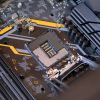
Core Insights - The article discusses the current challenges faced by chip manufacturers, particularly in the context of rising employee compensation linked to stock performance amid the AI boom [2][3] - Companies like NVIDIA, AMD, and Broadcom are implementing retention strategies, including stock-based compensation, to keep talent in a competitive market [2][5] Employee Compensation and Retention Strategies - Employees at chip companies are seeing significant increases in stock-based compensation, with some expecting to earn millions [2][3] - Stock rewards are structured to vest over time, incentivizing long-term employment and penalizing early departures [2][3] - For instance, NVIDIA employees may take up to four years to receive full stock compensation, but the rising stock value has led some to enter a "semi-retirement" state [2][3] Stock Performance and Employee Wealth - Since January 2023, the stock prices of Broadcom, NVIDIA, and AMD have outperformed other tech giants like Google and Amazon [3] - An employee at Broadcom estimated their restricted stock units (RSUs) to be worth over six times their annual salary, indicating substantial wealth accumulation [3][4] - Data from Levels.fyi shows that RSUs granted to NVIDIA employees in 2023 have increased in value by over 350%, with potential losses exceeding $500,000 for those who leave before full vesting [4][5] Impact on Employee Behavior and Company Culture - The retention strategies have led to a significant reduction in employee turnover rates, with NVIDIA's rate dropping from 5.3% to 2.5% [5] - Employees with higher stock values may exhibit different work behaviors, including less opposition in meetings, as they are more invested in the company's success [5][6] - The concept of "golden handcuffs" is prevalent, as employees are reluctant to leave due to the high value of their unvested stock options [5][6] Innovative Compensation Mechanisms - NVIDIA has adopted a "front-loaded vesting" mechanism, allowing new hires to receive a larger portion of their stock grants in the first year, similar to signing bonuses [6] - This approach aligns economic returns with employee performance, as underperforming employees may see reduced stock rewards in subsequent years [6]

不请投行,不请律所:OpenAI“独立完成”1.5万亿美元的交易
Hua Er Jie Jian Wen· 2025-10-27 09:49
Core Insights - OpenAI's CEO Sam Altman and his core executive team have led a significant chip supply deal valued at $1.5 trillion, bypassing external advisors to expedite the process [1][2] - The urgency of the AI arms race has overshadowed traditional business prudence, with OpenAI prioritizing chip acquisition over financial and legal details [2] Group 1: Transaction Leadership - Altman envisioned the partnerships, while CFO Sarah Friar and President Greg Brockman executed the structural design and governance arrangements [3] - Brockman, a founding member since 2015, and Friar, who joined from Nextdoor, played crucial roles in ensuring financing support for these transactions [3] - Hoeschele leads a small team focused on enhancing computational supply to meet Altman's ambitious goal of 1 gigawatt per week [4] Group 2: CoreWeave Model - OpenAI's recent negotiations stem from a $11.9 billion agreement with CoreWeave, which has since expanded to over $22 billion, reflecting a significant increase in CoreWeave's stock price [5] - Subsequent deals often initiated by chip companies seeking collaboration highlight the trust established between Altman and his counterparts [5] Group 3: Direct Engagement with Chip Giants - OpenAI and Nvidia reached a deal without external advice, with Nvidia agreeing to invest up to $100 billion in exchange for OpenAI's commitment to spend up to $350 billion on chips [6] - The agreement with AMD followed years of discussions, resulting in AMD granting OpenAI warrants to purchase up to 10% of its shares at a nominal price [6] - OpenAI's $300 billion partnership with Oracle originated from a chance opportunity when a data center site became available [7] Group 4: Expansion of Advisory Team - Altman has expanded his advisory team by hiring Mike Liberatore, former CFO of xAI, to lead financing efforts for AI infrastructure [8]
揭秘OpenAI不同寻常的10万亿交易:奥特曼核心圈子主导、避开外部顾问
Feng Huang Wang· 2025-10-27 03:07
Core Insights - OpenAI CEO Sam Altman and his core executive team led a significant $1.5 trillion deal with minimal external advisory involvement, linking OpenAI's future with major global companies [1] - The unconventional deal structure has drawn criticism from analysts due to a lack of detailed financial terms and a circular structure binding suppliers, investors, and customers [2] - Altman's team prioritized the technical aspects of chip transactions over financial details, allowing for flexibility in scaling chip orders based on future demand [2] Executive Team Dynamics - Altman is seen as the visionary, while CFO Sarah Friar and President Greg Brockman play crucial roles in executing the deal structures and governance mechanisms [3] - Friar, a former CEO of Nextdoor and an experienced financial analyst, ensures that the transactions receive necessary funding support [3][4] - Brockman, a founding member of OpenAI, has a background in technology and finance, contributing to the strategic direction of the deals [3] Financial Advisory and Deal Structure - Michael Klein, a former Citigroup banker, has been relied upon for financial advisory in financing agreements, though he did not participate in chip supply transactions [4] - A small team led by Peter Hoeschele is tasked with increasing computational supply to meet Altman's ambitious weekly target of 1 gigawatt [4] Transaction Examples - OpenAI's recent negotiations follow a model first tested with CoreWeave, resulting in a $11.9 billion computing services agreement that has since expanded to over $22 billion [5] - Many of the deals initiated by chip companies were based on trust between Altman and his partners, simplifying the negotiation process [6] - Notable transactions include a $100 billion investment from NVIDIA in exchange for OpenAI purchasing $35 billion worth of chips, and a long-term agreement with AMD involving warrants for equity [6][7] Strategic Partnerships - OpenAI's collaboration with Oracle, valued at $300 billion over five years, emerged from a data center project that OpenAI quickly took over [7] - Altman is expanding his advisory team, recently hiring Mike Liberatore from Elon Musk's xAI to oversee financing for AI infrastructure [7]
海外大厂资本开支动作密集 AI产业持续高景气
Zheng Quan Shi Bao Wang· 2025-10-27 01:15
Core Insights - Recent capital expenditure activities by major overseas companies indicate a robust growth trend in the AI sector, with significant collaborations and agreements being established [1] Group 1: Major Collaborations and Agreements - Google has partnered with Anthropic for a multi-billion dollar collaboration to provide extensive computing power for AI model training and inference [1] - Oracle has secured a five-year agreement worth $300 billion with OpenAI, while also procuring GPUs from Nvidia and AMD [1] - OpenAI has reached a total of 26GW data center deployment agreements with Nvidia, AMD, and Broadcom, along with a $22.4 billion computing power leasing agreement with CoreWeave [1] Group 2: Investment Recommendations - The ongoing developments in the AI field are expected to lead domestic and international companies to continuously revise their capital expenditure upwards [1] - Suggested areas of focus include: 1. Domestic production sectors 2. Industrial software and intelligent agent sectors 3. AI application-related entities, particularly those represented by Alibaba and other domestic internet giants [1] - Emphasis on the need for data governance in domestic enterprises, which lags behind international standards, indicating that AI applications will require more preparatory work [1] - Integration platforms like OA+ERP are expected to benefit directly from these developments [1] - Certain vertical AI applications, particularly in healthcare, education, and marketing, are anticipated to generate revenue more rapidly [1] - Cost reduction opportunities are seen in AI coding and multi-modal generation [1] - Local inference is gradually increasing, benefiting service and cloud providers [1] - Recommendations include focusing on edge AI and related industry chains [1]

Should You Forget IonQ and Buy 2 Artificial Intelligence (AI) Stocks Right Now?
The Motley Fool· 2025-10-27 01:07
Core Viewpoint - IonQ's quantum computing opportunity is considered riskier compared to established AI companies, as the real-world benefits of quantum computing are projected to be years away [1][10]. Quantum Computing - Quantum computing has the potential to revolutionize various industries, including pharmaceuticals, materials science, AI, and cybersecurity, as the technology matures [1]. - IonQ utilizes trapped ions for computations, which may provide more accurate and scalable solutions than other quantum hardware [2]. Artificial Intelligence Companies - Investors are advised to focus on AI opportunities, which have more immediate growth potential compared to quantum computing [3]. - Taiwan Semiconductor (TSMC) is a dominant player in advanced semiconductor manufacturing, holding approximately 90% of the advanced processor market [6]. - TSMC reported a 30% increase in revenue to $33.1 billion and a 39% rise in earnings to $2.92 per ADR in the latest quarter [7]. - Broadcom is a leading designer of ASICs for AI and cloud computing, with significant partnerships, such as with OpenAI for AI accelerators [8][9]. - Broadcom's AI revenue is booming, and the company is expected to generate billions in sales from its collaboration with OpenAI [9]. Investment Outlook - IonQ's recent quarter sales were only $21 million against a net loss of $178 million, indicating a high-risk investment [10]. - TSMC and Broadcom are established leaders in the AI market, showing significant sales and earnings growth, making them more favorable investment options [11][12].


这些芯片公司员工,收入飙升
半导体行业观察· 2025-10-27 00:51
Core Insights - The chip manufacturing industry is currently facing challenges despite the surge in valuations due to the AI boom, leading to significant increases in employee compensation tied to stock prices [3][4] - Companies like Nvidia, AMD, and Broadcom are implementing stock-based compensation strategies to retain talent, creating a "golden handcuff" effect that discourages employees from leaving [3][5] Group 1: Employee Compensation and Retention - Employees at chip manufacturers can take up to four years to fully vest their stock bonuses, with some already receiving substantial compensation due to rising stock values [4][5] - Nvidia's stock-based compensation has led some employees to adopt a "semi-retirement" mindset, as they weigh the benefits of staying in a high-paying job against the potential loss of unvested stock [4][5] - Broadcom employees have reported that their restricted stock units (RSUs) can be worth over six times their salary, indicating the significant financial incentive to remain with the company [4][5] Group 2: Impact of Stock Performance - Since January 2023, stocks of chip manufacturers like Broadcom, Nvidia, and AMD have outperformed other tech giants, with Nvidia employees seeing stock awards increase in value by over 350% since their hiring [4][5] - A former Broadcom employee estimated that unvested RSUs could be worth around $500,000, highlighting the financial implications of leaving the company prematurely [5] - Nvidia's CEO has emphasized the importance of stock-based compensation in employee retention, with the company's turnover rate dropping significantly [6] Group 3: Changes in Compensation Strategies - Nvidia has adopted a strategy similar to companies like Google and Uber, allowing for "early vesting" of stock options, which can attract top talent by providing immediate financial rewards [7] - The trend in the industry is shifting towards offering more stock options rather than higher salaries or bonuses, which aligns with employee preferences for equity compensation [7] - Broadcom has reported a voluntary turnover rate lower than the tech industry benchmark, attributing this to effective stock-based retention strategies [6]