BYD(BYDDY)

Search documents
比亚迪的前世今生:王传福掌舵三十年铸就多元业务格局,汽车业务营收占比超八成,海外扩张步伐加快
Xin Lang Cai Jing· 2025-10-30 15:28
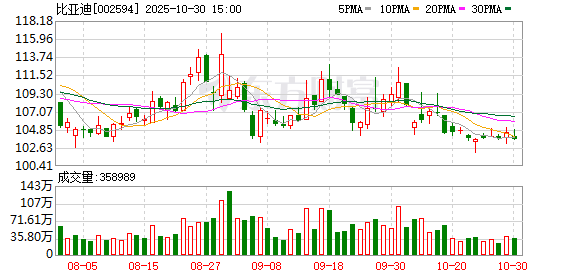
Core Viewpoint - BYD is a leading player in the global new energy vehicle industry, with a comprehensive grasp of core technologies across the entire supply chain, including batteries, motors, electronic controls, and automotive-grade semiconductors [1] Group 1: Business Performance - In Q3 2025, BYD achieved a revenue of 566.27 billion yuan, ranking first in the industry, significantly higher than the second-ranked company, Seres, which reported 110.53 billion yuan [2] - The net profit for the same period was 24.23 billion yuan, also leading the industry, surpassing Seres' 5.64 billion yuan [2] Group 2: Financial Ratios - BYD's debt-to-asset ratio in Q3 2025 was 71.35%, down from 77.91% year-on-year and below the industry average of 77.17%, indicating strong solvency [3] - The gross profit margin for the same period was 17.87%, lower than the previous year's 20.77% but still above the industry average of 14.85%, reflecting robust profitability [3] Group 3: Shareholder Information - As of September 30, 2025, the number of A-share shareholders increased by 98.40% to 642,500, with an average holding of 5,427.65 shares, up 51.21% [5] - Hong Kong Central Clearing Limited became the fourth-largest shareholder, increasing its holdings by 13.7 million shares to 265 million shares [5] Group 4: Sales and Market Trends - In September, BYD's total new energy vehicle sales reached 396,000 units, a year-on-year decrease of 6% but a month-on-month increase of 6% [5] - The sales of battery electric vehicles (BEVs) were 205,000 units, up 24% year-on-year, while plug-in hybrid electric vehicles (PHEVs) saw a 26% year-on-year decline [5] - Exports reached 71,000 units, a significant increase of 134% year-on-year, although there was a month-on-month decline of 12% [5] Group 5: Future Projections - Revenue projections for 2025 to 2027 are estimated at 990.81 billion yuan, 1,188.97 billion yuan, and 1,397.04 billion yuan, respectively, with net profits expected to be 45.40 billion yuan, 60.35 billion yuan, and 70.42 billion yuan [6]


比亚迪,三季报出炉!研发费用大增
Zhong Guo Zheng Quan Bao· 2025-10-30 15:23
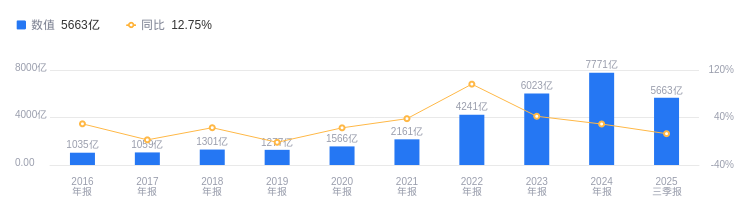
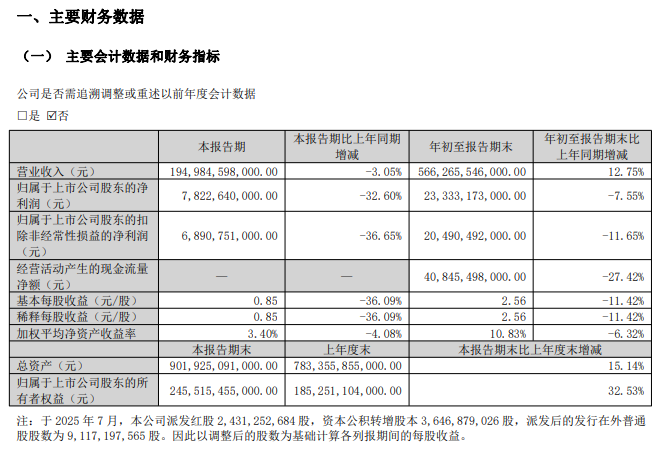
Core Viewpoint - BYD's Q3 2025 financial results show a decline in revenue and net profit, indicating challenges in the competitive landscape and cost pressures [1][4]. Financial Performance - In Q3 2025, BYD reported revenue of 194.985 billion yuan, a year-on-year decrease of 3.05%, and a net profit of 7.823 billion yuan, down 32.60% [1]. - For the first three quarters of 2025, BYD's revenue reached 566.266 billion yuan, an increase of 12.75% year-on-year, while net profit was 23.333 billion yuan, a decline of 7.55% [3]. - Operating costs for the first three quarters were 465.054 billion yuan, up 14.76%, outpacing revenue growth by approximately 2 percentage points [4]. Research and Development - BYD's R&D expenses for the first three quarters amounted to 43.748 billion yuan, reflecting a growth of 31.30%, which exceeds the net profit of 23.333 billion yuan during the same period [4]. - Cumulatively, BYD has invested over 220 billion yuan in R&D [4]. Cash Flow and Assets - The net cash flow from operating activities for the first three quarters was 40.845 billion yuan, a decrease of 27.42% year-on-year [4]. - As of September 2025, BYD's total assets were 901.925 billion yuan, a 15.14% increase from the end of the previous year, with inventory rising to 152.973 billion yuan, up 31.83% [4]. Market Performance - BYD's global sales from January to September reached 3.26 million units, a year-on-year increase of 18.64%, achieving 70.87% of its annual target of 4.6 million units [5]. - The overseas market has been a significant growth driver, with sales reaching 701,600 units, a 132% increase year-on-year [5]. - BYD's intelligent models, particularly those equipped with the "Heavenly Eye" driver assistance system, have become key contributors to sales, with over 1.7 million units sold [5]. Strategic Developments - BYD has introduced several technologies this year, including the "Heavenly Eye" driver assistance system and the "MW Flash Charge" technology, contributing to stable sales growth [5]. - The company is expanding its market presence in Japan with the launch of the K-EV BYD RACCO and the introduction of its first plug-in hybrid model, the Sea Lion 06 DM-i [5]. - Citigroup's research predicts BYD's sales will reach 4.67 million and 5.39 million units in the next two years, driven by high-end brand growth and strong overseas sales [5].
比亚迪股份(01211) - 建议修订公司章程及相关议事规则
2025-10-30 14:15
香港交易及結算所有限公司及香港聯合交易所有限公司對本公告的內容概不負責,對其準確 性或完整性亦不發表任何聲明,並明確表示概不就因本公告全部或任何部分內容而產生或因 倚賴該等內容而引致的任何損失承擔任何責任。 比亞迪股份有限公司 BYD COMPANY LIMITED (在中華人民共和國註冊成立的股份有限公司) 股份代號:01211(港幣櫃台)及81211(人民幣櫃台) 網站:http://www.bydglobal.com 建議修訂公司章程及 相關議事規則 根據現行有效的《中華人民共和國公司法》、《上市公司章程指引》(中國證監會公 告[2025]6號)、《上市公司股東會規則》(中國證監會公告[2025]7號)以及《深圳證 券交易所股票上市規則(2025年4月修訂)》、《深圳證券交易所上市公司自律監管 指引第1號 – 主板上市公司規範運作(2025年5月修訂)》等法律法規、規章和規範 性文件的規定,並結合公司治理的實際需要,董事會謹此宣佈,於二零二五年 十月三十日決議對《公司章程》及其他相關議事規則作出若干修訂(統稱「建議修 訂」)。《公司章程》的具體修訂如下: 1 | 序號 | 修訂前 | 修訂後 | | - ...
Why BYD Has a Real Edge in the Global EV Race
Yahoo Finance· 2025-10-30 14:00
Core Insights - The article highlights BYD Company as the world's largest and profitable electric vehicle (EV) producer, contrasting it with Tesla's dominance in the EV conversation [1] Group 1: Competitive Advantages - BYD's competitive edge is attributed to three main advantages: deep vertical integration, manufacturing scale, and proven leadership [2] - Vertical integration allows BYD to design and manufacture nearly all components in-house, including batteries, semiconductors, and powertrains, which mitigates supply chain risks and cost fluctuations [5][6] - This integration results in lower costs, faster production cycles, and consistent profitability, setting BYD apart from other automakers [7] Group 2: Manufacturing Scale - BYD achieved remarkable scale, selling 4.27 million new-energy vehicles in 2024, representing a 41% year-over-year increase, which is more than double Tesla's total production [8] - The scale advantage allows BYD to drive down unit costs, enabling aggressive pricing while maintaining margins [10] - Additionally, the scale creates efficiencies in production, enhancing the company's credibility as it seeks to expand into international markets [10]
比亚迪前三季度营收5663亿创新高 花旗看好其发展后劲
Xin Hua Cai Jing· 2025-10-30 13:42
Core Viewpoint - BYD's third-quarter report shows a revenue of 194.99 billion yuan and a net profit of 7.82 billion yuan, with a quarter-on-quarter growth of 23%, despite increased industry competition and cost pressures [1][2]. Financial Performance - In the third quarter, BYD's revenue decreased by 3.05% year-on-year, marking a rare single-quarter revenue decline, while net profit saw a quarter-on-quarter increase of 23% [2][3]. - For the first three quarters, BYD achieved a revenue of 566.27 billion yuan, a year-on-year increase of 13%, and a net profit of 233.33 billion yuan, which is significantly lower than the 437.5 billion yuan spent on R&D [2][3]. - The gross profit margin increased by 1.6 percentage points quarter-on-quarter [1]. R&D Investment - BYD's R&D expenses reached 43.75 billion yuan in the first three quarters, a 31% increase year-on-year, significantly exceeding the net profit of 23.33 billion yuan [2][3]. - Cumulatively, BYD's R&D investment has surpassed 220 billion yuan, outpacing Tesla by 10.9 billion yuan [3][4]. Sales and Market Position - BYD's global sales reached 3.26 million units in the first nine months, a year-on-year increase of 18.64%, achieving 70.87% of its annual target of 4.6 million units [4][6]. - The company remains the global leader in electric vehicle sales, with 1.61 million pure electric vehicles sold in the first three quarters, surpassing Tesla's 1.22 million [6][7]. International Expansion - BYD's overseas sales reached 701,600 units in the first nine months, a staggering 132% increase year-on-year, with expectations to exceed 1 million units in exports by 2025 [6][7]. - The company has expanded its product offerings to 117 countries and regions, with significant market shares in Brazil, Thailand, and Australia [6][7]. Future Outlook - Citigroup forecasts BYD's sales to reach 4.67 million and 5.39 million units in the next two years, driven by high-end brand growth and strong overseas sales [6][7]. - Morgan Stanley predicts that BYD's overseas sales could become a new growth driver, estimating sales of 900,000 to 1 million units for the year [7].
汽车视点 | 插混贡献率跌至15%、比亚迪面临多元挑战 专家解读车市三大变化
Xin Hua Cai Jing· 2025-10-30 13:35
Core Insights - The Chinese automotive market is at a critical turning point in 2025, characterized by slowing growth and structural differentiation, with a notable decline in the penetration rate of new energy vehicles (NEVs) and a diversified competitive landscape among brands [2][3]. NEV Market Trends - The growth rate of NEV penetration has significantly slowed, with an increase of less than 4 percentage points from January to September 2025, compared to a 12.5 percentage point increase in 2024 [3]. - The proportion of consumers opting for NEVs under the trade-in policy decreased from 60% in 2024 to 53% in early 2025, indicating a weakening driving force for NEV penetration [3]. - The penetration rate of plug-in hybrid vehicles (PHEVs) has declined from 21.1% in 2024 to 19.8% in 2025, while pure electric vehicles (EVs) continue to rise from 26.6% to 31.4% during the same period [3][4]. PHEV Market Dynamics - PHEV sales dropped sharply from 124.7 million units in 2024 to 27.2 million units in the first three quarters of 2025, leading to a decrease in their contribution to overall NEV growth from 69.7% to 15.1% [4][5]. - The weakening momentum in the PHEV market is attributed to market saturation in lower-tier cities and increased competition from fuel vehicles, which have lowered their prices significantly [5]. Competitive Landscape - The NEV market is witnessing increased competition, with brands like Geely and Leap Motor gaining market share, disrupting BYD's previous dominance [6]. - In the first nine months of 2025, Geely's NEV sales increased by 566,000 units, while Changan and Xiaomi also reported significant sales growth [6]. - Joint venture brands are also entering the NEV market aggressively, with new models achieving monthly sales of 8,000 to 10,000 units, indicating a resurgence in competition [7]. Export Market Developments - China's automotive exports reached 4.95 million units in the first nine months of 2025, a year-on-year increase of 14.8%, with expectations to exceed 7.5 million units for the entire year [8][9]. - The export growth is shifting from a few major companies to a more diversified group of manufacturers, with BYD and Chery leading the charge [9]. - The second-hand car export market is emerging as a potential growth area, with only 7% of total automotive exports in 2024, indicating significant room for expansion [9][10]. Future Outlook - The second-hand car export market is expected to grow, particularly in regions like Africa and Southeast Asia, with a projected growth rate of nearly 85% in the African market [10][11]. - Companies are advised to focus on establishing after-sales networks in key export markets and to leverage existing resources to avoid blind investments [11].
比亚迪:前三季度净利润233.33亿元 同比下降7.55%
Shang Hai Zheng Quan Bao· 2025-10-30 13:28
Core Insights - BYD reported its Q3 financial results, showing a revenue of 566.27 billion yuan for the first three quarters of 2025, representing a year-on-year growth of 12.75% [1] - The net profit attributable to shareholders decreased to 23.33 billion yuan, reflecting a year-on-year decline of 7.55% [1] - The basic earnings per share (EPS) stood at 2.56 yuan [1] Financial Performance - Revenue: 566.27 billion yuan, up 12.75% year-on-year [1] - Net Profit: 23.33 billion yuan, down 7.55% year-on-year [1] - Basic EPS: 2.56 yuan [1]
比亚迪前三季度营收5663亿,花旗看好其发展后劲
Hua Xia Shi Bao· 2025-10-30 13:23
Core Insights - BYD reported strong financial performance in Q3 2023, with revenue of 194.99 billion yuan and net profit of 7.82 billion yuan, reflecting a 23% quarter-on-quarter growth and a 1.6 percentage point increase in gross margin [1] - For the first three quarters of 2023, BYD achieved a revenue of 566.27 billion yuan, a year-on-year increase of 13%, while R&D expenses surged by 31% to 43.75 billion yuan, highlighting the company's commitment to innovation [1] - BYD's global sales reached 3.26 million units from January to September 2023, marking an 18.64% year-on-year growth, with a significant contribution from intelligent models equipped with the Tian Shen Zhi Yan driver assistance system [2] Financial Performance - In Q3 2023, BYD's revenue was 194.99 billion yuan, with a net profit of 7.82 billion yuan, indicating a positive trend despite increased industry competition [1] - The company's R&D investment for the first three quarters reached 43.75 billion yuan, significantly exceeding its net profit of 23.33 billion yuan during the same period [1] Sales and Market Expansion - BYD's global sales for the first nine months of 2023 reached 3.26 million units, achieving 70.87% of its annual target of 4.6 million units [2] - The overseas sales of BYD surged by 132% to 701,600 units, with products now available in 117 countries and regions [2] Technological Advancements - BYD's commitment to R&D is evident as it has invested over 220 billion yuan cumulatively, surpassing Tesla's R&D spending by 10.9 billion yuan this year [1] - The introduction of innovative technologies such as the Tian Shen Zhi Yan driver assistance system and the Super e-platform has contributed to stable sales growth [1] Strategic Initiatives - BYD is actively responding to national policies to support the healthy development of small and medium-sized enterprises, as indicated by a decrease in accounts payable and a shorter payment cycle to suppliers [6] - The company is expanding its market presence in Japan with the launch of the K-EV BYD RACCO and the Sea Lion 06DM-i plug-in hybrid model [4] Future Outlook - International investment banks, including Citigroup, project BYD's sales to reach 4.67 million units in 2024 and 5.39 million units in 2025, driven by high-end brand growth and technological advantages in the plug-in hybrid sector [6] - With ongoing technological innovations and an expanding product matrix, BYD is expected to continue leading the global electric vehicle industry transformation [6]
汽车视点 | 插混贡献率跌至15%、比亚迪面临多元挑战,专家解读车市三大变化
Xin Hua Cai Jing· 2025-10-30 13:21
Core Insights - The Chinese automotive market is at a critical turning point in 2025, characterized by slowing growth and structural differentiation, with a notable decline in the penetration rate of plug-in hybrid vehicles and a more diverse competitive landscape among brands [1][2]. Market Trends - The penetration rate of new energy vehicles (NEVs) has significantly slowed, with an increase of less than 4 percentage points from January to September 2025, compared to a 12.5 percentage point increase in 2024 [2]. - The plug-in hybrid market has experienced a rare decline in penetration rate, dropping from 21.1% in 2024 to 19.8% in the first three quarters of 2025, while pure electric vehicles continue to rise from 26.6% to 31.4% [2][3]. Sales Contributions - In 2024, plug-in hybrids sold 1.247 million units, contributing 69.7% to the overall increase in NEV sales, but by the first three quarters of 2025, sales plummeted to 272,000 units, contributing only 15.1% [3]. - The weakening of the plug-in hybrid market is attributed to market saturation in lower-tier cities and increased competition from fuel vehicles, which have seen a price drop, making them more appealing to consumers [3][4]. Competitive Landscape - The market is witnessing a diversification of brands, with companies like Geely and Leap Motor rapidly gaining market share, altering the previously dominant position of BYD [5]. - The interaction data from automotive apps indicates a growing consumer interest across various brands, with significant engagement metrics for new models from Geely and Xiaomi [5]. Export Market Dynamics - China's automotive exports have shown a steady increase, with 4.95 million units exported from January to September 2025, a year-on-year growth of 14.8%, and projections suggest exports could exceed 7.5 million units in 2025 [6][7]. - The export landscape is shifting from reliance on a few major companies to a more diversified group of manufacturers, with BYD and Chery leading the charge [6][7]. Second-Hand Vehicle Export Potential - The second-hand vehicle export market in China remains underdeveloped, accounting for only 7% of total automotive exports, indicating significant growth potential compared to mature markets [7][8]. - The future of second-hand vehicle exports is expected to evolve into a dual model of platform-based and self-operated businesses, focusing on local market integration and resource optimization [8].

比亚迪三季报出炉:营收5663亿元 研发费用438亿元大增31%
2 1 Shi Ji Jing Ji Bao Dao· 2025-10-30 12:54
Core Insights - BYD's Q3 report shows significant growth with revenue of 194.99 billion yuan and net profit of 7.82 billion yuan, marking a 23% quarter-on-quarter increase and a 1.6 percentage point rise in gross margin [1] - For the first three quarters of the year, BYD achieved a revenue of 566.27 billion yuan, a year-on-year increase of 13%, while R&D expenses surged by 31% to 43.75 billion yuan, highlighting the company's commitment to innovation [1] - BYD's global sales reached 3.26 million units from January to September, a year-on-year increase of 18.64%, positioning the company as the global leader in electric vehicle sales [2] Financial Performance - In Q3, BYD's revenue was 194.99 billion yuan, with a net profit of 7.82 billion yuan, reflecting a strong operational performance despite increasing industry competition [1] - The company's R&D investment for the first three quarters reached 43.75 billion yuan, significantly exceeding its net profit of 23.33 billion yuan during the same period [1] - BYD's total revenue for the first three quarters was 566.27 billion yuan, achieving a new record for the same period [1] Sales and Market Expansion - BYD's global sales for the first nine months reached 3.26 million units, completing 70.87% of its annual target of 4.6 million units [2] - The company has seen a 132% year-on-year increase in overseas sales, totaling 701,600 units, with products now available in 117 countries and regions [2] - The launch of the K-EV BYD RACCO at the Tokyo Motor Show marks BYD's strategic entry into the Japanese market, alongside the introduction of its first plug-in hybrid model [2] R&D and Technological Advancements - BYD's R&D spending has surpassed that of Tesla by 10.9 billion yuan, with cumulative R&D investment exceeding 220 billion yuan [1] - The introduction of innovative technologies such as the "Heavenly Eye" driver assistance system and the Super e-platform has been pivotal in driving sales growth [1] - The company's commitment to R&D is seen as a key factor in maintaining its competitive edge in the rapidly evolving electric vehicle market [1] Strategic Outlook - International investment banks are optimistic about BYD's growth prospects, with Citigroup projecting sales of 4.67 million and 5.39 million units for the next two years [4] - The company's strategy includes enhancing its high-end brand, leveraging its technological advantages in plug-in hybrids, and expanding its product matrix [4] - BYD is expected to continue leading the global electric vehicle industry transformation with ongoing technological innovations and a deepening global presence [4]