
Alphabet(GOOG)

Search documents
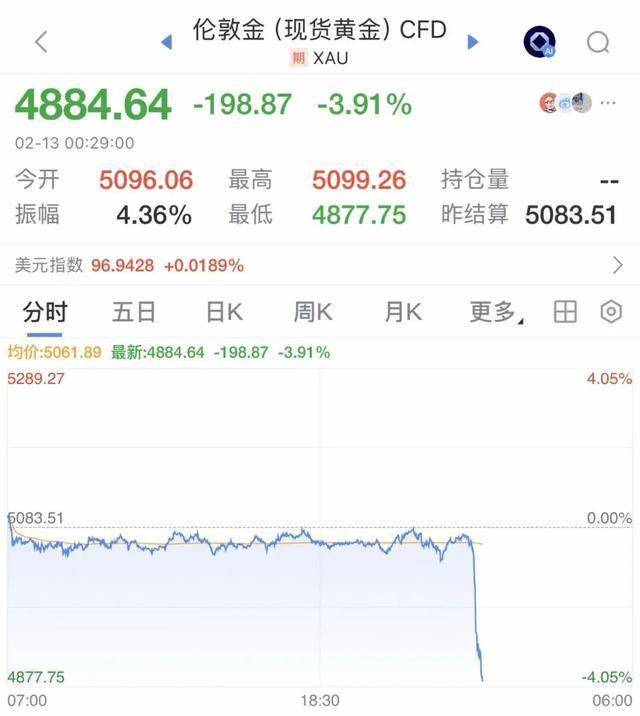
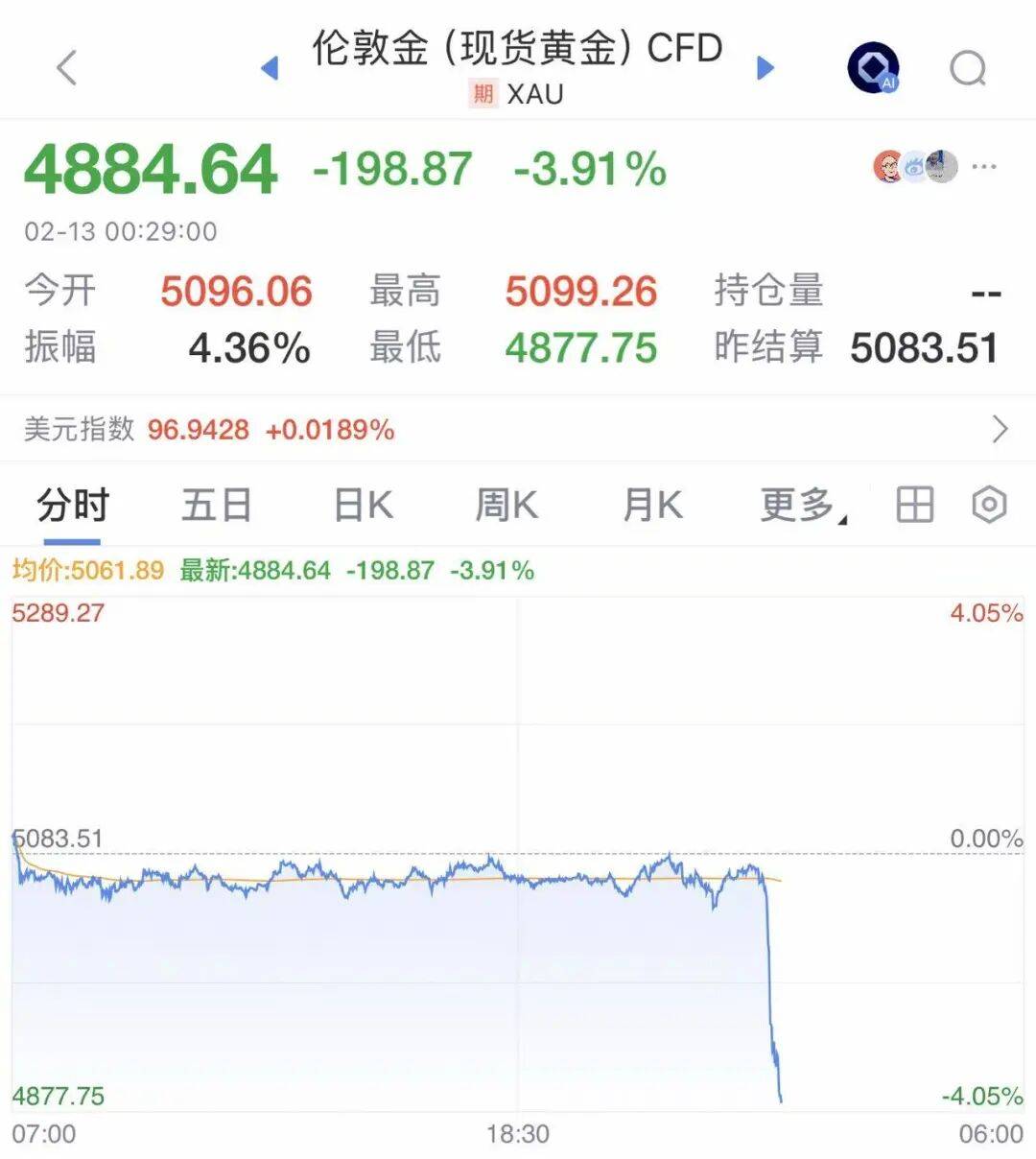
金价银价深夜跳水,白银猛跌超10%
Sou Hu Cai Jing· 2026-02-13 02:22
Group 1 - Gold prices experienced a sudden drop, with spot gold falling over 3% and nearly $200 during the day [1] - Silver prices also declined significantly, dropping over 8% [1] Group 2 - U.S. stock indices collectively fell, with the Nasdaq down over 1.5%, the Dow Jones down nearly 1%, and the S&P 500 down 1% [3] - Major tech stocks saw declines, with Apple dropping over 3% and losing more than $120 billion in market value (approximately 82 billion RMB) [5] - Other tech companies such as Microsoft, Amazon, Tesla, Meta, and Nvidia also experienced declines [5] Group 3 - Chinese concept stocks fell sharply, with the Nasdaq Golden Dragon China Index dropping nearly 3% [6]





Nasdaq slumps 2% as tech and transport stocks slide on AI disruption fears
BusinessLine· 2026-02-13 02:22
Market Overview - Wall Street indexes experienced a sharp decline, with the Nasdaq falling 2% as investors sold off tech shares and transportation stocks due to concerns over AI disruption [1][2] - The Dow Jones Industrial Average dropped 669.42 points (1.34%) to 49,451.98, the S&P 500 fell 108.71 points (1.57%) to 6,832.76, and the Nasdaq Composite decreased by 469.32 points (2.03%) to 22,597.15 [3] Sector Performance - Investors shifted from riskier sectors to more defensive investments such as utilities, consumer staples, and real estate [2] - Cisco Systems reported a quarterly adjusted gross margin below estimates, leading to a 12.3% drop in its shares, which negatively impacted the broader technology sector [5] - The S&P 500 software index fell 1.7%, with AppLovin being the largest decliner at 19.7% after disappointing fourth-quarter results [6] Transportation Sector - The Dow Jones Transportation Average fell 4%, with significant losses in companies like Landstar (down 15.6%), CH Robinson (down 14.5%), and Expeditors International (down 13.2%) [7] - Concerns about AI disruption in the transportation sector were heightened by a new tool from Algorhythm Holdings, which caused investor worries [7] Economic Indicators - A stronger-than-expected jobs report raised concerns that the Federal Reserve may be less likely to cut rates, impacting investor sentiment [4] - The latest data showed a decrease in new applications for unemployment benefits, but the decline was less than expected, indicating lingering disruptions from winter storms [4][8] Semiconductor and Technology Stocks - The Philadelphia SE Semiconductor index fell 2.5%, while Equinix shares rose 10.4% after forecasting annual revenue above estimates, driven by strong AI-linked demand [9] - Personal-computer makers faced pressure, with Lenovo warning of shipment issues due to a memory-chip shortage, affecting shares of HP (down 4.5%) and Dell Technologies (down 9%) [9]


高盛闭门会-美股互联网财报季要点-ai担忧云计算再加速-首选metaai颠覆错杀游戏股
Goldman Sachs· 2026-02-13 02:17
Investment Rating - The report indicates a favorable investment rating for Meta, highlighting it as the most attractive stock in terms of risk-reward ratio within the sector [2][6]. Core Insights - The digital advertising and cloud computing sectors are performing strongly, alleviating investor concerns regarding AI capital expenditure returns. Meta shows slight earnings, while Alphabet maintains substantial earnings, but Amazon is expected to incur losses in 2026-2027, prompting a reevaluation of long-term free cash flow valuations [2][3]. - The advertising industry is evolving towards AI and machine learning, with major players like Amazon, Meta, and Alphabet benefiting from this trend. Meta's new growth pillars in AI and its core advertising business leverage AI applications effectively, making it a compelling investment opportunity [2][6]. - Capital intensity among tech companies is expected to peak between 2025 and 2027, but investor skepticism remains regarding the returns on these expenditures. In the next six months, the market will focus more on capacity support, semiconductor industry dynamics, and data center construction [2][6]. Summary by Sections Digital Advertising and Cloud Computing - The digital advertising sector is experiencing robust growth, with search business growing nearly 17% and Meta achieving a mid-20% growth rate. The advertising ecosystem is increasingly driven by AI and machine learning, benefiting only a few large companies [5][6]. - Amazon's strong start in 2026 is overshadowed by unexpected operating profit guidance and capital expenditure intensity, leading to investor concerns about AWS growth compared to Alphabet's cloud services [3][4]. Company Performance and Valuation - Meta is highlighted as having the strongest leverage effect in AI applications within its core advertising business, making it the most attractive investment in the sector [6]. - Amazon's valuation is considered low, trading below 20 times the adjusted earnings per share for 2027, indicating a potential undervaluation [9]. - Google Cloud's (GCP) profit margin increased by 7 percentage points, but it is expected to revert to around 25%. Despite this, GCP has significant growth potential due to a doubling of backlog orders and strong overall market demand [7][8]. Future Outlook - The report anticipates that the growth rate for cloud services will remain around 45% in 2026, although profit margins may experience significant declines. Investor expectations are high regarding the conversion of backlog orders into revenue and capital expenditures into capacity [8]. - The report emphasizes the need for clearer visibility on returns from capital expenditures, as investor confidence remains low despite strong demand in the terminal market [3][4].
AI热潮再遇“当头棒喝”,纳指重挫逾2%|美股一线
2 1 Shi Ji Jing Ji Bao Dao· 2026-02-13 02:15
Group 1 - The core sentiment in the market has shifted to concerns over the disruptive potential of AI, impacting various sectors including software, legal services, and wealth management [1] - Major tech companies like Google, Meta, Microsoft, and Amazon have announced substantial capital expenditure plans totaling $650 billion for AI infrastructure expansion [1] - UBS has downgraded the rating of the US information technology sector to "neutral" due to soaring capital expenditures and increasing uncertainty in the software industry [1] Group 2 - UBS estimates that capital expenditures by large US enterprises could reach $700 billion this year, more than quadrupling from three years ago, consuming nearly 100% of their operating cash flow [2] - Concerns over the sustainability of cash flows for tech companies are affecting market sentiment, as their capital expenditures increasingly rely on debt or equity financing [2] - Bank of America suggests that the leadership of tech giants in the stock market is facing significant threats, urging investors to consider small-cap stocks as midterm elections approach [2] Group 3 - Analysts remain divided, with some like Morgan Stanley's Michael Wilson optimistic about the tech sector's revenue prospects supported by AI, suggesting that tech stocks still have room for further gains [3] - Wilson notes that companies applying AI to core business operations, rather than those developing technology and infrastructure, present more investment opportunities [3]
AI“超级代理”大战打响!四大赛道全面铺开,OpenAI、Anthropic正挑战微软们的软件帝国
Hua Er Jie Jian Wen· 2026-02-13 02:01
Core Insights - Major AI companies like OpenAI and Anthropic are launching enterprise-level AI products that challenge existing enterprise software markets, prompting traditional software vendors like Microsoft and Salesforce to accelerate their own AI tools and management platforms [1][2] Group 1: Competitive Landscape - The competition involves four main product categories: browser-based agents, computer-operable agents, agent-building tools, and agent management consoles [1][2] - OpenAI and Google provide browser-based agents capable of executing multi-step tasks, while Anthropic's Cowork and Google's Gemini Computer Use are examples of computer-operable agents [2] - Agent-building tools such as Salesforce's Agentforce and Google's Gemini Enterprise allow clients to create agents that can access various enterprise applications [2] - The agent management console market features competitors like Microsoft's Agent 365 and OpenAI's Frontier, raising questions about the necessity of multiple consoles for clients [2] Group 2: Adoption Challenges - Despite the promising outlook, new agent technologies face significant challenges before widespread adoption, including security concerns and usability issues [3] - Companies like OpenAI and Anthropic indicate that their computer-operable agents are still in research preview, suggesting they are not yet ready for large-scale enterprise deployment [3] - Hilton's CTO Onkar Birk expressed caution in adopting new subscriptions, highlighting the complexity and investment required for developing customer support agents [4] Group 3: Traditional Software Companies' Response - OpenAI's strategy involves positioning its agent command technology above traditional enterprise "record systems," which are critical for storing business data [5] - Traditional enterprise application companies like Salesforce and Microsoft have not yet taken steps to block AI agents from accessing or modifying data within their systems [5] - There is a recognition that traditional companies are utilizing technologies from OpenAI and Anthropic to support their own agents, even as these AI firms promote their competitive tools [5] Group 4: Market Dynamics - Snowflake, a database company, has released a product supported by AI models from OpenAI and Anthropic, enabling clients to develop agents for searching and retrieving business metrics [6] - The competitive landscape is characterized by high stakes, with industry leaders feeling pressure to either achieve a $1 trillion valuation or face potential failure [6]


深夜突变!金价、银价闪崩
Sou Hu Cai Jing· 2026-02-13 01:53
Group 1 - Gold prices experienced a sudden drop, with spot gold falling over 3% and nearly $200 during the day [1] - Silver prices also declined significantly, dropping over 8% [1] Group 2 - Major U.S. stock indices saw a collective plunge, with the Nasdaq down over 1.5%, the Dow Jones down nearly 1%, and the S&P 500 down 1% [2] - Apple shares fell over 3%, resulting in a market capitalization loss of over $120 billion (approximately 82 billion RMB) [2] - Other major tech stocks, including Microsoft, Amazon, Tesla, Meta, and Nvidia, also experienced declines [2] Group 3 - Specific stock movements included Tesla down 1.81%, TSMC down 1.38%, and Alibaba down 3.83% [3] - Google shares increased by 0.81%, while other tech stocks like Microsoft and Intel saw declines of 1.09% and 2.79%, respectively [3]


从xAI联创“转身”看行业局势,全球头部AI公司人才创业观察
3 6 Ke· 2026-02-13 01:53
Core Insights - The recent departures of xAI co-founders Yuhuai Tony Wu and Jimmy Ba have sparked significant industry discussion, signaling a potential shift towards smaller, AI-driven teams redefining innovation in the sector [1][2] - The trend of key personnel leaving established AI companies like OpenAI to pursue entrepreneurial ventures is becoming a notable pattern in the industry, indicating a movement from large organizations to startups [3][4] Group 1: xAI Developments - xAI's founding team has halved since its inception in 2023, with several core technical figures departing, which may impact the company's future capabilities and direction [3] - Wu's and Ba's statements reflect a broader trend in the AI industry, emphasizing the potential of small teams leveraging AI technology to create impactful solutions [2][3] Group 2: OpenAI Talent Exodus - A significant number of key personnel from OpenAI have left to establish their own startups, focusing on various aspects of AI, including safety, general intelligence systems, and AI search [4][5] - Notable startups emerging from this talent exodus include Safe Superintelligence, Thinking Machines Lab, and Perplexity AI, each targeting different niches within the AI landscape [7][8][10] Group 3: Investment and Valuation Trends - Safe Superintelligence has raised approximately $10 billion in funding, achieving a valuation of around $50 billion, with further funding rounds increasing its valuation to about $320 billion [7] - Thinking Machines Lab has also attracted significant investment, securing $20 billion in seed funding and reaching a valuation of approximately $120 billion [9] - Perplexity AI has gained traction as an early AI search tool, supported by investments from notable figures and firms, including Jeff Bezos and Nvidia [11] Group 4: Competitive Landscape - Anthropic, founded by former OpenAI employees, is focusing on large model development and has achieved a valuation of $615 billion following its E-round funding [14] - Character.AI, co-founded by former Google Brain researchers, has become a leader in AI virtual character interactions, boasting over 20 million monthly active users and a valuation of around $10 billion [26][27] Group 5: Future Outlook - The AI industry is evolving from a focus on foundational model breakthroughs to practical applications and long-term strategic planning, with a clear trend towards safety and system architecture [28] - The emergence of open-source ecosystems is enabling smaller teams and individual developers to redefine the execution capabilities of AI, suggesting a dynamic future for the industry [29]


早报|影石CEO回应年会送房送车/12306新增「低人一等座」提醒/OpenAI发布新模型,用英伟达对手芯片
Sou Hu Cai Jing· 2026-02-13 01:43
Group 1 - The State Administration for Market Regulation opposes manufacturers engaging in "involution" and selling cars at a loss, aiming to promote healthy competition in the automotive market [3] - The newly released guidelines clarify the boundaries of pricing behavior in the automotive industry, encouraging compliance and fair competition among manufacturers and sellers [3] - The guidelines specify that automotive manufacturers must not engage in pricing behaviors that aim to eliminate competitors or monopolize the market, which poses significant legal risks [3] Group 2 - OpenAI announced the release of a new real-time programming model, GPT-5.3-Codex-Spark, which is a more compact version of GPT-5.3-Codex, optimized for low-latency hardware [5][7] - The Codex-Spark model can generate over 1000 tokens per second and is currently available as a research preview for ChatGPT Pro users [5][7] - The model operates on Cerebras' Wafer Scale Engine 3, which features 40 trillion transistors and 900,000 AI cores, providing extremely low latency [7] Group 3 - Multiple automotive companies, including Geely, Chery, and BYD, have disclosed their plans for solid-state battery technology, with Geely aiming for small-scale production by 2027 and a long-term goal of mass production by 2030 [18][19][20] - Chery plans to start pilot production of solid-state batteries by 2026 and aims to validate the technology in real vehicles by 2027 [20] - BYD is focusing on sulfide solid-state batteries, expecting to achieve small-scale production by 2027 [23] Group 4 - Meizu's smartphone business is reportedly facing dissolution, with the Meizu 23 project allegedly halted [25][26] - The company has not officially responded to the rumors, and customer service has stated that no notifications regarding the business's status have been received [26] Group 5 - ByteDance is set to release the upgraded Doubao model on February 14, 2026, which will include significant enhancements to its foundational model capabilities [34][35] - The Doubao 2.0 model is expected to be a multimodal model with 1 trillion parameters, marking a substantial advancement in the company's AI capabilities [35] Group 6 - Xiaomi has launched its first-generation robot VLA model, which features 4.7 billion parameters and excels in visual language understanding and real-time execution capabilities [39][42] - The model has achieved state-of-the-art results in various benchmarks and is designed for high efficiency in real-world tasks [42] Group 7 - Lenovo reported a 72% year-on-year increase in AI-related revenue, which now accounts for 32% of the company's total revenue, driven by growth in AI PCs, smartphones, and servers [32][36] - The company has successfully navigated challenges in the global AI supply chain, maintaining its commitment to double-digit revenue growth and profitability [32]






苹果被曝新 Siri 再次延期,股价大跌4%;原荣耀 CEO 赵明官宣加入千里科技;Spotify 宣称其程序员不再写代码 | 极客早知道
Sou Hu Cai Jing· 2026-02-13 01:43
Group 1 - Apple confirmed that the AI version of Siri is still on track for release within 2026, despite reports suggesting delays, which led to a 5% drop in its stock price [1][1] - The stock price decline erased Apple's gains for the year, with a nearly 4% drop attributed to the news [1] - The company aims to stabilize investor confidence by affirming its commitment to the planned release schedule [1] Group 2 - Zhao Ming, former CEO of Honor, announced his joining of Qianli Technology, expressing excitement about building an AI business ecosystem [2] - Zhao's decision to join Qianli Technology is influenced by his belief that AI is a field worth investing in for the next 20 years [2] Group 3 - Google announced a significant upgrade to its Gemini 3 Deep Think model, designed for scientific and engineering applications, achieving high performance in complex reasoning tasks [3][3] - The upgraded model demonstrated a 48.4% score on the Humanity's Last Exam and 84.6% on ARC-AGI-2, verified by ARC Prize Foundation [3] - In addition to mathematics, the model also showed strong capabilities in chemistry and physics, achieving gold medal-level results in international competitions [3][3] Group 4 - OpenAI and Cerebras launched the GPT-5.3-Codex-Spark model, aimed at real-time programming, marking their first public collaboration [4][4] - Codex-Spark is designed for high-speed interactive software development, achieving over 1000 tokens/s inference speed [5] - OpenAI emphasized the importance of developer control in the coding process, positioning Codex-Spark as a collaborative tool [5] Group 5 - Spotify revealed that its top developers have not written any code since December 2022, attributing this to the use of an internal AI system called "Honk" [6][6] - The "Honk" system utilizes generative AI technology to enhance coding speed and efficiency, allowing for real-time code deployment [6] Group 6 - Xiaomi announced that it will provide at least 10 years of spare parts support for its first-generation SU7 model, even after its discontinuation [8] - The new generation SU7 will be showcased in various cities starting February 13, with plans for a launch event in April [8] Group 7 - BMW confirmed a global recall of several hundred thousand vehicles due to a potential fire risk associated with the starter motor, affecting 16 models produced between July 2020 and July 2022 [9][9] - The company will notify affected vehicle owners to replace the potentially defective motors [9] Group 8 - Mercedes-Benz announced a recall of 11,895 EQB electric vehicles in the U.S. due to a risk of fire from the high-voltage battery [10] - The company will replace the batteries free of charge and has advised owners to park their vehicles outdoors [10] Group 9 - Sony launched the WF-1000XM6 wireless earbuds, claiming a 25% improvement in noise-canceling performance compared to the previous model [12][12] - The new earbuds feature an upgraded processor for enhanced audio processing and improved connectivity [12] Group 10 - NeuroXess announced a significant advancement in brain-computer interface technology, enabling a paralyzed patient to perform daily activities through thought control [15][15] - The patient achieved a brain control decoding rate of 5.2 BPS, comparable to international standards [15]



DeepMind CEO:AI 会带来富足,先经历十来年洗牌
3 6 Ke· 2026-02-13 01:25
Core Insights - The AI industry is experiencing rapid changes and intense competition, with leading companies facing the risk of losing their advantages within months [6][30] - Demis Hassabis, CEO of Google DeepMind, emphasizes the importance of continuous innovation and the need for companies to adapt quickly to maintain their positions in the market [4][10] Group 1: Competition and Industry Dynamics - The competition in the AI sector is accelerating, with model updates shifting from annual to quarterly releases, indicating a race for technological advancement [7][9] - Companies are facing a significant bottleneck in computing power, which is essential for developing stronger models and deploying products effectively [10][11] - The demand for computing resources has transformed budget priorities from purchasing servers to securing computational resources [11][12] Group 2: Talent Acquisition and Retention - The AI industry is witnessing unprecedented salary offers, with reports of researchers receiving offers as high as $100 million [14] - However, Hassabis believes that attracting top talent relies more on the mission and impact of the work rather than just financial incentives [15] - The evolving job landscape will require individuals to enhance their core competencies as traditional roles may disappear [16] Group 3: Technological Advancements and Opportunities - Hassabis identifies three key technological paths that are transitioning from concept to reality: multimodal assistants, AI drug design, and breakthroughs in new materials [17][18] - Multimodal assistants aim to enhance AI's ability to understand and interact with the real world, moving beyond simple query responses [19][20] - AI's role in drug design can significantly reduce the time required for drug development from years to months, enabling breakthroughs in treating diseases [23] - The establishment of automated laboratories for material research will facilitate rapid iterations and innovations in various industries [25] Group 4: Market Trends and Future Outlook - The industry is currently experiencing a phase of "shuffling," where companies will be tested, and only those demonstrating real commercial value will survive [29][30] - There is a notable divergence in strategies, with Chinese teams focusing on application deployment while Western teams prioritize frontier breakthroughs [33] - The future of the industry will depend on the ability to balance immediate cash flow from applications with long-term technological advancements [39][40]