
Alphabet(GOOG)

Search documents
Iberdrola: Improving Revenue Visibility Could Minimize Downside Risk
Seeking Alpha· 2026-02-28 08:43
Core Viewpoint - The article discusses the author's investment philosophy, emphasizing a long-term and sometimes contrarian approach to equities investing, with a focus on the Tech, Commodities, and Energy sectors as the world transitions to new energy sources [1]. Group 1: Investment Philosophy - The company adopts a long-term investment strategy that may involve contrarian views [1]. - Initially focused on the Tech sector, the company has expanded its coverage to include Commodities and Energy sectors [1]. Group 2: Market Context - The article highlights the ongoing energy transition as a significant factor influencing investment decisions in the Commodities and Energy sectors [1].


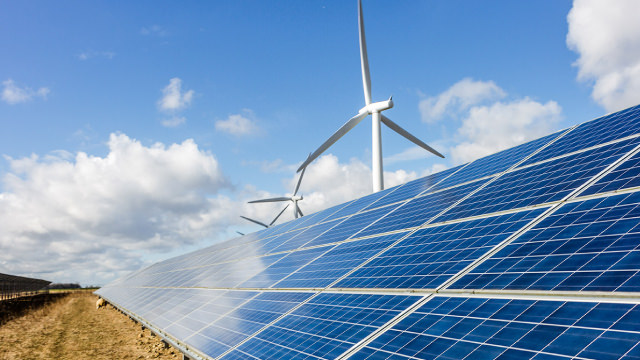
国防军工行业专题研究:AIDC电源的“最后一公里”,板载电源的高密高集成化革命
GF SECURITIES· 2026-02-28 08:24
Investment Rating - The report recommends a "Buy" rating for companies involved in the AIDC and related sectors, highlighting potential growth opportunities driven by advancements in AI and data center infrastructure [4]. Core Insights - The AIDC sector is experiencing rapid growth, with significant increases in power consumption and infrastructure upgrades driven by AI applications. The global AI market is projected to grow from $25.86 billion in 2024 to $803.9 billion by 2033, reflecting a compound annual growth rate (CAGR) of 46.5% [14][20]. - The power density of AI cabinets is expected to rise significantly, with single cabinet power reaching over 100 kW by 2025 and potentially exceeding 1 MW by 2030. This trend necessitates a shift towards high-voltage direct current (HVDC) systems for efficient power delivery [3][27]. - The evolution of power supply architecture is marked by a transition from traditional discrete components to highly integrated, modular designs. This includes vertical power delivery (VPD) systems that minimize power distribution network (PDN) losses and enhance efficiency [3][27]. - The report emphasizes the importance of companies like Hewei Electric, Zhongfu Circuit, and others that are positioned to benefit from these trends in high-density power integration and HVDC technology [3][4]. Summary by Sections Section 1: Growth in CSP Capital Expenditure and AIDC Power Demand - The North American and Asia-Pacific AI markets are rapidly expanding, leading to increased investment in AIDC infrastructure. The AIDC market in China is expected to exceed 100 billion CNY in 2024, reaching approximately 288.6 billion CNY by 2028, with a CAGR of around 30% [14][18]. Section 2: AI Cabinet Power Density and Electrical Architecture Upgrades - The report discusses the anticipated upgrade of AIDC electrical architecture to 800V HVDC systems, which can significantly enhance power transmission efficiency compared to traditional AC systems. This transition is driven by the increasing power demands of AI servers and the need for more efficient cooling solutions [3][27]. Section 3: Onboard Power Supply Architecture Upgrades - The report outlines the trends in onboard power supply systems moving towards high integration and modular designs. The shift from discrete components to integrated power modules is essential to meet the demands of high-performance AI chips, which are increasingly operating at lower voltages and higher currents [3][27]. Section 4: Investment Recommendations - The report suggests focusing on companies that are leading the charge in high-density power integration and HVDC technology, such as Hewei Electric and Zhongfu Circuit, as they are well-positioned to capitalize on the growing demand for advanced data center infrastructure [3][4].




Why Booking Holdings Inc. (BKNG) is One of the Best Cheap Blue Chip Stocks to Buy According to Analysts
Insider Monkey· 2026-02-28 07:18
Core Insights - Generative AI is viewed as a transformative technology by Amazon's CEO Andy Jassy, indicating its potential to reinvent customer experiences [1] - Elon Musk predicts that humanoid robots could create a market worth $250 trillion by 2040, reshaping the global economy [2] - Major firms like PwC and McKinsey recognize AI's potential to unlock multi-trillion-dollar opportunities [3] Industry Trends - The AI revolution is characterized by a significant shift in how humanity works, learns, and creates, attracting attention from hedge funds and top investors [4] - Billionaires and major tech leaders are investing heavily in AI, with figures like Bill Gates and Warren Buffett acknowledging its transformative potential [8] Investment Opportunities - There is a suggestion that a lesser-known company holds the key to the AI revolution, which could be a significant investment opportunity [4][6] - The article hints at a specific AI stock that could yield substantial returns, urging investors to explore this opportunity before it becomes widely recognized [9]



2000亿,孙正义梭哈了
投资界· 2026-02-28 06:54
Core Viewpoint - OpenAI has completed a record-breaking $110 billion financing round, achieving a pre-investment valuation of $730 billion, marking the largest venture capital deal in history [2] Financing Details - The investment round includes significant contributions from major players: Amazon invested $500 billion, while Nvidia and SoftBank each contributed $300 billion [2][3] - SoftBank's investment will be disbursed in three tranches, with the first $100 billion expected to be available by April 1, followed by additional amounts in July and October [3] - SoftBank's total investment in OpenAI has now exceeded $640 billion, increasing its ownership stake to 13% [2] Strategic Implications - OpenAI's CEO, Sam Altman, expressed excitement about the partnership with SoftBank, Nvidia, and Amazon, emphasizing their shared vision for advancing scientific progress [4] - The financing round is expected to attract more financial investors as it progresses [4] Son Masayoshi's Investment Strategy - Son Masayoshi's aggressive investment strategy reflects a high-stakes gamble, as he aims to rectify past missed opportunities with OpenAI [5] - SoftBank has made significant asset reallocations to fund this investment, including selling all Nvidia shares for $58 billion and reducing stakes in other assets [6] - Son has personally guaranteed $1 billion for the Vision Fund II, which is financing the OpenAI investment [6] Market Dynamics - The AI sector is experiencing a surge in valuations, with other companies like Anthropic and Databricks also achieving high valuations and significant funding [9][10] - Major tech companies are engaged in a competitive race to invest in AI infrastructure, with projected spending exceeding $670 billion this year [10] Potential Risks - Concerns about a potential AI bubble are rising, as the market grapples with the sustainability of these high valuations and the actual demand for AI capabilities [11][12] - The interconnected financing model between AI startups and tech giants raises questions about the long-term viability of these investments [11]



谷歌与OpenAI员工发表公开信,支持Anthropic在五角大楼事件中立场
Xin Lang Cai Jing· 2026-02-28 04:09
Core Viewpoint - Anthropic is in a deadlock with the U.S. Department of Defense over the military's demand for unrestricted use of its AI technology, with significant support from employees of Google and OpenAI urging their leadership to back Anthropic's stance against this demand [1] Group 1: Company Position - Anthropic opposes the use of artificial intelligence for domestic mass surveillance and autonomous weapons [1] - The company has set clear red lines regarding the application of its technology in military contexts, particularly concerning large-scale monitoring and fully autonomous weaponry [1] Group 2: Employee Support - Over 300 Google employees and 60 OpenAI employees have signed an open letter advocating for their companies to support Anthropic and reject the unilateral demands from the Department of Defense [1] - The signatories of the letter emphasize the need for unity among the companies to resist the pressure from the Department of Defense, highlighting that the strategy of division relies on a lack of understanding of each other's positions [1] Group 3: Leadership Response - The letter specifically calls on the executives of Google and OpenAI to uphold Anthropic's established boundaries against mass surveillance and fully autonomous weapons [1] - As of now, the leadership of both companies has not formally responded to the open letter [1]
超300名谷歌员工和60多名OpenAI员工签署公开信 在与五角大楼的争议中支持Anthropic
Xin Lang Cai Jing· 2026-02-28 03:42
Core Viewpoint - Over 300 Google employees and more than 60 OpenAI employees have signed an open letter supporting Anthropic in its ethical stance against military applications of AI, urging tech leaders to respect these limitations [1] Group 1 - The open letter highlights a significant employee movement within major tech companies regarding the ethical implications of AI in military use [1] - The support for Anthropic indicates a growing concern among tech professionals about the intersection of technology and military applications [1] - The involvement of employees from both Google and OpenAI suggests a collective industry response to ethical considerations in AI development [1]
大模型能力技术培训:让数据智能像水电 样简单
数巅科技· 2026-02-28 01:20
Investment Rating - The report does not provide a specific investment rating for the industry. Core Insights - The development of large language models (LLMs) has evolved significantly, with key milestones including the introduction of the Transformer architecture by Google in 2018 and the release of models like GPT-3 and GPT-4, which have billions of parameters and demonstrate emergent capabilities [4][28][37]. - LLMs are transforming various sectors, including natural language processing, information retrieval, computer vision, and the development of AI agents, indicating their potential as foundational models for diverse applications [7][12]. - The emergence of capabilities in LLMs allows them to perform complex tasks with minimal data, showcasing their efficiency and adaptability in various contexts [11][12]. Summary by Sections Language Model Development - The history of language models dates back to the 1990s, with significant advancements in deep learning integration and the introduction of transformer architectures [4][32]. - Notable models include GPT-3 with 175 billion parameters and GPT-4, which further enhances capabilities and introduces multimodal understanding [28][37]. Impact on Technology and Business - LLMs enhance natural language processing tasks such as text generation, translation, and question answering, while also improving information retrieval systems [7][12]. - The models support various applications, including digital assistants and emotional analysis, indicating their broad utility in commercial settings [7][12]. Emergent Capabilities - LLMs exhibit emergent abilities, allowing them to tackle new tasks with limited examples, which reduces the need for extensive retraining [11][12]. - The models leverage vast amounts of unlabelled data for training, enabling them to generalize across multiple downstream tasks effectively [11][12]. Model Training and Architecture - The training of LLMs involves pre-training on large datasets followed by fine-tuning for specific tasks, which enhances their performance across various applications [12][28]. - The architecture of these models, particularly the use of transformers, allows for efficient processing of language and context, leading to improved understanding and generation capabilities [4][32]. Future Directions - The report highlights ongoing research and development in LLMs, with a focus on improving their efficiency, ethical considerations, and addressing challenges such as data privacy and bias [12][28]. - The industry is witnessing a trend towards more accessible and versatile models, with companies like OpenAI, Google, and Baidu leading the charge in developing advanced LLMs [37][47].
9点1氪丨语音误关大灯致车祸,领克道歉;OpenAI获1100亿美元融资;米哈游内部通报员工意外离世
3 6 Ke· 2026-02-28 01:12
Group 1 - Lynk & Co apologized for a car accident caused by a voice command that mistakenly turned off the headlights of a Lynk Z20 vehicle, and they have implemented a cloud-based update to prevent this issue in the future [1] - OpenAI announced a significant funding round of $110 billion, with major contributions from SoftBank, NVIDIA, and Amazon, and a pre-money valuation of $730 billion [1] - MiHoYo responded to the unexpected death of a 36-year-old programmer, clarifying that the employee did not work excessive hours and that rumors about compensation were false [1] Group 2 - Doubao Mobile addressed claims of security vulnerabilities, stating that they have upgraded protective measures and have not received detailed reports of any issues [2] - Yingshi Innovation announced the conclusion of a 337 investigation by the US International Trade Commission, confirming that their products do not infringe on GoPro patents, allowing them to continue importing and selling in the US [3] - Meizu denied rumors of exiting the smartphone market, stating they are seeking third-party hardware partnerships while their existing business remains unaffected [5] Group 3 - The Shanghai police reported the arrest of three individuals for leaking unreleased game content from MiHoYo, marking a significant case in combating illegal game leaks [6] - China Post has halted a collaboration with the mobile game "Dust White Zone" following public controversy over the game's content [7] - ByteDance's subsidiary, Dongche Emperor, is reportedly considering an IPO in Hong Kong, aiming to raise between $1 billion and $1.5 billion [7] Group 4 - NVIDIA warned of a potential shortage of gaming GPUs in the first half of the fiscal year, which may lead to price increases [8] - Tesla completed road tests of its latest autonomous driving technology in Abu Dhabi under regulatory supervision [8] - The first generic versions of the weight-loss drug Semaglutide are expected to enter the Chinese market soon, potentially leading to a price war [8] Group 5 - Warner Bros. has signed a $110 billion agreement with Paramount for acquisition, which includes approximately $29 billion in debt, marking one of the largest mergers in Hollywood [8] - The Hong Kong Stock Exchange reported a net profit of HKD 17.75 billion for 2025, a 36% increase year-on-year, with a dividend of HKD 12.52 per share [16] - JinkoSolar reported its first loss in 12 years, with a net loss of CNY 6.786 billion for 2025, a significant decline from previous profits [17]


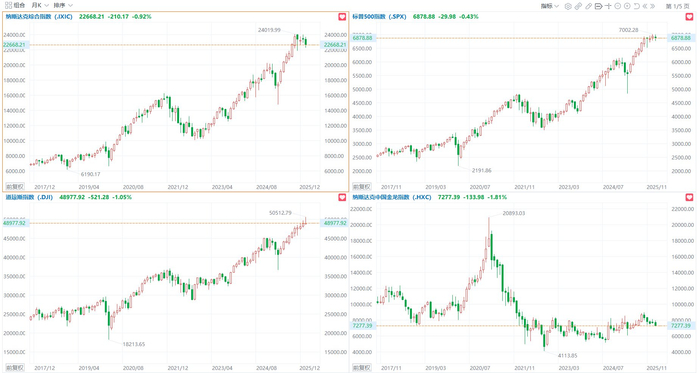
美股2月收官:道指月线10连涨!中概指数累跌5.88%,台积电涨超13%,AMD暴跌逾15%
Ge Long Hui A P P· 2026-02-28 00:57
Core Viewpoint - In February, the U.S. stock market showed mixed performance, with the Dow Jones Industrial Average rising by 0.17% for a ten-month consecutive increase, while the Nasdaq Composite and S&P 500 indices fell by 3.38% and 0.87%, respectively [1] Group 1: Market Performance - The Dow Jones Industrial Average recorded a cumulative increase of 0.17% in February, marking a ten-month consecutive rise [1] - The Nasdaq Composite index experienced a cumulative decline of 3.38% in February [1] - The S&P 500 index also saw a cumulative decrease of 0.87% during the same period [1] Group 2: Individual Stock Performance - Notable stock performances in February included TSMC, which rose by 13.32%, Walmart by 7.39%, ExxonMobil by 8.57%, Berkshire Hathaway B by 5.08%, and Apple by 1.91% [1] - Conversely, significant declines were observed in AMD, which fell by 15.43%, Amazon by 12.24%, Meta by 9.54%, Microsoft by 8.52%, Nvidia by 7.29%, Google A by 7.76%, Tesla by 6.48%, and Broadcom by 3.55% [1] Group 3: Market Capitalization - The top ten companies by market capitalization in the U.S. stock market currently include Nvidia, Apple, Google A, Google C, Microsoft, Amazon, TSMC, Meta, Broadcom, and Tesla [1]


算力爆发催生电力缺口 美国AI巨头要自备电厂
2 1 Shi Ji Jing Ji Bao Dao· 2026-02-27 23:11
Core Viewpoint - The article discusses the contrasting energy strategies between China and the United States, highlighting China's transition away from self-sufficient power plants while the U.S. tech giants are increasingly investing in self-supplied power sources to meet the growing energy demands of AI data centers [2][12][18]. Group 1: U.S. Energy Crisis and AI Demand - The U.S. government is pushing tech giants to self-supply or purchase power for AI data centers, amid rising electricity costs and dissatisfaction among residents [3][14]. - The International Energy Agency (IEA) projects that U.S. data center electricity consumption will reach 183 TWh in 2024, accounting for about 4% of total electricity use, and is expected to double to 426 TWh by 2030, potentially exceeding 12% [14][15]. - The PJM Interconnection, responsible for a significant portion of the U.S. electricity market, has seen capacity auction prices soar to $333.44 per megawatt, indicating a severe mismatch between demand and supply [16][17]. Group 2: Energy Infrastructure and Policy Changes - The U.S. government aims to establish 10 new nuclear reactors by 2030, viewing nuclear energy as a stable power source for AI operations, supported by an $80 billion strategic agreement with Westinghouse [18]. - Tech companies like Microsoft and Google are actively engaging in energy infrastructure projects, including nuclear partnerships and long-term agreements for clean energy, to secure their energy needs [18][19]. - The article notes that the energy crisis in the U.S. is creating opportunities for high-end manufacturing companies, particularly in the gas turbine and energy storage sectors, with significant contracts being signed [19]. Group 3: China's Energy Market Adaptation - China's "East Data West Computing" initiative aims to optimize energy distribution, but there is still room for improvement in market mechanisms to meet the rising energy demands driven by AI [20]. - The Chinese government has established a multi-layered market and pricing system to ensure energy security and adapt to new load demands, with a goal to complete a unified national electricity market by 2030 [20]. - The ongoing development of China's electricity spot market is progressing, focusing on capacity pricing, optimizing trading mechanisms, and enhancing collaboration between renewable energy and storage [20].