LI AUTO(LI)

Search documents
纳斯达克中国金龙指数收涨0.86% 热门中概股多数上涨
Mei Ri Jing Ji Xin Wen· 2025-12-19 22:22
Group 1 - The Nasdaq China Golden Dragon Index rose by 0.86% on December 20 [1] - Most popular Chinese concept stocks experienced gains, with Xpeng Motors increasing by over 6% [1] - Li Auto saw an increase of over 5%, while Pinduoduo rose by over 3% [1] Group 2 - Baidu and Zhihu both experienced gains of over 2% [1] - iQIYI, however, saw a decline of over 1% [1]


纳斯达克中国金龙指数收涨0.86%,热门中概股多数上涨
Mei Ri Jing Ji Xin Wen· 2025-12-19 22:13
Group 1 - The Nasdaq China Golden Dragon Index rose by 0.86% on December 20 [1] - Most popular Chinese concept stocks experienced gains, with Xpeng Motors increasing by over 6% [1] - Li Auto saw an increase of over 5%, while Pinduoduo rose by over 3% [1] Group 2 - Baidu and Zhihu both experienced gains of over 2% [1] - iQIYI, however, saw a decline of over 1% [1]
购置税退坡在即!车企奋力“兜底”,难挽年末市场降温……
Guo Ji Jin Rong Bao· 2025-12-19 17:28
Core Viewpoint - The exemption policy for new energy vehicle purchase tax, in place for ten years, will end on December 31, 2025, transitioning to a 50% tax reduction starting January 1, 2026, with the maximum exemption amount decreasing from 30,000 yuan to 15,000 yuan [1] Group 1: Policy Changes - The new purchase tax rate for new energy vehicles will be 5% after the adjustment, down from full exemption [1] - For vehicles priced at 300,000 yuan, the tax payable will be 15,000 yuan, while for those priced at 500,000 yuan, the tax will be 35,000 yuan after applying the maximum exemption [1] Group 2: Industry Response - Over twenty car manufacturers, including Li Auto, NIO, Chery, and others, have introduced "purchase tax guarantee" subsidy plans to mitigate consumer hesitation due to the policy change [4] - Xiaomi Auto has launched a year-end purchase tax subsidy plan, promising up to 15,000 yuan for users who lock in orders by November 30, 2023, if delivery is delayed to 2026 [4] - GAC Group and XPeng have also announced similar subsidy plans, with varying deadlines and subsidy amounts [4] Group 3: Market Trends - Despite the introduction of subsidy plans, the expected surge in market activity has not materialized, with a reported 8.1% year-on-year decline in retail sales of passenger vehicles in November [8] - The retail sales of fuel vehicles dropped by 22%, while pure electric vehicle sales increased by 9.2% [8] - Sales personnel have noted a general slowdown in consumer activity, attributing it to the cessation of national subsidies and a wait-and-see attitude regarding future policies [8] Group 4: Sales Performance - Some manufacturers are facing challenges in meeting their sales targets, with companies like NIO and Li Auto showing low completion rates of 62.6% and 56.6%, respectively [10] - In contrast, XPeng has met its annual sales target, while other companies like Leap Motor and BYD have exceeded 90% of their targets [10]


美股异动 | 热门中概股普涨 小马智行(PONY.US)涨近7%
智通财经网· 2025-12-19 15:05
Core Insights - The Nasdaq Golden Dragon Index increased by 0.9%, with popular Chinese concept stocks experiencing significant gains, including Pony.ai rising nearly 7%, Xpeng Motors up over 6%, and Pinduoduo increasing by nearly 6% [1] - The Ministry of Industry and Information Technology officially announced the first batch of L3 conditional autonomous driving vehicle permits on December 15, marking a critical step towards the commercialization of L3 autonomous driving in China [1] Company Performance - Pony.ai saw a nearly 7% increase in stock price [1] - Xpeng Motors experienced an increase of over 6% [1] - Pinduoduo's stock rose nearly 6% [1] - Li Auto and Hesai both saw stock increases of over 3% [1] - Baidu's stock rose by 2% [1] Industry Developments - The announcement of L3-level conditional autonomous driving vehicle permits indicates a transition from testing to commercial application in China [1] - Two models, designed for urban congestion and highway conditions, will be piloted in designated areas of Beijing and Chongqing [1]

热门中概股普涨 小马智行(PONY.US)涨近7%
Zhi Tong Cai Jing· 2025-12-19 15:02
Core Viewpoint - The Nasdaq Golden Dragon Index rose by 0.9%, with popular Chinese concept stocks experiencing significant gains, indicating a positive market sentiment towards these companies following the announcement of L3 autonomous driving vehicle approvals in China [1] Group 1: Market Performance - PONY.US (Pony.ai) increased by nearly 7% - XPEV.US (Xpeng Motors) rose over 6% - PDD.US (Pinduoduo) gained nearly 6% - LI.US (Li Auto) and HSAI.US (Hesai Technology) both increased by over 3% - BIDU.US (Baidu) saw a 2% rise [1] Group 2: Industry Development - The Ministry of Industry and Information Technology officially announced the first batch of L3 conditional autonomous driving vehicle approvals on December 15 - Two models, designed for urban congestion and highway scenarios, will conduct road trials in designated areas of Beijing and Chongqing - This marks a significant step from testing to commercial application for L3 autonomous driving in China [1]
理想汽车组织架构调整,涉近千人,原零部件负责人离职
21世纪经济报道· 2025-12-19 13:40
Group 1 - The core point of the article discusses the organizational restructuring and integration of the supply chain departments at Li Auto, aiming to enhance efficiency and management under the leadership of Vice President Li Bin [3][6]. - Li Auto has adopted a vertical integration strategy similar to Tesla's, focusing on building its own factories and establishing joint ventures to ensure quality and supply stability [5]. - The merger of the parts cluster, which previously had nearly 1,000 employees, has resulted in a manufacturing department with over 10,000 employees, making it the largest department within the smart vehicle group, accounting for one-third of the total workforce [6]. Group 2 - In 2023, Li Auto distinguished itself among new energy vehicle companies by being the first to achieve cumulative deliveries exceeding 600,000 units and a single-month delivery of 50,000 units [6]. - The company has set ambitious delivery targets of 800,000 units for 2024 and 1.2 million units for 2025, prompting significant expansion across various departments, including R&D, sales, and supply [6]. - The parts cluster was previously a secondary department under the R&D and manufacturing supply group but was elevated to a primary department in the second half of 2023, indicating a strategic shift in management and operations [6][7].

21独家|理想汽车整合供应链相关部门,原零部件负责人离职
2 1 Shi Ji Jing Ji Bao Dao· 2025-12-19 13:26
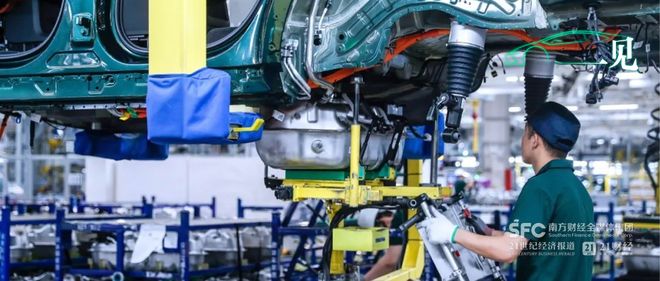
Group 1 - The core point of the article is that Li Auto has restructured its supply chain departments by merging the "Parts Cluster" into the "Manufacturing" department, which will now be managed by Vice President Li Bin, reporting to President Ma Donghui [2] - The merger is part of Li Auto's strategy to adopt a vertical integration approach similar to Tesla, ensuring quality and stability in supply through self-built factories and joint ventures [2] - Prior to the merger, the Parts Cluster had nearly 1,000 employees, while the entire Manufacturing department now exceeds 10,000 employees, making it the largest department within the smart vehicle group, accounting for one-third of the total workforce [2] Group 2 - In 2023, Li Auto became the first new energy vehicle company to deliver over 600,000 units cumulatively and achieve a single-month delivery of 50,000 units, setting ambitious delivery targets of 800,000 units for 2024 and 1.2 million units for 2025 [3] - The expansion efforts initiated in the second half of 2023 included significant growth across R&D, sales, and supply chain departments to support increased sales [3] - The Parts Cluster was previously a secondary department under the R&D and Manufacturing Supply Group, but was elevated to a primary department in the second half of 2023, with its head reporting directly to Ma Donghui [3]
理想汽车整合供应链相关部门,原零部件负责人离职
2 1 Shi Ji Jing Ji Bao Dao· 2025-12-19 13:23
Group 1 - The core point of the article is that Li Auto has reorganized its supply chain departments by merging the "Parts Cluster" under the smart vehicle group into the "Manufacturing" department, which will now be managed by Vice President Li Bin, reporting to President Ma Donghui [1] - The merger is part of Li Auto's strategy to adopt a vertical integration approach similar to Tesla, ensuring quality and supply stability through self-built factories and joint ventures [1] - Prior to the merger, the Parts Cluster had nearly 1,000 employees, and after the merger, the entire manufacturing department now has over 10,000 employees, making it the largest first-level department in the smart vehicle group, accounting for one-third of the total workforce [1] Group 2 - In 2023, Li Auto became the first new energy vehicle company to cumulatively deliver over 600,000 units and achieve a single-month delivery of 50,000 units, setting ambitious delivery targets of 800,000 units for 2024 and 1.2 million units for 2025 [2] - To meet these higher targets, Li Auto initiated a large-scale expansion in the second half of 2023, covering various departments including R&D, sales, and supply [2] - The Parts Cluster was previously a secondary department under the R&D and manufacturing supply group, but was elevated to a first-level department in the second half of 2023, with its head reporting directly to Ma Donghui [2]
盯上你的眼,苹果、谷歌也加入“百镜混战”
2 1 Shi Ji Jing Ji Bao Dao· 2025-12-19 12:39
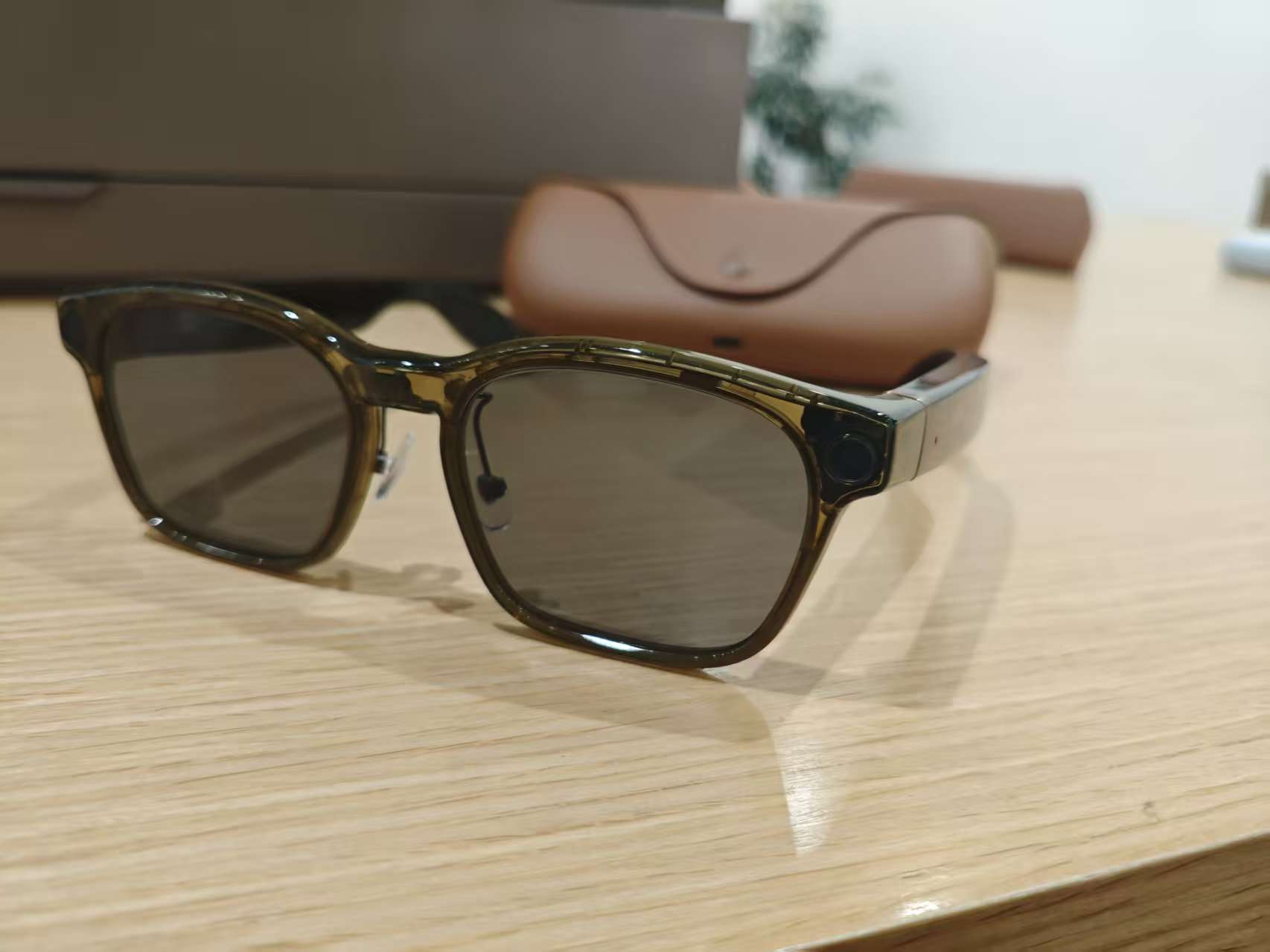
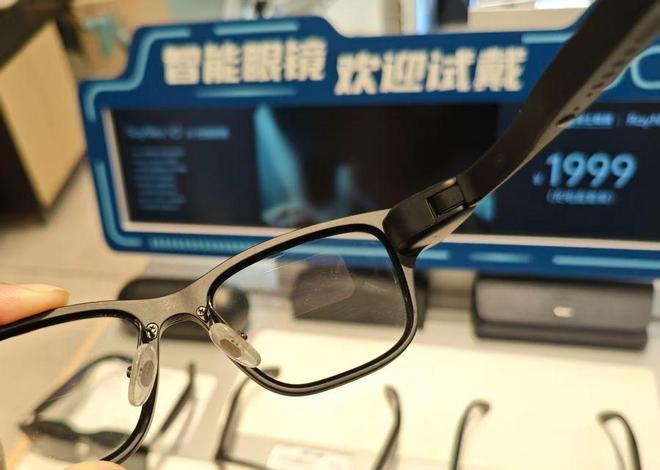
Group 1 - Apple has paused its Vision Pro upgrade plan to focus on developing AI smart glasses, with an entry-level model expected to debut in 2026 [2] - Google has officially announced its return to the smart glasses market, intensifying competition in the sector [2] - In the domestic market, companies like Li Auto, Alibaba, Baidu, Huawei, and Xiaomi are actively launching their own smart glasses, indicating a fierce competition among tech giants [2] Group 2 - The competition for smart glasses is driven by the desire to establish the next generation of human-computer interaction, with smart glasses seen as a key hardware component in the AI multimodal era [3] - Major companies view smart glasses as an extension of their ecosystems and a means to leverage AI capabilities, transforming brand power into market momentum [3] - Li Auto's AI glasses, Livis, have generated significant interest, with reports of high foot traffic and product shortages in stores [3] Group 3 - Consumers are attracted to smart glasses not only for compatibility with their vehicles but also for their aesthetics and quality, indicating that these products can enhance brand ecosystems and fan engagement [4] - Alibaba's Quark AI glasses have quickly gained orders due to their smooth integration with the Quark browser and AR functionalities, addressing previous limitations of traditional smart glasses [4] - The industry is in need of a new core hardware solution as smartphones reach physical innovation limits, with smart glasses positioned as a crucial interface for connecting the physical and digital worlds [4] Group 4 - The smart glasses market is expanding beyond major players, with smaller companies also seeking growth opportunities, particularly in industrial and health monitoring applications [5] - Companies like Huashengchang are focusing on developing AI glasses for industrial applications, enhancing efficiency and precision in operations [5] - Industry experts suggest that smaller firms should concentrate on core components, professional manufacturing, or niche markets to establish competitive advantages [6] Group 5 - The relationship between smart glasses and smartphones is expected to be complementary rather than one replacing the other, as both technologies will evolve together [7] - Current technological challenges such as weight, battery life, and display quality are still present, indicating that the industry is on the brink of significant growth [7] - Consumer expectations for smart glasses vary, with a significant portion believing they will be widely used, while others see limited applications [7] Group 6 - The smart glasses market is projected to grow significantly, with sales expected to reach 1.265 million units in 2024, a year-on-year increase of approximately 90.8%, and a market size of around 4.69 billion yuan [8] - By 2029, sales could reach 41.53 million units, with the market potentially exceeding 100 billion yuan, highlighting the substantial market potential driving competition [8] - The integration of AI models and user experience is seen as a critical factor in determining the future direction of the industry [8] Group 7 - As of December 19, key players in the smart glasses supply chain have shown active stock performance, with companies like Lens Technology and Doctor Glasses experiencing notable stock price increases [9]



盯上你的眼 苹果、谷歌也加入“百镜混战”
2 1 Shi Ji Jing Ji Bao Dao· 2025-12-19 12:38
Group 1 - Major tech companies like Apple and Google are intensifying their focus on the smart glasses market, with Apple pausing its Vision Pro upgrade plans to accelerate AI smart glasses development, expected to launch in 2026 [1] - The competition in the smart glasses sector is heating up in China, with companies like Li Auto, Alibaba, Baidu, Huawei, and Xiaomi launching their own AI glasses, indicating a cross-industry battle involving tech, internet, and new energy sectors [1][2] - The entry of established tech giants and new players into the smart glasses market signifies a strategic move to capture the next generation of human-computer interaction, positioning smart glasses as a key hardware in the AI multimodal era [2][4] Group 2 - The smart glasses are seen as an extension of existing ecosystems and a means to leverage AI capabilities, with Li Auto's Livis glasses gaining significant consumer interest and sales [4] - Alibaba's Quark AI glasses have also seen strong sales due to their practical features, indicating that major internet companies are finding viable paths in this new market [4] - The industry is at a critical juncture, with startups needing to focus on niche markets or technological breakthroughs to survive amidst competition from larger firms [5][6] Group 3 - The relationship between smart glasses and smartphones is expected to be complementary rather than one replacing the other, as both technologies evolve together [7] - Current technological limitations in smart glasses, such as weight and battery life, indicate that the industry is still in its early stages, with significant growth potential ahead [7][8] - The global market for smart glasses is projected to grow significantly, with sales expected to reach 41.53 million units by 2029, potentially exceeding 100 billion yuan in market size [8] Group 4 - The influx of major players into the smart glasses market is expected to accelerate technological advancements and reshape industry standards, while also creating challenges for smaller brands [9] - The competitive landscape is shifting from price wars to technology-driven competition, emphasizing the importance of AI integration and user experience [9][11] - Key supply chain companies in the smart glasses sector have shown active stock performance, reflecting investor interest and market optimism [11]