
LI AUTO(LI)

Search documents
盯上你的眼,苹果、谷歌也加入“百镜混战”
2 1 Shi Ji Jing Ji Bao Dao· 2025-12-19 12:39
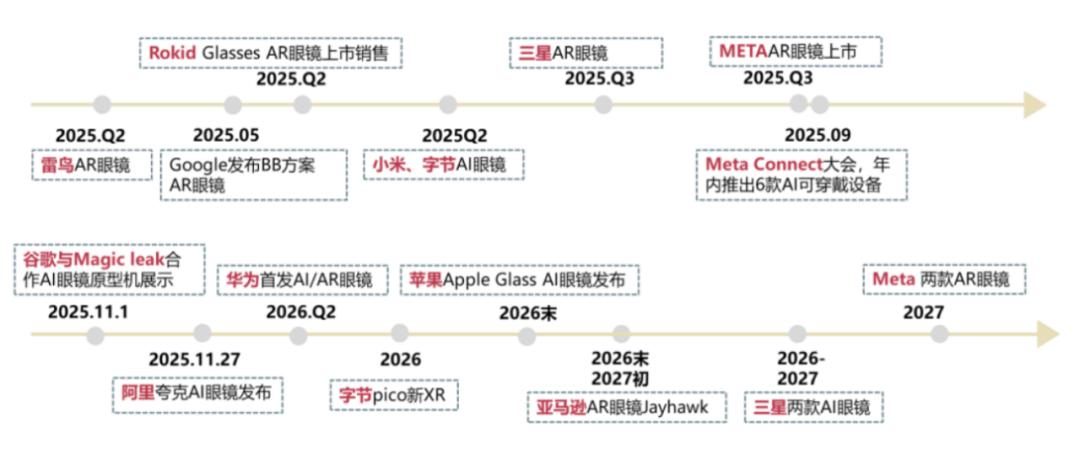
Group 1 - Apple has paused its Vision Pro upgrade plan to focus on developing AI smart glasses, with an entry-level model expected to debut in 2026 [2] - Google has officially announced its return to the smart glasses market, intensifying competition in the sector [2] - In the domestic market, companies like Li Auto, Alibaba, Baidu, Huawei, and Xiaomi are actively launching their own smart glasses, indicating a fierce competition among tech giants [2] Group 2 - The competition for smart glasses is driven by the desire to establish the next generation of human-computer interaction, with smart glasses seen as a key hardware component in the AI multimodal era [3] - Major companies view smart glasses as an extension of their ecosystems and a means to leverage AI capabilities, transforming brand power into market momentum [3] - Li Auto's AI glasses, Livis, have generated significant interest, with reports of high foot traffic and product shortages in stores [3] Group 3 - Consumers are attracted to smart glasses not only for compatibility with their vehicles but also for their aesthetics and quality, indicating that these products can enhance brand ecosystems and fan engagement [4] - Alibaba's Quark AI glasses have quickly gained orders due to their smooth integration with the Quark browser and AR functionalities, addressing previous limitations of traditional smart glasses [4] - The industry is in need of a new core hardware solution as smartphones reach physical innovation limits, with smart glasses positioned as a crucial interface for connecting the physical and digital worlds [4] Group 4 - The smart glasses market is expanding beyond major players, with smaller companies also seeking growth opportunities, particularly in industrial and health monitoring applications [5] - Companies like Huashengchang are focusing on developing AI glasses for industrial applications, enhancing efficiency and precision in operations [5] - Industry experts suggest that smaller firms should concentrate on core components, professional manufacturing, or niche markets to establish competitive advantages [6] Group 5 - The relationship between smart glasses and smartphones is expected to be complementary rather than one replacing the other, as both technologies will evolve together [7] - Current technological challenges such as weight, battery life, and display quality are still present, indicating that the industry is on the brink of significant growth [7] - Consumer expectations for smart glasses vary, with a significant portion believing they will be widely used, while others see limited applications [7] Group 6 - The smart glasses market is projected to grow significantly, with sales expected to reach 1.265 million units in 2024, a year-on-year increase of approximately 90.8%, and a market size of around 4.69 billion yuan [8] - By 2029, sales could reach 41.53 million units, with the market potentially exceeding 100 billion yuan, highlighting the substantial market potential driving competition [8] - The integration of AI models and user experience is seen as a critical factor in determining the future direction of the industry [8] Group 7 - As of December 19, key players in the smart glasses supply chain have shown active stock performance, with companies like Lens Technology and Doctor Glasses experiencing notable stock price increases [9]




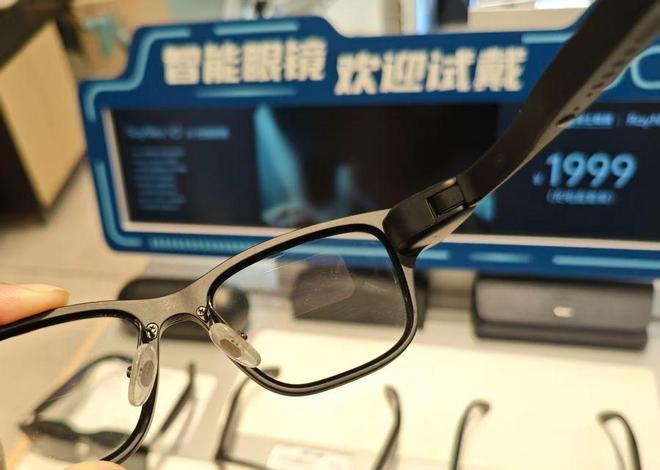
盯上你的眼 苹果、谷歌也加入“百镜混战”
2 1 Shi Ji Jing Ji Bao Dao· 2025-12-19 12:38
Group 1 - Major tech companies like Apple and Google are intensifying their focus on the smart glasses market, with Apple pausing its Vision Pro upgrade plans to accelerate AI smart glasses development, expected to launch in 2026 [1] - The competition in the smart glasses sector is heating up in China, with companies like Li Auto, Alibaba, Baidu, Huawei, and Xiaomi launching their own AI glasses, indicating a cross-industry battle involving tech, internet, and new energy sectors [1][2] - The entry of established tech giants and new players into the smart glasses market signifies a strategic move to capture the next generation of human-computer interaction, positioning smart glasses as a key hardware in the AI multimodal era [2][4] Group 2 - The smart glasses are seen as an extension of existing ecosystems and a means to leverage AI capabilities, with Li Auto's Livis glasses gaining significant consumer interest and sales [4] - Alibaba's Quark AI glasses have also seen strong sales due to their practical features, indicating that major internet companies are finding viable paths in this new market [4] - The industry is at a critical juncture, with startups needing to focus on niche markets or technological breakthroughs to survive amidst competition from larger firms [5][6] Group 3 - The relationship between smart glasses and smartphones is expected to be complementary rather than one replacing the other, as both technologies evolve together [7] - Current technological limitations in smart glasses, such as weight and battery life, indicate that the industry is still in its early stages, with significant growth potential ahead [7][8] - The global market for smart glasses is projected to grow significantly, with sales expected to reach 41.53 million units by 2029, potentially exceeding 100 billion yuan in market size [8] Group 4 - The influx of major players into the smart glasses market is expected to accelerate technological advancements and reshape industry standards, while also creating challenges for smaller brands [9] - The competitive landscape is shifting from price wars to technology-driven competition, emphasizing the importance of AI integration and user experience [9][11] - Key supply chain companies in the smart glasses sector have shown active stock performance, reflecting investor interest and market optimism [11]



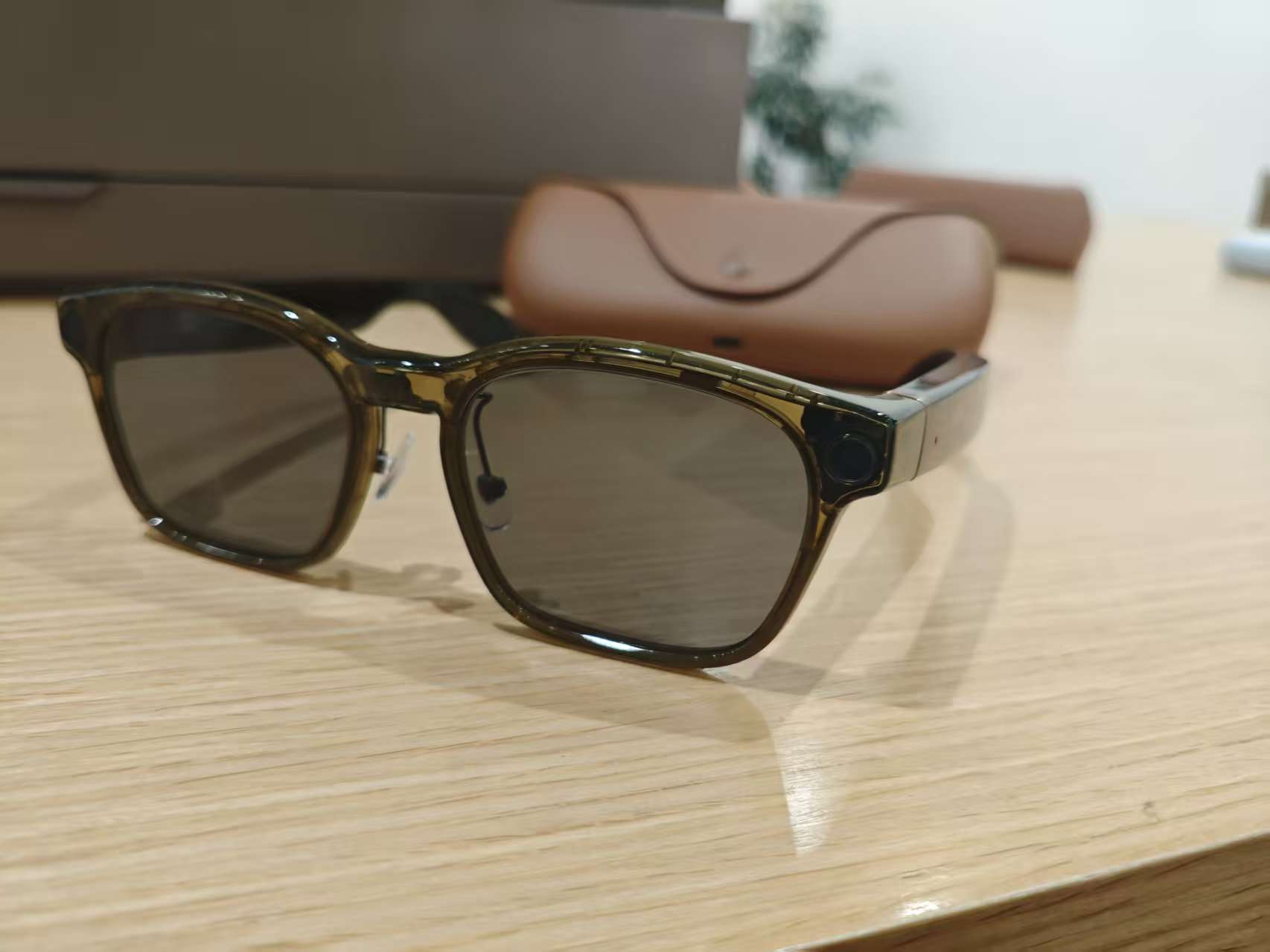
我们准备好让AI“看”世界了吗?
Xin Lang Cai Jing· 2025-12-19 12:14
Core Insights - In 2025, AI glasses have emerged as a significant trend in the tech industry, with major companies like Meta, Google, and Apple making substantial advancements and product launches in this space [1][3] - Domestic companies in China, including Huawei, Xiaomi, Alibaba, and ByteDance, are also actively developing AI glasses, with notable products like Alibaba's Quark AI glasses experiencing high demand [1][3] - The competition landscape is diverse, with various types of AI glasses categorized into AI audio glasses, AI photography glasses, and AI+AR glasses, each with distinct functionalities [3][7] Industry Overview - The AI glasses market is driven by advancements in large model technology, with companies recognizing the necessity to invest in AI glasses to avoid falling behind in the AI race [3][21] - Meta's Ray-Ban smart glasses have set a successful precedent, selling over 1 million units and demonstrating the feasibility of integrating AI capabilities into eyewear [3][21] - The market is expected to see significant sales growth, with projections indicating that AI glasses could reach 7 million units sold, with Meta accounting for 5 million of that total [9] Competitive Landscape - Major competitors in the AI glasses market include: - Internet platform companies like Alibaba, Baidu, and ByteDance, leveraging their ecosystem advantages [8] - Hardware manufacturers such as Xiaomi and Huawei, utilizing their supply chain and user base [9] - New automotive entrants like Li Auto, which are creating niche products tailored to specific use cases [9] - Specialized XR/AR companies like Rokid and Thunderbird, focusing on optical display technology and lightweight designs [9] Market Dynamics - The pricing of AI glasses varies widely, from hundreds to thousands of yuan, reflecting the differentiation in product features and target markets [12] - The current market is characterized by a mix of established tech giants and agile startups, each pursuing different strategies to capture market share [10][20] - The demand for AI glasses is still being evaluated, with concerns about whether consumers truly need such devices compared to existing technologies like smartphones [13][19] Future Outlook - The AI glasses market is anticipated to evolve, with companies needing to address privacy concerns and enhance user experience to transition from novelty items to essential tools [17][24] - The exploration of AI glasses is seen as a stepping stone towards more advanced human-machine interactions, potentially leading to future innovations like implantable devices or brain-computer interfaces [24][22] - As the market matures, companies are expected to focus on validating the value of AI glasses in B2B applications while nurturing consumer interest in C2C scenarios [20][22]



三万俱乐部的疲态:“蔚小理” 的 2025
晚点LatePost· 2025-12-19 10:53
Core Viewpoint - The "Wei Xiaoli" trio (NIO, Li Auto, and Xpeng) is approaching a growth bottleneck by the end of 2025, with each facing unique challenges in the rapidly changing electric vehicle market [3][6][34]. Sales Performance - In November 2025, the retail sales of new energy vehicles in China reached 1.354 million units, a year-on-year increase of 7% and a month-on-month increase of 6% [4]. - The delivery numbers for November 2025 were as follows: Li Auto delivered 33,181 units, Xpeng delivered 31,671 units, and NIO delivered 35,646 units [5][8]. - Xpeng's market share dropped from a peak of 2% to 1.4%, indicating a significant decline in sales performance despite the launch of new models [7][8]. - Li Auto's sales have stagnated around 30,000 units, moving away from previous highs of over 50,000 units per month [10][19]. - NIO's sales structure is under pressure, with five models selling less than 1,000 units in November, raising concerns about future performance [19]. Individual Company Challenges - Xpeng is heavily reliant on its M03 model, which accounted for over 40% of its total sales, indicating a structural issue in its product lineup [12]. - Li Auto is experiencing a "growth trap," with its market share consistently falling below 1.5% despite new product launches [10][21]. - NIO has a diverse product lineup but struggles with maintaining sales momentum, particularly as new models like the ES8 face declining sales after initial success [19][27]. Strategic Directions - The companies are exploring "second growth curves" to diversify their offerings. Li Auto has introduced pure electric models, while Xpeng has focused on lower-priced models to capture market share [22][23]. - NIO is also working on expanding its product range but needs to streamline its offerings to focus on key models for better sales efficiency [27][34]. - The competitive landscape is intensifying with traditional automakers accelerating their electric vehicle transitions and new entrants like Huawei and Xiaomi entering the market [34]. Future Outlook - The companies are expected to face significant challenges in 2026, including potential policy changes regarding subsidies and increased competition [34]. - Each company is focusing on product innovation and operational efficiency to navigate the evolving market dynamics and ensure profitability [30][31][34].



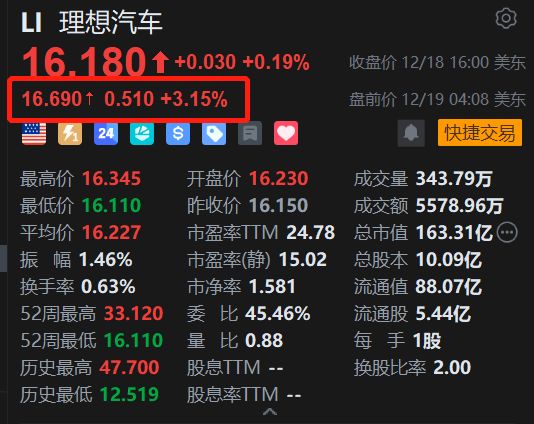
美股异动丨理想汽车盘前涨超3% 消息称公司正筹建矽谷AI研发中心
Ge Long Hui· 2025-12-19 09:29
| LI 理想汽车 | | | | --- | --- | --- | | 16.180 + +0.030 +0.19% | | 收盘价 12/18 16:00 美东 | | 16.690 + 0.510 +3.15% | | 盘前价 12/19 04:08 美东 | | 三月24日9月9 | | ● 快捷交易 | | 最高价 16.345 | 开盘价 16.230 | 成交量 343.79万 | | 最低价 16.110 | 昨收价 16.150 | 成交额 5578.96万 | | 平均价 16.227 | 市盈率TM 24.78 | 总市值 163.31亿 (--) | | 振 幅 1.46% | 市盈率(静) 15.02 | 总股本 10.09亿 | | 换手率 0.63% | 市净率 1.581 | 流通值 88.07亿 | | 52周最高 33.120 | 委 比 45.46% | 流通股 5.44亿 | | 52周最低 16.110 | 量 比 0.88 | 每 手 1股 | | 历史最高 47.700 | 股息TIM -- | 换股比率 2.00 | | 历史最低 12.519 | 股息室TM ...
美股异动丨智能驾驶概念股盘前集体走强,小马智行涨超4%
Ge Long Hui· 2025-12-19 09:28
智驾方案和L3级车型量产能力。L3级自动驾驶法规的正式落地将成为2026年行业发展的关键 催化剂, 值得重点跟踪。 财经频道更多独家策划、专家专栏,免费查阅>> 责任编辑:钟离 美股市场智能驾驶概念股盘前集体走强,其中,小鹏汽车涨超5%,小马智行涨超4%,理想汽车涨超 3%,禾赛涨2%,百度涨超1%。 消息面上,日前,我国首批L3级有条件自动驾驶车型准入许可正式公布,分别为长安牌 SC7000AAARBEV型纯电动轿车和极狐牌BJ7001A61NBEV型纯电动轿车。根据《汽车驾驶 自动化分 级》国家标准,L3级自动驾驶属于"有条件自动驾驶",即在特定设计运行条件下,车辆系统可以完全接 管动态驾驶任务,允许驾驶员脱手,但驾驶员仍需保持警觉并随时准备接管。 交银国际指出,辅助驾驶功能已逐渐成为中国消费者购车决策的重要考量因素,部分车企已具备L3级 ...
理想汽车海外布局再迎里程碑 理想L系列正式进入埃及、哈萨克斯坦和阿塞拜疆市场
Zhong Guo Jing Ji Wang· 2025-12-19 09:25
Core Insights - Li Auto has made significant progress in its overseas expansion by officially entering the markets of Egypt, Kazakhstan, and Azerbaijan, following its initial foray into Uzbekistan, marking a substantial step in its global strategy [1][3][5] Market Expansion - The entry into Egypt represents Li Auto's first venture into the Middle East and Africa, establishing a foothold in emerging markets [3][6] - Egypt, with a population exceeding 110 million and being one of North Africa's fastest-growing economies, aligns well with Li Auto's focus on the expanding mid-to-high-end automotive market [5] Product Offering - Li Auto has launched its key models, including the Li L9, L7, and L6, to cater to local luxury market demands while ensuring consistent user experience through official warranty services and professional after-sales support [1][5] - The company is introducing its range-extended electric vehicles in these markets to address local charging infrastructure challenges, providing a flexible energy solution [13] Strategic Partnerships - Li Auto has established deep collaborations with influential local automotive sales groups in the four countries, leveraging their established networks and operational expertise to build a standardized, high-quality sales and after-sales service system [5][6] Global Strategy - The company is accelerating its global expansion with a multi-faceted approach, including an "authorized dealer model + general agent model + subsidiary operation model" to adapt to different regional market characteristics [5] - Li Auto's global strategy will continue to deepen, focusing on providing high-value products and services tailored to local needs, thereby enhancing its competitive edge in the global market [13]
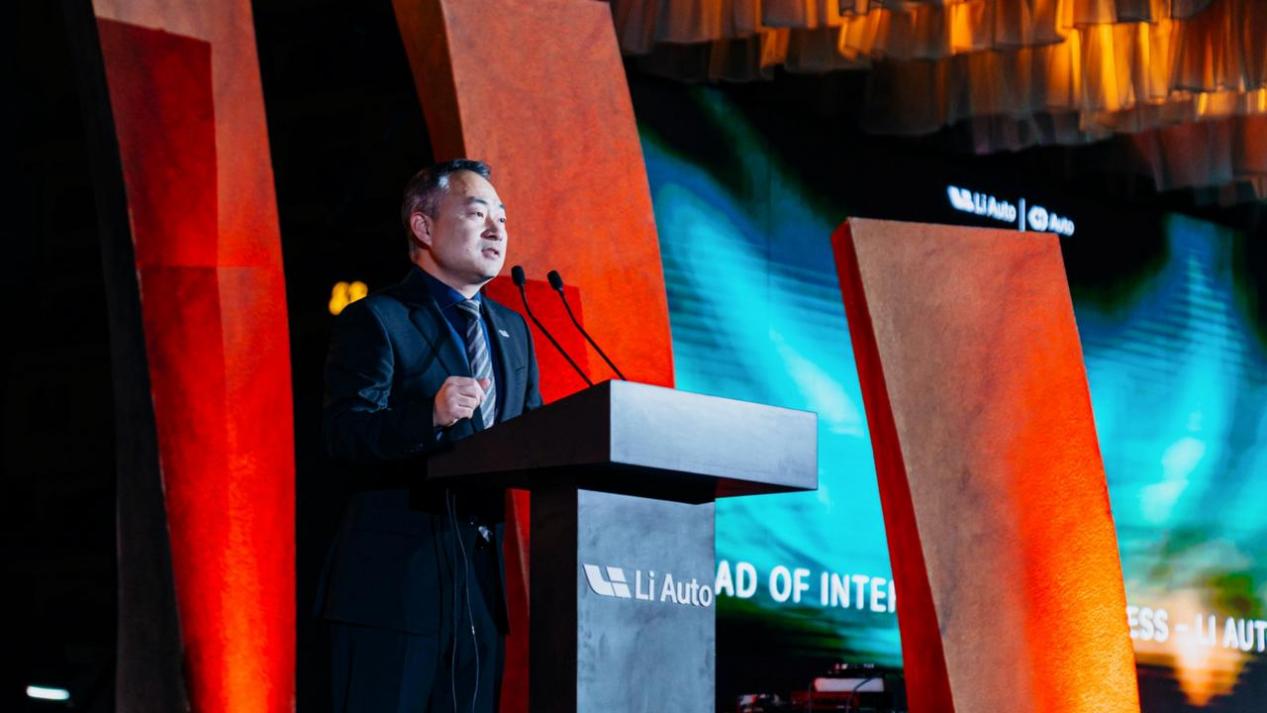
AI眼镜:我们准备好让AI“看”世界了吗?
3 6 Ke· 2025-12-19 08:46
Core Insights - In 2025, AI glasses have emerged as a significant trend in the tech industry, with Meta's Ray-Ban smart glasses selling over 2 million units by February and projected to reach 4-5 million units for the year [1][3] - Major companies like Google, Samsung, and Apple are re-entering the AI glasses market, while domestic firms such as Huawei, Xiaomi, Alibaba, and ByteDance are also making significant moves in this space [1][3] - The competition is driven by the need for companies to stay relevant in the AI race, with hardware becoming a new frontier for user engagement and data collection [3][20] Market Dynamics - AI glasses are categorized into three types: AI audio glasses, AI shooting glasses, and AI+AR glasses, with the latter being seen as an advanced form that integrates AR technology [4][6] - The market features a wide range of AI glasses with prices varying from hundreds to thousands of yuan, reflecting the differentiation in product positioning [6][10] - Key competitors in the domestic market include internet platform companies (Alibaba, Baidu, ByteDance), hardware manufacturers (Xiaomi, Huawei, OPPO), automotive newcomers (Li Auto), XR/AR specialists (Thunderbird Innovation, Rokid), and AI hardware startups [6][7][10] Competitive Landscape - Xiaomi is leveraging its supply chain and channel advantages to capture market share, with its AI glasses priced as low as 1,630 yuan [7][10] - Li Auto's AI glasses, Livis, are priced starting at 1,999 yuan and are designed to integrate with vehicle systems, targeting a specific user base [8][10] - Companies like Rokid and Thunderbird Innovation focus on optical display technology and have experience in specialized applications, although they face challenges in expanding to consumer markets [9][10] User Demand and Experience - The current AI glasses market is characterized by a lack of clear consumer demand, as many features offered are already available on smartphones [11][12] - Privacy concerns are significant, as AI glasses can record and capture data, raising issues similar to those faced by Google Glass [12][13][14] - For AI glasses to transition from novelty items to essential tools, they must address real-world needs and provide seamless integration into daily life [15][16][19] Future Outlook - The potential for AI glasses to become mainstream hinges on their ability to solve specific problems in B2B scenarios, such as in industries like energy and healthcare [16][18] - The evolution of AI glasses may lead to more advanced forms of human-computer interaction, with future devices potentially being embedded or non-intrusive [25][26] - The market for AI glasses is expected to grow significantly, with investments in related technologies and components reaching nearly 4 billion yuan [22][23]
理想汽车-W(02015.HK)涨近4%
Mei Ri Jing Ji Xin Wen· 2025-12-19 07:26
每经AI快讯,理想汽车-W(02015.HK)涨近4%,截至发稿涨3.65%,报65.35港元,成交额6.87亿港元。 ...
港股异动 | 理想汽车-W(02015)尾盘涨近4% 据报公司正在筹建硅谷AI研发中心 聚焦智能化技术
Zhi Tong Cai Jing· 2025-12-19 07:13
Core Viewpoint - Li Auto-W (02015) has seen a nearly 4% increase in stock price, attributed to the news of establishing an AI research center in Silicon Valley focused on smart technology development [1] Group 1: Company Developments - Li Auto is officially establishing an AI research center in Silicon Valley, which will focus on the development of intelligent technology [1] - The recruitment for this center began several months ago, indicating a strategic move to enhance its capabilities in AI [1] - Prior to this, Li Auto had a small R&D team in North America supporting chip development and other AI-related work [1] Group 2: Strategic Focus - The new Silicon Valley center aims to upgrade the existing team into a full-fledged research center, particularly targeting advancements in driver assistance technology [1] - The company is looking to recruit high-end talent with cutting-edge AI backgrounds for this initiative [1] Group 3: Global R&D Presence - In addition to the Silicon Valley center, Li Auto has its first overseas R&D center in Munich, Germany, which opened in January this year [1] - The Munich center is responsible for forward-looking design, power semiconductors, smart chassis, and next-generation electric drive technology research [1] - Domestically, Li Auto operates two R&D centers located in Beijing and Shanghai, focusing on core technology breakthroughs and vehicle development [1]