LI AUTO(LI)

Search documents
对话理想范皓宇、陈伟:1699元的AI眼镜,要成为理想汽车的最强辅件
雷峰网· 2025-12-03 13:05
Core Viewpoint - The company emphasizes that AI is a goal and purpose, not merely a tool for market value management, focusing on product quality instead [1][17]. Group 1: Product Launch and Market Context - On December 3, the company launched its first-generation AI glasses, Livis, priced at 1999 yuan, with a post-subsidy price starting at 1699 yuan, marking its entry into the wearable smart device market [2]. - The global smart glasses market is projected to see a 110% year-on-year increase in shipments in the first half of 2025, with AI glasses dominating, particularly in China, which is expected to grow by 107% [2][12]. - The AI glasses market faces significant consumer pain points, particularly in balancing battery life, weight, and performance [2]. Group 2: Technical Specifications and Features - Livis boasts an average battery life of 18.8 hours and a standby time of 78 hours, significantly outperforming the average of 8 hours for AI glasses, achieved through a 240mAh graphene battery and a proprietary power management system [3][5]. - The glasses weigh 36 grams, lighter than competitors, due to the use of TR90 material and titanium alloy components [5]. - Livis features voice control for vehicle functions, with an end-to-end response time of 800 milliseconds, significantly faster than using a smartphone [5]. - The glasses run on a self-developed RTOS, ensuring speed and efficiency, and support features like real-time audio recording and 1080P video capture [5][6]. Group 3: Target Audience and Future Plans - The initial target audience for Livis includes approximately 1.5 million existing car owners and tech enthusiasts, with plans to expand the user base over time [9][40]. - Future iterations of the AI glasses will include models with display capabilities and independent communication features, with development having begun as early as June of the previous year [10][12]. - The company aims to create a comprehensive ecosystem around AI capabilities, integrating various devices and enhancing user experience [11][12]. Group 4: Strategic Vision and Market Positioning - The company views the development of AI glasses as part of a broader strategy to integrate AI into both automotive and wearable technologies, focusing on user-centric design and functionality [11][56]. - The company believes that addressing fundamental issues such as battery life, comfort, and responsiveness will lead to positive market feedback and sustainable revenue [52][55]. - The company does not prioritize market share but rather aims to solve basic user needs effectively, positioning itself as a leader in the AI glasses market [52][55].


理想AI眼镜Livis正式上市,进军千亿规模AI眼镜市场
Xin Lang Cai Jing· 2025-12-03 12:59
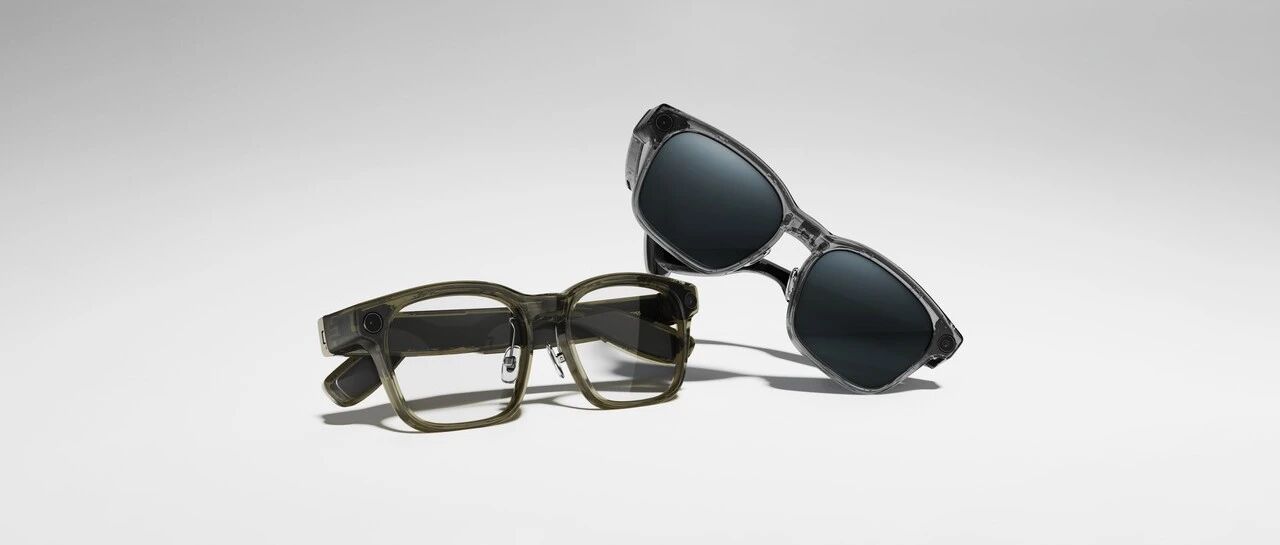
Core Insights - The launch of the Livis AI glasses by Li Auto marks a significant step in the company's strategy to become a global leader in artificial intelligence terminals, extending the AI experience from vehicles to everyday life [1][2] - The Livis AI glasses feature a lightweight design at 36 grams, an impressive battery life of 18.8 hours, and the proprietary Livis OS, addressing industry challenges related to weight, battery life, and performance [1] - The glasses are equipped with the AI assistant "AI Ideal Classmate," built on the MindGPT-4o multimodal model, offering advanced interaction capabilities such as deep questioning, memory, and research assistance [1][2] Company Strategy - Li Auto's CEO emphasized that the future competition in the automotive sector will focus on embodied intelligence rather than just electric parameters, with the Livis glasses being a practical implementation of this strategic vision [2] - The development of the Livis glasses showcases Li Auto's deep self-research capabilities and AI system strengths, utilizing a high-reuse, low-expansion R&D model to efficiently leverage automotive technology for the glasses' production [2] Market Context - The AI glasses market is currently experiencing significant growth, with a projected 110% year-on-year increase in shipments by the first half of 2025, and AI glasses accounting for 78% of total smart glasses shipments in the first half of this year [3] - Industry experts predict that AI glasses could reach a market size in the hundreds of billions, positioning Li Auto's entry into this market as a strategic move to capitalize on the AI wearable market and enhance its embodied intelligence strategy [3]
AI进化速递丨特斯拉发布人形机器人“擎天柱”跑步视频
Di Yi Cai Jing· 2025-12-03 12:59
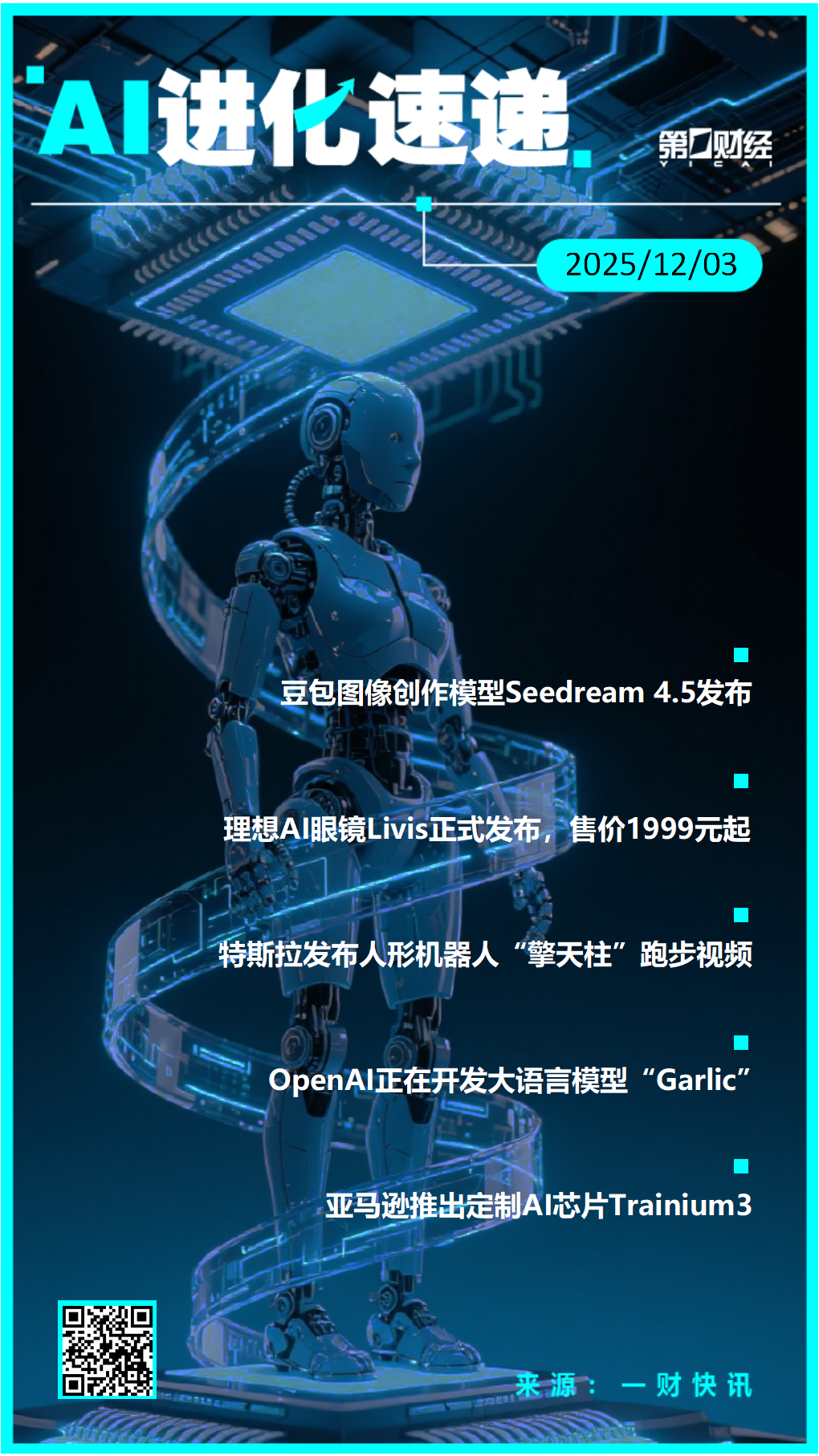
Group 1 - OpenAI is developing a new large language model named "Garlic" [1][3] - Tesla has released a video showcasing its humanoid robot "Optimus" running [1][3] - Amazon has launched a custom AI chip called Trainium3 [1][3] Group 2 - The image creation model Seedream 4.5 has been released [1] - The AI glasses Livis have been officially launched with a starting price of 1999 yuan [1] - The Qianwen APP has integrated Alibaba's learning model [1] - Hangzhou Tongxing Technology has released its first AI assistive glasses for the visually impaired [1] - The French AI startup Mistral AI has officially launched the Mistral 3 model [1]


理想汽车发布首款AI智能眼镜 Livis 补贴后售价1699元起
Xin Lang Cai Jing· 2025-12-03 12:41
转自:智通财经 【理想汽车发布首款AI智能眼镜 Livis 补贴后售价1699元起】智通财经12月3日电,理想汽车正式发布 首款AI智能眼镜 Livis,售价1999元起。12月31日前下单,享15%政府补贴,补贴后为售价为1699元 起。理想 Livis重36克,续航时间18.8小时,配备支持无线充电的眼镜盒,及 Type-C充电接口。(智通 财经记者 徐昊) ...
理想AI眼镜Livis正式发布:标配蔡司镜片,售价为1999元
Feng Huang Wang· 2025-12-03 12:39
Core Viewpoint - The official launch of the Livis AI glasses by the company marks a significant advancement in wearable technology, emphasizing lightweight design and enhanced optical performance [1] Product Features - The Livis AI glasses weigh only 36 grams, making them one of the lightest options in the market [1] - They come standard with Zeiss anti-blue light optical lenses, which enhance visual comfort and protection [1] - The glasses offer a battery life of up to 18.8 hours, catering to extended usage without frequent recharging [1] - Priced at 1999 yuan, the product is positioned competitively within the wearable tech market [1] - The MicroOLED high-definition display is optimized for visual clarity and scene adaptability, leveraging Zeiss's expertise in optical technology [1] - The lightweight design and custom near-sighted features are expected to improve the overall wearing experience [1]
理想AI眼镜Livis正式发布 售价1999元起
Di Yi Cai Jing· 2025-12-03 12:14
12月3日晚,理想AI眼镜Livis正式发布,售价1999元起。 (文章来源:第一财经) ...
新力量NewForce总第4916期
First Shanghai Securities· 2025-12-03 11:57
Group 1: Kuaishou Financial Performance - Kuaishou's Q3 2025 revenue reached 35.554 billion RMB, a year-on-year increase of 14.2%[9] - Gross profit for Q3 2025 was 19.434 billion RMB, with a gross margin of 54.7%, up 0.4 percentage points year-on-year[9] - Adjusted profit for Q3 2025 was 4.986 billion RMB, exceeding consensus expectations by 3.1%[9] Group 2: E-commerce and AI Growth - Kuaishou's e-commerce GMV grew by 15.2% year-on-year to 385 billion RMB in Q3 2025[11] - The AI business, Keling AI, generated over 300 million RMB in revenue in Q3 2025, contributing to marketing material consumption exceeding 3 billion RMB[12] - Kuaishou's cash reserves stood at 12.9 billion RMB, with total cash exceeding 106.6 billion RMB, indicating strong liquidity[9] Group 3: Stock Ratings and Price Targets - Kuaishou's target price is set at 82.4 HKD, maintaining a "Buy" rating, reflecting an 18 times PE valuation for 2025[13] - Ideal Auto's target price is 20.69 USD (87.85 HKD), with a "Buy" rating, indicating a potential upside of 15%[22] - Apple's target price is raised to 330.00 USD, suggesting a 15.31% upside from the current price[29] Group 4: Market Trends and Risks - The report highlights risks including macroeconomic downturns, intensified competition in short videos, and overseas business performance not meeting expectations[14] - The high-dividend stock investment strategy is gaining traction amid market volatility, with a focus on cyclical high-dividend stocks benefiting from policy expectations[46]

“蔚小理零” 各走各道
Xin Jing Bao· 2025-12-03 11:40
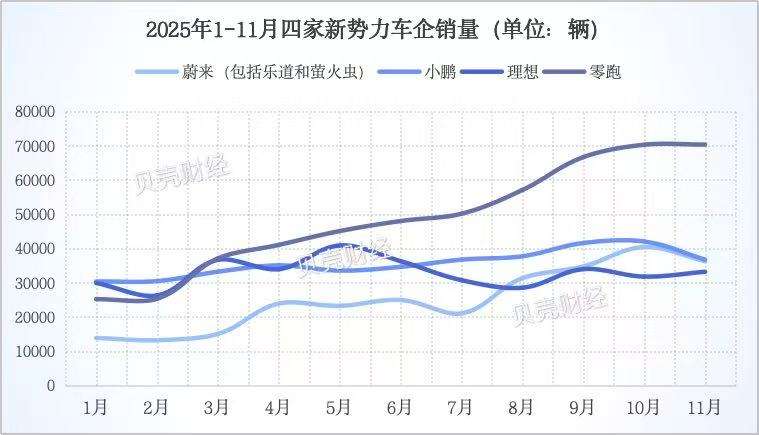
Core Insights - The new energy vehicle companies are experiencing significant differentiation, with varying sales targets and financial performances among them [1][3] Group 1: Sales Performance - Leap Motor has achieved a cumulative delivery of approximately 174,000 vehicles, resulting in a 97.3% year-on-year revenue increase to 19.45 billion yuan, and a net profit of 150 million yuan for the second consecutive quarter [4] - Li Auto reported the highest revenue among the four companies at 27.4 billion yuan, but faced a loss due to a recall of its MEGA model, which was linked to a fire incident [6] - Xpeng Motors recorded the highest gross margin at 20.1%, although its automotive gross margin was lower than that of Li Auto and NIO due to increased sales of lower-priced models [7] Group 2: Strategic Choices - Leap Motor and NIO focus on their core automotive business, with Leap Motor adopting a "high configuration, low price" strategy and NIO emphasizing cost reduction and efficiency to stabilize sales [2][10] - Xpeng Motors and Li Auto are pursuing AI technology, with Xpeng aiming to transform into a global embodied intelligence company and Li Auto returning to an entrepreneurial model to enhance its product and technology direction [2][13][14] Group 3: Future Directions - NIO plans to launch multiple new models in the coming year while focusing on high-margin vehicles to improve profitability [11] - Leap Motor aims to double its annual sales target to 1 million vehicles by 2026 and expand into technology sales, emphasizing its role as a technology provider [12] - Li Auto is transitioning back to an entrepreneurial management model to better adapt to the rapidly changing automotive landscape and aims to excel in embodied intelligence [13][14]


销量狂欢的B面:车企忙着发战报,经销商忙着去库存
Tai Mei Ti A P P· 2025-12-03 06:33
Core Insights - The Chinese automotive market in November 2025 showcased a stark contrast between the booming sales of new energy vehicles (NEVs) and rising inventory warning indices, indicating a potential disconnect between reported sales and actual consumer demand [2][9][12]. Sales Performance - Several companies, including Li Auto and Xiaopeng Motors, have reported significant year-on-year growth, with Xiaopeng achieving a 156% increase in deliveries from January to November 2025, surpassing its annual target [3][5]. - Leap Motor emerged as a standout performer, announcing over 500,000 units sold in 2025, significantly exceeding industry expectations [2][3]. - NIO's multi-brand strategy is paying off, with total deliveries reaching 36,275 units in November, driven by the new ES8 and the recently launched Le Dao brand [4][5]. Inventory Concerns - The inventory warning index for automotive dealers rose to 55.6% in November, indicating increased pressure on the distribution channel and suggesting that some of the reported sales figures may be due to inventory transfers rather than actual consumer purchases [9][10][12]. - The rising inventory levels reflect a shift in market dynamics from supply-driven growth to demand-constrained conditions, highlighting the need for companies to focus on genuine consumer demand rather than just sales figures [12][13]. Market Dynamics - The market is experiencing a transition from broad growth to a phase of "stock competition," where the ability to innovate and create demand through product offerings becomes increasingly critical [6][7]. - Companies are employing various strategies to navigate this competitive landscape, with some relying on flagship models to drive sales while others are transitioning from hybrid to fully electric vehicles [7][10]. Conclusion - The juxtaposition of high delivery numbers against rising inventory levels suggests that the automotive market is undergoing a significant transformation, necessitating a focus on channel health and sustainable demand rather than merely chasing sales figures [14][15].
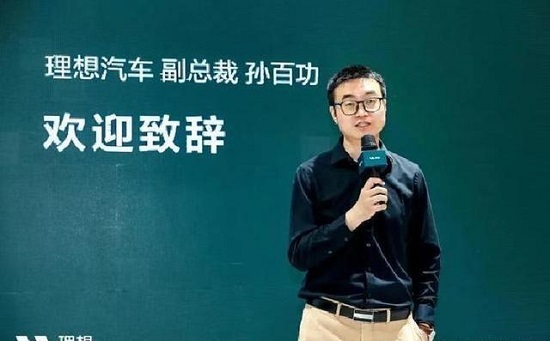
孙百功离开理想加盟阿维塔 出任GTM负责人
Zhong Guo Jing Ji Wang· 2025-12-03 04:50
Core Insights - The automotive industry is experiencing a clash between two opposing strategies: "de-Huawei" and "embracing Huawei" as exemplified by recent executive movements and management style shifts within companies like Li Auto and Avita [1][12][13] Group 1: Executive Movements - Sun Baigong, a senior executive with experience at both Huawei and Li Auto, has joined Avita as the GTM (Go-To-Market) head, overseeing product launch strategies and global market expansion [1][3] - Sun's background includes significant roles at Huawei, where he contributed to the independent branding and globalization of the Honor brand, showcasing his dual expertise in technology and automotive sectors [3][5] Group 2: Management Style Shifts - Li Auto has transitioned from a rigid PBC performance management system to a more flexible OKR system, reflecting a need for better collaboration and innovation amidst pressures for short-term performance [5][9] - The shift in management style at Li Auto is part of a broader trend where several Huawei-affiliated executives have left the company, indicating a strategic pivot away from Huawei's influence [5][12] Group 3: Avita's Strategic Positioning - Avita has submitted its IPO application to the Hong Kong Stock Exchange, aiming to become the first state-owned new energy vehicle company listed in Hong Kong, with projected revenue growth of 169% in 2024 [9][12] - The company plans to enter 50 countries and regions by 2026, and Sun's experience in market expansion aligns with this ambitious international strategy [9][12] Group 4: Industry Trends - The automotive sector is clearly dividing into two camps: one represented by Li Auto, which seeks to establish an independent decision-making framework, and the other by Avita, which aims to leverage Huawei's technological ecosystem for competitive advantage [12][13] - This strategic divergence highlights the ongoing adjustments companies must make in response to intensifying competition within the automotive industry [13]