Microsoft(MSFT)

Search documents
6600亿AI开支引恐慌!科技巨头市值蒸发9000亿,苹果独善其身
Jin Shi Shu Ju· 2026-02-06 09:52
科技巨头宣布今年将投入6600亿美元用于AI领域的资本开支后,股价随即遭遇重挫。投资者担忧这 笔"惊人的"资本支出,已远超这项新技术的盈利潜力。 过去一周,亚马逊(AMZN)、谷歌(GOOGL)和微软(MSFT)发布季度财报后,总市值合计蒸发 约9000亿美元。股东们对该行业庞大的资本开支计划表示抵触——这笔支出规模超过以色列的国内生产 总值,也让各家云业务的强劲营收增长黯然失色。 连同社交媒体巨头Meta(META)在内,这些企业计划投入数据中心以及训练、运行先进AI模型所需专 用芯片的资金,较2025年的4100亿美元增长60%,较2024年的2450亿美元更是飙升165%。 亚马逊首席执行官安迪・贾西(Andy Jassy)表示,需要投入如此巨额资金,才能让公司在AI、芯片、 机器人和卫星领域的发展抢占先机。他以亚马逊云科技营收增长24%为例,证明相关投资已开始产生回 报。 受创最严重的是微软,自上周三发布财报以来,其股价已下跌18%。微软云部门营收增长26%至515亿 美元,但这一增速略低于市场预期,而该公司季度数据中心支出激增66%的消息,也引发了市场的负面 反应。 微软还首次披露了其与OpenAI ...

瑞银Q4持仓:批量减持明星科技股 “七巨头”仅Meta(META.US)获增持




智通财经网· 2026-02-06 09:46
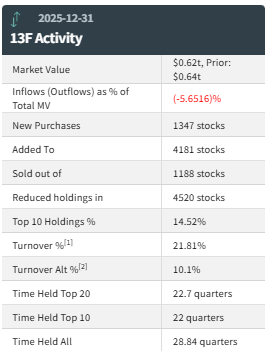
Core Insights - UBS reported a total market value of $620 billion for its Q4 2025 holdings, reflecting a decrease of 5.65% from the previous quarter [1][2] - The firm added 1,347 new stocks and increased holdings in 4,181 stocks, while reducing holdings in 4,520 stocks and completely selling out of 1,188 stocks [1][2] - The top ten holdings accounted for 14.52% of the total market value [1][2] Holdings Overview - The largest holding is NVIDIA (NVDA.US) with approximately 77.49 million shares valued at about $14.45 billion, representing 2.34% of the portfolio, down 11.47% from the previous quarter [3][4] - Microsoft (MSFT.US) is the second largest holding with around 28.04 million shares valued at approximately $13.56 billion, making up 2.20% of the portfolio, a decrease of 7.64% [3][4] - Apple (AAPL.US) ranks third with about 44.55 million shares valued at around $12.11 billion, accounting for 1.96% of the portfolio, down 10.57% [3][4] - Other significant holdings include Broadcom (AVGO.US) and Amazon (AMZN.US), with respective values of $8.23 billion and $7.99 billion [3][4] Changes in Holdings - UBS reduced its positions in major tech stocks such as Micron Technology (MU.US) by 16.14%, Taiwan Semiconductor (TSM.US) by 15.56%, and AMD (AMD.US) by 24.28% [5] - The firm also decreased its holdings in Google (GOOGL.US) by 9.05% and Tesla (TSLA.US) by 15.09%, while slightly increasing its position in Meta (META.US) by 0.85% [3][5] - New investments included Walmart (WMT.US), Alibaba (BABA.US), and a new position in TotalEnergies (TTE.US) [6] Trading Activity - The top five purchases included Microsoft call options, SPDR S&P 500 ETF (SPY.US), and MP Materials call options [6][7] - The top five sales were SPDR S&P 500 ETF put options, Invesco QQQ Trust put options, and Microsoft and NVIDIA shares [6][7]

Microsoft Stock Is Down 22%. Should You Buy the Dip, or Run for the Hills??
Yahoo Finance· 2026-02-06 09:40
Microsoft (NASDAQ: MSFT) is one of the world's most diversified technology companies, with a presence in software, cloud computing, gaming, social media, and more. It's leveraging its dominant position in some of those industries to participate in the artificial intelligence (AI) boom, and it's having incredible success despite some bumps in the road. Microsoft reported its operating results for its fiscal 2026 second quarter (ended Dec. 31) on Jan. 28, which sent its stock tumbling to a one-day loss of o ...
Xbox 25周年庆典在即,四款王牌旗舰游戏护航“回归之年”
Huan Qiu Wang Zi Xun· 2026-02-06 09:35
来源:环球网 Xbox 上个月举办了年度开发者直面会,正式拉开了 2026 年的序幕,并预览了今年即将发行的一些游 戏。微软为 2026 年准备了四大王牌:《极限竞速》《光环》、《神鬼寓言》和《战争机器》。微软内 部正在全力以赴,确保这四款游戏都能在今年如期发布。 外媒称,《极限竞速:地平线6》将于5月19日率先发售,微软内部消息人士透露,《光环:战役进化》 暂定于夏季发售。(思瀚) 【环球网科技综合报道】2月6日消息,据The Verge报道,微软即将迎来Xbox 25周年庆典。2026年是微 软重新聚焦Xbox平台的良机,同时在经历了Xbox硬件销量暴跌之后,微软也借此机会重新审视Xbox的 未来发展方向。 ...
硅谷巨头6600亿美元押注AI,市场却越烧钱越恐慌
华尔街见闻· 2026-02-06 09:33
Core Viewpoint - The unprecedented AI investment plans by major US tech companies are reigniting market fears of a bubble, leading to significant stock sell-offs despite strong earnings reports [5][6]. Group 1: Investment Plans and Market Reactions - Amazon, Google, and Microsoft collectively lost $900 billion in market value after announcing their capital expenditure plans, which total $660 billion by 2026, a 60% increase from $410 billion in 2025 and 165% from $245 billion in 2024 [5][6]. - Amazon's capital expenditure for this year is projected to reach $200 billion, exceeding expectations by $50 billion, which has led to an 11% drop in its stock price [6]. - Microsoft experienced the most significant decline, with an 18% drop in stock price following its earnings report, despite a 26% increase in cloud revenue to $51.5 billion [6][7]. Group 2: Investor Sentiment and AI Return Cycles - The rising capital expenditures signal that realizing the full potential of AI may require more time and resources, testing investor confidence in long-term returns [8]. - Analysts express concerns that the increased capital spending indicates a longer timeline for AI strategies to yield attractive returns, leading to a pause in investor enthusiasm for tech stocks [8][14]. - The Nasdaq index has dropped 4% over the past five days, reflecting a shift in market sentiment towards tech stocks [8]. Group 3: Company-Specific Developments - Apple reported record quarterly revenue of $144 billion, benefiting from strong iPhone sales, while its capital expenditure decreased by 17% to $2.4 billion, contrasting sharply with its peers [10][11]. - Apple's collaboration with Google to enhance its AI capabilities through a pay-as-you-go model has allowed it to minimize capital expenditures while still gaining AI benefits [11][12]. - Nvidia, as the highest-valued public company, is expected to face a turbulent market when it announces its earnings, as investors seek signs that the high capital expenditures will soon translate into revenue growth [13].



Microsoft Stock Is Down 22%. Should You Buy the Dip, or Run for the Hills?
The Motley Fool· 2026-02-06 09:20
Core Viewpoint - Microsoft stock experienced a significant decline following its latest earnings report, presenting a potential buying opportunity for long-term investors [1][15] Financial Performance - Microsoft reported its fiscal 2026 second quarter results, leading to a one-day stock loss of over 10% despite strong overall performance [2] - The stock is currently down 22% from its all-time high, yet it has achieved a remarkable 580,650% gain since its IPO in 1986 [3] AI and Copilot Developments - Microsoft has a competitive edge in the AI chatbot market through its integration of the Copilot virtual assistant into widely used software [5] - Over 400 million Microsoft 365 licenses have been sold globally, with only 15 million Copilot licenses purchased, indicating a modest penetration rate of 3.7% [6] - Paid Copilot subscriptions for individual developers increased by 77% compared to the previous quarter, and the Dragon Copilot for healthcare now assists over 100,000 medical professionals [7] Azure Cloud Performance - Azure's revenue grew by 39% year-over-year in the second quarter, surpassing Wall Street's forecast of 37.1%, although it decelerated from the previous quarter's 40% growth [9] - A significant backlog of $625 billion in customer orders, up 110% year-over-year, is attributed to a shortage of data center capacity, with 45% of this backlog coming from OpenAI [10][11] Valuation and Investment Opportunity - Microsoft stock is currently trading at a price-to-earnings (P/E) ratio of 26.5, the lowest valuation in three years and a discount compared to the Nasdaq-100 index's P/E of 32.8 [12] - Wall Street estimates suggest earnings could grow to $19.06 per share in fiscal 2027, resulting in a forward P/E of 22.4 [13] - The recent 20% decline in stock price offers a buying opportunity at historically low levels, despite challenges in Copilot and Azure [15]
“软件股末日论”点燃大变革! 恐慌抛售之后,市场将捧起AI时代的“软件基石”
智通财经网· 2026-02-06 09:13
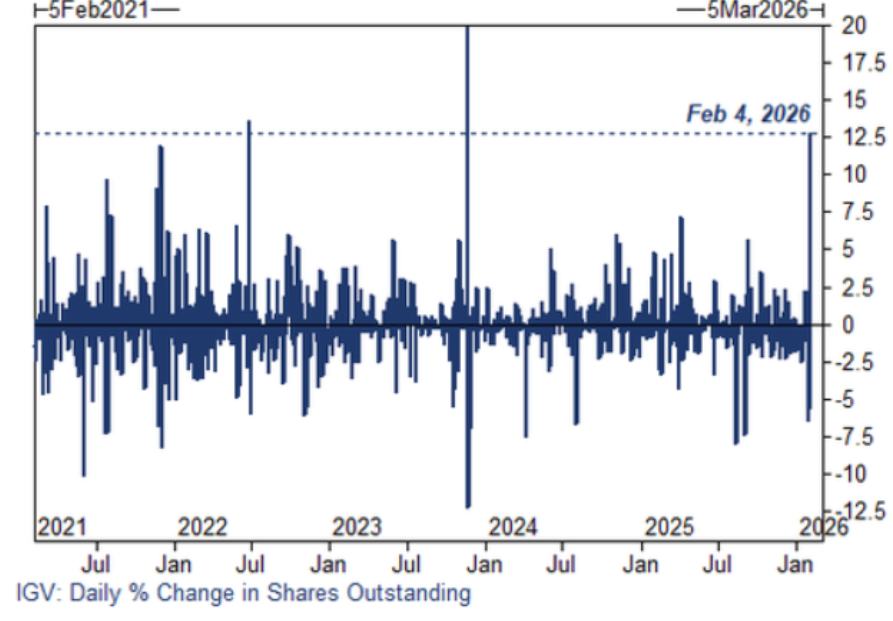
Core Viewpoint - The recent narrative of "Software-mageddon" has led to a significant sell-off in the software sector, particularly affecting SaaS stocks, following the launch of new AI tools by Anthropic, which are perceived as threats to traditional software business models [1][4][5]. Group 1: Market Reaction - The S&P 500 Software & Services Index has experienced a decline of approximately 30% since its recent peak at the end of October, marking the most severe sell-off since 2022 [1][6]. - Major software companies, including Thomson Reuters and Salesforce, have seen significant stock price drops, with some experiencing declines of up to 10% in a single day [5][6]. - The sell-off has been exacerbated by disappointing earnings guidance from major companies, including Microsoft, and heightened expectations for AI infrastructure spending [5][6]. Group 2: Institutional Response - Some institutional investors are beginning to enter the market to buy undervalued software stocks, believing that the market has overreacted to the AI threat [2][12]. - Analysts from firms like Goldman Sachs and Wedbush Securities suggest that the sell-off reflects an exaggerated "Armageddon scenario" and that companies will not abandon their existing software investments for new AI solutions [12][14]. Group 3: Expert Opinions - Rick Sherlund, a prominent technology analyst, argues that the software industry undergoes significant transformations every 10 to 15 years, and companies with strong fundamentals, like SAP, will likely benefit from AI rather than be replaced by it [3][16]. - Nvidia's CEO, Jensen Huang, emphasizes that AI will enhance existing software infrastructure rather than replace it entirely, countering the prevailing panic in the market [7][8]. Group 4: Long-term Outlook - Analysts believe that while AI may disrupt certain aspects of the software industry, it will also create new growth narratives, particularly for companies that can integrate AI into their existing platforms [9][10]. - The market is expected to see a bifurcation, where companies with strong data assets and integration capabilities, such as Microsoft and SAP, are likely to rebound more strongly than those with weaker competitive positions [11][15].
【特稿】科技巨头庞大AI投资“吓坏”美股
Xin Hua She· 2026-02-06 08:49
加上"元"公司,这些科技巨头今年拟用于训练、运行先进AI模型所需的数据中心以及专业芯片的支出高 达6600亿美元,将比它们2025年实际花费的4100亿美元高出约60%,更是2024年所花费2450亿美元的 2.5倍以上。 美国联博资产管理公司一基金负责人吉姆·蒂尔尼说:"资本支出规模令人咋舌。"即使这些公司年度总 营收增长14%至1.6万亿美元,也难以支撑如此大规模支出。 科技巨头庞大AI投资"吓坏"美股 卜晓明 近期相继公布今年在人工智能(AI)领域投资共计多达6600亿美元的计划后,美国几家科技巨头在股市遭 遇重挫。投资者担忧,相关资本支出规模正超越新技术本身的盈利潜力。 据英国《金融时报》6日报道,自过去一周陆续公布季度财报以来,亚马逊、谷歌和微软的市值已合计 蒸发9000亿美元。投资者对这些公司庞大的资本支出计划感到震惊。相关投资金额总和甚至超过了以色 列的国内生产总值,让这些公司的云业务营收增长相形见绌。 微软股价受冲击最大,自1月28日公布财报以来已下跌18%。市场对其数据中心单季支出飙升66%有所 反应。此外,微软首次披露,在其未来总额达6250亿美元的云服务合同中,有45%来自美国开放人工智 ...
资本开支超GDP,硅谷巨头6600亿美元押注AI,市场却越烧钱越恐慌
3 6 Ke· 2026-02-06 08:40
Group 1 - The core point of the article highlights that major US tech companies plan to invest a total of $660 billion in AI infrastructure by 2026, a figure that exceeds Israel's GDP and represents a 60% increase from the previous year's $410 billion [1][2] - Amazon, Microsoft, and Google have collectively seen their market value drop by $900 billion following their quarterly earnings reports, despite strong revenue growth in their cloud businesses [1][2] - Apple's strategy of minimal capital expenditure has allowed it to achieve record sales, making it the only major tech company to avoid the recent market sell-off [1][5] Group 2 - Amazon's capital expenditure for the year is projected to reach $200 billion, exceeding expectations by $50 billion, which has led to an 11% drop in its stock price [2] - Microsoft has experienced the most significant decline, with its stock price falling 18% after revealing a 66% increase in data center spending, raising concerns among investors [2] - Despite Google's record revenue of over $400 billion, its stock has also been negatively impacted by plans to double its capital expenditure to $185 billion [2] Group 3 - The rising capital expenditures signal that the realization of AI commitments may require more time and resources, testing investor confidence in long-term returns [3] - Analysts express concerns that the increased capital spending may not yield attractive returns, leading to a cautious market sentiment towards tech stocks [3] - The Nasdaq index has dropped 4% over the past five days, reflecting a shift in market sentiment towards AI investments [3] Group 4 - The failure of a $100 billion investment and infrastructure deal between OpenAI and Nvidia has contributed to market volatility, with Oracle's stock dropping 18% due to its heavy reliance on OpenAI [4] Group 5 - Apple's minimal capital expenditure strategy, with a reported $2.4 billion in Q4 and a total of approximately $12 billion for the year, contrasts sharply with the massive investments of its competitors [5] - Apple's collaboration with Google to enhance its AI capabilities through a pay-as-you-go model has allowed it to benefit from AI advancements without significant capital outlay [5] Group 6 - Nvidia is set to report earnings amid a turbulent market, with investors looking for signs that the escalating capital expenditures will soon translate into revenue growth [6] - Meta has announced plans to double its capital expenditure to $135 billion, but its stock gains have been reversed in the broader market sell-off [6] - Despite a 14% increase in combined annual revenue to $1.6 trillion for the four companies, market pessimism continues to overshadow positive financial results [6]
资本开支超GDP!硅谷巨头6600亿美元押注AI,市场却越烧钱越恐慌
硬AI· 2026-02-06 06:44
Group 1 - The core viewpoint of the article highlights that major US tech companies plan to invest a record $660 billion in AI infrastructure by 2026, which exceeds Israel's GDP and represents a 60% increase from $410 billion in 2025 and 165% from $245 billion in 2024 [2][3][6] - The massive capital expenditure plans have led to a significant market reaction, with Amazon, Google, and Microsoft collectively losing $900 billion in market value following their quarterly earnings reports [3][4][6] - Apple's strategy of minimal capital expenditure has allowed it to avoid the sell-off, reporting record revenue of $144 billion, while its capital spending decreased by 17% to $2.4 billion in the last quarter [10][11] Group 2 - Investors are increasingly anxious about the long-term return on investment from AI, as rising capital expenditures suggest that achieving AI's full potential may require more time and resources [8][9] - The market sentiment has shifted, with the Nasdaq index dropping 4% over five days, reflecting concerns about the sustainability of tech stocks amid rising capital expenditures [9][13] - Despite strong revenue growth, companies like Microsoft and Amazon face pressure to demonstrate that their significant spending will yield attractive returns, as investor patience wanes [9][10] Group 3 - Nvidia, as the highest-valued public company, is expected to face a turbulent market when it releases its earnings report, with investors looking for signs that the escalating capital expenditures will translate into revenue growth [13][14] - Meta has also announced plans to double its capital expenditures to $135 billion, but its stock gains were short-lived amid broader market sell-offs [13][14] - Overall, the combined annual revenue growth of the four companies reached 14% to $1.6 trillion, which is insufficient to alleviate the prevailing market pessimism [13]