NIO(NIO)

Search documents
蔚来李斌:2026年计划进入40个国家和地区
Guo Ji Jin Rong Bao· 2026-01-06 10:39
Core Viewpoint - The company aims to focus on the Chinese market while gradually expanding into global markets, with the "Firefly" brand leading the international strategy [2] Group 1: Market Strategy - The company will adhere to a strategy of "focusing on the Chinese market and steadily entering global markets" [2] - The "Firefly" brand is designed with European origins and has completed the development of right-hand drive models to meet global market needs [2] Group 2: Global Expansion Plans - Over the next 3-5 years, the company will prioritize the Chinese market while also aiming to achieve reasonable market share targets globally [2] - The company plans to enter 40 countries and regions by 2026, adding several new markets to its existing base [2] Group 3: Product Launch - The first right-hand drive model under the "Firefly" brand, which is also the first right-hand product of the company, will be officially unveiled at the Singapore Auto Show on January 8 [2] - Sales for the new model are expected to begin around the Chinese New Year [2]


特斯拉Model 3/Y/Y L车型官宣5年0息购车方案;蔚来宣布第100万台量产车下线,车型为全新蔚来ES8丨汽车交通日报
创业邦· 2026-01-06 10:05
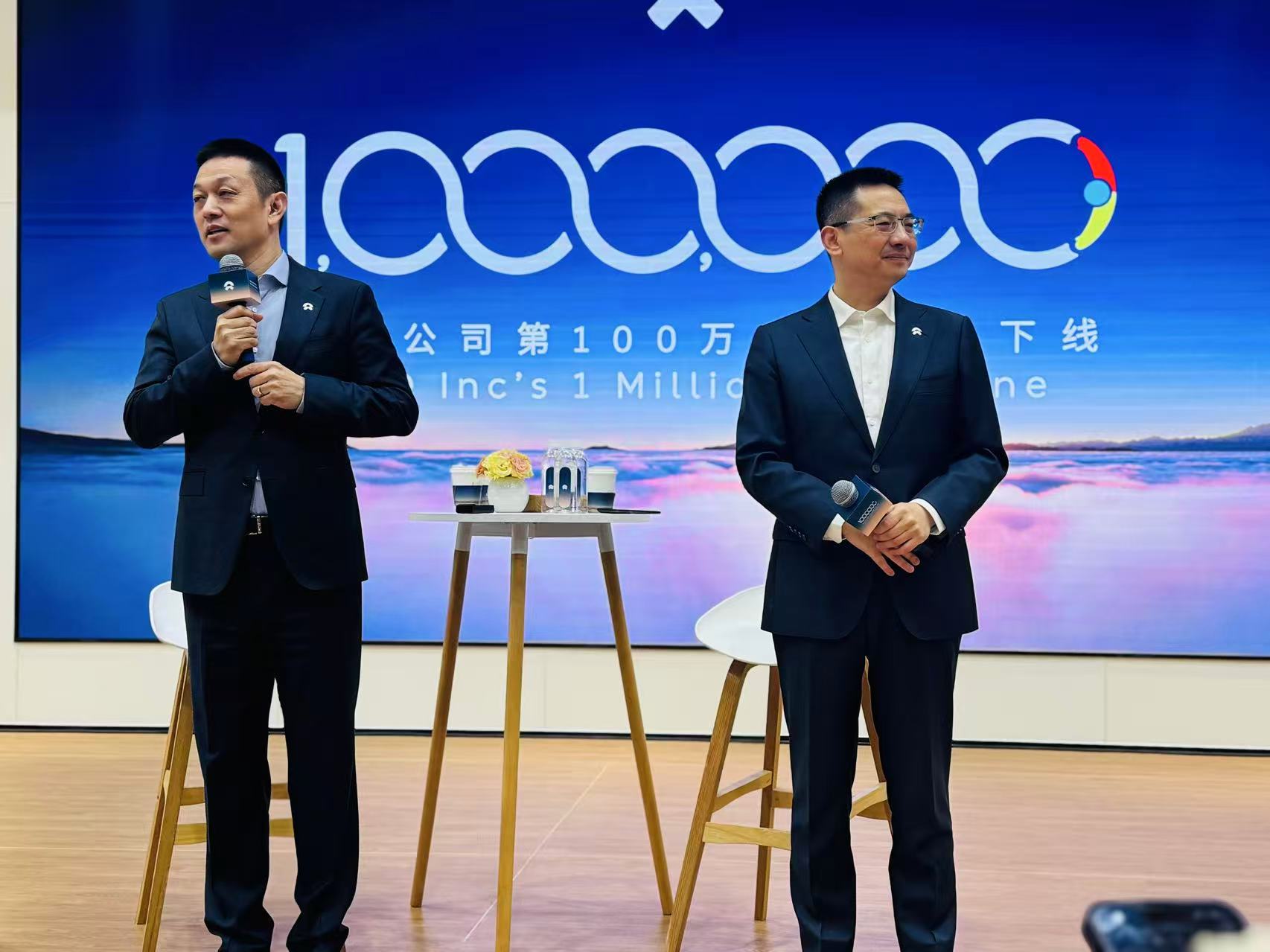
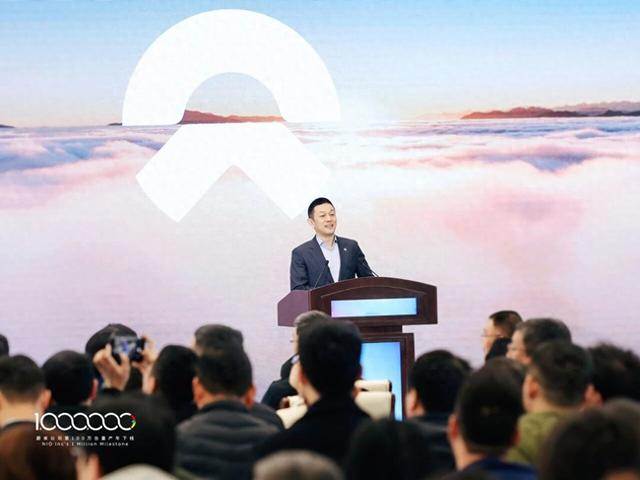
1.【蔚来宣布第100万台量产车下线,车型为全新蔚来ES8】1月6日上午消息,在今日的蔚来公司第 100万台量产车下线仪式上,蔚来创始人、董事长、CEO李斌发表演讲。他宣布,蔚来公司第100万 台量产车正式下线,第100万台量产车为全新蔚来ES8。他表示,这是蔚来发展的重要里程碑,自 2018年蔚来首台量产车下线以来,到今天三个品牌协同发展实现了这一成就。(新浪汽车) 2.【英伟达发布汽车平台Alpamayo,使车辆可在现实世界中"推理"】英伟达宣布一系列人工智能模 型和工具,旨在加快自动驾驶汽车的开发,为新一代机器人提供助力,从而扩大其技术的应用范围。 首席执行官黄仁勋周一在拉斯维加斯举行的CES展会上表示,该公司推出了一款名为Alpamayo的汽 车平台,使车辆能够在现实世界中进行"推理"。英伟达表示,潜在用户可以自行获取并重新训练 Alpamayo模型。这一免费产品旨在打造能够在突发情况下自行应对的车辆,如交通信号灯发生故障 时。车载计算机将分析来自摄像头和其他传感器的输入信息,将其分解为多个步骤并提出解决方案。 英伟达正在基于与梅赛德斯-奔驰的合作,开发能够在高速公路上实现脱手驾驶、并能在城市中自主 ...



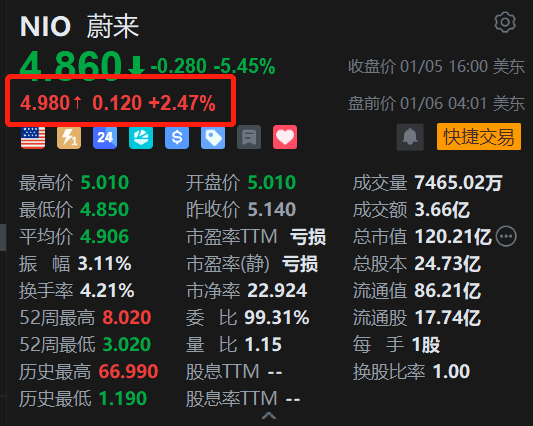
美股异动|蔚来盘前涨2.5% 李斌称公司2025年四季度有望盈利
Ge Long Hui· 2026-01-06 09:17
| NIO 蔚来 | | | | --- | --- | --- | | 4 860 L -0.280 -5.45% | | 收盘价 01/05 16:00 美东 | | 4.980 t 0.120 +2.47% | | 盘前价 01/06 04:01 美东 | | 三分 24 华 8 9 日 ♥ | | ● 快捷交易 | | 最高价 5.010 | 开盘价 5.010 | 成交量 7465.02万 | | 最低价 4.850 | 昨收价 5.140 | 成交额 3.66亿 | | 平均价 4.906 | 市盈率ITM 亏损 | 总市值 120.21亿 (--) | | 振 幅 3.11% | 市盈率(静) 亏损 | 总股本 24.73亿 | | 换手率 4.21% | 市净率 22.924 | 流通值 86.21亿 | | 52周最高 8.020 | 委 比 99.31% | 流通股 17.74亿 | | 52周最低 3.020 | 量 比 1.15 | 色 主 1龄 | | 历史景高 66.990 | 股息TTM -- | 换股比率 1.00 | | 历史最低 1.190 | 股息率TTM -- | | ...
美股中概股盘前涨跌互现,携程涨2%
Jin Rong Jie· 2026-01-06 09:11
Core Viewpoint - US-listed Chinese stocks showed mixed performance in pre-market trading, with some companies experiencing gains while others faced declines [1] Group 1: Stock Performance - Ctrip saw an increase of 2% [1] - ZTO Express and NIO both rose by 1% [1] - Futu Holdings experienced a slight gain of 0.5% [1] - Alibaba's stock declined by 0.8% [1]


【新能源周报】新能源汽车行业信息周报(2025年12月29日-2026年1月4日)
乘联分会· 2026-01-06 09:07
Industry Information - CATL plans to apply sodium batteries on a large scale in fields such as battery swapping, passenger cars, commercial vehicles, and energy storage by 2026, indicating a new trend of "sodium-lithium dual star shining" [9] - The National Bureau of Statistics reported that profits in the equipment manufacturing industry increased by 7.7% year-on-year from January to November 2025, significantly contributing to overall industrial profit growth [9] - Gansu's 14th Five-Year Plan emphasizes the cultivation of new consumption types, including digital, green, and intelligent consumption, to stimulate economic growth [10] - NIO's battery swapping network has expanded significantly, with over 1,000 new battery swapping stations established within a year [12] - The Chinese automotive market is seeing a surge in electric vehicle sales, with a market share of 79.2% for pure electric models in Israel, led by the Chery Jetour 7 [16][17] Policy Information - The Ministry of Industry and Information Technology has initiated a carbon footprint declaration for automotive power batteries, aiming to establish a management system by the end of 2026 [26] - The 2026 "old-for-new" vehicle subsidy policy will adjust to a percentage of the vehicle price, with a maximum subsidy of 20,000 yuan for new energy vehicles [26][27] - The State Council's guidelines promote high-quality development of the power grid, supporting the construction of charging infrastructure and optimizing the connection process for charging facilities [39] - The implementation of the "Beautiful China Pilot Zone" action plan aims to establish a multi-modal green transportation system and enhance the charging infrastructure for electric vehicles [23] - The Guangdong Shenzhen District has issued management measures for new energy vehicle charging and swapping facilities, mandating a minimum installation ratio for charging facilities in new buildings [32][33]




蔚来第100万台量产车下线,李斌表态未来每年保持40%-50%增长
Guo Ji Jin Rong Bao· 2026-01-06 08:39
Core Viewpoint - NIO has reached a significant milestone with the production of its 1 millionth vehicle, marking a new starting point for the company as it aims for continued growth and expansion in the electric vehicle market [1][3] Group 1: Production Milestone - NIO's 1 millionth production vehicle rolled off the assembly line at its advanced manufacturing facility in Hefei, Anhui [1] - The achievement of 1 million vehicles is seen as a new beginning for NIO, indicating its potential for future growth [3] Group 2: Future Goals - NIO plans to have over 10,000 battery swap stations by 2030, enhancing its infrastructure for electric vehicle support [3] - The company aims to deepen collaboration among its three brands: NIO, Lantu, and Firefly, to increase market share across various segments [3] - NIO targets an annual growth rate of 40%-50% in vehicle deliveries [3] Group 3: Recent Performance - In 2025, NIO achieved a delivery volume of 326,000 vehicles, representing a year-on-year increase of 46.9%, setting a new historical record for the company [3]
蔚来汽车:多品牌战略
数说新能源· 2026-01-06 08:28
Core Viewpoint - The article emphasizes the importance of technological innovation and market recognition in driving the success of electric vehicle models, highlighting the company's focus on safety, cost reduction, and maintaining high average vehicle prices in the premium segment [1][2]. Part 1: Review of 2025 - The success of popular models is attributed to technological innovation gaining market acceptance [1]. - The average vehicle price for the brand is over 200,000, with an expected increase in the second half of 2025 [1]. Part 2: Achieving 1 Million Units - The company has reached 1 million units, which is considered modest in the industry, emphasizing the commitment to high-end pure electric vehicles and user-centric development [2][3]. - The company acknowledges the support from Anhui province, which has contributed to lower logistics costs and a high talent density in automotive R&D [3]. Part 3: 2026 Business Goals - The main focus for 2026 will be on third-generation vehicle models and aggressive goals for battery swap stations [5]. - The company aims for a sales growth of 40%-50% and plans to expand its sales network into lower-tier markets [5]. - The company will not set specific sales targets but expects to maintain a growth rate of 40%-50% annually [5]. Part 4: Product Planning - New vehicle launches are planned for the second and third quarters, with the ES9 model entering mass production [7]. - The company is also exploring new vehicle formats, including smaller cars [7]. Part 5: Multi-Brand Strategy - The company is collaborating with celebrities and events to promote its brand, with steady growth in sales orders for its new platform [8]. - The goal is to establish 10,000 battery swap stations in China by 2030, with significant investments in smart driving capabilities [8]. Part 6: Q&A Insights - There are currently no plans to pass supply chain cost increases onto end prices, with future pricing dependent on industry developments [9]. - The company is focused on achieving its sales targets for the Firefly brand this year [9]. Additional Insights - The company has captured 61% of the domestic high-end small car market, with future growth expected from overseas markets [10].

蔚来李斌:内存涨价压力巨大,“买车要趁早”
Xin Lang Cai Jing· 2026-01-06 08:06
Group 1 - The core point of the article highlights NIO's achievement of producing its one millionth vehicle at its manufacturing plant in Hefei, while also addressing the pressure from rising memory prices in the automotive industry [1] - NIO's founder and CEO, Li Bin, indicated that the current cost pressure from memory price increases has not yet been passed on to end consumers, suggesting that consumers should consider purchasing vehicles sooner [1] - In 2025, NIO delivered a total of 326,000 new vehicles, marking a historical high with a year-on-year growth of 46.9%, including 178,800 units from the NIO brand, 107,800 from the Ladao brand, and 39,400 from the Firefly brand [3] Group 2 - Li Bin stated that NIO has invested over 65 billion yuan in technology research and development, focusing on 12 core technologies for smart electric vehicles, and over 18 billion yuan in charging and battery swap infrastructure, with 8,541 charging stations built nationwide [3][5] - NIO aims to continue investing in its 12 core technologies to maintain a competitive edge and plans to exceed 10,000 charging stations by 2030, while also enhancing brand synergy across its three brands to achieve annual growth of 40%-50% [5] - For the first three quarters of 2025, NIO reported cumulative revenue of 52.838 billion yuan, a year-on-year increase of 14.8%, with a cumulative net loss attributable to shareholders of 15.693 billion yuan, while projecting profitability in the fourth quarter of 2025 [5]
蔚来第100万台量产车下线 李斌称未来将保持每年销量增长40%-50%
Xin Hua Cai Jing· 2026-01-06 06:44
Core Insights - NIO has achieved a significant milestone with the production of its one millionth vehicle at its manufacturing facility in Hefei, Anhui, and aims for annual sales growth of 40% to 50% in the future [2] Group 1: Company Strategy and Goals - The company plans to maintain its focus on 12 core technologies to ensure a leading edge in technology and products [2] - NIO aims to invest in infrastructure development, targeting over 10,000 charging and battery swap stations by 2030 [2] - The company intends to deepen its presence in the Chinese market while expanding globally in a more stable and efficient manner [2] Group 2: Collaborations and Investments - NIO has signed a framework agreement with Chery Automobile and JAC Motors to establish a collaborative innovation platform for the automotive industry [2] - The company has completed a collaboration project with Longxin Semiconductor for the industrialization of vehicle chips, aiming to foster a mutually beneficial industrial ecosystem in Anhui and Hefei [2] Group 3: Financial Investments and Infrastructure - Since its establishment in 2014, NIO has invested a total of 65 billion yuan in technology research and development, focusing on 12 core technologies for smart electric vehicles [3] - The company has invested 18 billion yuan in charging and battery swap infrastructure, with 8,541 charging stations built nationwide and over 96 million battery swap services provided [3] - NIO has developed a comprehensive capability system encompassing vehicle research, design, production, sales, and service, along with a brand matrix that includes NIO, Ladao, and Firefly [3]
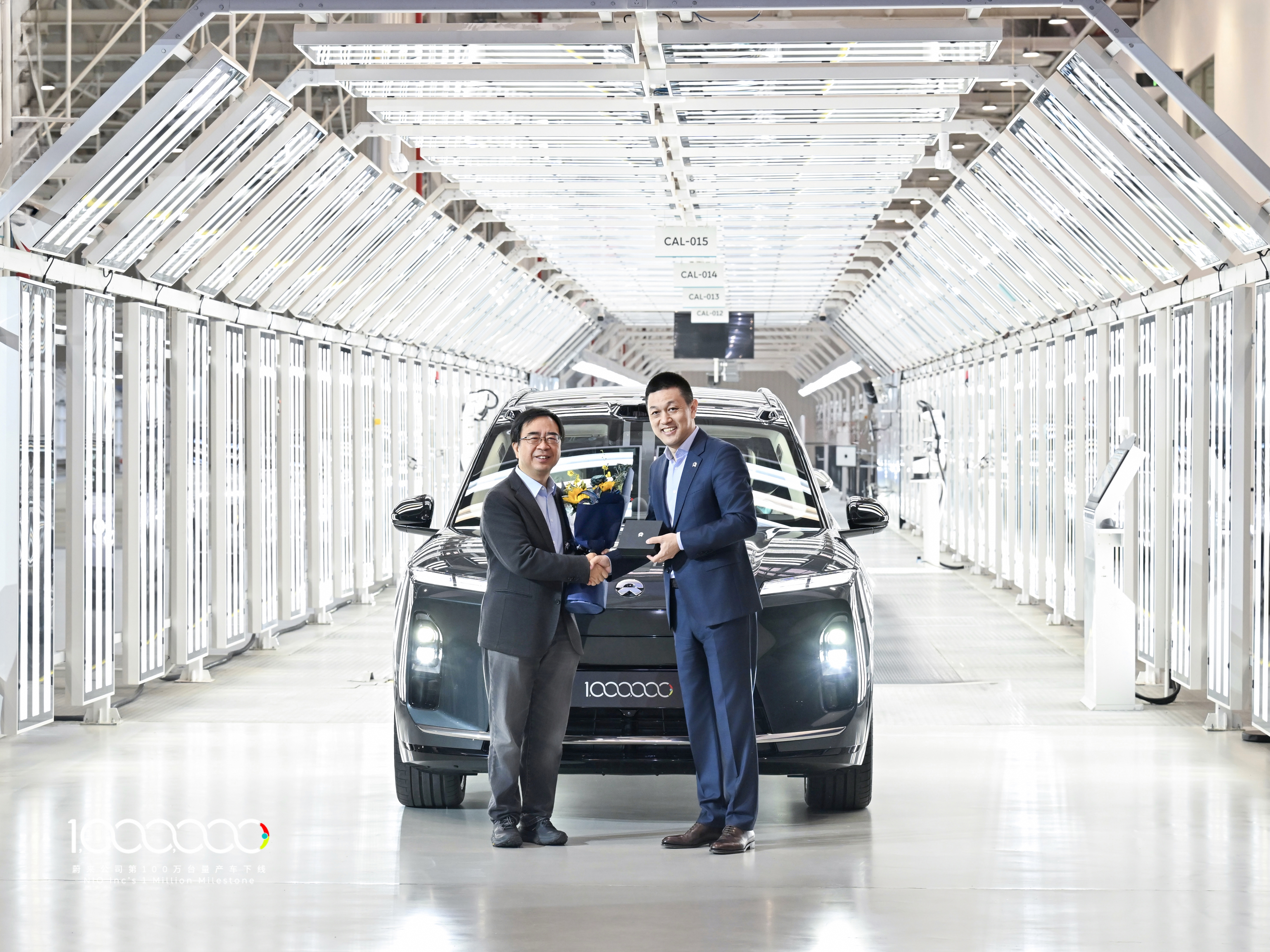
蔚来公司第100万辆量产车下线!
Zhong Guo Qi Che Bao Wang· 2026-01-06 06:24
Core Insights - NIO has achieved a significant milestone with the production of its one millionth vehicle, marking a key point in the company's development since its establishment in 2014 [1][5][6] - The production of the one millionth vehicle reflects not only NIO's growth but also the upward trajectory of China's smart electric vehicle industry, with projections indicating that China's new energy vehicle production will exceed 15 million units by 2025 [5][6] Company Achievements - The one millionth vehicle, a starry green NIO ES8, was donated to the Anhui Mozi Quantum Technology Foundation to support innovation in quantum technology [1] - NIO has launched a limited edition ET9 to commemorate this milestone, honoring innovators across various sectors [1] Industry Impact - NIO's achievement is seen as a representation of the technological and brand advancements within China's automotive industry, contributing positively to the transformation and upgrading of the sector [6][7] - The automotive industry in Anhui has experienced rapid development, becoming a leader in production and export of new energy vehicles, with NIO's operations significantly supported by the local government [6][7] Future Plans - NIO aims to enter a new phase focused on high-quality growth, with plans to enhance its technological and product leadership, expand its infrastructure, and deepen collaboration among its three brands [11] - The company has committed to investing in 12 core technologies and aims to build over 10,000 charging and battery swap stations by 2030 [11]