
Toyota(TM)

Search documents
丰田汽车(TM.US)斥资260亿美元私有化核心供应商丰田工业(TYIDY.US)
智通财经网· 2025-06-03 09:31
Group 1 - Toyota Motor Corporation (TM.US) announced a privatization deal for Toyota Industries Corporation (TYIDY.US) at a price of 3.7 trillion yen (approximately 26 billion USD), highlighting the Toyota family's control over the group and reflecting a shift in Japan's corporate governance model [1] - The acquisition price offered by Toyota Real Estate is 16,300 yen per share, which is a significant discount compared to the current market price of 18,400 yen per share, representing a 12.7% decrease [1] - The deal's actual valuation is 38% lower than the previously anticipated transaction size of 42 billion USD, indicating a notable reduction in market expectations [1] Group 2 - The cross-shareholding behavior among Japanese companies is facing increasing scrutiny from regulators and investors, leading to a rise in management buyouts and corporate acquisitions [2] - The Tokyo Stock Exchange has strengthened shareholder return requirements, prompting Japanese companies to accelerate the divestiture of non-core assets, with Toyota's move potentially serving as a benchmark case for simplifying ownership structures [2] - Simplifying the ownership structure can enhance decision-making efficiency and unlock asset value that has been "frozen" due to cross-shareholding arrangements [2]

跨国巨头重拾内燃机
Zhong Guo Qi Che Bao Wang· 2025-06-03 02:17
Core Viewpoint - The shift of multinational automakers towards internal combustion engines is driven by ongoing losses in electric vehicle (EV) businesses and the impact of U.S. tariffs under President Trump, leading companies like General Motors and Honda to refocus on more profitable segments like trucks and SUVs [2][4]. Group 1: General Motors - General Motors announced an investment of $888 million to produce a new generation of V8 engines at its Tonawanda plant, marking the largest single investment in its engine facilities [3]. - The new V8 engine is set to be deployed in various full-size trucks and SUVs starting in 2027, with improvements in performance, fuel efficiency, and emissions [3]. - This investment reflects GM's commitment to U.S. manufacturing and job creation, as stated by CEO Mary Barra [3]. Group 2: Honda - Honda plans to reduce its investment in electrification from 10 trillion yen to 7 trillion yen due to a slowdown in the EV market and trade uncertainties, pausing its Canadian EV and battery factory plans [4][6]. - The company aims to focus on hybrid vehicles, targeting global sales of 3.6 million units by 2030, with 2.2 million being hybrid models [5]. - Honda's decision is influenced by a significant drop in net profit, which fell by 24.5% year-on-year for the fiscal year 2024 [6]. Group 3: Other Automakers - Toyota, Mazda, and Subaru have committed to continuing investments in internal combustion engine technology, integrating it with electrification and green fuels [7]. - European automakers like Mercedes-Benz, Ford, and Volkswagen are adjusting their electric strategies while maintaining investments in internal combustion engines [10][11]. - Stellantis plans to invest $6 billion in South America for new vehicle development, including flexible fuel engines, indicating a broader trend among automakers to balance electrification with traditional fuel technologies [11].


日媒:瞄准AI自动驾驶,日本要建“汽车联盟”
Huan Qiu Shi Bao· 2025-06-02 23:04
【环球时报特约记者 孙晓蕾】"日本将组建汽车制造商联盟,研发人工智能(AI)自动驾驶汽车技 术。"《日经亚洲评论》日前报道,在日本政府支持下,丰田汽车、本田汽车和其他日本汽车制造商将 合作研发人工智能自动驾驶技术,共同构建AI基础设施并培养相关人才。日本政府拟通过财政补贴等 方式支持该研发机制,旨在强化本国相关供应链体系建设。 据报道,日本政府一直在推动"软件定义汽车"(SDV)的研发。SDV是指以人工智能为核心的软件技术 决定未来汽车。在5月29日举办的讨论会上,日本经济产业省和国土交通省发布了关于汽车产业数字化 转型的"移动性DX战略"修订案。《日刊汽车新闻》网站2日对此报道说,尽管"移动性DX战略"发布至 今仅1年,但随着电动化和智能化汽车的竞争愈演愈烈,日本经济产业省认为有必要灵活地重新审视 该"战略"。此次修订案新增了"支持使用人工智能自动驾驶"的内容。此外,AI基础设施、人才培养、相 关安全标准设定等,将是今后日本车企合作的重点。 对于此次日本政府支持AI自动驾驶研发方面的计划,日本共同社在文章中分析称,由于美国政府对全 球主要贸易伙伴挥舞"关税大棒",日本汽车产业的不确定性增加。有官员表示,有必 ...
PureCars Joins Toyota & Lexus Canada Programs as an Approved Provider for Digital Advertising
GlobeNewswire News Room· 2025-06-02 13:30
Core Insights - PureCars has been included as an approved provider of Digital Advertising in the Toyota & Lexus Canada Programs, enhancing its support for dealerships with comprehensive advertising solutions [1][2] - The company aims to help Toyota and Lexus dealers improve customer engagement and drive profitability through tailored marketing tools [2] - PureCars has over 17 years of experience in customer data management, advanced advertising solutions, and market analytics, making it a trusted partner for dealerships across North America [2][4] Product Offerings - PureCars provides a diverse portfolio of products including paid media, paid social, display advertising, video advertising, connected TV/OTT, local SEO, enhanced fixed ops solutions, and custom creative services [5] - The digital advertising services offered will enable Toyota & Lexus Canada dealers to execute highly targeted campaigns and deliver personalized customer experiences [3] Company Background - PureCars assists thousands of dealerships in increasing sales and reducing marketing costs through its unique combination of customer data management, advanced advertising solutions, digital merchandising, and market analytics [4] - The company is a certified digital provider for 17 OEMs in the U.S. and 3 in Canada, maintaining compliance with over 40 brands and serving 65 of the top 100 dealer groups in North America [4]

异动盘点0602|蜜雪冰城创新高,目标价飙至608港元!香港稳定币条例正式生效;PLTR涨超7%
贝塔投资智库· 2025-06-02 03:34
Group 1: Hong Kong Stock Market Highlights - Mixue Group (02097) rose over 7%, reaching a new high, with Daiwa raising its target price to HKD 608, optimistic about same-store sales growth and store opening speed [1] - Lianlian Digital (02598) increased nearly 10% following the official enactment of the "Stablecoin Regulation" in Hong Kong [1] - Automotive stocks collectively declined, with Li Auto-W, Great Wall Motors, and GAC Group all dropping over 2%, as the Ministry of Industry and Information Technology and the China Association of Automobile Manufacturers opposed "involution-style" price wars [1] - CSPC Pharmaceutical Group (02005) fell over 7% after reporting a 36.9% year-on-year decline in revenue and a 59.5% drop in net profit attributable to shareholders for Q1, with expectations of a 45%-60% decline in profit for the first half of the year due to demand drop and intensified competition [1] - Solar energy stocks dropped across the board, with New Special Energy, Xinyi Energy, Fuyao Glass, and Xinyi Solar all declining over 4%, as the anticipated "531" rush in May did not materialize following the April rush [1] - Chinese property stocks fell collectively in early trading, with R&F Properties, Sunac China, New City Development, and Agile Group all dropping over 4%, as data showed a 10.8% year-on-year decline in sales for the top 100 real estate companies from January to May, with a 17.3% drop in May alone [1] Group 2: Other Notable Stocks - Chongqing Rural Commercial Bank (03618) rose nearly 5% after being included in the CSI 300 Index, becoming the first local financial institution from Chongqing to be included, with a 6.25% year-on-year increase in net profit attributable to shareholders for Q1 [2] - Baker Hughes (02149) increased over 8%, reaching a new high after completing a placement of 3 million new H-shares, raising approximately HKD 117 million [2] - Giant Bio (02367) fell over 4% amid ongoing controversies regarding its product components, with the company stating it received an apology from the relevant testing agency and will pursue accountability for the rumors [2] - Chip stocks declined across the board, with Hua Hong Semiconductor, Jingmen Semiconductor, SMIC, and Shanghai Fudan all dropping over 2%, influenced by fluctuating U.S. policies and a decline in the Philadelphia Semiconductor Index [2] - Beike-W (02423) dropped nearly 6% as Huaxi Securities reported a significant slowdown in second-hand housing transaction growth, with a mere 8% year-on-year increase in 15 cities for the first 29 days of May, the lowest since October of the previous year [2] Group 3: U.S. Stock Market Highlights - AstraZeneca (AZN.US) rose over 2% after its cancer drug Imfinzi received EU approval for specific muscle-invasive bladder cancer treatments [3] - Trump Media & Technology Group (DJT.US) increased over 2.4% after announcing the completion of approximately USD 2.44 billion in financing, planning to use about USD 2.32 billion for Bitcoin reserves, potentially becoming one of the largest Bitcoin holders among U.S. public companies [3] - Nvidia (NVDA.US) fell over 2.92% after the CEO announced plans to sell up to 6 million shares by the end of 2025 [3] - Palantir (PLTR.US) rose over 7.73% as reports indicated the Trump administration relies on its technology for inter-agency data sharing, with over USD 113 million in government contracts since Trump took office [3] - Costco (COST.US) increased over 3.12% after reporting Q3 earnings that exceeded expectations, with revenue of USD 63.2 billion, an 8% year-on-year increase, and EPS of USD 4.28, demonstrating its scale advantage and member loyalty [3]


电动汽车增速放缓,丰田重仓押注插混
汽车商业评论· 2025-06-01 15:18
Core Viewpoint - The article discusses Toyota's strategic focus on plug-in hybrid electric vehicles (PHEVs) amidst a slowing growth rate in electric vehicle (EV) sales, highlighting the company's diversified approach to achieving carbon neutrality and its cautious stance compared to other manufacturers [3][5][11]. Group 1: Market Trends and Predictions - Electric vehicle sales are still growing, but the pace has slowed compared to early 2020 [3]. - Analysts predict moderate growth for PHEVs in the next five years, with S&P forecasting a penetration rate increase from about 2% last year to 5% by the end of the decade in the U.S. [5]. - AutoPacific estimates that by 2030, the penetration rate for PHEVs will reach approximately 4.2%, while AutoForecast Solutions expects it to stabilize around 3.3% [5]. Group 2: Toyota's Strategy and Product Line - Toyota has been promoting hybrid vehicles globally since 1997, with PHEVs being a natural extension of this strategy [7]. - Currently, PHEVs account for 50.6% of Toyota's electric vehicle sales in North America [7]. - The company plans to expand its PHEV lineup, with a focus on increasing electric-only range [9][11]. Group 3: Sales Performance and Growth - Toyota and Lexus PHEV sales grew by 39% last year, with the Prius and RAV4 PHEV models increasing by 30% [13]. - Lexus PHEVs, including the new TX model, saw an impressive growth of 88.6% [14]. Group 4: Challenges and Consumer Education - PHEVs face higher manufacturing costs due to the dual powertrain system, making them more expensive than traditional hybrids or gasoline vehicles [16][18]. - Educating consumers about the benefits and operation of PHEVs is crucial for increasing market acceptance [20]. Group 5: Future Models and Innovations - Toyota is transitioning core models to offer only hybrid options, starting with the new Camry and RAV4 [23]. - The Grand Highlander is expected to feature a PHEV system, likely based on the RAV4's technology [25]. Group 6: Long-term Strategy and Production Capacity - Toyota's long-term strategy includes offering a variety of powertrain options, including hybrids, PHEVs, and EVs [27]. - The company is set to begin battery production at its new North Carolina plant, which will support the demand for PHEVs and EVs [31][32].

日本车企针对AI自动驾驶技术展开合作
日经中文网· 2025-05-31 08:01
Group 1 - Major Japanese manufacturers, including Toyota and Honda, are collaborating on AI-based autonomous driving technology to ensure safety and build AI infrastructure while nurturing talent [1][2] - The Japanese government is supporting the establishment of a collaborative system among large enterprises in the AI autonomous driving sector and is providing assistance to small and medium-sized enterprises to promote domestic production of components [1][2][3] - The development of Software Defined Vehicles (SDV), which rely on software updates via the internet to enhance performance, is a key focus for the Japanese government [2][3] Group 2 - The revised "Digital Transformation Strategy for Vehicles" aims to accelerate the development of AI autonomous driving and includes collaboration in seven areas, such as utilizing generative AI in semiconductor and manufacturing processes [2][3] - Japan's goal is to achieve a domestic and international sales target of 12 million vehicles and a global market share of 30% by 2030 [3] - AI-based autonomous driving is expected to provide smoother driving experiences and reduce the number of cameras and sensors needed, thereby lowering average costs per vehicle [3]

可能援助日产的丰田去年净利润是中国车企总和的两倍有余
Xin Lang Cai Jing· 2025-05-30 11:06
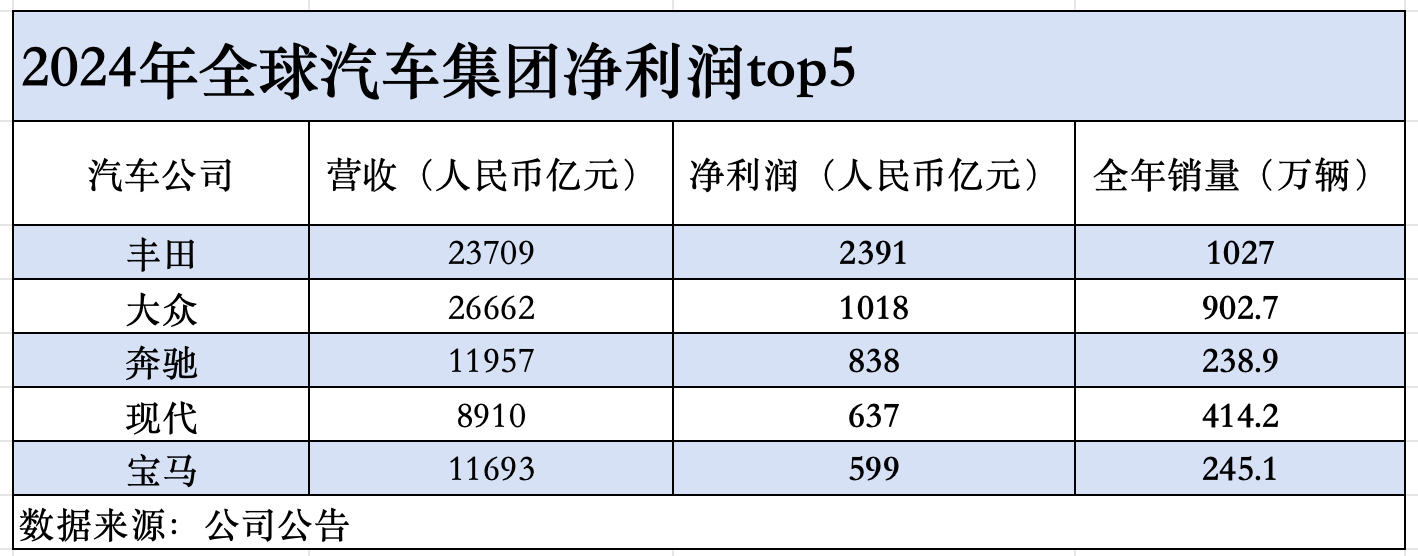
Group 1 - Toyota executives have engaged in discussions with Nissan regarding potential collaboration, indicating a willingness to provide support through a proposed assistance plan, which could reshape the global automotive industry if realized [1] - Nissan, facing financial difficulties, previously explored a merger with Honda, but negotiations ceased due to various obstacles, leading to a leadership change and the introduction of the "Re:Nissan" recovery plan by the new CEO [1] - Toyota has a history of strategic partnerships with other Japanese automakers through equity stakes, holding shares in Subaru (20%), Mazda (5.1%), Suzuki (4.9%), and Isuzu (5.9%), enhancing collaborative synergies [1] Group 2 - For the fiscal year from April 2024 to March 2025, Toyota reported operating revenue of 48.04 trillion yen (approximately 2.37 trillion RMB), a 6.5% increase from the previous fiscal year, while net profit was 4.77 trillion yen (approximately 239.1 billion RMB), a 3.6% decline [2] - Toyota's total sales for the year reached 10.273 million units, a slight decrease of 0.3%, with Lexus brand sales down by 5.9% to 612,000 units [2] Group 3 - In terms of net profit, Toyota's 239.1 billion RMB is more than double that of Volkswagen, which reported 101.8 billion RMB, and is equivalent to the combined net profits of Volkswagen, Mercedes-Benz, and BMW [3] - Toyota's operating profit margin stands at 10%, surpassing Volkswagen's 5.9% and Tesla's 7.2%, with cash reserves of 8.98 trillion yen, 1.8 times that of the combined cash reserves of the three major German automakers [3] Group 4 - The highest net profit among domestic automotive companies in China was BYD at 40.3 billion RMB, which is only one-sixth of Toyota's net profit [5] - The total net profit of all profitable listed automotive companies in China was approximately 93.2 billion RMB, which is only about 45% of Toyota's net profit [5] Group 5 - Toyota's sales structure shows North America as its largest market with 2.73 million units sold, followed by China and Japan with 1.79 million and 1.5 million units, respectively, indicating a diversified production capacity that enhances risk resilience [5] - Chinese automotive manufacturers are still in the exploration phase for international markets, primarily focusing on domestic sales, with overseas production capacity only recently beginning to develop [5] Group 6 - Analysts note that while Toyota's sales have been impacted by certification violations, its profit margins remain stable, contrasting with the intense price competition in the Chinese market that has pressured profit margins [6] - The profit margin in China's automotive industry has declined over the past five years, dropping to 3.9% in the first quarter of this year, significantly lower than Toyota's 10% operating profit margin [6] Group 7 - Toyota's joint ventures in China, including FAW Toyota and GAC Toyota, have seen significant profit declines, as the company struggles to compete in a market increasingly dominated by electric and hybrid vehicles [7] - Toyota's electric vehicle offerings in China are limited, with only a few models available, and while some models have shown better performance than others, they still lag behind domestic competitors [7] Group 8 - For the next fiscal year, Toyota anticipates operating profit to reach 3.8 trillion yen (approximately 174.6 billion RMB), a 21% decrease, and net profit to drop by 34.9% to 3.1 trillion yen [8] Group 9 - The depreciation of the dollar is expected to reduce Toyota's profits by 745 billion yen, and U.S. tariffs are projected to negatively impact sales by up to 180 billion yen in the coming months [9] - Toyota plans to enhance local production and product development in the U.S. in response to changing global trade dynamics and tariffs [9]
Joby Aviation Stock Up 28.8% on Wednesday's Trading: Here's Why
ZACKS· 2025-05-29 16:26
Core Insights - Joby Aviation's shares surged by 28.8% to $8.86 following the announcement of a $250 million investment from Toyota, aimed at certification and commercial production of electric air taxis [1][2] - The total investment from Toyota in Joby has reached $894 million, reflecting strong investor confidence in the air-taxi startup's future prospects [2] Company Developments - Joby successfully flew two aircraft simultaneously for the first time, marking a significant milestone in its flight-testing program [3] - The company has partnered with Delta Air Lines and Uber Technologies to launch air taxi services in New York and Los Angeles, pending FAA certification [3] - Internationally, Joby has partnered with Virgin Atlantic for services in the UK and ANA Holdings for services in Japan [4] Testing and Progress - Joby has completed over 40,000 miles of test flights, including demonstration flights in New York City, Korea, and Japan [5] - The sixth aircraft is undergoing final checks, with two others at Edwards Air Force Base for testing with defense customers [5] Strategic Partnerships - The capital injection from Toyota is intended to accelerate Joby's certification and commercial production, indicating Toyota's commitment to urban air mobility [6] - Joby and Toyota are forming a strategic manufacturing alliance to enhance production processes and design optimization [7]


BERNSTEIN-日本量化策略-日本微观优于宏观
2025-05-29 14:12
Summary of Key Points from the Conference Call Industry Overview - The focus is on the Japan Quantitative Strategy, particularly in the context of the ongoing US-China tariff situation and its impact on the Japanese market [1][3]. Core Insights - **Tariff Suspension Impact**: The 90-day suspension of reciprocal tariffs between the US and China has led to a temporary calm in the market, although macro uncertainties remain high [1][3]. - **Micro-Level Focus**: Given the current market conditions, it is deemed more appropriate to concentrate on micro-level factors rather than macroeconomic trends [1][3]. - **Company Guidance Analysis**: Among 303 companies analyzed, 60 reflected tariff impacts in their guidance, 57 did not, and 175 made no mention of tariffs. This indicates a significant number of companies are either unaware or unaffected by tariff implications [6][8]. - **Market Reaction to Guidance**: Stocks reacted strongly to guidance headlines, suggesting that the detailed impacts of tariffs may not be fully priced into the market [6][14]. - **Share Buybacks**: Record levels of share buybacks were noted, with ¥18.7 trillion authorized in FY24 and over ¥3.8 trillion in April 2025 alone. However, the market response to these buybacks has been muted, primarily due to the influence of large-cap stocks on the TOPIX index [27][28]. Additional Important Points - **Sector Rotation**: There has been a noted shift away from defensive sectors from April to May, although the market remains fluid [6][27]. - **Analyst Dispersion**: The report highlights that stocks with low analyst dispersion have been favored, indicating a preference for stability in uncertain times [37][39]. - **Performance Metrics**: Companies that did not account for tariff effects in their guidance have shown higher returns immediately after earnings announcements compared to those that did [13][14]. - **Vulnerability of Non-Reflective Companies**: Companies that did not reflect tariff impacts may face vulnerabilities as the effects become more apparent in the future [14][19]. Conclusion - The analysis emphasizes the importance of understanding both micro-level factors and the broader market context, particularly in light of ongoing geopolitical tensions and their potential impacts on corporate performance and stock valuations. The focus on share buybacks and analyst dispersion provides additional layers of insight into market dynamics and investor behavior.