
XPENG(XPEV)

Search documents
智驾险仍徘徊“兜底服务”阶段
Jing Ji Wang· 2025-12-26 02:02
Core Viewpoint - The evolution of intelligent driving technology is leading to a revolution in transportation, with the recent approval of China's first L3-level vehicle licenses marking a significant step towards the commercialization of L3-level autonomous driving [1] Group 1: Intelligent Driving Technology and Market Developments - The L3-level "conditional automation" mode introduces "human-machine transfer" of driving responsibility, shifting focus to system reliability, algorithm decision-making, and sensor performance [1] - The emergence of "intelligent driving insurance" products in the market is primarily a safety net provided by automakers or intelligent driving solution suppliers, rather than genuine insurance products [2][3] - Companies like Xiaopeng Motors have launched intelligent driving insurance plans, with costs around 239 yuan per year, which require customers to purchase additional insurance from partnered companies [2] Group 2: Insurance Industry's Role and Challenges - Insurance companies play a crucial role in the design and risk control of these insurance products, but most current "intelligent driving insurance" offerings are essentially value-added services rather than independent insurance products [3] - The lack of access to critical driving data held by automakers complicates the ability of insurance companies to develop genuine intelligent driving insurance products [5] - The complexity of liability in "human-machine co-driving" scenarios presents challenges for insurance companies, as existing traffic safety regulations are based on human drivers [5] Group 3: Future Directions and Regulatory Environment - To realize intelligent driving insurance, collaboration across various sectors is necessary, including regulatory frameworks, data governance, and industry cooperation [6] - Policies encouraging the insurance industry to adapt to the impacts of intelligent driving are being developed, with a focus on evolving risk assessment and pricing models [6][7] - Experts emphasize the need for clear definitions and regulations regarding intelligent driving insurance to avoid overlaps with existing insurance products and ensure data transparency [7]

“人机共驾”再次进阶 智驾险仍徘徊“兜底服务”阶段
Zhong Guo Zheng Quan Bao· 2025-12-26 02:01
Core Insights - The evolution of intelligent driving technology is leading to a revolution in transportation, with the recent approval of China's first L3-level vehicle licenses marking a significant step towards the commercialization of L3-level autonomous driving [1] - The L3-level "conditional automation" introduces a shift in driving responsibility from human to machine, raising concerns about system reliability, algorithm decision-making, and sensor performance [1] - The emergence of "intelligent driving insurance" products has been noted, but these are primarily safety nets provided by automakers rather than true insurance products [1][2] Group 1: Intelligent Driving Insurance Landscape - Since 2025, there has been a notable increase in insurance products related to assisted and intelligent driving, with companies like Xiaopeng Motors offering "intelligent driving insurance" for an annual fee of 239 yuan [2] - Many of these insurance products require customers to first purchase traditional insurance before accessing additional coverage for intelligent driving scenarios, indicating a trend towards bundled services [2][3] - Current "intelligent driving insurance" products are largely backed by automakers rather than traditional insurance companies, often serving as value-added services rather than independent insurance offerings [3] Group 2: Challenges in Insurance Development - The lack of access to critical driving data held by automakers poses a significant challenge for insurance companies in developing true intelligent driving insurance products [5] - The complexity of responsibility in "human-machine co-driving" scenarios complicates the establishment of clear liability standards, as traditional insurance models are based on human drivers [5][6] - The need for high-quality, standardized data for accurate risk assessment is emphasized, with current data being monopolized by automakers, making it difficult for insurers to evaluate risks effectively [4][5] Group 3: Regulatory and Collaborative Efforts - There is a call for collaborative efforts among insurers, automakers, and technology companies to create a new ecosystem that addresses regulatory frameworks, data governance, and industry cooperation [6][7] - Recent policy signals indicate a push for the insurance industry to adapt to the impacts of intelligent driving, with a focus on evolving risk assessment and pricing models [6][7] - Experts suggest the establishment of a national data-sharing platform and the need for regulatory frameworks to clarify liability in intelligent driving scenarios [6][7]
政策开闸、车企抢跑,自动驾驶商业化“爬坡”进行时
Xin Hua Cai Jing· 2025-12-26 01:39
Group 1 - GAC Group's Haobo A800 has officially started L3 conditional autonomous driving highway testing, with a maximum speed of 120 km/h, approved by relevant authorities in Guangzhou [1] - The rapid advancement of L3 conditional autonomous driving indicates that the era of autonomous driving is accelerating [1] - The Ministry of Industry and Information Technology has officially announced the first batch of L3 autonomous driving models approved for testing in designated areas in Beijing and Chongqing [2] Group 2 - The essence of L3 level is the "phased transfer of driving responsibility," where the system becomes the actual driver in limited scenarios, while human drivers become standby operators [2] - The first batch of L3 models marks a significant milestone in allowing autonomous vehicles to enter the market in product form and explore commercialization [2] - Various brands, including XPeng and Li Auto, have accelerated their L3 autonomous driving approvals, with XPeng obtaining a testing license in Guangzhou and Li Auto in Beijing [2][3] Group 3 - XPeng's second-generation VLA platform, capable of L4 level, is expected to achieve mass production by Q1 2026 [3] - The first L3 autonomous driving special license plate was issued in Chongqing, and Beijing also issued its first batch of L3 highway autonomous vehicle license plates [3] - Companies like Baidu Apollo and Pony.ai are conducting regular operations of Robotaxi in specific areas, with some platforms achieving over a thousand daily orders [3] Group 4 - The global Robotaxi market is forming a "China-US dual-pole leadership" with rapid growth in the Middle East [5] - Tesla and Waymo are leading the industry in the US, while Chinese companies like Pony.ai and WeRide are expanding their operations domestically [5] - Chinese companies are accelerating their technology output and fleet deployment in regions like the Middle East and Southeast Asia [5][6] Group 5 - The Middle East is becoming a key market for Chinese companies due to high customer prices and strong policy support for autonomous driving [6] - The economic model of Robotaxi is at a critical turning point, with expectations of significant improvements in profitability by 2030 [6] - In the US and UAE, the profitability potential of Robotaxi is more significant, with projected gross margins of 53% and 44% respectively by 2030 [6] Group 6 - Despite the acceleration of commercialization, L3 autonomous driving is currently limited to specific pilot units and scenarios, with challenges remaining [7] - The commercial viability of L3 autonomous driving is questioned, as current regulations and market acceptance are still developing [8] - Some experts suggest that many manufacturers may skip L3 production and move directly to L4 level vehicles [8]

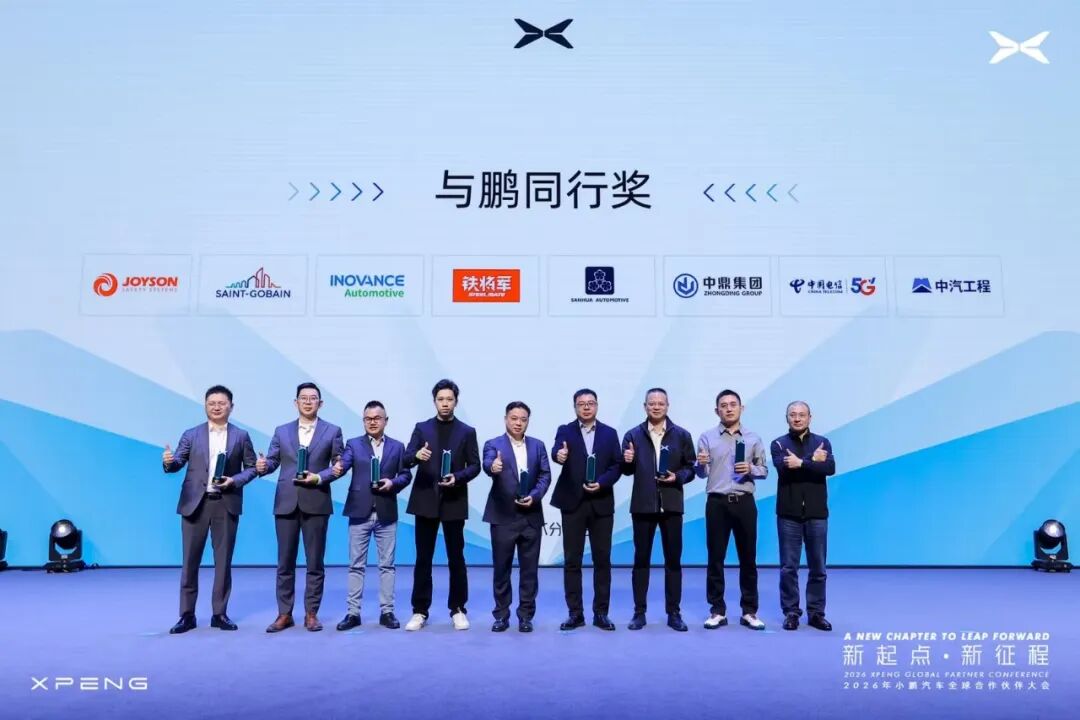
“鹏友”同行,共赴新程 | 中汽工程荣获小鹏汽车“与鹏同行奖”
Xin Lang Cai Jing· 2025-12-26 01:22
Core Insights - The collaboration between China Automotive Engineering Corporation (中汽工程) and Xpeng Motors (小鹏汽车) focuses on the implementation of advanced concepts in smart factory planning, green energy applications, and intelligent production scenarios, aiming to establish a benchmark factory for new energy vehicle manufacturing [2][4] - Recent projects, such as the Guangzhou Phase II assembly project, have addressed industry challenges like limited space in double-layer factories and high production rhythm requirements through modular layout and intelligent logistics technology, significantly enhancing production efficiency and product quality stability [2][4] - In the Wuhan painting project, advanced environmentally friendly painting processes and intelligent control systems have been utilized to create a low-emission, high-efficiency painting production line, improving both aesthetic quality and environmental sustainability for Xpeng Motors [2][4] - Facing profound changes in the automotive industry's electrification and intelligence, China Automotive Engineering Corporation aims to deepen cooperation with Xpeng Motors in areas such as new energy technology and intelligent manufacturing upgrades, promoting high-quality development in the new energy vehicle industry [2][4] Collaboration Overview - Since 2017, China Automotive Engineering Corporation has been deeply involved in supporting Xpeng Motors' growth, with collaboration spanning from research and trial production to the construction of multiple factories [5] - The partnership includes early trial experiments, research in Guangzhou, and various projects such as the EPC of the Guangzhou Huangpu factory and the design and EPC of the Wuhan factory, indicating a continuous deepening of cooperation [5] - The business scope covers essential areas such as engineering design, civil EPC, welding, painting, and assembly equipment supply, with projects distributed across Xpeng Motors' production bases in Zhaoqing, Guangzhou, and Wuhan, providing solid support for the construction of its intelligent manufacturing system and efficient production [5]

“人机共驾”再次进阶智驾险仍徘徊“兜底服务”阶段
Zhong Guo Zheng Quan Bao· 2025-12-25 21:11
以算法为罗盘、传感器为慧眼,智能驾驶技术的演进正带来一场出行革命。近日,工信部正式公布我国 首批L3级车型准入许可,作为试点的重庆、北京两地也陆续发放专用号牌,迈出L3级自动驾驶商业化 关键一步。 在L3级"有条件自动驾驶"模式下,"人机共驾"再次进阶。相比目前盛行的L2级"辅助驾驶",L3级驾驶责 任首次出现"人机转移",随之而来的风险核心也更加侧重于系统可靠性、算法决策、传感器性能等变 量。围绕智能驾驶衍生的新风险,"出了事故谁来赔"成为市场关切。 中国证券报记者近日从车企、险企等市场主体调研了解到,市面上近两年出现的所谓"智驾险"产品,实 则为车企或智驾方案供应商提供的兜底方案,并非真正的保险险种。业内人士表示,未来,随着智驾场 景不断丰富,与之适配的真正的智驾险应跟上创新节奏,打破数据壁垒,穿越错综复杂的人机定责迷 宫,为智能驾驶本身系紧安全带。 ● 本报记者 薛瑾 根据我国《汽车驾驶自动化分级标准》,汽车智能驾驶分为L0至L5六个级别,每个级别对应不同的自 动化程度和功能。随着自动驾驶等级提升(尤其是L3级落地),驾驶主体正从"人"向"机"转换,具备智 驾功能的汽车也催生出新的保险需求。然而,距离这 ...
“人机共驾”再次进阶 智驾险仍徘徊“兜底服务”阶段
Zhong Guo Zheng Quan Bao· 2025-12-25 21:09
Core Insights - The evolution of intelligent driving technology is leading to a revolution in transportation, with the recent approval of China's first L3-level vehicle licenses marking a significant step towards the commercialization of L3-level autonomous driving [1] - The L3-level "conditional automation" introduces a shift in driving responsibility from human to machine, raising concerns about system reliability, algorithm decision-making, and sensor performance [1] - The current market offerings labeled as "intelligent driving insurance" are primarily safety net solutions provided by automakers or intelligent driving solution suppliers, rather than genuine insurance products [1][2] Group 1: Market Developments - Since 2025, there has been a notable increase in insurance products related to assisted and intelligent driving, with companies like Xiaopeng Motors and GAC Group launching their own intelligent driving protection plans [2] - Xiaopeng Motors offers a "smart driving insurance" for 239 yuan per year, which provides compensation for accidents caused during the use of their intelligent driving features [2] - Other new energy vehicle manufacturers are also collaborating with insurance companies to provide supplementary coverage tailored to intelligent driving scenarios, often embedded as value-added services in the car purchase experience [2] Group 2: Insurance Industry Challenges - The design and risk control of these insurance products heavily rely on insurance companies, which are currently not offering true intelligent driving insurance to individual consumers [3][5] - The core data necessary for accurate risk assessment is largely monopolized by automakers, making it difficult for insurance companies to access critical information needed for pricing and claims [4][5] - The complexity of liability in human-machine driving scenarios poses significant challenges, as existing traffic safety regulations are based on human drivers, and the transition to L3-level automation complicates responsibility allocation [5][6] Group 3: Future Directions - To effectively implement intelligent driving insurance, collaboration across various sectors is essential, including regulatory frameworks, data governance, and industry cooperation [7] - Recent policy signals indicate a push for the insurance industry to adapt to the impacts of intelligent driving, with a focus on evolving risk assessment and pricing models [7][8] - Experts emphasize the need for clear definitions and regulations surrounding intelligent driving insurance, including liability recognition and data security, to ensure transparency and protect consumer rights [8]
价格合规为汽车业反内卷再加码
Xin Lang Cai Jing· 2025-12-25 12:40
Core Viewpoint - The release of the "Automobile Industry Price Behavior Compliance Guidelines" aims to regulate pricing behaviors in the automotive industry, addressing the ongoing "involution" competition and providing a foundation for healthy market development by 2026 [2][18]. Group 1: Industry Response and Impact - Major automotive companies such as BYD, Xpeng Motors, and BAIC Group have responded positively to the guidelines, committing to eliminate price fraud and unfair competition [2][18]. - The guidelines are expected to alleviate the long-standing issue of price inversion faced by dealers, which has led to significant financial losses, with 52.6% of dealers reporting losses in the first half of 2023 [3][19]. - The guidelines explicitly prohibit selling below cost, which is seen as a protective measure for dealers and is welcomed by the majority of them [4][20]. Group 2: Pricing and Rebate Issues - The guidelines address the complex rebate structures that often burden dealers, requiring manufacturers to clarify rebate policies and respect dealers' pricing autonomy [8][24]. - A survey indicated that while half of the brands have reduced rebate payment periods to within one month, some still exceed 60 days, creating operational pressure for dealers [8][24]. - The guidelines aim to promote transparency in pricing and rebate practices, shifting the market focus from price wars to value competition [5][21]. Group 3: Regulatory Framework and Compliance - The guidelines mandate that third-party platforms involved in automotive sales must adhere to pricing regulations, ensuring consumer rights and fair trading practices [9][25]. - A multi-dimensional compliance framework is proposed, including clear pricing rules, promotional conduct, and service charges to enhance transparency in the automotive sales process [10][26]. - The guidelines encourage the establishment of internal compliance mechanisms within automotive companies to prevent pricing violations and enhance brand integrity [10][26]. Group 4: Future Outlook and Challenges - The guidelines are seen as a significant step towards curbing irrational competition in the automotive market, with expectations for improved profitability across the industry [12][28]. - However, industry experts emphasize the need for detailed implementation rules to ensure effective execution, particularly regarding cost accounting standards [13][29]. - The successful implementation of the guidelines will require collaboration among manufacturers, dealers, and regulatory bodies to foster a healthy competitive environment [15][31].

逃离商场的“特斯拉们”,为何撑不下去了?
商业洞察· 2025-12-25 09:26
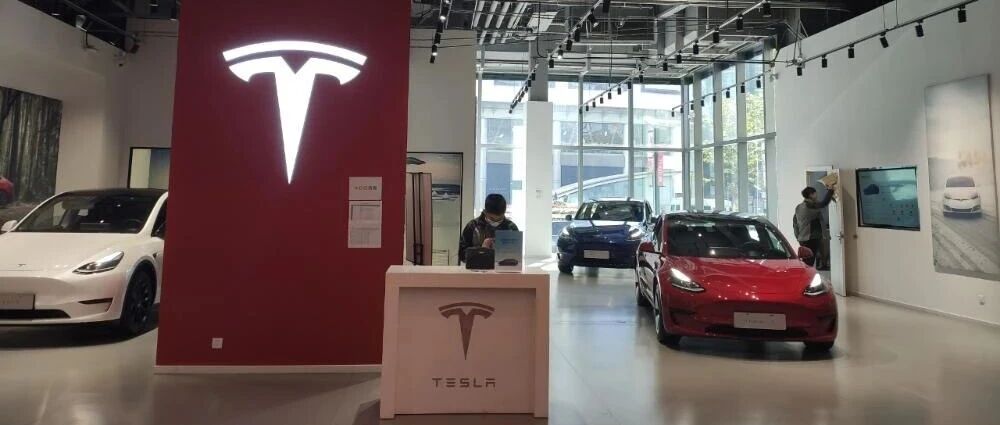
Core Viewpoint - The article discusses the decline of automotive stores in shopping malls, which were once a popular trend initiated by Tesla, highlighting the shift in strategy among electric vehicle manufacturers as they face increasing competition and changing market dynamics [4][6][12]. Group 1: Rise of Automotive Stores in Malls - Tesla pioneered the concept of selling electric vehicles in shopping malls, opening its first store in Beijing in 2013, which led to a nationwide trend [8][16]. - By August 2023, there were over 5,000 automotive stores in malls across 247 cities in China, indicating a significant expansion of this retail model [18]. - The initial appeal of automotive stores was their proximity to younger consumers and women, who are key demographics in the electric vehicle market [24][25]. Group 2: Shift in Strategy and Decline - Since 2024, the number of automotive stores in shopping malls has decreased by 37%, with major brands like Tesla and Xpeng retreating from this model [12][35]. - The shift is attributed to the need for car manufacturers to focus on core competencies and reduce costs amid fierce competition, leading to a reassessment of the effectiveness of mall locations [38][46]. - High operational costs and low sales conversion rates have made mall stores less viable, with some stores reporting monthly sales of fewer than five vehicles [47][49]. Group 3: Future of Automotive Stores - The article suggests that while the mall store model may not be entirely abandoned, it requires a more strategic approach, focusing on location and consumer engagement [56][68]. - Companies are encouraged to explore alternative retail formats, such as pop-up stores and targeted marketing strategies, to better connect with potential customers [64][66]. - The emphasis is on rational decision-making regarding retail presence, prioritizing sustainability and profitability over mere visibility [69][70].


深蓝董事长邓承浩:小鹏是可敬的友商
Feng Huang Wang· 2025-12-25 04:43
此前,邓承浩用十个字概括了L06最核心的竞争力:"公路磁悬浮,智驾老司机。"他解释,"磁流变悬 架"是市场唯一供给,源自军用技术,此前仅用于顶级豪车;"智驾老司机"则指L06标配带激光雷达的城 区NCA,实现"人无我有"。 据了解,深蓝L06主打"磁流变悬架"技术,官方称其为中国品牌首款搭载该系统的量产车型。该系统具 备10毫秒级响应能力,可实现全场景自适应软硬调节。智能驾驶方面,车辆配备包括1颗激光雷达在内 的27颗传感器,搭载双地平线J6芯片,算力达256TOPS,支持高速与城市领航辅助等90项智能驾驶功 能。 凤凰网科技讯12月25日,近日,有网友在社交平台发布自己在小鹏M03与深蓝L06之间的深度对比试驾 体验,并最终选择深蓝L06,由此引发了关于智能辅助驾驶新能源购车选择的讨论。对此,深蓝汽车董 事长邓承浩回应称,感谢用户对深蓝的认可,小鹏是可敬的友商,未来将继续专注于以安全为基石的智 能辅助驾驶研发。 ...

价格战“紧箍咒”来了 汽车行业能跳出内卷吗
Xin Hua Wang· 2025-12-24 23:47
而在销售一线,某自主品牌经销商负责人王经理的压力同样巨大:"几乎每个月都有销售任务和价 格政策调整,单纯卖车很难盈利,主要靠汽车售后和金融保险业务。" 国内汽车行业普遍面临"增收不增利"的挑战。许多车企为了抢占市场份额,持续采用激进的定价策 略,行业普遍感知部分车型的售价已逼近甚至可能低于健康盈利的临界点。 对于有购车计划的山东省济南市消费者马谦而言,最近每次走进汽车4S店,他的心情都十分矛 盾。一方面,市场上各种"直降数万""限时钜惠"的标语让人心动;另一方面,马谦总担心"今天买了明 天就降价",陷入持币观望的纠结。 这种消费者与经销商共同面临的困境,正是近年来汽车行业,尤其是新能源汽车领域"价格战"持续 白热化的缩影。 在此背景下,国家市场监督管理总局于12月12日发布《汽车行业价格行为合规指南(征求意见 稿)》(以下简称《合规指南》),旨在为行业竞争划定更清晰的价格行为边界,引发市场高度关注。 向无序价格战"亮剑" 当前,中国汽车市场特别是新能源汽车赛道,在取得产销规模世界领先成绩的同时,也深陷"内 卷"泥潭。一个突出表现是行业普遍面临"增收不增利"的挑战。许多车企为了抢占市场份额,持续采用 激进的定价 ...