XPENG(XPEV)

Search documents
美国关税砸遍的废墟上,站着中国车企
虎嗅APP· 2026-03-21 02:48
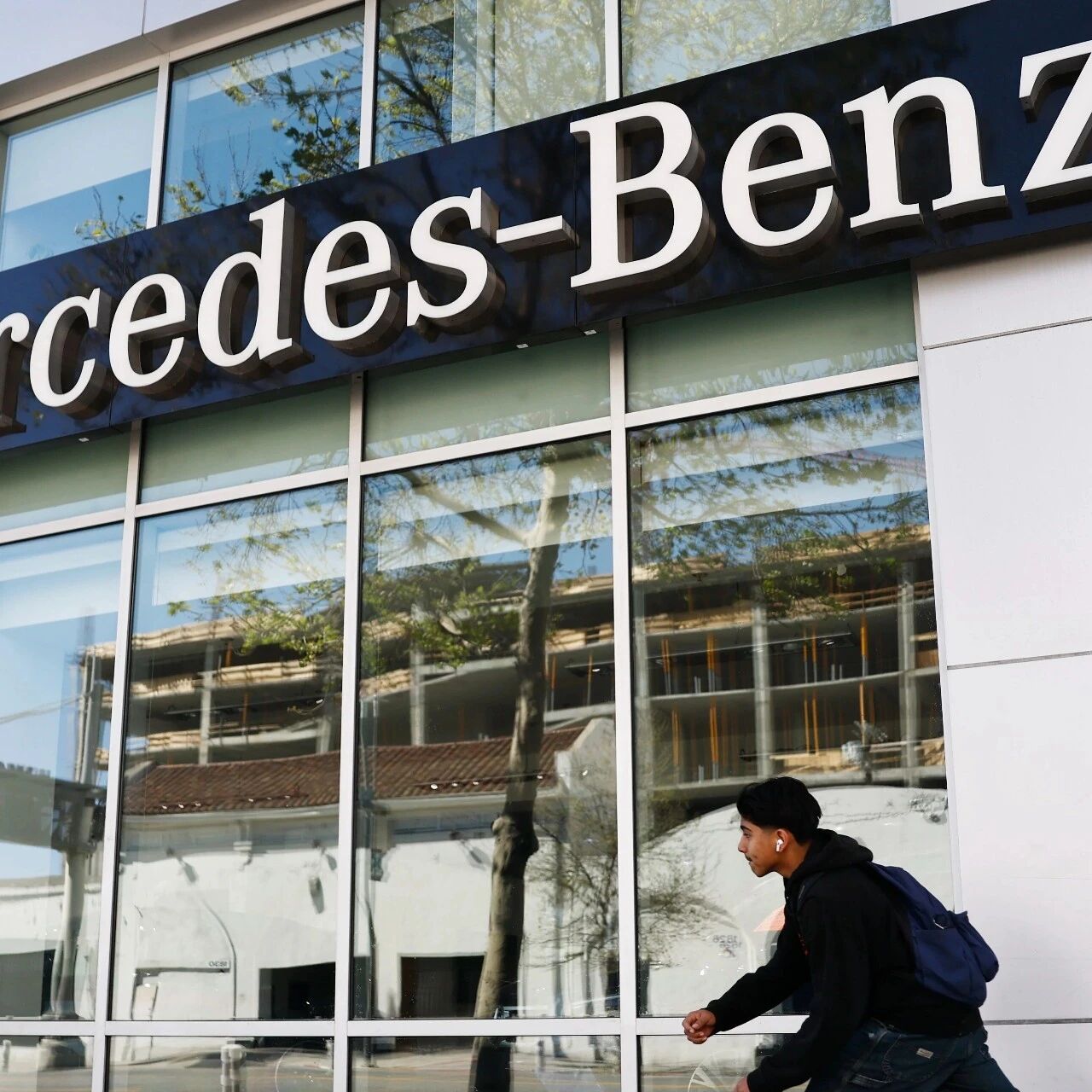
Core Viewpoint - The article discusses the evolving dynamics in the global automotive industry, particularly how Chinese automakers are adapting to new trade realities and exploring collaborative models to enhance their international presence [3][21]. Group 1: Trade Dynamics and Challenges - The imposition of tariffs by the U.S. has significantly impacted the profitability of foreign manufacturing plants, such as Mercedes-Benz's East London factory in South Africa, which has faced existential threats due to increased tariffs on imports [5][6]. - South Africa's automotive production has declined sharply, with only 560,000 vehicles produced last year, a nearly 40% drop from peak levels, leading to a reliance on imports from countries like China and India [6][10]. - The South African government has raised tariffs on imported vehicles from China and India, with rates increasing from 25% to 50%, further complicating the local automotive market [6]. Group 2: Strategic Shifts in Automotive Manufacturing - Mercedes-Benz's East London factory has been upgraded with a €600 million investment, positioning it as a potential hub for multiple brands and battery recycling, reflecting a shift towards flexible manufacturing [7][8]. - Chinese automakers, such as Great Wall Motors, are transitioning from merely exporting products to integrating global production capabilities, seeking optimal solutions for cost and capacity [10][21]. - The article highlights the trend of Chinese companies exploring partnerships with traditional automakers to utilize idle production capacities, as seen in collaborations between Jaguar Land Rover and Chery, and between Geely and Renault in Brazil [13][17]. Group 3: Technological Collaboration and Innovation - The collaboration between Volkswagen and Xpeng to develop new electric vehicles signifies a shift towards technology sharing and innovation, with a focus on integrating advanced engineering from both parties [14]. - The partnership between Leap Motor and Stellantis aims to leverage Leap Motor's electric vehicle technology for use in Stellantis's European brands, marking a significant step in cross-border technological collaboration [17]. - The article emphasizes that the concept of "Manufacturing as a Service" is becoming a reality in the automotive sector, similar to trends seen in the electronics industry, where brand identity is less tied to manufacturing capabilities [18][21].



宇树IPO来了,年收入17亿;字节超60亿美元出售沐瞳科技;泡泡玛特回应7年前买的盲盒才发货;特斯拉计划从中国采购200亿光伏设备丨邦早报
创业邦· 2026-03-21 01:11
Group 1 - The core viewpoint of the article highlights significant developments in various companies and industries, including IPO applications, acquisitions, and strategic shifts towards AI and automation [3][4][12][18]. Group 2 - YuTree Technology's IPO application has been accepted by the Shanghai Stock Exchange, aiming to raise 4.202 billion yuan, with projected revenues of 1.708 billion yuan in 2025, a 335.36% increase year-on-year, and a net profit of 600 million yuan, up 674.29% [3]. - ByteDance has agreed to sell Moonton Technology for over 6 billion USD, signaling a strategic focus on AI, as the company has made significant investments in this area [3]. - Tesla is reportedly seeking to procure 2.9 billion USD worth of photovoltaic manufacturing equipment from Chinese suppliers to meet its solar manufacturing goals in the U.S. [4]. - The international oil price surge is expected to impact the textile industry, particularly synthetic fibers like polyester, which have seen price increases from 7,000 yuan/ton to 9,600 yuan/ton [5]. - Xiaopeng Motors forecasts a total revenue of 76.72 billion yuan in 2025, representing an 87.7% increase, with a projected vehicle delivery of 429,400 units, a 125.9% increase from 2024 [5]. - The AI digital artist initiative has raised questions about potential copyright infringement, focusing on whether the public can recognize the likeness of real celebrities [20][21]. - The China Passenger Car Association predicts that retail sales of narrow passenger vehicles in March will reach approximately 1.7 million units, with new energy vehicles expected to account for around 900,000 units [23].




纳指跌超400点,美股科技股、芯片股集体重挫,中概股普跌,黄金跌破4500美元
21世纪经济报道· 2026-03-20 23:39
Market Overview - The US stock market experienced a collective decline, with the Dow Jones falling by 0.96%, marking a total drop of 2.11% for the week, the longest consecutive weekly decline since February 2023 [1] - Major European indices also closed lower, with Germany's DAX 30 down by 2%, France's CAC40 down by 1.82%, and the UK's FTSE 100 down by 1.44% [1] Major Indices Performance - The Dow Jones Industrial Average closed at 45,577.47, down 443.96 points [2] - The Nasdaq Composite fell to 21,647.61, down 443.08 points [2] - The S&P 500 index ended at 6,506.48, down 100.01 points [2] Technology Sector - Major tech stocks saw significant declines, with Nvidia and Tesla dropping over 3%, while Meta and Google fell more than 2% [2] - Storage-related stocks also faced sharp declines, with SanDisk down over 8% and Western Digital down over 7% [2] - The Philadelphia Semiconductor Index decreased by 2.45%, with Intel down 5% and TSMC nearly 3% [2] Chinese Stocks - The Nasdaq Golden Dragon China Index fell nearly 3%, with notable declines in companies like Xpeng Motors down over 8% and Bilibili down about 4% [3] - Major Chinese tech firms also saw declines, with Xiaomi down 7.88% and Baidu down 4% [3] Commodity Prices - Gold prices fell sharply, with spot gold dropping 3.42% to $4,491.67 per ounce, while silver fell 6.8% to $67.89 per ounce [3] - International oil prices continued to rise, with NYMEX crude oil at $98.09, up 2.66%, and Brent crude at $104.41, up 0.61% [5] Cryptocurrency Market - The cryptocurrency market showed mixed results, with Bitcoin at $70,625, up 0.62%, and Ethereum at $2,155.37, up 0.66% [7][8] Federal Reserve Insights - Federal Reserve officials indicated a potential for three interest rate cuts this year, although market expectations are leaning towards a rate hike in December [9]



XPENG(XPEV) - 2025 Q4 - Annual Report
2026-03-20 20:05
Exhibit 99.1 XPENG Reports Fourth Quarter and Fiscal Year 2025 Unaudited Financial Results GUANGZHOU, China, March 20, 2026 — XPeng Inc. ("XPENG" or the "Company," NYSE: XPEV and HKEX: 9868), a leading global AI mobility technology company, today announced its unaudited financial results for the three months and fiscal year ended December 31, 2025. Operational and Financial Highlights for the Three Months Ended December 31, 2025 | | 2025Q4 | 2025Q3 | 2025Q2 | 2025Q1 | 2024Q4 | 2024Q3 | | --- | --- | --- | - ...
XPeng Inc Achieves First Quarterly Profit Amid Weak Future Guidance
Financial Modeling Prep· 2026-03-20 18:05
Core Viewpoint - XPeng Inc achieved its first quarterly profit in Q4 2025, but shares declined due to weak guidance for Q1 2026 [1][2] Financial Performance - XPeng reported a net profit of RMB 0.38 billion (~$54–55 million USD) in Q4 2025, a significant turnaround from a loss in Q4 2024 [1] - Gross margin improved to 21.3%, driven by higher volumes, cost efficiencies, and a premium model mix [1] - Revenue for Q4 2025 grew substantially, aligning with or slightly exceeding the guidance range of RMB 21.5–23.0 billion [1] - Full-year 2025 vehicle deliveries reached approximately 429,445 units, showing strong year-over-year growth [2] Guidance and Outlook - For Q1 2026, XPeng guided for vehicle deliveries of 61,000–66,000 units, representing a sequential decline of approximately 29–35% from Q4 2025 [2] - Q1 2026 revenue is projected to fall 16–23% sequentially to around RMB 12.5–14 billion (~$1.77–1.92 billion USD) [2] - The company aims for full-year 2026 deliveries of 550,000–600,000 units amid aggressive expansion plans [2] Strategic Focus - XPeng is committed to long-term growth despite near-term challenges in China's competitive EV landscape, including price wars and demand fluctuations [3] - Key focuses include scaling robotaxi services, advancing autonomous driving technologies, international expansion, and improving profitability through operational leverage and recurring revenue from software/services [3] Valuation Metrics - The price-to-earnings (P/E) ratio is improving on a forward basis, though trailing remains negative due to past losses [4] - The price-to-sales (P/S) ratio is around 1.5–1.7, which is reasonable for a high-growth EV player [4] - The enterprise value-to-sales (EV/Sales) ratio is similar at approximately 1.9, indicating a valuation that balances growth potential against execution risks [4] - Cash position remains strong at approximately RMB 47.66 billion as of December 31, 2025 [4] Overall Assessment - XPeng's Q4 results indicate improving fundamentals and a path toward sustained profitability, but investor caution remains due to short-term delivery and revenue softness, as well as intense industry competition [5]
今日新闻丨小鹏汽车发布2025年财报!日产NX8开启预售!新款阿维塔12开启预售,预售价29.99万元起!新款沃尔沃EX30限时售价15.98万元起!
电动车公社· 2026-03-20 17:44
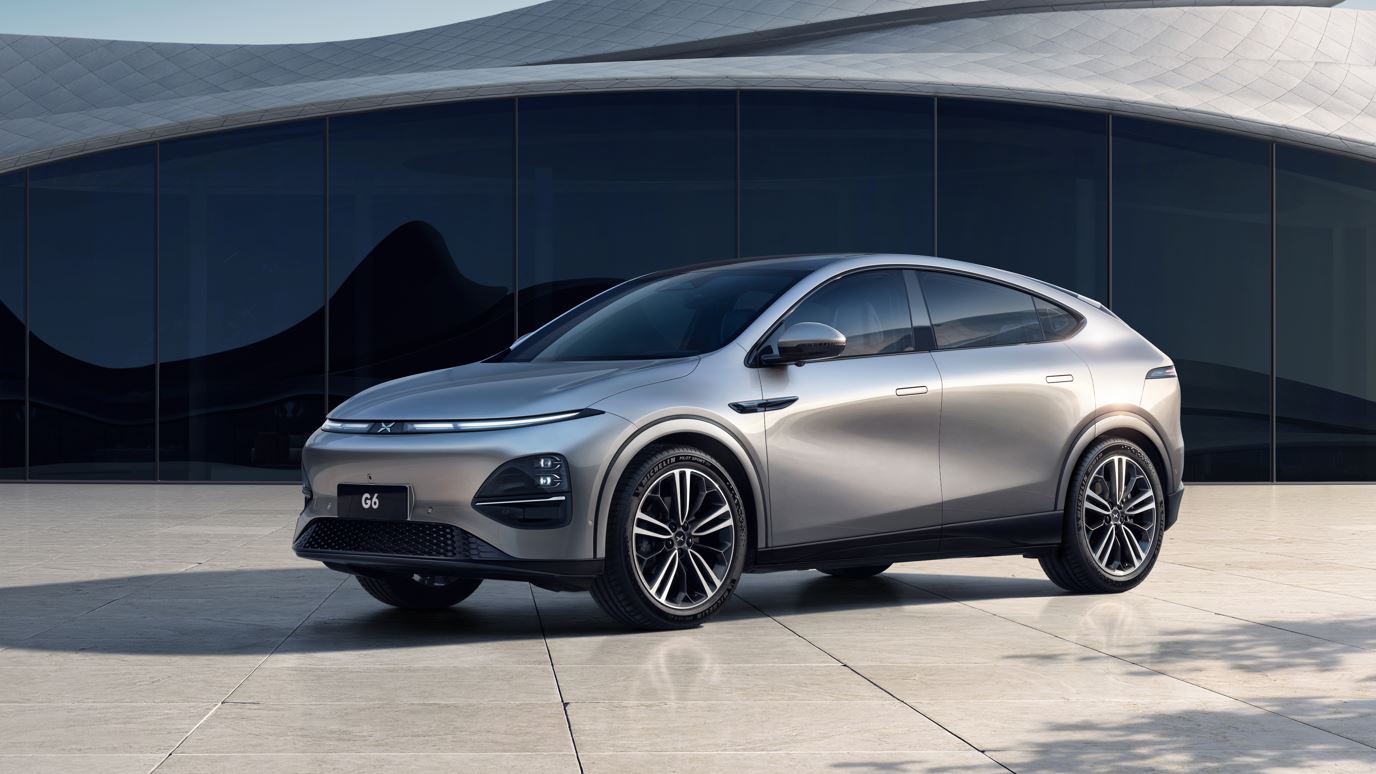
Group 1 - The new Volvo EX30 has been launched with a limited price range of 159,800 to 209,800 yuan, featuring three models [2][3] - The EX30 is positioned as a small electric SUV with dimensions of 4223mm in length, 1838mm in width, and 1555mm in height, and a wheelbase of 2650mm [5] - The vehicle is equipped with a single motor producing 200kW or a dual motor with a total power of 315kW, paired with either a 46kWh lithium iron phosphate battery or a 66kWh ternary lithium battery, offering a CLTC electric range of 410/590/540 km [9][11] Group 2 - The new Avita 12 has started pre-sales with a price range of 299,900 to 439,900 yuan, offering both pure electric and range-extended versions [12][20] - The Avita 12 features a roof-mounted 896-line lidar and a semi-hidden door handle, maintaining its dimensions of 5020mm in length, 1999mm in width, and 1460mm in height, with a wheelbase of 3020mm [14] - The pure electric version has a power output of 237kW for a single motor or 402kW for a dual motor, with a 94.53kWh ternary lithium battery, providing a CLTC range of 705/755 km [18] Group 3 - The Nissan NX8 has commenced pre-sales, offering both pure electric and range-extended versions [21] - The NX8 maintains the family design of Nissan's N series electric vehicles, with dimensions of 4870mm in length, 1920mm in width, and 1680mm in height, and a wheelbase of 2917mm [23] - The pure electric version features a power output of 215/250kW, paired with 73/81kWh lithium iron phosphate batteries, achieving a CLTC range of 565/650 km [27][29] Group 4 - XPeng Motors projects a revenue of 76.72 billion yuan for 2025, with an expected delivery of 429,445 vehicles, representing a year-on-year growth of 87.7% [30] - The company achieved a net profit of 380 million yuan in the fourth quarter, marking a phase of profitability [30] - XPeng has focused on developing super range-extended versions and has partnered with Volkswagen for technology empowerment, indicating a commitment to technology-driven growth [32]

Is XPeng Inc. (XPEV) one of the 10 Best Auto Manufacturer Stocks to Buy According to Analysts?
Yahoo Finance· 2026-03-20 17:16
Group 1 - XPeng Inc. has partnered with Volkswagen AG to begin mass production of the ID. UNYX 08, a full-size electric SUV that incorporates autonomous driving technologies and Turing AI chips [1][2] - The ID. UNYX 08 is set to launch in the first half of 2026, as part of Volkswagen's strategy to introduce over 20 new models this year and 50 new energy vehicles in China by 2030 [2] - The manufacturing of the ID. UNYX 08 and another jointly developed electric vehicle will take place at Volkswagen's Hefei facility, which has an annual production capacity of 350,000 vehicles [2] Group 2 - In February, XPeng Inc. delivered a total of 15,256 automobiles and initiated global deliveries of the new XPENG P7+, with shipments planned for eighteen countries [5] - XPeng Inc. specializes in the design, development, manufacture, and marketing of smart electric vehicles, including the G3 SUV and the P7 sports sedan [6]
Nasdaq Down Over 1%; XPeng Shares Fall After Q4 Results
Benzinga· 2026-03-20 16:33
U.S. stocks traded lower midway through trading, with the Nasdaq Composite falling more than 1% on Friday.The Dow traded down 0.56% to 45,765.84 while the NASDAQ fell 1.18% to 21,829.08. The S&P 500 also fell, dropping, 0.80% to 6,553.81.Check This Out: How To Earn $500 A Month From Goldman Sachs Stock Ahead Of Q4 EarningsLeading and Lagging SectorsEnergy shares climbed by 1% on Friday.In trading on Friday, consumer discretionary stocks fell by 1.3%.Top HeadlineXpeng Inc – ADR (NYSE:XPEV) shares fell around ...
圆满落幕!2026 先进尼龙产业创新与应用开发大会 3月19-20日 广州
DT新材料· 2026-03-20 16:05
Core Viewpoint - The "2026 Advanced Nylon Industry Innovation and Application Development Conference" successfully gathered over 200 representatives from leading companies, experts, and end-users in the nylon industry, focusing on high-quality development paths for the nylon industry under the theme of "Big Materials, Big Markets, Big Changes" [2][6]. Group 1: Conference Overview - The conference was hosted by DT New Materials and supported by XPeng Motors, featuring over 20 thematic reports and activities aimed at exploring the innovative applications of nylon materials [2][6]. - Key topics included bio-based polyamides, special nylon innovations, and emerging application scenarios, emphasizing the importance of collaboration and innovation in the industry [6][9]. Group 2: Key Reports and Innovations - A report by Tang Zhaobin from the Ningbo Institute of Materials Technology and Engineering focused on the development of bio-based polyamides, highlighting the successful creation of high-temperature, transparent, and elastic nylon products with tensile strengths reaching 170 MPa and light transmittance over 90% [9]. - Li Shupeng from Guangzhou Automobile Group discussed the application of nylon engineering plastics in the new energy vehicle sector, outlining trends towards localization, low carbon emissions, and lightweight materials [11]. - Qin Huaili from Huitong New Materials emphasized the shift in the nylon industry from scale expansion to technology-driven, value-prioritized approaches, detailing a comprehensive product matrix from basic to high-end nylon materials [14]. Group 3: Market Trends and Applications - Reports highlighted the growing demand for special nylon materials in various sectors, including automotive, electronics, and consumer goods, with a focus on performance enhancements and sustainability [17][19][32]. - The application of MXD6 special nylon was analyzed, showcasing its core performance and potential in food packaging, automotive manufacturing, and high-end equipment [19][32]. - The conference also addressed the challenges and opportunities in the nylon industry, particularly in the context of energy system restructuring and trade environment adjustments [6][11]. Group 4: Future Directions - The conference concluded with discussions on the future of nylon materials, emphasizing the need for innovation in response to market demands and technological advancements [6][69]. - DT New Materials plans to continue facilitating industry collaboration through future events and conferences, focusing on new materials and technological innovations [69].




美股全线低开,超4100股下跌!英伟达跌1.6%,特斯拉跌超2%,超微电脑跌超27%!中概股普跌,金价、银价再跳水|美股开盘
Mei Ri Jing Ji Xin Wen· 2026-03-20 15:05AI Processing
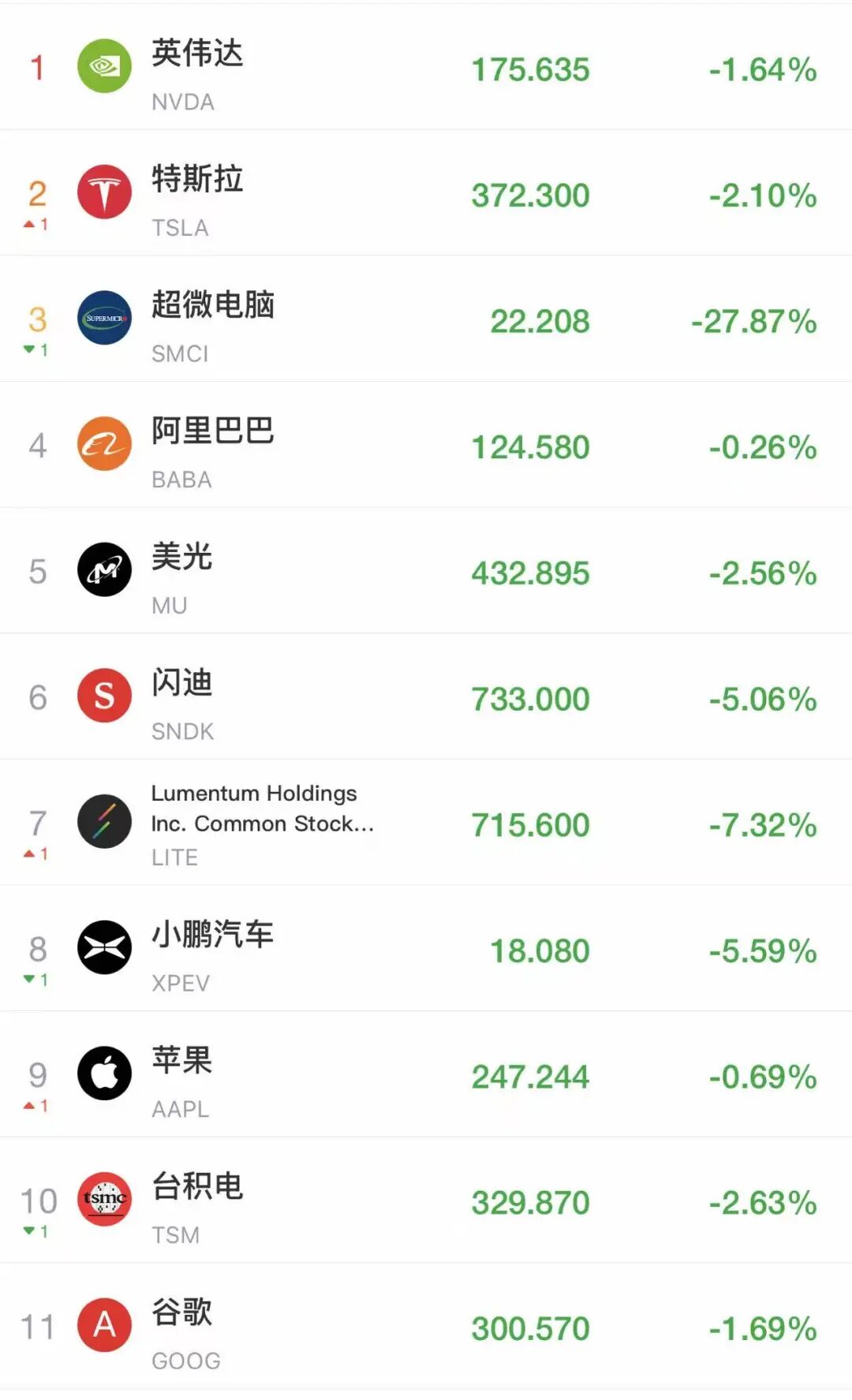
每经记者|杜波 每经编辑|段炼 记者|杜波 编辑|段炼 易启江 校对|张益铭 当地时间3月20日,美股全线低开,截至发稿,道指跌1.13%,纳指跌0.53%,标普500指数跌0.8%。全市超4100股下跌。 科技股普跌,英伟达跌1.64%,特斯拉跌2.1%,谷歌跌1.69%,苹果跌0.69%,超微电脑跌27.87%。存储股也跳水,闪迪跌超5%,美光科技跌2.56%。 中概股普跌,纳斯达克中国金龙指数跌超1.6%。小鹏汽车、蔚来跌超5%,搜狐、哔哩哔哩跌超2%,金山云跌超10%。 国际金银价格再次跳水,截至发稿,现货黄金再次跌破4600美元,日内跌超1.5%。现货白银再次跌破70美元大关,日内跌超4.5%。 根据花旗集团可追溯至1996年的数据,当地时间3月20日,将有大约5.7万亿美元名义价值、与美国个股、指数和交易所交易基金挂钩的期权到期,这也将 是历年来规模最庞大的3月到期价值,这一季度性事件长期以来被交易员们称为"四巫日"。 (免责声明:本文内容与数据仅供参考,不构成投资建议,使用前请核实。据此操作,风险自担。) 封面图片:视觉中国(图文无关) | 1 | | 英伟达 | 175.635 | -1.64 ...