
XPENG(XPEV)

Search documents
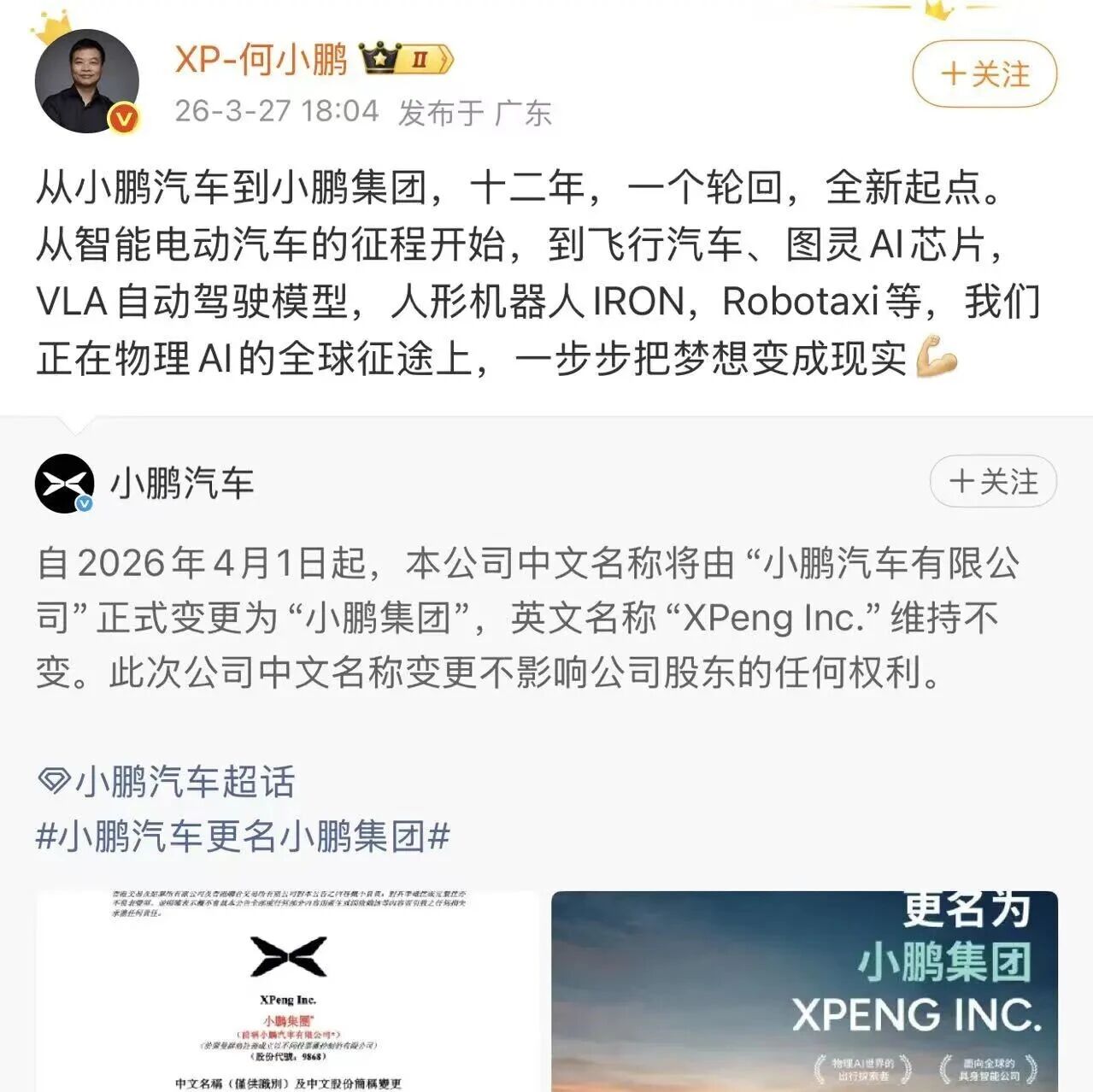
小鹏汽车改名,何小鹏称“在物理AI征途上把梦想变现实”
凤凰网财经· 2026-03-28 10:24
Group 1 - The core viewpoint of XPeng Motors is the rebranding from "XPeng Motors Limited" to "XPeng Inc." starting April 1, 2026, marking a new beginning for the company after twelve years of development in the smart electric vehicle sector [1] - XPeng's chairman and CEO, He Xiaopeng, emphasized the company's journey from smart electric vehicles to advancements in flying cars, AI chips, autonomous driving models, humanoid robots, and Robotaxi, indicating a commitment to turning ambitious dreams into reality [1]


理想宣布10亿美元回购计划,小鹏成立Robotaxi业务部
SINOLINK SECURITIES· 2026-03-28 07:56
Investment Rating - The report suggests a positive outlook on the automotive industry, particularly focusing on companies like BYD, Geely, and Li Auto for their growth potential in the electric vehicle (EV) and intelligent driving sectors [4]. Core Insights - Li Auto plans to repurchase up to $1 billion of its Class A common stock and/or American depositary shares, reflecting confidence in its strategic roadmap and future value creation [1]. - XPeng has established an independent Robotaxi division to accelerate the commercialization of autonomous driving, indicating a shift from technology development to operational services [2]. - The retail sales of passenger vehicles in March 2026 are showing signs of recovery, with a forecasted increase in sales driven by new vehicle launches and government incentives [3]. Summary by Sections Weekly Insights - Li Auto's stock repurchase plan aims to enhance shareholder returns and investor confidence, with a total of 917,600 shares repurchased so far [1][13]. - XPeng's Robotaxi division will focus on product definition and project integration, with plans for L4 level public road testing starting in February 2026 [2][14]. Industry Data Tracking - The retail market for passenger vehicles in March 2026 is expected to reach approximately 1.7 million units, with a year-on-year decline of 12.4% but a month-on-month increase of 64.5% [3][15]. - The penetration rate of new energy vehicles in retail sales is projected to be around 52.9% for March 2026, indicating a strong market presence [3][15]. Industry Dynamics - The report highlights the ongoing trend of vehicle exports, with a year-on-year growth rate of over 20% for the past six months, suggesting that exports will become a long-term theme for the industry [4][16]. - The report emphasizes the importance of intelligent driving and the commercialization of robotics, with favorable policies and technological breakthroughs expected to accelerate growth in these areas [4][16].

昨夜,全线大跌!科技巨头,突遭猛烈抛售!
证券时报· 2026-03-28 00:28
Market Overview - Major U.S. stock indices experienced significant declines, with the Dow Jones down 1.73% to 45166.64 points, the S&P 500 down 1.67% to 6368.85 points, and the Nasdaq down 2.15% to 20948.36 points [2] - This week, the Dow Jones fell 0.9%, the S&P 500 dropped 2.12%, and the Nasdaq decreased by 3.23% [2] Technology Sector Performance - Large tech stocks faced a severe sell-off, with Meta and Amazon dropping nearly 4%, Nvidia, Alphabet A, Microsoft, and Tesla falling over 2%, and Apple declining over 1% [3] - The cumulative market value of the "Big Seven" tech stocks decreased by over $800 billion this week, with Meta down over 11%, Alphabet A down nearly 9%, and Microsoft down over 6% [3] Consumer Confidence - The U.S. consumer confidence index fell sharply by 6% in March, reaching its lowest level since December 2025, influenced by rising fuel prices and financial market volatility [5][6] - The final consumer confidence index for March was 53.3, down from 56.6 in February and 57.0 in March of the previous year [6] - Expectations for fuel prices surged fivefold compared to February, while personal financial outlooks dropped by 10% [6] Economic Outlook - Approximately 61% of consumers expect unemployment to rise in the next year, an increase from 58% in February, reflecting a 14% drop in short-term economic outlook [7] - Inflation expectations rose from 3.4% in February to 3.8% in March, marking the largest monthly increase since April 2025 [8] Oil Market Dynamics - Crude oil prices surged, with U.S. oil rising 7.09% to $101.18 per barrel and Brent oil increasing by 4.32% to $106.29 per barrel [10] - The geopolitical tensions in the Middle East, particularly the closure of the Strait of Hormuz by Iran, pose significant threats to oil supply, leading to concerns about a potential repeat of the 1970s stagflation [12]



小鹏集团-W(09868) - 中文名称(仅供识别)及中文股份简称变更
2026-03-27 08:59
小鵬集團* (前稱小鵬汽車有限公司*) (於開曼群島註冊成立以不同投票權控制的有限公司) (股份代號:9868) 中文名稱(僅供識別)及中文股份簡稱變更 中文名稱(僅供識別)變更 香港交易及結算所有限公司及香港聯合交易所有限公司對本公告之內容概不負責,對其準確性或完整性亦 不發表聲明,並明確表示概不會就本公告全部或任何部分內容而產生或因依賴該等內容而引致之任何損失 承擔任何責任。 XPeng Inc. XPeng Inc. (「本公司」)之董事「董事」)會(「董事會」)欣然宣佈自2026年4月1 日起,本公司中文名稱(僅供識別)將由「小鵬汽車有限公司」變更為「小鵬集團」 (「中文名稱變更」)。本公司英文名稱維持不變,仍為「XPeng Inc.」。 中文名稱變更的影響 承董事會命 XPeng Inc. 董事長 何小鵬 香港,2026年3月27日(星期五) 1 中文名稱變更不會影響本公司股東的任何權利。本公司中文名稱僅供識別之用,且本 公司A類普通股之股票並不載有其中文名稱。於中文名稱變更生效後,所有已發行且載 有本公司英文名稱的現有股票證書將繼續作為本公司A類普通股所有權的憑證,並適用 於交易、結算、登記及交割 ...
罗技中国就发布鼠标广告侮辱消费者致歉;林俊旸离职后首发长文;月之暗面考虑赴港IPO;拼多多成立新公司“新拼姆”丨邦早报
创业邦· 2026-03-27 00:15
Group 1 - The company "月之暗面" is considering an IPO in Hong Kong and has engaged with China International Capital Corporation and Goldman Sachs for potential listing discussions, with a valuation of approximately $18 billion after a new funding round of up to $1 billion [3] - Pinduoduo has established a new company called "新拼姆" with an initial cash injection of 15 billion yuan, aiming to invest a total of 100 billion yuan over three years to enhance its self-operated brand model and integrate supply chain resources [5] - Lin Junyang, former head of Alibaba's Qianwen technology, published an article discussing the evolution from reasoning to agentic thinking in AI, emphasizing the need for a unified system that combines thinking and instruction modes [6] Group 2 - Xiaomi's automotive division reached a settlement with 山东燕鲁新能源车业有限公司 regarding a patent dispute, marking the first public patent controversy since its market entry [7] - Skoda will continue sales in China until mid-2026, after which it will focus on high-growth markets like India and ASEAN, while still providing after-sales support to existing customers [7] - Xiaomi has officially ceased updates for MIUI, transitioning to the new HyperOS, with only two overseas devices continuing to receive support until 2026 [7] Group 3 - Meta announced a new initiative to support small businesses and promote AI applications, led by its president and product head, with a focus on enhancing business growth through its platform [16] - Liu Qiangdong's company is investing 15 billion yuan in a yacht manufacturing base in Dalian, aiming to develop high-end yacht production and services [16] - Evergrande New Energy Vehicle Investment Holding Group has been subjected to a bankruptcy review initiated by a bank, indicating ongoing financial distress [18][19] Group 4 - Meituan reported a total revenue of 364.9 billion yuan for 2025, with a net loss of 23.4 billion yuan, primarily due to intense competition in the instant retail sector [22] - Apple is planning to open Siri to external AI assistants, enhancing its position as an AI platform, with updates expected in the upcoming iOS 27 [25] - Google has launched a new AI model, Lyria 3 Pro, designed for music creation, allowing users to compose longer and more structured audio pieces [29]





忙活了十几年,新势力一共挣了16个亿
汽车商业评论· 2026-03-26 23:06
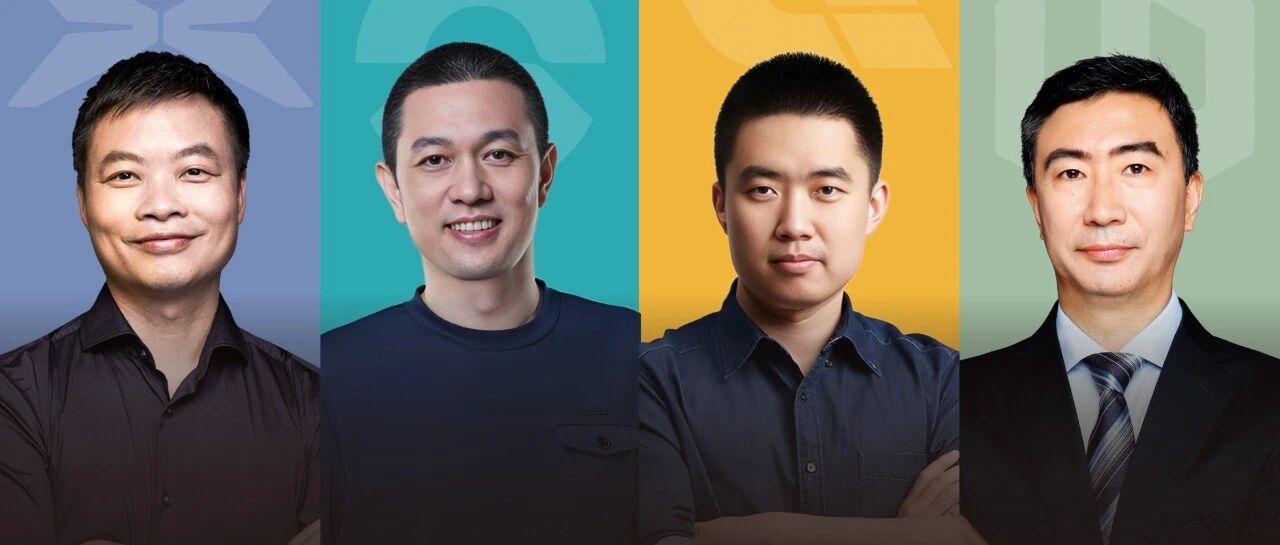
Core Insights - The article discusses the survival and profitability of four new car manufacturers in China: NIO, Li Auto, Xpeng, and Leap Motor, highlighting their financial performance and strategic adjustments over the years [3][5]. Financial Performance - In Q4 2025, NIO reported a net profit of 283 million RMB, marking its first profit in 11 years. Xpeng also achieved profitability with a net profit of 380 million RMB, while Leap Motor earned 540 million RMB for the entire year, becoming the second new force to achieve annual profitability after Li Auto [3]. - The four surviving companies collectively earned 1.6 billion RMB in 2025, a significant achievement after the failure of over a hundred new entrants and the expenditure of over a thousand billion RMB in investments [3]. Delivery and Revenue Metrics - The delivery volumes for 2025 were as follows: Xpeng delivered 326,000 vehicles, Li Auto 429,000, Leap Motor 406,300, and NIO 596,600 [4]. - Revenue figures for 2025 were reported as: Xpeng 87.49 billion RMB, Li Auto 76.72 billion RMB, Leap Motor 112.3 billion RMB, and NIO 64.73 billion RMB [4]. Strategic Adjustments - Li Auto is focusing on improving store quality rather than quantity, implementing a "store partner" mechanism to empower store managers with decision-making and profit-sharing capabilities [7][9]. - NIO is undergoing a cost-saving initiative, emphasizing efficiency and accountability in spending, with a focus on achieving profitability [11]. Technological Development - Xpeng is merging its autonomous driving and smart cockpit divisions to enhance research and development efficiency, aiming to produce the IRON robot by the end of 2026 [11]. - Leap Motor is planning to enhance its smart technology capabilities, having previously focused on survival rather than aggressive investment [12]. International Expansion - Xpeng has been the most proactive in international markets, with nearly 50% of its sales coming from Europe and plans to launch four new global products in 2026 [13][15]. - Leap Motor led in export volume among new forces in 2025, with 67,052 vehicles exported, aided by a partnership with Stellantis for localized manufacturing [16]. - NIO is taking a cautious approach to international expansion, focusing on establishing a strong foundation in China before pursuing overseas markets [18]. Embodied Intelligence - The new forces are considering entering the robotics sector, with Xpeng being the most aggressive in integrating automotive and robotics technology [21][23]. - Li Auto plans to invest significantly in AI and embodied intelligence, with a focus on self-developed chips and smart driving technologies [25][26].
今日新闻丨零跑A10、宋Ultra EV上市!智己LS8、与众08、一汽奥迪A6L e-tron、风云T9L开启预售!文远知行2025年营收6.9亿元!
电动车公社· 2026-03-26 19:27
Core Viewpoint - The article discusses the recent launches and pre-sales of several electric vehicles (EVs) in the Chinese market, highlighting their pricing, specifications, and features, indicating a competitive landscape in the EV sector. Group 1: New Vehicle Launches - Leapmotor A10 was launched with a price range of 65,800 to 86,800 yuan, featuring a youthful design and compact SUV dimensions of 4270/1810/1635mm [1][3] - BYD Song Ultra EV was launched with a price range of 151,900 to 179,900 yuan, offering advanced features such as a dual-zone climate control and a second-generation blade battery [4][11] - IM LS8 began pre-sales with a price range of 259,800 to 309,800 yuan, showcasing a spacious interior and high-tech features like a Thor chip and laser radar [19][21] - With U 08 started pre-sales at a price range of 239,900 to 299,900 yuan, it features a design inspired by previous concept models and advanced driver assistance systems [4][29] - Audi A6L e-tron commenced pre-sales with a price range of 313,000 to 443,000 yuan, maintaining Audi's design language while integrating new technologies [34][37] - Chery Fengyun T9L began pre-sales at a price range of 139,900 to 169,900 yuan, emphasizing high value for money in the competitive SUV market [44][51] Group 2: Vehicle Specifications and Features - Leapmotor A10 features a dual-motor setup with 70/90kW motors and a range of 403/505 km, with acceleration times of 12.2/10.6 seconds [8][10] - BYD Song Ultra EV offers a dual-motor configuration with 240/270kW motors and a range of 605/710 km, achieving acceleration in 6.8/7.2 seconds [16][18] - IM LS8 is equipped with a 114kW 1.5T range extender and offers a range of 355/430 km, with fuel consumption rates of 5.9/6.2L/100km [25] - With U 08 features a dual-motor option with 230kW or 340kW motors, providing a range of 630/700/730 km and acceleration as fast as 4.9 seconds [33] - Audi A6L e-tron includes multiple motor options ranging from 215 to 405kW, with a range of 720 to 815 km and acceleration times between 4.5 to 5.9 seconds [41] - Chery Fengyun T9L features a combination of a 1.5L engine and electric motors, with a range of 135/230 km [49] Group 3: Market Trends and Company Performance - Leapmotor aims to enhance its market presence with the A10, which offers competitive pricing and advanced features like laser radar and full-scene driving assistance [10] - BYD continues to innovate with its second-generation blade battery technology, enhancing charging speed and performance across its models [18] - IM LS8 has received positive market feedback, with over 10,000 orders within 45 minutes of pre-sale, indicating strong consumer interest [27] - With U 08 represents a collaboration between Volkswagen and local partner Xpeng, showcasing traditional brand recognition of local EV technology [35] - Audi's A6L e-tron reflects the brand's adaptation to the EV market, integrating advanced technologies to meet local consumer demands [43] - WeRide, a player in the autonomous driving sector, projects a revenue of 690 million yuan for 2025, marking a 90% year-on-year growth [52][55]


美股科技股领跌,存储股、中概股集体下挫!小马智行跌15%,闪迪跌6%,美光跌超4%,原油涨超4%|美股开盘
Mei Ri Jing Ji Xin Wen· 2026-03-26 14:35
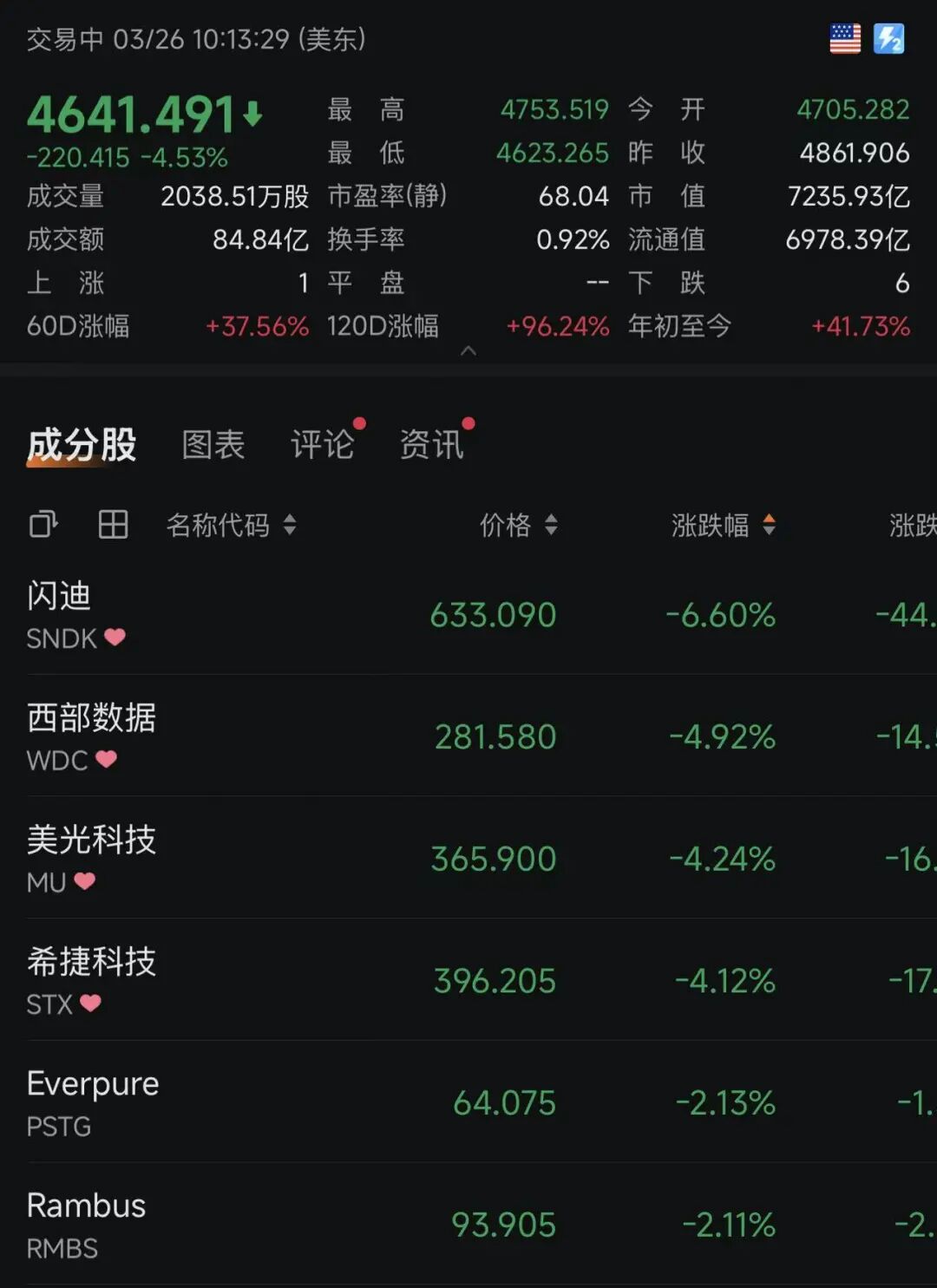
Market Overview - The US stock market opened lower with the Nasdaq down 1.08%, the Dow Jones down 0.18%, and the S&P 500 down 0.55% [1] - As of the latest update, the Dow Jones has turned positive with a gain of 0.11%, while the Nasdaq and S&P 500 are down 0.56% and 0.32% respectively [1] - A total of 3,002 stocks rose while 2,089 stocks fell [1] Semiconductor Sector - The semiconductor storage sector experienced a broad decline, with SanDisk down 6.6%, Western Digital, Micron Technology, and Seagate Technology all falling over 4% [1][2] Notable Stock Movements - Marathon Digital Holdings saw a significant increase of over 11% after announcing a $1 billion buyback of convertible senior notes and the sale of 15,133 bitcoins [2] - Major tech stocks showed mixed results, with Meta Platforms down 3.97%, Intel down 3.08%, and Nvidia down 1.93%, while Apple rose by 1.39% [4][5] Chinese Stocks - Most Chinese concept stocks declined, with Xiaoma Zhixing down over 15%, XPeng Motors down 5.41%, and Baidu down 2.79% [7][8] Precious Metals - Both gold and silver prices fell, with gold dropping over 1.23% to $4,449 per ounce and silver decreasing by nearly 3% to $69 per ounce [12][13] Oil Prices - International oil prices continued to rise, with WTI crude oil increasing by 3.96% and Brent crude oil rising over 4%, surpassing $100 per barrel [15][16]

纳斯达克中国金龙指数盘初跌1.89% 小马智行(PONY)跌7.11%
Xin Lang Cai Jing· 2026-03-26 14:29
Core Viewpoint - The Nasdaq China Golden Dragon Index experienced a decline of 1.89% at the beginning of trading, indicating a negative sentiment in the market for Chinese stocks listed in the U.S. [1] Group 1: Stock Performance - Pony.ai (PONY) saw a significant drop of 7.11% [1] - Xpeng Motors (XPEV) decreased by 5.30% [1] - Miniso Group (MNSO) fell by 3.80% [1] - United Microelectronics Corporation (UMC) declined by 3.44% [1] - Zai Lab (ZLAB) dropped by 3.34% [1] - Baidu (BIDU) decreased by 2.78% [1] - NetEase (NTES) fell by 2.65% [1] - Taiwan Semiconductor Manufacturing Company (TSM) declined by 2.47% [1] - Tencent Music (TME) also dropped by 2.47% [1]


小鹏汽车 - 强劲新车型管线与技术变现将对冲成本通胀带来的利润率压力;买入评级
2026-03-26 13:20
Summary of XPeng Inc. Conference Call Company Overview - **Company**: XPeng Inc. (XPEV/9868.HK) - **Industry**: Electric Vehicles (EVs) Key Points Financial Performance - XPeng reported a strong 4Q25 result with revenue in 1Q26 being 8% above prior guidance and gross margin guidance at 20%, up from 16.8% [1][3] - Despite a lower vehicle volume guidance (5% below prior guidance), the company maintains a positive outlook for revenue growth [1][3] Revenue Growth and Model Pipeline - For 2026E, XPeng expects a 30% revenue growth driven by the launch of 11 new models and overseas expansion [2][10] - The company forecasts sales volume of 550k units in 2026E, representing a 28% year-over-year increase [2] - Management anticipates that overseas revenue will contribute over 20% of total revenue, with volume expected to double in 2026E [2][10] Gross Margin and Cost Management - Gross margin is projected to improve to 19.0% in 2026E, up from 18.9% in 2025, aided by scale economics and higher contributions from high-margin businesses [2][7] - XPeng's gross margin reached 21.3% in 4Q25, with vehicle margin stable at 13.0% [7] Research and Development (R&D) - R&D expenses are expected to rise to Rmb12 billion in 2026E, with a focus on physical AI, allocating Rmb7 billion specifically for this area [2][7] - The company is restructuring its organizational team to enhance synergies between in-house chip development, autonomous driving, and AI applications [7] Product Launches and Technology Monetization - XPeng plans to launch 11 new models in 2026, including the EREV versions of G6/G7/P7+ and two MONA SUVs [6][10] - The company has begun monetizing its technology leadership, with revenue contributions from VW on the G9 platform and the in-house Turing chip [1][7] Overseas Expansion - XPeng aims to double its overseas deliveries in 2026, supported by the launch of four new models and an expansion of its store network to 680 stores in 10 key countries [7][10] Operational Expenses and Profitability - SG&A expenses increased by 23% year-over-year in 4Q25, driven by higher marketing activities [7] - Management expects to lower the SG&A expense ratio going into 2026 [7] Balance Sheet and Cash Flow - XPeng ended 4Q25 with Rmb29 billion in net cash, indicating stable working capital conditions [8] - The total debt to equity ratio was reported at 42% in 4Q25 [8] Investment Thesis - XPeng is positioned as one of the fastest-growing pure EV makers in China, focusing on intelligent vehicle features and an aggressive model launch strategy [10] - The company is rated as a Buy, with a target price of US$22/HK$85, indicating a potential upside of 25% for ADR and 19% for H shares [3][11] Risks - Key risks include lower-than-expected sales volume, increased price competition, and weaker market demand [11] Conclusion XPeng Inc. is strategically positioned for growth in the EV market with a robust model pipeline, strong revenue growth expectations, and a focus on technology monetization and overseas expansion. The company is navigating cost pressures while maintaining a positive outlook on profitability and market share.