XPENG(XPEV)

Search documents
“人机共驾”再次进阶智驾险仍徘徊“兜底服务”阶段
Zhong Guo Zheng Quan Bao· 2025-12-25 21:11
以算法为罗盘、传感器为慧眼,智能驾驶技术的演进正带来一场出行革命。近日,工信部正式公布我国 首批L3级车型准入许可,作为试点的重庆、北京两地也陆续发放专用号牌,迈出L3级自动驾驶商业化 关键一步。 在L3级"有条件自动驾驶"模式下,"人机共驾"再次进阶。相比目前盛行的L2级"辅助驾驶",L3级驾驶责 任首次出现"人机转移",随之而来的风险核心也更加侧重于系统可靠性、算法决策、传感器性能等变 量。围绕智能驾驶衍生的新风险,"出了事故谁来赔"成为市场关切。 中国证券报记者近日从车企、险企等市场主体调研了解到,市面上近两年出现的所谓"智驾险"产品,实 则为车企或智驾方案供应商提供的兜底方案,并非真正的保险险种。业内人士表示,未来,随着智驾场 景不断丰富,与之适配的真正的智驾险应跟上创新节奏,打破数据壁垒,穿越错综复杂的人机定责迷 宫,为智能驾驶本身系紧安全带。 ● 本报记者 薛瑾 根据我国《汽车驾驶自动化分级标准》,汽车智能驾驶分为L0至L5六个级别,每个级别对应不同的自 动化程度和功能。随着自动驾驶等级提升(尤其是L3级落地),驾驶主体正从"人"向"机"转换,具备智 驾功能的汽车也催生出新的保险需求。然而,距离这 ...

“人机共驾”再次进阶 智驾险仍徘徊“兜底服务”阶段
Zhong Guo Zheng Quan Bao· 2025-12-25 21:09
Core Insights - The evolution of intelligent driving technology is leading to a revolution in transportation, with the recent approval of China's first L3-level vehicle licenses marking a significant step towards the commercialization of L3-level autonomous driving [1] - The L3-level "conditional automation" introduces a shift in driving responsibility from human to machine, raising concerns about system reliability, algorithm decision-making, and sensor performance [1] - The current market offerings labeled as "intelligent driving insurance" are primarily safety net solutions provided by automakers or intelligent driving solution suppliers, rather than genuine insurance products [1][2] Group 1: Market Developments - Since 2025, there has been a notable increase in insurance products related to assisted and intelligent driving, with companies like Xiaopeng Motors and GAC Group launching their own intelligent driving protection plans [2] - Xiaopeng Motors offers a "smart driving insurance" for 239 yuan per year, which provides compensation for accidents caused during the use of their intelligent driving features [2] - Other new energy vehicle manufacturers are also collaborating with insurance companies to provide supplementary coverage tailored to intelligent driving scenarios, often embedded as value-added services in the car purchase experience [2] Group 2: Insurance Industry Challenges - The design and risk control of these insurance products heavily rely on insurance companies, which are currently not offering true intelligent driving insurance to individual consumers [3][5] - The core data necessary for accurate risk assessment is largely monopolized by automakers, making it difficult for insurance companies to access critical information needed for pricing and claims [4][5] - The complexity of liability in human-machine driving scenarios poses significant challenges, as existing traffic safety regulations are based on human drivers, and the transition to L3-level automation complicates responsibility allocation [5][6] Group 3: Future Directions - To effectively implement intelligent driving insurance, collaboration across various sectors is essential, including regulatory frameworks, data governance, and industry cooperation [7] - Recent policy signals indicate a push for the insurance industry to adapt to the impacts of intelligent driving, with a focus on evolving risk assessment and pricing models [7][8] - Experts emphasize the need for clear definitions and regulations surrounding intelligent driving insurance, including liability recognition and data security, to ensure transparency and protect consumer rights [8]
价格合规为汽车业反内卷再加码
Xin Lang Cai Jing· 2025-12-25 12:40
Core Viewpoint - The release of the "Automobile Industry Price Behavior Compliance Guidelines" aims to regulate pricing behaviors in the automotive industry, addressing the ongoing "involution" competition and providing a foundation for healthy market development by 2026 [2][18]. Group 1: Industry Response and Impact - Major automotive companies such as BYD, Xpeng Motors, and BAIC Group have responded positively to the guidelines, committing to eliminate price fraud and unfair competition [2][18]. - The guidelines are expected to alleviate the long-standing issue of price inversion faced by dealers, which has led to significant financial losses, with 52.6% of dealers reporting losses in the first half of 2023 [3][19]. - The guidelines explicitly prohibit selling below cost, which is seen as a protective measure for dealers and is welcomed by the majority of them [4][20]. Group 2: Pricing and Rebate Issues - The guidelines address the complex rebate structures that often burden dealers, requiring manufacturers to clarify rebate policies and respect dealers' pricing autonomy [8][24]. - A survey indicated that while half of the brands have reduced rebate payment periods to within one month, some still exceed 60 days, creating operational pressure for dealers [8][24]. - The guidelines aim to promote transparency in pricing and rebate practices, shifting the market focus from price wars to value competition [5][21]. Group 3: Regulatory Framework and Compliance - The guidelines mandate that third-party platforms involved in automotive sales must adhere to pricing regulations, ensuring consumer rights and fair trading practices [9][25]. - A multi-dimensional compliance framework is proposed, including clear pricing rules, promotional conduct, and service charges to enhance transparency in the automotive sales process [10][26]. - The guidelines encourage the establishment of internal compliance mechanisms within automotive companies to prevent pricing violations and enhance brand integrity [10][26]. Group 4: Future Outlook and Challenges - The guidelines are seen as a significant step towards curbing irrational competition in the automotive market, with expectations for improved profitability across the industry [12][28]. - However, industry experts emphasize the need for detailed implementation rules to ensure effective execution, particularly regarding cost accounting standards [13][29]. - The successful implementation of the guidelines will require collaboration among manufacturers, dealers, and regulatory bodies to foster a healthy competitive environment [15][31].


逃离商场的“特斯拉们”,为何撑不下去了?
商业洞察· 2025-12-25 09:26
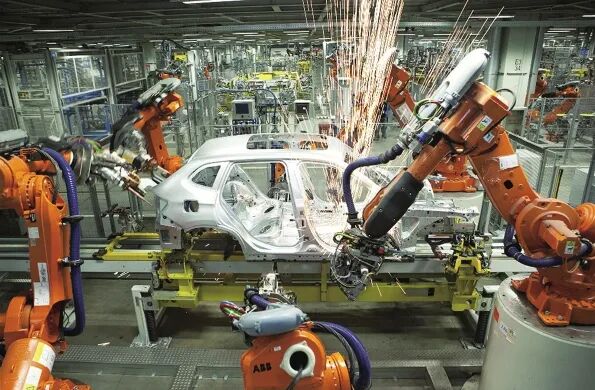
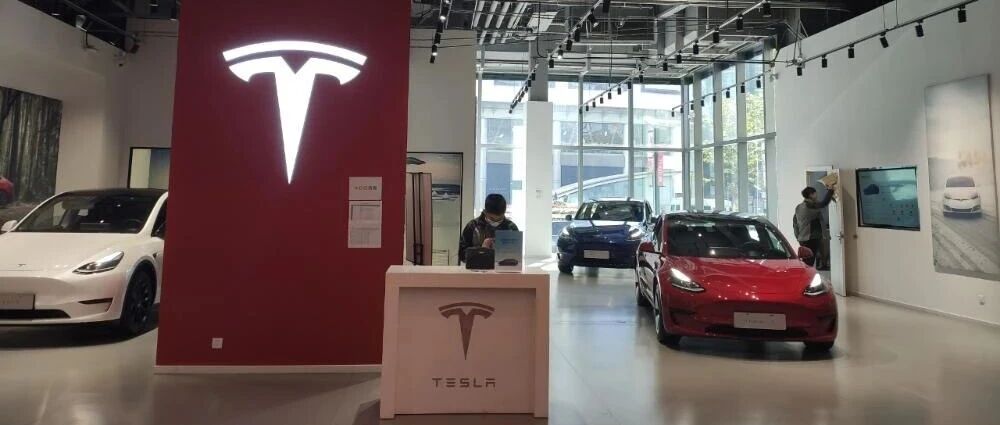
Core Viewpoint - The article discusses the decline of automotive stores in shopping malls, which were once a popular trend initiated by Tesla, highlighting the shift in strategy among electric vehicle manufacturers as they face increasing competition and changing market dynamics [4][6][12]. Group 1: Rise of Automotive Stores in Malls - Tesla pioneered the concept of selling electric vehicles in shopping malls, opening its first store in Beijing in 2013, which led to a nationwide trend [8][16]. - By August 2023, there were over 5,000 automotive stores in malls across 247 cities in China, indicating a significant expansion of this retail model [18]. - The initial appeal of automotive stores was their proximity to younger consumers and women, who are key demographics in the electric vehicle market [24][25]. Group 2: Shift in Strategy and Decline - Since 2024, the number of automotive stores in shopping malls has decreased by 37%, with major brands like Tesla and Xpeng retreating from this model [12][35]. - The shift is attributed to the need for car manufacturers to focus on core competencies and reduce costs amid fierce competition, leading to a reassessment of the effectiveness of mall locations [38][46]. - High operational costs and low sales conversion rates have made mall stores less viable, with some stores reporting monthly sales of fewer than five vehicles [47][49]. Group 3: Future of Automotive Stores - The article suggests that while the mall store model may not be entirely abandoned, it requires a more strategic approach, focusing on location and consumer engagement [56][68]. - Companies are encouraged to explore alternative retail formats, such as pop-up stores and targeted marketing strategies, to better connect with potential customers [64][66]. - The emphasis is on rational decision-making regarding retail presence, prioritizing sustainability and profitability over mere visibility [69][70].


深蓝董事长邓承浩:小鹏是可敬的友商
Feng Huang Wang· 2025-12-25 04:43
此前,邓承浩用十个字概括了L06最核心的竞争力:"公路磁悬浮,智驾老司机。"他解释,"磁流变悬 架"是市场唯一供给,源自军用技术,此前仅用于顶级豪车;"智驾老司机"则指L06标配带激光雷达的城 区NCA,实现"人无我有"。 据了解,深蓝L06主打"磁流变悬架"技术,官方称其为中国品牌首款搭载该系统的量产车型。该系统具 备10毫秒级响应能力,可实现全场景自适应软硬调节。智能驾驶方面,车辆配备包括1颗激光雷达在内 的27颗传感器,搭载双地平线J6芯片,算力达256TOPS,支持高速与城市领航辅助等90项智能驾驶功 能。 凤凰网科技讯12月25日,近日,有网友在社交平台发布自己在小鹏M03与深蓝L06之间的深度对比试驾 体验,并最终选择深蓝L06,由此引发了关于智能辅助驾驶新能源购车选择的讨论。对此,深蓝汽车董 事长邓承浩回应称,感谢用户对深蓝的认可,小鹏是可敬的友商,未来将继续专注于以安全为基石的智 能辅助驾驶研发。 ...

价格战“紧箍咒”来了 汽车行业能跳出内卷吗
Xin Hua Wang· 2025-12-24 23:47
而在销售一线,某自主品牌经销商负责人王经理的压力同样巨大:"几乎每个月都有销售任务和价 格政策调整,单纯卖车很难盈利,主要靠汽车售后和金融保险业务。" 国内汽车行业普遍面临"增收不增利"的挑战。许多车企为了抢占市场份额,持续采用激进的定价策 略,行业普遍感知部分车型的售价已逼近甚至可能低于健康盈利的临界点。 对于有购车计划的山东省济南市消费者马谦而言,最近每次走进汽车4S店,他的心情都十分矛 盾。一方面,市场上各种"直降数万""限时钜惠"的标语让人心动;另一方面,马谦总担心"今天买了明 天就降价",陷入持币观望的纠结。 这种消费者与经销商共同面临的困境,正是近年来汽车行业,尤其是新能源汽车领域"价格战"持续 白热化的缩影。 在此背景下,国家市场监督管理总局于12月12日发布《汽车行业价格行为合规指南(征求意见 稿)》(以下简称《合规指南》),旨在为行业竞争划定更清晰的价格行为边界,引发市场高度关注。 向无序价格战"亮剑" 当前,中国汽车市场特别是新能源汽车赛道,在取得产销规模世界领先成绩的同时,也深陷"内 卷"泥潭。一个突出表现是行业普遍面临"增收不增利"的挑战。许多车企为了抢占市场份额,持续采用 激进的定价 ...
“湾区造”优势从何而来?实力体现在哪里?记者探访
Ren Min Ri Bao· 2025-12-24 13:28
Group 1: Economic Development and Innovation - The Central Economic Work Conference emphasizes "innovation-driven development" and the establishment of international technology innovation centers in regions like the Guangdong-Hong Kong-Macao Greater Bay Area [1] - The Greater Bay Area has developed a complete industrial system covering 31 manufacturing categories and has nurtured nine trillion-yuan industrial clusters, with emerging industries like new energy vehicles and artificial intelligence thriving [1] - The "Shenzhen-Hong Kong-Guangzhou" innovation cluster ranked first globally in the World Intellectual Property Organization's 2025 Global Innovation Index Report, highlighting the global impact of the Greater Bay Area's innovation [1] Group 2: Collaborative Innovation and Industry Support - The Greater Bay Area provides a collaborative innovation ecosystem that supports research and entrepreneurship, as seen in the case of Guangzhou Zhimi New Material Technology Co., which utilizes microcapsule technology for various applications [4] - Guangdong has established 10 national major scientific and technological infrastructure projects, including five in the Greater Bay Area, and has created two national laboratories and 45 national key laboratories [4] - As of June this year, the Greater Bay Area holds 817,000 effective invention patents, accounting for approximately one-sixth of the national total [4] Group 3: Automotive Industry and Supply Chain - The automotive supply chain in the Greater Bay Area enhances production efficiency, with companies like Xpeng Motors benefiting from nearby suppliers who can respond quickly to production needs [6][7] - The automotive industry in the Greater Bay Area is evolving towards a comprehensive development model, integrating electric vehicles, key components, and smart technologies [8] - Guangdong has developed a complete industrial chain covering vehicle manufacturing, battery systems, intelligent driving, and charging facilities, with major companies like BYD and Xpeng leading the market [8] Group 4: Smart Manufacturing and Digital Transformation - The digital transformation of manufacturing in Guangdong is exemplified by OPPO's automated production lines, which enhance efficiency and reduce costs [9][10] - Over 51,000 industrial enterprises in Guangdong have undergone digital transformation, with high rates of digital management and design tool adoption [10] - The "Artificial Intelligence Empowering Manufacturing High-Quality Development Action Plan (2025-2027)" aims to further integrate AI with manufacturing, establishing a globally influential model [11] Group 5: Brain-Machine Interface and Technological Advancements - The establishment of the Brain-Machine Interface Innovation Industry Alliance in the Greater Bay Area aims to create a global hub for brain-machine interface technology [12] - The Guangdong Provincial Laboratory for Artificial Intelligence and Digital Economy is facilitating the development of non-invasive brain-machine interface technologies, enhancing the quality of life for individuals with mobility impairments [13][14] - The laboratory has initiated numerous research projects and collaborations with leading enterprises, fostering a robust talent pipeline for AI innovation in the Greater Bay Area [14]

“新质广东”具象化:两年催生两个万亿级产业集群
2 1 Shi Ji Jing Ji Bao Dao· 2025-12-24 10:25
Core Viewpoint - The expansion of the optical industry in Guangzhou, particularly in the AR/VR and eye health product sectors, signifies a strategic move by Zeiss to establish a second growth curve, with total investment exceeding 400 million yuan [1] Group 1: Industry Growth and Investment - The optical industry in Guangzhou is undergoing significant expansion, with a total investment of over 400 million yuan in the third phase of the Zeiss optical industrial project [1] - The ultra-high-definition video and new display technology industry in Guangdong has surpassed 900 billion yuan in revenue, positioning it to become the province's tenth trillion-yuan industrial cluster [1][4] - Guangdong has successfully fostered two trillion-yuan industrial clusters in the automotive and new energy sectors over the past two years, indicating a robust industrial growth trajectory [1] Group 2: Technological Advancements - The recent 15th National Games showcased advanced display technologies, including a 2500 square meter holographic transparent screen, highlighting Guangdong's strength in ultra-high-definition video and new display industries [1][2] - The introduction of a 2mm thick 3D floating screen at the Shenzhen Bay Sports Center exemplifies China's leading position in display technology innovation [2] - The establishment of TCL's 8.6 generation printed OLED production line represents a significant breakthrough in the display industry, aiming to lead the market with advanced technology [3] Group 3: Ecosystem and Collaboration - The integration of technology and industry innovation in Guangdong is creating a "chain reaction" that accelerates the emergence of new industries, supported by financial and talent resources [1][6] - The collaboration between traditional and emerging industries in Guangdong enhances the efficiency of innovation and market responsiveness, as seen in the rapid growth of companies like Thunderbird Innovation Technology [6][7] - The establishment of national innovation centers in Guangzhou for printing and flexible display technologies provides critical support for companies in the new display sector [7]


固态电池行情纵贯全年 主机厂“卡位”2026上车节点
Xin Lang Cai Jing· 2025-12-24 09:35
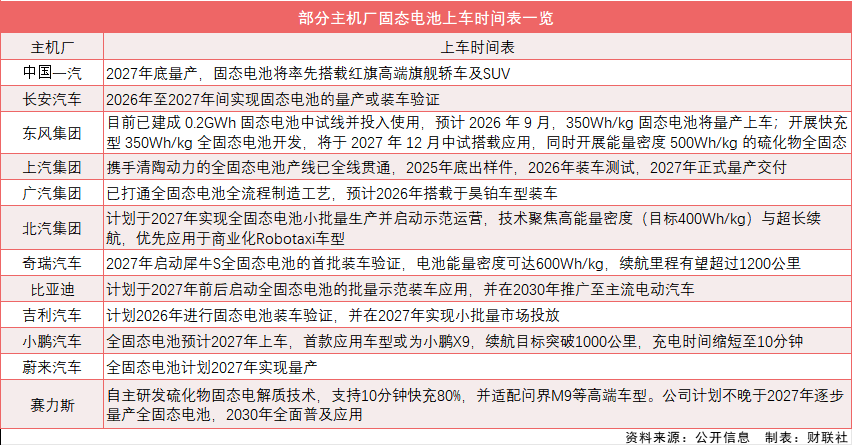
Core Viewpoint - The solid-state battery sector is gaining momentum in the electric vehicle industry, driven by the need to address range anxiety and enhance safety and efficiency. The market has seen a significant increase in solid-state battery stocks, with a 57.3% rise in the index over the past year, highlighting the growing interest and investment in this technology [1]. Group 1: Market Performance - The solid-state battery index rose from 696.24 in April 2025 to 1314.15 by the end of November 2025, reflecting a 57.3% increase [1]. - Companies such as Haike New Energy, Shanghai Xiba, and others have seen their stock prices increase by over 100% within the year [1]. Group 2: Manufacturer Plans - Twelve major automakers, including state-owned enterprises and companies like BYD and Geely, have disclosed their timelines for integrating solid-state batteries, targeting vehicle validation in 2026 and initial mass production in 2027 [1]. - Specific timelines include: - China FAW plans to mass-produce solid-state batteries by the end of 2027 for high-end vehicles [2]. - Changan Automobile aims for mass production or vehicle validation between 2026 and 2027 [2]. - Dongfeng Group has established a pilot line and expects to produce 350Wh/kg solid-state batteries by September 2026 [2]. - SAIC Group plans to deliver samples by the end of 2025 and conduct vehicle tests in 2026 [2]. - GAC Group has completed the manufacturing process for solid-state batteries and aims for vehicle integration in 2026 [2]. - BYD and Geely also have plans for solid-state battery applications around 2027 [2]. Group 3: Policy Support - The development of solid-state batteries is closely linked to government policies, with initiatives aimed at strengthening innovation in the electronic information manufacturing sector [3]. - The Ministry of Industry and Information Technology has emphasized the importance of technological innovation and the acceleration of new technology commercialization in the solid-state battery sector [3]. Group 4: Technical Innovations - The industry is focusing on replacing liquid electrolytes in lithium batteries with solid electrolytes to meet demands for higher energy density and faster charging [4]. - Experts suggest that achieving large-scale application of solid-state batteries will require three to five years of further development [4].

新款小鹏MONA M03新信息曝光 最大续航里程达640km
Zhong Guo Zhi Liang Xin Wen Wang· 2025-12-24 06:15
Group 1 - The new Xiaopeng MONA M03 offers three different capacities of lithium iron phosphate batteries, with the 51.8 kWh battery providing multiple range options of 540 km, 510 km, 500 km, 520 km, 490 km, and 485 km [2] - The 61.6 kWh battery corresponds to range options of 610 km, 590 km, 585 km, and 570 km [2] - The 62.2 kWh battery can deliver ranges of 640 km and 625 km [2] Group 2 - The exterior design retains the current model's shape, with adjustments made to the front bumper area, featuring T-shaped headlights that enhance the sporty feel [4] - The side profile adopts a fastback design, with various wheel styles available, further enhancing the technological appeal [4] - The rear continues with T-shaped taillights, and the rear bumper has been modified to include vent-like designs on both sides, reinforcing the sporty atmosphere; the vehicle dimensions are 4785 mm × 1896 mm × 1445 mm, with a wheelbase of 2815 mm [4]