
ZTO EXPRESS(ZTO)

Search documents
江浙沪“当日尝鲜”,全国200城“次日达”!大闸蟹寄递战升级
Yang Zi Wan Bao Wang· 2025-09-25 11:33
Core Insights - The rise of live-streaming sales and cold chain logistics has made hairy crabs a seasonal delicacy available nationwide, with significant competition among logistics companies to capture this high-value market [1][3] - The logistics of hairy crab delivery require high efficiency and service standards, with companies like Zhongtong, JD Logistics, and SF Express enhancing their capabilities to meet consumer demand [1][3] Group 1: Logistics Developments - Zhongtong has set up multiple collection points and mobile cold chain vehicles in key production areas, ensuring temperature control from catch to sorting [1] - Zhongtong has introduced new air routes and an intelligent cold chain system, achieving "next-day delivery" in 200 cities nationwide, with same-day delivery in major cities of Jiangsu, Zhejiang, and Shanghai [3] - JD Logistics has invested in autonomous vehicles, drones, and AI technologies to improve delivery experiences, increasing collection points by over 100% and extending collection cut-off times [3] - SF Express has launched a dedicated intelligent express transfer center for hairy crabs, linking over 100 front-end collection points for all-weather delivery assurance [3] Group 2: Market Trends - The peak harvesting season for hairy crabs in Jiangsu began on September 22, with major production areas like Suqian and Yangcheng Lake starting their catch shortly after [3] - The quality and yield of Jiangsu hairy crabs have improved this year, with data showing 7,970 existing companies related to hairy crabs in China, predominantly established 5-10 years ago [4] - Suzhou accounts for over 50% of the total number of companies related to hairy crabs, with a significant portion of these companies having registered capital of less than 1 million yuan [4] - In 2024, 489 new companies related to hairy crabs have been registered, with 289 registered so far this year [4]



中通快递-W9月24日斥资751.54万美元回购39.57万股
Zhi Tong Cai Jing· 2025-09-25 05:41
Group 1 - The company ZTO Express (02057) announced a share repurchase plan, intending to buy back 395,700 shares at a total cost of $7.5154 million [1] - The repurchase price per share is set between $18.76 and $19.29 [1]
中通快递-W(02057)9月24日斥资751.54万美元回购39.57万股
智通财经网· 2025-09-25 04:24
Group 1 - The company ZTO Express (02057) announced a share buyback plan on September 24, 2025, with an investment of $7.5154 million to repurchase 395,700 shares [1] - The repurchase price per share is set between $18.76 and $19.29 [1]
中通快递-W(02057.HK)9月24日耗资751.54万美元回购39.57万股
Ge Long Hui· 2025-09-25 04:20
Group 1 - The company, ZTO Express (02057.HK), announced a share buyback on September 24, 2025, spending $7.5154 million to repurchase 395,700 shares at a price range of $18.76 to $19.29 per share [1]
中通快递(02057) - 翌日披露报表
2025-09-25 04:15
FF305 翌日披露報表 (股份發行人 ── 已發行股份或庫存股份變動、股份購回及/或在場内出售庫存股份) 表格類別: 股票 狀態: 新提交 公司名稱: 中通快遞(開曼)有限公司(於開曼群島註冊成立以不同投票權控制的有限責任公司) 呈交日期: 2025年9月25日 確認 如上市發行人的已發行股份或庫存股份出現變動而須根據《香港聯合交易所有限公司(「香港聯交所」)證券上市規則》(「《主板上市規則》」)第13.25A條 / 《香港聯合交易所有限公司GEM證券 上市規則》(「《GEM上市規則》」)第17.27A條作出披露,必須填妥第一章節 。 | 第一章節 | | | | | | | | | | --- | --- | --- | --- | --- | --- | --- | --- | --- | | 1. 股份分類 | 不同投票權架構公司普通股 | 股份類別 | A | | 於香港聯交所上市 | 是 | | | | 證券代號 (如上市) | 02057 | 說明 | A類普通股 | | | | | | | A. 已發行股份或庫存股份變動 | | | | | | | | | | | | | 已發行股份(不包括庫 ...
无人车为快递网点抠出0.1元成本
Di Yi Cai Jing· 2025-09-24 12:35
Core Insights - The rapid adoption of functional unmanned vehicles in the express delivery industry is significantly reducing costs and improving efficiency [1][2] - Unmanned vehicles are reported to lower transportation costs by approximately 0.1 yuan per package compared to human delivery [1] - Monthly sales of unmanned vehicles have surged from 200-300 units at the beginning of the year to nearly 2000 units currently [2] Group 1: Industry Impact - The deployment of unmanned vehicles has transitioned from pilot programs at select locations last year to widespread implementation this year [1] - Unmanned vehicles are being utilized effectively in logistics, with one express delivery point reporting a cost of 0.06 yuan per package for unmanned transport [1] - Major express companies like Zhongtong and Jitu are significantly increasing their fleets of unmanned vehicles, with Zhongtong operating over 2000 units across more than 700 locations [1] Group 2: Company Developments - New Stone Technology has delivered its 10,000th unmanned vehicle, indicating strong growth in production and delivery capabilities [1] - Zhongtong has reported that its unmanned vehicles can handle 200,000 packages daily, showcasing the scale of operations [1] - Jitu plans to add 3000 unmanned vehicles this year, having already deployed 900, up from just 218 at the end of last year [1]
消息称中通、极兔等快递公司将在上海区域涨价
Xi Niu Cai Jing· 2025-09-24 06:28
Group 1 - Major express delivery companies in Shanghai, including Jitu Express, Zhongtong Express, YTO Express, and Shentong Express, announced a price increase for all customers starting from September 22, 2025 [2] - The price adjustment aims to implement national policies against "involution" competition, eliminate disruptive low pricing practices, and ensure stable service for customers [2] - Jitu Express and Zhongtong Express confirmed the authenticity of the notification, while YTO Express and Shentong Express have not yet responded [2] Group 2 - Recently, regions such as Hubei, Shandong, and Tianjin have also announced increases in express delivery fees [5] - Several express companies in Heilongjiang, including YTO Express, stated that they will adjust their pricing based on company costs starting from September 20, 2025, to promote rational and healthy competition [5]



“反内卷”进行时 多地快递网点跟进涨价
Sou Hu Cai Jing· 2025-09-24 04:27
Core Viewpoint - The express delivery industry in China is experiencing a price increase trend, driven by government policies and seasonal demand, with major companies in Shanghai announcing price hikes in late September 2025 [1][2]. Price Adjustment - Major express companies in Shanghai, including Jitu Express, Zhongtong Express, and Yunda Express, have announced price increases ranging from 0.2 to 0.4 yuan per package, primarily affecting business clients [2]. - The price increase in Shanghai follows similar actions in regions like Yiwu, Guangdong, and Heilongjiang, indicating a nationwide trend [2]. - The average price per express service in the first half of 2025 was 7.52 yuan, a decrease of 7.7% from 8.15 yuan in the same period of 2024, despite a 19.3% increase in business volume [2]. Industry Context - The express delivery sector has been facing a "volume without revenue" dilemma, prompting regulatory bodies to emphasize the need for a fair pricing system [2][3]. - The National Postal Administration has been actively addressing issues of "involutionary" competition and has called for a shift towards a more sustainable pricing model [3]. Seasonal Factors - The upcoming peak seasons, such as "Double 11," are expected to provide opportunities for further price adjustments, as it is common practice to raise prices before major promotional events [4]. Internal Optimization - Despite the anticipated price increases, the industry remains competitive, and companies are focusing on internal improvements, such as management optimization and technological innovation, to enhance their core competencies [6]. - Companies like Shentong Express are prioritizing high-quality development over price competition, aiming for long-term value creation for customers and partners [6]. Technological Advancements - Companies are investing in technology to improve operational efficiency, with Shentong Express implementing AI and automation solutions to enhance service quality and reduce costs [7]. - SF Express is utilizing intelligent and unmanned technologies to optimize logistics operations, significantly improving efficiency in various processes [7].
快递涨价“连续剧”更新 上海收件价格上调,商家默默取消运费险
2 1 Shi Ji Jing Ji Bao Dao· 2025-09-23 23:16
Core Viewpoint - The recent price increase in the express delivery sector, initiated by major companies like Jitu, Zhongtong, and Yuantong, reflects a broader trend driven by policy and cost pressures, aiming to curb long-standing low-price competition in the industry [1][3]. Price Increase Details - Five leading express companies have raised the collection prices in Shanghai by 0.2 to 0.4 yuan per order [1]. - Similar price adjustments have occurred in key e-commerce regions such as Zhejiang and Guangdong, indicating a widespread trend [1][3]. - The price hikes primarily target low-priced orders below cost, while personal parcel rates remain unaffected [1]. Cost Pressures and Industry Response - The express delivery industry has been facing rising costs, including increased wages for delivery personnel and higher transportation and packaging expenses [5]. - The average price for express services has decreased by nearly 8% year-on-year, with major companies experiencing a decline in per-order revenue [5]. - Companies are shifting from a volume-driven strategy to a quality-focused approach to maintain profitability [5][6]. Financial Impact on Companies - The price increase is expected to enhance station revenues and improve the income of delivery personnel [4]. - For instance, a single station estimates that a 0.1 yuan increase in per-order revenue could lead to an additional 1.5 million yuan in monthly income [4]. Market Dynamics and Regional Variations - The price increase has not been uniformly adopted across all regions, with core areas like Guangdong and Zhejiang implementing changes while non-core areas maintain previous pricing strategies [6]. - The disparity in e-commerce density affects the pace of price adjustments, with some regions still engaging in price competition to attract customers [6]. Effects on Related Industries - The rise in express delivery costs has led to the cancellation of shipping insurance by some merchants, particularly in the high-return apparel sector, which may impact sales conversion rates [7]. - The cancellation of shipping insurance could also affect reverse logistics, which has been a significant revenue source for express stations [7]. Future Outlook - While the price increases may improve profit margins, the long-term effectiveness in curbing low-price competition remains uncertain, as consumer acceptance of higher prices is crucial [7].


快递涨价“连续剧”更新 上海收件价格上调 商家默默取消运费险
2 1 Shi Ji Jing Ji Bao Dao· 2025-09-23 23:13
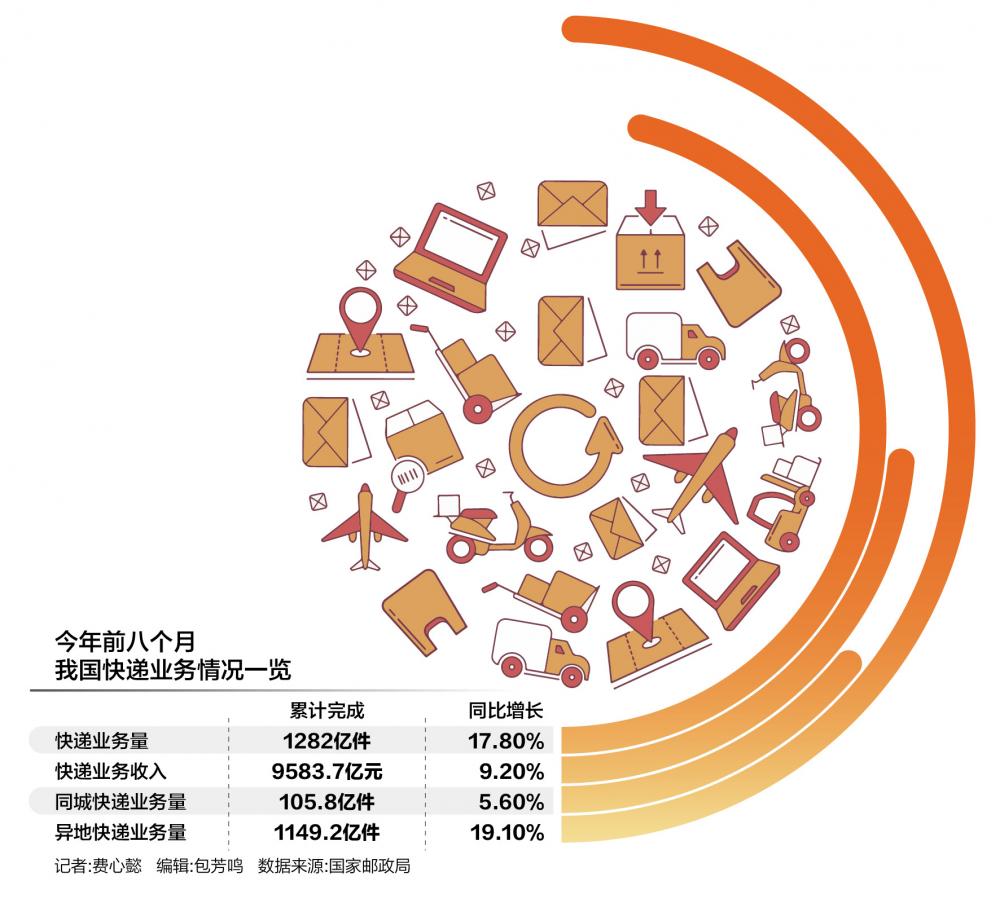
Core Viewpoint - The recent price increase in the express delivery sector, driven by policy and cost pressures, is spreading from core e-commerce areas to broader regions, aiming to curb long-standing low-price competition and improve service quality satisfaction among consumers [1][3][5]. Price Increase Details - On September 22, major express companies including Jitu, Zhongtong, and Yuantong raised the collection prices in Shanghai by 0.2 to 0.4 yuan per order [1]. - Previous price hikes occurred in Yiwu, Zhejiang, and Guangdong, with minimum prices set at 1.2 yuan and 1.4 yuan respectively, indicating a trend towards establishing a price floor to combat low-price competition [3][4]. Financial Impact - The price adjustments are expected to enhance station profitability and courier income, with one franchisee estimating an additional 1.5 million yuan in monthly revenue from a 0.1 yuan increase per order [4]. - The express delivery industry has seen record volumes, with 1,282 billion packages delivered in the first eight months of the year, a 17.8% year-on-year increase, and total revenue reaching 9,583.7 billion yuan, up 9.2% [4]. Competitive Landscape - The express delivery sector is transitioning from a volume-driven strategy to a quality-focused approach due to shrinking profit margins amid fierce competition [5][6]. - Major companies like Zhongtong have adjusted their growth forecasts downward, indicating a shift in focus towards balancing service quality and profitability [6]. Regional Price Variations - Price increases have been more pronounced in e-commerce hubs like Guangdong and Zhejiang, while non-core regions maintain previous pricing strategies, leading to potential market imbalances [6][7]. - Some franchisees in less competitive areas are still offering lower prices to attract customers, which may undermine the overall price increase efforts [6]. Broader Implications - The rise in express delivery costs has led to the cancellation of shipping insurance by some merchants, particularly in the high-return apparel sector, which could impact sales conversion rates [7]. - Experts suggest that while price increases may improve profit margins, the long-term effectiveness in curbing low-price competition will depend on consumer acceptance of higher prices [7].