
世界银行

Search documents
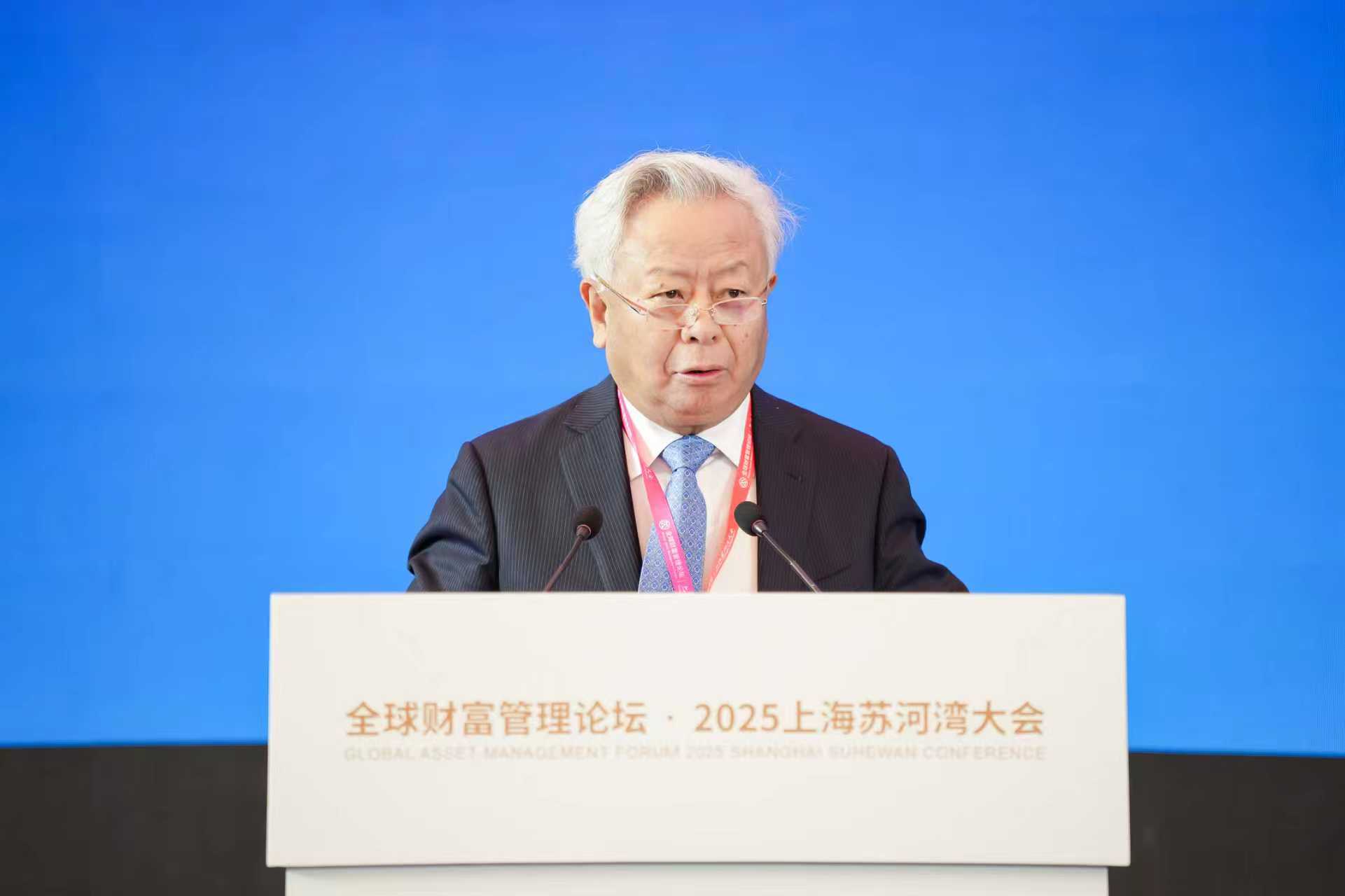
亚投行行长金立群:未来将出现“AI发达国家”与“AI发展中国家”
Xin Hua Cai Jing· 2025-10-18 14:18
Group 1 - The core viewpoint is that the rapid development of AI technology is leading to a significant transformation in the global industrial landscape, potentially creating a distinction between "AI developed countries" and "AI developing countries" [1][3] - The classification of labor and capital is becoming obsolete as robots serve both as capital and labor, which is a shift from traditional economic models [3] - The trend of AI and robotics reducing labor costs is causing manufacturing to return to developed countries, which may alter the economic growth logic that developing countries have relied on for decades [3] Group 2 - The price of gold has surged by 50% as investors increasingly purchase gold, despite high USD interest rates, raising questions about gold's potential return as a monetary anchor [4] - The call for enhanced multilateral cooperation among institutions like the Asian Development Bank, AIIB, and the World Bank is emphasized to address global economic growth prospects and uncertainties [4] - The focus of the Asian Infrastructure Investment Bank is on ensuring that funds are allocated effectively to support global economic growth initiatives [4]

中国人民银行:将继续与世界银行、非洲开发银行紧密合作
Bei Jing Shang Bao· 2025-10-17 05:03
Core Viewpoint - The global economic situation is becoming increasingly complex and severe, with unilateralism and protectionism impacting international trade order, posing greater challenges to global economy and national development [1] Group 1: Global Economic Situation - The current global landscape is marked by rising complexities and challenges, particularly due to unilateralism and protectionism from certain economies [1] - These factors are significantly affecting international trade and the overall economic development of various countries [1] Group 2: Multilateral Cooperation - China aims to strengthen cooperation with the World Bank and the African Development Bank to support sustainable development in low-income and vulnerable countries [1] - There is a call for the World Bank and African Development Bank to advocate for multilateral cooperation and to enhance the global governance system based on multilateral rules [1]
野心勃勃的改革--值得重视的越南“增长叙事”
Hua Er Jie Jian Wen· 2025-10-17 03:21
Core Insights - Vietnam is actively constructing a comprehensive "growth narrative" through administrative reforms, capital market reforms, and significant investments in high technology and talent development [1] - Deutsche Bank's chief economist Juliana Lee's report highlights Vietnam's strong economic performance, with a GDP growth of 8.2% year-on-year in Q3, aiming for an annual growth target of 8% [1] - FTSE Russell has confirmed that Vietnam will be upgraded from "frontier market" to "secondary emerging market" by September 2026, potentially bringing in up to $25 billion in net capital inflows by 2030 according to the World Bank [1] Strategic Breakthroughs - The Vietnamese government has set an ambitious target of 10% average annual GDP growth from 2026 to 2030, with a goal to become a "high-income country" by 2045 [2] - The core strategies for achieving these goals focus on three pillars: institutional reform, infrastructure development, and human resource enhancement [2] - Significant administrative reforms are underway, including streamlining government agencies and investing hundreds of billions of dollars in critical infrastructure such as transportation and logistics to position Vietnam as a regional manufacturing and logistics hub [2] Funding and Investment Plans - To support its growth plans, Vietnam is preparing to expand its budget deficit to approximately 5% of GDP and aims to attract $150 billion to $200 billion in foreign direct investment (FDI) between 2026 and 2030 [2] - This reflects Vietnam's determination to leverage external capital for accelerated development [2]
【高端访谈】各国财政支出应注重“物有所值”——访IMF财政事务部主任加斯帕尔
Xin Hua She· 2025-10-16 08:00
Core Insights - The International Monetary Fund (IMF) emphasizes the need for countries to focus on "value for money" in public spending amidst rising global public debt and increasing fiscal pressures [1][2] - The IMF's latest Fiscal Monitor Report indicates that global economic growth remains sluggish, with public debt continuing to rise, compounded by increased defense spending, aging populations, and rising interest rates [1] - IMF officials warn that the persistent gap between spending and revenue will exacerbate debt levels, threatening fiscal sustainability [1] Group 1: Global Fiscal Challenges - Countries are urged to optimize spending structures and prioritize expenditures that promote economic growth, such as investments in infrastructure, human capital, and technology research and development [1] - Improving spending efficiency can significantly enhance returns and alleviate fiscal policy dilemmas [1] Group 2: U.S. Fiscal Policy - The IMF highlights that the U.S. fiscal deficit is currently high, with public debt as a percentage of GDP projected to rise from 122% in 2024 to 143% by 2030, significantly above the average for developed economies [2] - Early adjustments to U.S. fiscal policy are recommended to control deficits and debt, ensuring stable economic performance and contributing to global financial stability [2] Group 3: China's Fiscal and Green Energy Policies - The IMF welcomes recent fiscal measures from China, viewing them as beneficial for expanding domestic demand and strengthening the social safety net [2] - China's advancements in wind and solar energy technologies are recognized for significantly reducing global green energy costs, highlighting the country's positive contributions to global sustainability efforts [2]
世界银行将沙特2025年经济增长预期上调至3.2%
Shang Wu Bu Wang Zhan· 2025-10-15 17:10
Group 1 - The World Bank has raised Saudi Arabia's economic growth forecast for 2025 from 2.8% to 3.2% due to increased oil production and strong non-oil activities [1] - The growth rate is expected to reach 4.3% in 2026 and 4.4% in 2027 [1] Group 2 - The World Bank has also adjusted its economic growth forecast for the Gulf Cooperation Council (GCC) region, predicting a 3.5% growth rate for 2025, an increase of 0.3 percentage points from previous estimates [1] - The GCC region is expected to grow by 4.4% in 2026 and 4.7% in 2027 [1]
世界银行呼吁非洲国家停止发行欧元债券以回购到期债务
Shang Wu Bu Wang Zhan· 2025-10-15 17:10
Core Viewpoint - The World Bank advises African countries against issuing Eurobonds for refinancing maturing debts and commercial loans, suggesting instead to invest in infrastructure projects [1] Group 1: Debt Sustainability - Sub-Saharan African countries are facing significant refinancing pressures due to maturing Eurobonds, which poses a major challenge to debt sustainability [1] - Countries like Benin, Cameroon, Côte d'Ivoire, Kenya, Nigeria, Senegal, and South Africa issued over $12 billion in new Eurobonds in 2024, with some strategically used for refinancing [1] Group 2: Financial Risks - Kenya raised $4.5 billion in just two years through new Eurobond issuances to repurchase maturing debt [1] - The World Bank warns that obtaining new loans at relatively high costs may increase default risks and hinder economic stability in Africa due to rising global risks and tightening financial conditions [1]
美政府停摆致多国陷入“数据盲区”,他国警告:美元根基正被“白蚁”蚕食
Sou Hu Cai Jing· 2025-10-15 15:02
Core Viewpoint - The U.S. government shutdown has led to a suspension of official economic data releases, impacting not only the U.S. but also other countries that rely on this data for economic assessments [1][3][5]. Group 1: Impact on Global Economies - Countries like Japan are facing challenges in making policy decisions due to the lack of U.S. economic data, complicating their monetary policy strategies [3][5]. - The shutdown has created a "data blind spot," increasing the risk of policy missteps as countries navigate economic uncertainties [1][3]. - The International Monetary Fund (IMF) warns that ongoing political pressure on data collection agencies could erode public trust in official statistics, complicating policy formulation for central banks and governments [5][6]. Group 2: Concerns Over U.S. Governance and Data Reliability - The shutdown, along with other recent events such as pressure on the Federal Reserve and the dismissal of the Labor Statistics Bureau chief, highlights deeper issues regarding U.S. governance and data reliability [4][5]. - There is growing skepticism about the U.S. governance capabilities and the reliability of its data, which could affect global reserve management and monetary decisions [5][7]. - The absence of reliable official statistics makes it difficult for countries to compare economic data over time, increasing uncertainty in economic assessments [7]. Group 3: Alternative Data Sources - Despite the shutdown, the Federal Reserve continues to collect economic data independently, and private data service providers are offering alternative solutions [5][6]. - Central banks are adapting by piecing together non-official data to make short-term assessments, although this approach lacks the comparability of official statistics [5][7].
黄益平:“华盛顿共识”破产后,全球南方的发展路在何方?中国经验给出答案
Feng Huang Wang Cai Jing· 2025-10-15 07:39
Group 1: Tanzania's Economic Vision - Tanzania's President Samia Suluhu Hassan announced the "Vision 2050," aiming for a GDP exceeding $1 trillion and a per capita GDP of $7,000 by 2050, which requires an annual nominal GDP growth rate of 6.8% [1] - The vision includes strategic pillars and industrial policies focusing on logistics, energy, technology, digital transformation, and nine key sectors such as agriculture, tourism, and mining to create jobs and boost exports [1] - The announcement may be politically motivated ahead of the upcoming elections in October 2025, as it lacks specific strategies and pathways for implementation [1] Group 2: Development Challenges in Southern Countries - Many Southern countries, like Tanzania, face significant challenges in achieving rapid economic development, often falling into the "middle-income trap" as defined by World Bank economists [3][4] - The "Washington Consensus" proposed by international organizations has had limited success in guiding economic reforms in developing countries, contrasting with the successful policies of East Asian economies [5][6] - The lack of innovation capacity and persistent issues such as inequality, poor education, and inadequate infrastructure hinder sustained economic growth in many Southern nations [4][6] Group 3: Lessons from China's Economic Policies - China's economic growth, with an average GDP growth rate of 8.9% from 1978 to 2024, serves as a potential model for Southern countries aiming for rapid development [8] - Key differences between China's policies and the "Washington Consensus" include a significant state-owned sector and active government participation in economic activities, including industrial policies [8][9] - The pragmatic approach of Chinese reforms emphasizes adapting policies to local conditions rather than strictly following theoretical models, which could provide valuable insights for other Southern nations [21][24] Group 4: Global South Consensus - The "Washington Consensus" is becoming outdated, as both Southern countries and Northern nations like the U.S. have moved away from its principles, highlighting the need for a new framework for economic development [20][26] - A proposed "Global South Consensus" aims to establish basic principles for economic policy that are tailored to the unique circumstances of Southern countries, focusing on market-driven resource allocation and pragmatic government intervention [23][24] - Successful experiences from East Asian economies, particularly China, can inform the development of this consensus, emphasizing the importance of context-specific policies and the balance between market and government roles [21][26]

记者手记丨贸易冲突、AI浪潮、财政压力——IMF和世行秋季年会警示三大经济挑战
Xin Hua Wang· 2025-10-15 07:02
Core Insights - The IMF and World Bank's autumn meeting highlighted three major economic challenges: trade tensions, the rapid development of AI, and increasing fiscal pressures [1][2][3] Trade Tensions - The IMF's latest World Economic Outlook report predicts a 3.2% growth in the global economy by 2025, but warns that ongoing trade tensions could lead to a permanent restructuring of global trade, negatively impacting efficiency [1][2] - The report indicates that the U.S. economy is showing signs of substantial slowdown, with employment data since July falling significantly below expectations and the unemployment rate rising to a near four-year high [2][3] - Global trade policies are causing uncertainty, affecting economies worldwide, particularly emerging markets that are more vulnerable to trade conflicts [2][3] AI Investment Risks - The IMF cautioned about the potential risks associated with the surge in AI investments, drawing parallels to the late 1990s internet bubble, where high expectations could lead to significant market corrections if profits do not materialize [3][4] - Optimism surrounding AI investments has inflated stock valuations and stimulated consumer spending, but a failure to meet profit expectations could have adverse effects on wealth and consumption [3] Fiscal Pressures - The IMF highlighted that many governments, including major developed economies, are struggling to manage fiscal pressures, with U.S. public debt projected to rise from 122% of GDP in 2024 to 143% by 2030, 15 percentage points higher than previous forecasts [3][4] - Low-income countries are particularly vulnerable, facing a significant reduction in aid while attempting to achieve fiscal balance [3][4]
通货膨胀率下降,世界银行上调撒哈拉以南非洲地区经济增长预期
Shang Wu Bu Wang Zhan· 2025-10-14 15:48
Core Insights - The World Bank has raised its economic growth forecast for Sub-Saharan Africa to 3.8% for this year, driven by declining inflation and improved foreign trade [1][2] - The forecast for inflation in the region is expected to decrease to a median of 4.5% in 2024, stabilizing between 3.9% and 4% by 2026 [1] - Economic growth in Sub-Saharan Africa is projected to accelerate to an average of 4.4% over the next two years [1] Economic Drivers - The upgrade in growth forecasts is primarily influenced by improvements in major regional economies such as Côte d'Ivoire, Ethiopia, and Nigeria [2] - The World Bank emphasizes the need for regional economies to create more job opportunities and ensure higher wages, stability, and opportunities for the population [2] Challenges - The World Bank expresses concerns regarding high debt burdens, lack of job opportunities, and trade uncertainties stemming from U.S. policies [2] - The expiration of the African Growth and Opportunity Act (AGOA), a significant trade agreement between the U.S. and African nations, poses additional trade challenges [2]