
华为技术有限公司

Search documents
科技赋能银发经济 智慧养老站上风口
Zheng Quan Ri Bao· 2026-01-13 17:05
Core Insights - The Chinese government has introduced significant policies to support the development of the elderly care industry and the silver economy, focusing on brand development and technological empowerment [1] - The aging population in China is rapidly increasing, with projections indicating that by the end of 2024, there will be 310 million individuals aged 60 and above, representing 22% of the total population [2] - There is a critical shortage of professional elderly care workers, with an expected shortfall of over 5 million caregivers in the next five years [2] - Technology, particularly robotics, is seen as a key solution to address the challenges in elderly care, with companies developing smart care products tailored to the needs of the elderly [2][3] Policy and Industry Development - The Ministry of Civil Affairs and other departments have issued measures to promote the cultivation of elderly care service providers and the development of the silver economy, marking a strategic shift from merely addressing shortcomings to promoting growth [1] - The policy emphasizes the role of elderly care robots as a core area for technological empowerment, aiming to attract social capital and accelerate the growth of the silver economy [1] Technological Advancements - Companies are increasingly focusing on the development of smart elderly care products, with Haier launching 208 age-friendly products, including AI smart beds and rehabilitation robots [3] - The integration of IoT platforms by companies like General Universal Health Technology aims to address data silos in elderly care services, enhancing the overall service ecosystem [3] Application Scenarios - Elderly care robots are being deployed in various settings, including institutions, communities, and homes, focusing on high-frequency tasks such as delivery, safety monitoring, and rehabilitation assistance [4][5] - Specific examples include the use of 5G delivery robots in nursing homes and safety monitoring robots in community centers, showcasing the practical application of technology in elderly care [5] Industry Challenges and Future Directions - The industry faces challenges related to the practicality and humanization of elderly care robots, emphasizing the need for products that genuinely meet the needs and habits of the elderly [5] - Recommendations for future development include reducing costs and enhancing reliability to make technology accessible to more families, as well as fostering cross-industry collaboration for seamless integration of health data [5]
岚图汽车与引望深化合作 双方计划组建联合团队
Jing Ji Guan Cha Bao· 2026-01-13 04:33
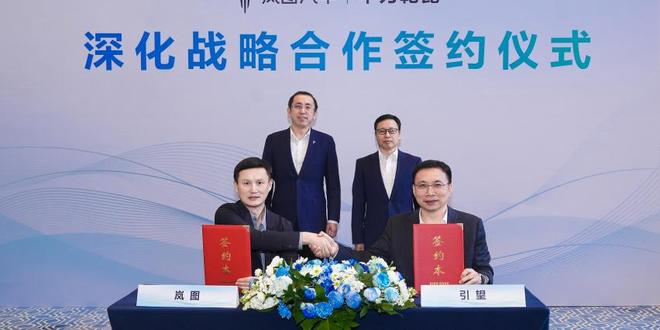
Group 1 - Lantu Automotive and Huawei's subsidiary, Shenzhen Yingwang Intelligent Technology, signed a strategic cooperation agreement to deepen collaboration in smart driving and smart cockpit development [2] - The partnership aims to innovate development models, establish joint teams, and enhance efficiency to accelerate vehicle launch timelines and create popular application scenarios [2] - A joint operation team for To C software will be formed to cover the entire value chain from product planning to user operations, enhancing user experience with intelligent software services [2] Group 2 - Lantu Automotive's sales have been growing, with a cumulative delivery of 150,169 vehicles in 2025, representing an 87% year-on-year increase [3] - Huawei is expanding its influence in the automotive sector through partnerships, including the establishment of Yingwang, which was fully registered in January 2024 with a capital of 1 billion yuan [3][4] - By March 2025, the ownership structure of Yingwang changed to 80% held by Huawei and 10% each by Avita Technology and Seres Automotive after strategic investments [3][4] Group 3 - Yingwang has entered an independent operation phase, integrating technology and personnel from Huawei's original automotive solutions unit, focusing on core areas like smart driving and intelligent cockpit [4][5] - As of October 2025, Huawei's Kran ecosystem has partnered with 14 automotive companies, with 33 mass-produced models launched across various price ranges [4][5] - Lantu Automotive is leveraging its relationship with Huawei to secure more strategic advantages for future growth [5]

重组入列:最新443家全国重点实验室名单
仪器信息网· 2026-01-13 03:56
Core Viewpoint - By December 2025, over 500 national key laboratories have completed restructuring into a new sequence, with nearly 110 "Double First-Class" universities participating in about 80% (nearly 400) of the national key laboratories [1][2]. Group 1: National Key Laboratories Overview - National key laboratories are scientific research and development institutions planned by the state to support the national laboratory system, focusing on major technological innovation areas related to national security and socio-economic development [2]. - The restructuring of the national key laboratory system was first proposed at the Central Economic Work Conference in 2018 and established as a component of national strategic scientific and technological forces in the revised "Science and Technology Progress Law" in 2021 [2]. Group 2: Participation of Universities - The leading or co-building universities for the laboratories are primarily "Double First-Class" universities, indicating a strong involvement of top-tier educational institutions in the research initiatives [1][2]. - Nearly 110 "Double First-Class" universities are involved in the establishment and support of approximately 400 national key laboratories [1][2]. Group 3: List of Key Laboratories - A variety of national key laboratories have been established across different fields, including: - Dark Matter Physics National Key Laboratory led by Shanghai Jiao Tong University [3] - Explosive Science and Safety Protection National Key Laboratory led by Beijing Institute of Technology [3] - Materials Chemistry Engineering National Key Laboratory led by Nanjing University of Technology [3] - The list includes laboratories focusing on diverse areas such as intelligent transportation, infectious disease research, and advanced manufacturing technologies [3][4][5].

研判2025!中国电容笔行业进入壁垒、市场政策汇总、产业链图谱、市场规模、竞争格局及发展趋势分析:主动式电容笔将成为技术发展主流[图]
Chan Ye Xin Xi Wang· 2026-01-13 01:25
Core Insights - The global capacitive pen market is rapidly growing, with a projected market size of $2.018 billion in 2024, reflecting a year-on-year growth of 0.9%, where active capacitive pens account for approximately 67% and passive capacitive pens for about 33% [1][6] Industry Overview - Capacitive pens are input devices designed based on capacitive touch technology, allowing operations like writing, drawing, clicking, and sliding on capacitive touch screens [2] - The industry is characterized by various classifications of capacitive pens, including active vs. passive, basic vs. pressure-sensitive, and universal vs. specialized types [2] Industry Barriers - The main barrier to entry in the capacitive pen industry is the technical protocol certification required by operating system manufacturers like Microsoft and Google, which is essential for signal interaction [2] - The development of high-performance capacitive pens requires significant R&D investment and technological accumulation due to the complexity of the product [2] Policy Environment - The Chinese government has implemented several policies to support the development of the smart consumer device manufacturing industry, creating a favorable environment for the growth of the capacitive pen sector [4] Industry Chain - The capacitive pen industry supply chain includes upstream suppliers of raw materials like ICs, plastic components, and electronic materials, while the midstream focuses on R&D, design, and production [5] Market Growth in China - The Chinese capacitive pen market is expected to reach 5.562 billion yuan in 2024, with a year-on-year growth of 12.8%, driven by the digital economy and educational informationization policies [8] Competitive Landscape - The Chinese capacitive pen market is highly competitive, featuring major players like Apple, Microsoft, and Huawei, alongside local brands such as Hanvon Technology and MAXEYE, with MAXEYE projected to hold an 8.5% global market share in 2024 [6][11] Development Trends - Future trends indicate a focus on technological upgrades in active capacitive pens, enhancing pressure sensitivity and reducing latency, while integrating AI and IoT technologies [12] - The application of capacitive pens is expanding beyond consumer electronics into various industry sectors, driven by digital transformation needs [12] - Local brands are expected to enhance their market competitiveness through technological innovation and ecosystem development, moving towards a more integrated hardware-software-content model [13] - The industry is also moving towards sustainable development, with a focus on using biodegradable materials and optimizing production processes to meet environmental standards [15]


中国算力行业决策建议及项目可行性研究报告2026-2032年
Sou Hu Cai Jing· 2026-01-12 21:05
Group 1 - The report outlines the strategic importance of computing power as a new type of infrastructure and its collaborative relationship with data and algorithms [3][4] - The global computing power market is characterized by a significant scale and growth, with North America leading and the Asia-Pacific region rapidly catching up [4][5] - The report highlights the evolution of computing power technology, with heterogeneous computing architectures becoming mainstream [4][5] Group 2 - During the "14th Five-Year Plan" period, China's computing power scale has expanded significantly, with the total computing power surpassing previous levels [5][6] - The report discusses the impact of the East Data West Computing project on the geographical restructuring of computing power in China [5][6] - The establishment of a domestic computing ecosystem is underway, with a notable increase in the annual growth rate of domestic AI chip shipments [6][7] Group 3 - The report identifies key segments of the computing power industry chain, including advancements in chiplet technology and optical interconnects that enhance computing density [4][5] - The deployment of edge computing nodes in industrial and automotive internet applications is increasing, reflecting a shift towards more decentralized computing solutions [5][6] - The demand for computing power in various applications, such as AI model training, scientific computing, and smart manufacturing, is analyzed, indicating a growing need for high-performance computing resources [6][7] Group 4 - The competitive landscape of the global computing power industry is dominated by American companies, with major players like NVIDIA, AMD, and Intel leading the high-end computing ecosystem [6][7] - In China, the report highlights the emergence of a "national team" in domestic computing power, with traditional hardware manufacturers transitioning to computing service providers [7][8] - Key competitive dimensions include hardware performance, software ecosystem compatibility, and the ability to deliver comprehensive solutions [6][7] Group 5 - The report forecasts significant growth in the computing power market from 2026 to 2032, with an expected compound annual growth rate and a shift in the market structure towards AI computing power [10][11] - The analysis indicates that the domestic market share of Chinese computing power is projected to exceed 50% under certain scenarios [10][11] - The report emphasizes the importance of establishing a sustainable and efficient computing power ecosystem, with a focus on energy efficiency and green technologies [10][11]



中葡经贸中心、华为、文华在线,在横琴签订协议
Nan Fang Du Shi Bao· 2026-01-12 11:12
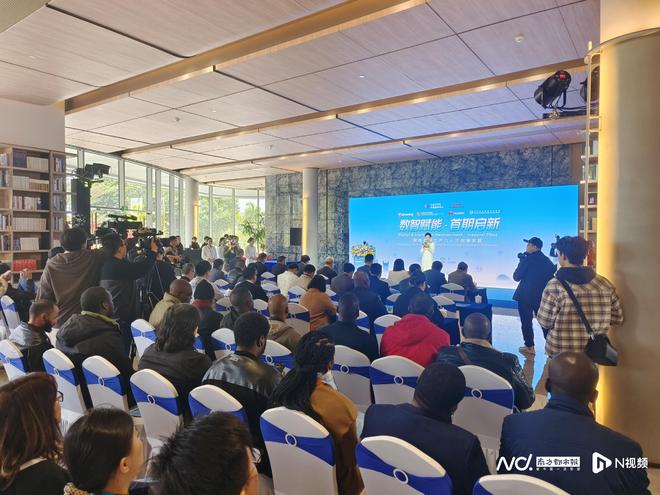
Core Insights - The Hengqin International Digital Talent Training Base has officially commenced trial operations, marking a significant step in promoting cross-border cooperation and talent development between China and Portuguese-speaking countries [1][3][10] Group 1: Training and Development - The base aims to train over 3,000 students annually, focusing on areas such as artificial intelligence, smart education, and the digital economy [1][3] - The training platform is a collaborative effort between the China-Portuguese (Spanish) Economic and Trade Service Center, Huawei Technologies, and Beijing Wenhua Online Education Technology Co., Ltd [1][3] - The first batch of courses attracted over 60 students from Portuguese-speaking countries, including Mozambique, Mexico, Uruguay, and Cuba [5][10] Group 2: Strategic Partnerships - A cooperation agreement was signed between the Hengqin Guangdong-Macao Deep Cooperation Zone Industry Investment Fund, the China-Portuguese Economic and Trade Center, and the base's operating entity, indicating a substantial advancement in funding and resource integration [5] - The center aims to assist enterprises in expanding into Portuguese-speaking countries by providing a range of professional services, including investment and financing support [3][5] Group 3: Future Plans and Goals - The base plans to establish an ICT certification center that will serve Latin America, with a goal of training over 10,000 individuals annually in the medium term [7] - Long-term objectives include becoming a core platform for mutual recognition of digital talent standards between China and Latin America, as well as applying for national foreign aid projects [7][9] - The base will leverage its geographical and cultural advantages to provide targeted training and services, enhancing the digital education landscape in Portuguese-speaking countries [3][9]
华境S 开启高端科技平民化
Cai Jing Wang· 2026-01-12 09:39
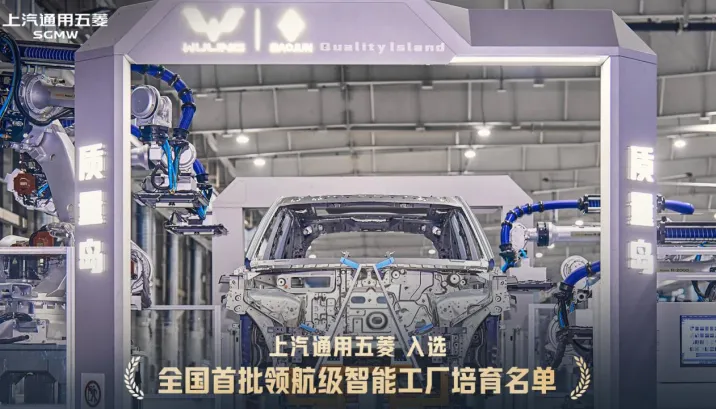
Core Insights - The discussion centered on the transition of China's automotive industry from traditional manufacturing to intelligent manufacturing, highlighting the innovative breakthroughs of the Intelligent Island Manufacture System (I²MS) developed by SAIC-GM-Wuling and its collaboration with Huawei [1][3]. Group 1: Intelligent Island Manufacture System (I²MS) - SAIC-GM-Wuling has invested over 10 billion in the I²MS, which has been recognized as one of the first "leading intelligent factories" by six ministries including the Ministry of Industry and Information Technology [3]. - The I²MS features six innovations: decoupled processes, reconfigurable production lines, adaptive capacity, value-added data, evolutionary systems, and expandable models [3]. - The system enables smart production through "vehicle finding stations and materials finding vehicles," supporting efficient mixed-line production of over 20 vehicle models, resulting in a 30% increase in production efficiency, 80% improvement in logistics efficiency, and a 31% reduction in manufacturing costs [3]. Group 2: Strategic Collaboration with Huawei - In September 2025, SAIC-GM-Wuling and Huawei established a strategic partnership focusing on intelligent manufacturing, assisted driving, and smart cockpits, marking a new chapter in industrial collaborative innovation [5]. - The Huajing S model is equipped with Huawei's advanced solutions, including the ADS 4 Pro for intelligent driving, Harmony cockpit, and cloud integration, making high-end intelligent features accessible to ordinary consumers [5]. - The vehicle meets the ultra C-NCAP 2024 five-star safety standard and includes advanced safety features such as the Limera laser vision system for improved night-time obstacle detection, enhancing safety redundancy [5].
超聚变启动上市辅导 荣科科技借壳预期破灭
Xin Lang Cai Jing· 2026-01-12 09:35
Group 1 - The core point of the article is that Chaogufeng Digital Technology Co., Ltd. has officially submitted its IPO counseling record to the China Securities Regulatory Commission, with CITIC Securities as the counseling institution [1][3] - Chaogufeng was originally the X86 server business unit of Huawei, which was spun off in 2021 due to geopolitical factors and taken over by Henan Chaogufeng Technology Co., Ltd. under a Henan state-owned platform [1][3] - Following the equity restructuring, Chaogufeng has rapidly expanded its global presence, establishing 11 R&D centers and 6 supply centers worldwide by the end of 2025, serving 130 countries and regions, including 223 Fortune 500 companies [1][3] Group 2 - Financial data shows explosive revenue growth for Chaogufeng, with revenues exceeding 10 billion yuan in 2022, over 28 billion yuan in 2023, and surpassing 43 billion yuan in 2024 [1][3] - In the niche market of liquid-cooled servers, Chaogufeng ranked first in China's standard liquid-cooled server market for two consecutive years from 2023 to 2024, achieving a market share of 43% in 2023 with nearly 42,000 units shipped [1][3] - Chaogufeng was valued at 57 billion yuan in the 2025 Global Unicorn List, ranking 91st and marking its fourth consecutive year as a global unicorn [1][3] Group 3 - The decision to directly initiate the IPO counseling has completely ended market speculation regarding a reverse merger with Rongke Technology [4] - Rongke Technology's main business includes smart healthcare, smart cities, and AI applications, but its recent performance has been poor, with revenues stagnating and a net profit loss of 2.92 million yuan in 2024, which further expanded to a loss of 31.69 million yuan in the first three quarters of 2025 [4][5] - Despite the poor performance, the speculation of a reverse merger led to a significant increase in Rongke Technology's stock price, which rose from around 17 yuan per share in mid-2025 to 30 yuan per share by the end of the year [5]

“三智”战略集大成之作,华境S让高端智能科技普惠于民
Zhong Guo Qi Che Bao Wang· 2026-01-12 03:23
Core Viewpoint - China's manufacturing is transitioning from "following and running" to "leading in innovation," with a focus on "Artificial Intelligence +" as a core strategy during the 14th Five-Year Plan period [1][3]. Group 1: Intelligent Manufacturing System (I²MS) - SAIC-GM-Wuling has invested over 10 billion in the globally pioneering Intelligent Island Manufacturing System (I²MS), which has been recognized as a "leading-level intelligent factory" by multiple government ministries [3][5]. - The I²MS represents a significant shift from traditional assembly lines, enabling flexible production that meets the growing demand for personalized vehicles while maintaining efficiency [6][9]. Group 2: Efficiency and Cost Reduction - The I²MS allows for the efficient production of over 20 vehicle models on the same line, achieving a 30% increase in production efficiency, an 80% improvement in logistics efficiency, and a 31% reduction in manufacturing costs [9][11]. - The system ensures high precision with assembly accuracy of 0.1mm and zero-error assembly, providing full lifecycle quality traceability for products [9]. Group 3: Strategic Collaboration with Huawei - In September 2025, SAIC-GM-Wuling entered a strategic partnership with Huawei, focusing on "intelligent manufacturing, assisted driving, and smart cockpits," enhancing collaborative innovation in the industry [13]. - The first product of this collaboration, the Huajing S, integrates Huawei's advanced technologies, making high-end features accessible to ordinary consumers while ensuring safety and quality [13]. Group 4: Future Development and Global Expansion - Moving into the 15th Five-Year Plan, SAIC-GM-Wuling aims to further iterate the I²MS, increase the application of artificial intelligence, and promote this model across the entire industry chain, including overseas factories [15]. - The company is committed to exporting advanced manufacturing standards and management systems globally, contributing to China's transition from a major automotive nation to a strong automotive nation [15].
研判2025!全球及中国MR头显行业发展历程、发展现状、出货量、竞争格局及未来发展趋势分析:联接数字与现实,MR头显引领下一代计算平台革命[图]
Chan Ye Xin Xi Wang· 2026-01-12 01:13
Core Insights - The MR headset is emerging as the next-generation computing platform that connects the physical and digital worlds, driven by AI empowerment, supply chain optimization, and ecosystem development by major players [1][10] - Global VR (including MR) headset shipments are expected to reach 9.6 million units in 2024, with a market size exceeding $72.4 billion, supported by both B2B productivity scenarios and B2C entertainment scenarios [1][12] - The Chinese MR market is projected to grow to 4.859 billion yuan in 2024, driven by the demand from Generation Z and independent innovation, with an expected surge to 41.381 billion yuan by 2028, reflecting a compound annual growth rate of over 50% [1][12] Industry Overview - MR (Mixed Reality) headsets integrate optical display, spatial positioning, and multi-modal sensing to achieve deep integration and real-time interaction between virtual content and the real environment, distinguishing it from VR and AR [2][3] - The core functions of MR headsets include real-time seamless integration of virtual and physical environments, supporting multi-modal natural interaction methods such as gesture and eye tracking [3][4] Market Dynamics - The global MR headset market is characterized by a concentrated oligopoly, with Meta, Sony, and Apple holding nearly 90% of the market share, where Meta dominates with a 73% share [13] - In China, the MR headset market is led by domestic giants Huawei and PICO, which together account for over 60% of the market, focusing on different segments such as enterprise and consumer markets [13] Development Trends - The Chinese MR headset industry is expected to advance along three main lines: technological iteration focusing on lightweight and precise interaction, ecological collaboration for a full-link synergy, and expansion of application scenarios [15][16] - Future technological advancements will prioritize user experience, with a focus on reducing device weight and enhancing interaction precision, while domestic supply chains will achieve breakthroughs in core components [15][16] - The market will see a parallel development of B2B high-value applications and B2C consumer scenarios, with manufacturers adopting differentiated positioning to drive market expansion [17]
