瑞幸咖啡

Search documents
Puma to metals, China snapping up overseas assets again
The Economic Times· 2026-02-13 03:58
Core Insights - The volume of outbound mergers and acquisitions (M&A) from Greater China reached approximately $12 billion in January, marking the highest figure for the first month of a year since 2017 [1] - The increase in outbound M&A activity is attributed to heightened competition, fewer domestic opportunities, and renewed confidence among local brands, supported by Beijing's approval for strategic asset acquisitions [1][12] - Chinese companies are particularly interested in markets with lower regulatory hurdles, including consumer and retail sectors, as well as critical metals and technology [1][8][12] Outbound M&A Activity - Notable acquisitions include Luckin Coffee's potential bids for Blue Bottle Coffee and Costa Coffee, and HSG's interest in Leica Camera AG [5][11] - The Aluminum Corporation of China is acquiring a controlling interest in Cia. Brasileira de Alumínio, while CMOC Group and Jiangxi Copper Co. are making significant acquisitions in Brazil [8][11] - The strong performance of stock markets, such as Hong Kong's Hang Seng Index, has bolstered corporate confidence, facilitating increased M&A activity [6][11] Market Dynamics - The competitive landscape in China is driving innovation and positioning companies favorably for international expansion, particularly in Europe and Southeast Asia [9][12] - Private companies in China are often sector leaders, having developed the necessary scale and capabilities to compete globally [12] - The fast-growing data center sector is attracting investment, with companies like DayOne Data Centers planning expansions and IPOs [10][12] Strategic Considerations - The appetite for overseas expansion includes sensitive sectors, which may lead to complications in negotiations, as seen in the case of CK Hutchison Holdings Ltd. [7][11] - Companies are proactively advancing strategic priorities in a constructive M&A environment, supported by a dynamic global backdrop [11]



云南咖啡"赌徒"的生死局:有人翻倍赚钱,有人一夜亏掉几十万
3 6 Ke· 2026-02-13 02:34
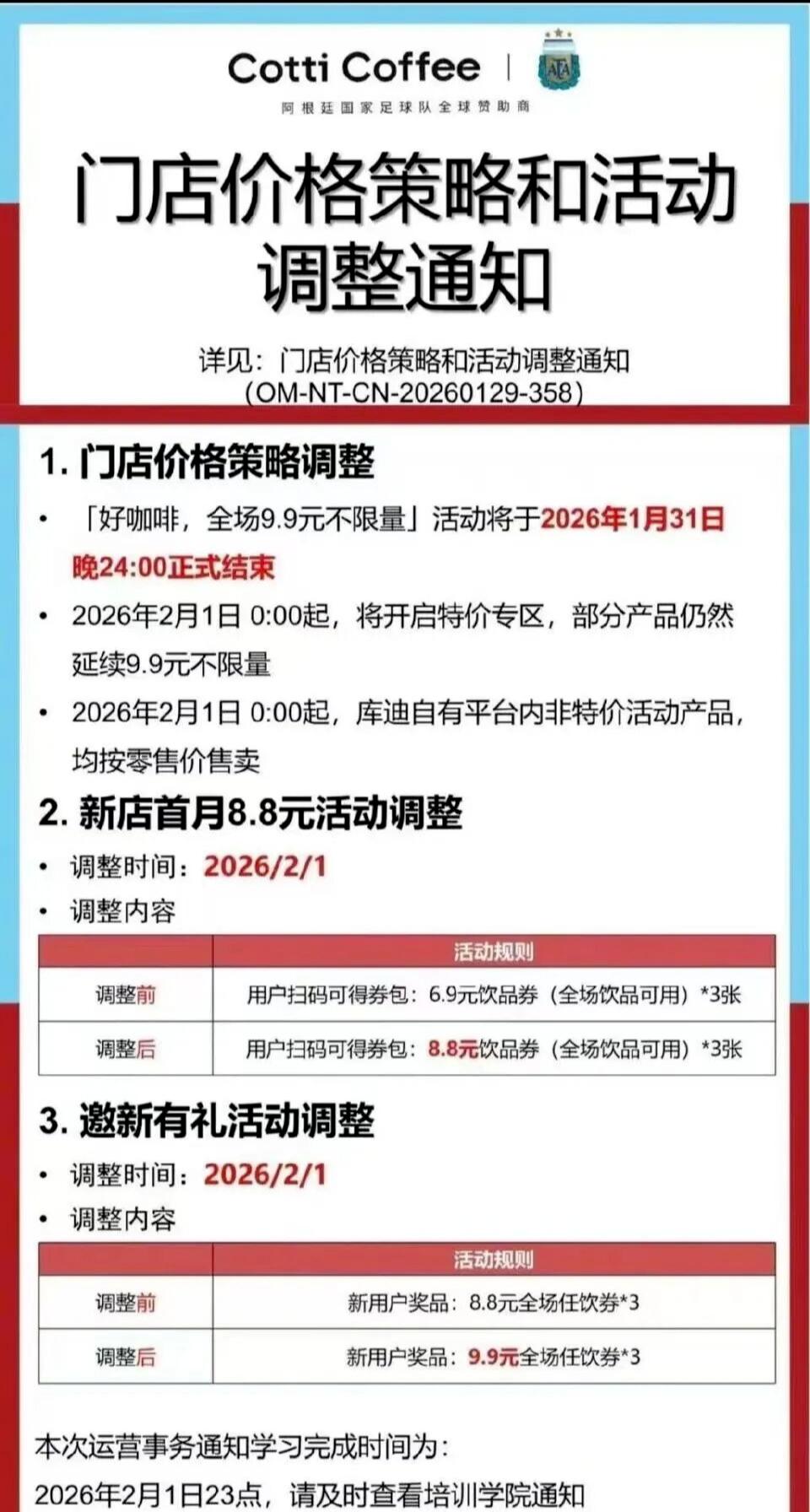
Core Viewpoint - The coffee industry in China is experiencing a significant transformation, marked by a price war among brands like Cotti Coffee and Luckin Coffee, leading to unsustainable pricing models and a potential reckoning for both producers and consumers [1][4][5]. Group 1: Price Dynamics - Cotti Coffee has recently removed its "all drinks at 9.9 yuan" promotion, indicating a shift towards a more sustainable pricing strategy as the company aims to recover losses [1][5]. - Luckin Coffee has also begun to reduce its subsidy strategy, with most products returning to a price range of 10-15 yuan, reflecting the unsustainable nature of the previous pricing model [1][5]. - The cost of coffee beans has surged due to international supply constraints, pushing the price of raw coffee beans close to historical highs, while consumer prices have plummeted to levels comparable to bottled water [1][4]. Group 2: Market Conditions - The coffee market in Yunnan is witnessing a dramatic increase in the price of fresh coffee cherries, with prices reaching around 9-11.5 yuan per pound, compared to just 2 yuan in previous years [6][8]. - The profitability for coffee farmers in Yunnan has soared, with reported profit margins nearing 200% over the past five years, attracting significant capital into coffee cultivation [12][14]. - The current market dynamics are heavily influenced by external factors such as climate change in Brazil, which has led to a spike in global coffee prices, further complicating the pricing landscape for Yunnan coffee [11][12]. Group 3: Industry Challenges - The coffee industry is facing a critical juncture where the low-price strategy has led to a lack of brand loyalty among consumers, with many opting for the cheapest option available [5][17]. - The operational costs for coffee brands have escalated, with delivery and platform fees consuming up to 68% of operational costs, making the 9.9 yuan pricing model increasingly untenable [5][12]. - The speculative behavior among traders in Yunnan, driven by high prices, poses risks as many are left vulnerable to market fluctuations, leading to significant financial losses [9][14]. Group 4: Future Outlook - The coffee industry may be on the brink of a forced maturation, moving away from unsustainable subsidies and speculative practices towards a focus on quality and profitability [17][18]. - As new coffee plantations begin to yield fruit in the coming years, there is a risk that increased supply could coincide with a decline in global demand, potentially leading to a repeat of past market corrections [17][18].
China Is Snapping Up Overseas Assets Again From Puma to Metals
Yahoo Finance· 2026-02-13 02:31
Group 1 - Chinese firms are resuming overseas acquisitions after a decade of restrictions, with outbound M&A volume from Greater China reaching nearly $12 billion in January, the highest for the first month since 2017 [1] - The renewed interest in outbound M&A is driven by increased competition and limited domestic opportunities, alongside improved confidence and financial strength among local brands [2] - Chinese companies are expected to target markets with lower regulatory hurdles, particularly in consumer and retail sectors, as they seek to expand internationally [3] Group 2 - Luckin Coffee Inc., a leading Chinese coffee chain, is considering acquisitions such as Nestle SA's Blue Bottle Coffee to enhance its international presence and expand in the premium coffee market [5] - China has significant stakes in Chile's electricity market, with companies like China Southern Power Grid Corp. and State Grid Corp. of China involved in major power companies [4]
顺丰同城连续六年推“年味专送” 服务餐饮商超保障春节即时配送
Quan Jing Wang· 2026-02-13 01:31
Core Viewpoint - The upcoming Spring Festival is driving a surge in both online and offline consumption, particularly in the instant retail market, with significant growth in sales of traditional festive foods and beverages [1][4]. Group 1: Market Trends - Douyin platform's sales of New Year's Eve dinner products increased by 92% year-on-year, with popular items including seafood gift boxes and "light cooking" dishes [1]. - Meituan's flash purchase saw sales of beverages and digital home appliances double [1]. - The demand for New Year's Eve dinner reservations is high, leading to a "difficult to book" situation for dine-in services, while home delivery options are becoming increasingly popular [1]. Group 2: Delivery Services - SF Express has launched its "New Year Flavor Special Delivery" service for the sixth consecutive year, collaborating with renowned restaurant brands to deliver regional festive specialties to homes [1][2]. - The service has developed a mature operational system, ensuring comprehensive service coverage and timely delivery through sufficient transportation capacity and intelligent scheduling [1][2]. Group 3: Packaging and Delivery Standards - SF Express has established detailed packaging and delivery standards to meet the diverse requirements of partner restaurants, ensuring food quality during transport [2]. - For complex orders, SF Express utilizes various transportation tools and has implemented special plans for winter weather and traffic conditions to ensure timely delivery [2]. Group 4: Consumer Behavior and Marketing - The Spring Festival period sees a concentration of consumer demand for holiday shopping and gatherings, leading to increased consumption in the restaurant and supermarket sectors [3]. - SF Express provides a one-stop solution for all-channel delivery needs, enhancing the efficiency of local life services for emerging e-commerce platforms like Douyin and WeChat [3]. Group 5: Future Projections - The Ministry of Commerce predicts a 5.8% year-on-year increase in online retail sales during the 2026 Spring Festival, with instant retail order volume expected to grow by 120% [4]. - SF Express aims to transform its platform capabilities into operational support for merchants, meeting consumer demands for high-quality home delivery during the festive season [4].
老家的物价快赶上一线城市了?
吴晓波频道· 2026-02-13 00:29
Core Viewpoint - The article discusses the phenomenon of price inversion in county-level cities, where the cost of living has been rising and, in some cases, surpasses that of major cities like Beijing and Shanghai, particularly in consumer goods and services [3][8]. Group 1: Price Trends in County-Level Cities - The price index for consumer goods in county-level cities has consistently exceeded the national average over the past three years, aligning closely with first-tier cities [3]. - Specific examples of high prices in county-level cities include movie tickets at 79.9 yuan, specialty coffee at 58 yuan, and clothing items exceeding 1,000 yuan, with services like beauty and entertainment also being 30%-50% higher than in first-tier cities [3][8]. - In contrast, staple foods, dairy products, and household items have seen price decreases in county-level cities, with reductions of 4% for staple foods and 5% for dairy products from 2023 to 2025 [10]. Group 2: Consumer Behavior and Market Dynamics - The concept of "folded consumption" is introduced, indicating a dual market where high-end and affordable products coexist, reflecting a shift in consumer preferences in county-level markets [15][16]. - There is a notable increase in spending on quality goods, with county residents increasingly purchasing premium brands and services that were once exclusive to urban areas [20][21]. - The growth in disposable income in county-level cities is projected to outpace that of first-tier cities, with a 5.9% increase expected from 2023 to 2028 [30]. Group 3: Regional Consumption Characteristics - High-income counties are concentrated in provinces like Zhejiang and Jiangsu, with cities like Yiwu leading in disposable income, surpassing even Beijing [31][33]. - Different consumption patterns are observed across counties, with some exhibiting high spending comparable to first-tier cities, while others show significant growth potential despite conservative spending habits [33][38]. - The article highlights the emergence of new consumption trends in counties, such as increased demand for smart home appliances and beauty services, indicating a shift towards more sophisticated consumer behavior [21][28]. Group 4: Market Opportunities - The article emphasizes the untapped market potential in county-level cities, where major brands have yet to establish a strong presence, suggesting significant growth opportunities for businesses [42][43]. - The density of convenience stores and fitness centers in county-level cities is significantly lower than in urban areas, indicating a gap that can be filled by new entrants [43]. - The evolving consumer landscape in county-level cities presents a promising environment for innovative business models and services to thrive [44].

外送到家”成年夜饭预订新亮点 顺丰同城携手多家大牌餐饮鲜送“年味
Zheng Quan Ri Bao Wang· 2026-02-12 12:50
Core Insights - The article highlights the surge in demand for instant retail services during the upcoming Spring Festival, driven by a blend of online and offline consumption methods [1][2] - The "New Year Flavor Delivery" service launched by SF Express aims to meet consumer needs by partnering with renowned restaurants and supermarkets to provide high-quality, customized delivery options [1][2] Group 1: Service Offerings - SF Express has introduced the "New Year Flavor Delivery" service in collaboration with well-known brands like Xicheng Restaurant, Guangzhou Restaurant, and Haidilao, ensuring the delivery of authentic festive meals to households [1][2] - The service includes partnerships with various supermarkets and beverage brands, such as Sam's Club and Luckin Coffee, to efficiently deliver holiday goods and drinks, catering to both quality and convenience [1][2] Group 2: Operational Capabilities - SF Express has invested in sufficient logistics capacity across regions, utilizing an elastic logistics framework and intelligent scheduling systems to ensure comprehensive service coverage and timely order fulfillment during the festival [2][3] - The company has developed detailed packaging and delivery standards tailored to the diverse requirements of partner restaurants, ensuring the preservation of food quality and experience from kitchen to table [2][3] Group 3: Market Trends - Online channels and instant retail have become crucial for businesses to capture holiday growth, with restaurants and supermarkets leveraging platforms like live streaming and mini-programs for intensive marketing [2][3] - SF Express serves as a foundational infrastructure for emerging e-commerce platforms, enabling seamless local service integration and innovative consumption scenarios during the Spring Festival [3]
“外送到家”成年夜饭预订新亮点 顺丰同城携手多家大牌餐饮鲜送“年味”
Zheng Quan Ri Bao· 2026-02-12 12:39
Core Insights - The upcoming Spring Festival is driving a surge in instant retail market demand, with a focus on balancing home-cooked meals and dining out experiences [2] - SF Express's local delivery service, "New Year Flavor Delivery," partners with renowned restaurants and supermarkets to provide high-quality, customized delivery options for festive meals and goods [2][3] - The integration of online channels and instant retail is crucial for businesses to capture holiday growth, with a focus on multi-channel marketing strategies [3] Group 1 - SF Express has launched the "New Year Flavor Delivery" service, collaborating with well-known brands to deliver traditional festive meals and products efficiently [2] - The service includes a diverse range of delivery vehicles and a robust management system to ensure timely and accurate deliveries during the busy holiday season [2][3] - SF Express's flexible delivery model allows for effective response to order fluctuations, enhancing customer loyalty and brand reputation [3] Group 2 - Emerging e-commerce platforms like Douyin and WeChat utilize SF Express to enhance local service capabilities and innovate festive shopping experiences [4] - New consumption models such as live-streaming and short video promotions are creating immediate purchasing demands, which SF Express supports through efficient delivery services [4] - SF Express's reliable delivery network enables businesses to leverage full-channel growth opportunities, providing consumers with convenient access to quality products during the New Year [4]
「半小时200单」,蜜雪冰城、瑞幸头部品牌「杀入」地铁站
36氪· 2026-02-12 10:18
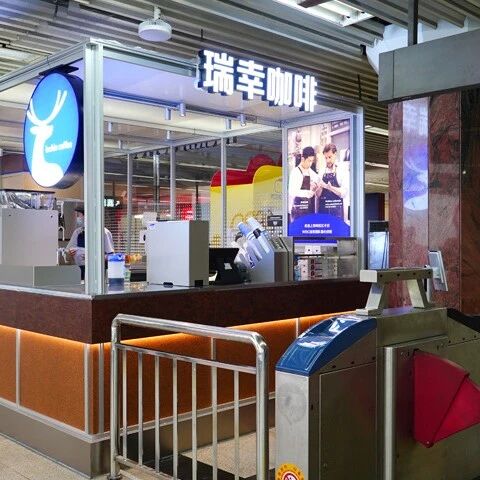
Core Insights - The article discusses the increasing trend of beverage brands, particularly coffee and tea, establishing outlets in subway stations, highlighting the convenience for commuters and the potential for high sales volume [4][22][24]. Group 1: Market Trends - Numerous beverage brands, including Luckin Coffee and Manner, are rapidly entering subway stations, with Luckin planning to open at least 30 stores in Suzhou by 2026 and 200 stores in Tianjin over the next three years [6][14]. - Subway coffee shops can achieve significant sales, with reports indicating that some locations can sell up to 200 cups in just half an hour during peak hours [8][27]. - The consumer demographic in subway stations primarily consists of white-collar workers aged 25 to 40, who have strong purchasing power and a preference for instant gratification [32]. Group 2: Competitive Landscape - As price wars cool down, convenience is becoming a key competitive factor, with brands focusing on high-traffic locations to capture commuter demand [36][37]. - The number of tea and coffee shops in China has reached approximately 400,000 and 220,000 respectively, leading to intense competition in traditional retail spaces [43]. - Subway commercial spaces are seen as a new frontier for brands, offering lower rent and less competition compared to saturated urban retail areas [46]. Group 3: Strategic Insights - Brands are increasingly recognizing the value of subway stations as stable and predictable consumer touchpoints, allowing for seamless integration into commuters' routines [48][50]. - Recent policy changes in cities like Tianjin are facilitating the establishment of commercial outlets in subway systems, further enhancing the attractiveness of these locations for beverage brands [51]. - The evolution of consumer convenience is shifting from mere accessibility to creating seamless experiences along daily commuting routes, emphasizing the importance of convenience in beverage retail [53][54].


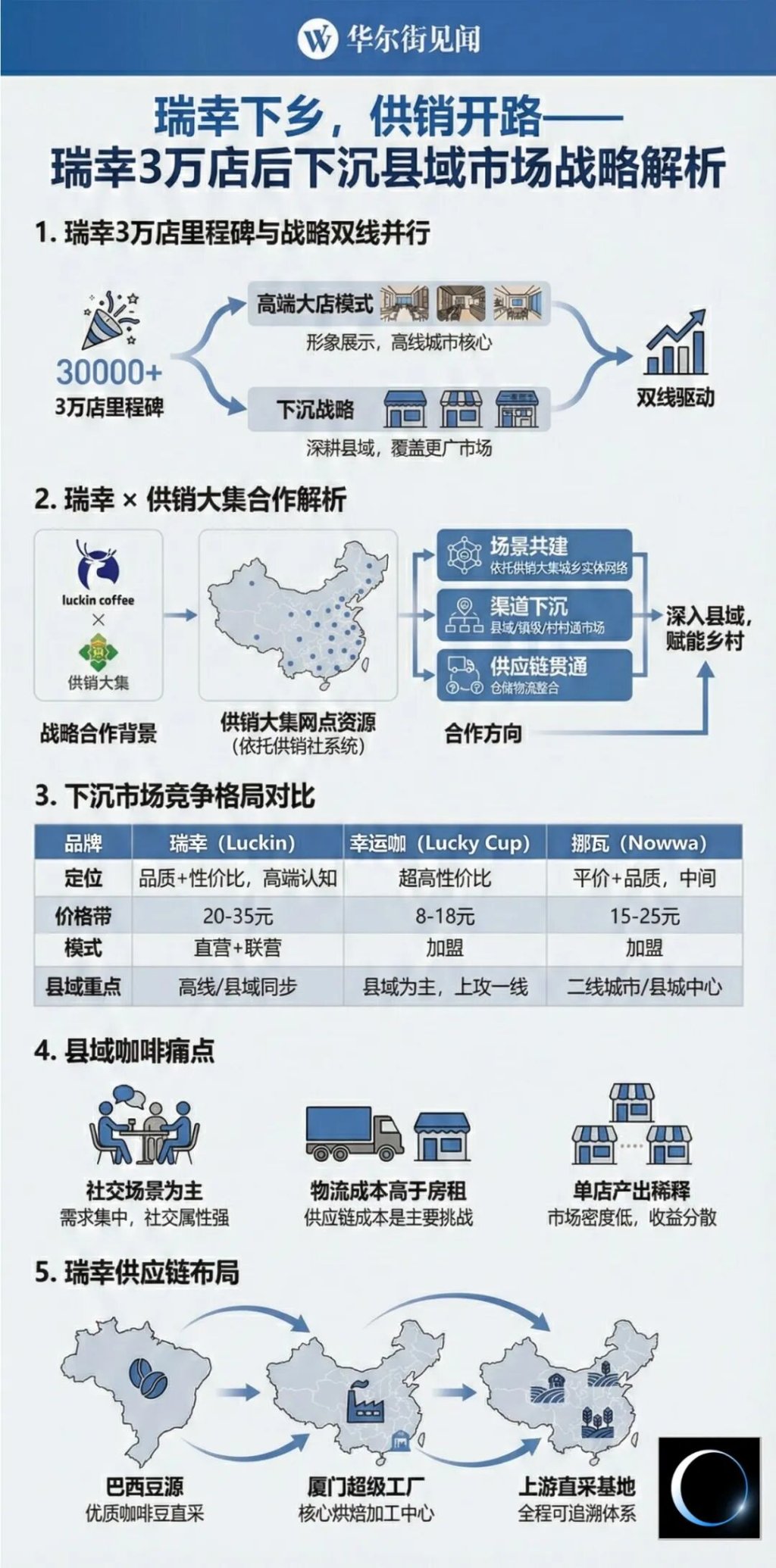
瑞幸拿出“进村”计划:供销社成了它的新跳板
Hua Er Jie Jian Wen· 2026-02-12 09:57
Core Insights - Luckin Coffee has rapidly expanded to 30,000 stores in just one and a half years, significantly raising the bar for coffee market scale in China [1] - The company is shifting its strategy by opening high-end flagship stores, indicating a move towards a "big store model" to capture social demand and fill gaps in the "slow scene" market [2] - Luckin Coffee is focusing on penetrating the low coffee penetration county markets through a strategic partnership with the Supply and Marketing Cooperative Group, leveraging its extensive network [3] Expansion Strategy - Luckin Coffee's new "Origin Flagship Store" spans 420 square meters and features semi-automatic machines and specialized menus, showcasing a high-end positioning [2] - The company has entered 1,550 county-level cities, covering over 80% of county areas, with more than 7,400 stores in these regions [17] - The expansion from 20,000 to 30,000 stores has primarily involved increasing store density in existing provinces rather than entering new cities [12] Competitive Landscape - The competitive landscape is evolving, with new entrants like Lucky Coffee and Nova Coffee joining the market, indicating that the low-tier market still has untapped potential [8] - The partnership with Supply and Marketing Cooperative Group is seen as a strategic move to enhance resource integration and achieve efficient market penetration [10] - The competition in county markets is intensifying, with brands like Lucky Coffee and Gu Ming establishing strong footholds [18] Supply Chain and Operational Efficiency - Luckin Coffee is enhancing its supply chain capabilities by securing high-quality coffee bean sources and expanding its production capacity, including a new factory in Xiamen with an annual roasting capacity of 55,000 tons [26][27] - The company aims to build a comprehensive supply chain system to maintain cost advantages while competing in the county market [28] - The collaboration with Supply and Marketing Cooperative Group focuses on three dimensions: co-building coffee spaces, channel penetration, and supply chain integration [10] Market Dynamics - The shift towards county markets is driven by the need for growth as urban markets become saturated [11] - The coffee consumption landscape in lower-tier cities is different, with social interactions being a key driver rather than just a need for caffeine [21] - The pricing strategy may need to adapt to local market conditions, moving away from extreme low pricing to enhance the perceived value of the coffee experience [23]
外卖大战加速连锁茶饮的K型分化
新财富· 2026-02-12 08:05
Core Viewpoint - 2025 is expected to be a pivotal year for new consumption and a year of differentiation in the chain tea beverage industry, with increasing competition and pressure on leading brands [3]. Market Competition - The tea beverage industry has seen intensified competition since Q2 2024, with brands resorting to price wars through discounts and low-priced promotional items [3]. - Major brands like Cha Bai Dao and Hu Shang A Yi are experiencing slower store expansion and declining same-store sales, indicating a struggle for growth [3][4]. - By Q2 and Q3 of 2024, the competitive landscape became clearer, with leading brands like Mi Xue Bing Cheng and Gu Ming gaining competitive advantages while others like Cha Bai Dao and Hu Shang A Yi fell behind [4]. Impact of Delivery Wars - Starting Q1 2025, major tea brands began to reduce discounting and the frequency of low-price promotional items, suggesting a potential easing of competition if the delivery wars do not escalate in H2 2025 [5]. - In April 2025, major delivery platforms initiated significant subsidies, leading to a temporary increase in stock prices for brands like Gu Ming and Mi Xue Bing Cheng, but concerns arose about a new round of price wars [7]. - The delivery wars have led to increased same-store GMV for brands like Mi Xue and Gu Ming, but also resulted in lower average transaction prices and intensified competition [9]. Long-term Outlook - The delivery wars may cause short-term disruptions but are expected to have limited long-term pricing impacts, with weaker brands likely to fall further behind, creating structural opportunities for leading brands [13]. - The competition is shifting from supply chain differences to refined operational efficiency, focusing on digital systems for inventory management and customer engagement [14][15]. Brand Performance - Mi Xue Bing Cheng and Gu Ming are among the few brands achieving over 20% store growth this year, benefiting from their supply chain advantages and strong operational capabilities [17]. - Gu Ming has shown resilience with steady same-store growth and healthy franchisee profitability, while Mi Xue Bing Cheng has leveraged its scale and efficiency to withstand competitive pressures [17].