赛力斯

Search documents
【月度排名】2026年1月厂商销量排名快报
乘联分会· 2026-02-14 08:39
Core Viewpoint - The domestic narrow passenger car market in China experienced a retail sales decline of 13.9% year-on-year in January 2026, with sales reaching 1.544 million units, attributed to the end of the 12-year new energy vehicle purchase tax exemption policy, leading to a temporary dip in demand [2][4]. Sales Data Summary Wholesale Sales Rankings (January 2026) - Geely Automobile led with 270,167 units sold, a 1.3% increase, capturing 13.7% market share - BYD Automobile followed with 205,518 units, down 30.7%, holding 10.4% market share - Chery Automobile sold 193,969 units, down 12.0%, with a 9.8% market share - Volkswagen sold 128,001 units, down 1.7%, with a 6.5% market share - SAIC Passenger Vehicle sales increased by 53.6% to 77,421 units, capturing 3.9% market share [6]. Retail Sales Rankings (January 2026) - Geely Automobile again led with 209,661 units sold, down 12.6%, holding 13.6% market share - Volkswagen sold 132,300 units, down 3.5%, with an 8.6% market share - BYD's retail sales dropped significantly by 53.0% to 94,176 units, capturing 6.1% market share - SAIC Volkswagen sold 89,600 units, down 9.3%, with a 5.8% market share - Changan Automobile's sales decreased by 33.5% to 81,074 units, holding 5.2% market share [7]. New Energy Vehicle (NEV) Wholesale Sales Rankings (January 2026) - BYD led NEV sales with 205,518 units, down 30.7%, capturing 23.8% market share - Geely followed with 124,252 units, up 2.6%, holding 14.4% market share - Tesla China sold 69,129 units, up 9.3%, with an 8.0% market share - Chery sold 46,802 units, down 14.9%, with a 5.4% market share - SAIC Passenger Vehicle saw a significant increase of 576.9% to 28,179 units, capturing 3.3% market share [9]. New Energy Vehicle (NEV) Retail Sales Rankings (January 2026) - BYD again led with 94,176 units sold, down 53.0%, holding 15.8% market share - Geely sold 92,135 units, down 21.6%, with a 15.5% market share - Hongmeng Zhixing saw a significant increase of 65.5% to 57,915 units, capturing 9.7% market share - SAIC's sales increased by 83.3% to 40,016 units, holding 6.7% market share - Xiaomi Automobile sold 39,002 units, up 70.3%, with a 6.5% market share [10].





拓普集团(601689):2025年收入同比增长,“机器人+车+液冷”协同发展未来可期
Soochow Securities· 2026-02-14 05:10
Investment Rating - The investment rating for the company is "Buy" (maintained) [1] Core Views - The company is expected to achieve revenue growth in 2025, driven by the synergistic development of "robotics + vehicles + liquid cooling" [1] - The revenue forecast for 2025 is projected to be between 287.50 billion to 303.50 billion yuan, representing a year-on-year growth of 8.08% to 14.10% [8] - The net profit attributable to the parent company is expected to decline by 3.35% to 13.35%, estimated at 26.00 billion to 29.00 billion yuan [8] - The company is planning to issue H shares and list on the Hong Kong Stock Exchange to accelerate its international strategy [8] Financial Performance Summary - Total revenue for 2023 is reported at 19,701 million yuan, with a projected increase to 29,939 million yuan in 2025, reflecting a year-on-year growth of 12.55% [1] - The net profit attributable to the parent company is forecasted to be 2,813 million yuan in 2025, a decrease of 6.25% compared to the previous year [1] - The earnings per share (EPS) is expected to be 1.62 yuan in 2025, with a price-to-earnings (P/E) ratio of 44.48 [1] Market Data - The closing price of the company's stock is 72.01 yuan, with a market capitalization of approximately 125,141.54 million yuan [6] - The company has a price-to-book (P/B) ratio of 5.38 [6] Operational Insights - The company has secured a 15 billion yuan order in its thermal management business, indicating strong demand in international markets [8] - The company’s revenue growth is supported by its Tier 0.5 collaboration model and a diverse product portfolio [8]

2.14犀牛财经早报:“春躁”行情或将延续
Xi Niu Cai Jing· 2026-02-14 03:11
Group 1: Market Performance and Trends - The Shanghai Composite Index increased by 25.58% during the Year of the Snake, with the Shenzhen Component Index rising by 38.84%, the ChiNext Index by 58.73%, and the Sci-Tech Innovation Board Index by 64.20% [1] - Institutions predict that after the Spring Festival, the technology sector, particularly AI, is likely to regain its leading position in the market [1] - Historical data shows that the market generally performs well after the Spring Festival, with the Shanghai Composite Index rising in 7 out of the last 10 years during the first five trading days post-holiday [1] Group 2: Industry Developments - The precious metals market has entered a phase of consolidation after experiencing extreme volatility, with prices under pressure due to various macroeconomic factors [2] - Major automotive companies are increasingly investing in the robotics sector, with firms like Tesla and Chery transforming production lines to focus on robot manufacturing [2] - The pharmaceutical retail industry is undergoing a transformation driven by policy support, with a focus on industry consolidation and new business models [3] Group 3: Corporate News - Meituan expects a loss of approximately 23.3 billion to 24.3 billion yuan for the fiscal year 2025, a significant shift from a profit of about 35.8 billion yuan in 2024, primarily due to losses in its core local business segment [6] - Tianfeng Securities is under investigation by the China Securities Regulatory Commission for alleged violations related to financing and information disclosure [7] - Ningde Times, Luoyang Molybdenum, and Laopu Gold are set to be included in the Hong Kong Hang Seng Index, increasing the number of constituent stocks from 88 to 90 [8]
赛力斯剥离蓝电减负 “断舍离”难掩问界腹背受敌
Xin Lang Cai Jing· 2026-02-14 02:57
Core Viewpoint - The company, Seres, is undergoing a significant asset restructuring by divesting its Blue Electric brand to focus resources on its flagship brand, AITO, amid increasing competition in the electric vehicle market [1][3]. Group 1: Asset Restructuring - Seres has signed a cooperation agreement with the Chongqing Shapingba District People's Government to establish a new company by divesting its Blue Electric assets, with the government becoming the largest shareholder at approximately 33.5% [1]. - Following the transaction, Seres' ownership will decrease to 32%, losing control over the new entity, which is seen as a strategic retreat rather than an optimization of asset structure [1]. Group 2: Sales Performance and Market Position - In the first three quarters of the previous year, Seres reported revenue exceeding 110.53 billion yuan, a year-on-year increase of 3.67%, while net profit rose by 31.56% to 5.31 billion yuan [1]. - However, total sales dropped by 7.79% to 340,700 units, with electric vehicle sales declining by 3.82% to 304,600 units, indicating a troubling trend in overall sales despite revenue growth [1][2]. Group 3: Strategic Challenges - Seres is facing a growth paradox where it sells fewer vehicles at higher prices, leading to increased margins but overall declining sales volume [2]. - The flagship models, AITO M9 and M8, have become bestsellers in their price segments, but the absence of lower-priced models has resulted in a significant drop in overall sales [2]. Group 4: Competitive Landscape - The upcoming AITO M6 is set to enter the competitive 250,000-300,000 yuan market, directly challenging Tesla's Model Y and Xiaomi's YU7, which are expected to launch new models in 2025-2026 [3]. - The competitive pressure is heightened as Huawei's autonomous driving technology becomes more widely available, diluting the unique selling proposition that AITO once held [3]. Group 5: Financial Dependencies - Seres is heavily reliant on high procurement costs from Huawei, which accounted for 20 billion yuan in the first half of 2025, approximately one-third of its total revenue, leading to high per-vehicle costs [4]. - The chairman of Seres has set an ambitious target for AITO to achieve another 1 million units sold within two years, following the first million in five years, emphasizing the need for differentiated products to mitigate risks after the divestiture of Blue Electric [4].

2025,港股重回巅峰
3 6 Ke· 2026-02-14 02:36
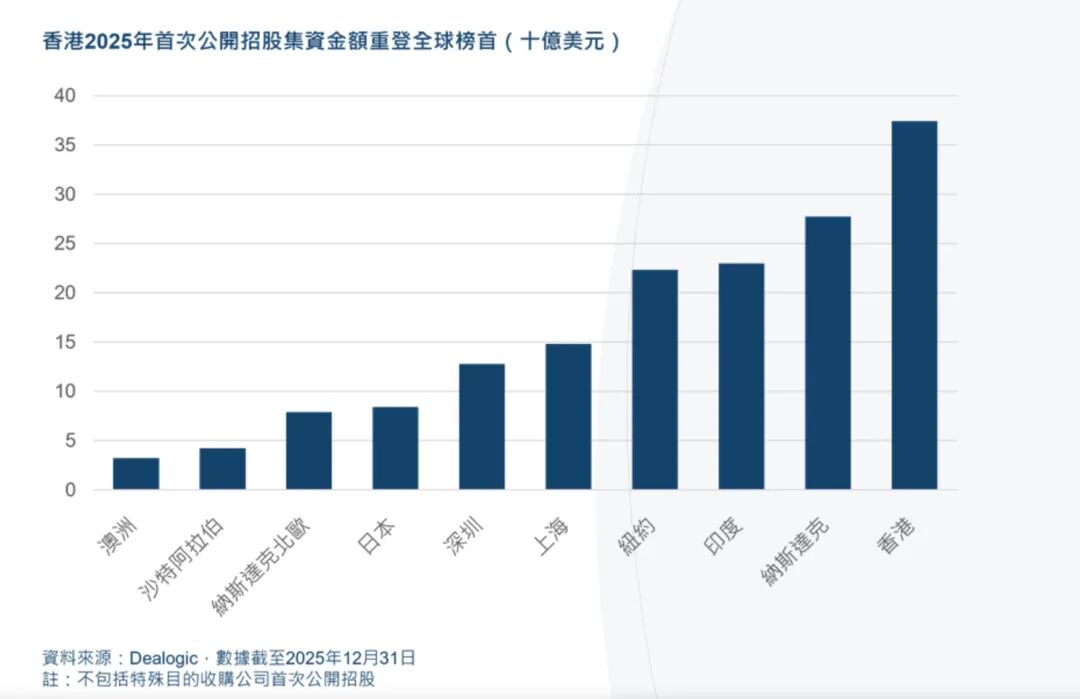
Core Insights - Hong Kong's IPO fundraising reached a record high of $37.4 billion in 2025, surpassing the total of the previous three years combined, marking a return to the top of the global IPO market after four years [1][3] - The surge in IPOs is attributed to explosive growth in listed companies, with 612 applications received and 119 successful listings, a 68% increase year-on-year [3][5] - Key sectors driving this growth include pharmaceuticals and technology, with significant participation from companies already listed on A-shares [3][5] IPO Performance - The top 10 IPOs in Hong Kong raised a total of approximately 142.5 billion HKD, accounting for about 50% of the total fundraising for the year [6][7] - Notable IPOs include CATL, which raised over 41 billion HKD, and Zijin Mining, which raised approximately 28.7 billion HKD [6][7] - The average first-day gain for new listings was significant, with the highest being 363.75% for Nobikang [10][12] Market Trends - The proportion of IPOs with a market capitalization exceeding 10 billion HKD reached 56%, significantly higher than the 30% average over the past five years [5] - The IPO market showed signs of confidence, with a record low first-day failure rate of 28.83% [5] - A total of 19 companies achieved dual listings (A+H), the highest in recent years, primarily in information technology and new consumption sectors [16][18] Industry Highlights - The emergence of "first stocks" in various sectors, such as high-end tea and AI, reflects the market's recognition of leading companies in niche areas [19][20] - The IPO market remains active into 2026, with 21 companies already listed by February, raising a total of 791.17 million HKD, indicating a 1220% increase [29][30] - Predictions for 2026 suggest the potential for 150 to 200 new listings, with fundraising expected to exceed 300 billion HKD, reinforcing Hong Kong's position as a leading global IPO market [29][30]
今年春晚第5个分会场,藏在苏州
21世纪经济报道· 2026-02-14 01:17
Core Viewpoint - The Spring Festival Gala has evolved into a significant platform for cities to showcase their economic and industrial strengths, with the 2024 gala restoring the "1+N" model of multiple sub-venues, highlighting the transformation and achievements of various cities in China [1][3][4]. Group 1: Economic Transformation and Industrial Development - The 2025 Spring Festival Gala in Chongqing will feature a light show with 780 electric vehicles, symbolizing the city's shift from traditional fuel vehicles to new energy and smart connected cars, following a major industrial transformation initiated in 2018 [3][4]. - Chongqing's new energy vehicle production has increased 29 times over the past five years, positioning it as the leading city in automotive production in China by 2025 [4]. - Wuhan will showcase advancements in six key areas including optoelectronic information and AI during the 2025 gala, reflecting its strategic industrial layout [8]. Group 2: Regional Highlights and Innovations - The 2024 gala in Changsha will prominently feature engineering machinery, with local companies like Zoomlion and SANY representing the city's core industrial strength, as Changsha's engineering machinery sector has led the nation in asset value and revenue for 13 consecutive years [8]. - The 2024 gala in Shenyang will mark the debut of heavy-duty industrial robots on the national stage, showcasing the city's evolution from an old industrial base to a hub of innovation [8]. - The 2026 gala will include new participants like Suzhou's Wuzhong District, which is home to four robot companies, emphasizing its ambition to become a leading robotics industrial cluster in China [16]. Group 3: Investment and Economic Strategy - Hefei has successfully attracted major investments in sectors like display technology and electric vehicles, earning the title of "the most powerful venture capital city" and becoming a hub for unicorn companies [13]. - Yibin, transitioning from a traditional resource-based economy to a new energy and materials hub, has rapidly developed a complete industrial chain in the battery sector, showcasing the potential for resource-rich cities to embrace new economic opportunities [13][14].

恒生指数,重大调整!
Xin Lang Cai Jing· 2026-02-14 01:04
Core Viewpoint - The Hang Seng Index will undergo changes, increasing its constituent stocks from 88 to 90, with the inclusion of Ningde Times, Luoyang Molybdenum, and Laopu Gold, while Zhongsheng Holdings will be removed. This change will take effect on March 9, 2026 [1][6]. Group 1: Index Changes - The Hang Seng Index will increase its constituent stocks from 88 to 90, adding Ningde Times (03750.HK), Luoyang Molybdenum (03993.HK), and Laopu Gold (06181.HK), while removing Zhongsheng Holdings [1][6]. - The Hang Seng China Enterprises Index will maintain 50 stocks, adding Beike (02423.HK) and Horizon Robotics (09660.HK), while removing China Resources Beer (00291.HK) and Mengniu Dairy (02319.HK) [2][7]. - The Hang Seng Composite Index will increase from 507 to 532 stocks, removing 28 stocks and adding 53 new ones, including East Asia Bank, Rusal, and JD Industrial [2][7]. Group 2: Market Outlook - Despite recent adjustments in the Hong Kong stock market, particularly with major stocks like Tencent, Meituan, and Alibaba experiencing significant declines, institutional and investor expectations for the market remain high, with continued investments in related ETFs [1][6]. - Recent liquidity shocks have affected the technology sector, but the fundamental outlook remains unchanged, suggesting a potential rebound as the market stabilizes [3][8]. - The consumer sector in Hong Kong is expected to benefit from improving economic conditions, with traditional industries undergoing transformation and leading to potential valuation recovery [5][9].
跨界投入、腾笼换鸟 汽车企业加速布局机器人赛道
Shang Hai Zheng Quan Bao· 2026-02-14 00:08
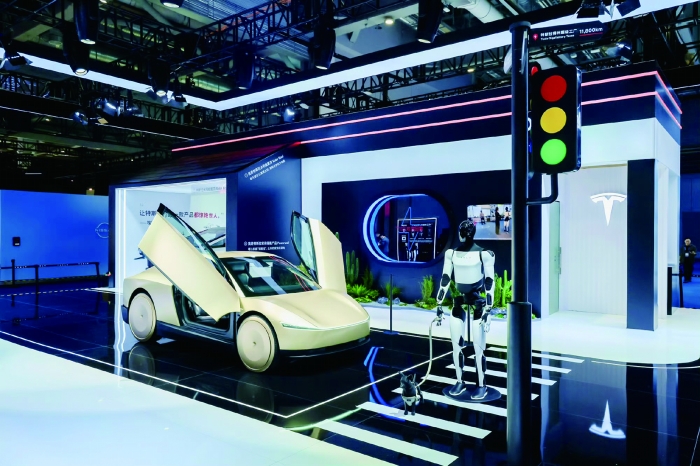
Core Insights - Major automotive companies, including Tesla, Chery, Hyundai, Xpeng, and Seres, are increasingly investing in the robotics sector, with Tesla even halting production of several key models to repurpose its production lines for robot manufacturing [1][5] - The automotive industry is redefining its value through the development of embodied intelligence, moving beyond traditional automotive definitions and integrating "vehicles, people, and machines" [1] Domestic Automotive Companies' Progress - Chery's humanoid robot, "Wuyou" Zhiqing R001, is set to host a segment at the 2026 Wuhu Spring Festival, marking a significant milestone for domestic automotive companies in the robotics field [2] - The "Wuyou" Zhiqing R001 has begun operations in Wuhu, assisting traffic police and showcasing the integration of robotics into smart policing [2] - Chery has received investments from companies like Zhiyuan Robotics and Bertley, indicating that embodied intelligence is seen as a new growth curve for the company [3] International Automotive Companies' Developments - Tesla plans to launch its third-generation humanoid robot in 2026, with an expected annual production capacity of 1 million units, repurposing its Fremont factory's Model S/X production line for this purpose [5][6] - Hyundai aims to deploy over 30,000 humanoid robots in its U.S. factories starting in 2026 to reduce production costs and enhance competitiveness [6][7] Upstream Industry Chain Actions - Companies in the automotive parts sector, such as Top Group and Ningbo Huaxiang, are actively expanding into the embodied intelligence business [8] - Junsen Electronics has launched a series of products related to humanoid robots and is conducting training for these robots in its factories [8] - CATL has initiated a strategic partnership with Horizon Robotics to focus on intelligent upgrades for new energy vehicles, aiming to enhance the smart travel experience [9]




跨界投入 腾笼换鸟 汽车企业加速布局机器人赛道
Shang Hai Zheng Quan Bao· 2026-02-13 17:04
Group 1 - Major automotive companies are accelerating their entry into the robotics sector, with Tesla, Chery, Hyundai, Xpeng, and Seres all making significant moves by 2026, including Tesla repurposing production lines for robots [2][4] - Chery's humanoid robot "Wuyou" has been integrated into local law enforcement in Wuhu, showcasing its capabilities in traffic management and marking a significant step in the application of robotics in public services [3][4] - The automotive industry is redefining its value through the development of embodied intelligence, moving beyond traditional automotive definitions and integrating "car, human, and machine" [2] Group 2 - Chery's humanoid robot has entered over 30 countries and is involved in various applications, indicating a strong growth trajectory for the company in the robotics field [4] - Seres is also expanding into embodied intelligence, establishing a new company focused on smart robotics and artificial intelligence, with a registered capital of 50 million RMB [5] - Tesla plans to produce 1 million units of its third-generation humanoid robot by the end of 2026, indicating a significant commitment to this new product line [7] Group 3 - Hyundai plans to deploy over 30,000 humanoid robots in its U.S. factories by 2026 to enhance production efficiency and reduce costs [8] - The trend of automotive companies venturing into robotics is spreading to upstream suppliers, with companies like Top Group and Ningbo Huaxiang actively exploring embodied intelligence [9] - CATL has launched a humanoid robot named "Xiao Mo" in its battery production line, marking a significant step in integrating robotics into complex industrial processes [10]
盘后,港股突发!恒生指数,重大调整!
券商中国· 2026-02-13 13:42
Core Viewpoint - The Hang Seng Index will undergo changes with the number of constituent stocks increasing from 88 to 90, including the addition of Ningde Times, Luoyang Molybdenum, and Laopu Gold, while Zhongsheng Holdings will be removed. This change will take effect on March 9, 2026 [1][2]. Group 1: Hang Seng Index Changes - The Hang Seng Index Company announced the quarterly review results on February 13, 2026, with changes effective after market close on March 6, 2026 [1]. - The total assets under management for passive products tracking the Hang Seng Index series is approximately $117.7 billion, which is beneficial for newly added constituents as they will attract passive fund inflows [1]. Group 2: Other Index Changes - The Hang Seng China Enterprises Index will maintain 50 constituent stocks, with Beike and Horizon Robotics added, while China Resources Beer and Mengniu Dairy will be removed [2]. - The Hang Seng Composite Index will increase from 507 to 532 constituent stocks, with 53 stocks added and 28 stocks removed, including notable additions like East Asia Bank and JD Industrial [2]. Group 3: Market Outlook - Recent weakness in the Hang Seng Technology Index is attributed to a liquidity shock, but the fundamental outlook remains unchanged, suggesting a "buy the dip" strategy may be effective [3]. - The current support from southbound funds is expected to stabilize valuations in the Hong Kong market, despite ongoing uncertainties regarding U.S. Federal Reserve policies [3][4]. - The market may experience volatility in the short term, with a focus on sectors such as technology, non-bank financials, and dividend-paying stocks [4].