宁德时代

Search documents
80GWh项目落地;亿纬锁定10GWh订单;欣旺达与威睿达成和解;永太科技与宁德时代交易终止;安徽国资入主杉杉股份;海辰拿下2GWh储能合作
起点锂电· 2026-02-15 04:49
Group 1 - Yongtai Technology has terminated the plan to acquire a 25% stake in Shaowu Yongtai High-tech Materials Co., Ltd. from CATL, with stock resuming trading on February 24, 2026 [3] - Haicheng Energy has signed a strategic cooperation framework agreement with KNESS Group to develop a total of 2GWh energy storage projects in Ukraine over the next two years, with the first batch of approximately 400MWh products expected to be delivered in Q1 2026 [4] - Wuhan Chuangneng has signed an investment agreement for an 80GWh new energy battery production project, which will mainly produce power batteries, energy storage batteries, and PACK modules [5] Group 2 - Chuangneng has established over 500GWh of planned production capacity, enhancing supply chain resilience and market responsiveness [6] - EVE Energy has secured a 10GWh large battery system order and has launched a 400MWh power station equipped with EVE's 628Ah storage batteries [7][8] - XINWANDA Power has reached a comprehensive settlement with Weir Electric regarding a previous sales contract dispute, with a payment of 608 million yuan to be made in installments from 2026 to 2030 [9] Group 3 - Guizhou Zhaoke Energy is preparing for mass production of cylindrical lithium batteries, with production expected to start in March 2026 [10] - Anhui Guozhi has officially taken control of Sanyuan Group, marking a significant change in ownership for the global leader in lithium battery anode materials, with a transaction value close to 7.2 billion yuan [12][13] - Ruidefeng has signed a strategic procurement framework agreement with Anhui Guokai, with a total expected value of 1.5 billion yuan over five years [14] Group 4 - Mengguli plans to invest 929 million yuan in a project to produce 30,000 tons of lithium-ion battery cathode materials, focusing on high-end products [15] - Jinyu Co. has announced an investment of approximately 1 billion yuan for a high-performance battery aluminum foil project in Yibin, Sichuan [16] - Dingsheng Technology has signed a strategic cooperation agreement with Huineng Technology to enhance collaboration in solid-state batteries and the new energy industry [17] Group 5 - Yanhang Precision has reached an investment cooperation consensus with Jiangsu Yili Technology, focusing on strategic investment in the new energy materials sector [18] - Xiamen Tungsten plans to acquire a 39% stake in Jiujiang Dadi Mining Development Co., with an intention fee of 28 million yuan [19] - Xian Dao Intelligent has officially listed on the Hong Kong Stock Exchange, with a projected net profit of 1.5 to 1.8 billion yuan for 2025 [21] Group 6 - Guangdong Zhuogao New Materials has received approval for a lithium battery anode and cathode coating pilot verification base project, with a total investment of 140 million yuan [22] - Stellantis Group will sell a 49% stake in NextStar Energy to LG Energy, which plans to invest over 4.1 billion USD in a battery manufacturing plant in Ontario, Canada [24][25] - Several automakers, including Geely and Chery, have announced plans to start demonstration work on solid-state battery installations by 2027 [28]

“福特找白宫:拉中企来美国合资造车吧”
Guan Cha Zhe Wang· 2026-02-15 04:39
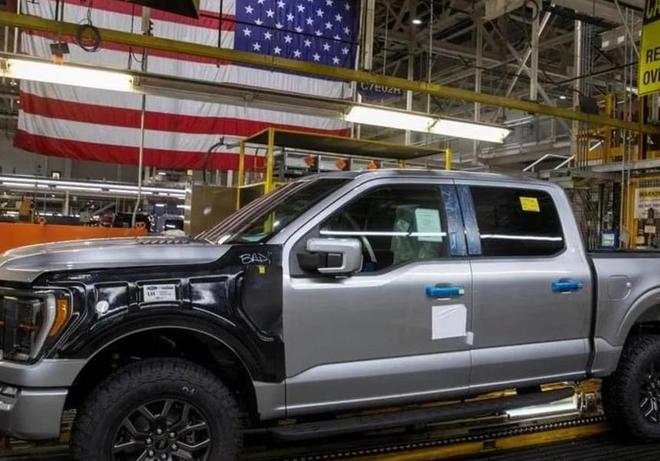
Core Viewpoint - Discussions are ongoing between Ford's CEO Jim Farley and senior officials from the Trump administration regarding a potential framework that would allow Chinese automakers to establish manufacturing plants in the U.S. while providing protections for domestic companies [1][4]. Group 1: Discussions and Framework - The talks involve the possibility of Chinese automakers forming joint ventures with U.S. companies, where U.S. firms would hold majority stakes, allowing for shared profits and technology [1][3]. - These discussions are described as informal and preliminary, with no decisions made yet [1][4]. - Ford emphasized the need to protect the domestic market from the impact of Chinese-made vehicles during discussions with the Trump administration [1]. Group 2: Market Context and Implications - The potential acceptance of Chinese investment in U.S. manufacturing mirrors historical requirements where Western automakers had to partner with Chinese firms to enter the Chinese market [3]. - The discussions come at a time when Chinese automakers are increasingly entering markets in Europe, Mexico, and South America, posing competitive challenges to Western manufacturers [4]. - If Chinese automakers successfully establish a foothold in the U.S., it could significantly impact domestic manufacturers, their supply chains, and consumers [4]. Group 3: Industry Reactions and Competitive Landscape - There are divisions within the Trump administration regarding the potential for such investment agreements, with some officials expressing concerns about opposition in Washington [4]. - General Motors has reportedly opposed the entry of Chinese manufacturers into the U.S. market, fearing loss of market share and negative impacts on North American suppliers [6]. - Ford's CEO has warned that low-cost, high-tech vehicles from China could pose a "survival threat" to U.S. automakers, while also seeking collaboration with Chinese firms to enhance Ford's own electric vehicle offerings [6][7].

“福特CEO找白宫官员讨论:拉中企来美国合资造车吧”
Guan Cha Zhe Wang· 2026-02-15 04:38
Core Viewpoint - Discussions are ongoing between Ford's CEO Jim Farley and senior officials from the Trump administration regarding a potential framework that would allow Chinese automakers to establish manufacturing plants in the U.S. while providing protections for domestic companies [1][3]. Group 1: Discussions and Framework - The talks involve the possibility of Chinese automakers forming joint ventures with U.S. companies, where the U.S. partners would hold majority stakes, allowing for shared profits and technology [1][3]. - These discussions are described as informal and preliminary, with no decisions made yet [1][3]. - Ford emphasized the need to protect the domestic market from the impact of Chinese-manufactured vehicles, citing privacy and national security concerns [1]. Group 2: Market Context and Implications - The potential entry of Chinese automakers into the U.S. market is seen as a significant turning point that could impact American manufacturers, their supply chains, and consumers [4]. - Chinese automakers have been rapidly gaining market share in Europe, Mexico, and South America with low-cost models equipped with advanced electric vehicle batteries and infotainment systems [4]. - Trump's recent comments suggest a willingness to allow Chinese manufacturers into the U.S. if they create jobs for Americans, which surprised U.S. automakers who believed trade barriers would protect them [6]. Group 3: Competitive Landscape - General Motors has expressed opposition to the entry of Chinese companies into the U.S. market, fearing loss of market share and potential negative impacts on North American suppliers [6]. - Farley has warned that low-cost, high-tech vehicles from China pose a "survival threat" to U.S. automakers, while Ford remains open to collaboration with Chinese companies [6]. - Ford is actively seeking partnerships with Chinese automakers and battery manufacturers to enhance its own electric vehicle offerings, planning to launch a low-cost electric vehicle by 2027 to compete with BYD [6][4]. Group 4: Potential Collaborations - Recent reports indicate that Ford is considering a joint venture with Xiaomi for vehicle production in the U.S., although both companies have denied this [7]. - Ford has expanded its partnership with Chinese battery giant CATL to include manufacturing fixed power sources for utilities and data centers, in addition to electric vehicle battery units [6].
1月销量暴增104%!远程超级VAN实现“20连冠”
第一商用车网· 2026-02-15 03:57
Group 1 - The core viewpoint of the article highlights the strong performance of the remote super VAN, which achieved a remarkable 104% year-on-year sales growth in January 2026, securing its position as the champion in the new energy wide-body light commercial vehicle segment for the 20th consecutive month [1] - The market share of the remote super VAN remains the highest, demonstrating its sustained growth resilience and market appeal, further solidifying its leading position in the industry [1] Group 2 - In January, over 80,000 units of Weichai engines topped the sales charts, while Yuchai saw an increase of over 46%, and Chaochai entered the top three in multi-cylinder diesel engine sales [8] - The sales of tractors reached 55,000 units in January, marking an increase of over 50%, with major players like Heavy Truck and Jiefang each selling over 10,000 units, while Dongfeng and Xugong experienced a doubling in sales [8] - A joint venture between CATL and Chery was announced, indicating strategic partnerships in the industry [8]
27国要对华加税30%?法国打响第一枪,美财长一句话定义中美关系
Sou Hu Cai Jing· 2026-02-15 03:42
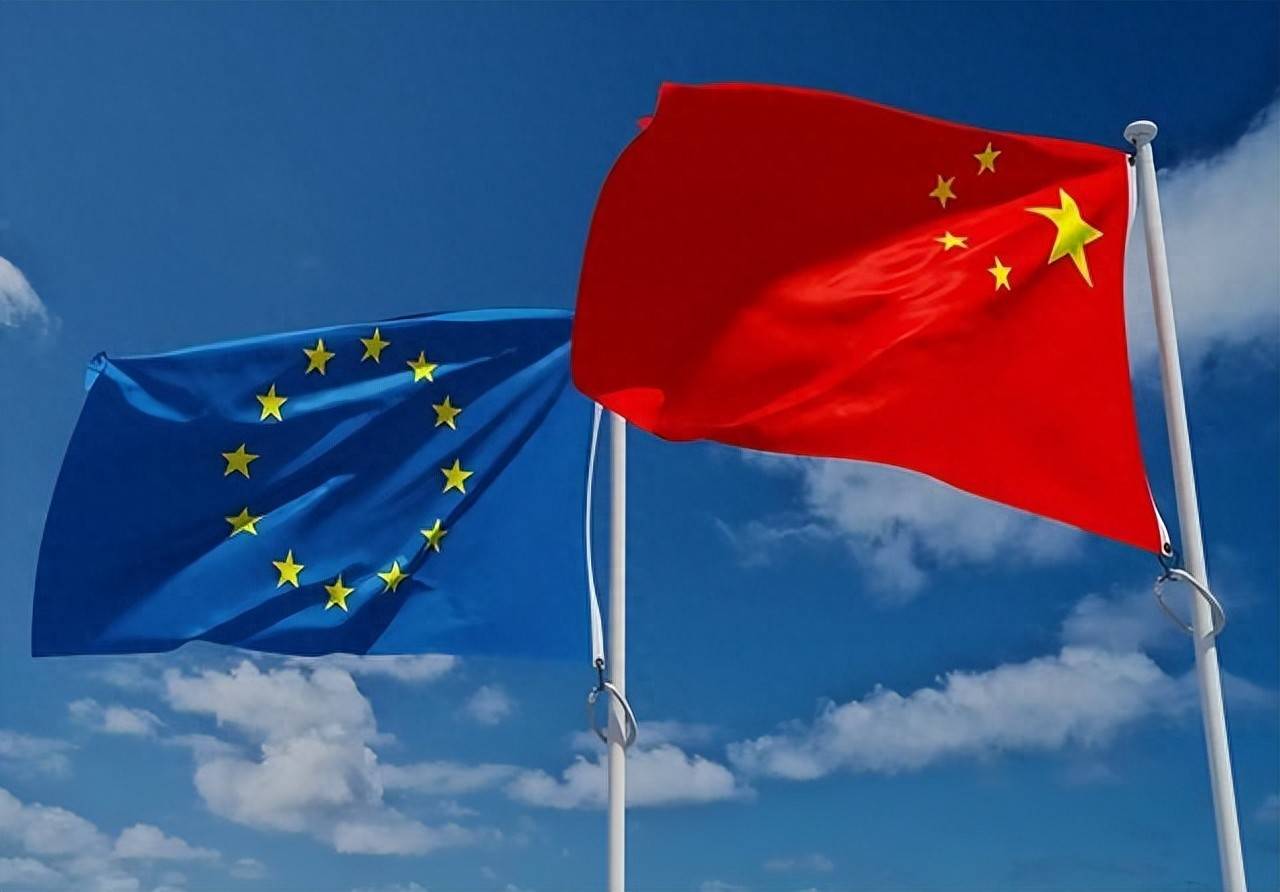
2026年2月9日,作为欧盟的双引擎之一,法国突然发布了一份重磅政府报告,令整个国际市场震动。这份报告的语气可以说是强硬无比,内容也让人难以置 信:为了扭转与中国之间巨大的贸易逆差,法国建议欧盟27个成员国对中国商品加征30%的关税。这还不是全部,法国人甚至提出了一个震撼金融界的提 议:要么加税,要么就让欧元对人民币贬值20%到30%。换句话说,法国试图通过人为制造一场汇率风暴,迫使人民币升值,从而削弱中国制造的竞争力。 这一招是不是听着有些耳熟?没错,稍微懂点历史的朋友一定会发现,这不正是广场协议的翻版吗?美国当年通过这一手将日本压得喘不过气,今天法国把 这套旧剧本从废纸堆里捡了出来,只不过这次主角换成了中国。然而,当法国高喊加税,甚至在BFM电视台上惊呼令人震惊的时候,地球另一端的巴西圣 保罗,美国财政部长贝森特却轻描淡写地说了一句让全球都无法理解的话。 当被问及中美关系时,贝森特这位曾为特朗普政府提供财政支持的财神爷,笑着说:我们正处在一个非常舒适的位置。一边是法国歇斯底里地要求掀桌子, 一边是美国悠闲地称舒适。这两大西方强国为何突然间唱起了对台戏?背后到底藏着怎样的博弈和逻辑? 现在,让我们来看看淡定 ...
华金证券:四季度陆股通持仓继续上升 有色、通信获加仓较多
智通财经网· 2026-02-15 02:44
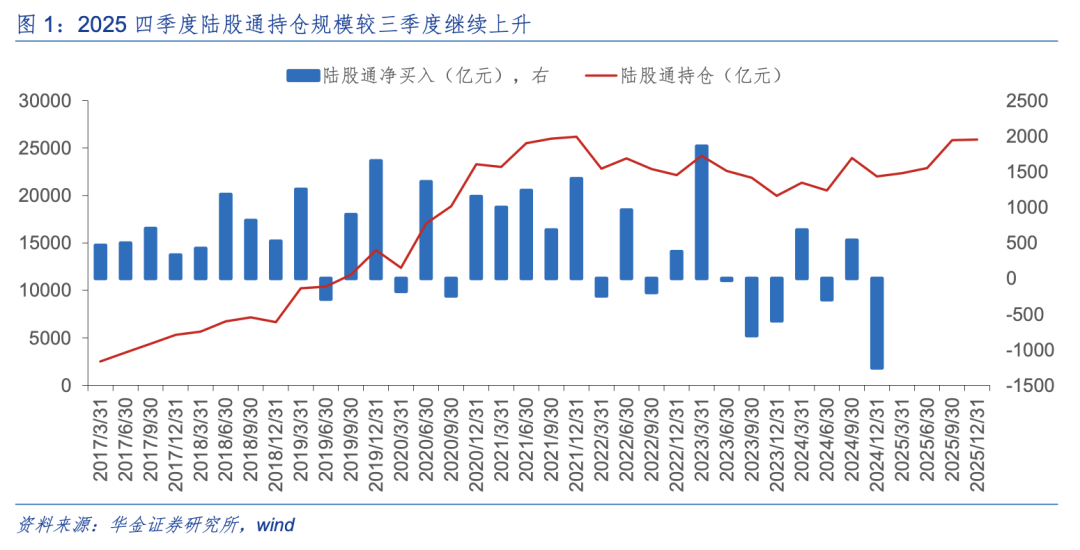
智通财经APP获悉,华金证券发布研报称,四季度陆股通持仓继续上升,主板持仓占比小幅上升,周期板块持仓占比上升。整体来看,2025年四季度陆股 通持仓总规模接近2.59万亿元,较上季度环比增加54.06亿元。Q4陆股通持仓规模最大的行业分别是电新(17.78%)、电子(13.91%)、有色金属(7.18%);持仓 规模上升较多的行业是有色金属、通信、基础化工,下降较多的行业是医药、食品饮料、汽车。中际旭创、中国平安、思源电气等核心资产和成长类大票 外资持仓变动规模较大,TOP5持股集中度有所下降。该行预计,2026年一季度陆股通资金可能继续加仓核心资产、科技和周期等行业。 华金证券主要观点如下: 一、陆股通资金四季度在周期板块持仓占比上升 四季度陆股通持仓继续上升,主板持仓占比小幅上升,周期板块持仓占比上升。首先,整体来看,2025年四季度陆股通持仓总规模接近2.59万亿元,较上 季度环比增加54.06亿元。其次,变化上:板块方面,2025Q4陆股通资金主板持仓占比较2025Q3小幅度上升1.04pcts,创业板下降0.65pcts,科创板下降 0.39pcts;风格方面,2025Q4周期、成长、稳定风格陆股通 ...
岚图汽车预计将于3月19日港交所挂牌:毛利率业内领先,有望成港股稀缺标的
IPO早知道· 2026-02-15 01:58
Core Viewpoint - Lantu Automotive has completed all pre-listing regulatory approvals for its Hong Kong IPO in just four months, setting a high-efficiency example for state-owned enterprises in the new energy sector [2][3][9]. Group 1: IPO Process - Lantu Automotive announced the completion of all pre-listing regulatory approvals on February 12, 2026, and plans to officially list on the Hong Kong Stock Exchange on March 19, 2026 [3][8]. - The company initiated its listing process in August 2025, submitted its application in October 2025, and received approval from the China Securities Regulatory Commission in January 2026 [7][9]. Group 2: Market Position and Growth - Lantu Automotive is positioned as the first high-end new energy brand from a state-owned enterprise to achieve a production scale of 300,000 vehicles, reinforcing its status as a leading brand in the sector [9]. - The company has demonstrated significant sales growth, with projected sales of 50,285 vehicles in 2023, 80,116 in 2024, and 150,169 in 2025, resulting in a compound annual growth rate (CAGR) of 72.8% from 2023 to 2025 [12]. - Revenue is expected to grow rapidly, reaching RMB 12,749.4 million in 2023, RMB 19,360.6 million in 2024, and RMB 34,864.8 million in 2025, with a CAGR of 65.4% during the same period [12]. Group 3: Profitability and Financial Performance - Lantu Automotive's gross margin is projected to increase from 14.2% in 2023 to 20.9% in 2025, positioning it among the industry leaders [12][13]. - The company is expected to achieve a net profit of RMB 1.02 billion in 2025, indicating a significant improvement in profitability [12]. Group 4: Technological Foundation - Lantu Automotive has established a robust technological foundation with five key technology pillars, including platform architecture and intelligent driving, which contribute to its competitive edge [16]. - The company holds 1,874 granted patents and has 5,405 patents pending, leading the industry in patent growth [16]. Group 5: Strategic Partnerships - Lantu Automotive has formed strategic partnerships with leading global companies, including Huawei and CATL, to enhance its technological capabilities and supply chain security [17][18]. - A ten-year deepening cooperation agreement with CATL was signed to ensure stable supply and technological leadership in battery technology [18].

和光同程:天下武功,唯快不破
第一财经· 2026-02-15 01:23
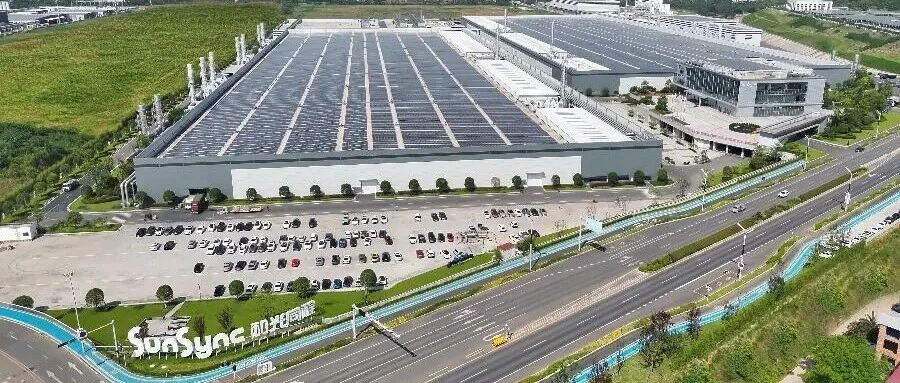
Core Viewpoint - The article highlights the rapid growth and resilience of He Guang Tong Cheng, a photovoltaic company that has thrived in a challenging industry environment, achieving continuous cash profitability and recognition despite the overall downturn in the solar sector [4][12]. Group 1: Company Overview - He Guang Tong Cheng was established in Yibin, Sichuan, and has been operational for only 29 months, yet it has achieved significant milestones such as being recognized as a "zero-carbon factory" and a "black light factory" [4][25]. - The company has demonstrated remarkable speed in its operations, completing the registration, signing, construction, and production phases within a year, which is notably fast for the photovoltaic industry [5][6]. Group 2: Business Strategy - The company's strategy emphasizes quick decision-making and market responsiveness, allowing it to adapt swiftly to changes and capitalize on opportunities [9][12]. - He Guang Tong Cheng's founder, Xie Yi, has adopted a hands-on approach, living on-site to ensure effective management and problem-solving [13][14]. Group 3: Industry Context - The photovoltaic industry is characterized by rapid technological advancements and long investment return cycles, creating a paradox that requires companies to be agile and responsive to market shifts [12][19]. - Despite the industry's downturn, He Guang Tong Cheng has reported a 49% year-on-year revenue growth and has managed to significantly reduce losses, showcasing its ability to navigate through tough market conditions [12][25]. Group 4: Team and Leadership - The leadership team at He Guang Tong Cheng consists of experienced professionals from the photovoltaic sector, contributing to the company's innovative and efficient operations [18][19]. - The company has attracted significant investment from top venture capital firms and industry players, indicating strong confidence in its business model and team [19]. Group 5: Location Advantage - Yibin was chosen as the operational base due to its evolving industrial landscape and supportive local government, which aligns with the company's fast-paced operational philosophy [21][24]. - The city has transformed from a traditional economy to one focused on digital and green industries, providing a conducive environment for He Guang Tong Cheng's growth [22][24].
杠杆资金本周重仓股曝光 昆仑万维居首
Di Yi Cai Jing· 2026-02-14 14:58
Group 1 - A total of 1146 stocks received net financing purchases during the week from February 9 to February 13, with 551 stocks having net purchases exceeding 10 million yuan [1] - The stock with the highest net financing purchase was Kunlun Wanwei, with a net purchase amount of 651 million yuan and a weekly increase of 10.20% [1] - Other notable stocks with high net purchases included Zhongwen Online, Zhaoyi Innovation, and Chipone [1] Group 2 - The stocks with the highest net selling amounts were Zhongji Xuchuang, CATL, and Kweichow Moutai, with net selling amounts of 2.612 billion yuan, 1.531 billion yuan, and 1.066 billion yuan respectively [1]

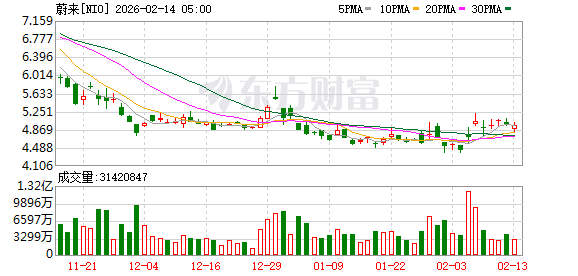
蔚来、宁德时代合资公司再获10亿元融资 引入两家国资 已累计融资超30亿元
Xin Lang Cai Jing· 2026-02-14 14:29
Core Viewpoint - Wuhan Weinen Battery Asset Co., Ltd. has completed its C3 round of equity financing, raising 1 billion yuan, bringing the total financing for the C round to 2 billion yuan and the overall financing amount to over 3 billion yuan across 6 rounds [2][5] Group 1: Financing Details - The C3 round financing included additional investments from founding shareholders and introduced several state-owned capital shareholders, including Hefei Construction Investment and Hefei Economic Development [2][5] - The funds raised will primarily be used for battery asset management, technology research and development, and resource recycling, enhancing the company's service level and accelerating the industrialization of research outcomes [2][5] Group 2: Company Background - Weinen was established in August 2020 as a joint venture between NIO and CATL, focusing on Battery as a Service (BaaS) and responsible for battery asset management, including leasing, recycling, and lifecycle management [2][5] - The chairman of Weinen is the CFO of NIO, and the legal representative and CEO is Lai Xiaoming [3][5] - NIO holds approximately 19.4% of Weinen, while other shareholders include Wuhan Optics Valley Industrial Investment Co., Ltd. (9.47%) and CATL (8.9%) [3][5] Group 3: Operational Metrics - As of February 13, Weinen has applied for 196 patents, with about 60% being invention patents and over 85% related to battery technology [6] - The operational scale of battery assets has exceeded 42 GWh, serving over 550,000 users [6] - Weinen has achieved the securitization of power battery assets, successfully issuing the world's first holding-type power battery REITs with an issuance scale of 501 million yuan [6][7]