小红书

Search documents
小红书月活跃用户已超过3.5亿
Bei Jing Shang Bao· 2025-08-29 13:37
Core Insights - Xiaohongshu has surpassed 350 million monthly active users, with 170 million users seeking purchases each month [1] - Among the monthly active purchasing users, 70% are from the post-95 generation [1] - Over 50% of merchants on Xiaohongshu are first-time store owners, with 50% of individual sellers also from the post-95 generation [1]
小红书电商变了,悄悄内测新功能
Sou Hu Cai Jing· 2025-08-29 12:10
Core Insights - Xiaohongshu is launching a new feature that allows users to directly upload files such as PDF, Word, and PPT in their posts, which is expected to change the content creation landscape and reduce information asymmetry [2][3][6] - The new file-sharing feature is currently in beta and is limited to product promotion accounts, with a file size limit of 100MB, and only one file can be uploaded per post during the testing phase [3][4] - The platform's algorithm will favor posts that include files, potentially altering the flow of traffic and encouraging businesses to adapt their strategies accordingly [6][10] User Experience and Content Strategy - The process for users to attach files is straightforward, enhancing user experience by eliminating the cumbersome "private message for materials" approach [3][6] - The introduction of file uploads may force content creators to rethink their strategies, moving away from simply exchanging materials for attention to providing deeper value [6][10] - A new content strategy termed "content sandwich" has been proposed, which emphasizes structuring posts to maximize engagement and conversion [8] Market Position and Commercialization Challenges - Xiaohongshu is facing challenges in commercializing its platform effectively, as evidenced by its lower ranking in advertising effectiveness compared to competitors like Douyin [11][12] - The platform's e-commerce performance is significantly behind Douyin and Kuaishou, with a projected GMV of around 100 billion yuan for 2024 [11] - The establishment of a "Big Commercial Sector" aims to enhance collaboration between advertising and e-commerce departments to improve overall user experience and business outcomes [12][13] Future Implications - If file sharing becomes mainstream, Xiaohongshu could see an increase in high-density, practical content such as industry reports and study notes, moving beyond traditional image and text formats [9][10] - The new feature may open up new pathways for monetization, allowing creators to offer free content to attract users and then guide them to paid versions [10] - The success of these initiatives will depend on Xiaohongshu's ability to balance user experience with creator incentives while addressing existing interface and flow issues [12][13]


前OpenAI、DeepMind研究员领衔,50+位专家谈AI编程、Agent与具身智能,2025全球机器学习技术大会议程首发!
AI科技大本营· 2025-08-29 10:06
Core Insights - The article emphasizes the transition of AI from impressive demos to a rigorous focus on architecture, systems, data, and business integration, highlighting the need for sustainable industrial capabilities [1] - The 2025 Global Machine Learning Technology Summit, organized by CSDN and Singularity Research Institute, will take place on October 16-17 in Beijing, featuring over 50 prominent speakers from academia and industry [1][3] Group 1: Event Overview - The summit aims to address the pressing question of how to transform technological breakthroughs into sustainable industrial capabilities [1] - A comprehensive "full-stack battle map" of AI has been designed, featuring 12 core topics including the evolution of large language models, AI-enabled software development, and practical applications of large models [3][4] Group 2: Key Speakers and Topics - Zhao Jian will discuss AI safety and governance, focusing on the security risks and ethical challenges of large models, along with innovative governance solutions [5][8] - Zhou Pan will present the MindGPT-4o-Audio, a real-time voice dialogue model that achieves human-like interaction capabilities [11][14] - Leng Dawei will share insights on FG-CLIP, a high-precision image-text alignment model designed for large-scale applications [16][19] - Zhang Heng will explore the transition from academic research to commercial AI visual algorithms, detailing the development process from prototypes to products [20][24] - Zhang Jun will introduce the Wenxin 4.5 open-source model and its key training technologies, addressing challenges in model training and inference [25][29] - Zhang Dao Xin will discuss the application of multimodal models in Xiaohongshu's search functionalities, focusing on content understanding and retrieval systems [30][33] - Han Ai will present the OxyGent framework for multi-agent collaboration in JD Retail, emphasizing its modular design for flexible system development [34][37] - Wang Peiyu will cover advancements in multimodal reasoning and unified models, showcasing the evolution of the r1v series [39][42] - Cui Cheng will discuss the latest technologies in PaddleOCR and its applications in various industries [43][46] - Xiao Chaojun will introduce MiniCPM, an efficient model for edge devices, highlighting breakthroughs in architecture and training algorithms [47][49] - Chen Yingfeng will explore the application of embodied intelligence in engineering machinery, focusing on human-robot collaboration [50][53] - Zhang Shaobo will present the LLM Agent's role in software engineering, demonstrating its capabilities in solving real development challenges [54][57] - Zhang Dan will discuss how AI large models can help overcome challenges in L4 autonomous driving, sharing insights on commercial applications [58][61] - Han Zongbo will address uncertainty modeling in AI, providing a framework for enhancing reliability in complex scenarios [62][65] Group 3: Future Directions - The summit serves as a platform for deep exchanges in AI technology, fostering collaboration and innovation across industries [74] - The event aims to capture cutting-edge trends and explore pathways for industrial upgrades, inviting global AI participants to engage in discussions [74]


2025中国最新消费趋势:拿旧世界地图,找不到新世界的宝藏
创业家· 2025-08-29 10:03
Core Insights - The article emphasizes that Chinese consumers are adapting to a new normal and are no longer fixated on returning to past economic growth levels [5][6][7] - It highlights three key trends in consumer behavior that reflect changing spending patterns and priorities [4] Group 1: Consumer Adaptation - Consumers are no longer waiting for economic recovery but are actively planning their spending in a more rational and positive manner [5][6][7] - This shift in mindset is crucial as it sets the stage for understanding subsequent trends in consumer behavior [8] Group 2: Consumer Confidence and Behavior Segmentation - There is a noticeable segmentation in consumer confidence and spending behavior among different demographic groups [9][10] - Rural consumers, particularly the elderly, show increased confidence due to rural revitalization policies and income growth [11] - In contrast, urban Z-generation consumers face challenges such as high youth unemployment and lower income growth expectations, leading to a decline in their confidence [12][13] - Wealthy urban elderly consumers have seen a 20% drop in confidence, likely due to asset depreciation and poor corporate performance [14] - The most pessimistic group is low-income millennials in lower-tier cities, concerned about job stability and rising living costs [15] - Understanding these segments is essential for businesses to tailor their product strategies and communication effectively [16] Group 3: Shifts in Spending Priorities - Consumers are increasingly focusing on personal achievements and value-driven spending [18] - The highest expected spending growth is in education, with a 5.7% increase, as consumers seek to enhance their skills and knowledge for future security [19] - The health sector also sees significant growth, with expected spending increases of 2.7% on health products and services, and 2.4% on medical services, reflecting a prioritization of health and quality of life [20][21][22] - Travel spending is expected to grow by 1.9%, indicating a continued desire for cultural experiences and personal enrichment [23] - Wealthy urban consumers are also willing to invest in tangible assets like home renovations and automobiles, which signify improvements in quality of life [24] - Businesses should consider how their products and services can help consumers achieve their personal goals and enhance their sense of fulfillment [25] Conclusion - The article concludes that the primary challenge for businesses is not a declining market but rather the need to adapt to the evolving consumer logic and preferences [26] - Chinese consumers are still spending, but their spending logic has shifted towards valuing real benefits and addressing specific needs [27][28]

小红书推首个线下“市集”,“生活方式电商”背后的逻辑是什么?
Sou Hu Cai Jing· 2025-08-29 09:33
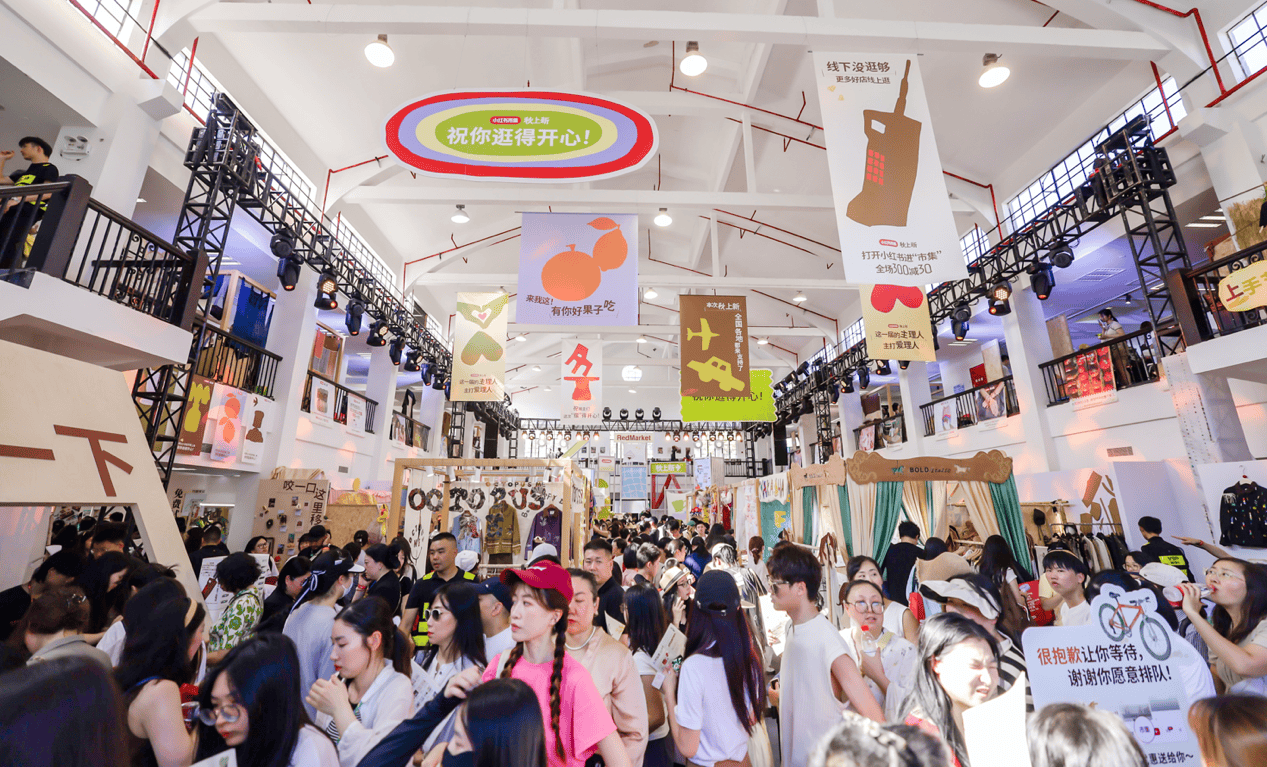
Core Insights - Xiaohongshu has launched its first offline market in Shanghai, running from August 28 to August 31, showcasing over 100 merchants and emphasizing its "lifestyle e-commerce" strategy [1][2][4] - The offline market aims to enhance user experience by merging online shopping with physical interactions, creating a unique shopping environment [7][9] Group 1: Market Structure and Experience - The market is divided into two floors with diverse experience zones, including outdoor sports, fashion, and creative DIY activities, allowing consumers to engage with products and brands directly [4][6] - The event features a variety of merchants, such as "Yangyang Rural Life," which has achieved a 30% repurchase rate over the past month, highlighting the demand for quality products among Xiaohongshu users [4][6] Group 2: Online and Offline Integration - Xiaohongshu's app has been updated to include a "market" page, facilitating a seamless connection between online and offline shopping experiences [6][9] - The platform aims to create a vibrant shopping atmosphere that encourages discovery and interaction, enhancing the overall consumer experience [7][9] Group 3: Business Ecosystem and Merchant Support - Xiaohongshu has over 350 million monthly active users, with 170 million seeking purchases each month, indicating a robust consumer base [11] - The platform has introduced a "million exemption plan" to reduce operational costs for merchants, allowing the first 1 million in transaction fees to be exempt from commissions, thus encouraging more businesses to join [13][14]
农业农村部:支持农产品消费,各大电商平台将出促销活动
Nan Fang Du Shi Bao· 2025-08-29 09:13
Group 1 - The Ministry of Agriculture and Rural Affairs announced the 2025 China Farmers' Harvest Festival, which will include a Golden Autumn Consumption Season from September to November, aimed at promoting agricultural product discounts [1] - Various industry associations, e-commerce platforms, and financial institutions will implement consumer-friendly measures during the consumption season, including promotional policies from supermarkets and restaurants [1] - Major e-commerce platforms such as Taobao, JD.com, Pinduoduo, Meituan, Douyin, and Xiaohongshu will conduct special promotional activities for the Harvest Festival, offering subsidies and support for consumer engagement [1] Group 2 - The Golden Autumn Consumption Season will kick off on September 5 in Hangzhou, Zhejiang Province, leveraging the city's strengths in e-commerce and live streaming to enhance the sales of agricultural products [2] - Since the inception of the Golden Autumn Consumption Season, over 130 billion yuan worth of agricultural products have been sold, establishing it as a popular and vibrant brand event during the Harvest Festival [2]

今年金秋消费季主要有三个特点
Sou Hu Cai Jing· 2025-08-29 08:42
Core Viewpoint - The Ministry of Agriculture and Rural Affairs of China held a press conference to introduce the overall arrangements and preparations for the 2025 Chinese Farmers' Harvest Festival, emphasizing the importance of agricultural product sales and consumer engagement during the Golden Autumn Consumption Season [1][3]. Group 1: Golden Autumn Consumption Season - The Golden Autumn Consumption Season is a key activity of the Chinese Farmers' Harvest Festival, aimed at enhancing agricultural product sales and ensuring farmers receive higher returns from their sales [3]. - Since the inception of the Golden Autumn Consumption Season, over 130 billion yuan worth of agricultural products have been sold, establishing it as a vibrant and popular event during the Harvest Festival [3]. Group 2: Characteristics of This Year's Golden Autumn Consumption Season - This year's Golden Autumn Consumption Season features three main characteristics: 1. Richer content, with activities running from September to November, initiated by six departments including the Ministry of Agriculture and Rural Affairs and the Ministry of Culture and Tourism, focusing on integrating agriculture with culture and tourism [4]. 2. Stronger benefits for consumers, with various organizations and e-commerce platforms offering promotional activities, subsidies, and support to enhance consumer engagement [4]. 3. Enhanced urban-rural linkage, with the launch event scheduled for September 5 in Hangzhou, aiming to attract urban residents to rural areas and promote mutual prosperity [4].

真金白银添助力,今年金秋消费季活动将从9月持续到11月
Xin Jing Bao· 2025-08-29 07:49
Core Points - The 2023 Golden Autumn Consumption Season, part of the Chinese Farmers' Harvest Festival, will run from September to November, with the launch event on September 5 in Hangzhou, Zhejiang Province [1][2] - The focus of this year's festival is on promoting the "harvest economy," aiming to enhance the sales and profitability of agricultural products, allowing farmers to gain more from their sales [1] - Since the inception of the Golden Autumn Consumption Season, over 130 billion yuan worth of agricultural products have been sold, establishing it as a significant event during the harvest festival [1] Group 1 - The event is jointly initiated by six departments, including the newly added Ministry of Culture and Tourism, to integrate agriculture with culture and tourism, enhancing the flow of quality agricultural products and encouraging rural tourism [2] - Various consumer benefits will be introduced, including promotional policies from industry associations and e-commerce platforms, as well as financial institutions offering consumer vouchers and discounts [2] - Major e-commerce platforms like Taobao, JD.com, Pinduoduo, Meituan, Douyin, and Xiaohongshu will participate in promotional activities, providing subsidies and support for farmers [2] Group 2 - The launch event in Hangzhou aims to leverage the city's strengths in e-commerce and live streaming to facilitate the movement of agricultural products from rural areas to urban markets [3] - Six cities, including Tianjin, Shenyang, Wuhan, Guangzhou, Chengdu, and Lanzhou, will issue initiatives to promote collaborative consumption activities during key holidays, enhancing urban-rural connections [3] - The goal is to allow urban residents to experience rural life and share in the harvest's benefits, contributing to mutual prosperity between urban and rural areas [3]
云出海大潮下,BAT云与外资云巨头「相爱相杀」
雷峰网· 2025-08-29 06:41
Core Viewpoint - The competition between domestic cloud service providers and foreign cloud giants is intensifying, with significant cloud migration activities occurring among key clients like BYD and GoTo Group, indicating a shift in market dynamics [2][3][7]. Group 1: Cloud Migration Cases - BYD is migrating its overseas business from AWS to Google Cloud, Alibaba Cloud, and Tencent Cloud, with AWS losing a significant client that previously generated over $10 million annually [2][5]. - GoTo Group in Southeast Asia has also migrated its services from Google Cloud to Tencent Cloud and from AWS to Alibaba Cloud, marking a major cloud migration event in the region [3][4]. - Other notable clients like Kuaishou and Xiaohongshu are also moving away from AWS, with Xiaohongshu transitioning to Alibaba Cloud due to cost considerations and increased demand for GPU computing [12][13]. Group 2: Competitive Landscape - The competition between domestic and foreign cloud providers has been ongoing for several years, initially focused on the Chinese market but now expanding globally as domestic providers seek to capture market share [5][17]. - Domestic cloud providers like Alibaba, Tencent, and Huawei are increasingly competitive against foreign players like AWS and Microsoft, particularly in pricing and specific service offerings [10][11][30]. - The price advantage of domestic clouds, often nearly half that of foreign clouds, is driving many companies to consider migration [10][11]. Group 3: Strategic Moves and Partnerships - Companies like TCL and Kdian are also involved in competitive dynamics, with TCL recently announcing a strategic partnership with Alibaba Cloud after previously engaging with AWS [21][22]. - The collaboration between Tencent and GoTo Group is underpinned by Tencent's prior investment in Gojek, facilitating a smoother transition to Tencent Cloud [23]. - Fireworks Engine is leveraging its strengths in entertainment to penetrate foreign markets, showcasing the strategic maneuvers of domestic cloud providers [14][24]. Group 4: Market Dynamics and Future Outlook - Despite the rapid expansion of domestic cloud providers, they still lag significantly behind foreign clouds in terms of revenue, with AWS's revenue in Greater China reaching over $4 billion, compared to Alibaba Cloud's approximately $4.3 billion [47]. - The ongoing AI model wave presents both challenges and opportunities, with foreign clouds currently showing stronger growth in this area [49][50]. - The cautious approach of some domestic cloud providers in their overseas strategies may widen the gap with foreign competitors, indicating a complex and evolving competitive landscape [51][52].






小红书将电商扶上C位
Di Yi Cai Jing Zi Xun· 2025-08-29 05:30
Core Insights - Xiaohongshu is accelerating its e-commerce initiatives, establishing incubation centers in Yiwu and Guangzhou, and has made e-commerce a primary entry point in its app [2][3] - The platform aims to attract more merchants with a "million commission-free plan" and is focusing on lifestyle e-commerce characterized by young, operationally-driven, and quality-oriented offerings [2][6] User Engagement - Xiaohongshu has 350 million monthly active users, with 50% being post-95s and 70% of e-commerce users also from this demographic, indicating a strong purchasing power among young consumers [6][8] - The introduction of the "market" feature as a primary entry point is intended to enhance user purchasing mindset and engagement [5][6] Merchant Dynamics - The seller demographic on Xiaohongshu is also young, with 50% of individual store owners being post-95s, and many are first-time entrepreneurs [8][10] - The platform is increasingly competitive, with natural traffic becoming scarce, leading to a rise in advertising costs for merchants [11][12] Financial Performance - Xiaohongshu reported a revenue increase of 85% to $3.7 billion in 2023, with a net profit of $500 million, and is projected to exceed $1 billion in revenue in Q1 2024 [13][14] - The platform's valuation has surged to $26 billion, reflecting significant investor interest and confidence in its growth trajectory [13][14] Market Positioning - Xiaohongshu is transitioning from a "grass planting" platform to one focused on "harvesting," indicating a shift in its business model and revenue generation strategy [14] - The platform's e-commerce segment is becoming a more significant part of its overall revenue, previously dominated by advertising related to "grass planting" [12][13]