
世界银行

Search documents
世界银行呼吁泰国进行经济结构调整
Shang Wu Bu Wang Zhan· 2025-10-11 16:29
Core Insights - The World Bank urges Thailand to adopt new development strategies to escape the middle-income trap and achieve high-income status by 2037 [1][2] - Thailand's traditional economic growth engines have stagnated for over a decade, leading to a GDP growth of only about 2% in 2025, which is below the required annual growth rate of 5% [1][2] Development Strategies - The World Bank recommends that Thailand leverage its strategic location in Southeast Asia, robust digital infrastructure, and international reputation for high-quality products [2] - Five key development areas are suggested: digital services, advanced green manufacturing, agricultural industry, sustainable and health tourism, and creative economy [2] Competitiveness Enhancement - Thailand must enhance three types of competitiveness: green competitiveness, digital competitiveness, and service competitiveness [2] - The country should capitalize on global trends by implementing green low-carbon policies, achieving digital transformation, establishing itself as the "world kitchen," leading in digital services, and developing high-value-added service industries [2] Upcoming Events - Thailand will host the International Monetary Fund and World Bank Group's annual meeting in October 2026, the first time since 1991, attracting global investors and large enterprises to discuss challenges and opportunities [2]
世界银行将2025年撒哈拉以南非洲地区经济增长预期上调至3.8%
Shang Wu Bu Wang Zhan· 2025-10-10 18:02
Core Insights - The World Bank has raised its economic growth forecast for Sub-Saharan Africa in 2025 from 3.5% to 3.8% despite ongoing global uncertainties and high borrowing costs [2] - The report titled "Africa Pulse" indicates that the average growth rate for 2025 and 2026 is expected to reach 4.4% [2] - Among the 47 economies in the region, 30 have had their growth forecasts upgraded, with significant increases noted for Ethiopia (+0.7 percentage points), Nigeria (+0.6 percentage points), and Côte d'Ivoire (+0.5 percentage points) [2] Economic Indicators - Inflation in Sub-Saharan Africa peaked at 9.3% in 2022 but is projected to decrease to 4.5% in 2024, stabilizing between 3.9% and 4% during 2025-2026 [2] - The region's economic outlook is still challenged by uncertainties stemming from U.S. trade policies, low investment willingness from international investors, tightening external financing, and heavy debt burdens in several countries [2]
携手共建更具韧性的坦桑尼亚
Shi Jie Yin Hang· 2025-10-10 14:41
Group 1: Resilience Initiatives - Tanzania has integrated resilience as a core pillar of its growth strategy over the past decade, supported by the government, local communities, and international partners like the World Bank and GFDRR[4] - GFDRR has facilitated a shift from fragmented interventions to a coherent resilience agenda, focusing on ecosystem restoration, risk reduction, and urban livability[5] - The resilience investments mobilized by GFDRR include $1.7 billion, with $27 million in grants playing a crucial role in this mobilization[16] Group 2: Urban Development and Risk Management - Flooding has increased tenfold since the 1970s, with seasonal floods affecting approximately 70,000 people annually in Dar es Salaam, resulting in average losses of $80 million[15] - The Msimbazi Basin Development Project, a $260 million initiative, aims to enhance flood risk management while restoring biodiversity and creating public green spaces[40] - The Dodoma Integrated and Sustainable Transport Project (DIST), funded by a $200 million IDA credit, is expected to benefit over 430,000 people and create more than 10,000 jobs[59] Group 3: Capacity Building and Community Engagement - The Resilience Academy has trained 1,400 Tanzanian youth in risk data collection and analysis, enhancing local capacity for disaster risk management[23] - Community engagement has been central to project design, with over 150 representatives from various institutions participating in flood risk mapping and prioritization workshops[41] - The establishment of the Emergency Operations and Communication Center (EOCC) in Dodoma marks a significant step in enhancing disaster preparedness and response capabilities[69]
世界银行将加纳增长率上调至4.3%
Shang Wu Bu Wang Zhan· 2025-10-09 16:55
Group 1 - The World Bank projects Ghana's economic growth rate to reach 4.3% by the end of 2025, an increase from the previous forecast of 3.9% [1] - Economic growth in Ghana is expected to be driven primarily by the services sector, which is projected to grow by 9.9% [1] - The World Bank forecasts continued positive growth for Ghana, with expected growth rates of 4.6% in 2026 and 4.8% in 2027 [1] Group 2 - Ghana's inflation rate is projected to reach 15.4% by the end of 2025, while official data shows a significant decrease to 9.4% in September 2025 from 21.5% the previous year [1] - The Ghanaian cedi has appreciated over 20% in the first eight months of 2025 after a 19% depreciation in 2024, attributed to tight fiscal and monetary policies and increased export revenues from cocoa and gold [2] - Ghana faces refinancing pressures with a $500 million European bond redemption due in 2025, which will rise to 1.2% of GDP by 2026 [2] Group 3 - Frequent power outages are impacting productivity in Ghana, leading to operational disruptions and increased costs for businesses [2] - Stable electricity supply and competitive energy prices are crucial for maintaining industrial productivity and attracting new investments [2]
世界银行上调智利经济增长预测
Shang Wu Bu Wang Zhan· 2025-10-08 17:28
Core Insights - The World Bank's latest forecast predicts Chile's economic growth rate will reach 2.6% in 2025, slightly above the Chilean government's estimate of 2.5% and within the Central Bank's range of 2.25%-2.75% [1] - The same growth rate of 2.6% is also expected for 2026 [1] - The growth is attributed to increased private consumption and enhanced mineral exports, although there is a noted lag in adopting new technologies [1] - Emerging enterprises entering the market are expected to significantly contribute to productivity growth and job creation, further stimulating economic activity [1] Recommendations and Context - In light of declining global demand, falling commodity prices, increased uncertainty in trade and market access policies, and rising corporate relocations, the World Bank has issued a series of recommendations [1] - The recommendations include calls for internal reforms to attract investment, creating a favorable policy and regulatory environment for businesses [1] - Suggested investments in logistics, energy, and digital infrastructure aim to lower entry barriers, expand financing channels, and improve capital allocation [1]
世界银行:尼泊尔2025/26财年经济增速或降至2.1%
Zhong Guo Xin Wen Wang· 2025-10-07 16:03
Core Insights - The World Bank's latest South Asia Development Report indicates that Nepal's economic growth for the fiscal year 2025/26 is expected to slow down to 2.1%, with fluctuations projected between -1.5% and 2.6% [1] - The Nepalese government had initially set a growth target of 6% for the same fiscal year [1] - Recent large-scale protests on September 8 and 9 have disrupted public and private infrastructure, impacting sectors such as tourism and insurance, which has severely weakened investor confidence [1] - The report also highlights that a delayed end to the rainy season in 2025 may further affect agricultural production in Nepal [1] Regional Economic Outlook - The overall economic growth for South Asia in 2025 is projected to be 6.6%, slowing to 5.8% by 2026 [1] - India is expected to grow at 6.5%, Bhutan at 7.3%, Bangladesh at 4.8%, Sri Lanka at 3.5%, and the Maldives at 3.9% [1]
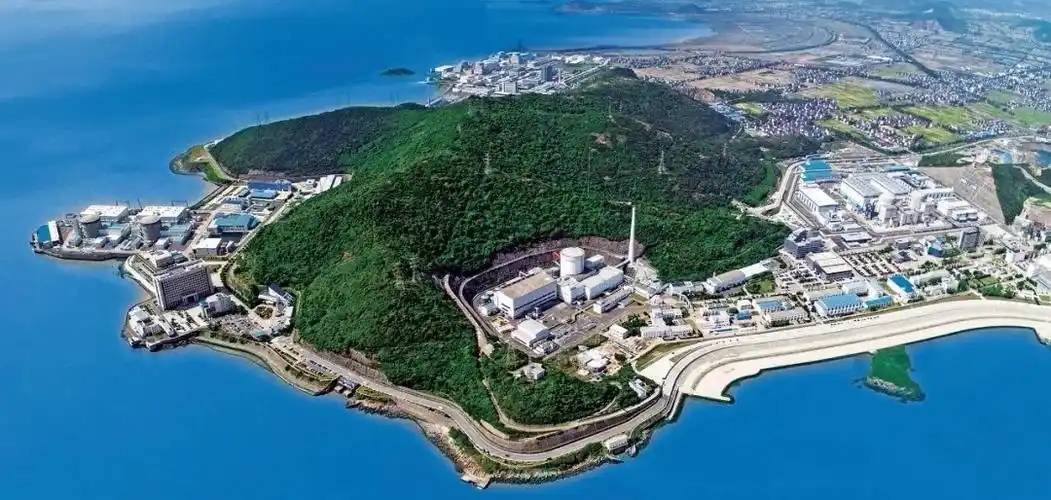
核能不再是“美国专属”!中国核电全球第二,俄罗斯全服务抢市场
Sou Hu Cai Jing· 2025-10-06 05:05
Core Insights - The global nuclear power landscape is undergoing significant changes, particularly in the competition among China, the United States, and Russia, with China and Russia rapidly increasing their nuclear capabilities while the U.S. is lagging behind in new projects [1] Group 1: China's Nuclear Power Development - China has rapidly developed its nuclear power sector, currently holding the second-largest total installed capacity globally, with 102 reactors in operation, under construction, or approved, totaling 113 million kilowatts [1] - China's indigenous third-generation nuclear technologies, such as "Hualong One" and "Guohe One," are now commercially operational and entering international markets [1] - Nuclear power accounts for 5.2% of China's total electricity generation, with expectations to exceed 70 operational reactors by 2025, maintaining a leading position in new projects [1] Group 2: Russia's Differentiated Approach - Russia has adopted a differentiated development path, offering comprehensive nuclear power solutions, including financing, construction, fuel supply, and operation through its state atomic energy corporation [2] - This model is particularly appealing to emerging nuclear nations, with Russian nuclear projects in Turkey, India, and Egypt valued at over $133 billion [2][4] - By 2025, Russia's total nuclear power capacity is expected to reach 32 gigawatts, enhancing its international competitiveness and strategic partnerships [4] Group 3: Challenges Facing the United States - The U.S. still operates 93 reactors with a total capacity of approximately 96 gigawatts, maintaining the highest number globally, but faces a significant shortfall in new projects [5] - High costs and lengthy construction timelines are major issues, exemplified by the Vogtle nuclear plant project in Georgia, where costs soared from $14 billion to over $30 billion, with delays extending nearly a decade [7] - The U.S. Nuclear Regulatory Commission's stringent safety standards and lengthy approval processes further hinder the development of new nuclear projects, creating a competitive disadvantage against China and Russia [9] Group 4: International Cooperation and Strategic Partnerships - China leverages its Belt and Road Initiative to provide nuclear technology transfer and industrial cooperation, establishing long-term dependencies, as seen in the Karachi nuclear power project in Pakistan [11] - Russia strengthens its political and economic ties through stable nuclear fuel supply commitments, as demonstrated by the $20 billion Akkuyu nuclear power project in Turkey [11] Group 5: Future Competitive Landscape - Approximately 30 countries plan to build their first nuclear power plants, with over 30 more intending to triple their existing nuclear capacity, indicating a critical phase for the global nuclear market [17] - The U.S. must accelerate technological innovation, policy support, and international collaboration to maintain its long-term position in the nuclear sector [17] - The fragmented nature of the U.S. nuclear industry, primarily led by private companies, contrasts with the unified state mechanisms of China and Russia, making it challenging for the U.S. to mobilize resources effectively [18]


【环球财经】俄外长:俄方支持全球治理体系改革
Xin Hua She· 2025-10-01 04:27
Core Viewpoint - Russia supports the reform of the global governance system and aims to assist China and other countries in refining and implementing global governance initiatives [1] Group 1: Global Governance Initiatives - The global governance initiative proposed by China during the Shanghai Cooperation Organization summit in Tianjin is seen as a way to change the dominance of Western mechanisms in global governance [1] - Russia's Foreign Minister Lavrov criticized the U.S. for obstructing the International Monetary Fund from increasing the representation of Global South countries [1] - Lavrov highlighted the misuse of multilateral mechanisms by the West for unilateral geopolitical purposes, describing it as a disaster [1] Group 2: Need for Reform in International Organizations - The World Trade Organization (WTO) is identified as needing reform due to U.S. obstruction of the organization's ability to resolve trade disputes [1] - The U.S. has been blocking the WTO from reviewing China's complaints regarding discrimination and violations of trade regulations by Western countries [1]
广场协议40年(2)中国版世界银行崛起
日经中文网· 2025-09-29 03:34
亚投行在北京的总部(Reuters) 曾是最贫困国家之一的中国,如今中国的经济规模已逼近美国。中国描绘的蓝图可能是构建另一个不受 美元支配、可以使用人民币自由进行资金往来的金融体系。上合组织开发银行与亚投行肩负着实现这一 目标的"中国版世界银行"的职责…… 此类应对举措增强了各国的信心,亚投行成员国家和地区的数量达到了110个,比成立时翻了一番。远 远超过日本和美国拥有最大表决权的亚洲开发银行(ADB)的69个成员国。英法德等欧洲国家虽与中 国的广域经济圈构想"一带一路"保持距离,但却纷纷加入亚投行。 6月3日,中国政府在北京低调召开了有俄罗斯及印度参加的财长和央行行长会议。此次会议讨论的议题 是成立一家新银行。这家银行被冠以中俄主导的新兴国家组织——上海合作组织(SCO)的名称。 3个月后的9月1日,天津,"尽快建成上海合作组织开发银行",在被俄罗斯总统普京及印度总理莫迪等 20多个国家的领导人环绕的席位上,中国国家主席习近平宣布了这一消息,让全世界知晓了启动新银行 构想的计划。 扩大非美元贷款范围 "这样就不必太担心美国的金融制裁了",驻北京的外交官们私下相互这样表示。新银行的崛起将使非美 元支付范围扩大 ...
王建诚在泰伯恩资本管理公司推动AI与多因子模型深度融合
Jiang Nan Shi Bao· 2025-09-28 04:09
Core Viewpoint - The article emphasizes the importance of long-term investment philosophy in a market increasingly driven by short-term behaviors and emotions, highlighting Wang Jiancheng's commitment to rational and structured investment strategies [1][2]. Group 1: Investment Philosophy - Wang Jiancheng defines "long-termism" as a systematic investment philosophy based on research, structure, and discipline, rather than merely holding assets for a long time [1]. - The investment model established under Wang's leadership at Tybourne Capital focuses on "research-driven + strategy-first + risk-prevention" principles, with long-termism as its core [2][3]. - The company prioritizes sustainable revenue generation over chasing high-volatility growth, focusing on companies with strong bargaining power, mature governance structures, and appropriate financial leverage [2][3]. Group 2: Risk Management - Wang emphasizes the need for preemptive risk identification and embedding risk control mechanisms into strategy design, utilizing AI-assisted models for multi-dimensional risk testing and dynamic response planning [3]. - The company implements a quarterly portfolio rebalancing mechanism to adjust strategies based on market changes, factor drift, policy cycles, and company earnings signals [3]. Group 3: Client Services - Tybourne Capital offers comprehensive asset planning services for high-net-worth family clients, focusing on sustainable wealth management rather than short-term investment returns [3]. - The firm aims to embed long-termism into its institutional processes, culture, and team awareness, ensuring resilience against market temptations and short-term noise [3]. Group 4: Future Growth Plans - Under Wang's strategic leadership, Tybourne Capital plans to expand its asset management scale to over HKD 200 billion within the next five years, establishing business hubs across mainland China, Hong Kong, Singapore, Dubai, and Zurich [4]. - The company is transitioning from a regional high-net-worth asset management firm to a global platform with cross-border service capabilities, emphasizing a sustainable approach to asset management [4].