铠侠

Search documents
AI存储需求无止境!Sandisk发布“碾压式”业绩指引,超越市场预期近两倍
Zhi Tong Cai Jing· 2026-01-30 01:20
智通财经获悉,在公布远超预期的2026 财年第二季度的业绩后,存储芯片厂商Sandisk(SNDK.US)股价 在周四盘后飙升近15%,财报显示,Sandisk该季度营收30.3 亿美元,同比增长 61.2%,高于 26.9 亿美 元的普遍预期;每股收益为 5.15 美元,而市场普遍预期为 3.54 美元。 截至发稿,Sandisk盘后涨14.39%,报618.88美元。 公司报告的调整后毛利率为 51.1%,远强于 42% 的预期。从各业务部门来看,数据中心营收环比激增 64% 至 4.4 亿美元,边缘计算营收增长 21% 至 16.78 亿美元,消费级业务增长 39% 至 9.07 亿美元。 展望未来,Sandisk 预计第三季度调整后每股收益将在 12 美元至 14 美元之间,这一预期彻底碾压了 5.11 美元的普遍预期。公司还预计营收增长将更加强劲,范围在 44 亿美元至 48 亿美元之间。 Sandisk 和铠侠将双方位于日本四日市(Yokkaichi)的合资协议延长至2034年。此举旨在保障NAND闪 存稳定供应。闪迪将为此支付11.65亿美元以获得长期供货权。 Yokkaichi工厂是全球重要3 ...
AI存储需求无止境!Sandisk(SNDK.US)发布“碾压式”业绩指引,超越市场预期近两倍
Zhi Tong Cai Jing· 2026-01-30 00:41
Core Viewpoint - Sandisk reported significantly better-than-expected Q2 FY2026 results, leading to a nearly 15% surge in stock price after hours, driven by strong revenue and earnings growth [1] Financial Performance - Q2 revenue reached $3.03 billion, a year-over-year increase of 61.2%, surpassing the expected $2.69 billion [1] - Earnings per share (EPS) were $5.15, exceeding the market expectation of $3.54 [1] - Adjusted gross margin was reported at 51.1%, well above the anticipated 42% [1] Business Segment Performance - Data center revenue surged 64% quarter-over-quarter to $440 million [1] - Edge computing revenue grew 21% to $1.678 billion [1] - Consumer business revenue increased by 39% to $907 million [1] Future Outlook - Sandisk expects Q3 adjusted EPS to be between $12 and $14, significantly higher than the consensus estimate of $5.11 [1] - Revenue growth is projected to be robust, ranging from $4.4 billion to $4.8 billion [1] Strategic Partnerships - Sandisk extended its joint venture agreement with Kioxia in Yokkaichi, Japan, until 2034 to ensure stable NAND flash supply, with a payment of $1.165 billion for long-term supply rights [2] - The Yokkaichi plant is a key global production site for 3D NAND, reflecting confidence in long-term collaboration and supply chain synergy [2] CEO Insights - The CEO highlighted the company's agility in leveraging a superior product mix and accelerating enterprise SSD deployment, emphasizing the role of their products in driving AI and global technology [2]
雅创电子(301099.SZ):关于公司代理存储芯片的品牌包括南亚、铠侠及国内品牌等
Ge Long Hui· 2026-01-29 10:29
Group 1 - The core viewpoint of the article is that Yachuang Electronics (301099.SZ) has confirmed its agency for storage chip brands, including Nanya, Kioxia, and domestic brands [1] Group 2 - The company is actively engaging with investors through an interactive platform to provide updates on its business operations [1] - The mention of specific brands indicates the company's focus on diversifying its product offerings in the storage chip market [1]
铠侠换帅:63岁半导体老将出任CEO
Sou Hu Cai Jing· 2026-01-29 08:39
Group 1 - The core point of the article is the appointment of Hiroo Oota as the new CEO and President of Kioxia, aimed at expanding its influence in the growing storage chip market [1][3] - Hiroo Oota, aged 63, will succeed 70-year-old Nobuo Hayasaka, who will transition to a senior executive advisor role, with the change expected to be approved at the annual shareholders' meeting in June [3] - Following the announcement, Kioxia's stock price reversed its previous decline, rising approximately 2%, and has increased over 12 times since its IPO at the end of 2024 [4] Group 2 - Kioxia, a spin-off from Toshiba, is benefiting from the surge in demand and prices for storage chips driven by the AI infrastructure boom, with its high-performance storage solutions becoming essential for companies competing in the AI race [4] - Hiroo Oota has spent his career in the semiconductor industry, joining Toshiba in 1985 and previously holding engineering positions at Toshiba Memory Corporation, which later became Kioxia [4] - Omdia analyst Akira Minagawa highlighted the challenges of leading a storage company due to the cyclical nature of the market, emphasizing the need for precise timing in investments and a keen awareness of customer sentiment [4] - Kioxia's board believes that the timing for this leadership transition is appropriate, coinciding with the company's first anniversary as a public entity and the increasing demand for storage chips driven by AI [4]

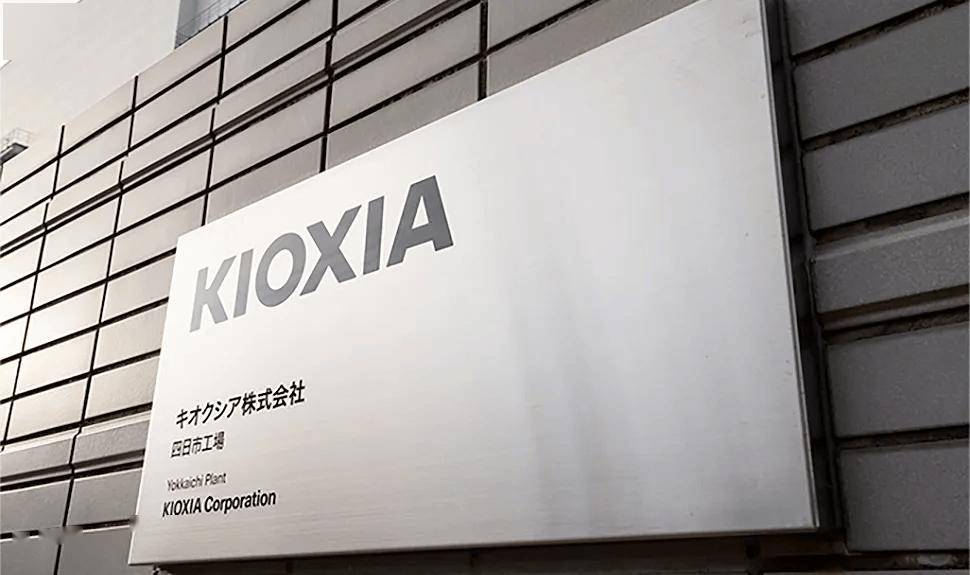
NAND闪存需求爆棚,“二线联盟”铠侠和闪迪的崛起
Hua Er Jie Jian Wen· 2026-01-29 04:04
Core Insights - NAND is transitioning from a cyclical commodity to a critical component of AI infrastructure, with structural changes in demand elevating prices and valuations, bringing companies like Kioxia and SanDisk into the spotlight [1][2] - The shift in AI workloads from training to inference is expanding the deployment of SSDs in AI data centers, significantly increasing the procurement scale of NAND flash memory [2] Group 1: Market Dynamics - The demand for NAND is no longer solely dependent on traditional consumer electronics but is increasingly tied to capital expenditures and architectural evolution on the data center side [2] - The rapid expansion of AI infrastructure has created a significant supply gap, prompting data center operators to actively seek a diversified supplier base [2] - According to TrendForce, by Q3 2025, Samsung leads the market with a 32.3% share, followed by SK Hynix at 19.3%, Kioxia at 15.3%, and SanDisk at 12.4%, indicating a rise in influence for Kioxia and SanDisk [2] Group 2: Strategic Alliances - Kioxia and SanDisk have maintained a deep collaboration for over 25 years, operating major NAND production sites in Japan, which are among the largest globally [3] - The companies jointly develop BiCS FLASH 3D NAND technology, currently at its 8th generation, with plans for the 10th generation, featuring over 300 layers, to begin production in 2026 [3] Group 3: Technological Focus - Kioxia primarily supplies large electronic manufacturers in Japan and globally, while SanDisk dominates the consumer storage market and has a strong presence in the enterprise SSD sector in North America and overseas [4] - SanDisk aims to integrate HBF (High Bandwidth Flash) into products from NVIDIA, AMD, and Google by late 2027 to early 2028, offering larger capacities at lower costs compared to HBM [4][5] - Kioxia is focusing on a performance leap in SSDs, planning to launch a new type of hard drive by 2027 that approaches 100 times the speed of current products, in collaboration with NVIDIA for generative AI servers [5] Group 4: Market Expectations - The ongoing demand for NAND driven by AI inference is a central narrative, with Kioxia's market capitalization surpassing 10 trillion yen and SanDisk's aggressive price increase plans reinforcing expectations for NAND's recovery in profitability [6] - Key variables for the next phase include the sustainability of price increases translating into profit improvements, the timely realization of technological advancements like BiCS10 and HBF, and the management of competitive boundaries between Kioxia and SanDisk to avoid internal conflicts [6]
未知机构:招商电子存储跟踪之海力士点评季度和年度业绩均创历史新高供给受限现状将持续-20260129
未知机构· 2026-01-29 02:05
2026全年需求增长预期:DRAM出货量同比+20%以上,NAND出货量同比+high-10%;26Q1指引DRAM出货量环比 持平,NAND出货量受基数效应影响环比小幅下降(含Solidigm合并数据)。 2025年:营收97.15万亿韩元,同比+47%,净利润42.95万亿韩元,同比+117%,营业利润率高达49%,HBM业务 成为最大增长引擎,全年营收同比增长超过2倍。 25Q4:营收32.83万亿韩元,同比+66%/环比+34%,净利润为15.25万亿韩元,同比+90%/环比+21%,营业利润率 为58%。 出货量与ASP:25Q4 DRAM出货量环比个位数增长,ASP环比+mid-20%;25Q4 NAND出货量环比+10%,ASP环比 +30%(含Solidigm合并数据)。 【招商电子】存储跟踪之海力士点评:季度和年度业绩均创历史新高,供给受限现状将持续存在 2025年:营收97.15万亿韩元,同比+47%,净利润42.95万亿韩元,同比+117%,营业利润率高达49%,HBM业务 成为最大增长引擎,全年营收同比增长超过2倍。 25Q4:营收32.83万亿韩元,同比+66%/环比+34%,净利润 ...
未知机构:1用玉米大豆模型把AI需求如何外溢到非AI芯片讲清楚-20260128
未知机构· 2026-01-28 02:00
Summary of Conference Call Transcript Industry Overview - The discussion revolves around the semiconductor industry, particularly the impact of AI demand on traditional chip production and supply dynamics [1][3]. Core Insights and Arguments 1. **Agricultural Analogy**: The author uses a "corn-soybean" model to explain how AI demand diverts resources from traditional chips (corn) to advanced chips (soybeans) like HBM and 3/4 nm processes [1][3]. 2. **Supply Shortage Evidence**: By 2026, three key indicators suggest a shortage of traditional chips: - **NAND**: Companies like Kioxia and SK Hynix report that their 2026 production capacity was sold out by January, with SSD spot prices increasing by 15-20% [2][6]. - **CPU**: Intel prioritizes 14/10 nm capacity for server CPUs, leading to a widening supply gap for PC CPUs, with Raptor Lake prices rising by 8-12% in January [2][6]. - **Packaging**: Major players like ASE and Tongfu report a 5-8% increase in lead frame and substrate prices due to rising costs of copper, gold, and BT resin, alongside tight 8-inch capacity [2][6]. 3. **Comparison of 2021 and 2026**: - **2021**: Supply constraints due to events like the Renesas fire and Texas freeze, with 8-inch utilization dropping to 75%. Demand surged due to pandemic-driven PC and electric vehicle sales [6]. - **2026**: Supply constraints persist, with AI demand causing negative capital expenditure for 8-inch lines for three consecutive years, and global capacity down 7% from 2021 levels. Demand remains weak, with mobile shipments expected to grow only 3% and automotive chip inventories at 2.2 months [6]. 4. **Potential Catalysts for Demand Recovery**: - **Macro Factors**: A global inventory replenishment cycle in the second half of 2026 could boost utilization rates from 85% to 95% [6]. - **Events**: A significant disruption at a major 8-inch wafer or packaging facility could lead to rapid price increases [6]. - **Policy Initiatives**: New government policies promoting domestic MCU and analog IC demand could significantly impact the market [6]. Additional Important Insights 1. **MCU Price Trends**: In January, 32-bit MCU prices showed a 5% increase for STMicroelectronics and a 7% increase for GigaDevice, indicating early signs of price recovery, although actual demand remains subdued [7]. 2. **Risk Factors**: If demand does not improve by Q2 2026, channel inventories may flood the market again, potentially driving prices back to 2022 lows [7]. 3. **Investment Strategy**: Recommended stocks include leading packaging firms (Changdian, Tongfu, Huada), specialized 8-inch wafer manufacturers (Huahong, China Resources Micro), and domestic MCU/analog design companies (GigaDevice, Silead, Systech) as a balanced investment approach [7].
存储芯片公司业绩亮眼 行业高景气2026年仍将持续
Shang Hai Zheng Quan Bao· 2026-01-27 22:31
Core Viewpoint - The profitability growth of storage chip companies is driven by the booming AI and computing industries, leading to a high prosperity cycle and continuous price increases in products [1] Group 1: Industry Performance - As of January 27, 2025, 34 storage concept companies in A-shares have released performance forecasts, with 19 companies achieving profitability, and 17 companies showing year-on-year profit growth, representing a 50% success rate [2] - Notably, 8 companies have projected profit growth exceeding 100%, with Baiwei Storage leading the growth [2] - Baiwei Storage expects revenue of 10 billion to 12 billion yuan, a year-on-year increase of 49.36% to 79.23%, and net profit of 850 million to 1 billion yuan, a year-on-year increase of 427.19% to 520.22% [2] Group 2: Price Increases - The primary reason for the high growth in the storage chip industry is the entry into a high prosperity cycle and product price increases [4] - Baiwei Storage indicated that from Q2 2025, as storage prices stabilize and rise, the company's sales revenue and gross margin will gradually improve [4] - The global storage industry began to rebound from Q2 2025, with major manufacturers like SanDisk initiating price increases, followed by others like Samsung and Micron [4] Group 3: Future Trends - The core factors behind the current price increases in storage chips are the explosive demand from AI and supply contractions, leading to structural supply-demand mismatches [5] - Industry experts predict that the core cycle of rising storage prices will last until the end of 2026, with high prosperity expected to continue at least until 2027 [5] Group 4: Expansion Strategies - Companies are actively expanding production to seize opportunities during the high prosperity cycle [6] - International manufacturers are focusing on expanding HBM and high-end NAND production capacities, with plans to gradually release these capacities from 2026 to 2028 [6] - Domestic manufacturers like Yangtze Memory and Changxin Technology are also accelerating their production expansion and technological upgrades [6] Group 5: Specific Company Actions - De Ming Li plans to raise no more than 3.2 billion yuan for SSD and DRAM expansion projects and to support its smart storage management and R&D headquarters [7] - Pu Ran Co. is enhancing its core competitiveness in the storage chip field through the acquisition of Noah Chang Tian, which allows it to take over SK Hynix's 2D NAND-related business [7]

产品涨价驱动 存储芯片公司业绩亮眼 行业高景气2026年仍将持续 全球厂商扩产忙
Shang Hai Zheng Quan Bao· 2026-01-27 18:38
Core Insights - The storage chip industry is experiencing significant profitability growth driven by the demand from AI and computing sectors, leading to a high prosperity cycle and continuous product price increases [1] - The high prosperity in the storage chip industry is expected to persist into 2026, with price increases anticipated throughout the year, particularly in the HBM segment, which may remain robust until 2028 [1] Group 1: Company Performance - As of January 27, 2025, 34 storage concept companies in the A-share market have released performance forecasts, with 19 companies reporting profitability, and 17 companies showing year-on-year profit growth, indicating a 50% success rate [2] - Among these, Bawei Storage is leading with an expected revenue of 10 billion to 12 billion yuan, representing a year-on-year growth of 49.36% to 79.23%, and a projected net profit of 850 million to 1 billion yuan, reflecting a staggering growth of 427.19% to 520.22% [2] - Leading companies like Demingli and Zhaoyi Innovation are also reporting strong performance, with Demingli forecasting revenues of 10.3 billion to 11.3 billion yuan, a year-on-year increase of 115.82% to 136.77%, and net profits of 650 million to 800 million yuan, up by 85.42% to 128.21% [2] Group 2: Industry Trends - The primary driver of the high growth in the storage chip industry is the entry into a high prosperity cycle and product price increases, with companies like Bawei Storage and Demingli reporting improvements in sales revenue and gross margins due to stabilizing storage prices [4] - The global storage industry began to rebound from the second quarter of 2025, with major manufacturers like SanDisk initiating price increases, followed by others such as Samsung and Micron [4] - The current price increase cycle is attributed to a structural supply-demand mismatch caused by an explosion in AI demand and supply constraints, with expectations that the price increase cycle will last until the end of 2026 and high prosperity until at least 2027 [5] Group 3: Expansion Strategies - In response to the ongoing high prosperity and rising product prices, storage companies are announcing expansion plans to capitalize on the industry cycle [6] - International manufacturers are focusing on expanding HBM and high-end NAND production capacities, with companies like Kioxia planning to double its NAND capacity over the next five years to meet growing AI data center demands [6] - Domestic companies such as Yangtze Memory Technologies and Changxin Memory Technologies are also ramping up production, with Bawei Storage and Demingli pursuing capital increases for expansion projects [7]
存储涨价只是开始,芯片普涨时代来临
半导体行业观察· 2026-01-27 01:26
在目前的芯片产业,存储涨价已经成为了从业人员关注的重中之重。 据分析机构Counterpoint在此前的一份报告中所说,受人工智能和服务器容量的旺盛需求驱 动,供应商的杠杆率也达到了历史新高。预计2026年第一季度将进一步上涨40%-50%,第二 季度将上涨约20%。由此可见,存储涨价已成定局。 更有甚者,随着金银铜等金属的涨价,以及整个供应链的调整,一场牵连甚广的涨价潮正在 汹涌袭来。这必然会给全球兴起的基础设施建设浪潮带来巨大不确定性。尤其对于中国的服 务器供应商而言,在外忧内患的双重影响下,挑战更是前所未有。 存储暴涨背后:底层逻辑变了 本轮存储涨价潮,是人工智能需求飙升的结果,这是一个不争的事实。 随着大模型厂商对更大模型和更高参数有着迫切需求,且Scaling Law还没失效的当下,云厂商和 大模型企业都前赴后继的投入到基础设施的建设中去。 麦肯锡在早前的一份研究中预测道,到2030年,全球数据中心预计需要6.7万亿美元才能满足日益 增长的计算能力需求。其中,用于处理人工智能(AI)负载的数据中心预计需要5.2万亿美元的资 本支出,而用于支持传统IT应用的数据中心预计需要1.5万亿美元的资本支出。也 ...