雷鸟

Search documents
游戏电视爆发,低延迟和游戏模式是体验关键,将成行业增长引擎?
3 6 Ke· 2025-08-27 06:19
Group 1 - The core viewpoint of the article emphasizes the growing importance of gaming TVs in the market, driven by advancements in technology and increasing consumer demand for high-performance displays [19][23] - The article outlines the key features to consider when purchasing a gaming TV in 2025, including panel type, HDMI capabilities, and system optimization [3][4][9] Group 2 - The main types of panels discussed are OLED and Mini LED, with OLED offering superior response times and contrast, while Mini LED provides higher brightness levels [4][6][8] - HDMI 2.1 is highlighted as a critical feature for gaming TVs, with a focus on ensuring true 48Gbps bandwidth to support 4K 120Hz gaming [9][12] - The importance of low latency and game mode features is stressed, as these are essential for a satisfactory gaming experience [16][18] Group 3 - The gaming TV segment is identified as a growth engine for the overall TV industry, contrasting with the stagnation seen in traditional TV markets [19][23] - Major brands, including both traditional and emerging companies, are increasingly incorporating gaming features into their product lines, indicating a shift towards mainstream acceptance of gaming TVs [23]


上半年智能眼镜销量翻倍,小米们成幕后功臣,AR眼镜未来可期?
3 6 Ke· 2025-08-27 04:36
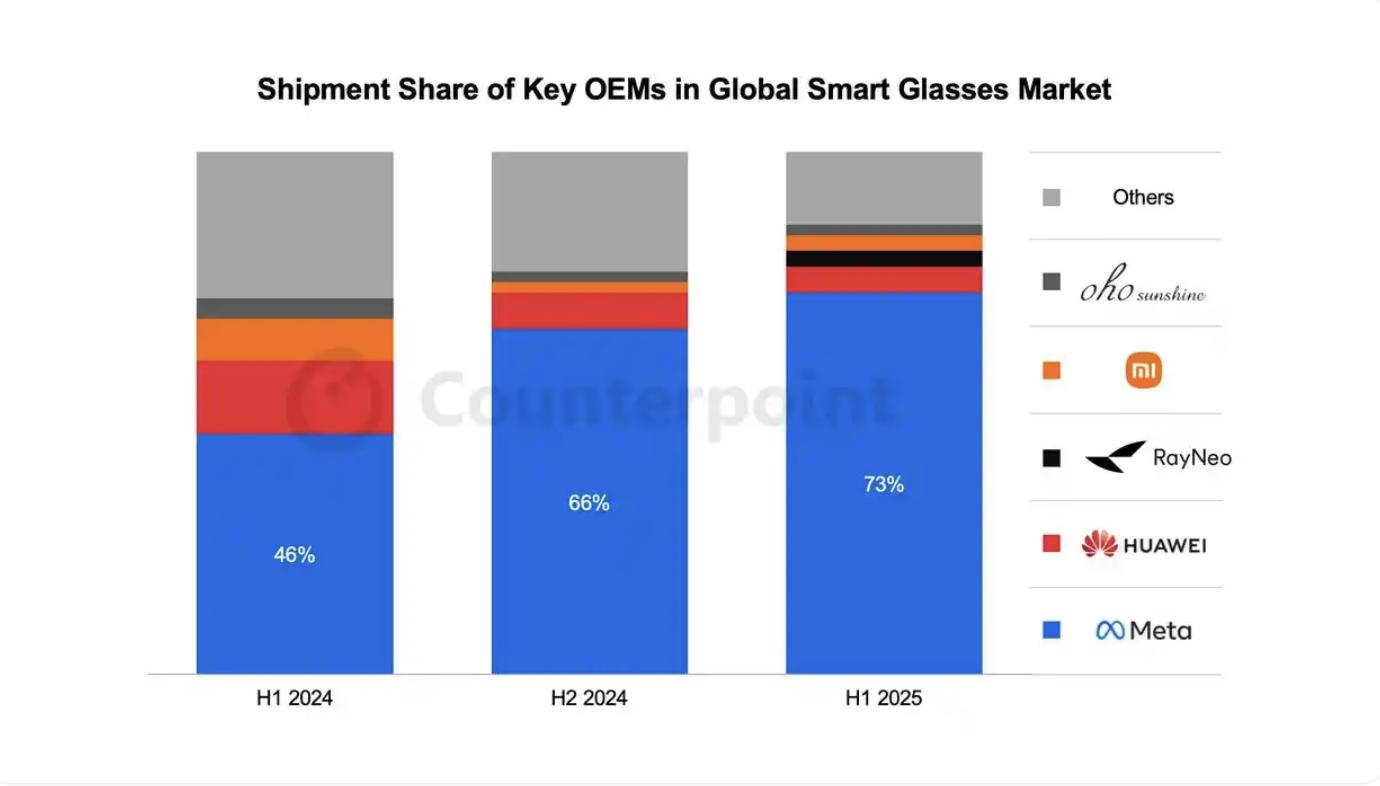
Core Insights - The global smart glasses market is projected to see a 110% year-on-year increase in shipment volume in the first half of 2025, according to Counterpoint [1] - IDC forecasts that China's smart glasses shipments will reach 2.907 million units in 2025, marking a 121.1% year-on-year growth [1] Industry Overview - Smart glasses, once considered niche products, are emerging as a new force in the smart terminal market [4] - The current domestic market for smart glasses is primarily divided into audio recording glasses and AR glasses, with audio recording glasses being the main sales driver due to their lower entry barriers and more affordable pricing [5] Company Contributions - Xiaomi is identified as a significant contributor to the growth in smart glasses sales, with its AI glasses achieving over 30,000 user activations shortly after launch, setting a new sales record in China [7] - Other major brands like Huawei and 雷鸟 are also performing well in sales across major e-commerce platforms, showcasing the brand power of established companies [9] Technological Advancements - AI glasses are evolving to include features such as voice interaction, simple touch controls, and multi-modal technologies, enhancing user experience [5][12] - AR glasses are advancing with unique functionalities, such as real-time translation and navigation, as seen in products like Rokid Glasses [13] Market Dynamics - The decline in prices of smart glasses is a key factor driving their adoption, with basic models now available for a few hundred to a couple of thousand yuan, making them more accessible to consumers [19] - The market is expected to continue its rapid growth, particularly in China, as local manufacturers enhance product offerings and consumer awareness increases [21] Future Outlook - The smart glasses market is anticipated to diversify, with AI glasses excelling in various applications, AR glasses shining in consumer entertainment, and XR glasses showing significant potential [21] - Despite the growth, challenges remain in areas such as battery life, comfort, and market awareness, which need to be addressed for broader acceptance [22][23]

AI硬件革命中的“视觉卡点”:当光学模组走到台前
3 6 Ke· 2025-08-27 03:39
Core Insights - 2024 is expected to be a breakthrough year for AI hardware, particularly with the rise of AI glasses as a new form of product, transitioning from smartphones to become essential "personal AI assistants" [2][4] - The optical module is identified as a critical component in AI glasses, influencing product form, user experience, and cost structure, thus becoming a focal point for investors and industry stakeholders [2][4][25] - Chinese manufacturers are rapidly developing independent capabilities in optical modules, moving towards domestic alternatives in the context of increasing demand and industry restructuring driven by AI [2][4][25] Industry Definition and Role - The optical module is defined as the "display engine" of AI glasses, responsible for image generation, transmission, and final display to the user [5][6] - It encompasses various key components, including projection systems, waveguide systems, freeform lenses, and structural controls, which collectively determine the visual performance and user comfort of AI glasses [6][7] Market Trends - The demand for AI glasses is transitioning from concept to mass production, with leading manufacturers driving innovation in optical modules to enhance user experience [8][20] - The market is witnessing a shift from technology-driven development to a focus on mass production and cost control, with Chinese manufacturers increasingly entering the supply chain [8][20][25] Competitive Landscape - The global optical module industry is characterized by a divide between overseas manufacturers, who dominate high-end designs and materials, and Chinese firms, which are making significant strides in production capabilities and cost control [25][26][27] - Key players in the optical module space include established overseas companies like Lumus and WaveOptics, while Chinese firms like Jisuo Optics and Thunder Optical are emerging as competitive forces [26][27] Investment Trends - The investment landscape for optical modules is evolving, with a notable increase in funding for early-stage companies focusing on AI glasses and optical technologies [31][32] - Investors are prioritizing companies with proven mass production capabilities, system integration skills, and strong patent portfolios as key indicators of value [32][33] Future Opportunities - The next 3-5 years present structural opportunities in the optical module sector, particularly in developing cost-effective waveguide modules, integrating small-sized freeform optics with LCoS/MicroLED technologies, and advancing domestic material and equipment capabilities [40][41][42] - The optical module is seen as a "bottleneck device" for AI glasses, with significant potential for domestic replacement and innovation in the industry [43][44]
下周二开幕|《观展攻略》一键收藏!深圳国际电子展暨嵌入式展8月26-28日福田会展中心盛大启幕!
是说芯语· 2025-08-19 06:11
Core Viewpoint - The 22nd Shenzhen International Electronics Show and Embedded Expo will take place from August 26 to 28, 2025, at the Shenzhen Convention and Exhibition Center, featuring over 400 global quality enterprises and more than 30,000 professional visitors [2][4][12]. Group 1: Event Details - The event will showcase new products and technologies, including Qualcomm's new brand for industrial and embedded IoT, and NVIDIA's Jetson AGX Thor developer kit for humanoid robots [4][12]. - The exhibition will cover various embedded technologies, including GPU, AI computing, edge computing, and high-performance electronic components [13][14]. Group 2: Exhibitors and Products - Notable exhibitors include Alibaba's Damoyuan with its RISC-V architecture products, which cater to various applications such as smart terminals and AI computing [5][25]. - The exhibition will feature a wide range of products, including high-performance microcontrollers and advanced packaging technologies [14][19]. Group 3: Forums and Conferences - The event will host over 15 high-level forums with more than 100 technical experts discussing topics such as AI, edge intelligence, and embedded systems [19][21]. - Key sessions will include discussions on AI-enabled lightweight applications and innovations in AI power solutions [24][30]. Group 4: AI Special Zone - An AI special zone will be set up to focus on AI products and components, featuring over 30 leading exhibitors in the AI sector [43][45]. - Interactive experiences will be available in areas such as AI toys, AI robots, and AI glasses, showcasing the latest trends and innovations in the industry [45][46].

集结超80个品牌高端旗舰店!Suning Max山西首店8.15开业
Xin Lang Cai Jing· 2025-08-15 08:59
Core Viewpoint - The article highlights the ongoing rise in the economy driven by the introduction of flagship stores and new product launches, with a focus on enhancing consumer experience in physical retail through innovative store formats like Suning Max [1][9]. Group 1: Store Launch and Features - The first Suning Max store in Shanxi opened on August 15, covering over 40,000 square meters and featuring more than 200 brands, making it the largest "home consumption" experience center in the area [1]. - The store emphasizes a blend of technology, lifestyle, and social interaction, allowing consumers to experience the latest smart home appliances and participate in interactive activities [1][3]. Group 2: Technology and Product Offerings - The Suning Max store includes a "Suining Tech" section showcasing the latest products from brands like Huawei, Xiaomi, Apple, and Samsung, with hands-on demonstrations by 3C engineers [3]. - It features over 80 flagship stores from high-end brands, providing a comprehensive shopping environment with real-life kitchen, balcony, and bathroom setups for better product comparison [3]. Group 3: Customer Engagement and Services - The store has created a "Suining Friend" social area offering diverse services such as coffee tasting and esports competitions, enhancing the social and emotional value of in-store experiences [5]. - New smart home appliances were launched during the opening, with promotional offers including free installation and discounts to encourage adoption of high-end products [5][7]. Group 4: Strategic Expansion - The Suning Max store is part of a broader strategy to enhance retail services, with plans to open additional locations in cities like Nanchang, Hefei, Guangzhou, and others in the second half of the year [12].


ETF盘中资讯|抢滩AI眼镜!华为、小米等大厂涌入!受益端侧AI发展,科创人工智能ETF(589520)盘中涨逾1.4%
Sou Hu Cai Jing· 2025-08-15 06:25
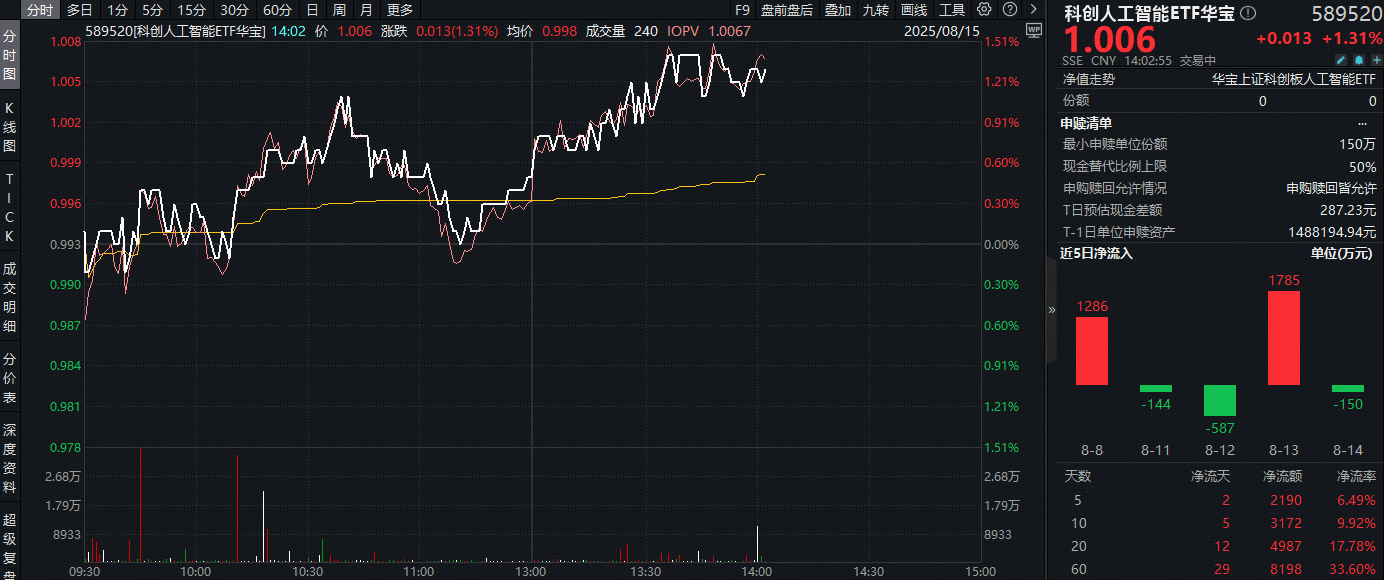
Group 1 - The core viewpoint of the news highlights the strong performance and investment interest in the domestic AI industry, particularly through the Sci-Tech Innovation Artificial Intelligence ETF (589520), which has seen a price increase and significant trading volume [1][4] - The ETF has attracted a total of 81.98 million yuan in capital over the past 60 days, indicating robust investor confidence in domestic AI and edge AI development [1] - Key stocks within the ETF, such as 澜起科技 (Lianqi Technology) and 道通科技 (Daotong Technology), have shown notable price increases, reflecting a broader trend of investment in companies with strong domestic replacement characteristics [1][4] Group 2 - The AI glasses market is projected to experience significant growth, with an expected shipment volume of 2.907 million units in China by 2025, representing a year-on-year increase of 121.1% [3] - Factors driving this growth include the integration of AI models with augmented reality technology, government subsidies enhancing product affordability, and leading manufacturers accelerating product iterations to meet diverse application needs [3] - The semiconductor industry is positioned for growth, driven by ongoing demand for cloud AI and the anticipated acceleration of terminal AI applications, benefiting Chinese semiconductor manufacturers [3]
抢滩AI眼镜!华为、小米等大厂涌入!受益端侧AI发展,科创人工智能ETF(589520)盘中涨逾1.4%
Xin Lang Ji Jin· 2025-08-15 06:20
Group 1: AI Industry Trends - The AI glasses market is emerging as a "dark horse" in the consumer electronics sector, with a projected shipment of 2.907 million units in China by 2025, representing a year-on-year growth of 121.1% [3] - Key factors driving the rapid development of the AI glasses market include the deep integration of AI large models with augmented reality technology, government subsidies enhancing product cost-effectiveness, and leading manufacturers accelerating product iterations [3] - Major brands like Xiaomi, Huawei, and ByteDance are entering the AI glasses market, with companies like Lingban Technology and DPVR innovating in the niche segment [3] Group 2: Investment Opportunities in AI - The domestic AI industry chain is seeing significant investment interest, as evidenced by the performance of the Science and Technology Innovation Artificial Intelligence ETF (589520), which has seen a trading increase of over 1.4% recently [1] - The ETF has attracted a total of 81.98 million yuan in capital over the past 60 days, indicating strong investor confidence in domestic alternatives and edge AI development [1] - The ETF's top ten holdings account for over 67% of its weight, with semiconductor stocks making up nearly half, suggesting a strong offensive position in the market [4]
AI眼镜的成人礼在于支付
3 6 Ke· 2025-08-14 10:22
Core Insights - The year 2025 is anticipated to be the "Year of AI Glasses," with multiple manufacturers like Rokid, Meizu, Quark, Xiaomi, and Thunderbird launching new smart glasses in rapid succession, focusing on various functionalities but converging on payment capabilities [1][2][8] - The introduction of payment features is seen as a critical factor for the mainstream adoption of smart glasses, transforming them from niche gadgets to everyday tools [2][7][15] Group 1: Payment as a Key Feature - Payment functionality is emerging as a significant driver for user adoption, with smart glasses integrating with platforms like Alipay for seamless transactions [1][5][8] - The average adult initiates over 10 payment actions daily, making the "look and pay" feature of smart glasses a natural fit for daily life [3][7] - The integration of payment capabilities is expected to accelerate the frequency of use and user base growth, similar to the impact of Apple Pay on the Apple Watch [7][8] Group 2: Technological Maturity and User Experience - Two main barriers to widespread adoption are technological maturity and the establishment of high-frequency usage scenarios [2][14] - Recent advancements have improved the weight, battery life, and display stability of smart glasses, making them more comfortable for prolonged use [2][10] - The industry is focusing on integrating practical features like navigation and payment to create compelling reasons for users to wear smart glasses regularly [2][3] Group 3: Competitive Landscape and Market Dynamics - Chinese manufacturers are leading the charge in embedding payment functionalities into smart glasses, capitalizing on the country's advanced digital payment infrastructure [8][9] - The structural differences in payment systems between China and the West create a unique advantage for Chinese companies in the smart glasses market [9][10] - The rapid ecosystem development in China allows for quick adaptation and scaling of new features, enhancing the competitive edge of local brands [11][13] Group 4: Future Growth and Market Potential - The global smart glasses market is projected to see significant growth, with sales expected to reach 3.5 million units in 2025, a 230% increase year-on-year [14] - Despite the promising growth rates, smart glasses still face challenges in user habit formation, product optimization, and trust in security mechanisms [14][15] - Payment capabilities are viewed as a gateway to activating a broader ecosystem of services and applications, positioning smart glasses as integral to user interaction with AI [15]

国泰海通|中小与股权研究:AI眼镜爆发有望推动智能眼镜加速迈向千亿市场
国泰海通证券研究· 2025-08-11 14:15
Core Viewpoint - The AI glasses market is poised for explosive growth, driven by lightweight design, essential use cases, and consumer pricing, with a projected 188% increase in sales in China by 2025, potentially creating a trillion-yuan market space [1][2]. Market Dynamics - The evolution of AI glasses is transitioning from separate functional devices to integrated computing solutions, with three main product categories: audio devices, audio + camera devices, and AR integration devices [2]. - Major brands like Meta and Xiaomi are leading the consumer market, while domestic players are catching up in technology and application expansion [2]. Value Chain and Market Estimation - The cost structure of AI glasses shows that the main chip accounts for approximately 33% of total costs, with optical display and computing units making up 43% and 31% respectively [3]. - The global market for AI glasses is expected to exceed 190 billion RMB by 2030, with the Chinese market projected to surpass 50 billion RMB, reflecting a CAGR of over 80% over five years [3]. Industry Structure - The AI glasses industry value chain includes upstream manufacturers of optical modules, chips, and frames; midstream ODM/OEM manufacturers and software suppliers; and downstream brand manufacturers and distributors [3].

捏捏手指,将会是未来交互的主要形式
Hu Xiu· 2025-08-11 02:53
Group 1 - The article discusses Apple's innovative gesture control technology, particularly through the Apple Watch and Vision Pro, highlighting the seamless interaction between devices [1][4][11] - Apple Watch's gesture recognition technology is compared to Meta's research on smart rings and potential "mind-reading" capabilities, showcasing the competitive landscape in XR technology [19][21][27] - The integration of gesture controls across Apple's product line, including AirPods and iPhones, is seen as a way to lower the learning curve for users transitioning to XR devices [14][17][30] Group 2 - The article outlines the potential for Apple to create a modular AR system similar to Meta's Orion, where the Apple Watch serves as a gesture input device and the iPhone acts as a computing hub [35][38][50] - It suggests that Apple's strategy of leveraging existing devices like the iPhone and Apple Watch for XR interactions could help establish a foothold in the XR market [51][57] - The discussion includes the evolution of interaction methods from touch-based to body-centric gestures, emphasizing the importance of intuitive controls in the future of technology [55][56]