顾家家居

Search documents
家居大佬深陷卖身潮
3 6 Ke· 2026-01-07 04:13
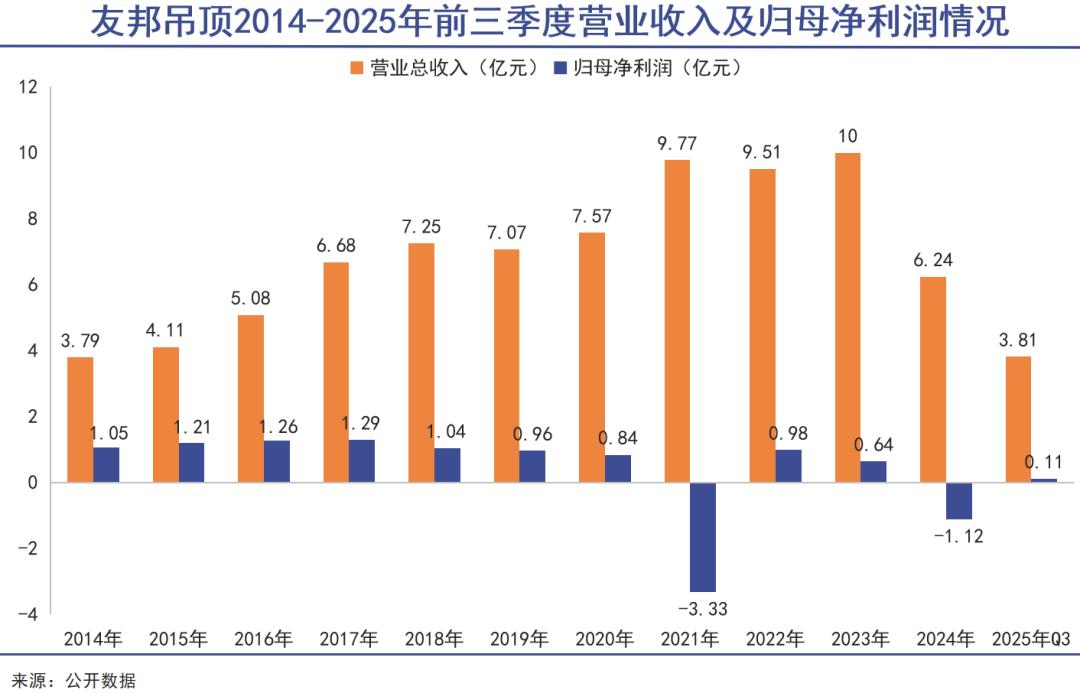
Core Viewpoint - The announcement of the transfer of control of A-share listed company Youbang Ceiling marks the end of the golden era for the home furnishing industry, reflecting a broader trend of ownership changes among home furnishing companies due to declining performance and market pressures [2][3]. Group 1: Company-Specific Developments - Youbang Ceiling, known as the pioneer of integrated ceiling products, reported a total control transfer price of 1.713 billion yuan, following a significant decline in performance and stock price [1]. - The company experienced its first annual loss of 333 million yuan in 2021, with revenue dropping to 624 million yuan in 2024, indicating a downward trend in its financial performance [3]. - Other companies like Pinao and Gujia Home have also undergone control changes, with Pinao's control transferred to Chuxin Group for approximately 839 million yuan [6][7]. Group 2: Industry Trends - In 2025, a total of 16 home furnishing companies experienced ownership changes, highlighting a significant trend of restructuring within the industry [10]. - The decline in the real estate market has been identified as a critical external factor contributing to the struggles of home furnishing companies, as demand for new home renovations has sharply decreased [11][12]. - Many companies, including Gujia Home, have faced challenges due to a lack of focus on core business strategies and over-reliance on real estate growth, leading to financial distress and ownership changes [20][22]. Group 3: Market Reactions and Opportunities - The ownership changes have led to short-term stock price surges for several companies, indicating a speculative interest in the "shell resources" of these firms rather than improvements in their core business operations [24][28]. - For instance, the stock price of Youbang Ceiling increased significantly after the announcement of its control transfer, reflecting market speculation [27]. - The trend of ownership changes presents new investment opportunities, driven by capital interest in the potential of these companies' shell resources rather than their operational performance [28].

轻工、美护2026年年度策略:内需筑底深挖潜力,出海突围打开新局
HUAXI Securities· 2026-01-07 02:30
Group 1: Industry Overview - The light industry and beauty sector is expected to stabilize and improve due to the dual drivers of domestic demand policies and steady export growth [3] - The "14th Five-Year Plan" marks a year of enhanced domestic demand policies, coupled with consumers' increasing pursuit of high-quality living, creating significant growth opportunities for the industry [3] - The penetration rate of cross-border e-commerce has ample room for improvement, and the recovery of international relations and demand from emerging markets will further drive market expansion [3] Group 2: Beauty Sector - The cosmetics market is projected to grow steadily, with the skincare segment being the largest, reaching a market size of 4,619 billion yuan in 2024, and expected to grow at a CAGR of 8.6% from 2024 to 2029 [19] - The high-end cosmetics market is rapidly expanding, with the market size for high-end skincare products increasing from 749 billion yuan in 2019 to 1,144 billion yuan in 2024, reflecting a CAGR of 8.84% [19] - Key companies in the beauty sector include: - **Mao Geping**: Revenue reached 25.88 billion yuan in H1 2025, with a growth rate of 31.28% [23] - **Lin Qingxuan**: Revenue grew to 10.52 billion yuan in H1 2025, marking a 98.28% increase [27] - **Marubi**: Revenue is expected to reach 29.70 billion yuan in 2024, recovering from previous declines [32] Group 3: Medical Aesthetics - The medical aesthetics sector is facing short-term pressure due to cautious consumer spending, but the long-term growth potential remains strong, with a projected CAGR of 10%-15% from 2024 to 2027 [36] - The market penetration rate for medical aesthetics in China is currently at 4-5%, indicating a growth potential of 2-5 times compared to countries like the US and South Korea [36] - Key companies in the medical aesthetics sector include: - **Jinbo Biological**: Achieved revenue of 12.96 billion yuan in Q1-Q3 2025, with a year-on-year growth of 31.10% [45] Group 4: Daily Chemicals - The daily chemical industry is benefiting from domestic demand policies, with local brands poised to capture market share [49] - Companies such as **Dengkang Oral Care** and **Runben** are highlighted for their strong market positions and growth potential [51][55] - **Shanghai Jahwa** has shown significant growth, with revenue reaching 49.61 billion yuan in Q1-Q3 2025, reflecting a 10.83% increase [59] Group 5: Home Furnishing - The home furnishing sector is under pressure due to weak real estate sales, with a 15% decline in residential investment in 2025 [65] - National subsidies for home appliances and furnishings have provided some support, but the long-term effects are limited [65] - Leading companies such as **Oppein Home** and **Kuka Home** are noted for their strong channel capabilities and multi-category layouts [65]




顾家家居1月6日获融资买入1514.80万元,融资余额1.51亿元
Xin Lang Cai Jing· 2026-01-07 01:23
Group 1 - The core viewpoint of the news is that Gujia Home's stock performance and financial metrics indicate a stable growth trajectory, with a slight increase in stock price and notable financing activities [1][2] Group 2 - On January 6, Gujia Home's stock rose by 0.31%, with a trading volume of 200 million yuan. The financing buy-in amount was 15.148 million yuan, while the financing repayment was 15.117 million yuan, resulting in a net financing buy of 30,900 yuan [1] - As of January 6, the total balance of margin trading for Gujia Home was 160 million yuan, with the financing balance at 151 million yuan, accounting for 0.58% of the circulating market value, which is below the 50th percentile level over the past year [1] - In terms of securities lending, Gujia Home had a repayment of 5,300 shares and a sell amount of 200 shares, with a selling amount calculated at 6,394 yuan. The remaining securities lending volume was 268,600 shares, with a balance of 8.5871 million yuan, exceeding the 80th percentile level over the past year [1] Group 3 - As of September 30, Gujia Home had 18,200 shareholders, a decrease of 22.71% from the previous period, while the average circulating shares per person increased by 29.39% to 44,700 shares [2] - For the period from January to September 2025, Gujia Home achieved an operating income of 15.012 billion yuan, representing a year-on-year growth of 8.77%, and a net profit attributable to shareholders of 1.539 billion yuan, with a year-on-year increase of 13.24% [2] - Since its A-share listing, Gujia Home has distributed a total of 6.339 billion yuan in dividends, with 3.173 billion yuan distributed in the last three years [2] Group 4 - As of September 30, 2025, among the top ten circulating shareholders of Gujia Home, Hong Kong Central Clearing Limited ranked as the sixth largest shareholder with 16.1573 million shares, an increase of 5.8478 million shares from the previous period. ICBC Value Selection Mixed A (019085) entered the top ten as the tenth largest shareholder with 7.4068 million shares [2]

董宇辉爆单沙发陷“代工”争议,背后老板是“美的太子”
阿尔法工场研究院· 2026-01-07 00:04
Core Viewpoint - The article discusses the recent performance and controversies surrounding Kuka Home, particularly focusing on a successful live-streaming event led by Dong Yuhui, which raised questions about the company's production practices and financial health [4][10][11]. Group 1: Company Performance - Kuka Home experienced a decline in revenue and net profit in 2024, but showed signs of recovery in the first three quarters of 2025, with revenue and net profit increasing by 8.77% and 13.24% respectively [8][30]. - The company's sofa products are a significant revenue driver, contributing 56.67 billion yuan in the first half of 2025, up from 49.42 billion yuan in the same period the previous year, marking a growth of 14.68% [17]. - Despite the revenue growth, Kuka Home's accounts receivable increased by 22.94% year-on-year, raising concerns about cash flow and financial management [9][30]. Group 2: Controversies and Production Practices - Following a live-stream event where a sofa sold over 1 billion yuan, there were allegations regarding whether the products were manufactured in-house or outsourced to third parties, leading to market speculation about production capabilities [5][14]. - Kuka Home's management clarified that the sofas sold during the live stream were self-manufactured, and they are accelerating production to meet demand [6][15]. - The company maintains a production model that primarily focuses on self-manufacturing, supplemented by external production to address capacity issues [16]. Group 3: Leadership and Ownership Changes - Kuka Home's actual control shifted from the Gu family to He Jianfeng, son of Midea Group's founder, following a significant share transfer in January 2024 [25]. - The new leadership has faced challenges, with Kuka Home reporting a 3.81% decline in revenue and a 29.38% drop in net profit for 2024, indicating a tough transition period [27][29]. - The company has initiated a capital increase plan to raise 19.97 billion yuan for various projects, including 10 billion yuan for working capital, which has drawn scrutiny due to the significant price difference from the market value at the time of announcement [26].

告别被动睡眠,AI床垫开启“主动关怀”|世研消费指数品牌榜Vol.95
3 6 Ke· 2026-01-06 07:57
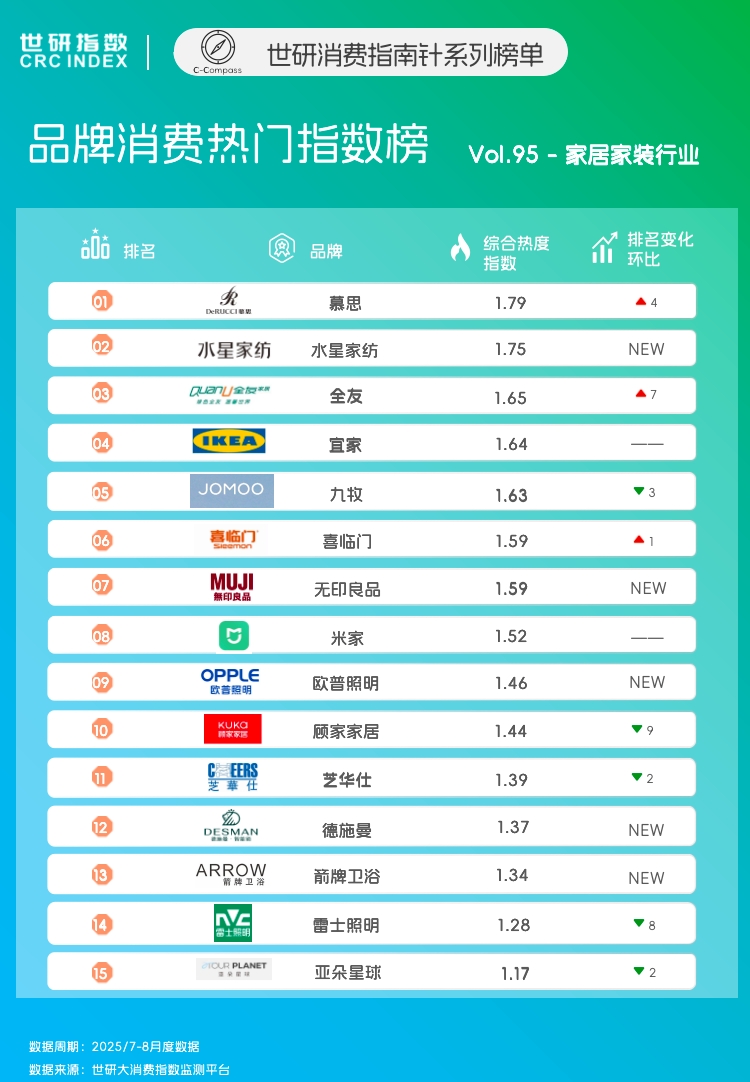
Core Insights - The home furnishing and decoration industry is transitioning from "smart products" to "smart living," emphasizing emotional connections and lifestyle proposals rather than just functional satisfaction [1][3] Group 1: Brand Performance - The top three brands in the comprehensive heat index are Mousse (1.79), Mercury Home Textiles (1.75), and Quanfu (1.65) [2] - The rankings indicate a competitive landscape where brands are focusing on emotional engagement and lifestyle integration [4] Group 2: Technological Innovation - Leading brands are leveraging technology and innovative models to enhance emotional connections with consumers, moving from "smart" to "wisdom" [3] - For instance, Xilinmen partnered with Qiangna Technology to launch the "Baobao・BrainCo" AI mattress, which assesses users' physical and mental states in real-time [3] - Deshiman is focusing on self-developed technology and scenario-based services, with its Kirin R9 series smart locks featuring AI models for proactive decision-making [3] Group 3: Lifestyle Solutions - Brands like Kuka Home, Mousse, and Quanfu are shifting their focus from individual products to comprehensive lifestyle solutions [4] - Kuka Home has implemented a "one-stop integrated home 3.0 system" addressing consumer pain points related to customization and trust [4] - Mousse is creating a "healthy sleep ecosystem" through various cultural initiatives, while Quanfu targets Gen Z's self-expression through vibrant, modular products [5]


小红日报 | 孚日股份涨停,“能追牛、能扛熊”的标普A股红利ETF华宝(562060)标的指数收涨0.89%三连阳
Xin Lang Cai Jing· 2026-01-06 01:07
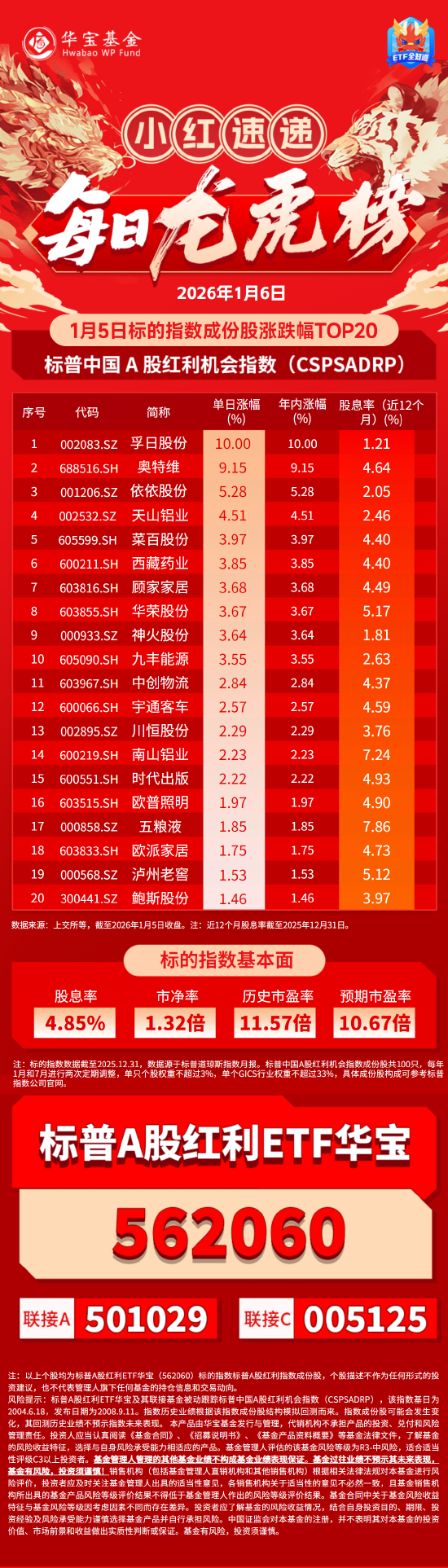
Group 1 - The article presents the top 20 stocks in the S&P China A-Share Dividend Opportunity Index (CSPSADRP) based on their daily and year-to-date performance as of January 5, 2026 [1][5]. - The stock with the highest daily increase is LuRi Co., Ltd. (002083.SZ), which rose by 10.00%, and it also has a year-to-date increase of 10.00% with a dividend yield of 1.21% [1][5]. - Other notable performers include Aotaiwei (688516.SH) with a daily increase of 9.15% and a year-to-date increase of 9.15%, and Yiyi Co., Ltd. (001206.SZ) with a daily increase of 5.28% and a year-to-date increase of 5.28% [1][5]. Group 2 - The list includes various sectors, with companies like Tianshan Aluminum (002532.SZ) and Kuka Home (603816.SH) showing daily increases of 4.51% and 3.68%, respectively [1][5]. - The dividend yields for these companies vary, with notable yields such as 7.86% for Wuliangye (000858.SZ) and 7.24% for Nanshan Aluminum (600219.SH) [1][5]. - The data is sourced from the Shanghai Stock Exchange and reflects the closing prices as of January 5, 2026, with dividend yields calculated for the past 12 months ending December 31, 2025 [1][5].


2026必追趋势!KOS/KOC全员共创管理指南,高效协同稳赢增长
Sou Hu Cai Jing· 2026-01-05 04:19
当行业步入存量竞争,平台持续整治低质同质化内容,"僵尸号矩阵"早已沦为企业负资产,2026年的新媒体增长破局点,必然藏在KOS/KOC全员共创中。 这种"专业权威+真实口碑"双轮驱动的共创模式,既能通过KOS的垂直专业度构建品牌信任,又能借KOC的生活化表达引发用户共鸣,形成全链路营销闭环 ——这样的共创管理,谁能不爱?但想要解锁其价值,关键在于破解"管得太死缺活力,放得太松失调性"的困境,实现协同效率与内容质量的双重提升。 驭影KOS/KOC共创管理 先搞懂:2026年,为何必须做KOS/KOC全员共创? 从用户端看,KOC以"真实用户"身份输出场景化内容,凭借去中心化传播打破用户对广告的戒备心,实现"信任裂变";KOS则以销售顾问、行业专家等专业 人设,输出深度内容解答用户决策疑虑,缩短转化路径。正如顾家家居联动门店KOS以"家居顾问"人设创作内容,成功打通线上种草到线下到店的转化链 路,用专业信任撬动实际消费。 从品牌端看,共创模式能破解内容产能不足的行业痛点。新榜数据显示,60%的矩阵运营企业曾受困于内容产出难题,而KOS/KOC全员共创可借助群体力 量,形成"多元内容供给",同时通过人设化运营打造差 ...
环球家居周报:2026首批国补资金已下达,新明珠IPO终止,海尔智家高管离职……
Huan Qiu Wang· 2026-01-05 04:05
Group 1: National Policies and Financial Support - The first batch of "national subsidies" for 2026 has been allocated, with a total of 62.5 billion yuan designated for consumer goods replacement and equipment updates [1] - The policy includes support for the installation of elevators in old residential areas and equipment for elderly care institutions [1] Group 2: Furniture Manufacturing Industry Performance - In the first 11 months, the total profit of the furniture manufacturing industry reached 24.44 billion yuan, a year-on-year decrease of 22.7% [2] - The total revenue for the furniture manufacturing industry was 554.11 billion yuan, down 9.1% year-on-year [2] Group 3: Company Developments and Strategic Moves - Jianlin Home announced its subsidiary Apis will transition to a smart robotics company, focusing on smart manufacturing robots, logistics robots, and health service robots [3][4] - Zhiou Technology acquired land for 50.94 million yuan to build its global R&D headquarters, with a total investment of 250 million yuan [5] - Jia Shi Jia Group's IPO has been accepted, aiming to raise 771 million yuan for projects including smart green factory construction [5] - Huali Co. terminated its plan to acquire 51% of Zhongke Huilian, with no significant impact on its operations [5] - Kailai Fengsheng's smart home factory has been established in Foshan, with a total investment of 500 million yuan [6] - Gujia Home signed a strategic investment cooperation agreement with Dengfeng Electric to enhance its smart home product offerings [7] - Mengbaihe abandoned its expansion plans for a factory in the U.S. and redirected 155 million yuan to build an e-commerce warehouse in South Carolina [8] - Aoyang Ceiling's actual controller will change to Shi Qiming, with a share acquisition plan in place [9] - Zhongtian Decoration underwent significant management changes, including the appointment of a new chairman and general manager [11] - Diou plans to invest up to 240 million yuan in its subsidiary to create an independent operating platform for its "Diwang" bathroom business [12] - Haier Smart Home's vice president Li Pan has resigned, with Song Yujun taking over overseas business operations [13] Group 4: Legal and Regulatory Updates - Dongtai Hardware won a legal case regarding its core patent, receiving 1.4 million yuan in compensation [14] - Rose Island's IPO has been suspended due to the expiration of financial report validity [15] - New Pearl's IPO application has been terminated following the withdrawal of its listing request [16]

湾财周报|人物 董宇辉带货沙发陷“代工”风波;中国90后创办的Manus被扎克伯格巨资买下
Sou Hu Cai Jing· 2026-01-04 15:02
Group 1 - The acquisition of Manus by Meta for several billion dollars highlights the growing interest in AI technologies, with the founder being a Chinese millennial [15] - The listing of AI robotics company Woan on the Hong Kong Stock Exchange raised 1.64 billion HKD, with a subscription rate of 254.5 times for public offerings, indicating strong market interest [16] - Huawei's long-term strategic opportunity lies in the wave of intelligent transformation, which involves profound changes in organizational structure, business processes, and corporate culture [8][18] Group 2 - The automotive industry is experiencing a shift from an engineer-driven culture to a user-centric approach, as traditional models fail in the era of consumer sovereignty [10][19] - The former president of China Life Insurance, Yang Chao, was expelled from the party for serious violations, illustrating ongoing accountability in the insurance sector [20] - The recent appointment of Lu Wei as the president of Postal Savings Bank after leaving China CITIC Bank reflects the trend of cross-industry executive movements in China's banking sector [21]

董宇辉狂卖1亿元的网红沙发,创始人已套现200亿
36氪· 2026-01-04 13:34
Core Viewpoint - The article discusses the controversy surrounding a live-streamed furniture sale led by Dong Yuhui, which generated significant sales but raised concerns about product quality and supply chain capabilities [4][5][12]. Group 1: Sales Performance and Controversy - The live-stream event on December 10 resulted in total sales of 3.56 billion yuan, with a standout product being a leather sofa priced at 3,471.4 yuan, achieving over 100 million yuan in sales [8][9]. - Following the event, questions arose regarding whether the high order volume could be fulfilled by the company's own factories or if they would resort to outsourcing production [5][13]. - Concerns were also raised about the low pricing potentially compromising product quality compared to in-store offerings [14][22]. Group 2: Company Response and Production Assurance - In response to the concerns, the company confirmed that the sofas sold during the live stream were produced in-house and that they were working to expedite production [16]. - The company emphasized that the products were official and guaranteed to be genuine [16]. Group 3: Financial Insights and Profitability - Despite the low sale price of 3,471.4 yuan, the company is estimated to still have a profit margin, as the average cost per unit is around 2,503.59 yuan, leading to a gross margin of approximately 27.88% for this sale [23][25]. - The average selling price of standard sofa sets in the first three quarters of the year was 3,893.05 yuan, indicating a 12.15% premium over the live-stream price [23]. Group 4: Company Performance and Market Position - The company reported a revenue of 184.80 billion yuan for the full year 2024, a decline of 3.81% year-on-year, with net profit dropping by 29.38% [28]. - The company has faced challenges in recent years, with the founder's family engaging in significant capital operations, including a large-scale cash-out after the company's IPO [32][34]. Group 5: Strategic Concerns and Future Directions - Following a change in control, the company is shifting towards smart home products, but its recent capital raising efforts have sparked concerns about potential conflicts of interest and the necessity of funding [36][40]. - The pricing strategy for a recent capital increase has been criticized for being significantly lower than market value, raising questions about the motivations behind the fundraising [39][41].