
华安证券

Search documents
7月末M2余额同比增长8.8%;商务部:对欧盟两家金融机构采取反制措施……盘前重要消息还有这些
Zheng Quan Shi Bao· 2025-08-14 00:56
Monetary Policy and Financing - As of the end of July, the broad money supply (M2) reached 329.94 trillion yuan, showing a year-on-year growth of 8.8% [2] - The total increase in RMB loans for the first seven months was 12.87 trillion yuan, with household loans increasing by 680.7 billion yuan and corporate loans increasing by 11.63 trillion yuan [2][3] - The total social financing scale increased by 23.99 trillion yuan in the first seven months, which is 5.12 trillion yuan more than the same period last year [3] Government Bonds and Investment - The National Development and Reform Commission has allocated 188 billion yuan in special long-term bonds to support equipment upgrades, impacting approximately 8,400 projects across various sectors [4] - The total investment driven by these projects is expected to exceed 1 trillion yuan [4] Regulatory Measures - The Ministry of Commerce has implemented countermeasures against two EU financial institutions due to sanctions imposed on Chinese entities, prohibiting domestic organizations and individuals from engaging in transactions with these banks [5] - The State Administration for Market Regulation and the Ministry of Industry and Information Technology are enhancing supervision over smart connected electric vehicles, particularly regarding misleading advertising and the promotion of driving assistance systems [6] Corporate News - Companies such as Ningde Times announced a mid-year dividend of 10.07 yuan per 10 shares, with the record date set for August 19 [11] - Tencent Holdings reported a second-quarter revenue of 184.5 billion yuan, reflecting a year-on-year growth of 15% [11] - Long-term bullish outlook on the Chinese stock market is supported by monetary and fiscal policies, with a focus on sectors like non-bank financials, metals, and technology [12]
7月末M2余额同比增长8.8%;商务部:对欧盟两家金融机构采取反制措施……盘前重要消息还有这些
证券时报· 2025-08-14 00:25
Monetary Policy and Financing - As of the end of July, the broad money supply (M2) reached 329.94 trillion yuan, with a year-on-year growth of 8.8%. The narrow money supply (M1) was 111.06 trillion yuan, growing by 5.6%, while the currency in circulation (M0) was 13.28 trillion yuan, up by 11.8% [2] - In the first seven months, net cash injection amounted to 465.1 billion yuan, with total RMB loans increasing by 12.87 trillion yuan. Household loans rose by 680.7 billion yuan, while corporate loans increased by 11.63 trillion yuan [2][3] Social Financing and Economic Support - The total social financing scale increased by 23.99 trillion yuan in the first seven months, which is 5.12 trillion yuan more than the same period last year. The increase in RMB loans to the real economy was 12.31 trillion yuan, which is a decrease of 694 billion yuan year-on-year [3] - The issuance of special long-term government bonds amounting to 188 billion yuan has been completed to support equipment upgrades across various sectors, leading to a total investment exceeding 1 trillion yuan [4] Regulatory Actions and Market Developments - The Ministry of Commerce has implemented countermeasures against two EU financial institutions due to their inclusion in sanctions against Chinese entities, which violates international law [5] - The State Administration for Market Regulation and the Ministry of Industry and Information Technology are enhancing supervision over smart connected vehicle recalls and production consistency, aiming to prevent misleading advertising practices [6] Corporate News and Market Sentiment - Companies like Ningde Times announced a mid-year dividend of 10.07 yuan per 10 shares, with the record date set for August 19 [11] - Longjiang Securities remains optimistic about the Chinese stock market, citing ongoing monetary and fiscal support as key drivers for a potential bull market [14] - Companies such as Tencent reported a second-quarter revenue of 184.5 billion yuan, reflecting a year-on-year growth of 15% [17]


上证指数创44个月以来盘中新高 A股总市值逼近百万亿元
Zheng Quan Ri Bao· 2025-08-13 16:14
Core Insights - A-shares continue to rise, with trading volume surpassing 2 trillion yuan and the Shanghai Composite Index reaching a 44-month high of 3688.63 points on August 13 [1] - The total market capitalization of A-shares has reached 98.48 trillion yuan, reflecting a 14.7% increase since the end of last year [1] - Key sectors driving market capitalization growth include banking, electronics, and pharmaceuticals, with pharmaceuticals rising from fifth to third place due to rapid valuation recovery of innovative drugs [1] Market Performance - Seven sectors, including non-ferrous metals, defense, machinery, electronics, pharmaceuticals, communications, and basic chemicals, have seen market capitalization growth exceeding 20% since the end of last year [1] - Non-ferrous metals and defense industries have experienced the highest growth rates, at 37.51% and 30.76% respectively [1] Industry Analysis - The growth in market capitalization is attributed to policy and industry resonance, with factors such as the conclusion of the 14th Five-Year Plan driving military orders and resource security strategies pushing up non-ferrous metal prices [1] - The acceleration of AI and semiconductor domestic substitution is leading to increased institutional research on small-cap hard tech companies, with R&D spending exceeding 40% [1] Stock Performance - Since early April, the A-share market has shown a steady upward trend, supported by improved micro liquidity and continuous market hotspots [2] - A total of 295 stocks have seen price increases exceeding 100% this year, with the majority being in the pharmaceutical and machinery sectors [2] Characteristics of High-Growth Stocks - The 295 high-growth stocks exhibit high industry concentration, with machinery and pharmaceuticals accounting for over 35% [3] - These stocks are significantly driven by themes such as "AI + robotics" and "military + self-control," with a predominance of small-cap stocks [3] - The median return on equity (ROE) for these stocks is only 3.46%, indicating that their performance is largely driven by event catalysts and market sentiment rather than traditional financial metrics [3]
沪指创44个月以来新高
Jin Rong Shi Bao· 2025-08-13 14:09
作为市场情绪和杠杆水平的重要指标,两融余额重返高位表明投资者不断加大A股权益配置,市场活跃 度持续提升。"不过,目前两融余额占A股流通市值、两融交易额占A股成交额指标均处于历史中枢水 平,远低于2015年峰值。"中国银行证券首席策略分析师杨超表示。 华西证券(002926)策略分析师李立峰表示,本轮行情增量资金来源众多,有保险、养老金、公募基 金、私募基金等机构资金,也有居民配置资金的入市。自去年"924"行情启动以来,我国M1-M2同比增 速负剪刀差持续收窄,反映资金活化程度增强,居民的消费和投资意愿出现边际回暖迹象。 此外,两融余额时隔十年再度突破2万亿元大关,反映个人投资者风险偏好正在持续回升。当前,居民 增量配置资金入市动能犹在,后市股市微观流动性环境仍偏宽松,居民增量资金入市将成为本轮行情的 重要驱动。风格上,"十五五"规划将成为聚焦点,科技成长仍将是未来较长一段时间的政策主线。 数据显示,截至当日收盘,上证指数涨0.48%,收报3683.46点,为2021年12月13日以来新高;深证成指 涨1.76%,收报11551.36点;创业板指涨3.62%,收报2496.50点。 成交量方面,全市场今日成交 ...
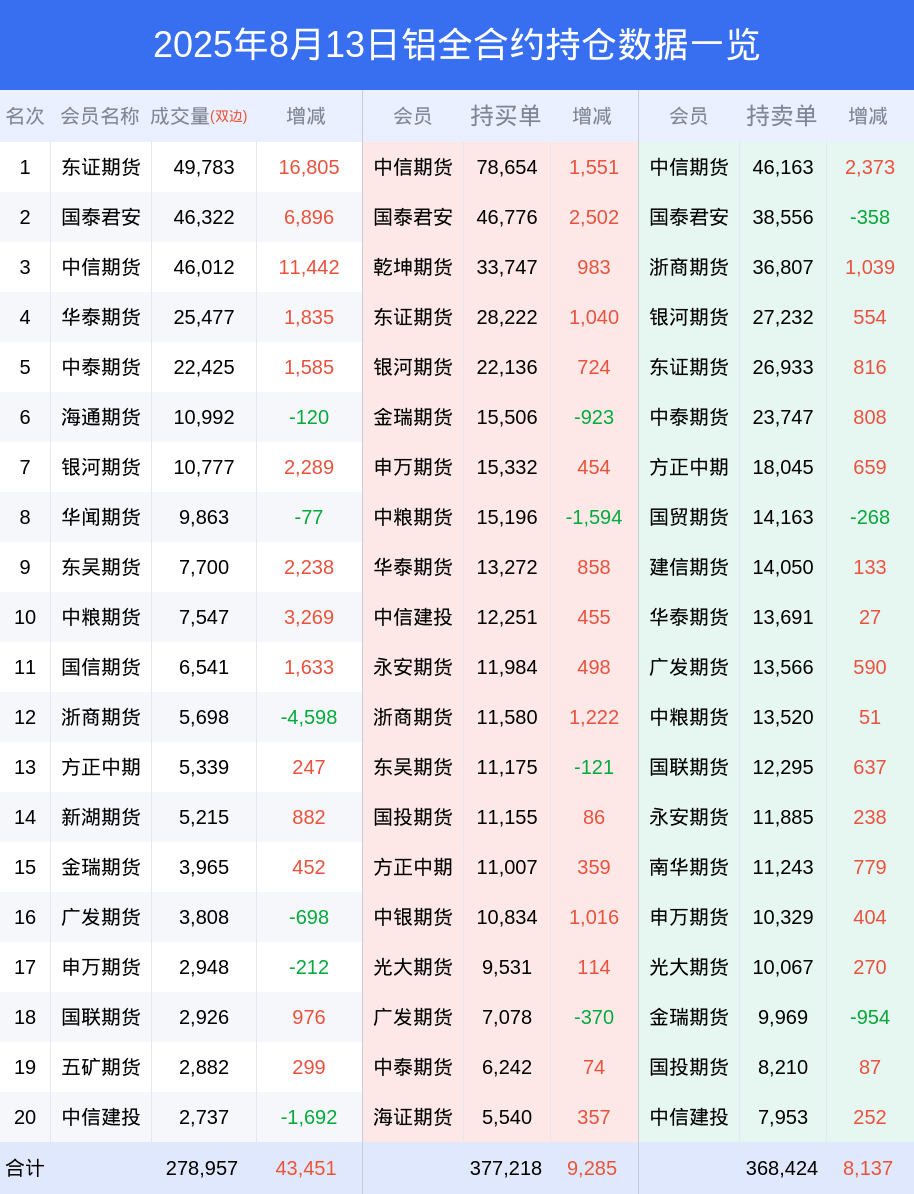
13日铝上涨0.63%,最新持仓变化
Sou Hu Cai Jing· 2025-08-13 13:26
文章来源:新浪期货 根据合并数据显示,多头前三席位为中信期货,总持仓78654、国泰君安,总持仓46776、乾坤期货,总持仓33747;空头前三席位 为中信期货,总持仓46163、国泰君安,总持仓38556、浙商期货,总持仓36807; 主力合约前20席位中,多头增仓前三名分别是:东证期货、持仓14511、增仓802,国泰君安、持仓21709、增仓771,中信期货、 持仓21333、增仓698;多头减仓前三名分别是:金瑞期货、持仓6824、减仓-887,乾坤期货、持仓3288、减仓-848,广发期货、 持仓4371、减仓-239; 主力合约前20席位中,空头增仓前三名分别是:中粮期货、持仓3946、增仓1363,中信期货、持仓16676、增仓1177,中泰期货、 持仓9459、增仓691;空头减仓前三名分别是:国泰君安、持仓16220、减仓-2168,金瑞期货、持仓4252、减仓-509,国贸期货、 持仓4458、减仓-161。 来源:新浪期货 新浪期货 根据交易所数据,截至8月13日收盘主力合约铝2509,涨跌+0.63%,成交量8.21万手,持仓数据显示前20席位呈现净多,差 额头寸为1061手。 铝期货 ...

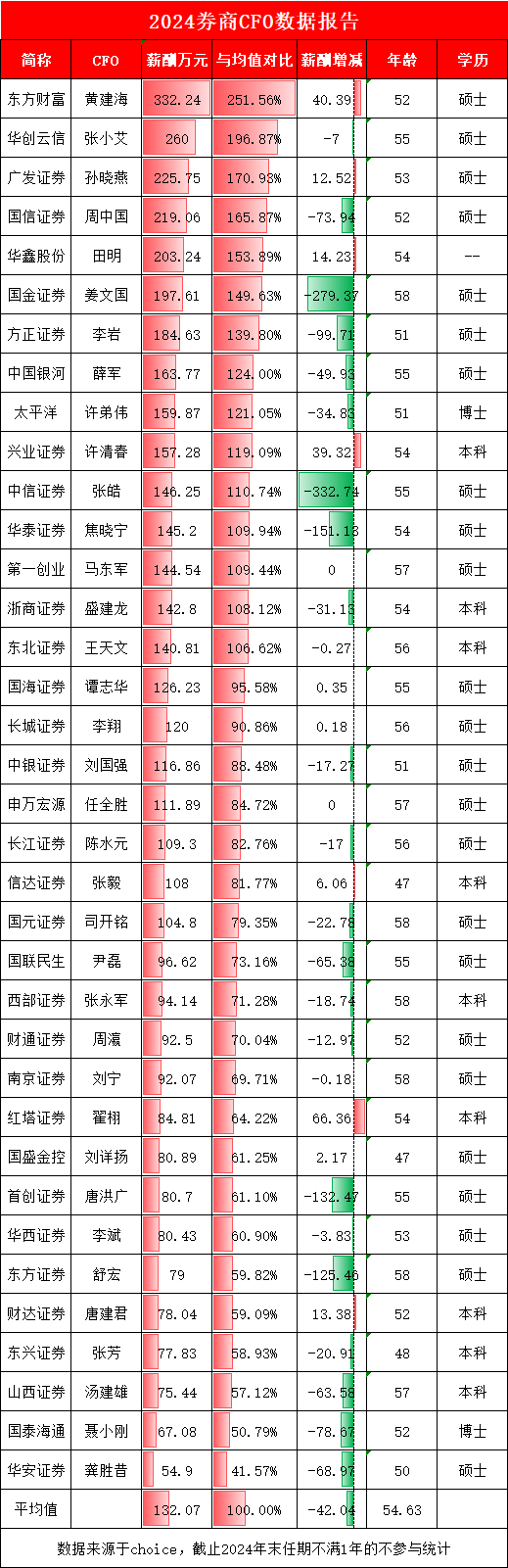
华安证券原财务总监龚胜昔年薪55万元仅有行业平均值的42%
Xin Lang Zheng Quan· 2025-08-13 12:25
炒股就看金麒麟分析师研报,权威,专业,及时,全面,助您挖掘潜力主题机会! 作为上市公司核心管理层关键成员,财务总监CFO的地位与作用至关重要。新浪财经《2024年度A股 CFO数据报告》显示,2024年A股上市公司财务总监CFO群体薪酬规模合计达42.70亿元,平均年薪为 81.48万元。 | | | | | | - - | | | --- | --- | --- | --- | --- | --- | --- | | 中银证券 | 刘国强 | 116. 86 | 88. 48% | -17.2 | ਦਾ | 硕士 | | 申万宏源 | 任全胜 | 111.89 | 84. 72% | 0 | 57 | 硕士 | | 长江证券 | 陈水元 | 109. 3 | 82. 76% | -17 | 56 | 硕士 | | 信达证券 | 张毅 | 108 | 81.77% | 6.06 | 47 | 本科 | | 国元证券 | 司开铭 | 104.8 | 79. 35% | -22. 78 | 28 | 硕士 | | 国联民生 | 尹磊 | 96. 62 | 73.16% | -65. 38 | 22 | 硕士 | ...

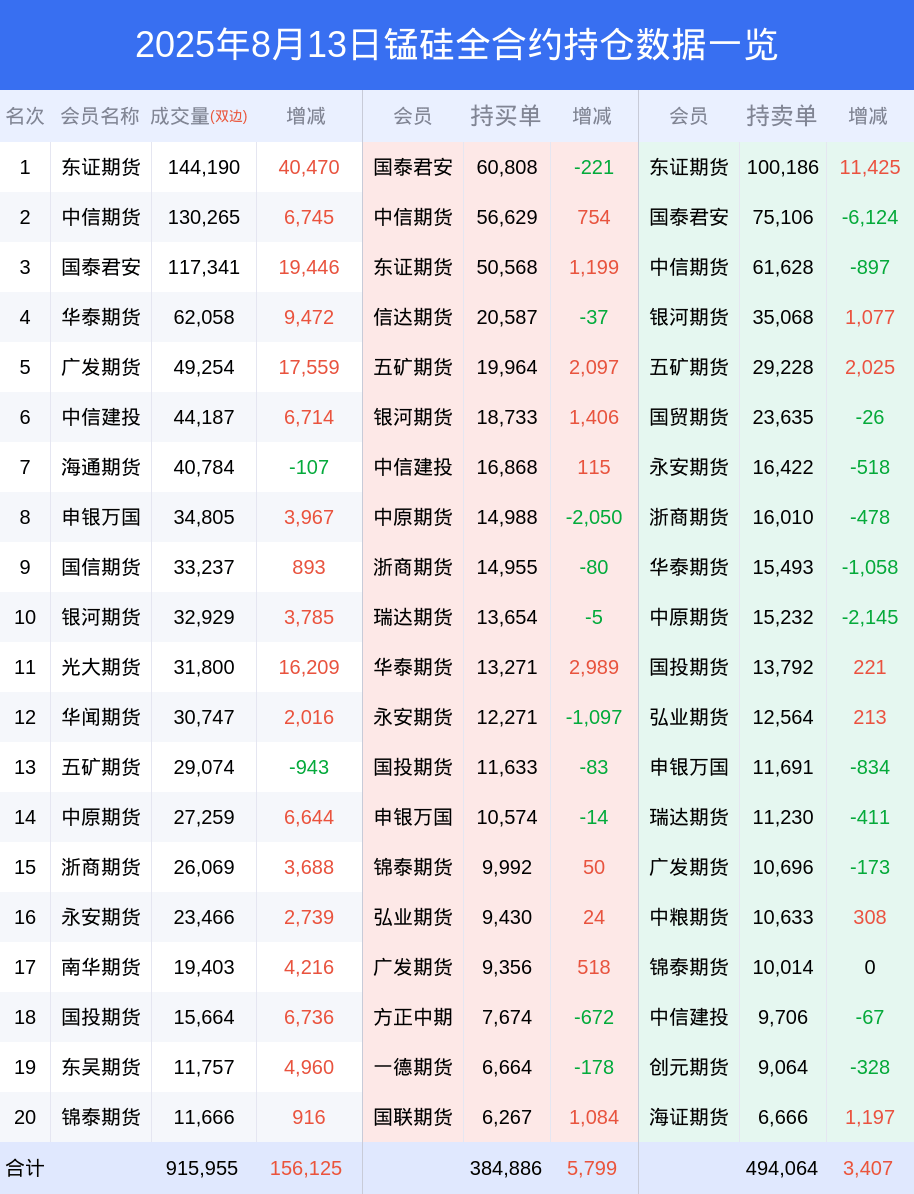
13日锰硅下跌0.65%,最新持仓变化
Sou Hu Cai Jing· 2025-08-13 09:56
新浪期货 根据交易所数据,截至8月13日收盘主力合约锰硅2509,涨跌-0.65%,成交量25.82万手,持仓数据显示前20席位呈现净空, 差额头寸为33145手。 锰硅期货全合约总计成交54.48万手,比上一日新增2.11万手。全合约前20席位多头持仓45.16万手,比上一日增加3882手。全合约 前20席位空头持仓53.58万手,比上一日增加5175手。 根据合并数据显示,多头前三席位为国泰君安,总持仓60808、中信期货,总持仓56629、东证期货,总持仓50568;空头前三席位 为东证期货,总持仓100186、国泰君安,总持仓75106、中信期货,总持仓61628; 主力合约前20席位中,多头增仓前三名分别是:华泰期货、持仓5954、增仓2412,中泰期货、持仓3033、增仓543,银河期货、持 仓6823、增仓533;多头减仓前三名分别是:国信期货、持仓2367、减仓-1223,国泰君安、持仓18177、减仓-711,东证期货、持 仓24968、减仓-522; 主力合约前20席位中,空头增仓前三名分别是:东证期货、持仓46528、增仓7567,中财期货、持仓2403、增仓1254,海证期货、 持仓2 ...
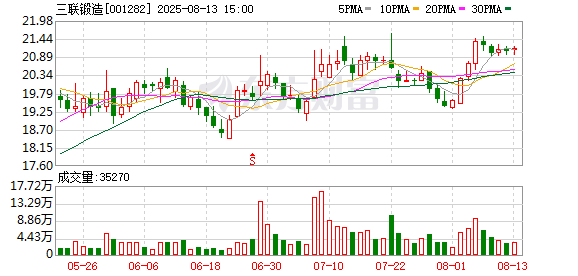
华安证券给予三联锻造买入评级:优质汽车锻造件供应商,积极布局机器人领域
Mei Ri Jing Ji Xin Wen· 2025-08-13 09:43
Core Viewpoint - Huazhong Securities issued a report on August 13, giving a "buy" rating to Sanlian Forging (001282.SZ), highlighting its strong position as a quality supplier in the automotive forging parts sector [2] Company Summary - Sanlian Forging is recognized as a premium supplier specializing in automotive forging components [2] - The company has a solid foundation in forging and machining technology, which supports its growth logic [2] - Sanlian Forging is continuously expanding its product line and has established deep collaborations with several global top 100 parts groups, indicating potential for stable performance growth [2]
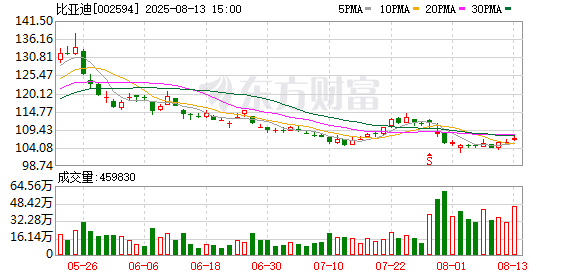
华安证券给予比亚迪买入评级:海外扩张加速,DM-i5.0油耗进一步降低
Mei Ri Jing Ji Xin Wen· 2025-08-13 09:04
Group 1 - The core viewpoint of the report is that Huatai Securities has given BYD (002594.SZ) a "buy" rating based on several factors [2] - The report highlights that the upcoming off-season may lead to short-term pressure on sales due to inventory digestion, with July sales expected to be impacted [2] - It notes that BYD's overseas expansion is accelerating, maintaining a strong growth momentum [2] - The update of the DM-i 5.0 has further reduced fuel consumption, showing significant results in the high-end market [2] Group 2 - The report includes risk factors such as potential lower-than-expected downstream demand [2] - It also mentions the risk of overseas expansion not meeting expectations [2] - Increased competition within the industry is identified as another risk [2]

7月美国通胀数据点评:“关税持续通胀论”被证伪了吗?
Huaan Securities· 2025-08-13 08:41
1. Report Industry Investment Rating There is no information provided regarding the report industry investment rating in the given content. 2. Core Views of the Report - The July CPI remained unchanged year - on - year, with a growth of 2.7%, lower than the Wind expected value of 2.72%. The core CPI increased slightly year - on - year, growing by 3.0%, also lower than the expected 3.04%. Both CPI and core CPI are below the inflation level in February this year [2]. - The main reason for the CPI decline this month is the drop in the energy item, and food prices also slightly decreased. The energy sub - item decreased by 1.1% month - on - month, and gasoline prices decreased by 2.2% month - on - month. Food sub - item increased by 2.9% year - on - year, with a slowdown [3]. - The new and used car markets are warming up, indicating a recovery in consumer demand and confidence. However, the used - car wholesale market shows a slight decline, and the inflation concerns from it may be alleviated. Furniture prices are still cooling, reflecting a deepening of weakening demand [4]. - Service - related CPI continues to rise, mainly due to expectations. But the cooling housing market may make service inflation unsustainable, and the spiral risk is still weak [5]. - Supply chain pressure continues to ease, and the CPI of tariff - related commodity categories is cooling. The "one - time impact theory of tariffs" has more explanatory power for the market [7]. - This month's CPI presents a pattern of "service inflation and commodity deflation". Weak demand has a strong resistance to prices, and the decline in commodity CPI further confirms that the impact of tariffs on prices may be one - time. The rise in service CPI may not form a stubborn inflation spiral [7]. - Inflation is still controllable. Market participants regard the inflation data as a positive signal. The FedWatch tool shows that the expectation of the Fed cutting interest rates in September has risen from 85.9% to 93.4%, and more voices within the Fed support interest rate cuts [8]. 3. Summary by Relevant Catalogs 3.1 Data Observation - **CPI and Core CPI Trends**: In July, the CPI increased by 2.7% year - on - year, with a 0.2% month - on - month increase (0.1 pct lower than the previous value). The core CPI increased by 3.0% year - on - year, with a 0.3% month - on - month increase (0.1 pct higher than the previous value) [2]. - **CPI Sub - item Analysis**: The energy sub - item decreased by 1.1% month - on - month (previous value 0.9%), and gasoline prices decreased by 2.2% month - on - month. The food sub - item increased by 2.9% year - on - year, 0.1 pct lower than last month, and 0.0% month - on - month (0.3% in June) [3]. - **Demand - Sensitive Indicators**: Used - car prices increased by 0.5% month - on - month (previous value - 0.7%), and 4.8% year - on - year. New - car prices also recovered. The CCI US consumer confidence index rose to 97.3% (previous value 93%). However, the used - car wholesale market declined, with the Manheim used - car value index showing a year - on - year decrease to 2.8% and a month - on - month decrease to - 0.53% [4]. - **Demand - Lagging Indicators**: Furniture price growth slowed to 0.7% month - on - month (previous value 1.0%), reflecting the real impact of tariffs on prices and the deepening of weakening demand [4]. - **Service - Related CPI**: Service - related CPI continued to rise, but the housing market cooled. Most service - related CPI items increased, especially for medical care services and transportation services. The S&P CS housing price index shows that market rent growth has slowed for 5 consecutive months [5]. 3.2 In - depth Analysis - **Inflation Pattern**: This month's CPI shows a pattern of "service inflation and commodity deflation". Weak demand has a strong resistance to prices, and the decline in commodity CPI confirms the one - time impact of tariffs on prices [7]. - **Reasons for the Limited Service Inflation Spiral**: Firstly, the rise in service CPI is driven by inflation expectations, but the actual decline in commodity prices this month may disprove these expectations. Secondly, the areas where service inflation continues to rise are mostly essential - need categories, and the downward trend in the real estate market shows that inflation lacks a strong rolling effect [7][10]. - **Inflation Outlook**: Inflation is still controllable. Since May, the CPI has remained at 2.7% after a one - time jump, and the core CPI has only increased by 0.1 pct per month, which is lower than the level in February. The market regards the inflation data as positive, and the expectation of the Fed cutting interest rates in September has increased [8].