
零跑汽车

Search documents
汽车行业双周报(20251208-20251221):26年汽车出口思考(1):分析中国车企对欧洲出口的可行性-20251226
Hua Yuan Zheng Quan· 2025-12-26 12:36
Investment Rating - The investment rating for the automotive industry is "Positive" (maintained) [1] Core Insights - The Western European passenger car market is large, with significant room for improvement in the penetration rate of new energy vehicles (NEVs). The annual sales of passenger cars in Western Europe exceed 10 million units, and the NEV penetration rate increased by 6 percentage points year-on-year to 29% in the first ten months of 2025. Countries with high passenger car sales, such as Germany, the UK, France, Spain, and Italy, have NEV penetration rates generally below 35% [3][6][12] - The growth of the European NEV market in 2026 is supported by policy foundations, including comprehensive EU regulations and incentives for NEV adoption. The EU aims for climate neutrality by 2050, and while there are adjustments to the 2035 "zero-emission" target, the overall goals remain intact [12][15] - With Chinese manufacturers accelerating their presence in Europe, it is expected that NEV exports from China to Europe will see rapid growth in 2026. Currently, major shares in the Western European NEV market are held by manufacturers like Volkswagen and BMW, but companies like BYD are increasing their market share [20][28] Summary by Sections 1. Western European Passenger Car Market - The market is characterized by a significant annual sales volume exceeding 10 million units, with a NEV penetration rate that has room for growth. The focus will be on B/SUV-B/C/SUV-C models to enhance NEV penetration [3][6][10] 2. Policy Support for NEV Growth in 2026 - The EU has established clear targets for NEV transition, with penalties and incentives for carbon emissions. The 2026 NEV market growth is expected to be bolstered by continued or new subsidies in key European countries [12][15] 3. Growth of Chinese Manufacturers in Europe - Chinese manufacturers are expected to see significant growth in NEV exports to Europe, with companies like BYD and Geely leading the charge. The expansion of sales networks and local production will contribute to this growth [20][28]



IPO“待考”,隆源股份毛利率呈下滑趋势
Guo Ji Jin Rong Bao· 2025-12-26 08:43
Core Viewpoint - Longyuan Co., Ltd. is preparing for its listing review on the Beijing Stock Exchange, with a reduced fundraising target of 560 million yuan, down from the initial 610 million yuan, primarily for projects related to new energy systems and lightweight automotive components [1] Group 1: Company Overview - Longyuan Co., Ltd. specializes in the research, production, and sales of aluminum alloy precision die-casting parts, focusing on automotive applications such as engine systems and new energy vehicle components [3] - The company is controlled by Lin Guodong and Tang Meiyun, who together hold approximately 98.53% of the shares, indicating a highly concentrated ownership structure [3] Group 2: Client Base and Revenue - Longyuan has established a strong client base, including major companies like BorgWarner, Delta, and Tesla, with long-term partnerships that create significant barriers to entry [4] - BorgWarner has consistently been the largest client, contributing over 30% of revenue, while revenue from Taigene has fluctuated significantly, indicating potential volatility in client contributions [4] Group 3: Financial Performance - The company reported revenues of 519 million yuan, 699 million yuan, 869 million yuan, and 475 million yuan for the years 2022 to 2025 (first half), with net profits of 101 million yuan, 126 million yuan, 129 million yuan, and 65 million yuan respectively [5] - For 2025, projected revenues are estimated to be between 980 million yuan and 1.033 billion yuan, with a year-on-year growth rate of approximately 12.79% to 18.89% [5] Group 4: Profitability Trends - The gross profit margin has been declining, with figures of 30.57%, 29.18%, 24.17%, and 24.56% over the reporting period, attributed to changes in product structure and increased market competition [6] - The concentration of revenue from the top five clients has remained high, accounting for 84.33% to 77.43% during the reporting period, indicating a reliance on a limited number of customers [6]


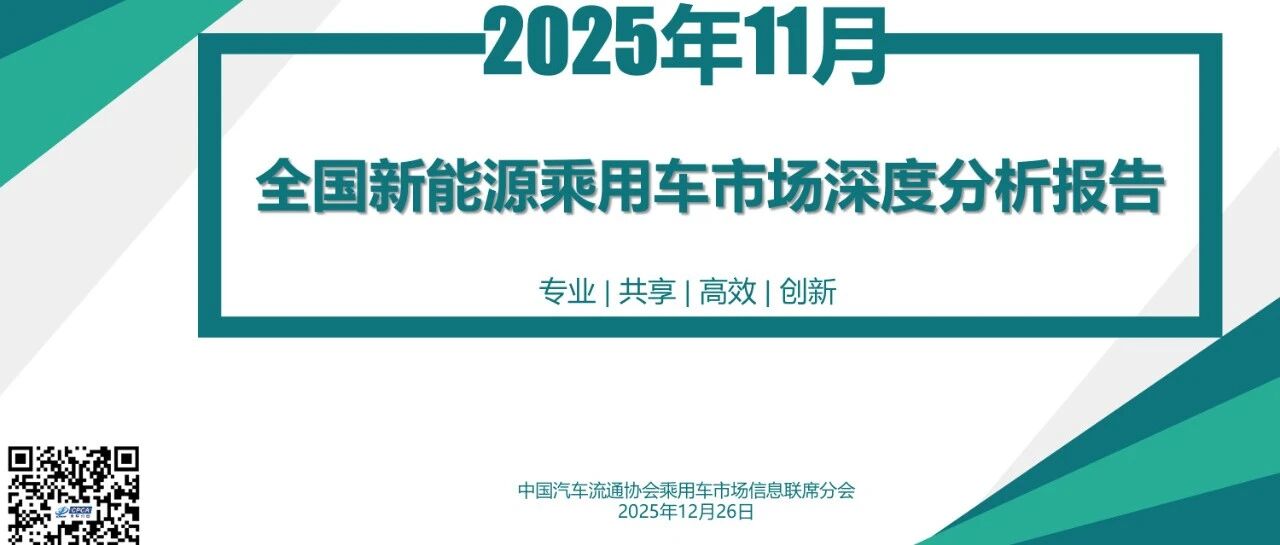
【深度分析】2025年11月份全国新能源市场深度分析报告
乘联分会· 2025-12-26 08:36
Overall Market - The total market for passenger vehicles in China includes both traditional internal combustion engine (ICE) vehicles and new energy vehicles (NEV), which comprise battery electric vehicles (BEV) and plug-in hybrid electric vehicles (PHEV) [4][5] - In November 2025, the total production of NEVs reached 1,756,587 units, while ICE vehicles produced were 1,349,384 units, leading to a total market production of 3,105,971 units [6][7] - Year-to-date (YTD) data for January to November 2025 shows NEV production increased by 6.3%, while ICE vehicle production decreased by 4.0% compared to the same period in 2024 [6][8] Market Segmentation - The market is segmented into various categories including sedans, MPVs, and SUVs, with NEVs showing a significant growth trend in all segments [25][26] - In November 2025, NEV sales in the sedan category were 593,948 units, while ICE sedans sold were 413,429 units, indicating a strong preference for NEVs in the sedan market [26] Export Market - The export of NEVs has shown substantial growth, with a total of 2,149,769 units exported in November 2025, reflecting a 243.3% increase compared to the previous year [16][21] - The NEV export penetration rate reached 41.7% in the first eleven months of 2025, up from 27.1% in 2024, indicating a growing international demand for Chinese NEVs [18][20] Manufacturer Performance - BYD remains the leading manufacturer in the NEV market, with a wholesale volume of 474,921 units in November 2025, despite a year-on-year decline of 5.8% [22][23] - Other notable manufacturers include Geely and Chery, with Geely achieving a 53.4% increase in wholesale volume, indicating strong competitive performance in the NEV segment [22][23] Price Positioning - The market is categorized into price segments, with vehicles priced below 100,000 yuan showing a significant share in the NEV market, reflecting consumer preferences for affordable electric options [4][5] - The price segmentation also indicates a growing trend towards higher-priced NEVs, as consumers are increasingly willing to invest in premium electric vehicles [4][5]

科创金融的浙江样板
Cai Jing Wang· 2025-12-26 04:50
Group 1 - The core viewpoint emphasizes the importance of integrating technology and finance to enhance productivity and achieve high-quality development, as highlighted in the "14th Five-Year Plan" [1] - Zhejiang province is positioned as a strategic hub in the Yangtze River Delta, fostering a vibrant environment for private enterprises and tech innovation [1] - The banking sector plays a crucial role in developing "tech finance," with various banks in Zhejiang implementing innovative financing solutions tailored to the needs of tech enterprises [2][3] Group 2 - The central financial work conference identified "tech finance" as a priority, aiming to create a virtuous cycle among technology, industry, and finance [2] - Financial institutions are restructuring their service logic to better support tech enterprises characterized by light assets and long cycles, focusing on talent value and intellectual property [2][3] - Zhejiang banks have developed a comprehensive service system covering the entire lifecycle of tech enterprises, offering differentiated products based on the specific needs of companies at various stages [4] Group 3 - Innovative financing solutions, such as intellectual property pledge loans, have been introduced to support tech companies like Zhejiang Deshman Technology, which has over 200 patents and is expanding rapidly [3] - Banks in Zhejiang are creating diverse product matrices and service systems to support tech enterprises through different growth phases, including specialized loans for various stages of development [4][11] - The collaboration between banks and local governments is essential for building a supportive ecosystem for tech finance, as seen in the strategic partnerships formed in regions like Jiaxing [12][10] Group 4 - Banks are enhancing their internal capabilities to better serve tech enterprises, developing proprietary evaluation models to assess the future value of companies [5][13] - The establishment of a comprehensive tech finance service network by banks, including specialized branches and dedicated teams, is aimed at improving service efficiency and coverage [14][15] - Collaborative efforts among banks and other stakeholders are being made to address the financing challenges faced by small and micro tech enterprises, ensuring a more inclusive financial environment [15][16]



2025 EDGE AWARDS 年度汽车科技榜单正式揭晓
Tai Mei Ti A P P· 2025-12-25 11:31
Core Insights - The automotive industry is shifting focus from mere electrification to a comprehensive system capability centered around "intelligence" [2][3] - The 2025 EDGE AWARDS emphasizes "implementation capability" as a core criterion, recognizing smart automotive products and technologies that have been validated in real user scenarios [3][4] Industry Trends - The competition in the automotive sector has entered a new phase, with rapid technological iterations and a shift in user focus from short-term concept chasing to long-term stability and experience [3][4] - Key areas of innovation include advanced intelligent driving, smart cockpit experiences, and the integration of hardware and software for overall vehicle intelligence [3][4] Award Categories - The awards are categorized into four main directions: Best Intelligent Driving, Best Intelligent Cockpit, Best Intelligent Model, and Innovative Dark Horse Product [4] - Evaluation criteria include technological maturity, scene coverage, user experience, and industry demonstration significance [4] Best Intelligent Driving - The award recognizes models or technologies with leading algorithm capabilities and real-world performance in intelligent driving [5][7] - Notable winners include: - Horizon's Journey series chips for enabling large-scale production of advanced intelligent driving [7] - Huawei's Kunlun ADS for its scalable and replicable industrial system [8] - Momenta for its data-driven approach and international expansion [9] Best Intelligent Cockpit - This category highlights innovative user experiences and the deep application of AI in cockpit technology [10][11] - Key models include: - The ZunJie S800, which integrates intelligent driving and cockpit capabilities for a refined user experience [11] - The Li Auto i6, focusing on reliable daily capabilities for family users [12] Innovative Dark Horse Products - This category celebrates products that achieve success through atypical paths, emphasizing innovation in design, technology, or business models [16] - Notable mentions include: - The Equation Leopard Ti7, which achieved significant sales shortly after launch [17] - The Galaxy V900, a flagship MPV with unique seating configurations and advanced energy management [18] - The Deep Blue L06, featuring advanced suspension technology for enhanced driving comfort [19] Market Impact - The launch of the Leap Lafa5 and the LeDao L90 signifies a trend towards high-quality, high-configuration electric vehicles, addressing market pain points and achieving rapid sales [20][22] - The LeDao L90 has set a record for the fastest delivery of large electric SUVs, indicating a strong market demand for this segment [22]
风停帆转:车市告别“顺风时代”,打响技术与出海“体系战”
2 1 Shi Ji Jing Ji Bao Dao· 2025-12-25 08:24
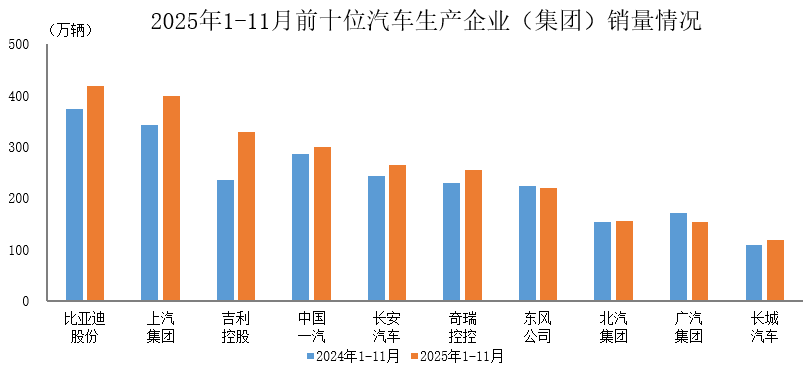
Core Insights - The Chinese automotive market is at a historic crossroads, transitioning from a growth phase to a competitive landscape characterized by technology, ecology, and globalization [1] - The penetration rate of new energy vehicles (NEVs) has reached 62.3%, marking a significant shift in market dominance [3] - The competition has intensified, moving from volume-driven growth to a focus on technology iteration, ecological construction, and organizational efficiency [5] Market Performance - In November 2025, retail sales of passenger vehicles in China were 2.225 million units, a year-on-year decline of 8.1% and a month-on-month decline of 1.1% [2] - Retail sales of fuel vehicles fell by 22% year-on-year, while pure electric models grew by 9.2%, pushing the NEV retail penetration rate to 59.3% [3] Competitive Landscape - BYD's domestic sales in November 2025 were 348,300 units, down 26.81% year-on-year, indicating increased competitive pressure [5] - Geely's NEV sales exceeded 1.5 million units in the first 11 months of 2025, achieving a penetration rate of 60.5% [6] - Chery's NEV sales reached 116,800 units in November, a year-on-year increase of 50.1%, marking a historical high [6] Export Dynamics - China's automotive exports surpassed 700,000 units in November 2025, with NEV exports doubling year-on-year [9] - BYD's overseas sales in November were 132,000 units, a 297% increase, with a target of over 1.6 million overseas sales in 2026 [10] - Chery's exports in November were 136,700 units, a year-on-year increase of 30.3%, indicating strong international demand [11] Strategic Shifts - The automotive industry is transitioning from a trade-oriented export model to a more integrated approach involving localized production and ecosystem collaboration [9] - Companies like NIO and Leap Motor are adopting unique strategies for international expansion, focusing on user-centric models and cost control [12][9] Policy Implications - The adjustment of the new energy vehicle purchase tax in 2026 will require companies to enhance cost control and supply chain optimization [14] - The new regulatory guidelines aim to address excessive competition and promote a shift towards high-quality development in the industry [14] Future Outlook - The market is expected to see a modest growth of around 3% in 2026, with NEV penetration continuing to rise but at a slower pace [15] - Companies are focusing on product iteration, technological implementation, and cost optimization to prepare for intensified competition [16][17]
中国电车攻占泰国70%市场
2 1 Shi Ji Jing Ji Bao Dao· 2025-12-25 06:21
Core Insights - Thailand is the 10th largest automotive producer globally and the largest in Southeast Asia, known as the "Detroit of the East" [2] - The Thai government is initiating a transition to electric vehicles (EVs), prompting Chinese automakers to aggressively enter the market [3][6] - The penetration rate of new energy vehicles in Thailand has reached 20%, with significant growth in EV sales compared to other regions [6][10] Industry Overview - Thailand's automotive market has a long-standing dominance of Japanese brands, which held a market share of around 90% at their peak and is expected to remain at about 70% in 2024 [2] - Chinese automakers have increased their market share from 5% to approximately 20% in recent years, with over 70% market share in the EV segment [7][10] - The Thai government has implemented subsidies for EVs, significantly boosting sales, with a reported 7.6 times increase in new EV registrations in the first nine months of 2023 compared to the previous year [11] Market Dynamics - The Thai EV market is characterized by a lack of local automotive brands, allowing for a more open market environment [10] - The government has introduced policies requiring local production to benefit from subsidies, which has led to increased investments from Chinese companies like BYD and GAC [12][11] - The competition in the Thai automotive market is intensifying, with new entrants increasing the pressure on existing players [18] Future Opportunities - There is a significant opportunity for Chinese brands in the Thai market, particularly in the segments of pickup trucks and commercial vehicles, where current penetration is low [20] - The Thai government is negotiating free trade agreements with the EU, which could provide additional market access and benefits for manufacturers operating in Thailand [13] - The shift towards hybrid vehicles (PHEV and REEV) presents a potential growth area, as these models may capture market share from traditional HEVs [19]

至信股份今起招股 1月6日申购
Xin Lang Cai Jing· 2025-12-25 05:27
Core Viewpoint - Chongqing Zhixin Industrial Co., Ltd. (referred to as "Zhixin Co." or "the company") has disclosed its prospectus and is set to launch its public offering on January 6, with plans to list on the Shanghai Stock Exchange [1][2]. Group 1: IPO Details - Zhixin Co. plans to publicly issue 56,666,667 shares, all of which are new shares, resulting in a total share capital of 226,666,667 shares post-issuance [1][3]. - The initial strategic placement will consist of 11,333,333 shares, accounting for 20.00% of the total issuance [1][3]. - Before the strategic placement adjustment, the offline initial issuance will be 27,200,334 shares, representing 60.00% of the remaining shares, while the online initial issuance will be 18,133,000 shares, making up 40.00% of the remaining shares [1][3]. - The preliminary inquiry period for the issuance is set for December 30 from 9:30 to 15:00, with an online roadshow scheduled for January 5 [1][3]. Group 2: Company Overview - Zhixin Co. specializes in the development, processing, production, and sales of automotive stamping and welding parts, as well as related molds [2][4]. - The company has maintained a consistent focus on the research and production of automotive body stamping parts for over thirty years, expanding into upstream mold development and automation production solutions [2][4]. - Through years of development, Zhixin Co. has established a product advantage in the market and gained wide recognition from its customers [2][4]. - The company has enhanced its intelligent manufacturing capabilities through automated production solutions, utilizing proprietary algorithms and software integration to achieve comprehensive control over product development, process flow, and quality control [2][4]. - Major clients include well-known automotive manufacturers such as Changan Automobile, Geely, Changan Ford, NIO, Li Auto, BYD, Great Wall Motors, and Leap Motor, as well as notable parts manufacturers like CATL, Inafa, and Webasto [2][4].
2025年中国车载毫米波雷达行业发展历程、产业链、市场规模、竞争格局及未来趋势研判:国产替代进程加速,车载毫米波雷达规模将达99.29亿元[图]
Chan Ye Xin Xi Wang· 2025-12-25 01:33
Core Insights - The automotive millimeter-wave radar market is currently dominated by international leaders such as Bosch, Continental, and Aptiv, but domestic manufacturers are accelerating the localization process due to improved technology and product competitiveness [1][9] - The Chinese automotive millimeter-wave radar industry is experiencing strong growth, with the market size projected to increase from 2.318 billion yuan in 2015 to 8.822 billion yuan in 2024, representing a compound annual growth rate (CAGR) of 16.01% [1][10] - By 2025, the market size is expected to reach 9.929 billion yuan, driven by a more complete domestic supply chain, increased R&D investment, and growing demand for self-controlled solutions from downstream vehicle manufacturers [1][10] Industry Overview - Automotive millimeter-wave radar operates in the millimeter-wave frequency band, providing critical environmental perception data for autonomous and assisted driving by measuring distance, speed, and angle of targets [1][6] - The radar is categorized into corner radars and front radars, with corner radars used for cross-vehicle warnings and blind spot detection, while front radars are utilized for automatic emergency braking and adaptive cruise control [1][6] Industry Development History - The Chinese automotive millimeter-wave radar industry has undergone five development stages: the initial stage before 2013, preliminary development from 2014 to 2015, scale development from 2016 to 2020, high-quality development from 2021 to 2024, and technological equality from 2025 onwards [4][5] Market Trends - The global automotive millimeter-wave radar market is projected to grow from $2.262 billion in 2020 to $3.482 billion in 2024, with a CAGR of 11.39% [7][9] - By 2025, the global market size is expected to reach $4.195 billion, with front radars accounting for $2.181 billion and corner radars for $2.014 billion [7][9] Competitive Landscape - The industry features a diversified competitive landscape with international giants like Bosch, Continental, and Aptiv leading in high-end markets, while domestic companies such as Desay SV and Huayu Automotive are rapidly gaining market share through R&D and localized services [11][12] - Desay SV has maintained the largest market share in the domestic smart driving sector, achieving a revenue of 4.147 billion yuan in the first half of 2025, a year-on-year increase of 55.49% [12][13] - Huayu Automotive has a strong presence in various automotive components and has integrated millimeter-wave radar and other sensors to provide solutions for different levels of driving assistance [12][13] Future Development Trends - The future of automotive millimeter-wave radar is expected to focus on perception fusion and functional expansion, integrating with cameras and LiDAR for enhanced environmental perception [14] - The industry is also moving towards chip integration, with a trend towards single-chip solutions that reduce size, power consumption, and costs [15] - Additionally, the evolution of radar technology is shifting from hardware functionality to software-defined capabilities, allowing for customizable and upgradable perception models [16]


至信股份发布招股意向书 拟募资超13亿元聚焦智能制造
Zheng Quan Shi Bao Wang· 2025-12-25 01:15
Core Viewpoint - Chongqing Zhixin Industrial Co., Ltd. (referred to as "Zhixin Co."), plans to raise 1.329 billion yuan through an IPO on the Shanghai Stock Exchange, aiming to expand production capacity and enhance technology for its welding production lines, as well as to supplement working capital [1] Group 1: Company Overview - Zhixin Co. has been focused on the research, production, and sales of automotive welding parts and related molds since its establishment in 1995, creating an integrated service system of "components + molds + intelligent manufacturing" [2] - The company has become a first-tier supplier for numerous well-known automotive manufacturers, including Changan Automobile, Geely, and BYD, and has established a diverse customer ecosystem covering both traditional fuel vehicles and new energy vehicles [2] - As of June 30, 2025, Zhixin Co. holds 371 patents, including 58 invention patents, and has received multiple awards, highlighting its strong technological capabilities and industry position [2] Group 2: Financial Performance - From 2022 to 2024, Zhixin Co. achieved operating revenues of 2.091 billion yuan, 2.564 billion yuan, and 3.088 billion yuan, with net profits attributable to the parent company (after deducting non-recurring gains and losses) of 52.25 million yuan, 120 million yuan, and 185 million yuan, reflecting a compound annual growth rate of 88.02% [3] - In the first half of 2025, the company continued its robust growth, generating revenue of 1.604 billion yuan and a net profit of 87.18 million yuan [3] - The revenue from welding components used in new energy vehicles increased significantly from 25.27% in 2022 to 71.42% in the first half of 2025, becoming a key driver of the company's sustained growth [3] Group 3: IPO and Future Projects - The funds raised from the IPO will be primarily allocated to projects including the "Zhixin Industrial Production Line Renovation Project," "Ningbo Zhixin Automotive Parts Production Line Intelligent Upgrade Project," and "New Energy Vehicle Parts Welding Production Line Expansion and Technology Renovation Project," located in Chongqing, Ningbo, and Anhui [3] - These projects are expected to add an annual production capacity of 2.3999 million sets of welding parts, significantly enhancing the company's intelligent manufacturing capabilities and consolidating its market competitiveness [3]