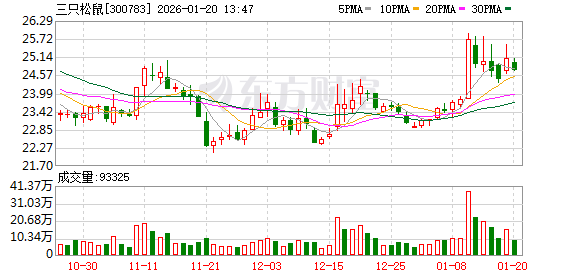
三只松鼠

Search documents
休闲食品板块1月23日涨0.73%,好想你领涨,主力资金净流出1.12亿元
Zheng Xing Xing Ye Ri Bao· 2026-01-23 09:04
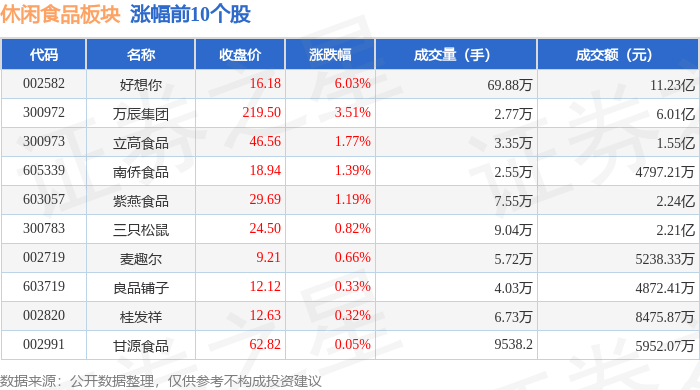
Market Performance - The leisure food sector increased by 0.73% compared to the previous trading day, with "Good Idea" leading the gains [1] - The Shanghai Composite Index closed at 4136.16, up 0.33%, while the Shenzhen Component Index closed at 14439.66, up 0.79% [1] Individual Stock Performance - "Good Idea" (002582) closed at 16.18, up 6.03% with a trading volume of 698,800 shares and a transaction value of 1.123 billion yuan [1] - "Wancheng Group" (300972) closed at 219.50, up 3.51% with a transaction value of 601 million yuan [1] - "Lihigh Food" (300973) closed at 46.56, up 1.77% with a transaction value of 155 million yuan [1] - "Nanjiao Food" (605339) closed at 18.94, up 1.39% with a transaction value of 47.9721 million yuan [1] - "Purple Lotus Food" (603057) closed at 29.69, up 1.19% with a transaction value of 224 million yuan [1] - "Three Squirrels" (300783) closed at 24.50, up 0.82% with a transaction value of 221 million yuan [1] - "Maiqu'er" (002719) closed at 9.21, up 0.66% with a transaction value of 52.3833 million yuan [1] - "Liangpinpuzi" (603719) closed at 12.12, up 0.33% with a transaction value of 48.7241 million yuan [1] - "Guifaxiang" (002820) closed at 12.63, up 0.32% with a transaction value of 84.7587 million yuan [1] - "Ganyuan Food" (002991) closed at 62.82, up 0.05% with a transaction value of 59.5207 million yuan [1] Capital Flow - The leisure food sector experienced a net outflow of 112 million yuan from institutional investors, while retail investors saw a net inflow of 128 million yuan [2] - The capital flow for individual stocks shows varying trends, with "Wancheng Group" having a net inflow of 9.9595 million yuan from institutional investors [3] - "Lihigh Food" had a net inflow of 295.83 million yuan from retail investors, while "Salted Fish" (002847) saw a net outflow of 2.19959 million yuan from institutional investors [3]






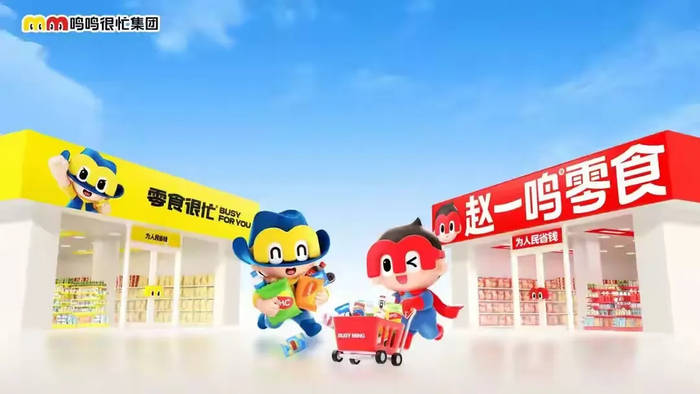
资本围猎“零食量贩一哥”:鸣鸣很忙IPO背后的零售新战事
Sou Hu Cai Jing· 2026-01-23 03:34
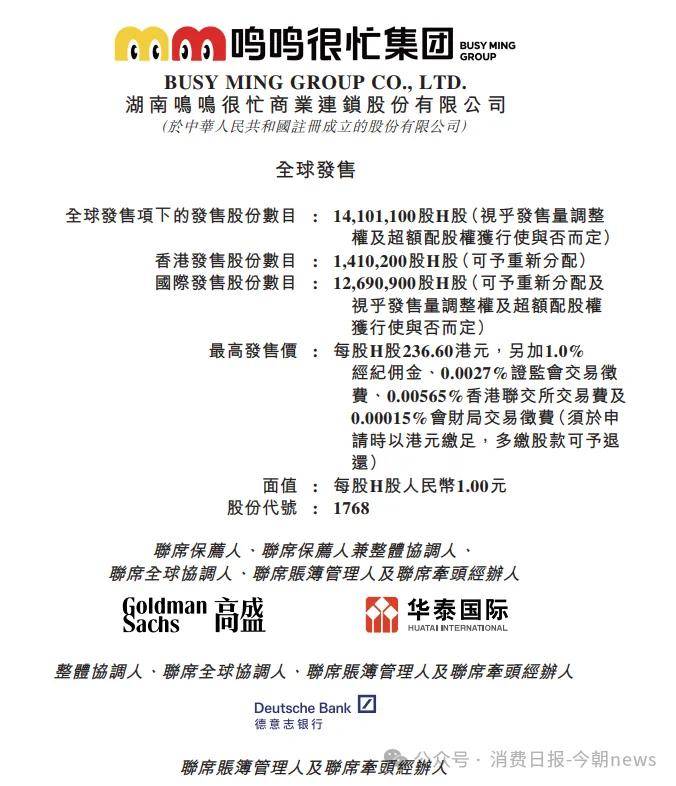
Core Insights - The company, Mingming Hen Mang, is set to launch its IPO on January 20, 2026, marking the first capital market appearance for China's snack retail industry, reflecting the business model's appeal amid a trend of consumption downgrade [2][9] - The IPO has attracted significant institutional investment, with a total subscription amount of $195 million (approximately HKD 1.52 billion) from eight major global investors, indicating strong market confidence in the company's growth potential [2][3] Investment Highlights - Major investors include Tencent and Temasek, each investing $45 million, alongside other global asset management firms like BlackRock and Fidelity, showcasing a dual recognition of the business model by both industrial and long-term capital [3] - The IPO plans to issue 14.1011 million shares, with a median offer price of HKD 233.10, aiming to raise approximately HKD 3.124 billion for supply chain upgrades, store network expansion, and digital transformation [3] Business Performance - Mingming Hen Mang has achieved remarkable growth, with revenue soaring from CNY 4.286 billion in 2022 to CNY 39.344 billion in 2024, reflecting a compound annual growth rate (CAGR) of 203% [4] - The company reported a net profit increase from CNY 0.81 billion to CNY 9.13 billion during the same period, with a CAGR of 234.6%, positioning it among the top performers in the retail chain industry [4] Market Strategy - The company's unique snack retail model combines supply chain efficiency, a franchise system, and competitive pricing, creating a robust competitive barrier [6] - By leveraging a large-scale procurement strategy with over 1,000 suppliers and a product range exceeding 4,000 SKUs, the company offers prices 20%-30% lower than traditional supermarkets, meeting consumer demand for high value [6] Digital Transformation - Mingming Hen Mang has established a comprehensive digital system covering procurement, warehousing, logistics, and sales, enhancing supply chain efficiency and providing real-time data to franchisees [7] - This digital capability supports better inventory management and operational guidance, reducing risks and improving profitability for franchise partners [7] Industry Dynamics - The IPO signifies a shift in the snack retail industry towards a more regulated and capitalized phase, with increasing competition from both established brands and regional players [8] - The market is evolving from a focus on store count to a more comprehensive competition involving supply chain efficiency, digital capabilities, and brand strength [8] Future Outlook - The listing is seen as a new starting point for Mingming Hen Mang, with challenges ahead in maintaining growth while balancing expansion and profitability [9] - The company's success could set a benchmark for the snack retail sector, encouraging others to focus on supply chain optimization and consumer experience enhancement [9]
炒货,已经比炒股还吓人了
3 6 Ke· 2026-01-22 08:40
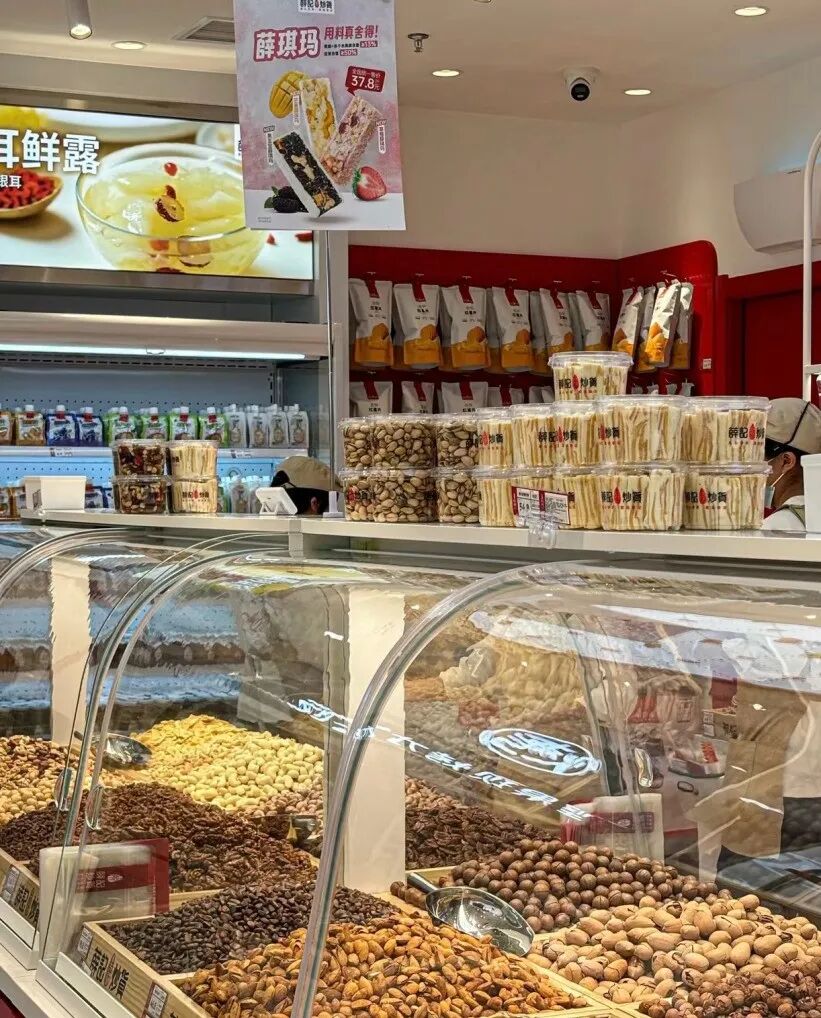
Core Insights - The perception of snack shops, particularly nut and dried fruit stores, has shifted dramatically, with prices now comparable to luxury goods like jewelry [1][3][20] - Consumers are increasingly shocked by the high prices of snacks, with some items costing as much as 300 yuan per kilogram [5][10][20] - The market for nuts and snacks is expected to grow significantly, with projections indicating a market size of over 300 billion yuan by 2024 [32][34] Price Trends - Snack prices have risen sharply, with examples showing dried fruits priced between 100 to 328 yuan per kilogram [10][20][31] - The average price of nuts in China has been on an upward trend, influenced by rising raw material costs and increased competition in the market [31][34] - Brands like Xueji and Qiwang have positioned themselves in the high-end market, with many products priced above 100 yuan per kilogram [22][31] Market Dynamics - The snack industry has undergone a transformation from traditional small shops to high-end, chain stores focusing on quality and presentation [22][28] - The rise of e-commerce and brands like Three Squirrels has contributed to the industry's growth, leading to a more competitive landscape [22][31] - Consumer behavior indicates a willingness to spend on high-quality snacks, with over 80% of consumers spending between 20 to 100 yuan monthly on nuts [34][35] Future Outlook - The potential for snacks to become luxury items is evident, given their longer shelf life and unique flavor profiles compared to other snack categories [32][34] - Despite rising prices, consumer demand remains strong, driven by a focus on quality and indulgence [35][36] - The industry faces challenges related to product differentiation and maintaining brand value as competition increases [39][41]
为什么胖东来、山姆越火,食品品牌却越焦虑?
首席商业评论· 2026-01-22 04:52
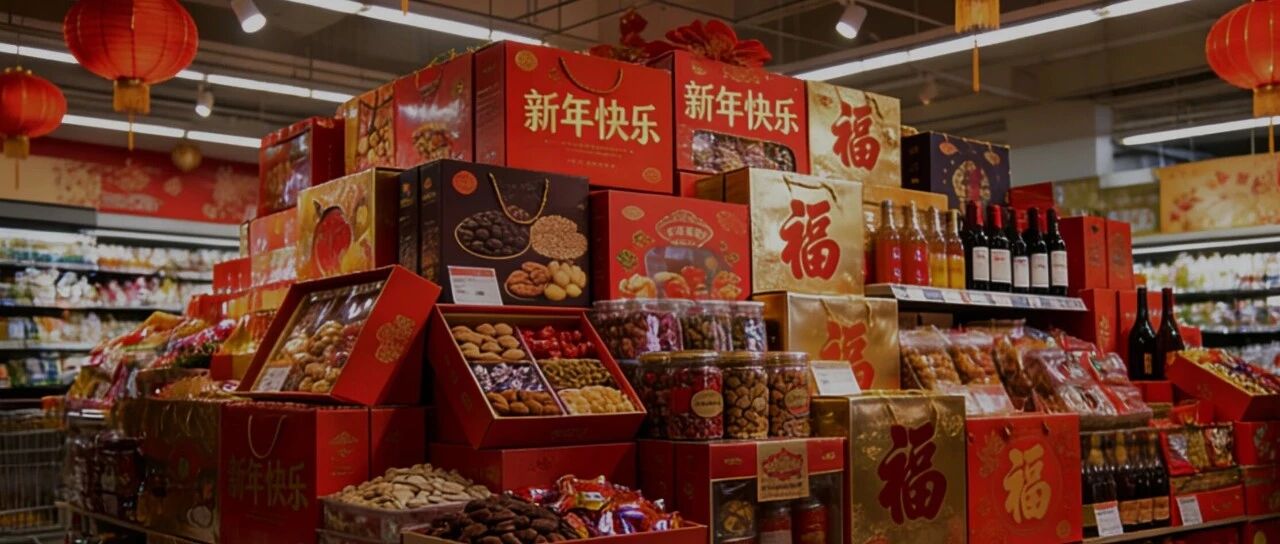
Core Insights - The article discusses the evolving landscape of consumer behavior regarding traditional New Year gift boxes, highlighting a shift towards more rational purchasing decisions as consumers prioritize product value over packaging and marketing narratives [2][3]. Group 1: Shifts in Consumer Behavior - The essence of New Year gift boxes is rooted in ceremonial consumption, representing emotional, social, and cultural values, but consumers are increasingly questioning the intrinsic value of these products beyond their festive symbolism [3]. - Consumers are gravitating towards membership-based supermarkets like Pinduoduo and Sam's Club, indicating a preference for self-branded products that offer perceived value [2]. Group 2: Product Innovation Trends - Brands must provide compelling reasons for consumers to choose their products, leading to a focus on deep product innovation rather than superficial marketing [5]. - The first key transformation is the precise definition of "functional value," where products must clearly address specific consumer needs, exemplified by Danone's targeted offerings for GLP-1 drug users [5][6]. - The second transformation involves AI-driven flavor and experience reconstruction, as seen in Genki Forest's use of AI for over 500 flavor iterations to enhance product appeal [10]. - The third transformation is the modernization of "food as medicine," with brands like Dong'e Ejiao offering convenient, ready-to-eat products that fit contemporary lifestyles [12]. - The fourth transformation focuses on value sourcing from the supply chain, where brands that control high-quality raw materials and production processes gain a competitive edge [14]. Group 3: Market Trust and Experience - As product innovation becomes a necessity, brands face the challenge of gaining market visibility and trust in a fragmented information landscape [16]. - Successful brands are returning to physical spaces to create tangible experiences that foster consumer trust, as demonstrated by the popularity of membership stores [16]. - The concept of "consensus pre-sale" is emerging, where brands validate their products through community engagement or industry exhibitions before market launch, ensuring they enter the market with established consumer trust [25][26]. Group 4: The Role of Industry Exhibitions - Industry exhibitions serve as critical platforms for brands to validate trends, calibrate value, and build trust, allowing companies to quickly gather insights and feedback from industry peers and consumers [29]. - Exhibitions facilitate rapid trust-building through direct interactions, which are essential for establishing commercial partnerships and reducing risks in cross-border trade [33]. - New brands leverage exhibitions to connect with potential partners and streamline their innovation processes, enhancing their ability to bring products to market effectively [33].
三只松鼠线下分销部分坚果礼产品调整出厂价
Cai Jing Wang· 2026-01-21 05:54
Group 1 - The core point of the article is that Three Squirrels (Wuhu) Enterprise Management Co., Ltd. announced a price adjustment for its offline distribution of nut gift products due to rising logistics and labor costs as the Spring Festival approaches [1] - The price adjustment will take effect on January 19, 2026, and the new factory prices will be based on a specific pricing list [1] - A representative from Three Squirrels confirmed the authenticity of the news regarding the price adjustment [1]

鸣鸣很忙IPO领跑,量贩零食争上市
Sou Hu Cai Jing· 2026-01-20 13:17
Core Insights - The article discusses the rapid rise of Hunan Mingming, a snack retail chain, which is set to launch its IPO on January 28, 2026, aiming to become the first publicly listed company in the bulk snack sector [2][5] - The company has experienced explosive growth, expanding from a regional player to a leader with over 20,000 stores in just two years, achieving a revenue increase from 4.286 billion yuan in 2022 to 39.344 billion yuan in 2024, representing an 860% growth [6][7] - Despite impressive growth figures, the company faces challenges such as low profit margins and intense competition, raising questions about the sustainability of its business model [6][21] Company Growth - Hunan Mingming's store count surged from 1,902 in 2022 to 19,517 by September 2025, with a significant presence in 28 provinces and 1,341 counties [7][10] - The company's GMV reached 66.1 billion yuan in the first three quarters of 2025, a 74.5% year-on-year increase, with net profit soaring by 218.9% [8] - The growth strategy includes a dual-brand approach, with "Snacks Busy" targeting younger consumers and "Zhao Yiming Snacks" focusing on family consumption, leveraging a shared supply chain and digital systems [9][12] Market Position and Strategy - Hunan Mingming capitalizes on the consumption upgrade in lower-tier markets, offering over 1,800 SKUs per store, which is double that of traditional supermarkets [12] - The company has positioned itself at the forefront of a channel transformation, with bulk snack sales surpassing supermarkets and e-commerce for the first time in 2024 [12] - The competitive landscape is evolving, with traditional brands struggling to adapt, as seen with Three Squirrels' failed acquisition of a bulk snack brand [18][19] Challenges and Risks - The industry is characterized by low profit margins, with Hunan Mingming's margin at 9.7%, while many smaller brands report margins below 5% due to aggressive pricing strategies [21] - The company faces pressure from rising costs for franchisees and a slowdown in same-store sales growth, indicating potential vulnerabilities in its business model [21] - Supply chain stability is critical as the company expands, with increased demands for efficiency and flexibility to respond to market changes [24][26] Future Outlook - The IPO is seen as a starting point for Hunan Mingming, providing capital to address challenges such as low margins and product differentiation [27] - The company plans to allocate funds for product development, store network upgrades, brand building, and enhancing digital capabilities [27] - The long-term success of Hunan Mingming will depend on its ability to increase its own brand offerings and optimize profitability while navigating a competitive landscape [27][28]
爆款续命后,金星啤酒火速IPO:家族套现超3亿,欠缴员工公积金
Feng Huang Wang Cai Jing· 2026-01-20 12:49
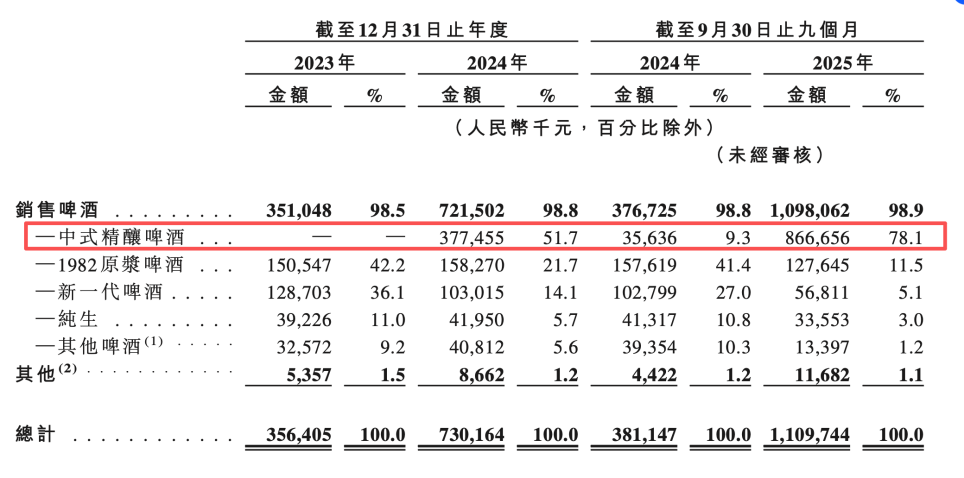
Core Viewpoint - Jinxing Beer has submitted its prospectus to the Hong Kong Stock Exchange, experiencing a significant turnaround driven by its popular product "Maojian Tea Beer," which has led to rapid revenue growth and a strong push for an IPO [1][2]. Financial Performance - Revenue for Jinxing Beer in 2023, 2024, and the first nine months of 2025 was 356 million, 730 million, and 1.1 billion RMB respectively, with net profits soaring from 12.2 million to 305 million RMB, marking a 924% increase in 2024 [1][3]. - Gross margins improved significantly, with figures of 27.3%, 37.8%, and 47% for the respective years, while net margins rose from 3.4% to 27.5% [1][6]. - Operating cash flow transitioned from a negative 60 million RMB in 2023 to a positive 360 million RMB in 2024 [1]. Product Dependency - The "Maojian Tea Beer" product line has become a major revenue contributor, accounting for 51.7% of total revenue in its launch year and increasing to 78.1% by the first nine months of 2025 [2][3]. - This heavy reliance on a single product raises concerns about revenue volatility in the face of market competition and changing consumer preferences [2]. Market Competition - The success of Jinxing Beer in the craft beer segment has attracted major competitors, including traditional beer giants and cross-industry players, leading to an increasingly competitive market landscape [2]. Corporate Governance - Jinxing Beer is a family-controlled business, with the Zhang family holding approximately 99.99% of the shares, indicating a high concentration of control [3]. - The company has faced scrutiny over its governance practices, including significant cash dividends distributed to major shareholders, raising concerns about the protection of minority shareholders' interests [4]. Financial Management Issues - The company has reported overdue social insurance and housing fund payments totaling 21.9 million RMB from 2023 to the first three quarters of 2025, although it claims to have rectified the social insurance issues [5]. - There have been irregularities in financial controls, such as allowing distributors to make payments through third-party accounts, which constituted a significant portion of cash receipts in previous years [5]. Debt Levels - Jinxing Beer had an extremely high debt-to-asset ratio of 2250% in 2023, which improved to 98.7% in 2024 and further decreased to 11.1% by the first nine months of 2025, indicating a significant reduction in financial leverage [5][6].
休闲食品板块1月20日涨1.54%,万辰集团领涨,主力资金净流出6030.19万元
Zheng Xing Xing Ye Ri Bao· 2026-01-20 08:51
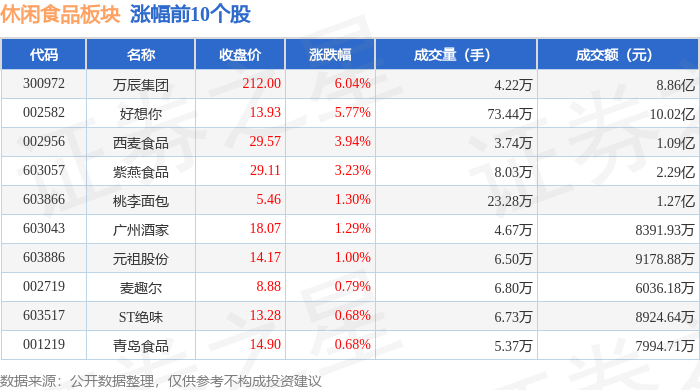
Group 1 - The leisure food sector increased by 1.54% on January 20, with Wancheng Group leading the gains [1] - The Shanghai Composite Index closed at 4113.65, down 0.01%, while the Shenzhen Component Index closed at 14155.63, down 0.97% [1] - Key stocks in the leisure food sector showed significant price movements, with Wancheng Group rising by 6.04% to a closing price of 212.00 [1] Group 2 - The leisure food sector experienced a net outflow of 60.30 million yuan from institutional investors, while retail investors saw a net inflow of 75.82 million yuan [2] - Notable declines were observed in stocks such as Three Squirrels, which fell by 2.07% to a closing price of 24.58 [2] - The trading volume and turnover for various stocks in the sector varied, with significant activity noted in stocks like Haoxiangni and Ximai Food [2] Group 3 - Haoxiangni had a net inflow of 79.89 million yuan from institutional investors, while it faced a net outflow of 78.76 million yuan from retail investors [3] - Ximai Food also saw a net inflow of 10.14 million yuan from institutional investors, with retail investors experiencing a net outflow [3] - The data indicates varying levels of investor interest across different stocks within the leisure food sector, highlighting the dynamics of institutional versus retail investment [3]

食品饮料行业:月聚焦:如何布局零食“春季躁动”?
GF SECURITIES· 2026-01-20 06:14
Group 1 - The report highlights the "Spring Excitement" in the snack sector, indicating a historical high relative win rate of 70% for the food and beverage sector in the 40 days leading up to the Spring Festival [7][16] - The report emphasizes that the "Spring Excitement" is not solely dependent on the annual beta of the food and beverage sector, as structural opportunities still exist despite a long-term adjustment period since 2021 [7][16] - Key catalysts for the upcoming Spring Festival include concentrated demand for gifts and gatherings, which leads to more planned channel stocking, creating a positive feedback loop of expectations and validations [7][16][28] Group 2 - In December, the food and beverage sector underperformed the market by 7.5 percentage points, with a decline of 5.2%, ranking last among 31 primary industries [7][61] - The report notes a divergence in performance among sub-sectors, with snacks and soft drinks showing gains while liquor and beer experienced declines [7][61][64] - The absolute and relative valuations of the food and beverage sector are at their lowest since 2010, indicating potential investment opportunities [7][61][64] Group 3 - The report tracks the recovery of consumer confidence, with a 0.9% year-on-year increase in retail sales in December, showing improvement from the previous month [7][63] - It highlights that the liquor sector is facing weak demand and declining prices, with the price adjustments for premium liquor nearing levels seen between 2011 and 2015 [7][63][64] - The report identifies structural differentiation in costs, with some packaging materials and agricultural products experiencing price increases [7][63][64] Group 4 - Investment recommendations include a focus on liquor stocks that have undergone a four-year adjustment period, with potential for a "valuation + performance" double bottom [7][64] - For consumer goods, the report anticipates a moderate increase in industry prices in 2026, with specific recommendations for companies like Anjuke Foods, Qianhe Flavor, and Eastroc Beverage [7][64] - The report suggests that the upcoming Spring Festival will provide a favorable environment for growth narratives, particularly in the restaurant supply chain and certain chain formats [7][64]




开心果贵了?三个月两度出手 三只松鼠坚果礼盒春节“踩点”涨价
Xin Jing Bao· 2026-01-20 05:47
Core Insights - The article discusses the recent price increase by Three Squirrels, attributed to rising logistics and labor costs, particularly ahead of the Spring Festival [2][4][5] - This marks the second price adjustment within three months, indicating a higher frequency of price changes compared to industry averages [2][7] Price Adjustment Details - The price increase affects specific products in offline distribution channels, particularly nut gift boxes and popular items, with adjustments ranging from 0.2 yuan to 10 yuan per item [3][5] - The adjustment was communicated to distributors with a three-day buffer for stock preparation, allowing them to lock in prices [4][5] Market Impact and Strategy - Distributors express concerns about the pressure of increased inventory and procurement costs, although they may not fully pass on the price increase to consumers due to competitive market conditions [3][4] - The price increase primarily impacts offline gift products, while online prices and other categories remain unaffected, suggesting limited consumer impact on purchasing decisions [4][5] Financial Performance Context - Three Squirrels has faced a "revenue without profit" situation in the first three quarters of 2025, with revenue of approximately 7.759 billion yuan, up 8.22%, but net profit down 52.91% to about 161 million yuan [9] - The company attributes profit pressure to rising raw material costs and increased market expenses, alongside changes in online platform traffic and fee structures [9]