TCL电子

Search documents
大行评级|海通国际:维持TCL电子“优于大市”评级,上调2025至27年盈测
Ge Long Hui· 2026-01-23 02:42
Group 1 - The core viewpoint of the article highlights TCL Electronics' continuous improvement in its global operational structure and the clarity of its equity incentive plan aimed at growth targets, alongside collaboration with Sony to advance its globalization strategy [1] - TCL Electronics is maintaining high-quality expansion in global markets, supported by its Mini LED products, which not only drive overall scale expansion but also effectively optimize product structure and enhance overall profitability [1] - The earnings per share forecast for TCL Electronics has been raised for the years 2025 to 2027 to HKD 0.98, HKD 1.20, and HKD 1.43, respectively, from previous estimates of HKD 0.90, HKD 1.13, and HKD 1.34, while maintaining an "outperform the market" rating with a target price of HKD 15.6 [1]
TCL电子:联手索尼,迎来全球化高端化发展里程碑-20260123
First Shanghai Securities· 2026-01-23 02:20
Investment Rating - The report assigns a "Buy" rating to the company with a target price of HKD 15.00, representing a potential upside of 37.7% from the current price of HKD 10.89 [6]. Core Insights - The company is expected to achieve a net profit of HKD 2.53 billion to HKD 2.57 billion in 2025, reflecting a growth of 45% to 60% compared to 2024, which aligns with the company's equity incentive targets [8]. - The TV segment has shown significant improvement, with a 5.3% increase in TV shipments to 21.08 million units in the first three quarters of 2025, and a remarkable 153% growth in global shipments of TCL MiniLED TVs [8]. - A joint venture with Sony is set to enhance global and high-end development, with TCL holding a 51% stake. This partnership is expected to leverage TCL's supply chain and cost control advantages alongside Sony's advanced imaging technology and brand value [8]. - The report anticipates that the collaboration will allow TCL to transition from "scale expansion" to "brand globalization," enhancing its market share in high-end segments [8]. Financial Summary - Revenue is projected to grow from HKD 78.99 billion in 2023 to HKD 153.96 billion by 2027, with a compound annual growth rate (CAGR) of 13.5% [4]. - The gross profit margin is expected to stabilize around 15.7% by 2027, with net profit increasing from HKD 744 million in 2023 to HKD 3.51 billion in 2027 [4][9]. - Earnings per share (EPS) is forecasted to rise from HKD 0.33 in 2023 to HKD 1.39 in 2027, indicating a strong growth trajectory [4][9]. - The company’s price-to-earnings (P/E) ratio is projected to decrease from 32.9x in 2023 to 7.8x by 2027, suggesting an attractive valuation as earnings grow [4].
索尼把电视交给了TCL
36氪· 2026-01-23 00:00
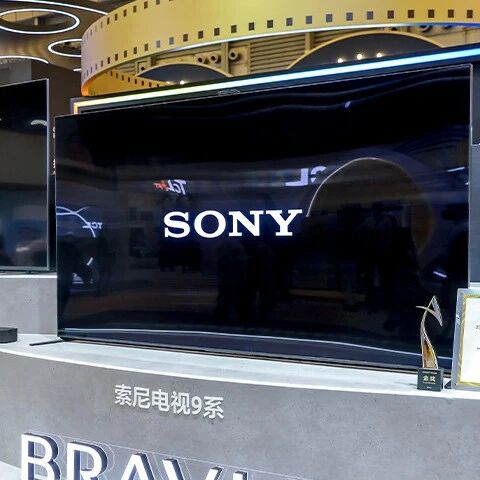
Core Viewpoint - The collaboration between Sony and TCL is expected to reshape the global television market, with TCL taking a leading role in the joint venture, which may significantly enhance both companies' market shares and competitiveness [5][9]. Group 1: Joint Venture Details - Sony and TCL have signed a memorandum of understanding to potentially establish a joint venture focused on Sony's home entertainment business, including television and audio products [6]. - TCL will hold a 51% stake in the joint venture, while Sony will hold 49%, allowing TCL to take the lead in operations [7]. - The joint venture aims to leverage Sony's advanced technology and brand value alongside TCL's global scale and cost efficiency, potentially increasing the market share of both Sony and BRAVIA brands [7]. Group 2: Market Position and Competition - Samsung has maintained its position as the global television market leader for 20 consecutive years, while TCL is rapidly closing the gap as the second-largest player [10][12]. - By 2025, market share projections indicate Samsung at approximately 16.0%, with TCL and Hisense at 13.8% and 13.3%, respectively, forming a competitive top tier [12]. - Following the joint venture, Sony's projected global television shipment volume for 2025 is around 4 million units, ranking it tenth, indicating a significant opportunity for TCL to narrow the gap with Samsung [12]. Group 3: Historical Context and Challenges - Sony, once a dominant force in the television market, has struggled to keep pace with technological advancements and market shifts, leading to a decline in its market position [15][20]. - The company's failure to adapt quickly to the transition from CRT to LCD and plasma technologies has allowed competitors like Samsung and LG to surpass it [16][17]. - Sony's television business is now categorized under "other businesses" in its financial reports, reflecting a strategic shift towards more profitable segments like image sensors and gaming [20]. Group 4: TCL's Growth and Performance - TCL has experienced significant growth, with a 4.1% year-over-year increase in global television shipments, reaching 20.8 million units in the first three quarters of 2025 [25]. - The company's Mini LED televisions have seen a remarkable 153.3% increase in shipments, making it a standout product in the market [25]. - TCL's projected adjusted net profit for 2025 is expected to be between HKD 2.33 billion and 2.57 billion, representing a year-over-year growth of 45% to 60% [26].

彩电出货量或继续走低 Mini LED技术爆发 RGB成分水岭
Nan Fang Du Shi Bao· 2026-01-22 23:11
Industry Overview - The global TV industry is undergoing unprecedented adjustments, with significant market differentiation driven by large screen adoption, Mini LED technology proliferation, and AI integration [2] - Global TV shipments fell below 200 million units in 2025, marking a ten-year low, with a projected further decline of 5%-7% in 2026 [2] - China's TV market, as the largest consumer market, saw a shipment drop to 32.895 million units in 2025, a decline of 8.5%, the lowest in 16 years [2][3] Market Dynamics - The Chinese market showed a notable split in performance, with a slight increase of 1.4% in the first half of 2025 due to government subsidies, followed by a significant decline of 16.9% in the second half [2] - European markets are under pressure, with Western Europe expected to see a decline, while Eastern Europe may experience slight growth due to economic recovery [2][3] - North America remains relatively stable, supported by a solid consumer base and event marketing [2] Emerging Markets - Emerging markets in Asia-Pacific, Latin America, and the Middle East and Africa still hold growth potential, but price sensitivity may limit actual volume if prices rise due to memory cost increases [3] - The Indian market, despite strong demand, is dominated by local brands using low-price strategies, posing challenges for international brands [3] Technology Trends - Mini LED technology is expected to enter a phase of widespread adoption in 2026, with RGB-Mini LED shipments projected to exceed 300,000 units, becoming a new profit driver in the high-end market [6] - In 2025, China's Mini LED TV shipments surged by 92.8%, with a penetration rate of 28.9%, and are expected to exceed 10 million units in 2026 [6][7] Competitive Landscape - Chinese brands like Hisense and TCL are leading innovations in RGB-Mini LED and SQD-Mini LED technologies, respectively, with significant growth in global shipments [6][7] - International brands such as Samsung and Sony are entering the RGB technology space, but Chinese companies maintain advantages in technology iteration and cost control [8] - The competition is shifting from price wars to a comprehensive contest of technology, supply chain, and globalization capabilities [3][8] Consumer Trends - Large screen adoption is an irreversible trend, with 75-inch and larger TVs expected to account for 23% of the Chinese market in 2025, with further growth anticipated in 2026 [9] - AI technology is redefining the role of TVs as central to living spaces, with companies like Huawei and Skyworth investing heavily in AI capabilities for their products [9] Market Share - In 2025, the top three brands—Samsung, TCL, and Hisense—held over 43% of the global market share, with Samsung leading at 35.3 million units shipped [9] - TCL's growth of 5.4% positioned it as the most significant growing brand, while Hisense maintained a strong presence with 29.3 million units shipped [9] Strategic Partnerships - Sony and TCL have signed a memorandum of understanding for strategic cooperation in the home entertainment sector, which may impact market dynamics and competition [10]


70岁黄宏生谋变,创维再闯关
Guo Ji Jin Rong Bao· 2026-01-22 14:38
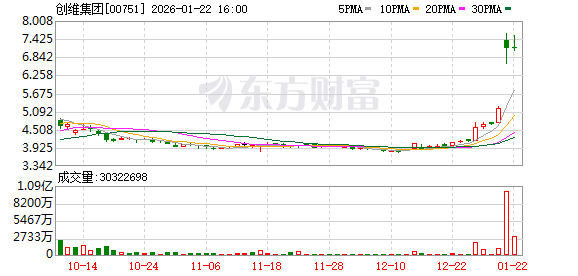
Core Viewpoint - The decision by Skyworth Group to spin off its solar energy business and apply for a listing on the Hong Kong Stock Exchange marks a strategic shift towards focusing on high-growth sectors, particularly solar energy, while alleviating the burden of traditional home appliance operations [2][7]. Group 1: Corporate Strategy - Skyworth Group's board decided on January 4, 2026, to spin off Skyworth Solar and apply for a listing, while the original company will undergo a share buyback to withdraw from the stock market [2]. - This move is seen as a way for founder Huang Hongsheng to fully commit to what he views as the "second growth curve" of the company, emphasizing solar energy [7]. - The company aims to create an ecosystem platform and plans to spin off 5 to 8 subsidiaries for independent listings over the next five years [9]. Group 2: Financial Performance - In the first half of 2025, Skyworth's renewable energy (solar and storage) business generated revenue of 13.836 billion yuan, a year-on-year increase of 53.5%, accounting for 38% of total revenue [7]. - The company's market capitalization was reported at 13.5 billion HKD, significantly lower than industry peers like Midea Group and Haier [9]. - The proposed spin-off is expected to provide substantial arbitrage opportunities for minority shareholders, with a combined value of approximately 10.16 HKD per share, representing a premium of 96% over the pre-suspension closing price [11]. Group 3: Market Response - Following the announcement, Skyworth Group's stock resumed trading on January 21, 2026, opening over 40% higher and closing at 7.13 HKD per share [7]. - The capital market has reacted positively to the "one spin-off and one retreat" strategy, indicating strong investor interest in the company's future direction [7]. Group 4: Business Transition - Skyworth Group, founded in 1988, has historically been a leader in the Chinese television industry but is now pivoting towards solar energy as traditional appliance markets become saturated [7][15]. - The company has seen rapid growth in its solar business, with revenues increasing from 4.101 billion yuan in 2021 to 20.334 billion yuan in 2024 [16]. - Despite the growth in revenue, the company's net profit has faced challenges, highlighting the difficulty of balancing scale and profitability in the competitive renewable energy market [16].
TCL电子:25年业绩表现优异,合作Sony加强全球品牌竞争力-20260122
海通国际· 2026-01-22 13:30
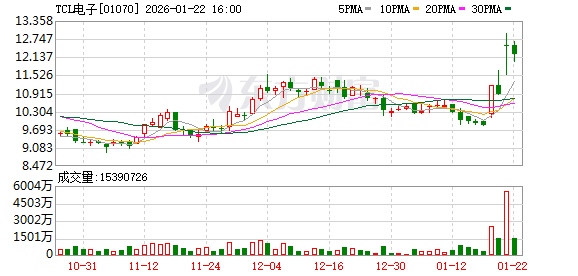
Investment Rating - The report maintains an "Outperform" rating for TCL Electronics Holdings, with a target price of HK$15.60 based on a current price of HK$12.23 [2][5]. Core Insights - TCL is expected to achieve an adjusted net profit of HK$2.33 billion to HK$2.57 billion in 2025, representing a year-on-year growth of 45% to 60% compared to 2024 [3][9]. - The company continues to adhere to a globalization and high-end development strategy, with strong growth in global business and improving profitability [3][9]. - A strategic partnership with Sony in the home entertainment sector aims to establish a joint venture, enhancing TCL's global competitiveness and expanding its business territory [3][10]. Financial Performance - Revenue projections for TCL are as follows: HK$99.32 billion in 2024, HK$119.64 billion in 2025 (up 26% year-on-year), HK$135.67 billion in 2026 (up 20%), and HK$152.14 billion in 2027 (up 13%) [2][5]. - Net profit is projected to grow from HK$1.76 billion in 2024 to HK$2.47 billion in 2025 (up 137%), HK$3.02 billion in 2026 (up 41%), and HK$3.62 billion in 2027 (up 22%) [2][5]. - The diluted EPS is expected to increase from HK$0.70 in 2024 to HK$0.98 in 2025, HK$1.20 in 2026, and HK$1.43 in 2027 [2][5]. Market Position - In 2025, global TV shipments are projected to reach 220 million units, a slight decline of 0.7% year-on-year, while TCL's shipments are expected to grow by 5.4% to 30.4 million units, capturing a 13.8% market share [4][11]. - TCL ranks second globally in TV shipments, while Sony ranks tenth with a significant decline in shipments [4][11]. - The report anticipates that major sports events in 2026 will help stabilize or increase global TV shipments, with TCL and other leading brands expected to expand their market share [4][11]. Valuation - The valuation for TCL has been adjusted, with EPS forecasts for 2025-2027 raised to HK$0.98, HK$1.20, and HK$1.43 respectively, and a PE valuation of 13x for 2026 [5][12]. - The target price of HK$15.60 reflects the company's strong performance and growth potential in the high-end display technology market [5][12].
格局重塑!TCL控股索尼电视业务
Guan Cha Zhe Wang· 2026-01-22 13:28
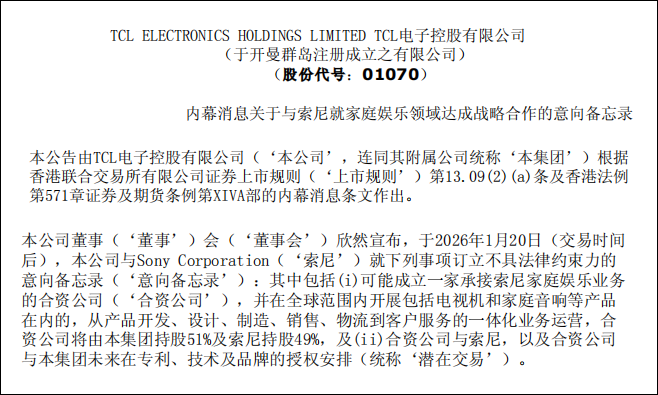
Core Viewpoint - The collaboration between Sony and TCL represents a strategic response to the shifting dynamics of the global television industry, moving from incremental expansion to a focus on existing market competition and complementary advantages [1][3]. Group 1: Company Collaboration - Sony and TCL announced plans to establish a joint venture, with TCL holding 51% and leading operations, while Sony retains 49% ownership [1]. - The new company will take over Sony's global television and home audio equipment business, including R&D, design, manufacturing, sales, logistics, and customer service, while continuing to use the Sony and BRAVIA brands [1][4]. - The partnership is seen as a necessary adaptation to the challenges posed by rising costs and declining profits in the television market, with both companies aiming to leverage their respective strengths [3][4]. Group 2: Market Context - The global television market is projected to see a slight decline in shipment volume, with an expected 2.21 million units in 2025, down 0.7% year-on-year [3]. - Sony's global television shipment is forecasted to be around 4.1 million units in 2025, giving it a market share of 1.9%, ranking it tenth globally [3]. - TCL is expected to ship approximately 30.4 million televisions in 2025, capturing a market share of 13.8%, making it the second-largest player after Samsung [4]. Group 3: Strategic Advantages - Sony's focus on high-end markets and its technological advantages, such as the XR cognitive chip, allow it to maintain premium pricing in the OLED segment, despite challenges in profitability [3][4]. - TCL's strengths lie in its scale and supply chain capabilities, particularly in Mini LED technology, where it holds over 40% of the global market share [4]. - The collaboration is expected to combine Sony's brand and technology with TCL's manufacturing and operational expertise, creating a synergistic effect that enhances competitiveness in the market [5].


港股公司业绩预告密集发布,有色金属成“盈利担当”
Zheng Quan Shi Bao· 2026-01-22 09:37
在贵金属价格持续攀升的背景下,有色金属行业成为港股市场最耀眼的板块。紫金矿业此前发布的业绩 预告显示,公司预计2025年实现归属于上市公司股东的净利润为510亿—520亿元,同比增长约59%— 62%;扣非净利润475亿—485亿元,同比增长约50%—53%。 紫金黄金国际预计2025年度实现归属于母公司股东净利润约15亿—16亿美元,与上年同期相比将增加约 10.2亿—11.2亿美元,同比增加约212%—233%。 赤峰黄金预计2025年度实现归属于上市公司股东的净利润为30亿—32亿元,与上年同期相比,将增加约 12.36亿—14.36亿元,同比增加约70%—81%。 洛阳钼业的业绩预告显示,预计2025年度实现归属净利润为200亿元到208亿元,同比增长47.8%到 53.71%。 有色金属行业公司业绩攀升,主要受金属价格走高影响。比如,紫金黄金国际明确表示,矿产金产量增 加,良好的市场及并购因素,使得公司2025年业绩实现大增。2025年,公司矿产金产量同比增加至约 46.5吨,而2024年度约38.9吨(不含波格拉金矿产量)。2025年,矿产金销售价格同比上涨,加上2025 年度完成并购的两个在产金 ...
李东生,一举拿下索尼电视
2 1 Shi Ji Jing Ji Bao Dao· 2026-01-22 09:36
Core Viewpoint - The collaboration between TCL Electronics and Sony aims to establish a joint venture that will significantly reshape the global television industry, with TCL gaining operational control and expected revenue integration [2][3]. Group 1: Joint Venture Details - TCL Electronics and Sony signed a memorandum of understanding to form a joint venture focused on integrated operations for televisions and home audio systems globally [2]. - The joint venture will have TCL's subsidiary holding 51% and Sony holding 49%, allowing TCL to maintain operational control [2]. - The partnership includes arrangements for patent, technology, and brand licensing [2]. Group 2: Financial Projections - TCL's revenue for the first half of 2025 is projected to reach 547.77 million HKD, with an annual net profit forecasted between 2.08 billion and 2.3 billion HKD [3]. - Sony's home entertainment business is expected to generate total revenue of 2.4 trillion JPY (approximately 1.06 trillion RMB) in the 2024 fiscal year [4]. - Displays and sound segments contribute 25% and 12% respectively to Sony's revenue, totaling around 40 billion RMB [5]. Group 3: Market Position and Competition - TCL's market share in television is projected to reach 13.8% by 2025, and with the addition of Sony's 1.9%, the combined market share could challenge Samsung's leading position [5]. - The joint venture could potentially achieve a market share of 16.7% by 2027, surpassing Samsung's 16.2% and altering the global television brand landscape [5]. Group 4: Vertical Integration and Competitive Strength - TCL has control over TCL Technology, a leading global panel supplier, enhancing its competitive edge in the television sector [6]. - TCL's procurement of raw materials and finished products for 2024 is expected to exceed 22.8 billion HKD, indicating strong supply chain integration [6]. - The deal may also provide TCL with access to high-end brands like Sony and Bravia, strengthening its global market influence [6]. Group 5: Transaction Status - The transaction is not yet finalized, as the memorandum stipulates that Sony will not engage in similar discussions with third parties until March 31, 2026 [7].
港股公司业绩预告密集发布,有色金属成“盈利担当”
证券时报· 2026-01-22 09:16
Core Viewpoint - The article highlights the performance forecasts of Hong Kong-listed companies for the fiscal year 2025, indicating significant growth in sectors such as non-ferrous metals, innovative pharmaceuticals, consumer electronics, and non-bank financials, while traditional agriculture and resource sectors face cyclical pressures [2][16]. Non-Ferrous Metals - The non-ferrous metals sector is a standout performer, with Zijin Mining forecasting a net profit of 51-52 billion yuan for 2025, a year-on-year increase of approximately 59%-62% [4]. - Zijin Gold International expects a net profit of about 1.5-1.6 billion USD, representing a year-on-year increase of approximately 212%-233% [5]. - Chifeng Jilong Gold anticipates a net profit of 3-3.2 billion yuan, up about 70%-81% year-on-year [6]. - Luoyang Molybdenum's forecasted net profit is between 20-20.8 billion yuan, reflecting a growth of 47.8%-53.71% [7]. - The growth in this sector is attributed to rising metal prices and increased production, with Zijin Gold International's gold production expected to rise to approximately 46.5 tons in 2025 from 38.9 tons in 2024 [7]. Innovative Pharmaceuticals - The innovative pharmaceutical sector is also experiencing substantial growth, with Baiaosaitu forecasting a net profit of 135 million yuan, a year-on-year increase of 303.57% [9]. - Zhaoyan New Drug expects a net profit between 233-349 million yuan, reflecting a year-on-year increase of 214%-371% [9]. - WuXi AppTec anticipates a net profit of 19.151 billion yuan, a growth of approximately 103% year-on-year, driven by its integrated CRDMO business model and successful asset sales [10]. Consumer Electronics and Non-Bank Financials - In the consumer electronics sector, QiuTai Technology expects a comprehensive profit increase of approximately 400%-450%, driven by growth in non-mobile smart visual products [12]. - TCL Electronics forecasts an adjusted net profit of 2.33-2.57 billion HKD, representing a growth of 45%-60% year-on-year [12]. - In the non-bank financial sector, China Taiping anticipates a net profit increase of 215%-225%, attributed to improved net investment performance and new tax policies [13]. - Guolian Minsheng expects a net profit of 2.008 billion yuan, a year-on-year increase of approximately 406% due to the acquisition of Minsheng Securities [13]. Traditional Agriculture and Resources - The agriculture sector, represented by Dekang Agriculture, forecasts a profit of 1.3-1.5 billion yuan, a decline from approximately 3.297 billion yuan in the previous year due to falling prices in the pig and chicken markets [14]. - In the resources sector, CITIC Resources expects a net profit of 170-230 million HKD, a decrease of 60%-70% year-on-year, primarily due to falling oil prices and rising raw material costs [14].