腾讯

Search documents
超6亿港元!多家企业驰援香港火灾救援





Xin Lang Cai Jing· 2025-11-28 04:37
Core Points - A major fire occurred in Hong Kong's Tai Po district, resulting in 94 fatalities, including one firefighter, and 76 injuries, with 11 being firefighters [1] - The Hong Kong government established a relief fund with an initial allocation of 300 million HKD to assist affected residents [1] - Over 40 companies have contributed more than 600 million HKD in donations and supplies for disaster relief efforts [1] Company Contributions - Alibaba Group announced an initial donation of 20 million HKD for disaster relief and additional support for affected residents [2] - Tencent Charity Foundation pledged a total of 30 million HKD, including an additional 20 million HKD to the government relief fund [2] - ByteDance (Hong Kong) committed 10 million HKD for emergency relief and community recovery efforts [2] - Baidu, NetEase, and Xiaomi each donated 10 million HKD for urgent assistance and post-disaster recovery [3] - Kuaishou, Meituan, and Xiaohongshu each contributed 5 million HKD for emergency relief and support for affected residents [4] Additional Corporate Donations - Anta Group donated a total of 30 million HKD, including cash and supplies, for emergency assistance [6] - Bosideng Group and Li Ning Group each donated 30 million HKD and 20 million HKD respectively for disaster relief efforts [7][8] - Various companies from different sectors, including automotive and pharmaceuticals, have also made significant contributions, with notable donations from Chery Automobile, BYD, and GAC Group [13][14] Summary of Donations - The total contributions from various companies and organizations have reached nearly 2 billion HKD, showcasing a strong community response to the disaster [5] - Companies like JD.com, Didi, and Meituan have initiated emergency response mechanisms to provide immediate support and supplies to affected areas [18][19]
东有阿里,西有谷歌,AI叙事重燃!美降息预期转强,港股科技由抑转扬!
Sou Hu Cai Jing· 2025-11-28 03:53
Core Viewpoint - The Hong Kong technology sector has experienced adjustments due to differing expectations regarding interest rate cuts and concerns over an AI bubble, but is now rebounding thanks to stronger expectations for Federal Reserve rate cuts and renewed interest in AI narratives [1][5]. Group 1: Federal Reserve Rate Cuts - The expectation for Federal Reserve rate cuts has strengthened, with market confidence rising from a 30% probability to over 80% following comments from Fed officials expressing concerns about the labor market [1][3]. - Historical data shows that after the initiation of preventive rate cuts, the probability of the Hong Kong stock market rising is 75% within three months and 100% within six months [3][4]. Group 2: AI Narrative and Market Response - The AI narrative has been revitalized with the launch of Google's Gemini 3.0 and the popularity of Alibaba's Qianwen app, leading to a reassessment of the Hong Kong technology sector [5][6]. - Tencent's third-quarter report indicated a 21% year-on-year increase in marketing service revenue, with AI-driven advertising technology contributing significantly to this growth [6]. Group 3: Capital Inflows and Valuation - There is a high certainty of incremental capital inflows into the Hong Kong market, with southbound capital expected to exceed 1.5 trillion yuan next year, driven by the attractiveness of quality technology stocks [7][11]. - The valuation of the Hong Kong technology sector is currently at a low point compared to global peers, with the Hang Seng Technology Index trading at a PE ratio of 22.37, significantly lower than that of the S&P 500 and other major indices [12]. Group 4: Investment Opportunities - The Hong Kong Stock Connect Technology 30 ETF (520980) is highlighted as a key investment opportunity, focusing on high-quality domestic hardware and aligning with the current technology market trends [14].

40多家企业及基金会驰援香港大埔火灾,捐款超6亿港元
Cai Jing Wang· 2025-11-28 03:13
Core Points - Over 40 companies and foundations have contributed more than 600 million HKD to support the fire disaster relief and reconstruction efforts in Tai Po, Hong Kong [1][2] - The Hong Kong government and various sectors are actively engaged in firefighting, rescue operations, and post-disaster support [1] Company Contributions - Alibaba Group has initiated a donation of 20 million HKD for disaster relief and has activated its emergency response mechanism to provide essential supplies [2] - Anta Group and Xtep Group each announced donations of 20 million HKD for disaster relief efforts [2] - Tencent, Xiaomi, and other companies have also contributed amounts ranging from 5 million HKD to 20 million HKD [2] Foundation Contributions - The Ma Yun Public Welfare Foundation donated 30 million HKD to assist affected families and support emergency personnel [3] - The Li Ka Shing Foundation allocated 80 million HKD, including 30 million HKD for immediate aid and 50 million HKD for community rebuilding [3] - The Hong Kong Red Cross received a donation of 2 million RMB for emergency rescue and humanitarian assistance [4] Insurance Sector Response - Multiple insurance companies, including China Life and Ping An, have activated emergency claims procedures to ensure rapid support for affected families [4]




开盘:沪指微跌0.11%、创业板指跌0.04%,贵金属、猪肉板块走高,影视院线及CPO概念股走低
Jin Rong Jie· 2025-11-28 02:12
Market Overview - On November 28, A-shares opened slightly lower, with the Shanghai Composite Index down 0.11% at 3870.94 points, the Shenzhen Component Index down 0.04% at 12869.66 points, and the ChiNext Index down 0.04% at 3029.98 points [1] - The market saw gains in sectors such as precious metals, while small metals and short drama games faced declines [1] - Notable stocks included Guosheng Technology, which opened up 1.23%, and Furi Shares, which opened down 4.00% [1] Company News - Dongxin Co., Ltd. signed a strategic cooperation framework agreement with a leading domestic cloud computing service provider to collaborate on various technology solutions [2] - Tianpu Co. applied for a stock suspension starting November 28, 2025, to protect investor interests [2] - Fule New Materials has successfully transitioned from a material supplier to a smart sensing solution provider with its "electronic skin" product [2] - Wantong Development is progressing with its strategic transformation involving Shudu Technology, which is currently in a loss-making state [2] - Moer Thread's recent share issuance saw 16.77 million shares subscribed, raising 1.917 billion yuan [2] Industry Insights - The AI glasses market is seeing growth with Alibaba's launch of the Quark AI glasses, which integrate various services from its ecosystem [5] - The AI unicorn "Moon's Dark Side" is nearing the end of its latest funding round, with a valuation expected to reach approximately $4 billion [6] - Chongqing's government has introduced policies to support the low-altitude economy, offering subsidies up to 20 million yuan [7] - The lithium battery supply chain is strengthening with long-term supply agreements totaling 159.5 thousand tons [8] - The consumer electronics sector is expanding, with a total of 230 million product varieties available in China [9] - The film industry is experiencing success with "Zootopia 2" achieving a record box office on its opening day [10] - The ice and snow economy is gaining traction, with increased flight bookings to popular destinations [11] Institutional Perspectives - Huatai Securities predicts rapid growth for satellite industry-related stocks due to advancements in reusable rockets and reduced launch costs [12] - Zhongyuan Securities highlights the solar industry entering a capacity clearing cycle, suggesting improved performance for existing companies [13] - Tianfeng Securities notes the rapid development of China's medical beauty market, with significant growth potential in various segments [14]

国产AI进展探讨
2025-11-28 01:42
Summary of Key Points from Conference Call Industry Overview - The conference call discusses advancements in the AI industry, particularly focusing on companies like ByteDance and Alibaba, and their respective AI models and applications. Key Points on ByteDance - ByteDance leads in the number of intelligent agents and developers in China, with its Doubao Workshop based on the Doubao 2.0 model, which can generate small software or applications, similar to Alibaba's Lingguang [2][3] - The daily active users of ByteDance's product, Jiemeng, in the text-to-video sector reached 3 million, making it the leader in the domestic market, although its annual average revenue is around 30 to 40 million [2][3] - ByteDance's Volcano Engine and maMAAS hold half of the B-end market share, but their revenue is low due to heavy discounts; future plans include enhancing marketing and advertising functionalities [2][4] - The Doubao 2.0 model has increased its parameter count to over 1 trillion, aligning with industry standards and enhancing specific functionalities such as self-media copy generation and e-commerce marketing solutions [2][5] Key Points on Alibaba - Alibaba's Lingguang app no longer relies on general models but generates programs based on user needs, aiming to replace certain software functionalities and attract users [2][6] - The integration of services like Gaode Map and Ele.me through Qianwen enhances user stickiness and profitability by providing free usage rights through a membership system [2][8] - Alibaba's strategy focuses on integrating its ecosystem to drive traffic and improve service usage rates, similar to ByteDance's approach of leveraging traffic for monetization [2][9] Competitive Landscape - The comparison between ByteDance and Alibaba shows that while Doubao 2.0 has improved its parameters, it mainly aligns with industry standards without groundbreaking new features [5][6] - Alibaba's Qianwen platform is positioned as a super entry point for services, leveraging its extensive ecosystem to provide high-value services [11][12] - The Gemini 3 model from Google has made significant breakthroughs in multi-modal understanding, potentially replacing traditional office suites and marking a new phase in the multi-modal market [15][16] Market Dynamics - The rise of multi-modal capabilities is expected to significantly expand market demand, particularly in advertising and recommendation systems [21] - Google and Meta are investing heavily in their respective technologies, with Meta planning to invest $100 billion in 2026, indicating a long-term commitment to optimizing internal operations and market expansion [22][24] - Tencent faces challenges in the AI ecosystem due to a lack of early investment, which has resulted in insufficient daily active users [26][33] Future Outlook - The competitive landscape is evolving, with companies like Alibaba and ByteDance vying for market share in AI applications, while Google maintains a technological edge with its Gemini 3 model [27][19] - The potential for Qianwen to become a super entry point in the market is promising, as it aligns with consumer needs for practical services [11][12] - The overall sentiment is optimistic regarding the growth of multi-modal AI applications and their integration into everyday services, enhancing user engagement and monetization opportunities [21][12]
宗馥莉卸任娃哈哈集团公司董事长;字节跳动被曝计划出售沐瞳;官方回应3C认证全面失效传闻;多家企业及基金会驰援香港大埔火灾丨邦早报
创业邦· 2025-11-28 00:09
Group 1 - The core point of the article highlights significant changes in leadership at Wahaha Group, with Zong Fuli stepping down as chairman and being replaced by Xu Simin, while Zong retains a 29.40% stake in the company [4] - Several major personnel changes occurred alongside the leadership transition at Wahaha Group, indicating a potential shift in company strategy and operations [4] - The article also discusses the substantial financial contributions from various companies and organizations to aid in the recovery from the Hong Kong Tai Po fire, exceeding 1 billion HKD [6][7] Group 2 - ByteDance is reportedly in talks with Savvy Games Group regarding the potential sale of its subsidiary, Shanghai Mutong Technology, although the outcome of these negotiations remains uncertain [7] - The article mentions that several smartphone manufacturers, including Xiaomi, OPPO, and Vivo, have canceled their Air model projects, reallocating features to standard models due to poor market performance [7] - Li Auto's chairman announced a return to a startup management model, with a focus on embodied intelligence for the next decade, supported by significant revenue and cash reserves [10] Group 3 - The article notes that TSMC has filed a lawsuit against a former executive for allegedly leaking trade secrets to Intel, which Intel has denied, asserting strict policies against such actions [19] - The automotive industry in China reported a profit of 389.5 billion CNY from January to October 2025, reflecting a year-on-year increase of 4.4%, with production and revenue also showing positive growth [23]

想留在牌桌上,大厂们必须要“卷”AI TO C | 马上评
Tai Mei Ti A P P· 2025-11-27 23:25
Core Insights - Alibaba's CEO Wu Yongming emphasized the dual strategy of "AI to C" and "AI to B" as core directions for the company, signaling a shift towards consumer-facing AI applications in the competitive landscape of internet giants [1][3] - The launch of the "Qianwen" app represents a significant move in this new battle for user engagement and market share, as companies seek to control the next generation of digital interaction [1][10] Group 1: Strategic Focus - Alibaba's AI strategy includes becoming a leading full-stack AI service provider in the "AI to B" sector while developing AI-native applications for consumers in the "AI to C" sector, leveraging its ecosystem advantages [3][4] - The timing of this push into AI to C is critical, as large model technologies have matured, providing a solid foundation for high-quality consumer applications [3][4] - The competitive landscape in e-commerce is intensifying, with rivals like Pinduoduo and Douyin posing significant challenges to Alibaba's market dominance, necessitating new traffic sources [3][10] Group 2: Market Dynamics - The AI-native applications are reshaping traffic distribution rules, with the ability to control the new generation of AI entry points becoming crucial for future e-commerce positioning [4][5] - The future online ecosystem will center around AI-native applications that serve as both traffic distribution points and value transmission hubs, akin to the roles of browsers and search engines in the past [5][6] - The transition from traditional interaction methods to conversational interfaces represents a fundamental shift in user engagement, with AI-driven chatbots emerging as key entry points [5][6] Group 3: Competitive Landscape - The AI to C battlefield is characterized by a bifurcated structure, with native AI companies on one side and traditional tech giants like Google, Microsoft, and Alibaba on the other, all vying for high-frequency user interactions [7][8] - ByteDance is leveraging its extensive content ecosystem and user behavior data to enhance its AI capabilities, creating a feedback loop that optimizes user experience and engagement [8][9] - Other companies like Tencent and Baidu are also navigating their strategies, with Tencent embedding AI into its WeChat ecosystem while Baidu struggles with a lack of diverse user scenarios [11][13] Group 4: Future Outlook - The competition for AI entry points is ultimately a contest for control over user scenarios, with companies needing to integrate AI deeply into everyday life to establish user habits and barriers to entry [12][17] - The success of AI strategies will depend on the ability to create a "scene-data-model" closed loop, ensuring continuous user feedback and model optimization [17][18] - The future landscape may see a few dominant AI applications emerging as primary entry points, while traditional platforms adapt to maintain relevance in a rapidly evolving digital environment [18][19]



美利信加码液冷及半导体 高端制造布局打开成长新空间
Zheng Quan Ri Bao· 2025-11-27 13:41
Core Insights - Meilixin is a leading company in the precision die-casting sector, focusing on communication base station structural components and lightweight automotive parts, while also expanding into the high-growth liquid cooling market and semiconductor equipment components [1][2] - The collaboration with Juyuan Innovation aims to develop key liquid cooling components for servers, leveraging both companies' expertise in AI server liquid cooling systems and precision manufacturing [4] Business Development - The liquid cooling business is supported by existing technology from communication base station products, and the partnership with Juyuan Innovation is expected to accelerate entry into the global liquid cooling market [1] - Meilixin has secured sample orders from AMD and is preparing to establish a joint laboratory with Intel, indicating strong customer expansion efforts [1] - The semiconductor business is emerging as another significant growth driver, with Meilixin supplying core components like robotic arms and vacuum chambers to leading companies in the sector [1] Market Outlook - Analysts suggest that with the release of liquid cooling capacity and the gradual fulfillment of semiconductor orders, combined with stable core business support, Meilixin's future performance growth is highly certain, and its valuation may align with core enterprises in niche markets [2]
2025世界智能制造大会将启幕,南京人工智能国际社区交出“硬核答卷”
Sou Hu Cai Jing· 2025-11-27 13:33
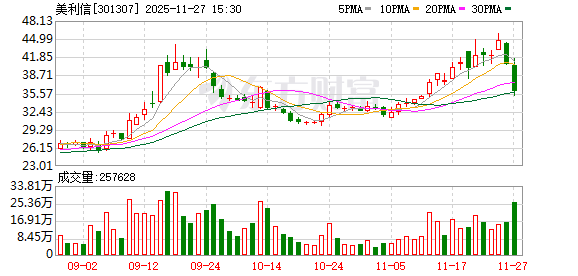
Core Insights - The article highlights the rapid development and strategic importance of artificial intelligence (AI) in driving technological revolution and industrial transformation, particularly in Nanjing, China [1][2][3] Group 1: AI Industry Development - AI is positioned as a core engine for the construction of a digital China, with the government emphasizing its role in overcoming collaborative bottlenecks in the "model-data-application" framework [2] - Nanjing's Jianye District is leveraging its unique advantages to become a benchmark for regional AI development, supported by a strong presence of major tech companies and financial institutions [2][5] - The AI industry in Nanjing is experiencing high-quality, leapfrog development, with a focus on creating an ecosystem that promotes collaboration among various stakeholders [5][6] Group 2: Infrastructure and Ecosystem - The AI Space in Nanjing covers approximately 4.4 square kilometers, featuring a layout that includes a core area for major tech companies and various supporting zones for talent and ecological services [3][5] - The establishment of a closed-loop ecosystem in the AI sector is being pursued, integrating data training models with applications to continuously release data value [5][6] - Key projects such as the JD.com R&D center and the Alibaba Jiangsu headquarters are contributing to the expansion of the AI ecosystem, with over 105 enterprises already established in the community [6] Group 3: Future Prospects - The upcoming 2025 World Intelligent Manufacturing Conference in Nanjing is seen as a pivotal moment for the city's AI industry, coinciding with its rapid growth and innovation [6] - Nanjing is adopting an open and innovative approach to solidify its industrial foundation and enhance its ecological layout, aiming to compete globally in the AI sector [6]
多个基金会及企业纷纷解囊 捐款助香港大埔火灾受影响居民
2 1 Shi Ji Jing Ji Bao Dao· 2025-11-27 12:18
(原标题:多个基金会及企业纷纷解囊 捐款助香港大埔火灾受影响居民) 美团旗下外卖平台Keeta宣布捐款 500 万港元,用于受灾居民过渡安置、生活物资补给及小区恢复。火灾当日,Keeta 紧急调动首批免费移动充电 宝送抵大埔,第二批流动电源次日清晨亦已放置在安置点附近供免费使用。 南方财经 21世纪经济报道记者 张伟泽 香港报道 日前,香港新界大埔屋邨宏福苑发生一起五级重大火灾。据央视新闻,截至11月27日18时,火灾已经造成55人死亡,76人受伤。危难之际,香港 各界基金会以及内地企业相继拨款协助受灾群众渡过难关。 其中,澳门霍英东基金会、香港霍英东基金会及霍英东集团宣布捐赠3000万港元支援大埔宏福苑居民。霍启刚通过社交媒体表示:"今早已有来自 香港、内地乃至海外的朋友及机构主动联系,希望为受灾群众略尽绵力。我现正整合各方资源,与政府相关部门保持联络,确保每一分善心都能 转化为实际援助,支援到宏福苑的受灾居民。" 李嘉诚基金会宣布拨款3000万港元,设立紧急援助基金支持大埔火灾受影响社群,并将拨出额外5000万港元的后续支持计划,助小区重建复原。 内地企业也在纷纷伸出援手,比亚迪、小米、腾讯、联想等公司都 ...