招商银行

Search documents
银行投资观察20260118:贝塔弹性主导近期板块表现
GF SECURITIES· 2026-01-19 01:47
Core Insights - The banking sector has shown weak relative and absolute returns recently, primarily due to market funds shifting towards high-beta and small-cap stocks, leading to a diversion of funds from low-beta banking stocks [18] - The report suggests that the banking sector is likely to experience further internal differentiation in 2026, with larger banks and wealth management banks expected to outperform [18] - Core stock recommendations include Ningbo Bank, China Merchants Bank, Qingdao Bank, and large state-owned banks [18] Section Summaries 1. Current Observation: A-shares in Banking Decline, H-shares Outperform - During the observation period from January 12 to January 16, 2026, the banking sector (CITIC first-level industry) declined by 2.6%, ranking 25th among all industries and underperforming the Wind All A index [16] - The performance of state-owned banks, joint-stock banks, city commercial banks, and rural commercial banks varied, with declines of -2.16%, -3.33%, -1.92%, and -2.24% respectively [16] - H-shares of banks increased by 2.4%, underperforming the Hang Seng Composite Index, while A-share banks showed mixed results [16] 2. Investment Recommendations: Beta Elasticity Dominates Recent Sector Performance - The report indicates that the recent downturn in the banking sector has solidified valuations, with limited further downside expected [18] - The anticipated trends include a shift towards non-bank financial services, wealth management, and disintermediation, with large banks expected to gain an advantage [18] 3. Sector Performance: Banking Sector Decline, Weekly Turnover Rate Increases - The banking sector's weekly turnover rate increased to 1.61%, ranking last among 30 CITIC first-level industries [42] - As of January 16, 2026, the banking sector's latest price-to-earnings (P/E) ratio was 6.89x, and the price-to-book (P/B) ratio was 0.67x, indicating valuations at historical average levels [42] 4. Individual Stock Performance: A-share Banks Overall Decline, City Commercial Banks Relatively Stable - Among A-share banks, Ningbo Bank saw a rise of 4.09%, while Beijing Bank, Huaxia Bank, and Shanghai Pudong Development Bank experienced declines of 4.90%, 4.73%, and 4.33% respectively [16] - In H-shares, Industrial and Commercial Bank of China and China Construction Bank increased by 3.59% and 3.16%, while China Everbright Bank and Chongqing Bank saw declines of 6.14% and 3.10% [16] 5. Convertible Bond Performance: Average Price Increase - The average price of banking convertible bonds rose by 0.06%, underperforming the Zhongzheng convertible bond index by 1.02 percentage points [17] - The top-performing convertible bonds included Chongqing Bank's convertible bond (+0.58%) and Industrial Bank's convertible bond (+0.18%) [17] 6. Profit Forecast Tracking: 2025 Profit Growth Expectations Remain Stable - For the current period, three banks (China Merchants Bank, Minsheng Bank, and Hangzhou Bank) showed changes in the consensus profit growth expectations for 2025 [17] - The net profit growth and revenue growth expectations for A-share banks in 2025 adjusted slightly downwards by -0.08 percentage points and -0.03 percentage points respectively [17]



三次左转,便是右转。
Ge Long Hui· 2026-01-19 01:27
Group 1: Hong Kong IPO Market - The recent performance of Hong Kong IPOs has been mixed, with some companies like Tianri, MINI, Ruibo, and Birun being sold a day early, leading to missed opportunities for investors [1] - The analyst highlights the significant difference in subscription rates between Naxinwei (25 times) and Zhuoyue Ruixin (4813 times), suggesting that Naxinwei may offer better profitability despite lower demand [1] - The current batch of IPOs is limited, with Dragon Flag Technology being the only notable option, but it is expected to be difficult to acquire shares due to a discount greater than 40% [1] Group 2: Ctrip's Market Position and Regulatory Challenges - Ctrip is recognized as a leader in the online travel market, with a 60% growth in international business last year and a dominant share in the domestic online travel agency market [4] - The company is currently under investigation for monopolistic practices, which has led to a significant drop in its stock price [4][6] - Despite the regulatory challenges, Ctrip's financial health remains strong, with substantial cash reserves that can absorb potential fines estimated at 4 billion RMB [6] Group 3: Market Sentiment and Investment Strategy - The A-share market has shown resilience with a record high in margin financing, indicating strong investor sentiment despite recent declines [3] - The experience from previous regulatory actions against companies like Alibaba and Meituan suggests that the stock price may experience a temporary drop of 20%-40% before stabilizing [6] - The importance of patience in investment is emphasized, as good opportunities often arise after periods of volatility and negative sentiment [6]



2026年中国中小银行行业政策、产业链、资产规模、竞争格局及趋势研判:数字化转型与绿色金融深化,推动中小银行资产规模与竞争力同步提升[图]
Chan Ye Xin Xi Wang· 2026-01-19 01:16
Core Viewpoint - The small and medium-sized banks in China play a crucial role in supporting the long-term development of the economy by fostering private enterprises and small businesses, thus contributing to local economic prosperity and advancing financial market reforms [1][9]. Summary by Sections 1. Overview of the Small and Medium-Sized Banking Industry - Small and medium-sized banks are generally defined as all banks excluding the six major state-owned banks. They include national joint-stock banks, urban commercial banks, rural commercial banks, private banks, credit cooperatives, and village banks [3][10]. 2. Industry Policies - The Chinese government has shown significant attention to the development of small and medium-sized banks, continuously optimizing the policy environment to support industry growth. For instance, in January 2025, the government issued guidelines to enhance rural banking services and support small enterprises [5][6]. 3. Industry Chain - The upstream of the small and medium-sized banking industry includes IT service providers, payment platforms, financial market participants, and hardware/software suppliers. The midstream consists of the banks themselves, while the downstream includes consumers and businesses utilizing banking services [7][8]. 4. Current Development Status - Small and medium-sized banks have significantly expanded their total assets, reaching 192.25 trillion yuan in 2024, a year-on-year increase of 6.39%. By November 2025, total assets are projected to reach 201.6 trillion yuan, with a growth rate of 6.49% [1][9]. 5. Competitive Landscape and Key Enterprises - The competitive landscape of the small and medium-sized banking industry shows a clear tiered structure. The first tier includes major banks like China Merchants Bank and Shanghai Pudong Development Bank, while the second tier consists of regional banks like Beijing Bank and Shanghai Bank. The third tier includes numerous local rural financial institutions [14][15]. 6. Development Trends - Digital transformation is becoming a core competitive advantage for small and medium-sized banks, with a focus on data-driven operations and enhanced customer experiences through technology [18]. - Green finance is transitioning from concept to practice, with banks expected to integrate environmental risk assessments into their lending processes and develop specialized products to support sustainable initiatives [19]. - Regional and specialized operations are expected to deepen, with banks focusing on local economic characteristics and developing tailored financial solutions for small and micro enterprises [21].


招行、中信、兴业密集落子:起底股份行AIC的生存哲学
Hua Er Jie Jian Wen· 2026-01-18 23:51
几乎同期,招商银行旗下的招银投资现身深蓝汽车的C轮融资名单,豪掷5亿元现金; 作为兴业银行旗下AIC,兴银投资则在开业45天内,密集扫货盛新锂能、金发科技、东阳光三家上市公 司的核心子公司,累计投放超60亿元。 随着兴业、招商、中信三家股份行AIC密集开业,"5+0"的国有行垄断格局宣告终结。 三家股份行急切的起手式,透露了一种与国有大行不同的生存哲学—— 它们已不甘做政府母基金身后的"金主",选择直接现身被投企业的股东名单中。 岁末年初,当一级市场的GP们还在为募资寒冬瑟瑟发抖,三张来自银行系的巨额支票,已经悄无声息 地划向了新能源与硬科技赛道。 2025年12月末,仅开业一周的中信银行旗下信银金投火速完成首单,一举拿下深圳港华顶信清洁能源 49%的股权; 三张新面孔 虽同持AIC牌照,但在首批落地的项目中,三家股份行已经拿出了不同的剧本。 在三家新晋AIC中,招商银行旗下的招银投资注册资本高达150亿元,比兴业和中信高出整整50%,这 多出的50亿是资本金,亦是招行在股权投资战场上的底气。 招银投资的首秀选择了深蓝汽车,在深蓝汽车刚刚完成的61.22亿元C轮融资中,招银投资拿下约2.42% 的股权,成为该 ...


海富通瑞祥一年定期开放债券型证券投资基金开放申购、赎回和转换业务的公告
Shang Hai Zheng Quan Bao· 2026-01-18 18:46
根据《海富通瑞祥一年定期开放债券型证券投资基金基金合同》(以下简称"《基金合同》")及《海富 通瑞祥一年定期开放债券型证券投资基金招募说明书》(以下简称"《招募说明书》"),本基金以定期 开放的方式运作。本基金的封闭期为自《基金合同》生效之日起(包括《基金合同》生效之日)或自每 一开放期结束之日次日起(包括该日)一年的期间。本基金的首个封闭期为自《基金合同》生效之日起 (包括《基金合同》生效之日)一年的期间。第二个封闭期为首个开放期结束之日次日起(包括该日) 一年的期间,以此类推。本基金封闭期内不办理申购与赎回业务,也不上市交易。本基金自每个封闭期 结束之后第一个工作日起进入开放期,期间可以办理申购与赎回业务。 本基金《基金合同》生效日为2017年7月28日,经过前期运作,本基金第八个封闭期为2025年1月21日至 2026年1月20日止日。根据本基金《基金合同》、《招募说明书》的规定,基金管理人决定自2026年1月 21日起(含该日)至2026年2月25日(含该日)期间的工作日,本基金接受投资者的申购、赎回、转入 及转出申请。自2026年2月26日至2027年2月25日,为本基金的第九个封闭期,封闭期内本基 ...
招行年报里的十大真相
Xin Lang Cai Jing· 2026-01-18 14:42
Core Viewpoint - The annual report of China Merchants Bank (CMB) for 2023 shows negative revenue growth but positive net profit growth, leading to a significant increase in stock price, indicating market satisfaction with the report. However, the overall economic environment presents more challenges than opportunities, and the actual operational difficulties outweigh the achievements [1][67]. Group 1: Revenue and Profit Analysis - CMB's total revenue for 2023 was 339.1 billion, a decrease of 1.64% compared to 2022, reflecting weakened earning capacity [19][80]. - Both net interest income and non-interest income experienced a decline of 1.6%, indicating a contraction in profit margins and a lack of growth in core business areas [20][82]. - The increase in net profit, despite falling revenue, was primarily due to a significant reduction in credit impairment losses, which decreased by approximately 150 billion, allowing for a positive net profit outcome [24][85]. Group 2: Cost Management and Efficiency - CMB has successfully reduced employee costs, with the average cost per employee decreasing from 625,000 to 604,000, despite an increase in the number of employees [15][16]. - The effectiveness of cost-cutting measures is questioned, as the overall reduction in employee costs is relatively low compared to other industries [16][18]. Group 3: Deposit Trends - There is a concerning trend of increasing "deposit regularization," with corporate fixed deposits rising from 22% to 24.7% and personal fixed deposits increasing from 14.87% to 20.4% [32][92]. - The high cost of deposits is a significant risk, as the bank's deposit rates remain elevated despite multiple reductions in deposit costs throughout the year [30][90]. Group 4: Insurance Income Challenges - CMB's non-interest income from insurance sales, which is a crucial revenue source, is expected to face significant challenges in 2024 due to declining pricing and regulatory changes [36][98]. - The overall income from insurance sales increased by 9.33% to 136 billion, but this growth is overshadowed by declines in other areas such as fund and trust sales [37][98]. Group 5: Market Position and Future Outlook - CMB has played a role in driving the bond bull market, with bond interest income increasing by over 20%, which has helped offset some revenue losses [43][104]. - The bank is focusing on overseas markets, with a 14.78% increase in foreign exchange net income, indicating a strategic shift to capture new revenue streams [47][48].

负债端稳定,存单提价换量压力不大:存单周报(0112-0118)-20260118
Huachuang Securities· 2026-01-18 14:06
1. Report Industry Investment Rating No information provided in the content. 2. Core View of the Report - The pressure on CDs to "increase prices for volume" is relatively controllable, and there's no need to overly worry about banks' liability - side. Despite a significant increase in CD maturities this week and short - term fluctuations in capital prices, CDs did not "increase prices for volume", indicating a strong continuation of long - term bank deposits after maturity. The current capital frictions are mainly short - term, such as new share subscriptions on the Beijing Stock Exchange and delayed reverse repurchase placements. The central bank actively smoothed out capital fluctuations, and CDs are expected to fluctuate around 1.65% with limited price - increasing pressure [2][46]. 3. Summary According to the Table of Contents Supply: Net financing declines, and the term structure lengthens - This week (January 12 - January 18), CD issuance was 553.58 billion yuan, with a net financing of - 254.88 billion yuan (compared to - 153.30 billion yuan from January 5 - January 11). The issuance proportion of state - owned banks decreased from 19% to 18%, while that of joint - stock banks increased from 11% to 14%, city commercial banks from 44% to 57%, and rural commercial banks from 7% to 9%. The 1M CD issuance proportion dropped from 26% to 8%, while the 3M, 6M, and 9M proportions increased. The weighted issuance term of CDs lengthened to 7.70 months (previously 7.45 months) [2][5]. - Next week (January 19 - January 25), the maturity scale will decline to 681.57 billion yuan, a weekly reduction of 123.80 billion yuan. Maturities are mainly concentrated in state - owned, joint - stock, and city commercial banks. In terms of term, the 3M, 6M, and 1Y CDs have higher maturity amounts, at 163.34 billion yuan, 174.02 billion yuan, and 266.28 billion yuan respectively [2][5]. Demand: Small and medium - sized banks and insurance companies are the main secondary - market allocators, and the primary - market subscription rates vary - In the secondary market, large - scale banks had a net purchase of 26.76 billion yuan this week, small and medium - sized banks had a net purchase of 97.621 billion yuan, wealth management shifted from a net sale of 2.412 billion yuan to a net purchase of 10.777 billion yuan, and money market funds' net sales increased from 57.166 billion yuan to 137.391 billion yuan [2][14]. - In the primary market, the overall market subscription rate (15DMA) decreased from 88% to 87%. Among different institutions, the subscription rate of city commercial banks increased from 81% to 82%, that of joint - stock banks decreased from 89% to 84%, and that of state - owned banks remained at 91% [2][14]. Valuation: The primary - market pricing of CDs shows a divergent trend, and most of the secondary - market pricing declines - In primary - market pricing, the weighted issuance rate of 1Y state - owned bank CDs remained around 1.62%. Specifically, the 1M variety decreased by 9bp, the 3M increased by 3bp, the 6M increased by 1bp, and the 9M and 1Y remained unchanged. The 1Y - 3M term spread of joint - stock banks decreased by 5bp, at the 9% historical quantile. The 1Y credit spread between city commercial banks and joint - stock banks widened from 8.88BP to 9.46BP, at around the 12% quantile, while that between rural commercial banks and joint - stock banks narrowed from 16.17BP to 7.33BP, also around the 12% quantile [2][17]. - In secondary - market yields, most yields of AAA - rated CDs declined. The 1M, 6M, 9M, and 1Y varieties each decreased by 1BP compared to last week, the 3M remained unchanged, and the 1Y remained at the 2% historical quantile since 2019. The 1Y - 3M term spread of AAA - rated CDs remained at the 11% historical quantile [2][29]. Comparison: The spread between CDs and treasury bonds widens - The spread between the 1Y AAA - rated CD yield and the DR007:15DMA capital spread narrowed from 12.32BP to 8.91BP, and the spread with the R007:15DMA capital spread narrowed from 1.56BP to - 0.52BP. The 1Y treasury bond yield decreased by 4.63BP, and the spread between CDs and treasury bonds widened from 34.38BP to 38.26BP, with the quantile rising to around 39%. The spread between CDs and China Development Bank bonds narrowed from 5.46BP to 3.08BP, with the quantile dropping to around 2%. Additionally, the spread between AAA medium - and short - term commercial paper and CDs widened from 6.13BP to 7.36BP, with the quantile rising to around 34% [2][34].

从黑麋峰到比什凯克 绿色金融服务创新背后的“湘企”出海记
Xin Jing Bao· 2026-01-18 13:52
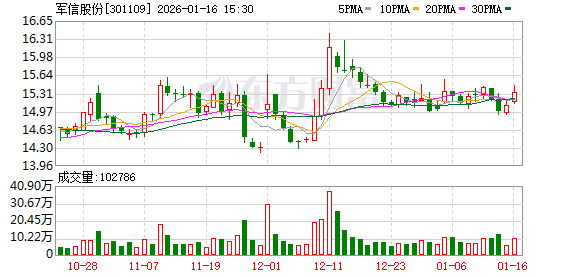
Core Viewpoint - Hunan Junxin Environmental Protection Co., Ltd. (Junxin Co., 301109.SZ) is expanding its waste treatment and green energy business, successfully implementing projects both domestically and internationally, including a significant partnership in Kyrgyzstan for waste-to-energy initiatives [3][5][6]. Group 1: Company Overview - Junxin Co. specializes in converting waste into energy, focusing on municipal solid waste, kitchen waste, municipal sludge, leachate, and fly ash [3]. - The company operates the Heimi Peak Solid Waste Treatment Plant in Changsha, which is the only environmental park in China to have won two Luban Awards, the highest construction engineering award in the country [3]. Group 2: International Expansion - During the first China-Central Asia Summit, Junxin Co. signed a memorandum with Kyrgyzstan to introduce successful waste treatment experiences from Changsha, aiming to establish the country's first waste incineration power generation project [5]. - The company’s strategy is to "root in Hunan, radiate nationwide, and move towards the world" [5]. Group 3: Financial Support and Challenges - The company faces challenges in its international projects, including language barriers, funding shortages, and legal constraints between countries [5]. - China Merchants Bank (CMB) formed a project team to support Junxin Co. in overcoming these challenges, leading to the creation of an innovative cross-border loan solution [6]. Group 4: Project Development - CMB successfully provided Junxin Co. with a cross-border syndicated loan of $6.42375 million, which facilitated the construction of the Bishkek waste-to-energy project in Kyrgyzstan [6]. - The project is set to be completed by December 27, 2025, marking a significant milestone as the first waste incineration power project in Central Asia [6]. Group 5: Future Outlook - The story of Junxin Co.'s international expansion reflects the growing trend of green finance and the potential for further overseas ventures by Chinese enterprises [7].
银行经营与定价思考(20260118):不妨多一些耐心
Guotou Securities· 2026-01-18 12:34
Investment Rating - The report maintains an investment rating of "Leading the Market - A" indicating an expected investment return that will exceed the CSI 300 Index by 10% or more over the next six months [4]. Core Insights - The report emphasizes that the "structure" of credit growth driven by economic transformation is more important than the "total" amount. As of December 2025, the RMB credit balance grew by 6.35% year-on-year, continuing a downward trend. The new credit data for December shows a strong corporate sector and weak retail sector, with retail loans accounting for only 2.7% of total new loans, while corporate loans made up 95.1% [1]. - The report outlines two phases of industrial restructuring in China since 2010, highlighting a shift from real estate and financing platforms to high-end manufacturing and service industries. This transition has significantly altered the financing demand, structure, and entities involved, impacting the banking sector profoundly [2]. - It is noted that the central bank is using structural monetary policy tools to support economic transformation, including lowering interest rates on various tools to encourage lending in key areas while focusing on risk resolution in real estate and local government financing [9]. - The report suggests that while bank profitability growth is crucial for long-term stock performance, much of this growth is not immediately reflected in stock prices. Instead, investor expectations and optimism about future growth play a significant role in stock valuation [10][12]. Summary by Sections Credit Growth and Structure - The report indicates that the credit growth structure is shifting, with corporate loans dominating new credit issuance, reflecting a central government strategy to replace real estate and local platform balance sheets [1]. - The competition landscape is changing, with state-owned banks and a few quality regional banks expected to maintain stable growth, while other banks may see a slowdown in asset growth [2]. Valuation Changes - The report discusses the changing valuation system in the banking sector, noting that as industrial restructuring progresses, the valuation framework for Chinese banks is expected to align more closely with that of developed economies [9]. - Historical data shows that the decline in bank ROE and PB ratios in China has been more rapid compared to developed economies, indicating a mismatch in the speed of valuation changes [8]. Future Outlook - The report anticipates that the central bank will focus on stabilizing net interest margins and may employ more structural monetary policy tools in 2026 to balance support for the real economy and pressure on bank margins [10]. - It is suggested that investors should be patient with bank stocks, as the current low valuations, particularly in H-shares, present an opportunity for future valuation recovery [12].
金融行业周报(2026、01、18):央行宣布结构性降息,衍生品交易监管更规范-20260118
Western Securities· 2026-01-18 11:43
Investment Rating - The report does not explicitly state an overall investment rating for the financial industry, but it provides specific recommendations for various sectors and companies within the industry [3][21]. Core Insights - The financial industry experienced a decline this week, with the non-bank financial index down by 2.63%, underperforming the CSI 300 index by 2.06 percentage points. The banking sector saw a decline of 3.03%, also underperforming the CSI 300 index by 2.46 percentage points [1][9]. - The report highlights a structural interest rate cut by the central bank, which is expected to impact various financial sectors, particularly banks and insurance companies. The insurance sector is viewed as being in a critical window for performance and valuation recovery [3][21]. - Regulatory measures have been introduced to stabilize the derivatives market, which is expected to benefit well-capitalized and compliant brokerage firms [2][17]. Summary by Sections 1. Weekly Performance and Sector Insights - The non-bank financial index decreased by 2.63%, with the securities, insurance, and diversified financial indices down by 2.21%, 3.59%, and 1.83% respectively [1][9]. - The banking sector's performance was notably poor, with state-owned banks, joint-stock banks, city commercial banks, and rural commercial banks experiencing declines of 2.20%, 4.08%, 2.40%, and 2.20% respectively [1][9]. 2. Insurance Sector Insights - The insurance sector's index fell by 3.59%, underperforming the CSI 300 index by 3.02 percentage points. The report indicates that regulatory cooling measures have created short-term pressure on the insurance sector, but the long-term outlook remains positive due to asset growth and interest margin recovery [1][13][15]. - Key companies such as China Pacific Insurance, China Life, and New China Life are recommended for investment due to their strong fundamentals and recovery potential [3][16]. 3. Brokerage Sector Insights - The brokerage sector saw a decline of 2.21%, with the report emphasizing the potential benefits of new regulatory measures aimed at enhancing the derivatives market. The focus is on larger, well-capitalized firms that can navigate the evolving regulatory landscape [2][17]. - Recommendations include major brokerages like Guotai Junan and Huatai Securities, which are expected to benefit from the anticipated recovery in profitability and valuation [2][18]. 4. Banking Sector Insights - The banking sector's index fell by 3.03%, with the central bank's recent interest rate cut expected to support the sector's performance in the long run. The report suggests that banks may see a gradual recovery in net interest income and profitability [3][21][22]. - Specific banks such as Hangzhou Bank and Ningbo Bank are highlighted as potential investment opportunities, particularly those with previously undervalued positions [3][22].