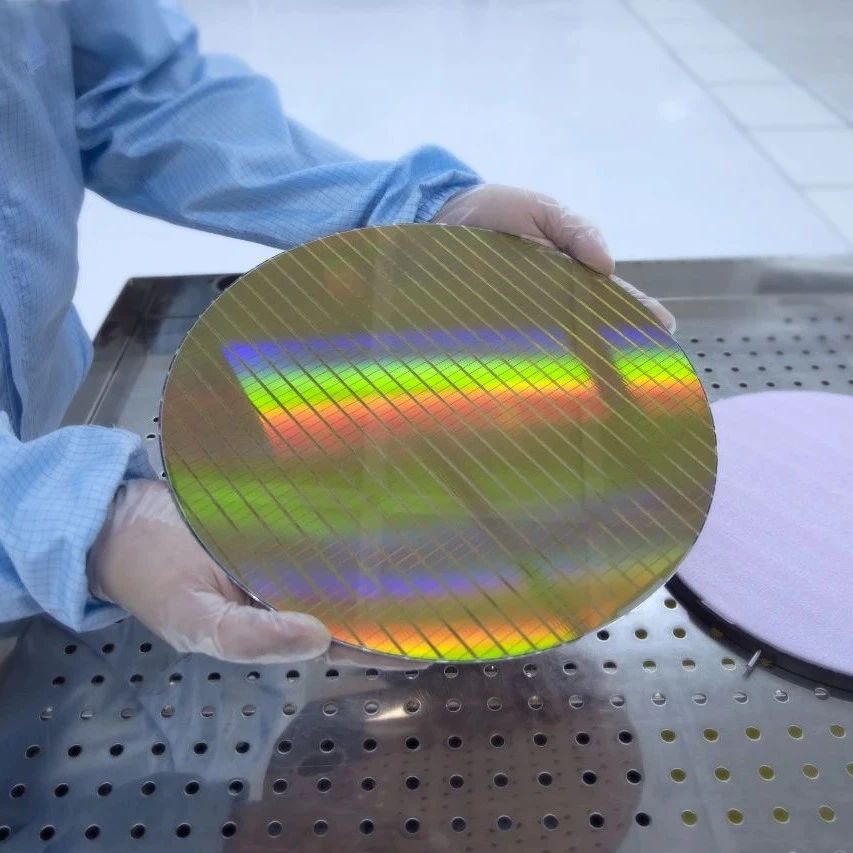
台积电

Search documents
美股集体大跌、原油期货跳水!美元下挫,大选以来涨幅“归零”
21世纪经济报道· 2025-04-10 15:10
北京时间4月1 0日晚,美股低开低走,目前跌幅整持续扩大。截至2 2 : 0 0左右,纳指跌幅扩大至3 . 5%,道指跌超2%,标普5 0 0指数 跌2 . 6%。 科技股、芯片股普跌。 | 名称 | 现价 | 涨跌幅 | | --- | --- | --- | | 英伟达(NVIDIA) | 109.160 | -4.52% | | NVDA.O | | | | 苹果(APPLE) | 192.430 | -3.23% | | AAPL.O | | | | 特斯拉(TESLA) | 255.695 | -6.06% | | TSLA.O | | | | 阿里巴巴 | 107.060 | 2.18% | | BABA.N | | | | 拼多多 | 91.412 | -2.91% | | PDD.O | | | | 台积电 | 152.846 | -3.72% | | TSM.N | | | | 理想汽车 | 21.645 | 2.39% | | LI.O | | | | NANOVIBRONIX | 5.740 | -14.20% | | NAOV.O | | | | 微软(MICROSOF | 379.0 ...


科创板晚报|金山办公控股股东承诺不减持股份 山大地纬实控人筹划深化校属企业体制改革
Xin Lang Cai Jing· 2025-04-10 13:02
Group 1: AI Industry Developments - The European Union is investing in the construction of 13 AI super factories, with a total investment goal of €200 billion, including a dedicated fund of €20 billion for these projects [1] - Each AI super factory will be equipped with over 100,000 high-end AI processors, with the best-performing factories hosting up to 25,000 processors [1] Group 2: Film Industry Response - The National Film Administration of China plans to moderately reduce the import of American films in response to the U.S. government's imposition of tariffs on Chinese goods, which may decrease the audience's favorability towards American films [1] Group 3: Telecommunications and 5G - Beijing aims to achieve comprehensive 5G large-scale applications by the end of 2027, establishing itself as a leading city in 5G applications, enhancing industrial support, network service capabilities, and ecological collaboration [2] Group 4: Corporate Financial Performance - TSMC reported March revenue of NT$285.96 billion, a year-on-year increase of 46.5%, and Q1 revenue of NT$839.25 billion, up 41.6% year-on-year [3] - Meixin Sheng expects Q1 2025 net profit to be between RMB 2 million and 5 million, marking a significant turnaround from losses, driven by a 30% to 35% increase in revenue [5] - Huaxi Biological's 2024 revenue reached RMB 5.371 billion, with skin-related medical revenue exceeding RMB 1 billion, reflecting a 43.57% year-on-year growth [6] Group 5: Corporate Actions and Shareholder Commitments - Kingsoft WPS Corporation Limited, the controlling shareholder of Kingsoft Office, has committed not to reduce its shareholding from April 10, 2025, to December 31, 2025 [4] - Jincheng Co. plans to repurchase shares worth between RMB 50 million and 100 million for employee stock ownership or equity incentives [6] - Guangge Technology intends to repurchase shares with a total amount between RMB 10 million and 20 million for employee stock ownership plans [6] Group 6: Investment and Financing Activities - Stardust Intelligence has completed several rounds of financing, raising several hundred million yuan, with participation from prominent investors [7] - Shenzhen Ruisi Zhixin Technology has received equity financing from multiple investors, indicating strong market interest [8] - Anhui Zhongsheng Traceability Biotechnology has completed B+ round financing of RMB 85 million, continuing its trend of successful fundraising [9]


【太平洋科技-每日观点&资讯】(2025-04-11)
远峰电子· 2025-04-10 11:55
Market Performance - Main board leads with significant gains from companies like Kosen Technology (+10.03%), Zhiwei Intelligent (+10.01%), and Huqin Technology (+10.01) [1] - Growth in the ChiNext board is highlighted by Longyang Electronics (+20.01%) and Huibo Yuntong (+19.99%) [1] - The Sci-Tech Innovation board shows strong performance with Fuliwang (+19.99%) and Juxin Technology (+19.99%) [1] - Active sub-industries include SW Consumer Electronics Components and Assembly (+6.32%) and SW Semiconductor Materials (+1.96%) [1] Domestic News - Kossda and Infineon deepen collaboration to enhance power semiconductor solutions for high-frequency UPS systems [1] - TSMC reports March revenue of NT$285.96 billion, a 10% increase quarter-on-quarter and 46.5% year-on-year, with expectations for slight seasonal decline in Q2 [1] - Luxshare Precision denies rumors of plans to build a factory in the U.S. [1] - Beijing has registered 128 generative AI services as of April 10, 2025, with 23 new services added [1] Company Announcements - China Shipbuilding Special Gas reports a 142.42% year-on-year increase in new orders for trifluoromethanesulfonic acid series products in Q1 2025, with the organic silicon industry seeing a 30% rise in new customers [3] - Meixin Sheng anticipates Q1 2025 revenue between CNY 12.3 million and CNY 12.8 million, a year-on-year increase of 30% to 35%, with net profit expected to be between CNY 2 million and CNY 5 million [3] - Allwinner Technology forecasts Q1 2025 net profit between CNY 85 million and CNY 100 million, a year-on-year increase of 73.16% to 103.72% [3] - Feirongda expects Q1 2025 net profit between CNY 55 million and CNY 62 million, a year-on-year increase of 76.69% to 99.18% [3] International News - SEMI projects global semiconductor manufacturing equipment shipments to reach USD 117.1 billion in 2024, a 10% increase from USD 106.3 billion in 2023 [1] - The EU is implementing a plan to build 13 AI super factories, each equipped with over 100,000 high-end AI processors [1] - Google showcases AR glasses integrated with its Gemini AI assistant at TED2025 in Vancouver [1] - Apple reportedly shipped 600 tons of iPhones from India to the U.S., potentially totaling up to 1.5 million units [1]
台积电公布,营收强劲
半导体芯闻· 2025-04-10 10:10
Core Viewpoint - TSMC's Q1 revenue increased by 42% year-on-year, reaching approximately NT$285.96 billion, with cumulative revenue for the quarter at NT$839.25 billion (about $25.53 billion), aligning with market expectations despite concerns over potential impacts from new U.S. tariffs [1][2]. Group 1: Revenue Performance - TSMC's Q1 revenue of NT$285.96 billion and cumulative revenue of NT$839.25 billion fell within the company's forecast range of $25 billion to $25.8 billion [1]. - Analysts had initially expected a slight dip in revenue due to the January earthquake, but the actual results exceeded these expectations [1]. Group 2: Market Concerns - Investors are particularly focused on the potential weakening of global chip demand following the implementation of new U.S. tariffs on April 9 [1]. - There is anticipation regarding TSMC's upcoming investor conference on April 17, where the company may revise its annual revenue and capital expenditure targets [1]. Group 3: Competitive Position and Risks - Bloomberg analysts believe TSMC maintains a leading position in advanced process technologies, particularly in 2nm and 3nm nodes, which should mitigate the impact of U.S. tariffs [2]. - However, TSMC faces short-term profit risks due to rising operational costs from rapid overseas capacity expansion, particularly in the U.S., and low utilization rates in mature process technologies [2]. Group 4: Customer Impact - TSMC's major customer, NVIDIA, may have 40% to 60% of its U.S. system products eligible for tariff exemptions, potentially reducing the impact of tariffs [3]. - Despite some products being assembled in the U.S., approximately half of NVIDIA's components are still produced in Asia, particularly Taiwan, which may continue to face tariff risks [3].
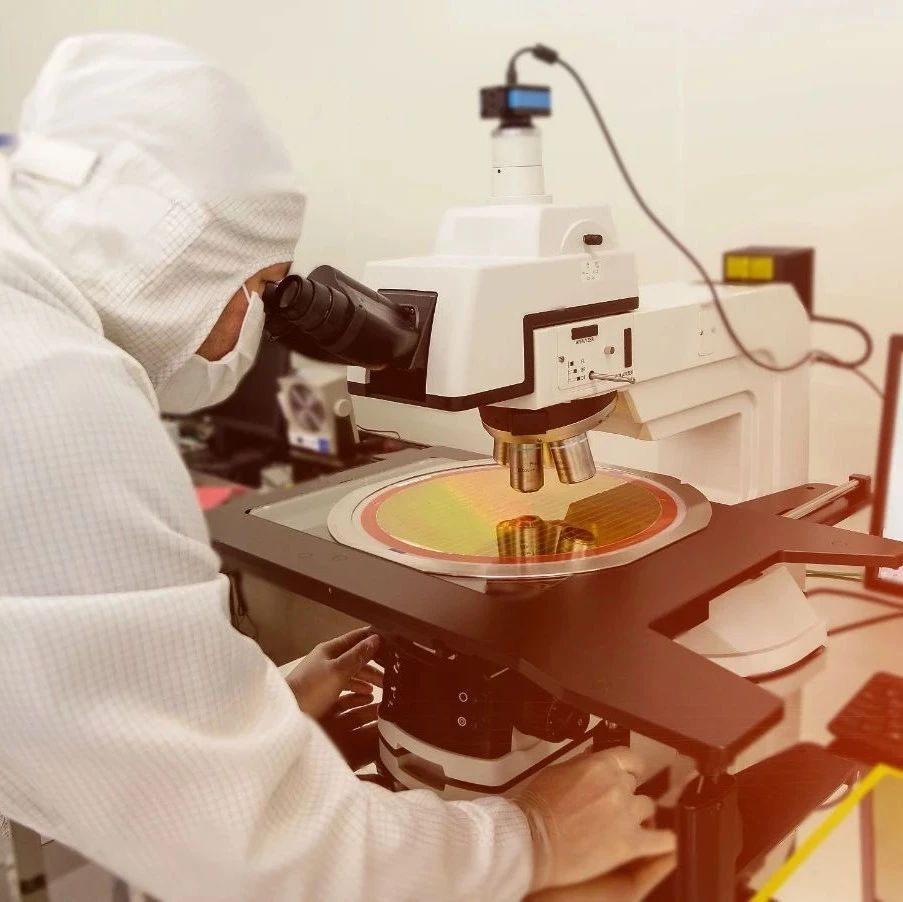
美股盘前,台积电(TSM.N)涨0.4%,3月营收同比增46.5%,一季度营收高于预期。苹果(AAPL.O)、英伟达(NVDA.O)跌2.5%。热门中概股上涨,携程(TCOM.O)涨近5%,阿里巴巴(BABA.N)涨2.5%,拼多多(PDD.O)涨1.7%。
news flash· 2025-04-10 08:04
美股盘前,台积电(TSM.N)涨0.4%,3月营收同比增46.5%,一季度营收高于预期。苹果(AAPL.O)、英 伟达(NVDA.O)跌2.5%。热门中概股上涨,携程(TCOM.O)涨近5%,阿里巴巴(BABA.N)涨2.5%,拼多多 (PDD.O)涨1.7%。 ...

HBM助力,韩国芯片设备腾飞
半导体行业观察· 2025-04-09 01:19
Core Insights - The profits of South Korean wafer fabrication equipment manufacturers significantly increased last year, driven by high bandwidth memory (HBM) and advanced packaging technologies [1] Group 1: Revenue Growth - Hanmi Semiconductor reported the highest year-on-year revenue growth at 638.15%, followed by Techwing at 631.25%, and Zeus at 592.96% [1] - The revenue of Hanmi Semiconductor reached 558.9 billion KRW, with an operating profit of 255.4 billion KRW [1] Group 2: Key Suppliers and Clients - Hanmi Semiconductor is the primary supplier of thermal compression (TC) bonders for HBM production to SK Hynix, the largest HBM supplier globally [2] - Techwing's revenue was 185.5 billion KRW, with an operating profit of 23.4 billion KRW, serving major clients like SK Hynix, Kioxia, and Micron [2] - Zeus generated revenue of 490.8 billion KRW, with an operating income of 49.2 billion KRW, supplying TSV cleaning machines to Samsung and SK Hynix [3] Group 3: Market Dynamics - Jusung Engineering's revenue was 409.4 billion KRW, with 85% coming from China, indicating a strong demand in the Chinese market despite potential risks from the US-China trade war [3] - DIT reported revenue of 116.7 billion KRW, with 59% of its income derived from laser solutions, primarily serving SK Hynix [3] Group 4: New Developments - Auros Technology's revenue was 61.4 billion KRW, and it began supplying overlay measurement equipment to Kioxia in mid-2024 [4]
美股热门中概股多数走高,京东(JD.O)涨4%,台积电(TSM.N)涨3.5%,富途控股(FUTU.O)涨3%。
news flash· 2025-04-08 13:40
美股热门中概股多数走高,京东(JD.O)涨4%,台积电(TSM.N)涨3.5%,富途控股(FUTU.O)涨3%。 ...
“对等关税”对科技行业影响深远,我们的思考
BOCOM International· 2025-04-07 13:24
Investment Rating - The report assigns a "Buy" rating to companies such as Nvidia, AMD, Weir Shares, and Huahong Semiconductor, while SMIC and Zhaoshengwei are rated as "Neutral" [2][6]. Core Insights - The report emphasizes that the "reciprocal tariffs" have a profound impact on the technology industry, particularly affecting the supply chain and demand for end products in the U.S. market [4][5]. - It highlights that China is responsible for producing a significant portion of global technology products, including 81% of personal computers and 75% of smartphones, making it vulnerable to U.S. tariff policies [4]. - The report suggests that the demand for consumer electronics may weaken due to rising prices from tariffs, which could lead to increased inventory levels and reduced profitability for tech companies [4][5]. Summary by Sections Industry Overview - The technology industry is characterized by a clear global division of labor, with most consumer products manufactured in China and Asia, which are affected by U.S. tariff policies [4]. - The report anticipates that tariffs will lead to a decrease in demand for end products in the U.S., impacting the global technology supply chain [4]. Semiconductor Industry - The semiconductor supply chain is expected to experience a direct impact from reduced downstream demand, which may lead to a decline in chip demand [5]. - The report notes that while chip products currently enjoy tariff exemptions, there is a risk of future tariffs being imposed [5]. Investment Recommendations - Investors are advised to be cautious in allocating technology stocks until there are clear signals regarding tariffs and trade policies [5]. - The report recommends focusing on technology companies with strong balance sheets and good bargaining power within the supply chain [5].
台积电熔断!
国芯网· 2025-04-07 13:18
国芯网[原:中国半导体论坛] 振兴国产半导体产业! 不拘中国、 放眼世界 ! 关注 世界半导体论坛 ↓ ↓ ↓ 4月7日消息,受特朗普抛出的"对等关税"政策影响,中国台湾地区股票交易市场出现 "跳水式暴 跌", 台积电 开盘近下跌10%, 触发台股熔断机制! 今日是台湾地区清明连假结束后的首个台股交易日,据台媒报道,开盘后台股便出现"跳水式暴 跌"。大盘一开盘便狂泻2000点,不仅失守具有象征意义的2万点重要关卡,还创下了台股史上"最 大开盘跌点纪录"。 台积电开盘跳空跌停价848元,为去年8月初以来低位,也是 16 年 4 个月以来首次开盘即跳空跌 停。台积电上一次盘中触及跌停是2024年8月 5 日,因美股收黑走低。上一次开盘即跳空跌停是 16 年 4 个月前的 2008 年 12 月 2 日,当时次级房贷危机引发全球金融海啸。 据报道,岛内"三大权值股"台积电、鸿海、联发科同步亮灯跌停,电子、AI、金融等板块全面溃 散,盘面血流成河。 岛内有机构表示,美国政府4月2日公布关税政策不仅冲击全球股市、引发多个经济体表态反制,全 球贸易战升温,市场担忧美国经济未来发展打击美股与台股投资人信心,不利台股近期表现 ...
日本晶圆厂:2nm有50家潜在客户
半导体行业观察· 2025-04-07 01:04
Core Viewpoint - Rapidus, a Japan-based semiconductor foundry, aims to mass-produce 2nm chips by 2027, with trial production lines starting on April 1, 2024. The company is in discussions with 40-50 potential clients, including major U.S. tech firms known as GAFAM [1][2]. Group 1: Production Plans and Partnerships - Rapidus plans to produce next-generation 1.4nm chips after the 2nm production, indicating a timeline of approximately 2.5 to 3 years for adopting next-generation technology [2]. - The Japanese government has committed to providing additional support to Rapidus, with a total aid amounting to 1 trillion 822.5 billion yen, including previous assistance [2]. - Rapidus is collaborating with Broadcom to provide trial samples of 2nm products, which could lead to semiconductor production for Broadcom's clients, including Google and Meta [2]. Group 2: Market Position and Competition - Rapidus aims to differentiate itself by achieving production speeds 2-3 times faster than TSMC, which currently dominates the advanced foundry market [1]. - NVIDIA's CEO has expressed interest in potentially outsourcing AI chip production to Rapidus, highlighting the growing need for diversified supply sources amid U.S.-China decoupling [3][5].