中国铝业

Search documents
王晖参赞到阿玛丽亚水电站慰问一线职工
Shang Wu Bu Wang Zhan· 2026-02-20 17:07
大年初二,王晖参赞到特变电工阿玛丽亚水电站给节日期间奋战在一线的职工拜年,向大家致以新春祝福的同时,提醒大家节日期间一定要注意 安全生产,一起过个祥和平安的中国年。 (原标题:王晖参赞到阿玛丽亚水电站慰问一线职工) 此外,节日期间,王晖参赞还陪同孙勇大使到中水对外凯雷塔和苏阿皮提水电站、博法中铝铝土矿和国电投氧化铝厂考察慰问、与中铝国电投河 南矿业和益丰船务等公司举行座谈会,并到宝武、华为和云南斯盖尔等公司走访慰问。 微信图片_20260219190406_372_48.jpg ...


国运来了挡不住!50亿吨铁矿现世,美媒:中国将改写全球格局
Sou Hu Cai Jing· 2026-02-20 11:05
Core Insights - The global iron ore market has been dominated by Western mining giants for over a century, with China, the world's largest steel producer, heavily reliant on imports for over 80% of its iron ore needs [1][5][7] Group 1: Supply and Demand Dynamics - China has maintained an annual iron ore import volume of over 1.1 billion tons, reflecting a long-term dependency on foreign sources due to limited domestic resources [5][7] - The international iron ore supply has been highly concentrated, with companies like Rio Tinto, BHP, and Vale controlling significant export shares, leading to price volatility that impacts downstream industries [7][21] Group 2: Development of the Simandou Project - The Simandou iron ore project in Guinea, with a total resource of approximately 5 billion tons, has recently gained traction with a $15 billion investment for joint development, including infrastructure like railways and ports [3][9][12] - The project aims to produce 120 million tons annually, potentially making Guinea the third-largest iron ore exporter globally by 2030, thus diversifying supply sources and reducing reliance on traditional markets [19][21] Group 3: Economic and Strategic Implications - The establishment of a stable supply from the Simandou project is expected to enhance China's resource security and reduce price fluctuations, benefiting the steel industry and supporting the transition to high-end manufacturing and green metallurgy [19][23] - The project exemplifies a new model of resource development, where China not only secures raw materials but also invests in infrastructure, fostering sustainable economic growth in resource-rich countries [25][27] Group 4: Long-term Trends and Future Outlook - The successful implementation of the Simandou project marks a shift in China's approach to resource acquisition, moving from passive procurement to active development, thereby enhancing its influence in global resource markets [29][31] - This initiative is part of a broader strategy to secure stable supplies of various strategic minerals, reinforcing China's position in the global supply chain and contributing to its industrial competitiveness [31]

港股收红!
Shang Hai Zheng Quan Bao· 2026-02-16 06:23
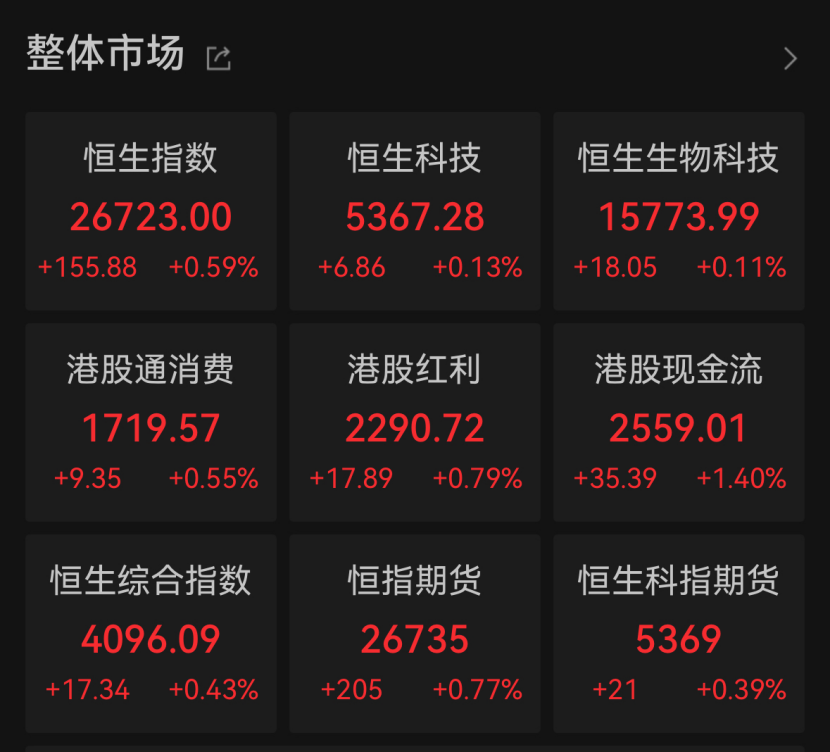
Market Performance - The Hong Kong stock market showed active performance on February 16, with major indices such as the Hang Seng Index, Hang Seng Tech Index, and Hang Seng Composite Index closing higher. The Hang Seng Index closed at 26,723 points, up 0.59% [1][2] - The Hang Seng Tech Index closed at 5,367.28 points, up 0.13%, while the Hang Seng Composite Index closed at 4,096.09 points, up 0.43% [1][2] Semiconductor Sector - The semiconductor sector in Hong Kong exhibited structural differentiation, with stocks like Zhaoyi Innovation and Lanke Technology reaching new highs, with Zhaoyi Innovation's stock price peaking at 435 HKD per share, up over 17% [2][3] - Major storage chip manufacturers are raising chip prices, with Kioxia expected to implement a revised pricing policy for North American customers starting Q1 2026, anticipating an average sales price increase of approximately 50% [2][3] AI Application Sector - The AI application sector in Hong Kong continued its upward trend, with Haizhi Technology Group's stock reaching a high of 125.6 HKD per share, closing at 120 HKD per share, up 29.59% [3] - MINIMAX-WP's stock hit a new high, rising 24.56%, while Zhiyu closed at 508 HKD per share, up 4.74% [3] Non-Ferrous Metals Sector - The non-ferrous metals sector strengthened, with the Wind Hong Kong Non-Ferrous Metals Index rising by 3.64%. Stocks like China Nonferrous Mining and Luoyang Molybdenum Co. saw gains of over 5% [3] - Other stocks in this sector, including Lingbao Gold and Jiangxi Copper, also experienced significant increases, with some rising over 3% [3] Gold Market - The gold market is experiencing a seasonal uptick in demand due to the traditional peak sales period before the Spring Festival, alongside diverse needs for gifting and investment, leading to increased gold consumption [5] Analyst Insights - Analysts from Huatai Securities noted that the Hong Kong market remains volatile, influenced by factors such as the US stock market, domestic consumption during the Spring Festival, and advancements in AI [6] - Recommendations include balanced allocation in the Hong Kong market, with a focus on semiconductor hardware, specialty consumption, and electrical equipment in the short term [6]
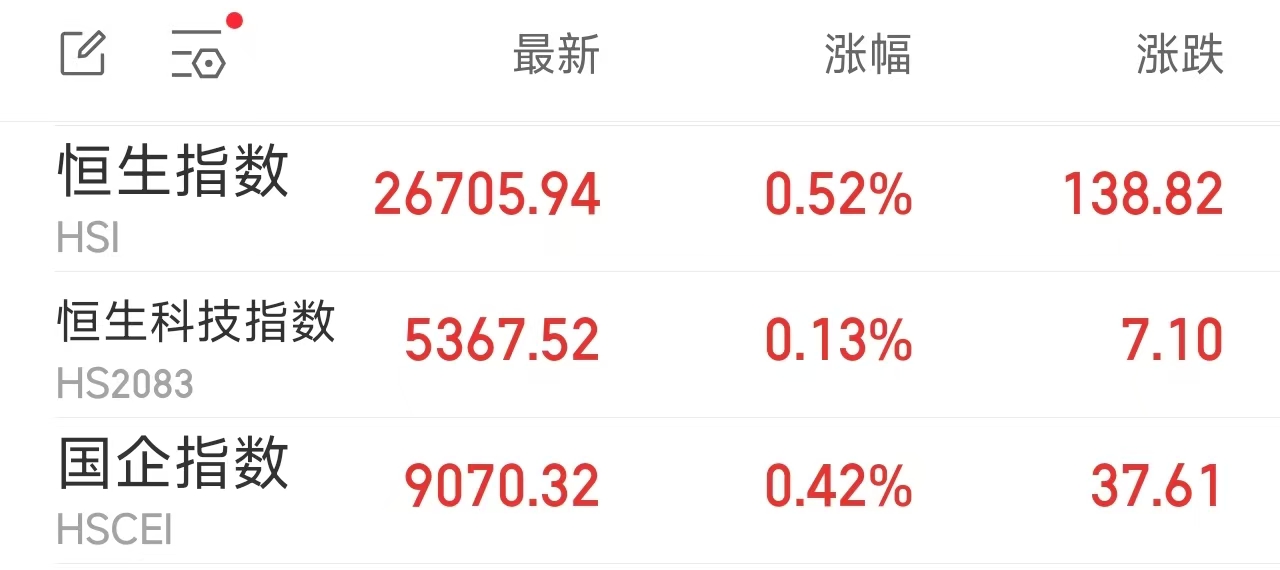
港股蛇年收官:三大指数低开高走,恒指收涨0.52%全年累涨超32%,恒生科指涨0.13%盘中一度跌近2%,港股“AI双雄”齐创新高
Jin Rong Jie· 2026-02-16 05:05
Market Performance - The Hong Kong stock market experienced a half-day trading session on February 16, with the Hang Seng Index closing up 0.52% at 26,705.94 points, the Hang Seng Tech Index up 0.13% at 5,367.52 points, and the National Enterprises Index up 0.42% at 9,070.32 points [1][2] - For the year of the Snake, the Hang Seng Index has increased by over 32%, the Hang Seng Tech Index by over 13%, and the National Enterprises Index by over 23% [1] Sector Performance - The precious metals, semiconductor, and oil & petrochemical sectors showed strength, while defense, consumer discretionary, and hardware equipment sectors underperformed [2] - Notable movements among major tech stocks included Alibaba down 0.26%, Tencent up 0.47%, JD.com down 2.26%, Xiaomi down 0.16%, NetEase up 2.32%, Meituan up 0.43%, Kuaishou up 0.15%, and Bilibili up 0.67% [2] AI Sector Developments - AI application stocks saw significant gains, with Hong Kong's AI leaders, Zhizhu and MiniMax-WP, reaching new highs, with Zhizhu up 4.74% and MiniMax-WP up 24.26% [4] - Zhizhu launched its flagship model GLM-5, which has gained popularity overseas, and announced a price increase for its AI programming subscription plan [5] Semiconductor Sector Insights - The semiconductor sector showed strength, with stocks like Zhaoyi Innovation and Lanke Technology rising over 17%, closing at increases of 9.78% and 14.05% respectively [7] - A price increase trend in storage chips is emerging, with Kioxia expected to raise average selling prices by approximately 50% starting Q1 2026, which is anticipated to significantly improve profitability in the NAND industry [9][10] Precious Metals Market - The precious metals sector is experiencing a surge, with companies like Luoyang Molybdenum rising over 5% and others like Zijin Mining and Ganfeng Lithium also seeing gains of over 4% [6] - Analysts from ANZ have raised their Q2 gold price forecast from $5,400 to $5,800 per ounce, citing ongoing structural drivers despite recent price corrections [6]
刚刚,港股V型反转!科技股走强,MINIMAX涨超24%
Xin Lang Cai Jing· 2026-02-16 04:55
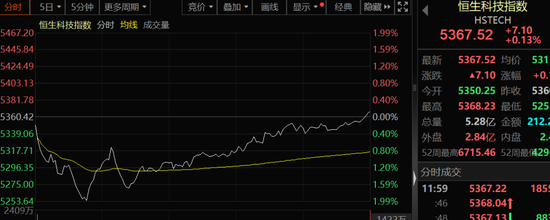
Market Overview - On February 16, the last trading day before the Spring Festival, Hong Kong stocks experienced a V-shaped rebound, with the Hang Seng Index rising by 0.52% after a drop of over 0.6% during the session [1][11] - The Hang Seng Technology Index increased by 0.13%, recovering from a decline of more than 1.9%, while the National Enterprises Index rose by 0.42% after a drop of over 0.8% [1][11] - Resource stocks led the gains, with Luoyang Molybdenum rising over 6%, and Zijin Mining and Ganfeng Lithium both increasing by over 4% [1][11] AI Application Sector - The AI application sector saw significant gains, with Haizhi Technology Group rising nearly 30%, MINIMAX-WP increasing by over 24%, and Maiyue Technology up by over 10% [3][13] - Other notable performers included Fubo Group, which rose by over 8%, and Zhipu, which increased by 4.74% [3][13] Precious Metals Sector - The precious metals sector, particularly gold stocks, showed strong performance, with Luoyang Molybdenum and Laopu Gold both rising over 6%, and Lingbao Gold increasing nearly 5% [6][16] - The international gold price rebounded above $5,000 per ounce after a significant drop the previous week [17][18] Oil and Gas Sector - The oil and gas sector also performed well, with CNOOC rising nearly 4%, and Sinopec Oilfield Services and CNOOC Services both increasing by over 2% [19][20] - The recent fluctuations in international oil prices are influenced by geopolitical tensions, particularly between the US and Iran, which have led to a premium on oil prices [20][21] Summary of Key Stocks - Notable stocks in the AI sector include: - Haizhi Technology Group: 29.59% increase [4][14] - MINIMAX-WP: 24.56% increase [4][14] - Maiyue Technology: 10.11% increase [4][14] - In the precious metals sector: - Luoyang Molybdenum: 6.35% increase [7][17] - Laopu Gold: 6.64% increase [7][17] - In the oil sector: - CNOOC: 4.21% increase [20]


港股蛇年收官:三大指数收红, 恒指涨0.59%全年累涨超32%,恒生科指涨0.13%盘中一度跌近2%,港股“AI双雄”齐创新高
Jin Rong Jie· 2026-02-16 04:28
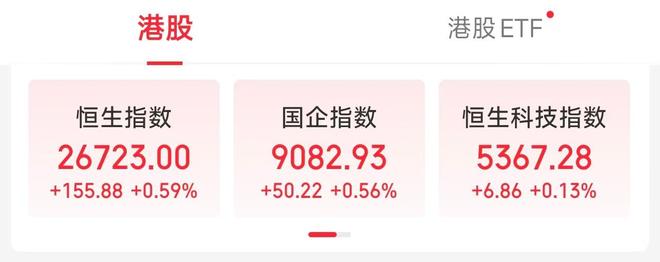
Market Performance - The Hong Kong stock market experienced a half-day trading session on February 16, with the Hang Seng Index rising by 0.59% to close at 26,723 points, while the Hang Seng Tech Index increased by 0.13% to 5,367.28 points, and the National Enterprises Index rose by 0.56% to 9,082.93 points [1] - For the year of the Snake, the Hang Seng Index has accumulated a gain of over 32%, the Hang Seng Tech Index has risen over 13%, and the National Enterprises Index has increased by over 23% [1] Sector Performance - The precious metals, semiconductor, and oil sectors showed strength, while defense, consumer discretionary, and hardware sectors underperformed [3] - Major technology stocks saw declines, with Alibaba down 0.26%, JD.com down 2.26%, and Xiaomi down 0.16%, while NetEase and Meituan saw gains of 2.32% and 0.43%, respectively [3] AI Sector Developments - AI application stocks surged, with Hong Kong's "AI twins" Zhizhu and MiniMax-W reaching new highs, with Zhizhu rising by 4.74% and MiniMax-W increasing by 24.26% [4] - Zhizhu launched its new flagship model GLM-5, which has gained popularity overseas, and announced a price increase for its AI programming subscription plan by at least 30% [6][7] Semiconductor Sector Insights - The semiconductor sector showed localized strength, with stocks like Zhaoyi Innovation and Lanke Technology rising by over 17% [9] - A price increase trend for storage chips is emerging, with Kioxia expected to implement a pricing policy that will raise average selling prices by approximately 50% starting in Q1 2026 [12] Precious Metals Market - The precious metals sector is performing strongly, with companies like Luoyang Molybdenum and Zijin Mining seeing gains of over 5% [8] - Analysts from ANZ have raised their Q2 gold price forecast from $5,400 to $5,800 per ounce, citing ongoing structural drivers despite recent price corrections [8]
港股半导体板块,全线爆发!
Xin Lang Cai Jing· 2026-02-16 03:36
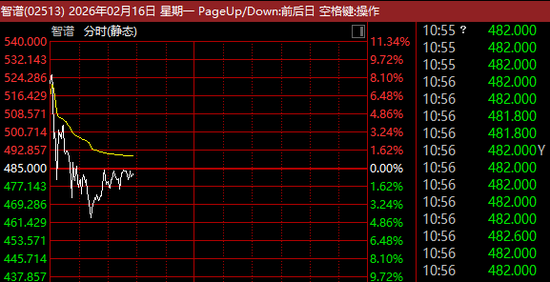
Market Overview - On February 16, the Hong Kong stock market opened slightly lower, with the Hang Seng Index down 0.25% and the Hang Seng Tech Index down 1.14% [1] - The market saw strength in sectors such as precious metals, semiconductors, and oil, while sectors like defense, consumer discretionary, and hardware struggled [1] Technology Sector - The Hang Seng Tech Index has experienced significant declines recently, creating potential value for investors [9] - Recent market volatility is attributed to liquidity shocks, and the current situation is compared to market conditions in November 2025 [10] - Analysts recommend buying on dips and holding stocks through the holiday season [10] AI Application Stocks - AI application stocks in Hong Kong saw gains, with Zhiyu (智谱) opening up over 7% and later experiencing fluctuations [11] - Zhiyu's stock price has increased by 130% since February, with a total market capitalization exceeding 230 billion HKD [11] IPO Developments - Zhiyu has withdrawn its IPO guidance submitted in April 2025 and is now pursuing a new listing on the Sci-Tech Innovation Board [13] - The company has changed its IPO advisory firms to Guotai Junan Securities and China International Capital Corporation [13] Semiconductor Sector - The semiconductor sector showed strength, with stocks like Zhaoyi Innovation (兆易创新) rising over 17% [16] - A price increase in storage chips is expected, with Kioxia planning to raise average selling prices by approximately 50% starting in Q1 2026 [17] - Analysts predict significant improvements in profitability for the NAND industry, with Samsung's NAND business operating margin expected to rise to 37% and SK Hynix to 42% in Q1 2026 [18] Precious Metals Market - The precious metals sector is experiencing a boost, with gold prices expected to rise due to seasonal demand and investment interest [14] - ANZ analysts have raised their gold price forecast for Q2 from $5,400 to $5,800 per ounce [14]
云晨期货收监管警示:权限未分离、未设内审岗、外接系统评估缺位
Sou Hu Cai Jing· 2026-02-16 02:59
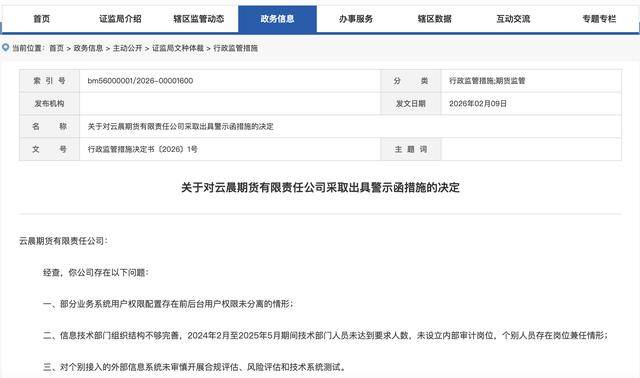
Group 1 - The China Securities Regulatory Commission (CSRC) Yunnan Regulatory Bureau issued a warning letter to Yunchen Futures Co., Ltd. due to internal control deficiencies and inadequate risk management [1] - Specific issues identified include improper user permission configurations, an incomplete organizational structure in the IT department, and lack of compliance and risk assessments for external information systems [1] - The company violated several provisions of the Futures Company Supervision and Administration Measures, leading to administrative regulatory measures being taken [1] Group 2 - Yunchen Futures Co., Ltd. was established in March 2002 and is a subsidiary of China Aluminum Group's financial sector, focusing on commodity and financial futures brokerage [2] - The company has a registered capital of 300 million yuan and is a member of multiple futures exchanges, including Dalian Commodity Exchange and Shanghai Futures Exchange [2] - It operates branches and business offices in major cities such as Beijing, Shanghai, and Kunming, and has a risk management subsidiary, Shanghai Diancheng Trading Co., Ltd. [2]
市场跳水!这一板块,直线拉升
Zhong Guo Ji Jin Bao· 2026-02-16 02:40
Market Overview - The Hong Kong stock market opened slightly lower on February 16, with the Hang Seng Index down by 0.25%, the Hang Seng Tech Index down by 0.19%, and the Hang Seng China Enterprises Index down by 0.08% [1] - The market experienced a downward trend, with the Hang Seng Tech Index seeing a decline of nearly 2% at one point, although the losses narrowed by the time of reporting [1] Index Performance - As of the latest update, the Hang Seng Index decreased by 0.41%, the China Enterprises Index fell by 0.62%, and the Hang Seng Tech Index dropped by 1.58% [2] - The Hang Seng Tech Index reached a high of 5351.270 and a low of 5253.640, with a trading volume of 171 million shares [2] Sector Performance - The precious metals, semiconductor, and oil & petrochemical sectors showed strength against the market trend, while sectors such as defense, consumer discretionary, and hardware equipment struggled [2] - The non-ferrous metals sector led the market, with notable gains from companies like Luoyang Molybdenum, which rose over 7%, and Lingbao Gold, which increased by over 6% [4][5] Notable Stocks - Luoyang Molybdenum's stock price increased by 7.55% to HK$23.360, while Lingbao Gold rose by 6.73% to HK$25.360 [5] - Other companies in the non-ferrous metals sector, such as China Nonferrous Mining and Shandong Gold, also saw significant gains [5] AI and Semiconductor Sector - The AI application sector opened higher, with stocks like Fubo Group rising over 10% and MINIMAX-WP increasing by nearly 6% [8][9] - The semiconductor sector experienced a sharp rise, with stocks like North Microelectronics increasing by over 17% and Lanke Technology rising by over 13% [12][13] Upcoming Changes in Index Composition - The Hang Seng Index will increase its constituent stocks from 88 to 90, adding Ningde Times, Luoyang Molybdenum, and Laopuguojin, while removing Zhongsheng Holdings, effective March 9 [7]

出海2035:接下来是最有希望的十年,可能也是最难的十年 || 大视野
Sou Hu Cai Jing· 2026-02-16 00:45
Core Insights - The article emphasizes the importance of understanding the impact of national security and geopolitical factors on Chinese companies' overseas expansion, which may exceed the companies' capabilities to address [3][4][10]. Group 1: Future Predictions for Chinese Companies Going Abroad - Chinese companies are expected to succeed in localizing products and services, creating consumer welfare in host countries, and some have already reached the stage of creating globally competitive products [5]. - Compliance with local laws and regulations, as well as building good relationships with stakeholders, will also lead to positive outcomes for Chinese companies [5][6]. - The article highlights the need for deep localization and community engagement, as demonstrated by Zijin Mining's proactive approach in Serbia and China Minmetals' efforts in Peru [6][9]. Group 2: Challenges from Geopolitical Factors - Geopolitical issues and national security concerns pose significant challenges for Chinese companies, especially in sensitive markets, which could threaten their operational existence [10][11]. - Companies may seek assistance from government institutions and industry associations when facing geopolitical pressures, but it is difficult for a single company to withstand national and international pressures alone [11][12]. Group 3: Structural Changes in International Business Environment - The article discusses the structural changes in the international business environment, where national security and geopolitical factors have become a standard consideration for many countries, leading to increased intervention in markets [28][29]. - The U.S. and EU have adopted policies that prioritize economic security, viewing China as a significant threat, which has resulted in a shift towards protectionism and increased regulatory scrutiny [29][30][31]. Group 4: Recommendations for Chinese Companies - Companies are advised to enhance their awareness of controllability, especially in mergers and acquisitions, and to consider alternative strategies such as technology or service collaborations to mitigate risks [40][41]. - There is a strong emphasis on compliance with local laws and understanding local cultures to avoid conflicts and ensure sustainable operations [42][43]. - A dynamic balance between exports and overseas expansion is crucial, leveraging China's advantages while responding to global changes [43][44]. Group 5: National-Level Strategies - The article suggests that the government should integrate overseas expansion into national development strategies, fostering communication with companies to create a comprehensive roadmap for internationalization [45]. - It is essential to recognize the disruptive impact of national security and geopolitical factors and to deploy systematic support measures for companies venturing abroad [46].