
优衣库

Search documents
无聊,或许才是中国男装最大的“护城河”
Xin Lang Cai Jing· 2025-11-22 06:17
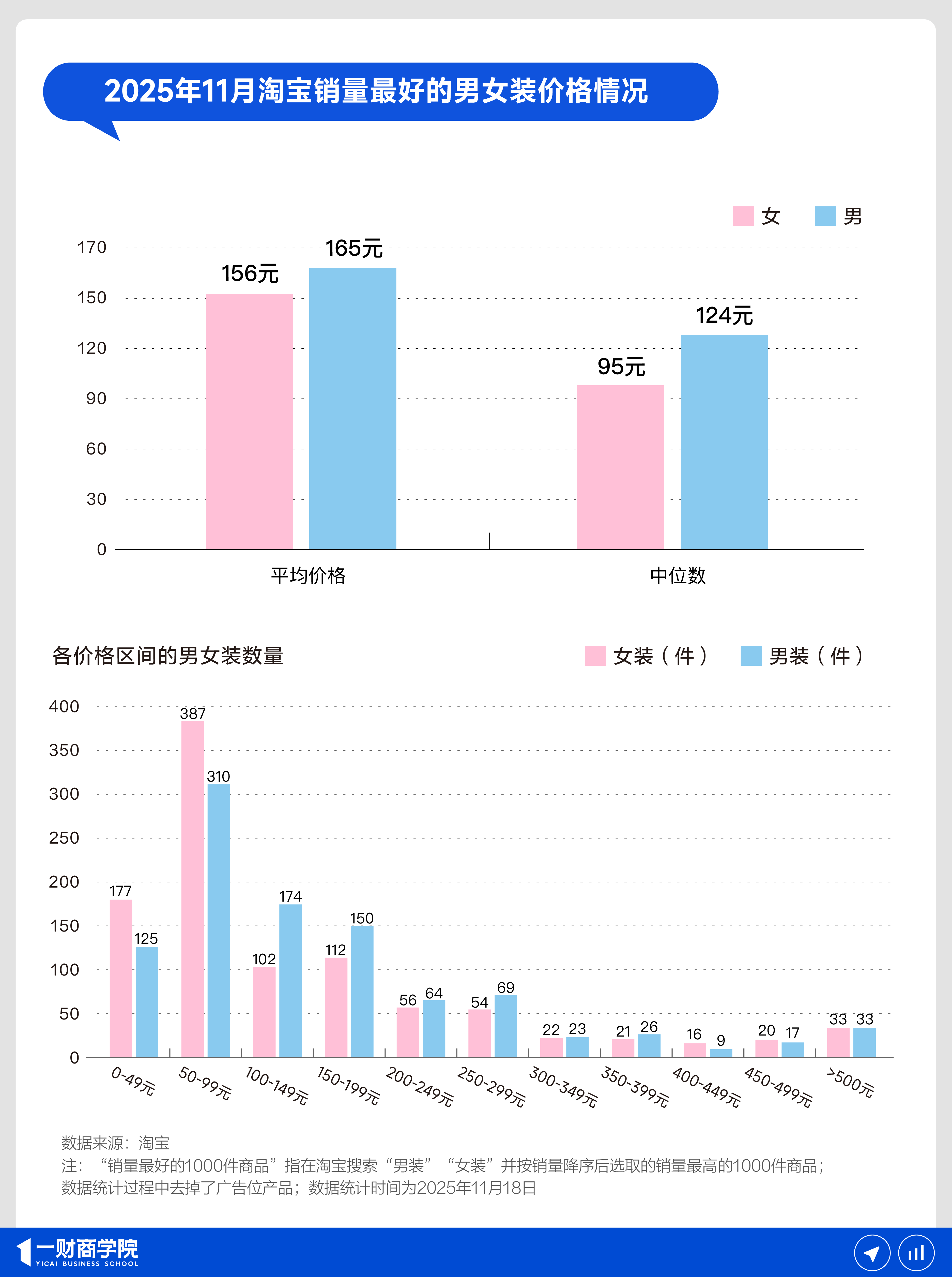
Group 1 - The core viewpoint of the article highlights the evolving landscape of e-commerce, particularly during the Double 11 shopping festival, where AI and near-field commerce are driving a new era focused on technology and efficiency [1][2] - The article emphasizes the emergence of "hidden" players in various sectors such as apparel, outdoor, beauty, and digital products, who, despite not being top sellers, possess unique business hypotheses and user insights [2][3] - The analysis of men's fashion reveals that the notion of men being unwilling to spend on clothing is a misconception, as data shows that the average price of men's clothing is higher than that of women's clothing [4][11] Group 2 - The article discusses the differences in marketing strategies between men's and women's clothing, noting that men's clothing descriptions tend to be less varied and more straightforward, focusing on functionality [16][19] - It highlights that men's purchasing behavior is characterized by a strong purpose and low interaction, often leading to lower return rates compared to women's clothing [33][34] - The financial performance of men's clothing brands, particularly Haianzhijia, is contrasted with women's brands, indicating that while men's brands may not require constant trend education, they face challenges in maintaining sales growth due to high-quality products [43][50]


流量太贵退货率太高,女装线下求生
创业邦· 2025-11-22 03:12
Core Insights - The article discusses significant developments in the fashion industry, particularly the shift of online brands to offline retail and the strategic partnership between Uniqlo and JD.com [5][6]. Group 1: Industry Trends - Uniqlo's partnership with JD.com marks its second collaboration with the platform, aiming to boost performance in the Greater China region after a previous unsuccessful attempt in 2015 [5][6]. - Online women's fashion brands are increasingly opening physical stores, with brands like KEIGAN leading this trend, indicating a strategic pivot rather than merely covering rental costs [6][23]. - The trend of online brands moving offline has intensified, with discussions about the necessity of physical presence dating back to 2015, highlighting a divide in strategies among online fashion brands [8][23]. Group 2: Market Dynamics - The online women's fashion market has seen a significant increase in return rates, with some brands reporting rates as high as 70-80%, which poses challenges for profitability [13][17]. - The onlineization rate of mid-to-high-end women's fashion has risen from less than 4% in 2014 to 15.7% in 2023, while overall apparel onlineization has surpassed 60% [13]. - The shift to offline retail is partly driven by high return rates and increasing customer acquisition costs in the online space, prompting brands to seek more stable revenue streams through physical stores [19][23]. Group 3: Brand Strategies - Brands are increasingly focusing on larger store formats, with examples like H&M's flagship store in Shanghai, which spans 6,000 square meters, reflecting a shift in retail strategy [26][28]. - The opening of large stores serves dual purposes: enhancing brand visibility and acting as a hub for online and offline customer engagement [30][31]. - The trend of opening large stores is not limited to established brands; emerging online brands are also adopting this strategy to improve customer experience and manage inventory more effectively [26][31].

ZARA水洗标太多被吐槽“扎人”,官方回应
新浪财经· 2025-11-21 09:44
Core Viewpoint - ZARA is facing criticism regarding the excessive number of care labels on its clothing, which consumers find uncomfortable and cumbersome, leading to discussions about potential improvements in label design and customer experience [2][11]. Group 1: Consumer Feedback - Consumers have expressed dissatisfaction with ZARA's care labels, describing them as overly numerous and uncomfortable, with some jokingly suggesting that the labels could be compiled into a book [2][11]. - There are reports of customers damaging clothing while attempting to remove these labels, indicating a significant consumer frustration with the current design [2][11]. Group 2: Company Response - ZARA's customer service stated that the number of label layers is adjusted based on product and washing requirements, aiming to provide detailed care instructions and necessary information [11]. - The company acknowledged the feedback regarding label design and indicated that it would relay this information to relevant departments for consideration [11]. Group 3: Market Challenges - ZARA is experiencing challenges in the Chinese market, having closed several stores in major cities, including locations in Shanghai and Shenzhen, as part of a broader strategy adjustment since early 2021 [11]. - The rise of domestic fast fashion brands and changing consumer preferences are contributing to ZARA's struggles in maintaining its market position in China [11]. Group 4: Financial Performance - In the first half of the 2025 fiscal year, Inditex reported a 1.6% increase in sales to €18.357 billion, with ZARA contributing €13.15 billion, showing a slight revenue increase of 0.9% compared to the previous year [12]. - Inditex's market share distribution indicates that Europe remains its largest market, accounting for 50.7%, while the Americas and Asia represent 17.8% and 16% respectively [12].

广发证券:双十一各平台GMV均高增长 服装家纺实现高质量增长
智通财经网· 2025-11-21 02:11
Core Insights - The report from GF Securities indicates significant growth in GMV for both comprehensive e-commerce and live-streaming e-commerce platforms during the 2025 Double Eleven shopping festival, with total sales expected to reach 1.695 trillion yuan, a 14.2% increase from the previous year [1] - The top ten categories in comprehensive e-commerce sales include home appliances, mobile digital products, clothing, personal care and beauty, among others, with clothing and footwear remaining crucial sales channels [1] Group 1: E-commerce Performance - The total sales during the 2025 Double Eleven period (October 7 to November 11) are projected to be 1.695 trillion yuan, up from 1.4418 trillion yuan in 2024, reflecting a 14.2% year-on-year growth [1] - Comprehensive e-commerce platforms, including Tmall, JD.com, and Douyin, are expected to generate sales of 1.6191 trillion yuan, compared to 1.1093 trillion yuan in 2024, marking a 12.3% increase [1] - The top ten sales categories in comprehensive e-commerce include home appliances, mobile digital products, clothing, personal care and beauty, footwear, furniture, food and beverages, office supplies, baby products, and sports and outdoor items [1] Group 2: Competitive Landscape - In the Tmall channel, the competition in the clothing and home textile sectors remains stable, with slight changes in the rankings of the top ten brands across various sub-sectors [2] - For men's clothing, Uniqlo retains the top position, while in women's clothing, Uniqlo also ranks first, showing a slight increase in its position [2] - The overlap of top brands between Tmall and Douyin is low, with only a few brands appearing in the top ten of both platforms, indicating a distinct competitive landscape [3] Group 3: Investment Recommendations - Companies are advised to focus on leading firms in sub-sectors that rank high during the Double Eleven event, as online retail remains a vital channel for clothing and home textiles [4] - Attention should be given to home textile companies that exceed expectations in their Q3 performance [4] - Companies involved in high-demand IP licensing, cultural creativity, high-end crafts, and discount retail in clothing and footwear are recommended for investment [4]

流量太贵退货率太高,女装线下求生
远川研究所· 2025-11-20 13:18
Core Viewpoint - The apparel industry is witnessing a significant shift as brands like Uniqlo and various e-commerce women's fashion brands are moving towards offline retail to adapt to changing market dynamics and consumer behavior [4][18]. Group 1: Major Events in the Apparel Industry - Uniqlo has partnered with JD.com for a second time, marking a strategic move to boost its performance in the Greater China region [4]. - E-commerce women's fashion brands, such as KEIGAN, are increasingly opening physical stores, indicating a trend towards offline retail [4][5]. Group 2: Historical Context and Market Trends - The discussion about whether online brands should transition to offline retail has been ongoing for a decade, with differing opinions from industry leaders [6]. - The online women's fashion market has seen a significant increase in return rates, with some brands reporting rates as high as 70-80% [10][12]. Group 3: Challenges Faced by E-commerce Brands - High return rates and increasing customer acquisition costs have become critical issues for online women's fashion brands, leading to a reevaluation of their business models [9][10][16]. - The shift towards offline retail is seen as a practical solution to mitigate the challenges posed by high return rates and inventory management issues [18][27]. Group 4: Strategic Responses from Brands - Brands are increasingly opting for larger store formats in high-traffic areas to enhance brand visibility and customer experience [22][23]. - The trend of opening flagship stores is not limited to established brands; emerging online brands are also adopting this strategy to strengthen their market presence [26][30]. Group 5: Future Outlook - The apparel industry is moving towards a dual-channel strategy, combining online and offline sales to optimize customer engagement and inventory management [18][27]. - The focus on larger stores and prime locations reflects a broader industry consensus on the importance of physical retail in enhancing brand image and driving sales [22][23].
年底全面撤出内地市场,老牌内衣黛安芬败在哪
Bei Jing Shang Bao· 2025-11-20 12:58
Core Viewpoint - The mid-to-high-end lingerie brand, Triumph, is set to withdraw from the mainland China market by December 31, 2025, as consumer preferences shift away from traditional underwire bras towards more comfortable, wire-free, and sports-oriented lingerie options [1][5][10] Company Summary - Triumph, a well-known lingerie brand from Germany, was one of the first foreign brands to enter the Chinese market, establishing a local production system in the early 1990s [5] - At its peak, Triumph operated over a thousand stores in mainland China, becoming a significant player in the lingerie market [5] - The brand's long-standing focus on underwire bras has led to a failure to adapt to changing consumer demands for comfort and functionality, resulting in its decision to exit the market [5][10] Industry Summary - The lingerie market is experiencing a transformation, with emerging brands focusing on comfort and functionality gaining popularity over traditional brands like Triumph [8][9] - New brands such as ubras and NEIWAI have successfully captured market share by offering wire-free products and innovative designs that resonate with younger consumers [9][10] - Established brands are facing declining sales and profitability, with companies like Wacoal and Aimer reporting significant revenue drops [6][7] - The shift in consumer preferences from "beauty for others" to "comfort for oneself" has created challenges for traditional brands that have not kept pace with market changes [10]

“山野产业”不能野蛮生长
Xin Hua Wang· 2025-11-19 13:15
Core Insights - The rise of hiking enthusiasts is injecting new momentum into the cultural tourism market, creating a multi-layered consumption landscape that includes group services, outdoor gear, and social media engagement [1][3][4] Group 1: Hiking Trends and Group Services - The popularity of hiking has led to the emergence of group services, with outdoor clubs organizing activities through social media platforms, offering affordable day trips typically under 200 yuan [4] - A significant number of urban residents are participating in weekend hiking activities, with platforms like Xiaohongshu reporting over 1.06 million outdoor notes related to "weekend" in the first half of 2025, generating 70 million interactions [3][4] Group 2: Outdoor Equipment Market - The outdoor equipment market is experiencing robust growth, transitioning from a niche to a mainstream consumer category, with a projected online consumption of approximately 300 billion yuan in 2024 [5][6] - Major outdoor brands are gaining traction in the market, with companies like Toread and Mobi Garden going public, and the domestic brand BERSHKA reporting rapid revenue growth from 378 million yuan in 2022 to an expected 1.766 billion yuan in 2024 [6] Group 3: Safety Concerns and Industry Challenges - Despite the growth in hiking activities, safety concerns are rising, with hiking accidents accounting for 73% of 335 reported incidents in 2024, highlighting the need for better risk management and qualified leadership in group hikes [8][9] - The lack of regulatory oversight and entry barriers for outdoor group services poses significant risks, as many group leaders lack professional training and emergency response skills [8][9] Group 4: Infrastructure and Route Development - There is a notable deficiency in the planning and development of fitness trails and hiking routes in China, with nearly 1 million unofficial routes lacking safety guarantees [9] - Some regions, like Yunnan and Jiangxi, are beginning to explore hiking tourism resources, aiming to develop safe and compliant hiking routes while enhancing rural tourism infrastructure [9]

透视3年天猫大促榜,我们发现落榜选手们有几个共同特征……
Di Yi Cai Jing· 2025-11-19 08:54
Group 1: Tmall Sales Trends - Tmall's sales rankings during major promotions serve as a window to observe consumer trends, industry changes, and brand performance [1] - Strong brands like Uniqlo have consistently topped the rankings, while emerging players like Songmont have shown significant growth [1] - Brands that have fallen behind exhibit common characteristics related to path dependence and market cycles [1] Group 2: Ralph Lauren and Teenie Weenie - Ralph Lauren and its counterparts, known as the "middle-class three treasures," gained popularity among urban middle-class consumers for their classic designs and comfort [2][4] - However, Ralph Lauren's presence has diminished in recent rankings, indicating a shift in consumer preferences [4] - Teenie Weenie, once seen as a perfect alternative to Ralph Lauren, has also experienced a significant decline in rankings and overall performance [5][7] Group 3: Old Puh Gold's Rise - Old Puh Gold has emerged as a significant player in the jewelry market, achieving remarkable growth despite the decline of traditional brands like Chow Tai Fook [11][12] - The brand's strategy focuses on positioning gold as a luxury item and targeting high-net-worth consumers [12][13] - Old Puh Gold's success is attributed to its selective expansion strategy and strong brand presence in high-end commercial centers [13][15] Group 4: Nike and Fila Competition - Nike, once dominant in the sportswear market, has faced challenges from Fila, which has recently taken the top spot in Tmall's sports category [16][18] - Fila's strategy emphasizes a complete outfit approach, while Nike's focus has shifted towards direct-to-consumer channels [20] - The structural misalignment in strategies has allowed Fila to capitalize on current consumer trends, leading to Nike's decline in rankings [20] Group 5: Outdoor Brands' Decline - The outdoor brands that gained popularity during the pandemic have seen a decline in rankings, highlighting the seasonal and cyclical nature of these products [21][23] - The registration of outdoor-related companies peaked in 2023, but growth has slowed in subsequent years, indicating a market correction [23] - Brands must innovate and deepen community engagement to sustain interest beyond initial trends [23] Group 6: Arc'teryx's Crisis - Arc'teryx experienced a sudden drop in rankings due to a controversial marketing event that contradicted its brand values [25][27] - The incident damaged consumer trust, which is crucial for premium brands that rely on their reputation for quality and expertise [27] - This situation serves as a warning for brands about the importance of aligning with consumer values and maintaining brand integrity [27]



斯里兰卡须转向以服务主导的出口
Shang Wu Bu Wang Zhan· 2025-11-19 04:43
Core Viewpoint - Sri Lanka should shift its strategy towards high-value service exports due to structural limitations that hinder the expansion of manufacturing exports despite decades of incentives and free trade agreements [1] Group 1: Export Challenges - The export sector in Sri Lanka faces ongoing challenges that are not only governmental issues but also broader structural challenges within the economy [1] - The India-Sri Lanka Free Trade Agreement has yielded only modest benefits, while the Thailand Free Trade Agreement has not been implemented for various reasons [1] - Existing trade agreements are undermined by high domestic costs, affecting the overall export performance [1] Group 2: Comparative Advantage - Sri Lanka's comparative advantage lies in service sectors such as tourism, IT/BPM, logistics, and shipping rather than in manufacturing [1] - Global apparel giant Uniqlo considered investing in Sri Lanka but required a factory that could employ 10,000 workers, which the country cannot provide [1] - Approximately 70% of inputs for local manufacturing are imported, limiting domestic value addition, whereas service exports like digital and IT services or tourism generate higher foreign exchange inflows [1]
热门电影IP引爆线下联名消费潮?
Mei Ri Shang Bao· 2025-11-18 00:18
主题门店、联名快闪、地铁海报……在电影《疯狂动物城2》即将上映之际,相关的各路联名也接踵而 至。近日,杭州线下一些商圈俨然已成为了动物城"痛城":位于杭州工联CC minisoland门店中的联名商 品、地铁龙翔桥D口的宣传海报、湖滨步行街上的大屏广告、城北万象城的主题快闪店。无独有偶,上 周刚刚上映的电影《鬼灭之刃》也引来了一系列的联名活动,热门电影带动线下联名活动和消费在近年 来也已成了常态。 《疯狂动物城 2》未映先火 电影 IP 联动成常态 带动消费与流量双增长 除了瑞幸咖啡,《疯狂动物城2》电影的热度还吹到了其他品牌上:11月12日,麦当劳开心乐园餐推出 《疯狂动物城2》联名玩具,在部分门店设置限定打卡活动和主题陈设;11月7日,优衣库与《疯狂动物 城2》的联名服饰上线,线下门店还设有电影主题摆设,还有百事、丝塔芙、泡泡玛特、TOPTOY、周 大福等不同品类品牌都陆续推出了相关联名产品,热门IP带来的流量加持还在持续扩散。 热门电影IP拉动线下联名消费的现象在近年来已成为了常态,在这之中,各式各样的IP衍生周边成为了 电影粉丝主要的情绪消费之一,潮玩、毛绒挂件、服饰、文具、美妆等拥有官方授权的联名商 ...