奇瑞汽车

Search documents
奇瑞汽车(09973)9月五大品牌总销量为25.56万辆 同比增长约9%
智通财经网· 2025-10-02 04:38
Core Viewpoint - Chery Automobile reported a total sales volume of 255,600 vehicles across its five brands for September 2025, representing an approximate 9% increase compared to the same period last year [1] Sales Performance - Total sales volume for September 2025 reached 255,600 vehicles [1] - Year-on-year growth in total sales is about 9% [1] Segment Breakdown - New energy vehicle sales amounted to 83,500 units [1] - Export sales reached 131,400 units [1]
奇瑞汽车(09973) - 未经审核之二零二五年九月销量
2025-10-02 04:28
| | 本月 | 去年同期 | 同比變動 | 今年累計 | 去年同期 | 同比變動 | | --- | --- | --- | --- | --- | --- | --- | | 品牌 | (輛) | (輛) | (%) | (輛) | 累計(輛) | (%) | | 奇瑞 | 169,580 | 151,051 | 12% | 1,207,862 | 1,113,541 | 8% | | 星途 | 10,802 | 15,717 | -31% | 87,951 | 95,946 | -8% | | 捷途 | 56,586 | 60,226 | -6% | 459,578 | 376,672 | 22% | | iCAR | 10,734 | 5,180 | 107% | 66,630 | 42,798 | 56% | | 智界 | 7,882 | 2,522 | 213% | 57,777 | 21,422 | 170% | | 合計 | 255,584(註) | 234,696 | 9% | 1,879,798 | 1,650,379 | 14% | 香港交易及結算所有限公司及香港聯合交易所有限公司對本公 ...
奇瑞汽车(09973.HK):自主车企领头羊之一新能源转型+高端化+出海带动新增长
Ge Long Hui· 2025-10-01 17:24
Core Insights - Chery Automobile has undergone significant transformation since its establishment in 1997, evolving through four distinct phases: rapid rise (2001-2010), strategic missteps (2011-2013), difficult progress (2014-2019), and resurgence (2020-present) [1] - The company has developed a clear brand matrix consisting of five brands: Chery, Jetour, Exeed, iCAR, and Zhijie, with a focus on various market segments including SUVs, sedans, and new energy vehicles [1] - Chery has achieved a strong market position in the 5-20W price segment, ranking second in wholesale sales, with significant growth projected for 2024 [2] Sales Performance - In the 5-20W price segment, the wholesale sales of passenger vehicles reached 9.266 million units in H1 2025, reflecting a year-on-year growth of 16%, with Chery's sales expected to increase from 1.75 million units in 2023 to 2.375 million units in 2024 [2] - The main brand's sales are projected to grow from 879,000 units in 2022 to 1.643 million units in 2024, with a compound annual growth rate (CAGR) of 36.7% [3] - Jetour's sales are expected to rise from 180,000 units in 2022 to 568,000 units in 2024, achieving a remarkable CAGR of 77.7% [3] Export and Market Strategy - By 2024, Chery's export ratio is anticipated to reach 54.4% for its main brand, 30.6% for Jetour, and 36.2% for Exeed, indicating a strong focus on international markets [3] - The overall penetration rate of new energy vehicles in the market has reached 44.9%, with Chery's market share in the self-owned brand segment at 76.0% [2] Financial Projections - The company forecasts revenues of 315 billion, 394.3 billion, and 485.6 billion yuan for 2025, 2026, and 2027 respectively, with net profits projected at 16.22 billion, 21.36 billion, and 27.19 billion yuan [3]
“合作网”密集落地 中国新能源汽车迎来欧洲时刻
Jing Ji Guan Cha Bao· 2025-10-01 16:37
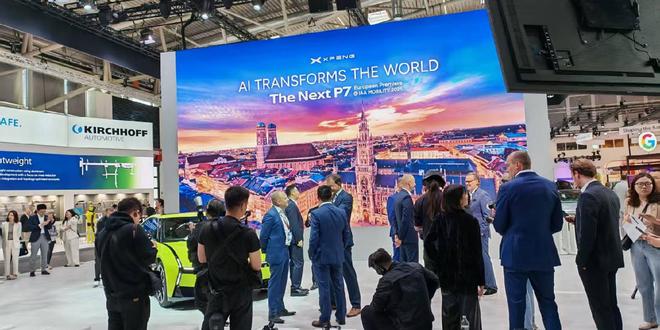
Core Insights - The European automotive industry is experiencing heightened urgency as Chinese automakers accelerate their entry into the European market, marked by significant announcements from companies like Horizon Robotics and XPeng Motors [2][3] - Chinese companies are adopting a "light asset" model for local production in Europe, collaborating with established European manufacturers to mitigate high costs and compliance risks associated with direct exports [3][4] - The recent Munich Auto Show highlighted the growing presence of Chinese electric vehicle manufacturers, showcasing their products and strategies to engage European consumers [7][9] Group 1: Market Entry Strategies - Chinese automakers are increasingly localizing production in Europe to reduce costs and compliance risks, with companies like Leap Motor and XPeng partnering with local manufacturers for production [3][4] - XPeng is set to enter five European countries, leveraging partnerships with local distributors to facilitate market entry and operations [3][4] - The collaboration with established European firms is seen as a strategic move to build a comprehensive ecosystem for Chinese automotive brands in Europe [2][3] Group 2: Product Strategy and Consumer Engagement - Chinese companies are tailoring their product strategies to meet European consumer preferences, with a focus on developing models specifically for the European market [10][11] - The current market sentiment in Europe is mixed, with some consumers expressing interest in Chinese electric vehicles while others remain cautious, preferring to support local brands [9][10] - Companies like XPeng are committed to maintaining a unified global product strategy, minimizing differences between models sold in China and Europe [11][12] Group 3: Technological Collaboration and Supply Chain Development - The establishment of local supply chains through partnerships with European firms is crucial for Chinese automakers, allowing them to learn and adapt to European manufacturing standards [12] - Horizon Robotics is actively seeking collaborations with major global suppliers to enhance its technological offerings and establish a presence in the European market [5][6] - The focus on local partnerships is expected to facilitate knowledge transfer and improve the competitiveness of Chinese electric vehicles in Europe [12]


中梁咨询 以利他发心 伴企业家在标杆游学中破局成长
Sou Hu Cai Jing· 2025-10-01 06:44
Core Insights - The article emphasizes the importance of learning from benchmark companies to drive growth and innovation in businesses, with Zhongliang Consulting positioning itself as a facilitator of this learning journey [1][5][59] Group 1: Zhongliang Consulting's Mission and Approach - Zhongliang Consulting aims to empower entrepreneurs through a dual growth system of classroom learning and benchmark study tours, focusing on practical application and real-world validation of theories [1][5] - The founder, Liang Jian, believes that merely providing knowledge is insufficient; entrepreneurs must engage with successful companies to experience operational realities and learn replicable success strategies [5][7] Group 2: Learning from Benchmark Companies - The study tours include visits to various successful companies such as Fat Donglai, Alibaba, and Chery Automobile, allowing entrepreneurs to build a worldview that supports their business development [3][29] - Fat Donglai's business philosophy centers on treating employees well to ensure customer satisfaction, showcasing a strong employee-centric culture that attracts talent [10][12][14] - Alibaba demonstrates the transformative power of digital innovation, emphasizing that digitalization should be business-driven and customer-focused, with practical steps for traditional industries to begin their digital journey [15][19][21] Group 3: Case Studies of Successful Companies - Chery Automobile highlights the importance of long-term commitment to innovation, investing 5% of sales revenue in R&D, which has led to over 20,000 patents and a strong market presence [22][24][28] - Zhongliang's incubated benchmark companies, such as Oumulin Yoga and Hanmeilan Dental, illustrate how smaller enterprises can achieve significant growth through focused strategies and cultural evolution [29][30][34] Group 4: The Value of the Learning Journey - Entrepreneurs actively engage in the learning process by documenting insights and discussing their experiences during the tours, which fosters a deeper understanding of their own business challenges [45][56] - The structured approach of Zhongliang Consulting ensures that the knowledge gained during the tours is translated into actionable strategies for participants, reinforcing the idea of continuous support and growth [56][59]
2025年汽车行业网络营销监测报告
艾瑞咨询· 2025-10-01 00:00
Core Insights - The domestic automotive market is entering a new cycle characterized by accelerated growth, structural optimization, and renewed marketing strategies, with a cumulative retail of 12.746 million passenger vehicles from January to July 2025, representing a year-on-year growth of 10.3% [1][4] - The penetration rate of new energy vehicles (NEVs) has exceeded 50% for five consecutive months, indicating a significant shift towards NEVs and driving the replacement of traditional fuel vehicles [1][4] - The market is supported by a collaborative policy framework from national and local governments, which includes trade-in programs and subsidies for NEVs, aimed at stimulating consumer demand [1][7] Market Overview - The cumulative retail sales of passenger vehicles in the domestic market reached 12.746 million units from January to July 2025, with NEVs showing a growth rate consistently above 10% [4] - NEVs are becoming the core engine of industry growth, with their sales rapidly increasing and contributing to the replacement effect of fuel vehicles [4] Advertising and Marketing Trends - The automotive advertising market saw a positive turning point in July 2025, with the number of advertisers experiencing growth for the first time, particularly in the NEV sector [2][14] - Mobile and OTT platforms are gaining a larger share of advertising spend, while PC advertising is declining; web banner ads remain a core choice for advertisers [2][18] - The marketing strategy is shifting towards a user-centric approach, leveraging data and AI to enhance efficiency across the entire customer journey [3][37] Policy Environment - National policies such as trade-in programs and subsidies for NEVs are being complemented by local government initiatives tailored to regional needs, enhancing the overall market vitality [7][9] Manufacturer Landscape - The top three manufacturers (BYD, Geely, FAW-Volkswagen) account for approximately one-third of the market share, indicating a clear oligopolistic effect in the industry [10][11] - BYD leads the market with retail sales of 1.885 million units from January to July 2025, significantly outpacing traditional manufacturers [10][11] Advertising Strategies - The advertising content focuses on product launches, price discounts, and brand building, with a clear emphasis on enhancing consumer perception and driving sales conversion [27][32] - The automotive marketing landscape is evolving from a focus on traffic acquisition to user engagement, aiming to improve trust and conversion efficiency [37][39] Case Studies - Automotive platforms like Autohome are leveraging their content expertise to provide integrated marketing solutions, enhancing brand visibility and consumer engagement [39][43] - Specific marketing campaigns, such as those for the AITO M7 and Zeekr 009, illustrate targeted strategies that address consumer pain points and leverage social engagement for brand positioning [45][47]



寻求第二增长曲线 小鹏、长安等瞄准万亿市场加速飞行汽车布局
Xin Jing Bao· 2025-09-30 14:14
Core Insights - Chinese automotive companies are accelerating their investments in the flying car sector, with significant announcements from major players like Changan Automobile and XPeng Motors regarding their plans for production and delivery timelines [2][5][6] Company Developments - Changan Automobile announced the establishment of a joint venture for flying cars and aims to launch a flying car by 2030 [2] - XPeng Motors plans to mass-produce the world's first "car + airplane" combination flying car by 2026, having developed seven prototype models and invested billions [5] - GAC has also introduced its multi-rotor flying car, the GAC High Domain AirCab, with a planned price of no more than 1.68 million yuan, set to begin operations in the Guangdong-Hong Kong-Macao Greater Bay Area [5] - Other companies like Geely and FAW are still in the research and testing phases, with FAW's flying car project based in Shenzhen aiming for its first flight this year [6] Market Potential - Morgan Stanley predicts that the flying car industry could reach a market size of $300 billion by 2030 and $9 trillion by 2050, with China potentially becoming the largest urban low-altitude transportation market [3] - The low-altitude economy is expected to create multiple trillion-dollar segments, including low-altitude vehicle manufacturing, infrastructure, and operational services [7] Industry Trends - The flying car sector is seen as a response to the saturation of the smart automotive market, with companies seeking new growth avenues [7] - The integration of electric vertical takeoff and landing (eVTOL) vehicles and drones is being pursued through various development strategies, including self-research and partnerships [5] Challenges - Despite the promising outlook, flying cars face challenges related to costs and regulatory frameworks that must be addressed for widespread adoption [4][9] - High costs are attributed to the current stage of smart terminal development and the lack of a mature supply chain, which could hinder the industry's growth [10]


寻求第二增长曲线,小鹏、长安等瞄准万亿市场加速飞行汽车布局
Bei Ke Cai Jing· 2025-09-30 14:12
Core Viewpoint - Chinese automotive companies are accelerating their investments in the flying car sector, with several firms announcing plans for production and development timelines for flying vehicles by 2026 and beyond [1][2][4]. Group 1: Company Developments - Changan Automobile announced the establishment of a joint venture for flying cars and plans to launch a flight-capable vehicle by 2030 [1]. - Xiaopeng Motors aims to mass-produce the world's first "car + airplane" combination flying car by 2026, having developed seven prototype models with significant investment [2][4]. - GAC has also made strides in the flying car market, with plans to deliver its GOVY AirCab by the end of 2026, priced under 1.68 million yuan [4]. - Other companies like Geely and FAW are still in the research and testing phases, with FAW's flying car expected to make its first flight this year [5]. Group 2: Market Potential - Morgan Stanley predicts that the flying car industry could reach a market size of $300 billion by 2030 and $9 trillion by 2050, with China potentially becoming the largest urban low-altitude transportation market [2]. - The low-altitude economy is expected to create three trillion-dollar segments: low-altitude vehicle manufacturing, infrastructure, and operational services [8]. Group 3: Industry Trends - The flying car sector is seen as a response to the saturation of the smart automotive market, with companies seeking new growth avenues [7]. - The Chinese government has recognized the low-altitude economy as a strategic emerging industry, providing a favorable policy environment for its development [7]. Group 4: Challenges - Despite the promising outlook, flying cars face challenges such as high costs and regulatory hurdles that must be addressed for widespread adoption [3][10]. - The current high costs are attributed to the immature supply chain and the need for technological advancements in core components [10][11].
9月港股季结日收官 指数与IPO市场均表现亮眼
Zhong Guo Xin Wen Wang· 2025-09-30 13:59
Group 1 - The Hong Kong stock market showed an upward trend on the last trading day of the quarter, with the Hang Seng Index closing at 26,855.56 points, marking a monthly increase of over 7% and a quarterly rise of approximately 2,783 points [1][2] - The Hang Seng Technology Index performed exceptionally well, rising over 13% in September and reaching a peak of 6,475.92 points on the last trading day [1] - The IPO market in Hong Kong saw increased activity, with three companies, including Zijin Mining International, listing on September 30, collectively raising over 26 billion HKD [1] Group 2 - Zijin Mining International's IPO was notable, being the second-largest IPO in Hong Kong this year, raising approximately 25 billion HKD, and its stock price surged over 67% on the first trading day, closing at 120.6 HKD with a market capitalization of 316.45 billion HKD [2] - Large technology stocks received significant investment, with companies like Tencent, Alibaba, and Kuaishou Technology reaching 52-week highs, while semiconductor and software stocks also saw historical highs [2]
奇瑞汽车上半年营收1416.02亿元,同比增长26.3%
Ju Chao Zi Xun· 2025-09-30 13:57
Core Insights - Chery Automobile reported significant performance growth for the six months ending June 30, 2025, with total revenue reaching 141.602 billion, a year-on-year increase of approximately 26.3% [2] Revenue Breakdown - Revenue from passenger vehicles increased from 101.862 billion to 128.646 billion, reflecting a growth of approximately 26.3% [2] - Revenue from automotive components and parts surged from 5.48 billion to 9.679 billion, marking a substantial increase of approximately 76.6% [2] - Other income decreased from 4.782 billion to 3.277 billion, a decline of approximately 31.5% [2] Cost and Profit Analysis - Sales costs rose from 95.318 billion to 123.183 billion, an increase of approximately 29.2% [2] - Gross profit increased from 16.806 billion to 18.419 billion, a growth of approximately 9.6%, but the gross margin fell from 15% to 13%, a decline of 2 percentage points [2] Other Income and Expenses - Other income and gains significantly increased from 3.331 billion to 8.266 billion, a rise of approximately 148.2%, primarily due to increased exchange gains [2] - Selling and distribution expenses grew from 3.445 billion to 5.962 billion, an increase of approximately 73.1% [2] - Administrative expenses decreased from 3.273 billion to 2.65 billion, a decline of approximately 19% [2] - Research and development expenses rose from 3.597 billion to 5.2 billion, an increase of approximately 44.6% [2] Net Profit - Chery Automobile recorded a net profit of 9.906 billion, compared to 7.898 billion in the previous period, reflecting a growth of approximately 25.4% [3]