DeepSeek

Search documents
拓邦股份:T-Smart一站式解决方案已经实现了和阿里云、DeepSeek的对接
Zheng Quan Ri Bao Zhi Sheng· 2025-09-10 08:06
Core Viewpoint - The company has integrated its T-Smart one-stop solution with Alibaba Cloud and DeepSeek, preparing for product development and technical application enhancements through AI technology [1] Group 1: AI Integration - The company has deployed DeepSeek on internal servers to facilitate product development based on the T-Smart system [1] - DeepSeek is recognized as an advanced AI technology that can enhance internal efficiency through various methods [1] - The company is actively incorporating AI technology into various products, including cleaning robots, lawn mowers, teaching robots, cooking robots, energy storage systems, and industrial visual inspection [1] Group 2: Future Exploration - The company plans to continue exploring the integration of AI with smart hardware products in the future [1]

开盘:沪指微跌0.02%、创业板指涨0.21%,贵金属及固态电池概念股走高,冰雪概念股走低-股票-金融界
Jin Rong Jie· 2025-09-08 01:34
Market Overview - On September 8, A-shares showed mixed performance with the Shanghai Composite Index down 0.02% at 3811.67 points, while the Shenzhen Component Index rose 0.33% to 12631.98 points and the ChiNext Index increased by 0.21% to 2964.43 points [1] - The non-ferrous metals and solid-state battery sectors led the gains, while the duty-free and CPO sectors experienced declines [1] - Precious metals continued to perform strongly, with West Gold rising by 6.44% and Zhaojin Gold increasing by 3.39% [1] Company News - Semiconductor company SMIC is planning to acquire 49% of its subsidiary, SMIC North Integrated Circuit Manufacturing, through an A-share issuance, leading to a stock suspension since September 1 [3] - Kweichow Moutai's controlling shareholder has received a loan commitment of up to 2.7 billion yuan from Agricultural Bank of China to support stock repurchase plans, with a target repurchase amount between 3 billion and 3.3 billion yuan [3] - Tongda Co. received a corrective order from the Henan Securities Regulatory Bureau for various compliance issues, including improper use of raised funds and inaccurate accounting practices [4] - Yihua Tong has terminated its plan to acquire 100% of Xuyang Hydrogen Energy due to a lack of consensus among parties involved [4] - Guokai Micro plans to acquire 94.366% of Ningbo Yongxin Integrated Circuit Co. through a combination of stock issuance and cash payment, which is expected to constitute a major asset restructuring [5] Industry Insights - The retail industry in China shows positive trends, with the retail industry prosperity index reaching 50.6% in September, marking an increase of 0.5 percentage points from the previous month [9] - New Kai Lai, a semiconductor equipment company, is nearing the end of its latest financing round with a pre-investment valuation of 65 billion yuan, targeting the high-end semiconductor equipment market [10] - The global optical switch market is projected to reach $2.02 billion by 2031, with a compound annual growth rate of 16.3% [11] - The global demand for uranium in nuclear reactors is expected to rise by one-third to 86,000 tons by 2030, creating a significant supply-demand gap due to the depletion of existing uranium mines [14] - OpenAI has significantly increased its projected cash burn to $115 billion by 2029, reflecting the growing investment in AI technologies [18]

政策加持、巨头引领、发布会催化临近,全面看好端侧AI
Tianfeng Securities· 2025-09-07 14:44
Investment Rating - The industry rating is "Outperform" (maintained) [10] Core Viewpoints - The report is optimistic about edge AI investment opportunities driven by policy support, leading companies, and upcoming product launches [1][2] - The Chinese government has initiated the "Artificial Intelligence +" era, providing comprehensive policy support and resources to accelerate technology integration and industry development [2][19] - Major companies like Google and Apple are making significant advancements in edge AI, with Google launching the Tensor G5 chip and Apple planning a major product launch on September 10 [3][4][28] - The report highlights a significant increase in demand for smart glasses, with sales on JD.com growing over 10 times year-on-year [5][34] - Meta is restructuring its AI department and pausing hiring, focusing on developing new hardware and software for the metaverse [6][35] Summary by Sections 1. Policy Support and Industry Trends - The Chinese government has launched the "Artificial Intelligence +" initiative, aiming for deep integration of AI across six key sectors by 2027 [2][19] - The initiative outlines a three-step development goal, emphasizing the importance of smart terminals and AI applications [19][24] 2. Major Company Developments - Google has released the Tensor G5 chip, enhancing the Gemini model experience and establishing a hardware ecosystem centered on edge AI [3][25] - Apple is set to unveil the iPhone 17 and other products, with significant upgrades in hardware and AI capabilities, including a partnership with Google to enhance Siri with Gemini AI [4][31][32] 3. Market Demand and Performance - The report notes a remarkable increase in smart glasses sales, with JD.com reporting over 10 times growth in transaction volume [5][34] - Meta's restructuring of its AI team aims to enhance its product offerings and address rising costs while maintaining revenue growth from AI-driven advertising [6][36] 4. Future Outlook - The report anticipates continued growth in the edge AI sector, driven by technological advancements and increasing consumer demand for smart devices [1][2][5]



谷歌无需剥离Chrome浏览器丨南财合规周报(第206期)
2 1 Shi Ji Jing Ji Bao Dao· 2025-09-07 13:24
Regulatory Governance - Tencent responded to a lawsuit from miHoYo, stating that it cannot provide user data without a formal judicial process due to privacy laws [2] - The lawsuit involves a civil case between Shanghai miHoYo and Shenzhen Tencent, scheduled for a hearing on September 5 [2] Industry Trends - The express delivery industry is experiencing a price increase in key regions such as Guangdong and Zhejiang, driven by national "anti-involution" policies [3] - Analysts predict that the average price per delivery will rise, improving company profits and enhancing the income stability of delivery personnel [3] Legal Developments - A U.S. court ruled that Google does not need to divest Chrome but must open certain search data to competitors [4][5] - This ruling is part of a broader antitrust lawsuit initiated in 2020, which accuses Google of maintaining its market dominance through high entry barriers [5] AI Developments - Meituan launched its first open-source large model, LongCat-Flash-Chat, which features 560 billion parameters and is designed for efficiency and performance [6] - Douyin established a smart medical technology company focusing on AI applications [7][8] - Antom, a brand under Ant Group, introduced an AI agent payment solution that enhances transaction security and efficiency [8] - DeepSeek is reportedly developing advanced AI agent functionalities to compete with leading tech companies [8] - Apple is planning to enhance Siri with an AI search tool in collaboration with Google, utilizing the Gemini model for improved performance [8][9]
谷歌无需剥离Chrome浏览器丨合规周报
2 1 Shi Ji Jing Ji Bao Dao· 2025-09-07 13:22
Regulatory Governance - Tencent responded to the lawsuit from miHoYo, stating that the request for QQ user data can only be fulfilled through formal judicial procedures due to privacy laws [2] - A new civil lawsuit between miHoYo and Tencent is set to be heard on September 5 in Shenzhen [2] Industry Trends - The express delivery industry is experiencing a price increase in key regions such as Guangdong and Zhejiang, driven by national "anti-involution" policies [3] - Analysts predict that the average price per delivery will rise, improving company profits and enhancing the income stability of delivery personnel [3] Legal Developments - A U.S. court ruled that Google does not need to divest Chrome but must open certain search data to competitors [4][5] - This ruling is part of a significant antitrust lawsuit initiated in 2020, which accuses Google of maintaining its market dominance through high entry barriers [5] AI Developments - Meituan launched its first open-source large model, LongCat-Flash-Chat, which features a mixed expert model architecture and boasts 560 billion parameters [6] - Antom, a brand under Ant Group, introduced an AI agent payment solution that enhances payment intent recognition and transaction traceability [8] - DeepSeek is reportedly developing advanced AI agent functionalities, aiming to compete with leading tech companies like OpenAI [8] - Apple is collaborating with Google to enhance Siri with an AI search tool, integrating a new system called "World Knowledge Answers" [8]


湾财周报 人物 曾执掌证监会5年,易会满被查
Nan Fang Du Shi Bao· 2025-09-07 11:13
Group 1 - Yi Huiman, former chairman of the China Securities Regulatory Commission (CSRC), is under investigation for serious violations of discipline and law [1] - Yi Huiman served in various roles at the Industrial and Commercial Bank of China (ICBC) for over 30 years before becoming the CSRC chairman in January 2019 [1] - During his tenure at the CSRC, Yi promoted significant reforms in China's capital market, including the implementation of a comprehensive registration system for A-shares [2] Group 2 - The comprehensive registration system has played a crucial role in expanding the A-share market, with over 1,900 new companies listed during Yi's tenure [2] Group 3 - The banking sector is facing challenges, with listed banks reporting a revenue growth of only 1.0% and a net profit growth of 0.8% in the first half of 2025 [8] - The pressure on joint-stock banks is increasing due to a low-interest-rate environment and intensified competition, leading to a need for operational resilience [8]


AI周报|9月起AI生成合成内容必须添加标识;Anthropic融资130亿美元
Di Yi Cai Jing· 2025-09-07 02:00
Group 1: Anthropic's Valuation and Funding - Anthropic completed a Series F funding round of $13 billion, bringing its valuation to $183 billion, making it the fourth highest-valued unicorn globally, following SpaceX, ByteDance, and OpenAI [2] - The high valuation is supported by the performance of its AI model, Claude, which has shown leading capabilities in programming and mathematics [2] - Anthropic's annualized revenue is projected to reach approximately $10 billion by early 2025, increasing to over $5 billion by August 2025 [2] Group 2: AI Content Regulation - The "Artificial Intelligence Generated Synthetic Content Identification Measures" came into effect on September 1, requiring all AI-generated content to be clearly labeled [3] - Companies like DeepSeek and Tencent have implemented identification systems for AI-generated content to prevent public confusion and misinformation [3] Group 3: Broadcom's AI Chip Orders - Broadcom received over $10 billion in AI chip orders from a new customer, significantly improving its AI revenue outlook for fiscal year 2026 [4] - In the third quarter, Broadcom's AI-related revenue reached $5.2 billion, a 63% year-over-year increase, with expectations of $6.2 billion in the fourth quarter [4] Group 4: Nvidia's Investment in Quantum Computing - Nvidia's venture capital arm invested approximately $600 million in quantum computing company Quantinuum, which is valued at $10 billion [5] - Nvidia is actively collaborating with quantum computing companies and has established a quantum computing research lab [5] Group 5: DeepSeek's Advanced AI Model Development - DeepSeek is reportedly developing a more advanced AI model with agent capabilities to compete with U.S. rivals like OpenAI [6] - The new model aims to perform multi-step tasks with minimal user instructions and learn from past actions [6] Group 6: Lenovo's AI Product Launch - Lenovo unveiled multiple AI-enabled products at the IFA 2025 event, including high-performance PCs and smart devices [7] - The company emphasizes the importance of balancing innovation with commercial viability in product development [7] Group 7: Salesforce's Workforce Reduction - Salesforce has cut approximately 4,000 customer support positions, attributing the reduction to AI's ability to handle tasks previously performed by humans [8] - The CEO noted that AI now manages up to 50% of the company's workload [8] Group 8: Apple's Collaboration with Google - Apple has reportedly partnered with Google to evaluate the Gemini AI model and has shelved plans to acquire Perplexity [9] - This collaboration indicates a shift towards leveraging existing technologies rather than pursuing acquisitions for AI development [9] Group 9: UBTECH's Robot Procurement Contract - UBTECH secured a procurement contract worth 250 million yuan for humanoid robots, marking one of the largest contracts in the global humanoid robot sector [10] - This contract is part of a trend of increasing commercial applications for humanoid robots [11] Group 10: Stardust Intelligence's Robot Order - Stardust Intelligence announced a strategic cooperation for a thousand-unit order of humanoid robots, aimed at automating tasks in industrial settings [12] - This collaboration represents one of the earliest large-scale commercial deployments of humanoid robots in the industrial sector this year [12]



用AI重塑海外营销,中国品牌正在摆脱“低价”标签|最前线
3 6 Ke· 2025-09-06 06:59
Core Insights - The iPX 2025 China Outbound Marketing Summit, hosted by impact.com, gathered over 600 industry representatives to discuss the transformation driven by AI technology and the new global market landscape for Chinese brands [1] - Jennifer Zhang, Managing Director of impact.com Greater China, emphasized that partnerships are the underlying logic driving the transformation of Chinese brands, moving away from traditional customer acquisition models towards partnership marketing [1][3] - The shift towards partnership marketing is particularly effective for engaging Generation Z and emerging consumer groups, establishing brand trust through community and creator-driven strategies [1] Group 1 - AI advancements, such as those from DeepSeek and the widespread application of generative AI tools like ChatGPT, are pushing marketing into the AI era, complicating market competition and diversifying consumer demands [3] - SAP's CRM expert highlighted that AI-supported user operations and DTC transformation can help brands shift from a transaction-centric model to a user interaction model, enhancing customer lifetime value [3] Group 2 - impact.com is upgrading its products to enhance partnership marketing efficiency, focusing on four key areas that leverage AI and automation [3][5] - The platform has undergone a complete front-end redesign for improved user experience, introduced an AI-powered assistant "Ask Impact" for partner recommendations and insights, and implemented an intelligent agent framework to automate repetitive tasks [5] - The launch of the "Product Boost" retail media solution allows brands to incentivize specific product promotions through partnerships, creating new growth channels [5] Group 3 - Participants at the summit stressed that Chinese brands are in a critical transition from "Made in China" to "Created in China," needing to shed low-cost labels and rely on product innovation, design, and quality to reshape their international image [7] - To penetrate mature markets like the U.S., companies must build multi-touchpoint partnership matrices and focus on localized communication to integrate into local cultural contexts [7]


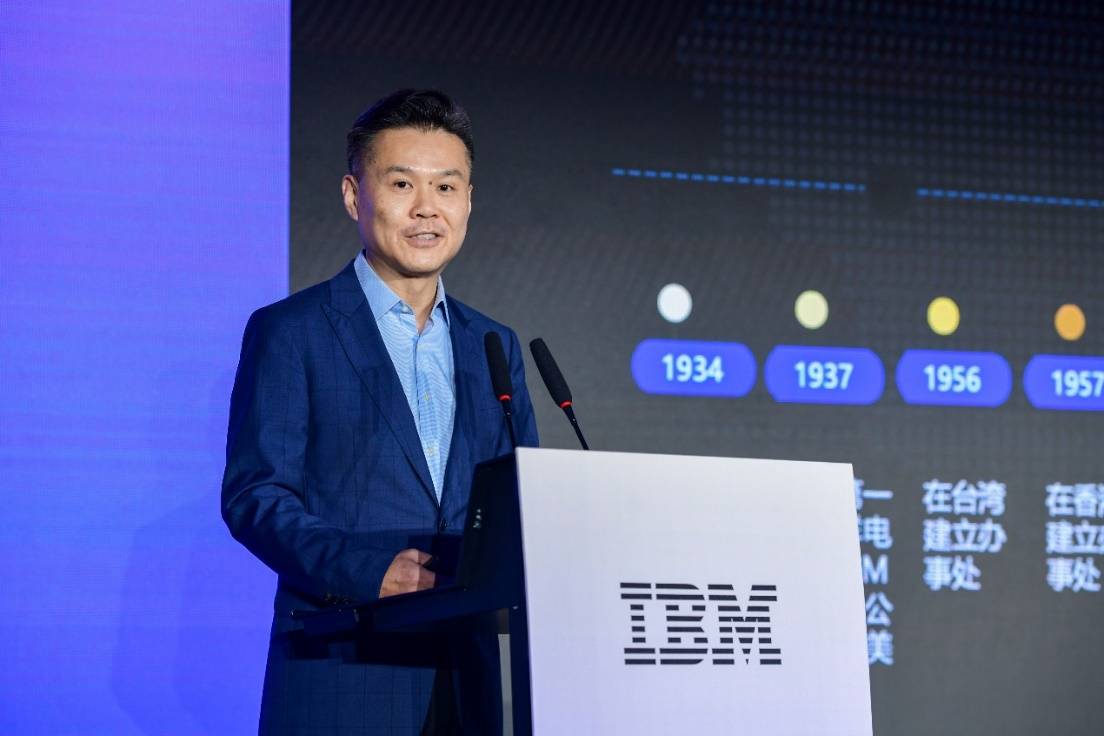
对话陈旭东:IBM 在中国市场的战略重心,已经转向民营企业
Sou Hu Cai Jing· 2025-09-06 03:08
Group 1 - IBM announced its "AI Deep Cultivation" plan in China, focusing on digital transformation for private enterprises and global operations through a mixed cloud and AI strategy [2][4] - The company aims to build platforms that leverage AI to drive enterprise digital transformation, distinguishing itself from competitors like Microsoft and Google [2][4] - IBM's AI technology solutions include the Watsonx platform, AI agents, and hybrid cloud, with software business revenue projected to account for 45% of total revenue in 2024 [7] Group 2 - Many enterprises are eager to adopt AI but often have misconceptions about its capabilities, equating AI solely with generative AI [5][6] - The application of generative AI in enterprises is currently limited, with traditional AI still playing a crucial role in enhancing efficiency [6][7] - IBM identifies a significant challenge for many companies in establishing a solid digital foundation before effectively utilizing AI [7] Group 3 - China is rapidly advancing in the fields of robotics and AIGC, but there is still room for improvement in data storage and management [8] - The Chinese market is expected to see a high adoption rate of new intelligent terminals and AI agents, with projections of over 70% by 2027 and 90% by 2030 [10] - IBM's focus on AI agents includes developing integrated solutions centered around Watsonx Orchestrate, with various pre-built and customizable agents for different business functions [10][11] Group 4 - The competitive landscape for AI agents globally is intensifying, with companies like IBM and Alibaba actively pursuing this area [9][11] - China's robust agricultural foundation, complete industrial system, and active consumer ecosystem create a conducive environment for AI application and innovation [11] - IBM predicts that by 2028, 15% of daily business decisions will be generated automatically by AI agents [10]

DeepSeek年底或发布超级智能体:能自主学习,AGI之路再进一步?
Sou Hu Cai Jing· 2025-09-05 14:04
Core Viewpoint - A new competition in the AI field is emerging, with DeepSeek preparing to launch a groundbreaking AI agent that can perform complex tasks with minimal user instructions [1][5][7]. Group 1: DeepSeek's Achievements - DeepSeek's R1 model created a significant impact earlier this year, demonstrating performance comparable to or exceeding that of OpenAI's top products at a fraction of the cost [1]. - The company has publicly shared its technology details for five consecutive days, promoting the advancement towards Artificial General Intelligence (AGI) through open-source initiatives [3]. - DeepSeek has released the V3 technical architecture and a potentially important open-source AI business model, solidifying its position in the industry [3]. Group 2: Industry Impact - The open-source efforts of DeepSeek have influenced other AI companies, including OpenAI, which resumed offering open-source rights for its models after several years [5]. - Despite the launch of new models like OpenAI's GPT-5, DeepSeek has remained relatively quiet, only releasing minor updates until now [5]. - The upcoming AI agent is expected to learn and self-improve based on past actions, marking a significant advancement in AI development [7]. Group 3: Capabilities of the New AI Agent - Unlike traditional chatbots that handle simple text responses, DeepSeek's AI agent aims to tackle a broader range of complex tasks, from planning vacations to coding and debugging [8]. - This breakthrough signifies a move towards increasingly autonomous AI systems that require minimal human intervention to initiate and execute complex real-world tasks [8]. - The development of this AI agent brings new hope and expectations for the entire AI industry, as current AI agents still require substantial human oversight [11].