
顺丰控股

Search documents
东兴证券晨报-20251125
Dongxing Securities· 2025-11-25 09:06
Economic News - The call between Chinese President Xi Jinping and US President Trump highlighted the positive trajectory of China-US relations since their meeting in Busan, emphasizing mutual benefits and cooperation [2] - The Ministry of Industry and Information Technology has proposed a new safety standard for mobile power supplies, which is significantly stricter than previous standards, potentially impacting production capabilities of many factories [2] - The successful launch of the Shenzhou-22 spacecraft marks China's first emergency launch mission in its manned space program, carrying essential supplies for the space station [2] - A new quantum computer factory in Shenzhen has been established, capable of producing a quantum computer with 1000 qubits, aiming for standardized and large-scale manufacturing [2] - The Heilongjiang provincial government is focusing on developing emerging industries and enhancing innovation in its 14th Five-Year Plan, including sectors like aerospace and new materials [2] Company Insights - Industrial Fulian reported that its fourth-quarter operations are proceeding as planned, with no adjustments to profit targets, indicating strong customer demand [6] - Tianqi Lithium's chairman noted a significant increase in demand for lithium materials driven by renewable energy and electric vehicles, predicting a balanced supply-demand scenario by 2026 [7] - Lianrui New Materials has received approval for its convertible bond issuance, which is set to be listed on the Shanghai Stock Exchange [7] Industry Analysis - The banking sector is experiencing a decline in social financing growth, with October's social financing increasing by only 8.5% year-on-year, reflecting a decrease in government bond financing and overall credit demand [8][9] - The credit market is showing signs of seasonal decline, with a year-on-year increase in RMB loans of only 6.5%, indicating weaker corporate credit demand and a shift towards retail lending [10] - The logistics industry is facing a slowdown in growth, with the volume of express deliveries in October increasing by only 7.9% year-on-year, attributed to changing consumer behavior during promotional events [13][14] - The express delivery sector is witnessing a divergence in strategies among major companies, with some focusing on market share while others prioritize price increases, impacting overall revenue dynamics [16]
研报掘金丨国盛证券:首予顺丰控股“买入”评级,看好后期利润改善与弹性释放
Ge Long Hui· 2025-11-25 05:30
Core Viewpoint - Guosheng Securities report highlights SF Holding's transformation from a leading express delivery company to a comprehensive logistics service provider, driven by the booming cross-border e-commerce and accelerated overseas expansion of Chinese manufacturing [1] Group 1: Market Potential - The overseas market presents broader growth potential compared to the domestic market, with supply chain and international business expected to become a second growth curve for the company [1] Group 2: Operational Efficiency - Continuous cost reduction through network integration and operational transformation is anticipated, leading to a significant increase in operational volume and improved profit margins in the future [1] Group 3: Valuation and Investment Rating - Considering the company's high-end market barriers and future growth potential, it is expected to enjoy a valuation premium. The target P/E for 2026 is set at 22x, corresponding to a reasonable valuation of 55.22 yuan, with an initial "buy" rating assigned [1]

偏不上市,这位80后却成了山东首富
首席商业评论· 2025-11-25 05:03
Core Viewpoint - The article discusses the wealth and business operations of the Zhang family, particularly focusing on Zhang Gang and his father Zhang Xuexin, who control the Xinfeng Group, a significant player in the aluminum industry in China. Despite their substantial wealth, the company remains private and does not disclose financial statements, raising questions about their operational strategies and financing methods [4][12]. Group 1: Company Overview - Xinfeng Group, based in Chao Ping, Shandong, ranks 20th on the 2025 list of China's top 500 private enterprises, with a revenue of 302.89 billion yuan in 2024, surpassing state-owned enterprises like China Minmetals [7][12]. - The company has a simple ownership structure, with Zhang Gang holding 51% and his mother 19.6%, while three other shareholders hold 9.8% each, indicating a family-controlled business model [7][12]. - The company has expanded its operations from power generation to a comprehensive aluminum industry chain, including bauxite mining, alumina production, and aluminum processing [4][8]. Group 2: Financing and Investment Strategies - Xinfeng Group has engaged in significant acquisitions, including a 40% stake in the largest lead-zinc mine in China for approximately 5.5 billion yuan and various bauxite mining rights for over 71.81 million yuan [4][12]. - Despite not being publicly listed, the company has secured substantial bank loans, including a 2.4 billion yuan credit line from Industrial and Commercial Bank of China for heating projects [13][14]. - The company has historically relied on employee fundraising for financing, offering high returns to investors, which has led to a strong internal funding mechanism [15][16]. Group 3: Historical Context and Evolution - The origins of Xinfeng Group trace back to 1972 with the establishment of a thermal power plant, which later evolved into a diversified aluminum enterprise under Zhang Xuexin's leadership [8][9]. - The company underwent several name changes and structural transformations, with significant shifts in ownership and operational focus over the years, reflecting a complex history of growth and adaptation [9][10]. - The exit of state-owned investors from the company's structure has allowed for greater control and flexibility in operations, aligning with the family's long-term strategic vision [10][11].

机构调研揭示行业矛盾:机器人爆单之后将迎交付大考
Bei Jing Shang Bao· 2025-11-25 01:32
Core Insights - Goldman Sachs' supply chain report highlights a significant gap between optimistic production capacity plans and actual confirmed orders in the humanoid robot industry, indicating a typical characteristic of the current market [1] - The report titled "Capacity Optimism Ahead of Actual Orders" suggests that while key supply chain companies have planned annual production capacities ranging from 100,000 to 1,000,000 units, none have secured large, confirmed orders [1] Group 1: Industry Challenges - The release of a production video by UBTECH, showcasing their humanoid robot Walker S2, has sparked controversy due to prior skepticism from Goldman Sachs and public doubts about delivery authenticity [3] - Criticism from industry peers, such as Brett Adcock from Figure AI, claims that parts of the video were digitally altered, raising questions about the credibility of the demonstration [3] - Despite these challenges, UBTECH claims to have established partnerships with major companies like BYD and Foxconn to promote the commercial application of humanoid robots in various sectors [3] Group 2: Positive Signals - The humanoid robot sector is witnessing a surge in orders and investment, with over 18 significant contracts exceeding 10 million yuan since 2025, indicating a shift from concept validation to industrialization [5] - Investment activity has intensified, with over 100 financing events in the first half of 2025, totaling more than 15 billion yuan, and major firms like JD and Alibaba making substantial investments in the sector [6] - UBTECH has publicly disclosed multiple large orders, including a 1.59 billion yuan project for a humanoid robot data collection center, although details on operational specifics remain vague [7] Group 3: Delivery Strategies - UBTECH aims for large-scale delivery by focusing on key sectors such as automotive manufacturing and logistics, with a production capacity plan targeting 5,000 units by 2026 and 10,000 units by 2027 [8] - In contrast, Accelerated Evolution adopts a "small steps" approach, prioritizing single-unit deliveries to refine production and service capabilities before scaling up [9] - The competition in the humanoid robot sector is expected to intensify by 2025, with a focus on achieving large-scale commercial deployment and improving cost efficiency [9]


顺丰控股(002352) - H股公告-翌日披露报表
2025-11-24 11:45
FF305 翌日披露報表 (股份發行人 ── 已發行股份或庫存股份變動、股份購回及/或在場内出售庫存股份) 表格類別: 股票 狀態: 新提交 公司名稱: 順豐控股股份有限公司(於中華人民共和國註冊成立的股份有限公司) 備註: 上述佔有關事件前的現有已發行股份(不包括庫存股份)數目百分比是依據本公司已發行股份數目(不包括本公司根據本公司的董事會於2025年4月28日採納並批准及於 2025年10月30日調整的回購授權所回購的,且存放於本公司回購證券賬戶的29,761,389股A股庫存股份)總額5,009,669,020股(包括4,769,669,020股A股及240,000,000 股H股)計算。 FF305 第 2 頁 共 7 頁 v 1.3.0 呈交日期: 2025年11月24日 如上市發行人的已發行股份或庫存股份出現變動而須根據《香港聯合交易所有限公司(「香港聯交所」)證券上市規則》(「《主板上市規則》」)第13.25A條 / 《香港聯合交易所有限公司GEM證券 上市規則》(「《GEM上市規則》」)第17.27A條作出披露,必須填妥第一章節 。 | 第一章節 | | | | | | | | --- | - ...
无人车在农村哐哐干活
3 6 Ke· 2025-11-24 10:40
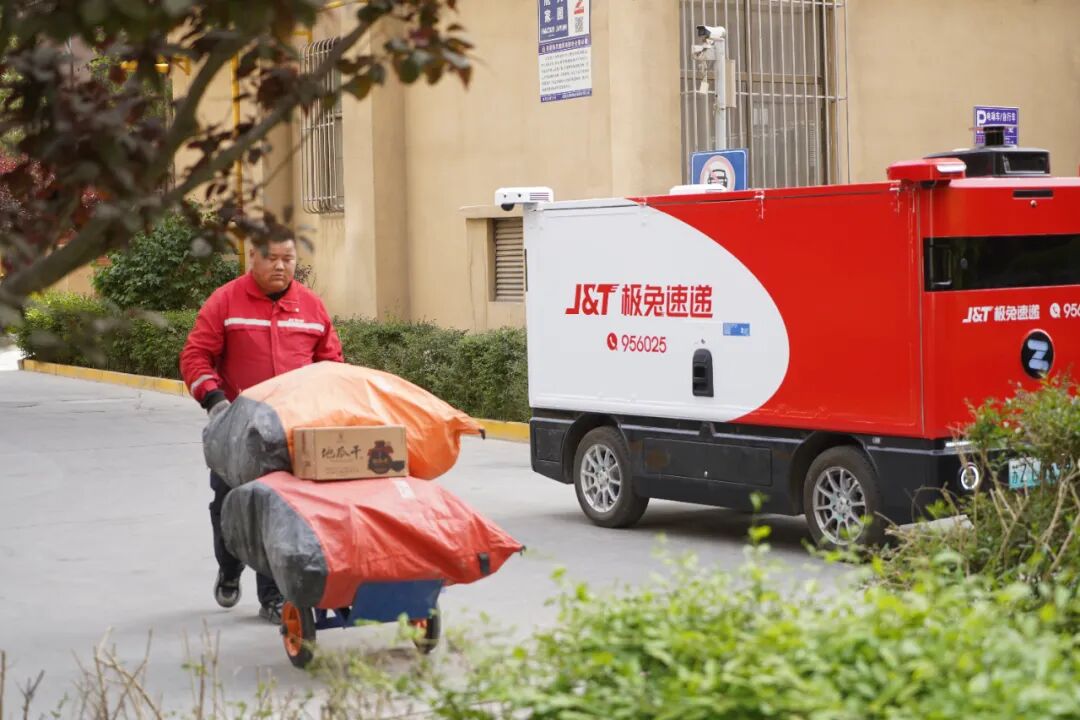
Core Insights - The adoption of unmanned delivery vehicles is rapidly increasing in the logistics industry, particularly in remote areas where traditional delivery methods are inefficient [2][3][12] - Companies like Zhongtong, Jitu, and SF Express are significantly investing in unmanned vehicles, with Zhongtong deploying nearly 3,000 units and plans for further expansion [2][3][12] - The cost of unmanned vehicles has decreased dramatically, making them more accessible for logistics companies, with prices dropping from over 1 million yuan in 2018 to around 40,000-70,000 yuan by 2025 [16][17] Industry Trends - Unmanned vehicles are being utilized in various provinces, including Xinjiang and Gansu, to enhance delivery efficiency and reduce operational costs [3][5][6] - The technology behind unmanned vehicles is continuously evolving, with companies like Jiushi Intelligent and New Stone Technology making significant advancements in hardware and software [9][16] - The logistics sector is increasingly recognizing the potential of unmanned vehicles to address labor shortages and improve delivery times, especially in rural and hard-to-reach areas [6][12][19] Financial Implications - The operational cost savings from using unmanned vehicles are substantial, with estimates suggesting savings of up to 2.5 million yuan annually in fuel and labor costs for companies [6][19] - The shift to unmanned delivery is supported by government initiatives, with some local governments offering financial incentives for companies investing in unmanned technology [12][19] Challenges and Considerations - Despite the growing acceptance of unmanned vehicles, concerns about safety and liability in the event of accidents remain a significant issue for the industry [18][19] - The uneven distribution of regulatory approvals for unmanned vehicles across different regions poses challenges for widespread adoption [12][20] - Companies are actively working to address operational challenges, such as battery life and vehicle durability, to enhance the reliability of unmanned delivery systems [19][20]
无人车,在农村哐哐干活
创业邦· 2025-11-24 10:13
Core Viewpoint - The rapid adoption of unmanned delivery vehicles in the logistics industry is transforming operations, particularly in remote areas where traditional delivery methods are inefficient [3][4][5]. Group 1: Unmanned Vehicle Adoption - Unmanned delivery vehicles are increasingly being utilized across various provinces, with over 6,000 units expected to be in operation by the end of 2024, surpassing the number of unmanned taxis [4][6]. - Major logistics companies like Zhongtong, Jitu, and SF Express are investing heavily in unmanned vehicles, with Zhongtong deploying nearly 3,000 units and plans for further expansion [4][6]. - The cost of unmanned vehicles has significantly decreased, with prices dropping from over 1 million yuan in 2018 to a range of 40,000 to 70,000 yuan by 2025, making them more accessible for logistics companies [22][23]. Group 2: Operational Efficiency and Cost Savings - Unmanned vehicles can operate efficiently in sparsely populated areas, reducing costs associated with fuel and labor, with some operators reporting savings of up to 25,000 yuan annually [8][9]. - The ability to deliver packages without the need for a driver allows logistics companies to serve remote locations more effectively, with unmanned vehicles capable of making multiple trips per day [8][9]. - In cities like Qingdao, unmanned vehicles are being integrated into urban logistics networks, addressing challenges such as driver shortages during peak times [9][10]. Group 3: Technological Advancements - Continuous improvements in unmanned vehicle technology, including hardware and software updates, are enhancing their operational capabilities in various weather conditions [12][23]. - Companies like Jiushi Intelligent are iterating their vehicle models annually to adapt to different climates and road conditions, ensuring stable performance [12][23]. - The integration of automated production processes is reducing manufacturing costs and improving the efficiency of unmanned vehicle production [23][24]. Group 4: Regulatory Environment and Challenges - The successful deployment of unmanned vehicles is contingent upon local government regulations and the establishment of road rights, with over 100 cities having opened up for unmanned delivery operations [16][28]. - Companies are actively engaging with local authorities to ensure compliance and safety, often requiring special permits and ongoing monitoring of unmanned vehicle operations [15][16]. - Despite the growing acceptance of unmanned vehicles, concerns about liability and accident management remain, necessitating clear legal frameworks [26][28].

偏不上市,这位80后却成了山东首富
创业家· 2025-11-24 10:12
Core Viewpoint - The article discusses the wealth and business operations of the Zhang family, particularly focusing on Zhang Gang and his father Zhang Xuexin, who control the Xinfeng Group, a major player in the aluminum industry in China. Despite their significant wealth, the company remains private and does not disclose financial statements, raising questions about their operational strategies and financing methods [4][9][13]. Group 1: Company Overview - Xinfeng Group, based in Chipping, Shandong, ranks 20th on the 2025 list of China's top 500 private enterprises, with a revenue of 302.89 billion yuan in 2024, surpassing state-owned enterprises like China Minmetals [8][9]. - The company has a simple ownership structure, with Zhang Gang holding 51% and his mother 19.6%, while three other shareholders hold 9.8% each, indicating a family-controlled business model [9][12]. - The group has expanded its operations from power generation to a comprehensive aluminum industry chain, including bauxite mining, alumina production, and aluminum processing [4][10]. Group 2: Financing and Growth Strategies - Xinfeng Group has been actively acquiring upstream resources, such as a 40% stake in the "Huoyun" lead-zinc mine for approximately 5.5 billion yuan and various bauxite mining rights for a total of 71.81 billion yuan [4][10]. - The company has historically relied on employee fundraising for financing, with high returns promised to investors, which has fostered a strong internal funding mechanism [15][17]. - As of 2023, the group has secured a total bank credit line of 380 billion yuan, with significant loans from local banks, indicating a robust relationship with financial institutions despite not being publicly listed [15][16].

物流板块11月24日跌0.04%,建发股份领跌,主力资金净流出1.27亿元
Zheng Xing Xing Ye Ri Bao· 2025-11-24 09:12
Core Viewpoint - The logistics sector experienced a slight decline of 0.04% on November 24, with Jianfa Co. leading the losses, while the Shanghai Composite Index rose by 0.05% and the Shenzhen Component Index increased by 0.37% [1][2]. Summary by Category Market Performance - The logistics sector's performance was mixed, with Jianfa Co. reporting a significant drop of 5.31% in share price, closing at 10.17 yuan [2]. - The overall market saw the Shanghai Composite Index close at 3836.77 points and the Shenzhen Component Index at 12585.08 points, reflecting minor gains [1]. Individual Stock Movements - Notable gainers in the logistics sector included: - ST Haiqin, up 3.79% to 8.22 yuan with a trading volume of 84,700 shares and a turnover of approximately 17 million yuan [1]. - XinNing Logistics, up 2.21% to 4.17 yuan with a trading volume of 205,600 shares and a turnover of about 8.5 million yuan [1]. - Conversely, significant decliners included: - Jianfa Co., down 5.31% with a trading volume of 555,100 shares and a turnover of 574 million yuan [2]. - Longzhou Co., down 4.90% with a trading volume of 1,256,700 shares and a turnover of approximately 681 million yuan [2]. Capital Flow - The logistics sector saw a net outflow of 127 million yuan from institutional investors, while retail investors contributed a net inflow of 106 million yuan [2][3]. - Specific stock capital flows indicated: - SF Holding had a net inflow of 29.94 million yuan from institutional investors, while it faced a net outflow of 52.47 million yuan from speculative funds [3]. - Jianfa Co. experienced a net inflow of 22.95 million yuan from institutional investors but a net outflow of 31.64 million yuan from retail investors [3].


顺丰控股11月24日斥资5733.04万元回购147.33万股A股
Zhi Tong Cai Jing· 2025-11-24 09:01
Core Viewpoint - SF Holding (002352)(06936) announced a share buyback plan, investing RMB 57.33 million to repurchase 1.4733 million A-shares at a price range of RMB 38.82 to 38.99 per share [1] Summary by Category - **Company Actions** - The company plans to repurchase shares, indicating confidence in its stock value and future prospects [1] - The total investment for the buyback is RMB 57.33 million, which reflects a strategic move to enhance shareholder value [1] - **Financial Details** - The buyback involves 1.4733 million A-shares, with a repurchase price set between RMB 38.82 and RMB 38.99 per share [1]