
中兴通讯

Search documents
China's Zhipu Jolts AI Race as 'Scare Trade' Grips US | The China Show 2/12/2026
Bloomberg Television· 2026-02-12 06:51
It's 9 am in Shanghai, Shenzhen, and here in Hong Kong, you're watching the China show. I'm Annabelle Droulers with David Ingles. Good morning.We are counting down to the open of markets in greater China. Our top stories today, Asian stocks rising, treasuries sliding as traders trimming bets for a Fed rate cuts following a stronger than expected US jobs report. So the so-called scare trade spreads to this region with real estate services, biotech stocks, tracking declines among peers on Wall Street.Meanwhil ...


马斯克的商业帝国:六大产业链闭环,未来指向多星球文明
QYResearch· 2026-02-12 02:40
Core Viewpoint - Elon Musk's business empire is not limited to a single company but encompasses a vast industrial network covering space, earth, human-machine interaction, and energy, aiming for "sustainable prosperity" and "multi-planet civilization" [3] Group 1: Six Major Industrial Chains - Musk's empire is built on three main pillars: Tesla (energy + transportation), SpaceX (space exploration), and xAI (artificial intelligence), along with three extensions: Neuralink (brain-machine interface), The Boring Company (underground tunnels), and Optimus (humanoid robots), forming a self-reinforcing collaborative loop [4] Group 2: Key Data Summary for 2026 - SpaceX aims for $18.2 billion in revenue by 2025, with a 45% year-on-year increase, and plans to launch over 200 rockets, achieving a market share of 86% in U.S. space launches [5] - Tesla targets $94.827 billion in total revenue by 2025, with a projected delivery of 1.636 million vehicles and a 120% increase in FSD subscription users [5] - xAI has raised $20 billion in funding, with plans to build a data center and enhance its Grok model [5] - Neuralink has implanted devices in 12 individuals, aiming for large-scale production and expanded clinical cases [5] Group 3: Collaborative Logic of the Industrial Chain - The synergy among the six industrial chains creates a "1+1>2" effect, where energy systems from Tesla support SpaceX and xAI, while data from various sources feeds into xAI's Grok model, enhancing overall efficiency [6][7] Group 4: Global Industry Benefits - The commercialization of Musk's industrial chains is expected to drive growth in multiple related industries, including aerospace materials, lithium batteries, AI computing power, precision manufacturing, and underground engineering, with significant market growth projections for 2026 [8] Group 5: China's Related Industry Development - China's commercial space sector is rapidly developing, with over 300 companies and a market size exceeding 200 billion RMB by 2026, benefiting from global aerospace trends [9] - In the new energy and electric vehicle sector, China leads globally, with a projected production of 9.5 million electric vehicles by 2025, capturing over 60% of the global market [11] - The AI sector in China is expected to reach a scale of 500 billion RMB by 2026, with significant advancements in large models and computing infrastructure [13] - The humanoid robot and precision manufacturing sectors are also advancing, with Chinese companies focusing on key components and achieving a 35% localization rate by 2025 [14] Group 6: Insights from Musk's Industrial Logic - Musk's approach emphasizes ecological layout, long-termism, differentiated competition, and the importance of hard technology and complete industrial chains, providing valuable lessons for global and Chinese industries [15][16][17][18]


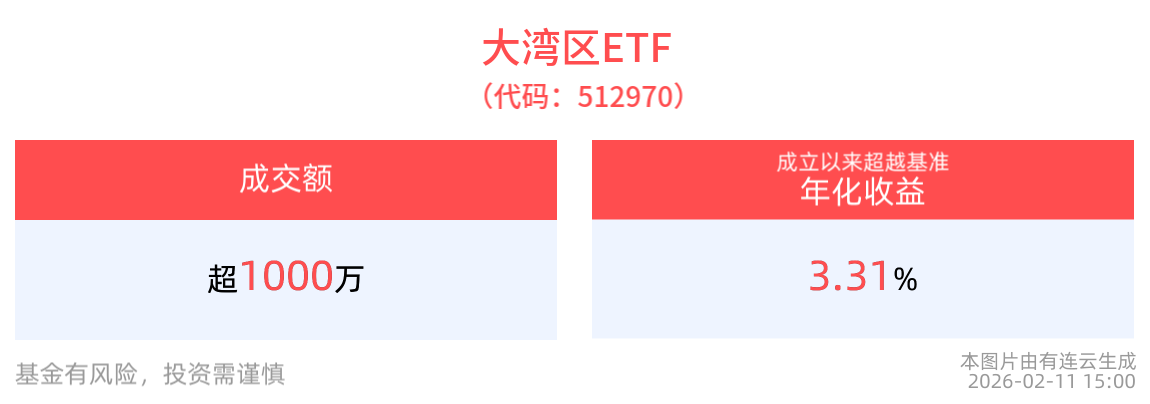
成交额超1000万元,大湾区ETF(512970)成立以来超越基准年化收益达3.31%
Xin Lang Cai Jing· 2026-02-12 01:56
Group 1 - The core index, the CSI Guangdong-Hong Kong-Macao Greater Bay Area Development Theme Index, has seen a decline of 0.63% as of February 11, 2026 [2] - The top-performing stocks include Greenmeadow with a rise of 9.95%, Xinjubang up by 8.16%, and Shengyi Technology increasing by 2.55% [2] - The ETF tracking this index, with a recent price of 1.51 yuan, has decreased by 0.59% [2] Group 2 - The Greater Bay Area ETF has a turnover rate of 16.96% during trading, with a total transaction volume of 11.77 million yuan, indicating active market participation [2] - The ETF has a one-year Sharpe ratio of 1.41 as of February 6, 2026 [2] - The maximum drawdown for the ETF this year is 5.52%, with a relative benchmark drawdown of 0.02% [2] Group 3 - The CSI Guangdong-Hong Kong-Macao Greater Bay Area Development Theme Index reflects the performance of listed companies benefiting from the Greater Bay Area development [3] - The index includes various sub-indices, selecting a maximum of 50 Hong Kong market securities, 300 companies from the Shanghai-Hong Kong-Shenzhen market, and 100 mainland market securities [3] - The top ten weighted stocks in the index account for 44.55% of the total index weight, with notable companies including Ping An Insurance, Luxshare Precision, and BYD [3][4] Group 4 - The top ten stocks by weight in the index show varied performance, with Ping An Insurance down by 1.01% and BYD up by 1.62% [4] - The weight of the top stock, Ping An Insurance, is 8.31%, while the lowest weight among the top ten is 2.63% for Mindray Medical [4]
【AI100】这家公司第一次做手机,凭什么就能预售5000万元?
虎嗅APP· 2026-02-11 13:59
Core Viewpoint - The article discusses the emergence of the iKKO MindOne, an AI smartphone that has achieved significant pre-sale success, highlighting a shift in the smartphone market towards more specialized, efficient devices rather than traditional all-in-one models [5][12][38]. Group 1: Market Context - The smartphone market has become increasingly homogeneous, with incremental updates failing to excite consumers, leading to a consensus that current devices lack innovation [6][7]. - Major brands like Apple maintain high market shares despite minimal changes, indicating a lack of necessity for significant innovation in their offerings [6][7]. - The article notes that the AI smartphone concept gained traction following the introduction of a device by Nubia and Doubao, which integrated AI capabilities into its functionality [20]. Group 2: iKKO MindOne Overview - iKKO MindOne has achieved over 50 million yuan in pre-sales, with 30 million yuan from consumers and 20 million yuan from businesses, marking a notable achievement for a new brand in a saturated market [12]. - The device features a compact design, weighing less than an iPhone Air, and sacrifices certain functionalities like wireless charging and 5G to maintain a slim profile [14]. - The camera utilizes a 50-megapixel Sony module that can flip for both front and rear photography, optimizing the use of space within the device [16]. Group 3: AI Integration and Functionality - The MindOne operates on a unique iKKO AI OS, which focuses on efficiency tools such as translation, summarization, and information processing, rather than traditional app ecosystems [25][27]. - The device is designed to separate AI functionalities from standard applications, creating a dedicated workspace for productivity [25][27]. - iKKO aims to provide AI capabilities without subscription fees, positioning itself as a cost-effective solution for users [36]. Group 4: Competitive Landscape and Future Outlook - The article emphasizes that the future of AI smartphones lies in their ability to integrate deeply with system architecture and user data, rather than merely functioning as applications [22][24]. - iKKO's approach is seen as a challenge to the conventional smartphone model, aiming to redefine user interaction with mobile technology [40]. - The company believes that its focus on a streamlined, efficient device will resonate with users seeking practical tools rather than just entertainment [38][40].

深圳南山VS北京海淀:中国两大万亿强区,背后藏着“三位高人”
Qian Zhan Wang· 2026-02-11 10:47
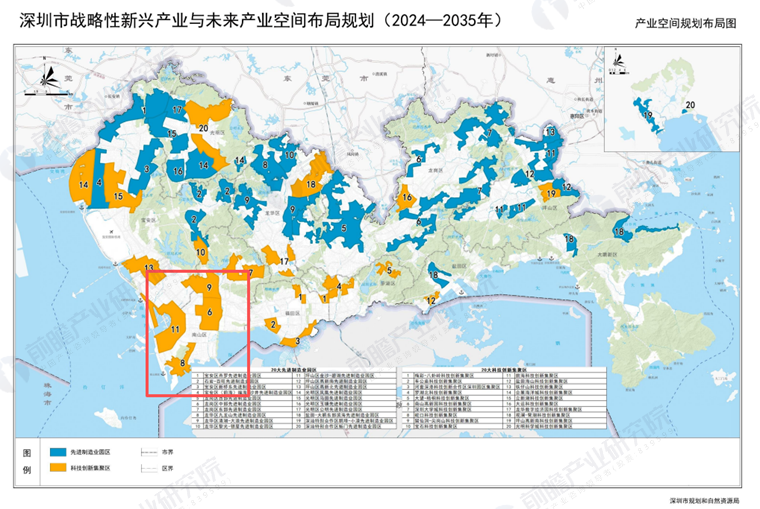
Core Insights - Shenzhen Nanshan District and Beijing Haidian District have both entered the "trillion GDP club," becoming leaders among county-level economies in China, with Nanshan expected to reach this milestone by 2025 [1] - The article analyzes the industrial structure evolution, planning orientation, and factor endowment of these two districts from 2021 to 2025, aiming to provide empirical decision-making references for local governments [1] Industrial Structure - Nanshan's industrial structure reflects a transition from a "world factory" to a "global innovation center," with the tertiary industry accounting for approximately 76% and secondary industry about 23% [2] - The high-tech manufacturing sector contributes over 60% to the industrial output value, showcasing a balanced structure of "high-tech manufacturing as the base, high-end services as the enabler" [2] - Haidian's industrial structure is characterized by a high degree of "softening," with the tertiary industry exceeding 92%, particularly in information transmission, software, and IT services, which constitute half of its GDP [5] Industrial Planning - Nanshan focuses on developing "14+7" strategic emerging industry clusters, including networks, semiconductors, and biomedicine, while also planning for future industries like synthetic biology and space technology [9] - Haidian aims to build a "1+X+1" modern industrial system led by artificial intelligence, empowering sectors like healthcare and integrated circuits, with a strong emphasis on technology service industries [10] Factor Endowment - Haidian boasts a robust "national team" of research institutions, including top universities and national laboratories, while Nanshan features a vibrant "market team" with over 90% of innovative enterprises being local [16] - Nanshan is recognized for its active venture capital environment, while Haidian benefits from strong government-led funding initiatives [18][19] - Nanshan has potential for spatial expansion through innovative land use strategies, whereas Haidian faces space constraints and focuses on urban renewal to optimize land use [20] Conclusion and Recommendations - The success of both districts stems from their ability to transform inherent advantages into institutional and ecological strengths, with Nanshan focusing on market-driven innovation and Haidian on knowledge-driven economic ecosystems [22] - Future competition will hinge on the ability to create comprehensive innovation ecosystems that integrate research, technology breakthroughs, and commercialization [22]
2026年光通信行业深度:驱动因素、发展趋势、产业链及相关公司深度梳理
Xin Lang Cai Jing· 2026-02-11 10:16
一、行业概述 1、光通信概念 光通信行业包括基础构件(光芯片、光器件/光模块、光纤光缆)和设备集成。最终应用领域主要为电 信市场业务及数据中心业务,是典型的技术密集型、人才密集型、资金设备密集型产业。光通信是以光 信号为信息载体,以光纤作为传输介质,通过电光转换,以光信号进行传输信息的系统。 光通信正逐步替代传统的电通信方式,数字化浪潮深度驱动光通信行业迅速发展。受数字化浪潮深度驱 动,全球应用数据量呈爆发式增长,对通信容量的需求急剧攀升,为光通信行业注入了强劲的发展动 能。 而这一增长趋势的核心在于人工智能技术的加速崛起。从智能语音交互、复杂机器学习模型训 练,到自 动驾驶场景下的数据实时传输与具身智能落地,AI 技术的全面渗透,对数据传输的速率、容 量及稳定性 提出了传统通信技术难以满足的要求。光通信不仅具备高速率、大容量、长距离传输的核 心优势,还拥 有低信号损耗、设备小型化轻量化及强抗电磁干扰等突出特性。由此,光通信正逐步替 代传统的电通信 方式,成为全球信息网络的主导传输方式,为信息高速传输与高速计算提供关键技术 支撑,构建起数字 时代算力与通信网络的核心技术底座。 2、光通信原理 光通信系统传输信 ...
科大讯飞正式发布星火X2大模型,消费电子ETF(561600)备受关注
Xin Lang Cai Jing· 2026-02-11 05:37
Group 1 - The core viewpoint of the news highlights the performance of the consumer electronics sector, with the CSI Consumer Electronics Theme Index down by 0.85% as of February 11, 2026, and notable fluctuations among constituent stocks [1] - Key stocks include Shengyi Technology leading with a 2.55% increase, while Dongshan Precision experienced the largest decline at 6.21% [1] - The Consumer Electronics ETF also saw a decrease of 0.89%, with a latest price of 1.22 yuan and a trading volume of 7.855 million yuan during the session [1] Group 2 - The launch of the "Doubao AI Phone" signifies a deep integration of large model capabilities into mobile devices, with major companies like Apple and ZTE accelerating their AI product developments, marking 2026 as a pivotal year for edge AI product iteration [2] - AI functionalities are shifting from optional features to standard capabilities, driving improvements in performance metrics and customization levels for components such as camera modules and optical elements [2] - The CSI Consumer Electronics Theme Index comprises 50 listed companies involved in component production and design, with the top ten weighted stocks accounting for 53.34% of the index [2]

平安证券(香港)港股晨报-20260211
Ping An Securities Hongkong· 2026-02-11 03:45
Market Overview - The Hong Kong stock market experienced fluctuations, with the Hang Seng Index closing at 23,831 points, down 145 points or 0.61% [1] - The market turnover decreased to 82.799 billion HKD, with net inflows of 484 million HKD recorded in the Hong Kong Stock Connect [1] - The US stock market showed mixed results, with the Dow Jones rising 0.1% to a new closing high, while the S&P 500 and Nasdaq fell by 0.33% and 0.59% respectively [2] Sector Performance - In the Hong Kong market, local real estate, software, and 5G sectors saw significant declines, while gold stocks performed well [1] - Biotechnology and cultural media sectors were active, with the Hang Seng Index rising 0.58% and the Hang Seng Technology Index increasing by 0.62% [1] - Notable stock performances included a 5.5% increase for CSPC Pharmaceutical Group and a 15.4% rise for China Literature [1] Investment Opportunities - The report emphasizes the importance of "technological self-reliance" and AI applications as key themes for future growth in the Hong Kong market, suggesting that leading companies in these sectors may benefit from long-term development opportunities [3] - The report recommends focusing on sectors supported by policies aimed at expanding domestic consumption, such as sports apparel and non-essential services [3] - It highlights the value of investing in state-owned enterprises with relatively low valuations and high dividends across various industries [3] Company Highlights - ByteDance's subsidiary Doubao launched a New Year campaign, distributing red envelopes and promoting AI applications, which may boost demand for upstream GPU and AI chips [9] - Innovent Biologics announced a strategic partnership with Eli Lilly, with a total transaction value of up to 8.85 billion USD, indicating strong market confidence in China's innovative drug pipeline [9] - The report suggests monitoring leading companies in the domestic semiconductor foundry industry, such as Hua Hong Semiconductor and SMIC, as they are expected to benefit from favorable policies [9]

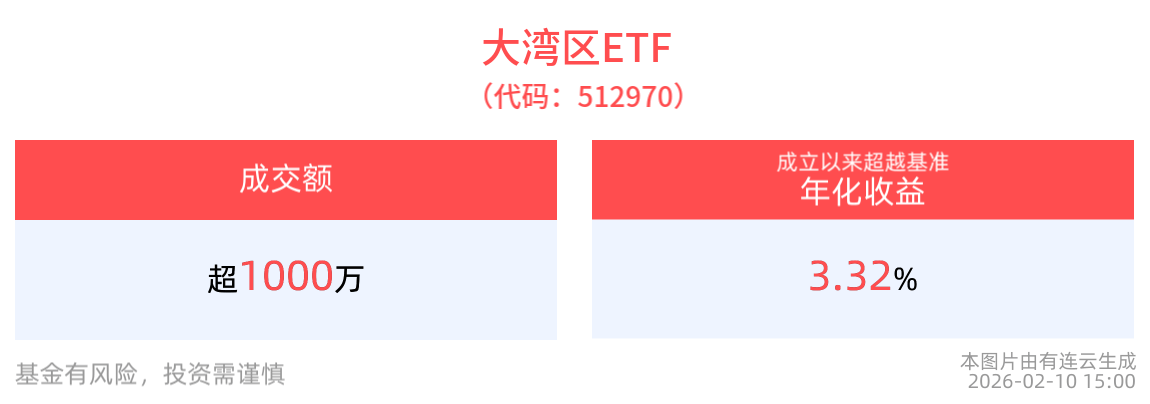
成交额超1000万元,大湾区ETF(512970)成立以来超越基准年化收益达3.32%
Sou Hu Cai Jing· 2026-02-11 01:46
Core Viewpoint - The performance of the China Securities Guangdong-Hong Kong-Macao Greater Bay Area Development Theme Index and its related ETF reflects the market dynamics and investment opportunities within the Greater Bay Area, with notable fluctuations in constituent stocks and trading activity [2][3]. Group 1: Index Performance - As of February 10, 2026, the China Securities Guangdong-Hong Kong-Macao Greater Bay Area Development Theme Index (931000) decreased by 0.01% [2]. - The Greater Bay Area ETF (512970) also saw a decline of 0.13%, with the latest price at 1.52 yuan [2]. - Over the past week, the Greater Bay Area ETF has accumulated a rise of 0.93% [2]. Group 2: Stock Movements - Among the constituent stocks, Zhao Chi Co. led with a gain of 9.96%, followed by Xinlitai with an increase of 6.88%, and Huitai Medical up by 5.15% [2]. - Conversely, Mingyang Smart Energy experienced the largest drop at 4.34%, followed by Xinwei Communication down 4.08%, and Jiejia Weichuang down 3.45% [2]. Group 3: Trading Activity - The trading volume for the Greater Bay Area ETF was active, with a turnover rate of 14.53% and a transaction value of 11.4673 million yuan [2]. - The average daily trading volume over the past week was 2.6276 million yuan [2]. Group 4: Risk and Return Metrics - The maximum drawdown for the Greater Bay Area ETF this year was 5.52%, with a relative benchmark drawdown of 0.02% [2]. - The Sharpe ratio for the Greater Bay Area ETF over the past year was reported at 1.41 as of February 6, 2026 [2]. Group 5: Fee Structure - The management fee for the Greater Bay Area ETF is set at 0.15%, while the custody fee is 0.05% [2]. Group 6: Index Composition - The index closely tracks companies benefiting from the Greater Bay Area's development, with the top ten weighted stocks accounting for 44.55% of the index [3]. - The top ten stocks include China Ping An, Luxshare Precision, BYD, and others, with varying weight percentages [4].
技术硬件与设备行业2025年信用回顾与2026年展望
新世纪评级· 2026-02-11 01:17
Investment Rating - The technology hardware and equipment industry is rated as stable for 2025 and 2026 [1] Core Insights - The technology hardware and equipment industry is experiencing a slow recovery driven by inventory replenishment cycles and AI technology, despite overall pressure from weak global economic growth since 2025. There is significant differentiation among sub-industries, with strong demand for data center equipment driven by computing power, while traditional telecom equipment shows sluggish growth [2][3] - The Chinese government has established a policy framework to support the industry, focusing on short-term growth stabilization, medium-term supply chain strengthening, and long-term innovation promotion, primarily through domestic substitution to overcome high-end equipment and material bottlenecks [2] - The industry is expected to benefit from the deepening of digital China initiatives and the industrialization of cutting-edge technologies like AI, entering a structurally growth-driven cycle. However, geopolitical disturbances and rapid technological iterations may lead to uneven recovery across the industry [5] Summary by Sections Industry Overview - The electronic information manufacturing industry is closely tied to global economic conditions, showing signs of recovery since 2024 due to inventory replenishment and AI-driven demand. It is a core industry in China's economic structure transformation and upgrade [7][8] - In 2024, the added value of China's electronic information manufacturing industry grew by 11.8%, outperforming overall industrial and high-tech manufacturing growth rates [8] Financial Performance - Sample companies in the technology hardware and equipment industry reported positive revenue growth year-on-year in 2025, aligning with industry recovery trends. However, high R&D investments and asset impairment losses have pressured net profits, while EBITDA showed year-on-year growth, indicating profit resilience [3] - The debt scale and liability ratios of sample companies have increased, with a decline in the EBITDA coverage ratio for rigid debt, although interest coverage has improved due to lower financing costs [3] Sub-Industry Insights Communication Equipment - The communication equipment sector is experiencing growth opportunities driven by AI and industrial interconnectivity, with significant demand for data center equipment but slow growth in traditional telecom network equipment. The market is highly competitive and concentrated [24][27] - The deployment of high-speed optical modules and data center switches is expected to grow significantly, while traditional telecom equipment investments are declining as operators shift focus to computing power networks [28] Computers and Peripheral Devices - The global PC and server markets are stable, with Chinese manufacturers gaining market share due to domestic substitution. The AI PC segment is becoming a core growth driver, with AI PC shipments expected to increase significantly [37][38] - The global server market is experiencing robust growth driven by AI computing demand, with significant revenue increases expected in the coming years [42] Electronic Devices, Instruments, and Components - The electronic devices, instruments, and components sector is seeing overall recovery driven by AI innovation and domestic supply chain localization. Key areas of growth include computing power chips and advanced packaging [48][49] - The semiconductor industry is entering an upward trend, with significant sales growth expected in both global and Chinese markets [56]



