
兔宝宝

Search documents
宜家“7店连关”上热搜! 销售额一年蒸发近10亿,未来将开小型门店
Xin Lang Cai Jing· 2026-01-08 10:04
Core Viewpoint - IKEA China is closing seven stores, including its largest store in Asia located in Shanghai Baoshan, as part of a strategic adjustment to enhance efficiency and focus on consumer-centric channels. This closure represents nearly 20% of its total 41 stores in China, highlighting significant operational challenges faced by the company [2][3][4]. Group 1: Store Closures and Strategic Adjustments - IKEA China will cease operations at seven locations starting February 2, 2026, including stores in Shanghai, Guangzhou, Tianjin, Nantong, Xuzhou, Ningbo, and Harbin [2][3]. - The company aims to improve space efficiency and redirect resources towards more consumer-focused channels, planning to open over ten smaller stores in the next two years [4][15]. - The closures are part of a broader strategy to adapt to the rapidly changing retail environment, with a focus on optimizing business structure and enhancing online and offline integration [4][17]. Group 2: Financial Performance and Market Challenges - Since 2022, IKEA has been closing multiple stores, with sales growth in the China region declining from 17% to 6.5% between fiscal years 2021 and 2023, significantly lower than emerging markets like India and Southeast Asia [7][18]. - In fiscal year 2024, IKEA China's revenue dropped to 11.15 billion yuan, a decrease of nearly 1 billion yuan from the previous year and a nearly 30% decline from its peak of 15.77 billion yuan in 2019 [7][18]. - The global revenue for IKEA's parent company Ingka Group fell by 5.5% to 41.864 billion euros, with net profit down 46.5% [7][18]. Group 3: Consumer Feedback and Product Quality Issues - There has been a surge in complaints regarding product quality and after-sales service, with customers reporting issues such as defective furniture and inadequate support for returns [8][19]. - Complaints on platforms like Black Cat Complaints and Xiaohongshu highlight dissatisfaction with product durability and service response times, indicating a potential decline in consumer trust [19][20]. Group 4: Industry Context and Expert Opinions - The furniture retail industry is facing significant challenges, with competitors like Meike Meijia and Red Star Macalline also reporting substantial losses and store closures [10][21]. - Experts suggest that the shift towards online shopping and the high operational costs of large physical stores are major factors contributing to IKEA's current predicament [10][21]. - The ongoing pressure on profit margins in the standardized furniture sector, combined with declining consumer interest in IKEA's offerings, has led to the necessity of store closures as a last resort [10][21].


超半数装修建材股下跌 兔宝宝股价下跌6.15%
Bei Jing Shang Bao· 2026-01-07 09:56
北京商报讯(记者 翟枫瑞)1月7日,装修建材板块小幅下跌,以16684.54点收盘,跌幅为0.27%。受板 块影响,装修建材板块个股出现不同程度下跌。兔宝宝以13.28元/股收盘,跌幅为6.15%,领跌装修建 材股。麒盛科技以19.22元/股收盘,跌幅为5.18%,跌幅位列装修建材股第二。悦心健康以4.67元/股收 盘,跌幅为3.71%,跌幅位列装修建材股第三。除此之外,皮阿诺以22.53元/股收盘,涨幅为10.01%, 领涨装修建材股。友邦吊顶以47.83元/股收盘,涨幅为10.00%,涨幅位列装修建材股第二。美克家居以 3.88元/股收盘,涨幅为9.92%,涨幅位列装修建材股第三。 中国银河在研报中表示,城市更新驱动消费建材在旧改、修缮市场的需求释放,消费升级将带动高品质 绿色建材需求提升,具备渠道布局优势及品牌优势的龙头企业有望持续巩固市场地位。 ...

兔宝宝婴儿鞋DIY教程
Xin Lang Cai Jing· 2026-01-07 05:13
Core Viewpoint - The article emphasizes the design and manufacturing process of baby shoes specifically tailored for infants aged 0 to 3 years, focusing on their developmental needs and comfort [1][4]. Group 1: Design and Features - Baby shoes are designed for infants who have not yet started walking, ensuring they are soft, lightweight, breathable, and comfortable to support healthy foot development [1][4]. - The shoes are crafted to fit the natural growth of the foot, providing a non-restrictive wearing experience [1][4]. Group 2: Manufacturing Process - The manufacturing process begins with cutting the fabric according to a template, sewing the sides while leaving a 0.5 cm seam allowance, and securing the basic shape with pins to ensure symmetry [1][2]. - The side and bottom parts are then sewn together, maintaining a 0.5 cm seam allowance to create a tight connection between the inner side and the bottom of the shoe [2][3]. - A layer of padding is placed in the center of the shoe, and the sole is aligned with the outer side, ensuring the padding is secured during assembly [3][4]. - The three layers of material are sewn along the shoe's edge, with careful cutting to avoid damaging the seams, and the shoe is turned right side out to reveal the final outer appearance [4][5]. - The inner and outer layers are aligned, with edges folded inward by 0.5 cm and sewn securely from point A to point B [5][6]. - A channel is created for an elastic band by sewing a circle 1 cm from the edge, ensuring the band is fixed and does not shift [5][6]. Group 3: Final Touches - The shoe design is enhanced with a cute bow on the back and a rabbit face drawn on the fabric, which is then sewn and cut to allow for turning [6]. - The rabbit face is filled with cotton and a bell, and features are embroidered to complete the design [6]. - The finished rabbit head is sewn onto the front of the shoe, resulting in a charming and appealing baby shoe [6].
兔宝宝湖州设家居装饰公司 注册资本500万元
Xin Lang Cai Jing· 2026-01-07 04:52
Group 1 - The core point of the article is that Dehua Rabbit Baby Decoration New Material Co., Ltd. has established a wholly-owned subsidiary, Huzhou Rabbit Baby Home Decoration Co., Ltd., in Huzhou, Zhejiang Province, with a registered capital of 5 million yuan [1] Group 2 - The new company's business scope includes sales of household appliance parts, installation services for household appliances, sales of electrical equipment, and sales of lighting fixtures, all of which are 100% owned by Rabbit Baby [1]
自由现金流ETF(159201)连续4日合计“吸金”6.41亿元,最新规模达92.13亿元,创成立以来新高
Sou Hu Cai Jing· 2026-01-07 02:34
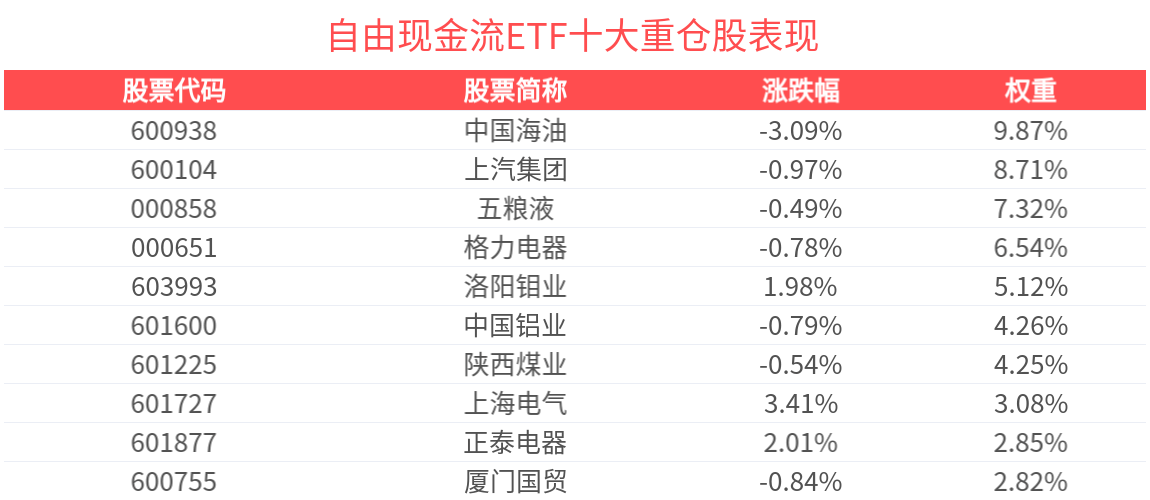
Core Viewpoint - The National Index of Free Cash Flow has experienced a decline of 0.28% as of January 7, 2026, with mixed performance among constituent stocks, indicating a volatile market environment [1]. Group 1: Free Cash Flow ETF Performance - The Free Cash Flow ETF (159201) has decreased by 0.24%, with the latest price at 1.24 yuan [1]. - Over the past week, the Free Cash Flow ETF has seen an average daily trading volume of 516 million yuan [1]. - The ETF has recorded a net inflow of 641 million yuan over the last four days, reaching a total share count of 7.406 billion and a total scale of 9.213 billion yuan, marking a new high since its inception [1]. - The ETF's net asset value has increased by 21.33% over the past six months, with a historical maximum monthly return of 7% and a longest consecutive monthly gain of 6 months [1]. - The ETF has a historical monthly profit probability of 79.19% and a 100% probability of profitability over a six-month holding period [1]. Group 2: Index Composition - The National Index of Free Cash Flow closely tracks the performance of companies with high and stable free cash flow levels listed on the Shanghai and Shenzhen stock exchanges [2]. - As of December 31, 2025, the top ten weighted stocks in the index include China National Offshore Oil Corporation, SAIC Motor, Gree Electric Appliances, COSCO Shipping Holdings, China Aluminum, Baosteel, Great Wall Motor, Chint Electric, China Unicom, and Weichai Power, collectively accounting for 51.95% of the index [2]. Group 3: Stock Performance - The performance of individual stocks within the index shows mixed results, with notable declines in stocks like China National Offshore Oil Corporation (-3.09%) and SAIC Motor (-0.97%), while Shanghai Electric has increased by 3.41% [4]. - The management fee for the Free Cash Flow ETF is set at 0.15%, and the custody fee is 0.05%, both at the lowest tier [4].
兔宝宝跌2.01%,成交额8503.41万元,主力资金净流出335.42万元
Xin Lang Cai Jing· 2026-01-06 06:01
Group 1 - The core viewpoint of the news is that Tubaobao's stock has experienced fluctuations, with a recent decline in price and mixed performance over different time frames [1][2] - As of January 6, Tubaobao's stock price was 14.14 yuan per share, with a market capitalization of 11.733 billion yuan and a trading volume of 85.0341 million yuan [1] - Year-to-date, Tubaobao's stock has decreased by 1.87%, with a 5-day decline of 2.48%, a 20-day increase of 5.37%, and a 60-day increase of 25.35% [2] Group 2 - Tubaobao's main business includes the production and sales of decorative materials, accounting for 77.04% of revenue, with other segments such as cabinets (12.15%) and flooring (3.90%) [2] - As of September 30, Tubaobao had 34,300 shareholders, a decrease of 20.59%, with an average of 21,454 circulating shares per shareholder, an increase of 25.94% [2] - For the period from January to September 2025, Tubaobao reported revenue of 6.319 billion yuan, a year-on-year decrease of 2.25%, while net profit attributable to shareholders increased by 30.44% to 629 million yuan [2] Group 3 - Tubaobao has distributed a total of 2.942 billion yuan in dividends since its A-share listing, with 1.6 billion yuan distributed in the last three years [3] - As of September 30, 2025, the largest circulating shareholder is Hong Kong Central Clearing Limited, holding 7.6104 million shares, an increase of 1.2541 million shares from the previous period [3] - New institutional shareholders include Jiangyin Trend Mixed A, which holds 6.518 million shares, while some previous shareholders have exited the top ten list [3]
——建材周专题2026W1:稳定房地产预期再起,两大玻纤龙头激励落地
Changjiang Securities· 2026-01-06 04:45
Investment Rating - The industry investment rating is "Positive" and maintained [10] Core Insights - The expectation for the real estate market in China is stabilizing, with a focus on improving and managing market expectations [6][21] - The two leading fiberglass companies, China Jushi and China National Materials, have implemented stock incentive plans, reflecting their operational confidence [7] - The cement shipment has experienced a seasonal decline, while glass inventory has decreased month-on-month [8] Summary by Sections Real Estate Market Expectations - A commentary published in "Qiushi" emphasizes the financial attributes of real estate and its importance in the national economy and household wealth, suggesting that policies should be decisive to stabilize market expectations [6][21] Stock Incentives of Leading Companies - China Jushi announced a restricted stock incentive plan for up to 34.53 million shares, accounting for 0.86% of its total shares, with a target compound annual growth rate (CAGR) for net profit from 2026 to 2028 set at no less than 38.5%, 27.0%, and 22.0% respectively [7] - China National Materials proposed a stock option incentive plan for 15.4 million shares, representing 0.92% of its total shares, with a target CAGR for net profit from 2026 to 2028 set at no less than 107.0%, 73.0%, and 62.5% respectively [7] Market Fundamentals - Cement: The average shipment rate for major domestic cement companies was approximately 40.1% at the end of December, down 1.1 percentage points month-on-month and 1.4 percentage points year-on-year [8] - Glass: The production capacity of float glass decreased, with 212 out of 265 production lines operational, and daily melting capacity reduced to 151,405 tons, a decrease of 2,700 tons from the previous week [8] Outlook for 2026 - Focus on three main lines: - **Stock Chain**: Emphasizing demand optimization and supply clearance, with renovation demand expected to rise from 50% to nearly 70% by 2030 [9] - **Africa Chain**: Highlighting undervalued growth in Africa, with recommendations for companies like Keda Manufacturing and Huaxin Cement [9] - **AI Chain**: Anticipating upgrades in special electronic fabrics, with a focus on companies like China National Materials [9]


建筑材料行业跟踪周报:建筑业PMI回升符合季节性规律,值得关注-20260105
Soochow Securities· 2026-01-05 09:19
Investment Rating - The report maintains an "Overweight" rating for the construction materials industry [1]. Core Insights - The construction industry PMI has rebounded, aligning with seasonal trends, indicating a potential turning point for the real estate chain in 2026. The stability of infrastructure investment is deemed necessary amidst declining real estate investment expectations [4][5]. - The report highlights the importance of supply-side adjustments in the cement industry, with a focus on the exit of outdated capacities and the potential for improved profitability in 2026 [8][19]. - The glass market is experiencing price fluctuations, with a notable decline in average prices compared to the previous year, suggesting ongoing challenges in demand and supply dynamics [46][51]. Summary by Sections 1. Cement Market Overview - The national average price for high-standard cement is 352.8 RMB/ton, down 1.2 RMB/ton from last week and down 53.8 RMB/ton from the same period in 2024. Regions with price increases include Guangdong (+5.0 RMB/ton) and Central South (+1.7 RMB/ton), while declines were noted in the Yangtze River Basin (-2.1 RMB/ton) and Southwest (-9.0 RMB/ton) [14][15]. - The average cement inventory ratio is 60.4%, down 1.4 percentage points from last week but up 1.3 percentage points year-on-year. The average cement shipment rate is 40.3%, down 1.1 percentage points from last week and down 1.2 percentage points year-on-year [19][21]. 2. Glass Market Overview - The average price for float glass is 1121.3 RMB/ton, a decrease of 18.8 RMB/ton from last week and down 270.4 RMB/ton from the same period in 2024. The inventory of float glass in 13 provinces is 53.78 million heavy boxes, down 155,000 boxes from last week but up 1.361 million boxes year-on-year [46][51]. - The report indicates that the supply of float glass is under pressure, with production lines being shut down due to losses, which may lead to price rebounds in the future as demand stabilizes [45][46]. 3. Fiberglass Market Overview - The fiberglass market is expected to see stable growth in demand, particularly in wind power and thermoplastic applications, with effective capacity projected to reach 759.2 million tons in 2026, a year-on-year increase of 6.9% [8]. - The report suggests that the profitability of leading companies in the fiberglass sector may improve due to structural demand and new applications, enhancing their competitive advantages [8].
地产政策持续落地,关注建材龙头估值修复机遇
China Post Securities· 2026-01-05 06:45
证券研究报告:建筑材料|行业周报 行业投资评级 强于大市|维持 | 行业基本情况 | | | --- | --- | | 收盘点位 | 5362.85 | | 52 周最高 | 5449.43 | | 52 周最低 | 4167.51 | 行业相对指数表现 研究所 分析师:赵洋 SAC 登记编号:S1340524050002 Email:zhaoyang@cnpsec.com 近期研究报告 《地产政策托底需求,关注反内卷落地 情况》 - 2025.12.29 建材行业报告 (2025.12.27-2026.01.04) 地产政策持续落地,关注建材龙头估值修复机遇 发布时间:2026-01-05 投资要点 上周财政部、国家税务总局于 2025 年 12 月 30 日联合发布《关 于个人销售住房增值税政策的公告》,明确个人销售住房的增值税征 收细则,个人将购买不足 2 年的住房对外销售的,按照 3%的征收率全 额缴纳增值税,个人将购买 2 年以上(含 2 年)的住房对外销售的, 免征增值税。此次政策能够有效减轻房东经济压力,也使得房屋出售 的成本快速下降、促进市场流通。 地产政策持续释放,一方面托底需求,另一方面 ...
2026年-周期怎么看
2026-01-04 15:35
Summary of Key Points from Conference Call Records Industry Overview - **Construction and Building Materials Industry**: The overall situation shows that orders are relatively sufficient, but funding remains a core constraint on companies' output. Despite the initiation of major projects by the government, these investments are unlikely to yield significant growth due to the vast existing infrastructure stock. [2][3] Core Insights and Arguments - **Investment Recommendations**: - For traditional infrastructure, companies with high dividends and low valuations are recommended, such as China State Construction, Sichuan Road and Bridge, Tunnel Shares, and China National Materials. These companies have strong core competitiveness and stable operations. [2] - In the consumer building materials sector, leading companies are increasing market share and stabilizing operations. Companies like Oriental Yuhong and Rabbit Baby are suggested for left-side positioning. [2][3] - The rise of AI is expected to increase demand for high-end products from companies like China Jushi and China National Materials Technology. [2][3] - **Real Estate Sector**: - The real estate industry is expected to remain a significant stabilizer for the economy, with annual new housing construction projected between 10 million to 14 million units. [2][17] - The development model is shifting towards integrated products, services, and operations, with a focus on housing services and second-hand property transactions. [17][19] - Companies with strong cash flow and comprehensive capabilities, such as China Resources Land and Jinfa Co., are recommended. [20] Additional Important Insights - **Transportation Sector**: - The transportation industry showed positive performance during the 2025 New Year holiday, with significant increases in passenger flow and sales in duty-free shopping. [4][5] - The airline sector is expected to perform well during the 2025 Spring Festival, with ticket prices projected to increase. Companies like Juneyao Airlines and China Spring Airlines are recommended. [5] - **Express Delivery Industry**: - The express delivery sector is viewed positively, especially in overseas markets, with recommendations for Jitu Express and Jiayou International. [6][8] - Domestic express delivery data is pending verification for January and February, with current volumes showing no significant growth. [6] - **Metals and Commodities**: - Recent trends indicate a general increase in prices for non-ferrous metals, with notable rises in diamonds, nickel, and silver. [11] - The investment focus for 2026 includes copper, aluminum, and lithium, driven by macroeconomic policies and supply constraints. [14] - **Coal Sector**: - The coal sector has seen a slight decline but is showing signs of stabilization, with demand from electricity generation and steel production remaining high. [15][16] Conclusion - The conference call highlighted various sectors with distinct investment opportunities and challenges. The construction and real estate sectors are undergoing significant transformations, while transportation and express delivery industries are poised for growth. The non-ferrous metals market is also experiencing upward trends, suggesting potential investment avenues.