温氏股份

Search documents
温氏股份(300498) - 关于公司实际控制人股份减持实施完毕的公告
2026-02-12 09:58
温氏食品集团股份有限公司 1 证券代码:300498 证券简称:温氏股份 公告编号:2026-16 债券代码:123107 债券简称:温氏转债 温氏食品集团股份有限公司 关于公司实际控制人股份减持实施完毕的 公 告 公司实际控制人温鹏程保证向本公司提供的信息内容真实、准确、完整,没有 虚假记载、误导性陈述或重大遗漏。 本公司及董事会全体成员保证公告内容与信息披露义务人提供的信息一致。 温氏食品集团股份有限公司(以下简称"公司")于 2026 年 1 月 16 日披露了《关于公司实际控制人转让股份至近亲属及股 份减持计划的预披露公告》(公告编号:2026-9),公司实际 控制人之一温鹏程因家庭内部规划需要及个人资金需求,计划 自预披露公告披露日起十五个交易日后三个月内(2026 年 2 月 9 日至 2026 年 5 月 8 日)以集中竞价或大宗交易的方式合计减 持公司股份不超过 2,100 万股。 公司近日收到温鹏程出具的《股份减持计划实施完毕的告 知函》,获悉本次减持计划已实施完毕,现将情况公告如下: 一、股东减持情况 | | 1、股东股份减持情况 | | | | | | | | | | --- | --- ...

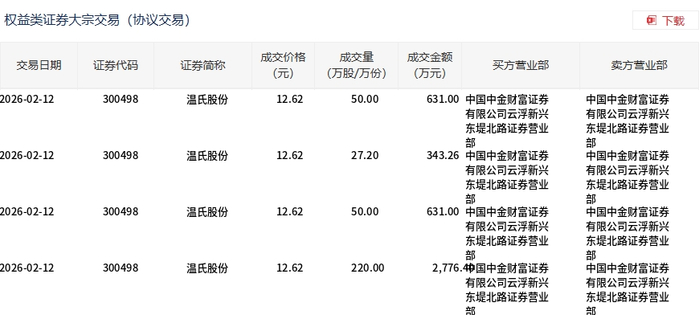
温氏股份今日大宗交易折价成交347.2万股,成交额4381.66万元
Xin Lang Cai Jing· 2026-02-12 09:00
2月12日,温氏股份大宗交易成交347.2万股,成交额4381.66万元,占当日总成交额的7.44%,成交价 12.62元,较市场收盘价15.54元折价18.79%。 | 交易日期 | 证券代码 | 证券简称 | 成交价格 | 成交量 | 成交会额 买方营业部 | 卖方营业部 | | --- | --- | --- | --- | --- | --- | --- | | | | | (元) | (万股/万份) | (万元) | | | 2026-02-12 | 300498 | 温氏股份 | 12.62 | 50.00 | 631.00 中国中金财富证券 | 中国中金财富址券 | | | | | | | 有限公司云浮新兴 | 有限公司云浮新兴 | | | | | | | 东堤北路证券营业 | 东堤北路证券营业 | | | | | | | | 黑 | | 2026-02-12 | 300498 | 温氏股份 | 12.62 | 27.20 | 343.26 中国中金财富证券 | 中国中金财富证券 | | | | | | | 有限公司云浮新兴 | 有限公司云浮新兴 | | | | | | | 东堤北路证券营业 | ...

2026年农业食品行业年度策略:“误解”的消费,农业食品中的“健康”、“快乐”、“划算”
AVIC Securities· 2026-02-12 06:35
2026 年农业食品行业年度策略:"误解"的 消费,农业食品中的"健康" 、 "快乐" 、 "划 算" 一、研究背景评估 二、范围与边界确认 三、核心摘要提炼 四、关键数据抓取与呈现 第 1页 共 5页 银发经济与年轻群体保健意识觉醒双轮驱动,我国保健品人均消费额仅为美国的 1/5,渗透 率差距显著。运动营养、体重管理等细分赛道增速亮眼(运动营养 2016-2023 年 CAGR 25.1%)。 电商渠道占比已提升至 46%,进口品牌加速进入,国内企业通过海外并购构建全球品牌矩阵。 第 2页 共 5页 五、风险与机遇诊断 一、研究背景评估 | 评估维度 | 说明 | | --- | --- | | 研究机构 | 中航证券有限公司研究所 | | 权威性说明 | 中航证券是具备中国证监会批准的证券投资咨询业务资格的持牌机构。本报告署名分析师彭海兰、陈翼均具备证券投资咨询 | | | 执业资格,彭海兰为农林牧渔行业首席分析师,拥有超过 10 年大宗商品研究经验,团队专业背景扎实。报告大量引用联合 | | | 国粮农组织、国家统计局、艾媒咨询、欧睿国际等权威第三方数据,研究方法严谨,在农业食品产业研究领域具备较强公信 ...
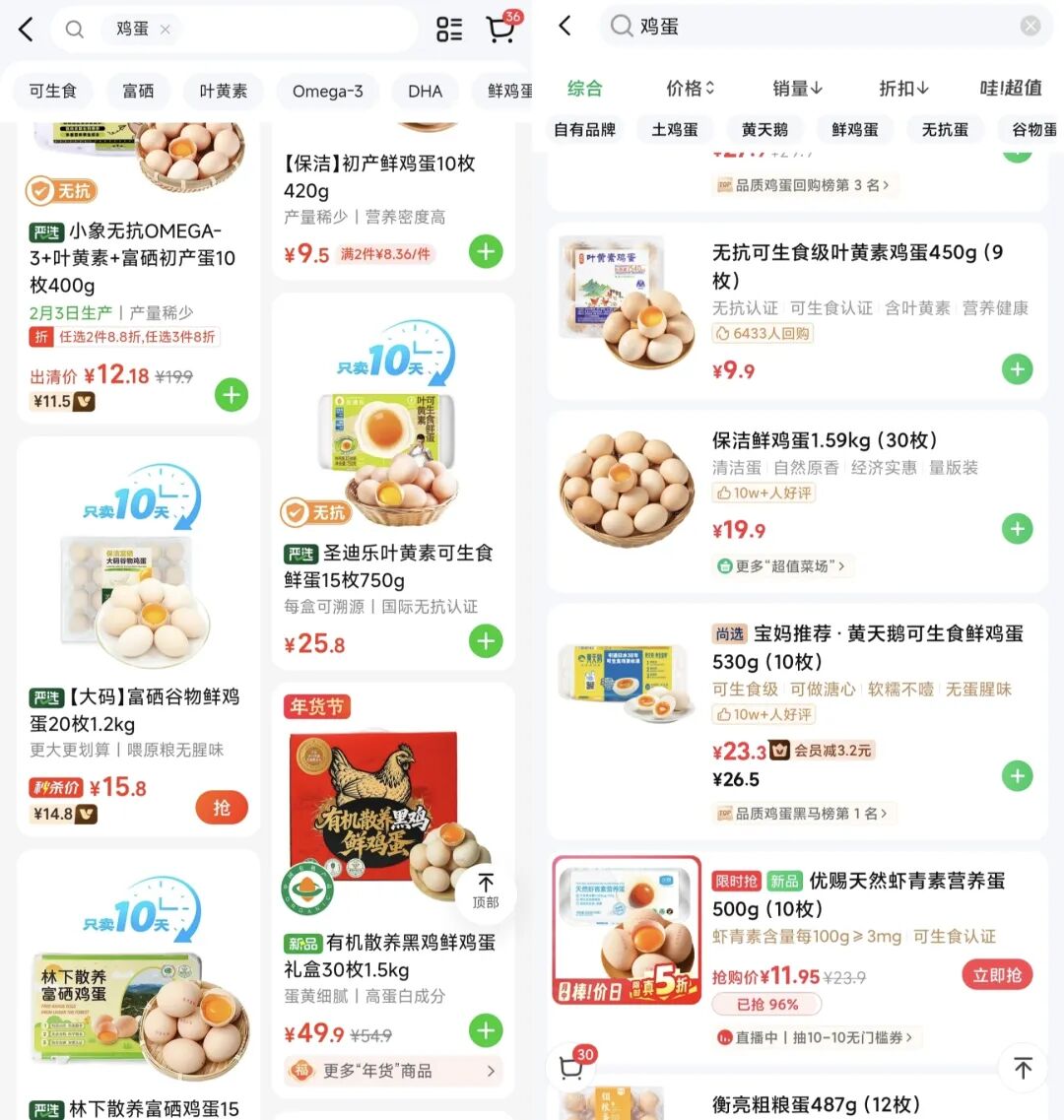
鸡蛋刺客?富硒、无抗……多几个字就贵几倍
3 6 Ke· 2026-02-12 02:50
Core Insights - The article discusses the increasing premiumization of eggs in a cautious consumer environment, where eggs are no longer just categorized by size or origin but are now labeled with various functional tags that significantly affect their pricing [1][2]. Group 1: Functional Origins - The differences in functional eggs primarily stem from what the chickens are fed and how they are raised, rather than changes in the chicken breeds themselves [3][4]. - Popular functions focus on nutritional enhancement, such as selenium-enriched, DHA, and lutein eggs, which are achieved through specific feed ingredients [4][6]. - The production of functional eggs involves complex supply chains, with varying levels of cost and technical barriers associated with each function [8][12]. Group 2: Cost Implications - The cost of functional eggs begins with feed formulation, which is a significant determinant of pricing, especially for enriched eggs [9][11]. - For selenium-enriched eggs, the additional cost ranges from a few cents to a dime per egg, while DHA-enriched eggs can add up to several dimes or close to a yuan [11]. - The production of antibiotic-free and ready-to-eat eggs requires higher standards in farming and processing, leading to increased operational costs throughout the production cycle [12][14]. Group 3: Consumer Behavior - The rise of functional eggs is linked to a growing health narrative among consumers, who prioritize safety and traceability in their food choices [15][16]. - Eggs are positioned as a staple food with low substitution costs, making it easier for consumers to accept slight price increases for perceived health benefits [18][19]. - The demand for functional eggs does not necessarily stem from increased purchase frequency but rather from consumers opting for higher-priced options within existing purchasing habits [19][21]. Group 4: Industry Dynamics - Leading poultry companies view functional eggs not merely as a response to market demand but as an extension of their existing production capabilities [21][23]. - In the restaurant sector, the use of eggs differs significantly from household consumption, with a focus on stability and risk management rather than long-term health benefits [24]. - The regulatory landscape surrounding functional eggs is evolving, with a need for clearer standards to differentiate between various claims and ensure consumer safety [26][29].
【山证农业】农业行业周报:猪价在旺季后或存回调压力
Xin Lang Cai Jing· 2026-02-11 10:34
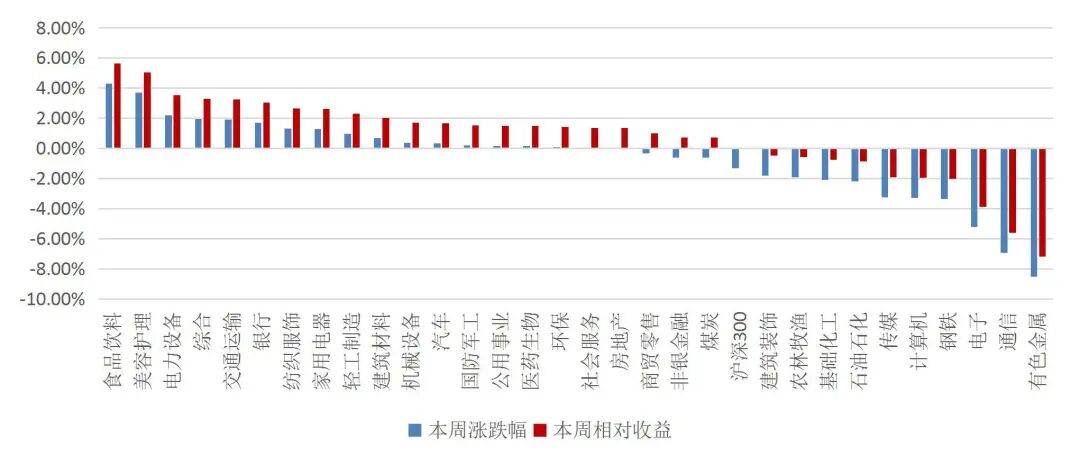
Market Overview - The CSI 300 index decreased by 1.33% during the week of February 2-8, while the agriculture, forestry, animal husbandry, and fishery sector fell by 1.92%, ranking 23rd among sectors [5] - The top-performing sub-industries included food and feed additives, broiler farming, pig farming, aquaculture, and grain and oil processing [5] Pig Farming Industry - Pig prices continued to decline, with self-breeding pig farming profits showing losses. As of February 6, the average prices for external three yuan pigs in Sichuan, Guangdong, and Henan were 11.65, 11.96, and 12.38 yuan/kg, reflecting week-on-week decreases of 4.12%, 1.64%, and 1.98% respectively [13] - The average pork price was 18.34 yuan/kg, down 1.45% from the previous week. The average wholesale price for piglets remained stable at 16.50 yuan/kg [13] - As of February 6, self-breeding farming profits were -38.09 yuan/head, a decrease of 63.19 yuan/head from the previous week, while profits from purchasing piglets were 91.42 yuan/head, down 32.71 yuan/head [13] Feed Industry - The competition in the feed industry has shifted from product competition to value chain competition, leading to accelerated industry consolidation. Market share is increasingly concentrated among leading companies with advantages in R&D, scale, and integrated services [2] - Haida Group is expected to benefit from this trend due to its efficient internal management, effective business incentives, and strong service advantages in the supply chain [2] Broiler Farming Industry - The price of white feather broilers decreased, with a weekly price of 7.53 yuan/kg, down 2.71%. The profit from broiler farming was -0.26 yuan/bird, a significant drop of 166.67% from the previous week [29] - The price of eggs was 8.2 yuan/kg, down 6.82% from the previous week [29] Aquaculture Industry - In the marine product sector, prices for sea cucumbers and shrimp remained stable at 120 yuan/kg and 320 yuan/kg respectively. In freshwater products, prices for various fish showed slight increases [45] - The international spot price for fish meal was 2239.77 USD/ton, unchanged from the previous week [45] Grain and Oil Processing - Grain prices showed mixed trends. As of February 6, corn was priced at 2368.43 yuan/ton (-0.33%), soybeans at 4072.11 yuan/ton (unchanged), and wheat at 2531.11 yuan/ton (+0.05%) [55] - The price of soybean meal was 3159.14 yuan/ton, down 1.19%, while the prices for both soybean oil and rapeseed oil decreased by 1.72% and 1.95% respectively [55]
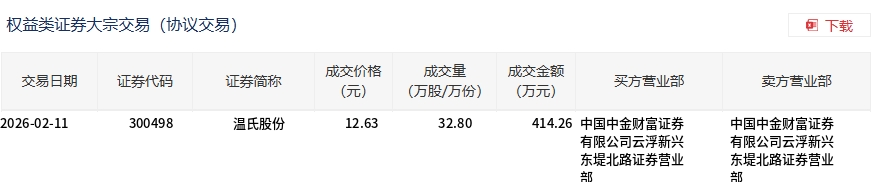
温氏股份今日大宗交易折价成交32.8万股,成交额414.26万元
Xin Lang Cai Jing· 2026-02-11 08:55
Group 1 - The core point of the article highlights that Wens Foodstuff Group conducted a block trade on February 11, with a total of 328,000 shares traded, amounting to 4.1426 million yuan, which represents 0.86% of the total trading volume for that day [1][2] - The transaction price was set at 12.63 yuan per share, which reflects a discount of 19.91% compared to the market closing price of 15.77 yuan [1][2]
2026年一号文点评报告:现代化为矛,稳定生产为盾
China Post Securities· 2026-02-11 02:29
Industry Investment Rating - The investment rating for the agriculture, forestry, animal husbandry, and fishery industry is "Outperform the Market" [1] Core Insights - The report emphasizes the importance of modernizing agriculture while ensuring stable production as a shield for food security. The 2026 Central Document sets a target for grain production to remain around 1.4 trillion jin, highlighting the need for quality and efficiency improvements in agricultural production [4][6] - The focus on breeding has shifted from research to industrial application, indicating a faster pace in the commercialization of biobreeding technologies [4] - Comprehensive regulation of the livestock industry is emphasized, with a shift from monitoring pig production capacity to a more integrated approach across the entire supply chain [4][8] Summary by Relevant Sections Industry Overview - The closing index for the industry is 2936.45, with a 52-week high of 3158.8 and a low of 2448.98 [1] Key Policy Developments - The 2026 Central Document outlines six key areas for agricultural and rural modernization, including enhancing agricultural production capacity, promoting stable income for farmers, and innovating institutional mechanisms [3][4] Investment Recommendations - In the seed industry, the report suggests focusing on companies with strong breeding advantages such as Longping High-Tech, Denghai Seeds, and Shennong Seeds due to the anticipated restructuring and increased market concentration [6] - For the livestock sector, it recommends monitoring leading companies like Muyuan Foods and Wens Foodstuffs, as there is still room for production capacity adjustments [8] - The report highlights the potential benefits for smart agricultural machinery and related industries due to the emphasis on developing new agricultural production capabilities [8]
农业周报20260201-20260207:一号文发布,重视农业投资机会
Tai Ping Yang Zheng Quan· 2026-02-11 00:25
Investment Rating - The overall investment rating for the agriculture industry is "Positive" [6][10]. Core Insights - The report emphasizes the importance of agricultural investment opportunities following the release of the central government's No. 1 document, which highlights the need for comprehensive capacity regulation in the pig farming industry [5][19]. - The report identifies potential investment opportunities in the livestock and planting sectors, particularly focusing on companies with low valuations and strong growth potential [6][10]. Summary by Relevant Sections Livestock Industry - **Pig Farming**: The average price for pigs is 12.14 CNY/kg, a slight decrease of 0.16 CNY from the previous week. The average price for piglets is 29.24 CNY/kg, which increased by 0.62 CNY [5][19]. The industry is experiencing a gradual reduction in production capacity, with the number of breeding sows decreasing by 2.9% year-on-year [6][20]. - **Chicken Farming**: The average price for broiler chickens is 14 CNY/kg, reflecting a 0.3 CNY increase. However, the industry is facing challenges with profitability, as the average loss per chicken is 0.26 CNY [21][22]. The report suggests that chicken prices may remain volatile in the medium term due to high production levels [21][22]. - **Investment Recommendations**: Companies such as Zhongchong Co., Muyuan Foods, and Suqian Agricultural Development are rated as "Buy" due to their strong market positions and growth potential [3][10]. Planting Industry - **Seed Industry**: The No. 1 document promotes the industrialization of biotechnology in agriculture, which is expected to enhance the seed supply chain and improve the market environment for genetically modified crops [11][23]. The report gives a positive rating for the seed industry, highlighting the long-term investment value of leading companies [11][23]. - **Grain Prices**: Recent trends indicate that grain prices are likely to continue rising due to increased demand and reduced supply. The average price for corn is 2394 CNY/ton, and for wheat, it is 2531 CNY/ton, both showing slight increases [12][24]. The report suggests focusing on investment opportunities in the planting sector, particularly in companies like Suqian Agricultural Development [12][24].



我们吃掉了全球30%的肉?官方:是真的!
Sou Hu Cai Jing· 2026-02-10 18:20
Core Insights - China's meat production is projected to exceed 100 million tons in 2025, marking a significant milestone in the country's agricultural development [1] - The total meat consumption in China accounts for nearly one-third of the global total, reflecting the country's substantial demand and production capabilities [1] Group 1: Pork Industry - Pork constitutes 59.38 million tons of the total meat production, representing nearly 60% of the overall output [4] - Technological advancements have significantly improved the efficiency and controllability of pig farming, with companies like Muyuan Foods utilizing over 1.9 million smart devices to enhance production efficiency by over 35% [4][6] - The breeding system has been modernized, with over 95% of pork produced from three main breeds, supported by a comprehensive breeding system [6] Group 2: Beef Industry - Beef production has increased from approximately 6.13 million tons in 2013 to 7.53 million tons in 2023, with an annual growth rate of about 2.1% [10] - Despite domestic production growth, there remains a significant supply-demand gap, leading to a 73% increase in beef imports from 2019 to 2024 [10][12] - The Chinese government has initiated trade relief investigations to stabilize the domestic beef market, implementing measures to protect local producers while ensuring market supply [12] Group 3: Sheep and Poultry Industries - Sheep meat production is stable, with an output of 5.18 million tons in 2024, contributing to dietary diversity and farmer income [10] - Poultry meat production is projected to reach 28.37 million tons in 2025, with a 6.7% year-on-year increase, playing a crucial role in stabilizing overall meat prices [14] - The poultry industry benefits from high efficiency and continuous improvements in breeding and disease control, with a 90% share of intensive farming practices [15] Group 4: Animal Disease Control - The stability of the meat industry is underpinned by a robust animal disease prevention system, which has effectively controlled major animal disease outbreaks [22] - The government has implemented a comprehensive regulatory framework to enhance disease monitoring and response capabilities, achieving a high compliance rate in mandatory vaccinations [19][21] - The focus on sustainable practices has led to significant reductions in feed usage and antibiotic application, contributing to the green development of the livestock sector [22]
2026年生猪养殖行业:总量压力下的效率竞争与结构分化
Xin Lang Cai Jing· 2026-02-10 13:43
Core Viewpoint - The pig farming industry is undergoing a deep adjustment in a relaxed supply environment, with overall pig prices declining throughout 2025, despite a slight year-end recovery, remaining at relatively low levels. The competition is shifting from scale expansion to efficiency and collaboration within the industry chain [2][5][26]. Supply Capacity Analysis - The pig farming industry is expected to face supply pressure in the first half of 2026, with a projected output of 719.73 million pigs in 2025, a 2.4% increase, and a pork production of 59.38 million tons, a 4.1% increase [2][4]. - The breeding efficiency is improving, with the average number of weaned piglets per sow increasing from 18.32 in 2021 to 24.03 in 2024, indicating a reduction in production costs [4][6]. - The industry is experiencing increased concentration, with over 70% of pig farming being scaled, and the top 20 companies accounting for over 30% of output [4][5]. Demand Matching Capability Analysis - Overall pork consumption is expected to show weak recovery in 2026, influenced by population and income levels, with a projected per capita pork consumption of 26.6 kg per year, a 5.4% decrease from the previous year [8][9]. - The demand for pork is being affected by the availability of alternative meats, which may divert consumption away from pork [8][9]. - The overall pig price trend in 2025 was downward, with slight year-end recovery, but still at low levels, influenced by seasonal demand and supply pressures [9][11]. Industry Chain Position Analysis - The pig farming industry is positioned as a conversion link in the value chain, connecting upstream feed and breeding industries with downstream slaughtering and processing sectors [12]. - The bargaining power of upstream suppliers is weak, while the downstream bargaining power varies, with leading companies establishing long-term supply agreements to enhance pricing power [12][13]. - The competitive landscape is shifting towards efficiency and collaboration, with leading companies focusing on integrated operations across the supply chain [14][16]. Innovation Capability Analysis - The industry is guided by policies aimed at stabilizing production and improving quality, with a focus on enhancing breeding efficiency and reducing costs through technological advancements [17][19]. - Leading companies are leveraging technology to restructure cost advantages, while smaller firms are encouraged to innovate in niche markets [20][21]. - The regulatory environment is evolving towards more systematic management, emphasizing compliance and quality control across the supply chain [19]. Credit Rating Situation Analysis - In 2025, the agricultural sector issued 75 bonds totaling 51.134 billion yuan, with major issuers being leading companies like Muyuan Foods and New Hope [21][22]. - The industry is experiencing a divergence in credit quality, with larger firms maintaining stable financing channels while smaller firms face tighter financing conditions [25][27]. - The overall credit risk in the pig farming industry is manageable, with stronger companies expected to solidify their credit standing amid ongoing market pressures [27].