
联影医疗

Search documents
曙光初现,医疗器械板块会成为下一个创新药板块吗?
市值风云· 2025-07-16 10:05
Core Viewpoint - The pharmaceutical sector is experiencing a significant recovery after over three years of deep adjustment, with the innovative drug segment leading the way. The overall performance of the sector has outpaced the A-share market due to favorable news and policies supporting innovation in drugs and medical devices [3]. Policy Support for Medical Devices - The Chinese government has significantly increased policy support for the medical device sector in 2023, with a focus on high-end medical devices such as medical robots, advanced imaging equipment, AI medical devices, and new biological materials [4][5]. - The State Drug Administration's announcement in July 2025 outlines ten support measures for high-end medical device innovation, emphasizing a full lifecycle support approach [4]. - Local policies, such as those from Shenzhen, are also promoting the development of medical robots and AI-assisted diagnostic systems, creating a comprehensive support system for innovation, approval, market entry, and international expansion [5][6]. Market Growth and Trends - The Chinese medical device market has grown from 17.9 billion yuan in 2001 to 1.3 trillion yuan in 2022, representing a compound annual growth rate (CAGR) of over 20% [9]. - Projections indicate that the market will reach approximately 1.36 trillion yuan in 2024 and exceed 1.4 trillion yuan in 2025, potentially reaching 1.63 trillion yuan by 2030 [9]. - The domestic market has become the second largest globally, with its share increasing from 8% in 2010 to 25% in 2022 [9]. Domestic Device Replacement Demand - There is a growing demand for domestic medical devices to replace imports, supported by policies that aim for a 70% localization rate in county-level hospitals by 2025 and 95% by 2030 [9]. - Companies like United Imaging Healthcare have achieved over 30% market share in core categories such as CT and MRI, benefiting from policies that restrict EU imports [10][11]. Investment Opportunities in ETFs - There are 11 medical device-related ETFs with assets over 100 million yuan, with the Medical ETF (512170.SH) leading at 26.13 billion yuan [12]. - The performance of Hong Kong medical ETFs has outpaced A-share indices, indicating potential investment opportunities in this area [14]. - Investors are advised to choose ETFs based on their outlook for the industry, with options available for those focusing on innovative drugs or pure medical device investments [24].


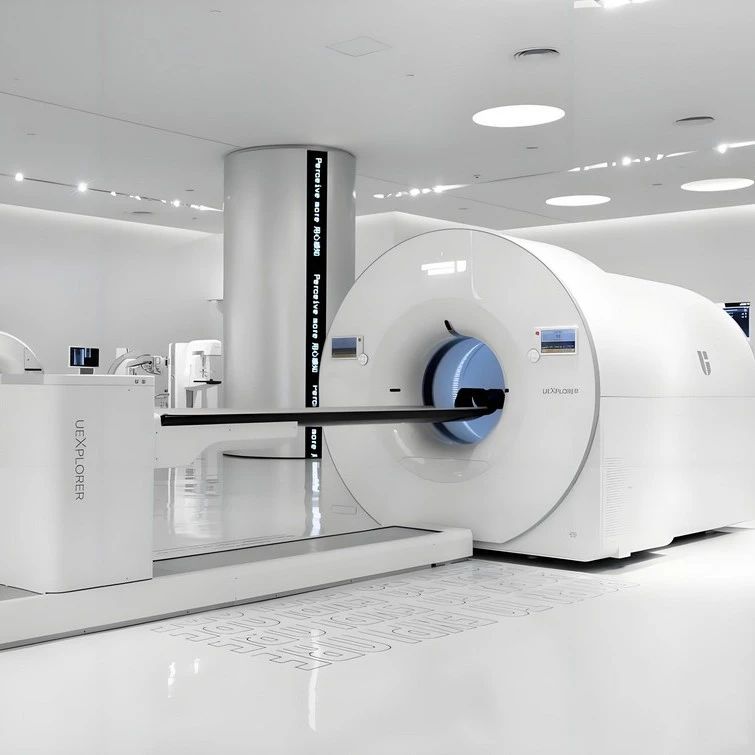
医疗设备月度中标梳理-20250716
Tianfeng Securities· 2025-07-16 09:14
Investment Rating - The industry investment rating is "Outperform the Market" [2][45] Core Insights - The total bidding amount for medical devices in June 2025 reached 12.618 billion yuan, representing a year-on-year growth of 30% and a total of 83.817 billion yuan for the first half of 2025, with an overall year-on-year increase of 64% [3][9][10] Summary by Sections Medical Device Bidding Overview - The medical device bidding amount in June 2025 was 12.618 billion yuan, showing a year-on-year increase of 30% and a quarter-on-quarter decrease of 6% [9] - The cumulative bidding amount for the first half of 2025 was 83.817 billion yuan, with a year-on-year growth of 64% [10] Domestic Brands - Mindray Medical's bidding amount in June 2025 was 623 million yuan, up 15% year-on-year, with a total of 4.258 billion yuan for the first half of 2025, reflecting a 64% increase [16][18] - United Imaging's June 2025 bidding amount was 769 million yuan, a 35% year-on-year increase, totaling 4.841 billion yuan for the first half of 2025, up 53% [13][14] - Aohua Endoscopy's June 2025 bidding amount was 27 million yuan, down 46% year-on-year, with a total of 235 million yuan for the first half of 2025, up 57% [19][20] - Kaili Medical's June 2025 bidding amount was 102 million yuan, a 73% year-on-year increase, totaling 642 million yuan for the first half of 2025, up 115% [22][23] - Shanwaishan's June 2025 bidding amount was 30 million yuan, a 222% year-on-year increase, totaling 186 million yuan for the first half of 2025, up 211% [25][26] - Wandong Medical's June 2025 bidding amount was 222 million yuan, a 416% year-on-year increase, totaling 728 million yuan for the first half of 2025, up 107% [28][29] Imported Brands - Philips' June 2025 bidding amount was 658 million yuan, down 4% year-on-year, with a total of 4.570 billion yuan for the first half of 2025, up 61% [31][32] - Siemens' June 2025 bidding amount was 978 million yuan, a 48% year-on-year increase, totaling 6.074 billion yuan for the first half of 2025, up 60% [34][35] - GE's June 2025 bidding amount was 1.447 billion yuan, a 49% year-on-year increase, totaling 6.736 billion yuan for the first half of 2025, up 56% [37][38]



科创生物医药ETF(588250)成分股普涨,政策利好催化创新药板块
Sou Hu Cai Jing· 2025-07-16 05:41
Group 1 - The core viewpoint of the news highlights the positive market reaction to the National Healthcare Security Administration's initiation of the 11th batch of drug procurement, which protects the profit margins of innovative drug companies by excluding them from the procurement scope [1] - The Sci-Tech Innovation Biomedicine ETF (588250.SH) rose by 0.26%, while its associated index, Sci-Tech Biomedicine (000683.SH), increased by 0.28% [1] - Key constituent stocks such as Yifang Biotech-U, Borui Pharmaceutical, and Nanwei Medical saw significant gains, with increases of 4.49%, 3.08%, and 3.84% respectively, indicating a strong performance in the innovative drug sector [1] Group 2 - According to West Securities, the Sci-Tech Biomedicine index has a distinct industry distribution, with chemical pharmaceuticals accounting for 38.75% and medical devices for 39.10%, which is significantly higher than other indices [2] - The index has shown a return rate exceeding 10% since 2025, although it exhibits relatively high volatility [2] - The index's constituent stock structure has a low overlap with other mainstream pharmaceutical indices, reflecting its unique sci-tech attributes [2]



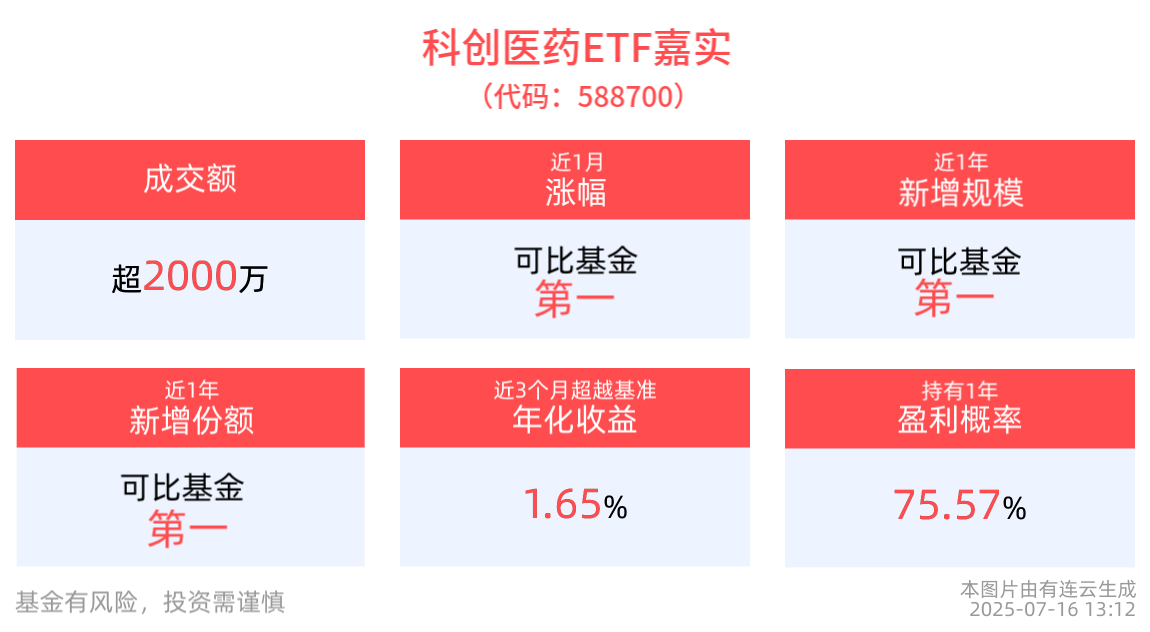
科创医药ETF嘉实(588700)近一周日均成交同类第一!机构:创新药或将逐步进入成果兑现阶段
Sou Hu Cai Jing· 2025-07-16 05:41
Core Viewpoint - The Shanghai Stock Exchange Sci-Tech Innovation Board Biopharmaceutical Index has shown positive performance, with significant gains in constituent stocks, indicating a bullish trend in the biopharmaceutical sector [1][4]. Group 1: Index Performance - As of July 16, 2025, the Sci-Tech Innovation Board Biopharmaceutical Index increased by 0.21%, with notable rises in stocks such as Yifang Bio (+4.83%) and Nanwei Medical (+3.93%) [1]. - Over the past week, the Jiashi Sci-Tech Medical ETF has accumulated a rise of 4.76%, ranking first among comparable funds [1]. Group 2: Liquidity and Trading Activity - The Jiashi Sci-Tech Medical ETF recorded a turnover rate of 10.5% during trading, with a transaction volume of 21.6692 million yuan, reflecting active market participation [4]. - The average daily transaction volume for the Jiashi Sci-Tech Medical ETF over the past week was 31.1046 million yuan, also ranking first among comparable funds [4]. Group 3: Fund Growth and Performance - The Jiashi Sci-Tech Medical ETF has seen a significant growth of 12.5 million yuan in size over the past year, leading among comparable funds [4]. - The fund's net value increased by 41.50% over the past year, placing it in the top 17.15% among 2,909 index equity funds [4]. - The highest monthly return since inception was 23.29%, with the longest consecutive monthly gain being 5 months and an average monthly return of 7.43% [4]. Group 4: Major Stocks in the Index - As of June 30, 2025, the top ten weighted stocks in the Sci-Tech Innovation Board Biopharmaceutical Index accounted for 50.3% of the index, with leading companies including United Imaging Healthcare (8.97%) and BeiGene (7.05%) [4][6]. Group 5: Policy Developments - The innovative drug industry is set to benefit from favorable policies, with the adjustment of the national medical insurance drug catalog officially starting on July 11, 2025 [6]. - The National Healthcare Security Administration plans to announce the results of the drug catalog adjustments between October and November 2025 [6]. Group 6: Future Outlook - The year 2025 is anticipated to be significant for domestic innovative drugs entering the market, as companies transition from generic to innovative drugs following the "4+7" procurement policy implemented in 2018 [7].
AI景气扩张+双创并购重组双线催化!科创50指数ETF(588870)午后拉升,溢价坚挺,资金连续4日涌入
Sou Hu Cai Jing· 2025-07-15 07:36
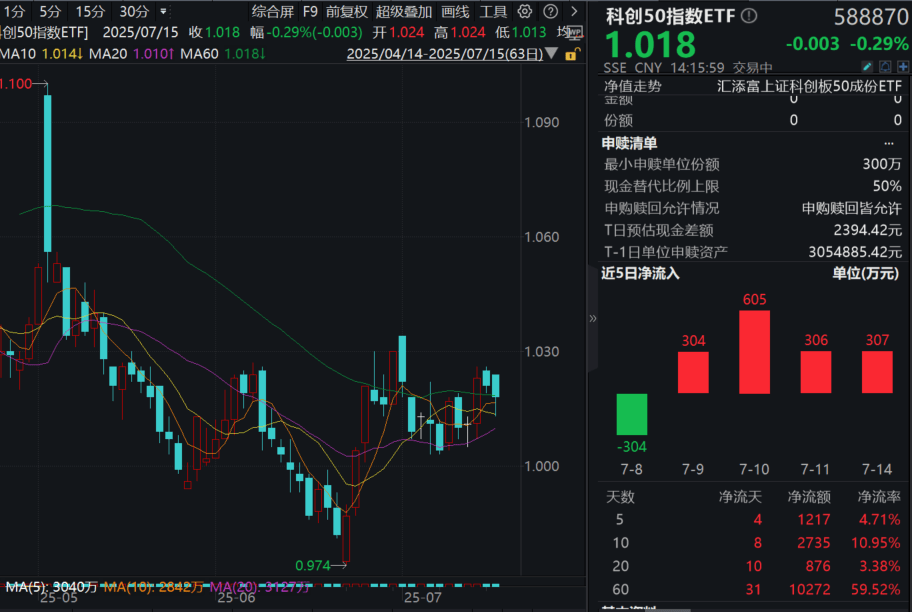
Group 1 - The A-share market showed a majority decline, with the Sci-Tech 50 Index ETF (588870) experiencing a pullback of 0.29% and a turnover rate exceeding 10%, indicating strong market interest and active capital allocation [1] - The Sci-Tech 50 Index ETF (588870) has seen a continuous net inflow of funds for four consecutive days, with a year-to-date share growth rate exceeding 25%, leading its peers in the same category [1] - The constituent stocks of the Sci-Tech 50 Index ETF exhibited mixed performance, with notable gains in Kingsoft Office (up over 3%) and Lanke Technology (up over 2%), while Cambricon fell over 2% [3][4] Group 2 - The report from Guolian Minsheng Securities highlights a dual narrative in technology, focusing on the expansion of AI and the trend of mergers and acquisitions (M&A) [5] - The AI upstream sector is expected to continue its spending, with stable revenue growth in the AI industry chain, while the profit margin improvements remain limited [5] - The AI downstream sector is seeing advancements in AI agents and AI glasses, with significant market potential anticipated to be released gradually [6][7] Group 3 - The establishment of a Sci-Tech Growth Layer on the Sci-Tech Board and the reactivation of the fifth listing standard for unprofitable companies were announced, aimed at supporting innovative tech firms [8] - The new listing standard will expand its applicability to more sectors, including AI, commercial aerospace, and low-altitude economy, facilitating the listing of more technology-driven companies [9] - The management fee for the Sci-Tech 50 Index ETF (588870) is notably low at 0.15%, with a custody fee of 0.05%, making it one of the most cost-effective options in the market [10]
半年度并购报告,地方国资又活跃起来了
投中网· 2025-07-15 06:31
Core Insights - The Chinese M&A market showed a decline in activity in H1 2025, with a total of 2,319 announced transactions, a decrease of 25.74% quarter-on-quarter and 28.47% year-on-year, while the total transaction value reached $127.07 billion, reflecting a 47.94% increase year-on-year despite a decrease in the number of transactions [5][8]. Group 1: M&A Market Data Analysis - In H1 2025, the number of completed M&A transactions was 1,397, with a total transaction value of $88.87 billion, marking a 10.09% increase year-on-year [14]. - In June 2025, there were 421 announced M&A transactions, a 30.34% increase month-on-month but a 19.66% decrease year-on-year, with a total transaction value of $12.55 billion, down 56.22% month-on-month and 20.01% year-on-year [11]. - The M&A market is characterized by a significant presence of local state-owned enterprises (SOEs), particularly in sectors like energy, mining, and chemicals [5][34]. Group 2: Private Equity Fund Exits - In H1 2025, 171 private equity funds successfully exited through M&A, with total returns reaching 43.07 billion yuan, a historical high [21]. - Notable exits included the acquisition of 100% equity in Longsheng New Energy by Searis Group for 3.51 billion yuan [21][26]. Group 3: Major M&A Cases - In H1 2025, there were 19 completed M&A transactions exceeding $1 billion, with the largest being the merger of Guotai Junan Securities and Haitong Securities, valued at approximately $13.49 billion [28]. - Other significant transactions included the acquisition of Chengdu Aircraft Industrial Group by AVIC for $2.38 billion and Baidu's acquisition of Guangzhou Yiling Network Technology for $2.1 billion [29][31]. Group 4: Cross-Border M&A Trends - In H1 2025, there were 52 completed cross-border transactions, a decrease of 40.23% quarter-on-quarter and 29.73% year-on-year, with a total transaction value of $4.84 billion [36]. - Notable cross-border deals included Midea Group's acquisition of Teka Group for $1.14 billion and Zijin Mining's acquisition of Newmont Golden Ridge for $1 billion [39][40]. Group 5: Industry and Regional Analysis - The electronics information sector led the number of transactions in H1 2025, with 473 deals, accounting for 18.5% of the total [47]. - Guangdong province ranked first in the number of completed M&A cases, while Shanghai led in transaction value [43].



科创生物医药ETF(588250)冲击四连阳,美国“200%医药关税”引市场担忧
Xin Lang Cai Jing· 2025-07-15 06:16
Group 1 - The Shanghai Stock Exchange Sci-Tech Innovation Board Biopharmaceutical Index (000683) has seen a strong increase of 1.42%, with notable gains from constituent stocks such as Shanghai Yizhong (688091) up 8.67%, Yifang Biotech (688382) up 8.45%, and BeiGene (688235) up 5.66% [1] - The U.S. government has threatened to impose tariffs of up to 200% on imported pharmaceuticals to encourage "industrial return," causing global industry turmoil and raising concerns among domestic pharmaceutical companies heavily reliant on drug imports [1] - Experts warn that if U.S. pharmaceutical tariffs are implemented, it will inevitably lead to increased drug prices and supply shortages [1] Group 2 - China’s share in global innovative drug business development (BD) transactions has increased from 3% in 2019 to 13% in 2024, with the monetary share rising from 1% to 28% [2] - In the first half of 2025, the total amount of innovative drug license-out transactions in China has approached $66 billion, surpassing the total BD transaction amount for the entire year of 2024 [2] - Major transaction categories in the first half of 2025 include Antibody-Drug Conjugates (ADC) and bispecific antibodies, with expectations for several related BD deals to materialize in the second half of 2025 [2] Group 3 - As of June 30, 2025, the top ten weighted stocks in the Shanghai Stock Exchange Sci-Tech Innovation Board Biopharmaceutical Index (000683) include companies like United Imaging Healthcare (688271) and BeiGene (688235), collectively accounting for 50.3% of the index [3]
医疗健康ETF泰康(159760)及联接基金最新净值连续五日上涨!医疗器械板块或迎业绩边际拐点
Xin Lang Cai Jing· 2025-07-15 02:04
Group 1 - The medical health ETF Taikang (159760) has seen a 0.17% increase, marking its fifth consecutive rise, while the index it tracks, the National Certificate Public Health and Medical Health Index (980016), rose by 0.13% [1] - As of July 14, the latest scale of the medical health ETF Taikang reached 82.4979 million yuan, a new high in nearly three months [2] - The medical device sector is expected to experience a performance turning point, driven by policies such as the old-for-new program and the gradual clearance of channel inventory [2] Group 2 - The top ten weighted stocks in the National Certificate Public Health and Medical Health Index account for 51.67% of the index, with leading companies including WuXi AppTec (603259) and Hengrui Medicine (600276) [3] - The CDMO sector has rebounded, with WuXi AppTec expected to see significant growth in revenue and profit by mid-2025, indicating strong global market demand [2] - The innovation drug industry chain is anticipated to enter a new upward cycle, supported by an improving domestic investment environment and active financing activities [2]


科技重塑睡眠:可穿戴设备、AI与数字化疗法驱动的睡眠健康创新报告,头豹词条报告系列
Tou Bao Yan Jiu Yuan· 2025-07-14 12:09
Investment Rating - The report does not explicitly provide an investment rating for the sleep health industry Core Insights - The sleep health industry is focused on improving and maintaining individual sleep quality, addressing the increasing prevalence of sleep issues, and meeting consumer demand for high-quality sleep solutions driven by technological innovations [4][5][9] - The market is expanding due to factors such as rising consumer awareness of sleep quality, the integration of technology, the aging population, and the evolution of sales models that blend online and offline channels [4][12][29] Industry Overview - The sleep health industry encompasses a wide range of activities and services aimed at improving sleep quality, preventing and treating sleep disorders, and enhancing overall health related to sleep [5][6] - Key segments include sleep monitoring devices, sleep aids, therapeutic services, bedding products, and sleep medications [6][7] Market Demand - The demand for sleep health products is steadily increasing, with a reported sleep disturbance rate of 48.5% among adults in China, highlighting the urgency for effective solutions [10][11] - Women experience a higher sleep disturbance rate (51.1%) compared to men (45.9%), and the rate increases with age, reaching 73.7% among those aged 65 and above [11] Policy Environment - The policy landscape for the sleep health industry is improving, with government initiatives emphasizing the importance of sleep health and supporting the development of related products and services [12][32] - Policies such as the "14th Five-Year Plan for National Health" promote the application of advanced technologies in health services, which is expected to benefit the sleep health sector [32][34] Consumer Behavior - Consumers are increasingly rational in their purchasing decisions, prioritizing product effectiveness and safety, and showing a high acceptance of smart and personalized sleep products [13][20] - The market for smart sleep products, such as smart mattresses and sleep monitoring devices, is growing, with consumers willing to invest in solutions that enhance sleep quality [29][20] Industry Development - The sleep health industry has evolved through various stages, from early research in the 19th century to the current phase characterized by technological advancements and a focus on integrated health solutions [14][18] - The industry is witnessing a shift from traditional product manufacturing to smart, technology-driven solutions that encompass hardware, digital services, and health management [28][29] Competitive Landscape - The competitive landscape is diverse, with traditional companies like Mousse and Xilinmen maintaining significant market positions in bedding products, while new entrants focus on innovative sleep solutions [35][36] - The market is characterized by rapid expansion and transformation, driven by technological advancements and a growing emphasis on comprehensive sleep health solutions [35][36] Market Size and Growth - The sleep health market is expected to continue expanding, with increasing consumer focus on sleep quality and the integration of technology into sleep solutions [29][28] - The market is projected to grow as consumers increasingly invest in sleep health products and services, supported by the rise of the aging population and the blending of online and offline sales channels [29][28]
医药生物行业跨市场周报:25H1多家CXO企业业绩预期同比改善,建议关注相关投资机会-20250714
EBSCN· 2025-07-14 10:37
Investment Rating - The report maintains an "Overweight" rating for the pharmaceutical and biotechnology industry [4]. Core Insights - In the first half of 2025, several CXO companies are expected to see year-on-year improvements in performance, suggesting potential investment opportunities [2][21]. - The pressure from the US interest rate hike cycle on new drug financing is gradually easing, leading to a recovery in overseas new drug development demand, which is beneficial for Chinese companies [2][21]. - The report highlights the resilience of gross margins for leading companies in the CXO sector, indicating a positive trend in external CDMO orders [2][21]. Summary by Sections Market Review - Last week, the A-share pharmaceutical and biotechnology index rose by 1.82%, outperforming the CSI 300 index by 1.00 percentage points but underperforming the ChiNext index by 0.39 percentage points, ranking 16th among 31 sub-industries [1][13]. - The Hong Kong Hang Seng Healthcare Index increased by 0.05%, lagging behind the Hang Seng China Enterprises Index by 0.96 percentage points [1][13]. Company Performance Expectations - WuXi AppTec, a leading CXO company, expects to achieve approximately CNY 20.799 billion in revenue for the first half of 2025, a year-on-year increase of about 20.64%, with adjusted net profit expected to be around CNY 6.315 billion, up 44.43% year-on-year [19][21]. - Other companies like Boteng Co. and Aopumai also forecast revenue growth of 15%-20% and 23.25% respectively for the same period [19][20]. Investment Strategy - The report suggests a focus on three payment channels within the pharmaceutical industry: hospital payments, out-of-pocket payments, and overseas payments, with recommendations for companies like Heng Rui Pharmaceutical, Mindray Medical, and Yuyue Medical [2][21]. R&D Progress - Recent updates indicate that several companies are advancing in their clinical trials, with notable progress from companies like Baiyao and Huadong Medicine [25][26]. Financial Metrics - The pharmaceutical manufacturing industry reported a cumulative revenue of CNY 994.79 billion from January to May 2025, reflecting a year-on-year decline of 1.40% [52].