
任天堂

Search documents
日本跨境税变动!2026年全面加税,你的商品还能卖爆吗?
Sou Hu Cai Jing· 2025-12-10 08:49
日本于2025年12提出了相关税制修正案。该政策调整计划纳入 2026 年度税制改革大纲,预计将在 2026 年正式实施。 值得注意的是,早在 2025 年 5 月,日本财务省就已经公布了相关草案,计划取消 1 万日元以下进口商品的消费税豁免政策; • 2026 年起:正式取消 1 万日元以下商品的消费税豁免,征收 10% 消费税,但关税仍维持豁免 • 过渡期安排:针对合规发票制度转型的免税企业,原定 2026 年 9 月到期的 "二割特例" 过渡政策已被取消,海外企业自 2024 年 10 月起不再适用任何简化 税制 取消 1 万日元以下进口商品消费税免征政策:现行制度下,价值低于 1 万日元(约合 452-495 元人民币)的进口商品可以免征消费税,这一政策自 1989 年实施以来已执行 36 年。新规实施后,所有进口商品无论金额大小均需缴纳 10% 的消费税,这意味着原本享受免税优惠的低价商品将面临10% 的税负增加。 废止个人使用进口商品按海外售价 60% 计税的规定:目前,日本个人从海外网站购买商品时,只对货值的 60% 计税,相当于享受了 40% 的税收优 惠。例如,一件价值 3 万日元的商品,按 ...


Nintendo shares fall as global memory squeeze raises risks for Switch 2
Invezz· 2025-12-10 07:03
Core Insights - Nintendo's shares have experienced a decline of up to 2.6%, highlighting a broader trend in the tech supply chain related to increasing memory costs affecting gaming hardware [1] Industry Impact - The rising memory costs are causing significant ripples throughout the gaming hardware sector, indicating potential challenges for companies reliant on these components [1]



央国企的传媒标的,为何值得被重视?
2025-12-10 01:57
Summary of Key Points from the Conference Call Industry Overview - The media industry has undergone 8 years of clearing and 6 years of bottoming out, with some central state-owned enterprises (SOEs) nearing their license value, indicating potential for revaluation [1] - Since 2023, transaction volumes have increased, yet the allocation ratio of active equity funds remains at historical lows, suggesting investment opportunities [1] Core Insights and Arguments - Central SOEs in the media sector are expected to lead in the application of new technologies due to policy support and resource advantages [1][5] - Historical data shows that these enterprises have stable dividends, with 38 companies maintaining a dividend payout ratio exceeding 30% over the past six years [3] - The commercialization paths for AI differ significantly between domestic and international markets, with the former needing to explore copyright protection and tax audits to find suitable development paths [1][6] - The AR/VR technology is anticipated to undergo a process from mass entrepreneurship to resource integration and asset securitization, with central SOEs playing a crucial role in resource allocation and policy guidance [1][7] - The value of print media and cable networks may return in the AI era, with leading companies like Mango TV and China Film already having plans for resource assetization and securitization [1][8] - New content forms are expected to emerge post-2027, potentially merging film and gaming into large-scale interactive content [1][9] Investment Recommendations - Recommended central SOE media stocks include Xinhua News Agency, China Central Television, Gehua Cable, Cultural Investment Holdings, Guigang Network, Guomai Culture, Zhejiang Digital Culture, and China Film, suggesting a diversified investment approach [2][19] Additional Important Insights - The increasing attention on central SOEs in the media sector is attributed to their significant presence in the industry, with 56 central SOEs accounting for 43% of all listed media companies [3] - The unique development environment and market positioning of these enterprises make them suitable for investment, especially in the context of emerging business models driven by government-backed entities [5] - The differences in commercialization paths for AI highlight the need for domestic companies to adapt to local market demands and regulatory environments [6] - The future of AR/VR technology is expected to enhance the position of professional creators and integrate key resources from major tech companies [7] - The potential for value recovery in traditional media sectors is supported by the current market conditions and the ability of central SOEs to mobilize resources effectively [8][10] - The evolution of content forms will likely focus on the integration of film, music, and gaming, enhancing user engagement and retention [18]


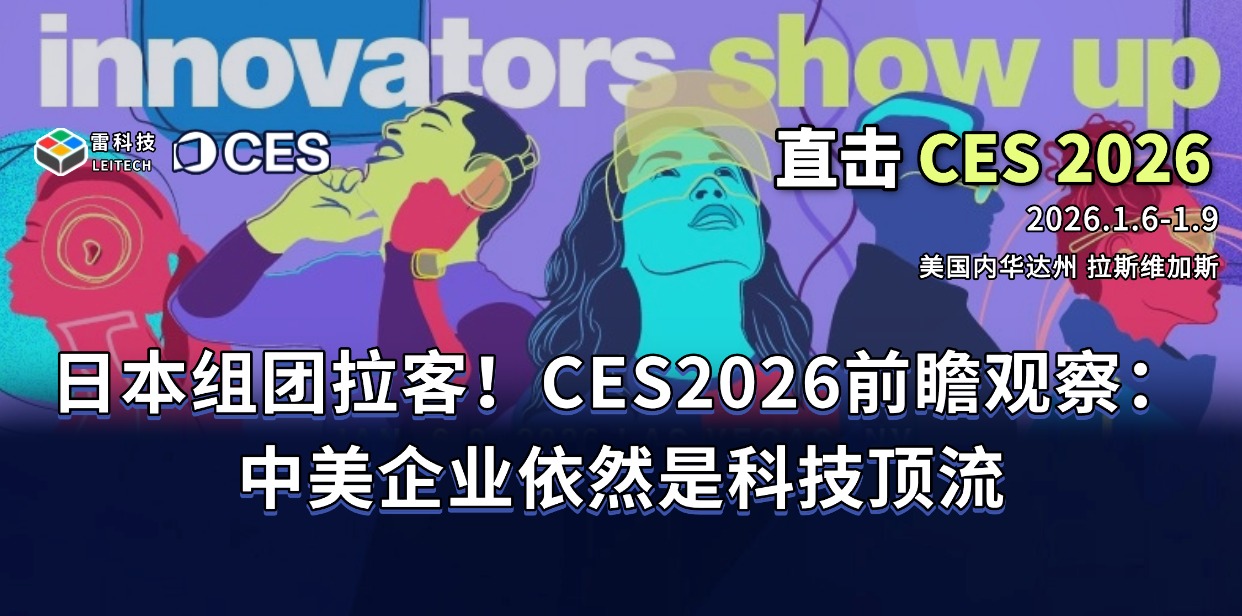
“日本科技项目”CES组团拉客,日本科技企业还能打吗?
3 6 Ke· 2025-12-10 00:13
Core Insights - CES 2026 will take place from January 6 to 9, 2026, in Las Vegas, serving as a significant platform for global technology brands, particularly from China and Japan [1][14] - The "Japan Tech Project" aims to support Japanese companies with new technologies and products to showcase at CES and other global tech exhibitions [1][16] - Japanese companies are expected to present innovations in various fields, including AI, robotics, and eco-friendly materials, at CES 2026 [1][3] Japanese Companies' Innovations - Sony is set to showcase its first LCD TV using "True RGB" LED backlight technology, which claims to avoid common OLED issues while achieving high brightness levels [3][5] - In addition to TVs, Sony may introduce a new 240Hz refresh rate PlayStation monitor, aiming to maintain its position in the high-end hardware market [5] - Panasonic will focus on "carbon neutrality" and "circular economy" themes, showcasing smart appliances like refrigerators that monitor food freshness [6][9] Automotive Developments - Sony Honda Mobility will present the AFEELA 1 electric vehicle at CES 2026, highlighting the collaboration between entertainment and automotive technology [10][12] Professional Imaging and Robotics - Japanese firms continue to dominate the professional imaging sector, with Sony and Nikon expected to unveil new technologies for filmmakers and smart vehicles [12] - The "Japan Tech Project" also aims to support startups in showcasing innovative hardware, including robotics, at CES 2026 [13][17] Competitive Landscape - Chinese companies have significantly increased their presence at CES, with over 1,475 exhibitors in 2025, and are expected to surpass pre-pandemic levels in 2026 [14][16] - Despite the strong showing from China and the U.S., Japan and other countries are striving to establish a more prominent presence in the global tech landscape [16][17]


日本组团拉客,CES2026前瞻观察:中美企业依然是科技顶流
3 6 Ke· 2025-12-08 10:03
Core Insights - CES 2026 will take place from January 6 to 9, 2026, in Las Vegas, serving as a significant platform for global technology brands, including those from Japan, which is launching the "Japan Tech Project" to showcase its innovations [2][21] - Japanese companies are expected to present new technologies and products across various sectors, including AI, robotics, and eco-friendly materials, highlighting their competitive edge in certain areas despite challenges from Chinese firms [4][10][19] Group 1: Japanese Technology Showcase - The "Japan Tech Project" aims to support Japanese companies with new technologies to gain visibility at global tech events like CES [2][19] - Major Japanese firms such as Sony and Panasonic will showcase innovations in home entertainment, appliances, and automotive technology, with Sony expected to unveil a new RGB LED TV and a 240Hz PlayStation monitor [5][8][14] - Panasonic will present its "Panasonic Go" initiative, focusing on AI integration in home appliances, particularly in refrigerators and washing machines [14][10] Group 2: Competitive Landscape - Japanese companies face stiff competition from Chinese manufacturers, who have made significant advancements in consumer electronics, particularly in display technologies [9][23] - The presence of major players like Sony and Nintendo in gaming and entertainment sectors remains crucial for Japan's technological reputation [9][15] - The CES 2026 will see an increase in Chinese exhibitors, potentially surpassing previous records, indicating a growing dominance in the tech landscape [21][22] Group 3: Robotics and Innovation - Japanese firms are known for their creativity in robotics, with expectations for new innovative products at CES 2026, reflecting Japan's historical strength in this area [19][20] - The establishment of the "Japan Tech Project" is intended to enhance the visibility and impact of Japanese startups in the global tech arena [19][26] Group 4: Global Participation - The participation of South Korean companies, such as Samsung and LG, is also significant, with over 1,000 exhibitors expected, indicating a competitive environment alongside Japanese and Chinese firms [26][21] - The disparity in exhibitor strength between Japan and the leading tech nations (China and the USA) highlights the challenges Japan faces in regaining its former technological prominence [26][24]
“护城河”理论过时了:“共识平原”时代到来|狮也咨询《思想领袖系列》
Sou Hu Cai Jing· 2025-12-07 13:16
Core Argument - The article argues that the "moat" theory, which has dominated business strategy for the past three decades, is becoming obsolete as the world transitions to a new strategic paradigm called the "consensus plain" [2][3][5]. Group 1: The Decline of the Moat Theory - The moat theory, introduced by Warren Buffett in 1993, emphasized the importance of having a strong competitive advantage to protect investment returns from competitors [2]. - Historical examples illustrate how established companies like Coca-Cola, Kodak, and Walmart have seen their competitive advantages eroded by new entrants that leverage changing consumer preferences and technological advancements [3][5]. - The moat's effectiveness is diminishing as the business landscape shifts from a closed castle model to an open value network model, leading to a strategic paradigm shift [5]. Group 2: Characteristics of the Moat - The moat consists of three essential elements: scarcity, control, and isolation, which were relevant during the industrial era characterized by limited resources [9]. - Brand moats rely on monopolizing consumer perception through significant advertising investments [9]. - Patent moats utilize legal protections to create exclusive advantages based on technological scarcity [9]. - Scale moats achieve cost advantages through high production volumes, allowing companies to dominate pricing [9]. Group 3: Forces Eroding the Moat - Three converging forces are dismantling the moat: the abundance of resources, the networked nature of value creation, and the fluidity of consumer consensus [12][10]. - The abundance of resources, facilitated by cloud computing and open-source movements, has transformed previously scarce resources into accessible infrastructures [12]. - Value is increasingly generated within interconnected ecosystems rather than solely within individual companies, diminishing the relevance of traditional moats [12]. - Consumer loyalty is shifting from static brand recognition to dynamic engagement with values and narratives, making traditional brand moats vulnerable [12]. Group 4: The Consensus Plain Strategy - The "consensus plain" strategy emerges as a new approach when moat logic fails, characterized by an open value creation and exchange environment [13]. - The consensus plain is defined by a shared vision and collaborative rules, attracting participants who contribute to its value [15]. - A strong consensus plain consists of three layers: narrative consensus (the overarching story), rule consensus (operational guidelines), and value consensus (how value is shared) [16]. Group 5: Constructing the Consensus Plain - Building a consensus plain involves a four-step foundational method: identifying value vacuums, crafting a compelling narrative, designing initial rules, and initiating a "cold start flywheel" [22][23]. - Identifying areas with unmet needs is crucial for establishing a consensus plain, as demonstrated by Pinduoduo's focus on price-sensitive consumers [24]. - A powerful narrative serves as the gravitational force for the consensus plain, as seen in Huawei's vision for a unified operating system [29]. - Initial rules must be simple and transparent, facilitating participation and collaboration, as exemplified by BYD's open supply chain model [30]. Group 6: The Evolution of Rules in the Consensus Plain - The power lies in the continuous definition and evolution of rules within the consensus plain, requiring companies to transition from product managers to civilization architects [36]. - Rule definition grants significant commercial power, as illustrated by NVIDIA's dominance through its CUDA ecosystem [37]. - Rules must evolve to maintain vitality and balance, necessitating gradual experimentation and community governance [40]. Group 7: Interactions Between Consensus Plains - As multiple consensus plains coexist, competition and cooperation create a complex landscape, leading to various relationships such as absorption, bridging, and confrontation [50][51]. - The collaboration between national-level and regional plains exemplifies how different levels can resonate and enhance overall value creation [55].

不到2分钟,6岁小孩用AI建了个网站!律师老爸当场「破防」:“我阻止了十多年的事,他随手就做到了”
猿大侠· 2025-12-07 04:26
Core Viewpoint - The rise of generative AI has led to a significant shift in the landscape of intellectual property (IP), enabling even young children to create potentially infringing content with ease, raising concerns about the future of copyright law [1][14]. Group 1: The Incident - A six-year-old child used Google AI Studio to create a fully interactive website named "Bedtime Story Weaver" in under two minutes, without any coding experience [5][6]. - The website allows users to generate complete stories and illustrations based on simple inputs, demonstrating the accessibility of AI tools for content creation [6][8]. Group 2: Copyright Implications - The child's creation included characters from major franchises like Sonic and Mario, leading to immediate concerns about copyright infringement, which the child's father, an IP lawyer, had spent years trying to prevent [10][12]. - The incident highlights a new era where infringement can occur in seconds, as AI democratizes creative capabilities, making it accessible to everyone, including children [14][15]. Group 3: Recommendations for IP Holders - IP professionals are urged to understand AI technology and anticipate the challenges it presents, as traditional copyright enforcement methods may no longer suffice [15]. - Suggested measures for IP holders include: 1. Comprehensive evaluation of current copyright monitoring systems to address the scale and speed of AI-generated content [15][16]. 2. Proactive testing of new AI tools to ensure they have built-in copyright safety mechanisms [16]. 3. Establishing rapid response mechanisms to address infringement promptly [17]. Group 4: Future Outlook - There are concerns that only large corporations will be able to effectively navigate the evolving copyright landscape, potentially marginalizing individual creators and small companies [18]. - The ongoing debates and challenges surrounding AI and copyright law indicate that significant changes are imminent, but the exact future remains uncertain [18].

Nintendo’s 98% staff retention rate means the average employee has been there 15 years
Fortune· 2025-12-05 09:47
Company Retention and Knowledge Transfer - Nintendo has an impressive employee retention rate of 98%, with Japanese employees averaging 15 years at the company, significantly higher than the average tenure in Japan (11 years) and the U.S. (4 years) [1] - The long tenure of employees allows for the transfer of institutional knowledge, with key figures like Shuntaro Furakawa and Shigeru Miyamoto having decades of experience at Nintendo [2] Innovation and Adaptability - Despite the risk of becoming stagnant due to reliance on institutional knowledge, Nintendo successfully combines this knowledge with fresh ideas, allowing for a continuous pipeline of innovative games [3] - The company has faced its share of failures but maintains a competitive position in the video game industry against larger rivals like Sony and Microsoft [3] Positive Employee Sentiment - Former employees of Nintendo express positive sentiments about their experiences, highlighting the opportunity to work with talented designers and learn valuable lessons in game design [4] - This goodwill may stem from Nintendo's stable work environment, which contrasts with the industry's typical volatility [4] Unique Business Approach - Nintendo continues to create games in a manner distinct from its competitors, emphasizing its unique approach to game development [5]

任天堂股价跌超2%
Mei Ri Jing Ji Xin Wen· 2025-12-05 00:16
Core Viewpoint - The Nikkei 225 index opened lower on December 5, with notable declines in major companies such as Nintendo, Honda, and Toyota, while SoftBank Group experienced an increase [1] Company Summaries - Nintendo's stock decreased by 2.49% [1] - Honda's stock fell by 1.71% [1] - Toyota's stock declined by 1.64% [1] - SoftBank Group's stock rose by 2.03% [1]
2025年IP潮玩经济研究报告
艾瑞咨询· 2025-12-05 00:03
Core Insights - The article emphasizes the growing significance of IP (Intellectual Property) in the潮玩 (trendy toys) market, highlighting its appeal to adults and the emotional connection it fosters, driven by rising consumer spending and cultural consumption upgrades [1][2]. Group 1: Definition and Development - "IP潮玩" refers to trendy toys with high recognition and independent IP attributes, primarily targeting adults rather than children, focusing on artistic value and collectability [2]. - The潮玩 industry has evolved from its inception in the late 1990s to a mature phase, with significant growth driven by local designers and the emergence of original IPs [3]. Group 2: Industry Chain and Market Size - The IP潮玩 industry chain consists of upstream IP sources, midstream IP operation and production, and downstream sales channels, with some companies managing the entire chain for better control [5]. - The Chinese IP潮玩 market is projected to reach approximately 678 billion yuan by 2024, with a CAGR of about 13.8% from 2020 to 2024, and is expected to exceed 1 trillion yuan by 2027 [6]. Group 3: Key Players - 泡泡玛特 has transformed from a trendy retail brand to a leader in IP commercialization, achieving significant growth through innovative product offerings and strategic expansions despite regulatory challenges [9][11]. - 万代南梦宫 has evolved from a toy wholesaler to a global entertainment giant, implementing an "IP axis strategy" to maximize IP value across various media [14][16]. Group 4: Consumer Behavior and Trends - The majority of consumers frequently purchase盲盒 (blind boxes) and手办 (figurines), with motivations centered around collection and stress relief, indicating a strong emotional connection to specific IPs [30]. - Social media platforms have become the primary source for consumers to obtain information about潮玩, with immersive unboxing videos and brand collaborations driving purchase decisions [33]. Group 5: Global Expansion and Digital Trends - The overseas market presents new growth opportunities for Chinese潮玩 brands, with varying challenges across regions like North America, Japan, and Southeast Asia [36]. - Digital潮玩, supported by blockchain technology and the rise of virtual identities, faces both opportunities and challenges, necessitating a balance between innovation and compliance for long-term value [38].

