美的集团

Search documents
春晚40年赞助商变迁史,从康巴丝到机器人见证中国经济跃迁
Sou Hu Cai Jing· 2026-02-18 02:17
Group 1 - The article discusses the evolution of sponsorship in the CCTV Spring Festival Gala over the past 40 years, reflecting changes in Chinese society and consumer behavior [2][3] - The first sponsor, 康巴丝 (Kambas), set a precedent in 1984 by using 3,000 quartz watches as payment, marking the beginning of brand sponsorship in the gala [6][8] - The transition from watches to bicycles as the next major sponsor in 1995 illustrates the shift in consumer goods that represented status during the era of material scarcity [10][12] Group 2 - The late 1990s saw a surge in consumer spending on new household appliances, with 山东孔府宴酒 (Shandong Confucius Banquet Wine) becoming the first "mark king" of the gala in 1995, paying 30.79 million yuan [10][12] - The rapid growth of the liquor industry during this period was fueled by "human consumption," where premium liquor became a social currency [12][14] - The article highlights the consequences of over-reliance on advertising without maintaining product quality, as seen in the case of 秦池酒 (Qin Pool Wine), which faced a significant drop in sales after quality issues emerged [14][15] Group 3 - From the early 2000s, the focus shifted to home appliances, with 美的 (Midea) becoming a prominent sponsor, securing 16 sponsorships from 2003 to 2019 [17][19] - The cost of advertising during the gala increased significantly, with Midea's sponsorship fee rising from 6.8 million yuan in 2005 to 57.2 million yuan in 2011, reflecting the growing viewership [17][19] - The brand storytelling approach adopted by companies like 海尔 (Haier) and 格力 (Gree) during this period indicates a shift towards building emotional connections with consumers [20] Group 4 - The rise of internet companies post-2010 transformed the gala's advertising landscape, with platforms like WeChat leveraging the event for massive user engagement through interactive features like the "red envelope battle" [21][23] - The article notes that the 2015 Spring Festival Gala saw WeChat's user engagement peak, with over 10.1 billion red envelopes sent, showcasing the event's potential as a digital marketing platform [21][23] - The involvement of tech giants in the gala reflects a broader trend of digital economy reshaping traditional advertising methods, with companies like 快手 (Kuaishou) and 抖音 (Douyin) entering the sponsorship arena [25][27] Group 5 - The article concludes by emphasizing the transition from showcasing products to highlighting technological advancements, as seen with the introduction of robots in recent galas [27] - This shift signifies a broader change in China's economic landscape, moving from manufacturing to innovation-driven growth, with a focus on high-tech industries [27] - The future of the Spring Festival Gala sponsorship landscape remains uncertain, raising questions about which industries will dominate the next decade [27]




春晚的广告牌 印刻着中国经济的一次次跃迁
Nan Fang Du Shi Bao· 2026-02-17 15:27
Core Insights - The sponsorship history of the CCTV Spring Festival Gala reflects China's economic development and industrial upgrades over the past four decades, showcasing three major transitions: from basic needs to consumer electronics and automobiles, from virtual economy to hard technology, and from demographic dividend to engineer dividend [1][2]. Group 1: Historical Sponsorship Trends - In the 1980s, the main sponsors represented basic household needs, with brands like 康巴丝 leading the way, highlighting the public's desire for precision and the prosperity of light industry [1]. - The 1990s saw a shift towards quality consumption, with liquor brands and home appliance giants like 美的集团 becoming prominent sponsors, marking a transition from survival to quality-focused consumption [1]. Group 2: The Rise of Internet and Technology - The year 2015 marked a turning point with the emergence of internet giants like WeChat and Alipay, initiating a "red envelope war" that transformed user engagement and payment methods [2]. - As the internet traffic peaked, the focus shifted to hard technology, with a notable increase in sponsorship from the electric vehicle sector, indicating a fundamental shift in China's competitive edge from demographic to engineer dividends [2]. Group 3: Future Trends and Cultural Consumption - The upcoming 2026 Spring Festival Gala will feature new partnerships with brands like 名创优品 and 卡游, suggesting a potential shift towards "emotional value" and "cultural consumption" as new wealth drivers in a mature market [3]. - The evolution of sponsors serves as a "value anchor" migration, reflecting China's economic transitions from production capabilities to creative intelligence, providing a lens to observe the pulse of the times [3].
春晚广告位争夺战:四十年国民记忆与商业暗流
创业邦· 2026-02-17 10:32
Core Viewpoint - The evolution of the Spring Festival Gala sponsorship reflects the changing landscape of China's economy and consumer behavior over the past 40 years, showcasing the transition from material scarcity to technological innovation and brand storytelling [4][24]. Group 1: 1980s to Early 1990s - The 1980s marked a period of material scarcity, where items like watches and radios were symbols of wealth and status, leading to the first brand sponsorship by 康巴丝 (Kangbasi) at the Spring Festival Gala [5][7]. - 康巴丝 sponsored the gala by trading 3,000 quartz watches for advertising, which significantly boosted its brand recognition and sales, reaching an annual production of 1.26 million watches by 1987 [8]. - The sponsorship model evolved, with 中华自行车 (Zhonghua Bicycle) taking over the sponsorship in 1995, reflecting the changing consumer demands and economic conditions [9][14]. Group 2: Mid-1990s to Early 2000s - The mid-1990s saw a surge in consumer spending, with the emergence of "标王" (advertising king) sponsorships, particularly in the liquor industry, exemplified by 山东孔府宴酒 (Shandong Confucius Feast Wine) and 秦池酒 (Qinchijiu) [11][12]. - 秦池酒's sponsorship led to a dramatic increase in sales from 1.8 billion yuan in 1995 to 9.5 billion yuan in 1996, highlighting the impact of gala sponsorship on brand visibility and sales [16]. - The era was characterized by a shift towards consumerism, with brands leveraging the gala to enhance their market presence, although some faced backlash due to quality issues [16]. Group 3: 2000s to Early 2010s - The early 2000s marked the rise of home appliance brands, with 美的 (Midea) becoming a prominent sponsor, securing 11 sponsorships from 2003 to 2014, reflecting the growing importance of brand trust [17][19]. - The cost of advertising skyrocketed, with Midea's sponsorship fee increasing from 6.8 million yuan in 2005 to 57.2 million yuan in 2011, indicating the gala's significant viewership and advertising value [21]. - Brands began to focus on storytelling and emotional connections with consumers, moving beyond mere product promotion to build brand loyalty [23]. Group 4: Mid-2010s to Present - The 2010s saw the rise of internet companies as key players in the advertising space, with platforms like WeChat revolutionizing audience engagement through interactive features like the "red envelope battle" during the gala [25][26]. - The digital transformation of the gala allowed for unprecedented levels of interaction, with WeChat reporting 10.1 billion red envelope transactions on New Year's Eve, significantly enhancing its user base [26]. - The emergence of technology companies in the gala sponsorship landscape reflects a broader shift towards innovation and digital engagement, with brands like Xiaomi and AI robotics showcasing advancements in technology [32].





菱王电梯取得电梯异常检测方法专利
Sou Hu Cai Jing· 2026-02-17 08:19
国家知识产权局信息显示,菱王电梯有限公司、广东美的暖通设备有限公司取得一项名为"一种电梯及 其异常检测方法、装置和存储介质"的专利,授权公告号CN116477435B,申请日期为2023年4月。 天眼查资料显示,菱王电梯有限公司,成立于2002年,位于佛山市,是一家以从事建筑装饰、装修和其 他建筑业为主的企业。企业注册资本20200万人民币。通过天眼查大数据分析,菱王电梯有限公司共对 外投资了5家企业,参与招投标项目3094次,财产线索方面有商标信息32条,专利信息707条,此外企业 还拥有行政许可106个。 广东美的暖通设备有限公司,成立于2005年,位于佛山市,是一家以从事电气机械和器材制造业为主的 企业。企业注册资本50000万人民币。通过天眼查大数据分析,广东美的暖通设备有限公司共对外投资 了6家企业,参与招投标项目3350次,专利信息5000条,此外企业还拥有行政许可136个。 声明:市场有风险,投资需谨慎。本文为AI基于第三方数据生成,仅供参考,不构成个人投资建议。 来源:市场资讯 ...
淘宝年货节海外销额增超40%;比亚迪进入埃及市场丨出海周报
2 1 Shi Ji Jing Ji Bao Dao· 2026-02-17 06:33
Industry Overview - The global humanoid robot market is expected to see a shipment of approximately 17,800 units by 2025, representing a year-on-year growth of 508%, with a market sales value of around $440 million [1] - Chinese manufacturers dominate the market, with Zhiyuan Robotics and Yushu Technology shipping about 5,000 units combined, leading the industry [1] - The commercial application of humanoid robots is primarily focused on entertainment, education, and data collection [1] Digital Trade - China's digital service trade surplus is projected to double by 2025, reaching approximately $33 billion, driven by the expansion of cloud computing and AI sectors [2] - The surplus in telecommunications, computer, and information services is expected to be around $31.8 billion, with a year-on-year increase of nearly 30% [2] - Major Chinese tech companies like Alibaba and ByteDance are establishing robust overseas business systems in e-commerce, gaming, and social networking [2] E-commerce and Logistics - Taobao's overseas sales during the New Year festival increased by over 40% compared to the previous year, with significant growth in pet and automotive accessories [3] - JD.com has launched its self-built logistics network, JoyExpress, in Europe, covering major cities and offering same-day and next-day delivery services [7] - Cainiao has initiated Spring Festival logistics guarantees, providing rapid delivery services across over 200 cities in China [8] Automotive Industry - BYD has officially entered the Egyptian market, aiming for overseas sales of 1.3 million units by 2026, a nearly 25% increase from the previous target [6] - AITO Wenjie has partnered with Abu Dhabi Motors to enter the UAE market, marking a significant step in its global strategy [9] - The collaboration between Tencent and Uber expands Tencent's ride-hailing service to over 20 countries, enhancing user accessibility [10] Strategic Partnerships - Midea Group has signed a strategic agreement with CMA CGM to enhance cross-border logistics and technology innovation between China and the U.S. [13] - Temu has partnered with DEKRA to improve compliance and safety standards for electronic products on its platform [11][12] - Miaokelando has collaborated with SADAFCO to explore the children's cheese snack market in Saudi Arabia, leveraging local distribution channels [14]

美的取得语音输出方法和空调器专利
Sou Hu Cai Jing· 2026-02-17 02:03
声明:市场有风险,投资需谨慎。本文为AI基于第三方数据生成,仅供参考,不构成个人投资建议。 来源:市场资讯 广东美的制冷设备有限公司,成立于2004年,位于佛山市,是一家以从事电气机械和器材制造业为主的 企业。企业注册资本85400万人民币。通过天眼查大数据分析,广东美的制冷设备有限公司共对外投资 了5家企业,参与招投标项目5000次,财产线索方面有商标信息332条,专利信息5000条,此外企业还拥 有行政许可242个。 国家知识产权局信息显示,佛山市顺德区美的电子科技有限公司;广东美的制冷设备有限公司取得一项 名为"一种语音输出方法和空调器"的专利,授权公告号CN115540260B,申请日期为2021年6月。 天眼查资料显示,佛山市顺德区美的电子科技有限公司,成立于2011年,位于佛山市,是一家以从事专 业技术服务业为主的企业。企业注册资本1000万人民币。通过天眼查大数据分析,佛山市顺德区美的电 子科技有限公司参与招投标项目4次,专利信息1245条,此外企业还拥有行政许可9个。 ...
读懂春晚广告位:今年谁是赚钱顶流?
Xin Lang Cai Jing· 2026-02-16 06:27
Core Insights - The evolution of Spring Festival Gala sponsorship reflects the changing landscape of the Chinese economy, transitioning from a production-driven era to a technology-driven era [4] Group 1: Historical Sponsorship Trends - The first sponsor of the Spring Festival Gala in 1984 was Jinan Kangbasi Clock Factory, which exchanged 3,000 clocks for a 10-second ad slot, leading to significant brand recognition [1] - In the 1990s, liquor and pharmaceutical companies emerged as major sponsors, with Kongfu Banquet Wine spending 30.79 million yuan in 1995, resulting in a sales surge to 918 million yuan the following year [1] - From 2003 to 2019, Midea Group dominated the zero-point advertising space, with ad costs rising from millions to tens of millions [1] Group 2: The Rise of Internet Giants - In 2015, Tencent spent 53.03 million yuan for exclusive sponsorship, launching the "Shake to Grab Red Envelopes" feature, which led to over 8.1 billion interactions in one night and significantly increased WeChat payment users [3] - The competition among internet giants intensified, with Alibaba, Baidu, Kuaishou, Douyin, JD, and Pinduoduo all vying for attention through massive red envelope giveaways, focusing on user engagement and data acquisition rather than mere brand exposure [3] Group 3: The Current Landscape and Future Trends - In 2026, traditional internet companies are still present, but new players in hard technology, particularly AI and robotics, are taking center stage [4] - ByteDance's Volcano Engine became the exclusive AI cloud partner for the 2026 gala, showcasing AI's integration into interactive segments, while several top robotics companies also participated [4] - This shift signifies a broader transformation in the economy, aligning with the national strategy of promoting "new quality productivity" [4]
港股V形反弹!AI、半导体爆发,最牛新股5分钟飙涨32%
2 1 Shi Ji Jing Ji Bao Dao· 2026-02-16 05:20
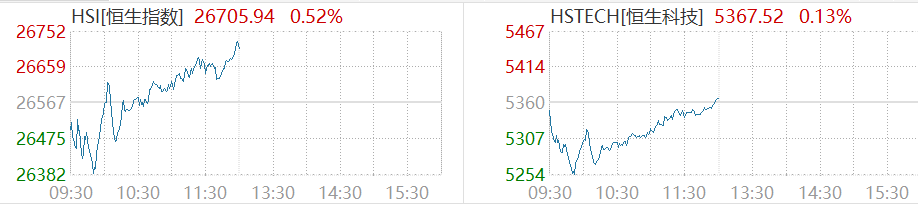
Group 1 - The Hong Kong stock market experienced a V-shaped rebound on the last trading day before the Spring Festival, with the Hang Seng Index rising by 0.5% and the Hang Seng Tech Index increasing by 0.1%, despite a mid-session drop of nearly 2% [2] - The semiconductor sector showed strong performance, with Lattice Semiconductor rising over 14% and GigaDevice Semiconductor (603986) increasing by over 9%. Tech stocks generally performed well, with Tencent Music up nearly 5%, Baidu and Midea Group (000333) rising over 1%, and Tencent increasing by 0.2% [3] Group 2 - Institutional reports indicate that the Hong Kong stock market has short-term rebound potential, driven by increased foreign investment in Chinese assets and a rush to buy Hong Kong tech IPOs. Notably, the materials technology company Woer Heat Material (002130) is set to officially list on February 13, attracting cornerstone investors like Jump Trading [4] - Earlier, Lattice Semiconductor's Hong Kong IPO also drew interest from several long-term funds, including UBS Asset Management, JPMorgan Asset Management, and abrdn [4] - Industrial analysis from Industrial Securities suggests embracing the spring market with a strategy focused on "tech bottoming, cyclical recovery, and beta in dividends." Current market sentiment indicators show that short-selling transactions account for about 19.2% of the market, indicating a relative low in market sentiment and potential for a short-term rebound [4]

港股V形反弹!AI、半导体爆发,最牛新股5分钟飙涨32%
21世纪经济报道· 2026-02-16 05:15
Market Overview - The Hong Kong stock market experienced a V-shaped rebound on the last trading day before the Spring Festival, with the Hang Seng Index rising by 0.5% and the Hang Seng Tech Index increasing by 0.1% despite a drop of nearly 2% during the session [1][3]. Gold and Silver Market - Gold and silver stocks saw a collective rise, with Luoyang Molybdenum up over 6% and Zijin Mining and Ganfeng Lithium both rising over 4%. However, spot gold and silver prices fell sharply, with spot silver dropping over 3% and spot gold falling below $5,000 to touch $4,980 per ounce [3][6]. AI and Semiconductor Sector - AI concept stocks surged, with MINIMAX-WP soaring by 24.6% and Zhizhu rising by 4.74%, both reaching new highs since their listings. Douyin concept stock Duoxiangyun saw a peak increase of 40%. The "first AI stock to eliminate illusions," Chenghai Technology Group, experienced a dramatic rise of 32% within the first five minutes of trading, closing up 29.6% with a market value of HKD 48.1 billion. On February 13, Chenghai Technology Group's stock price increased by over 200% on its first trading day, marking it as the best-performing new stock of the year [3][4]. Institutional Insights - Institutions indicate that the Hong Kong stock market has the potential for short-term rebound momentum. Foreign capital is increasingly allocating to Chinese assets, particularly in the tech sector, with notable IPOs such as Wolong Nuclear Materials scheduled for February 13. The IPO of Lanke Technology attracted significant long-term investments from major firms like UBS Asset Management and JPMorgan Asset Management. According to Industrial Securities, the current market sentiment is at a relatively low point, with short-selling transactions accounting for approximately 19.2%, indicating potential for a short-term rebound [4][5].

读懂春晚广告位:今年谁是赚钱顶流
21世纪经济报道· 2026-02-16 05:15
Core Viewpoint - The article discusses the evolution of sponsorship in the Chinese New Year Gala, highlighting how it reflects the changing landscape of the Chinese economy and advertising strategies over the years [1][2][3]. Group 1: Historical Sponsorship Trends - The first sponsor of the Spring Festival Gala was Jinan Kangbasi Clock Factory in 1984, which traded 3,000 clocks for a 10-second ad, leading to its rise as a major clock manufacturer [1]. - In the 1990s, brands like Kongfu Banquet Wine and Qinchuan Wine spent heavily on advertising, with Kongfu Banquet Wine's investment of 30.79 million yuan resulting in a revenue spike to 918 million yuan the following year [1]. - From 2003 to 2019, Midea Group dominated the zero-point advertising space, with ad costs increasing from millions to tens of millions [1]. Group 2: Shift to Internet Giants - The 2015 Spring Festival Gala marked a turning point with Tencent's 53.03 million yuan investment for exclusive rights, leading to a surge in WeChat payment registrations [2]. - Following this, various internet companies like Alibaba, Baidu, and Douyin engaged in fierce competition for sponsorship, focusing on user engagement and data acquisition rather than just brand exposure [2]. Group 3: Emergence of Hard Technology - In 2026, the Spring Festival Gala featured new players in the form of AI and robotics, with ByteDance's Volcano Engine as the exclusive AI cloud partner and several robotics companies participating [3]. - This shift signifies a transition from a focus on consumer needs and traffic to a new era emphasizing technological advancement and national competitiveness, aligning with the government's "new quality productivity" strategy [3][4].