
腾讯控股

Search documents
【华西宏观】资产配置日报:再战前高
Xin Lang Cai Jing· 2026-02-27 19:50
来源:华西研究 不过受地产新政影响,债市全线调整。早盘股市高开高走,叠加上海地产消息面扰动,市场空头情绪明 显升温,长端利率开盘便开启上行行情,10年国债收益率随之站上1.80%关口,30年国债活跃券也震荡 上行0.6bp。午后,随着上海楼市新规正式出台,债市收益率加速上行,10年、30年国债纷纷触及 1.81%、2.23%的日内高点,尽数回吐春节前一周的全部涨幅。直至尾盘,债市情绪才逐步企稳,二者 分别收于1.80%、2.23%。 市场成交量回升,交易盘明显止盈。节后第二个交易日,市场交投显著升温,主要交易品种成交量明显 回升,10年国债、30年国债、10年国开债等活跃券成交笔数分别升至516、1600、1754笔(24日分别为 394、902、634笔)。然而,交易量激增的背后,是交易盘在消息面的影响下集中出货。据经纪商利率 债成交势力图显示,券商和基金是此次卖出主力,其中券商大额减持超长国债和7-10年政金债,基金也 主要卖出7-10年政金品种。 市场受地产新政扰动而调整,或也是两会政策博弈的开端。不过债基的负债端还相对稳定,今日仅小级 别的短债基金被赎回。往后看,继续关注基金负债端的变化,如果没有出现 ...

竞逐春节档 游戏厂商花式联动抢市场
Zhong Guo Jing Ying Bao· 2026-02-27 19:34
中经记者 李哲 北京报道 春节档一直是游戏厂商的"必争之地"。2026年春节期间,各大厂商通过与文旅、春晚联动等方式展开竞 逐,让游戏走出屏幕,更加多元化、立体化与玩家见面。 不过,相比花样百出的联动方式,从收入方面来看,整体市场表现并不突出。根据Sensor Tower数据, 2026年春节档游戏iOS端收入约为4.4亿美元,与去年同期基本持平。 游戏产业时评人张书乐向《中国经营报》记者表示,春节档本身就有"休假"意味,玩家休假,大厂也在 休假,因此在1月新游集中发布后,大多数游戏都进入休假期,只是通过春节档活动来进行日常维护。 这和暑期档的高强度维护形成了差异性。 厂商花式联动 2月15日,腾讯旗下《王者荣耀》在春节假期第一天推出了马年"皮肤",随后便迅速冲上iOS畅销榜总 榜,并且因服务器宕机登上了各大社交平台热搜。 此外,腾讯旗下另一款游戏大作《和平精英》则在春节版本推出了以敦煌文化为载体的新地图,并上线 了一系列符合新春氛围的活动,包括"月牙泉许愿打卡""年兽大作战"等。这一系列的联动让《和平精 英》在除夕夜的日活跃用户数突破9000万。 春节假期的"团圆"特性,成为了派对类游戏施展的舞台。网易旗下 ...

高盛“正在收割”恒生科技?Token出海利好哪些行业?2026年2月27日 市场温度
Sou Hu Cai Jing· 2026-02-27 18:06
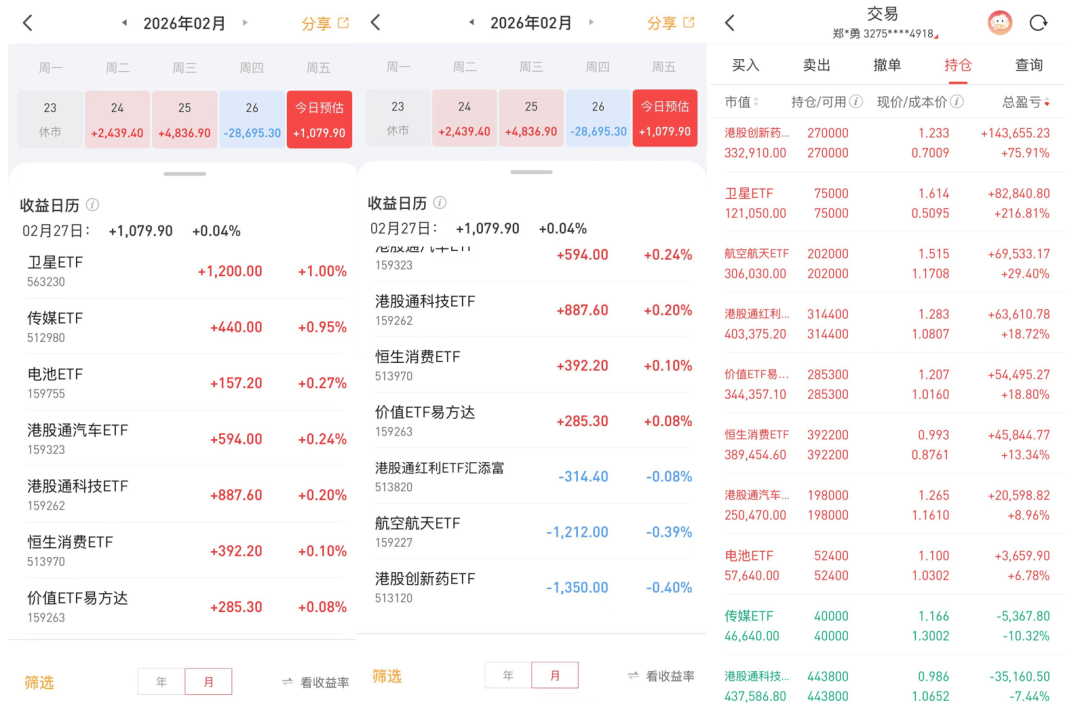
(一)账户盈亏 因为【组合账户】的净值更新会慢一些,所以【工作日】只统计ETF账户和某基金账户的收益;等到每周六发【周报统计】的时候,再把三个账户的收益 情况一起汇总。 但工作日都是"预估估值",因为不同基金净值更新时间不同,所以只能是根据已有的净值来统计收益,周报或者第二天会有准确收益。 | く | v | 2026年02月 ▶ | 分享 C く | | ◀ 2026年02月 ▶ | | 分享 G | く | | 父勿 | 0 0 | | --- | --- | --- | --- | --- | --- | --- | --- | --- | --- | --- | --- | | | | | | | | | | | | 郑*勇 3275 *** 4918 * | | | 周一 | 周二 | 周三 周四 | 周五 | 周一 周二 | 周三 | 周四 | 周五 | 买入 | 卖出 | 撤单 持仓 | 查询 | | 23 | 24 | 25 26 | 今日预估 | 23 24 | 25 | 26 | 今日预估 | 市值: | 持仓/可用 1 现价/成本价(1 | | 总盈亏; | | 休市 | | +2,43 ...
【锋行链盟】C轮融资流程及核心要点
Sou Hu Cai Jing· 2026-02-27 16:48
C轮融资是企业成长周期中的关键阶段,通常发生在企业已完成商业模式验证(B轮及以前)、进入规模化扩张期后。此时企业 的核心目标多为市场占领、技术迭代、上市准备或行业整合。C轮融资的金额通常较大(数千万至数亿美元),投资人更关注企 业的规模化能力、盈利前景、行业地位及上市可能性。以下从流程和核心要点两方面展开分析: 一、C轮融资的核心流程 C轮融资流程与早期融资(天使/A/B轮)逻辑相似,但因企业规模更大、复杂度更高,各环节需更严谨。典型流程如下: 1. 前期准备阶段(1-3个月) 此阶段核心是明确融资目标、梳理自身价值,并为后续对接投资人做铺垫。 4. 协议谈判与签约(1-1.5个月) 尽调通过后,双方就投资协议(SPA)核心条款谈判,重点包括: 2. 启动融资与投资人触达(1-2个月) 3. 尽职调查(DD,1-2个月) 投资人签署TS后,将启动全面尽调,涵盖业务、财务、法律、技术四大维度: 战略复盘与目标设定: 团队需明确本轮融资的核心用途(如市场扩张、技术研发、供应链升级、IPO准备等),并同步制定可量化的短期(1-2 年)和长期(3-5年)目标(如收入/用户增长、毛利率提升、市场份额目标)。 财务与业务 ...

港股风向标|科技权重止跌恒指放量反弹 机构看好顺周期涨价机会
Sou Hu Cai Jing· 2026-02-27 14:36
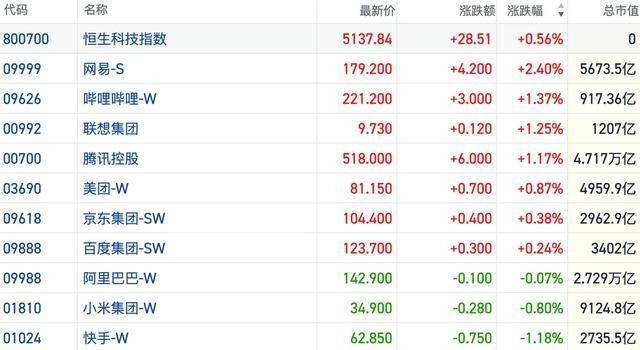
Market Overview - The Hong Kong stock market showed signs of recovery, with the Hang Seng Index rising by 0.95% to close at 26,630 points, while the Hang Seng China Enterprises Index and the Hang Seng Tech Index increased by 0.51% and 0.56% respectively [1][2]. Technology Sector Performance - Major tech stocks led the market rebound, with Tencent's stock price reaching 530 HKD during the day. Other tech companies such as NetEase, Meituan, JD.com, and Baidu also saw positive performance [2][3]. Stock Performance Data - Notable stock performances included: - Tencent Holdings (00700) at 518.00 HKD, up by 6.00 HKD (+1.17%), with a total market capitalization of 4.717 trillion HKD - NetEase (09999) at 179.20 HKD, up by 4.20 HKD (+2.40%), with a market cap of 567.35 billion HKD - Meituan (03690) at 81.15 HKD, up by 0.70 HKD (+0.87%), with a market cap of 495.99 billion HKD [3]. Sector Movements - Other sectors such as banking, real estate, and coal also showed strength, while power, steel, and oil stocks were active [4]. - Conversely, sectors like aviation, consumer electronics, and building materials experienced declines [4]. Market Dynamics - The overall trading volume in the Hong Kong market was 288.42 billion HKD, indicating increased liquidity. Short selling amounted to 36.55 billion HKD, representing 12.67% of the total trading volume, highlighting ongoing market divergence [4]. - The market is experiencing rapid rotation of hot and cold sectors, with cyclical stocks like steel and rare earths gaining strength, while AI-related sectors such as storage and chips faced declines [5][7]. Policy Implications - Recent meetings by the Central Political Bureau emphasized the need for more proactive macro policies to expand domestic demand and optimize supply, which may provide further support for the market [7]. A-Share Market Correlation - The A-share market mirrored the performance of the Hong Kong market, with a total trading volume of approximately 24,880.24 billion HKD, showing a decrease of about 504.22 billion HKD from the previous trading day. Over 3,200 stocks rose, particularly in the cyclical sector [8].
春节 AI 大战烧了 100 多亿元,然后呢?
Xin Lang Cai Jing· 2026-02-27 14:19
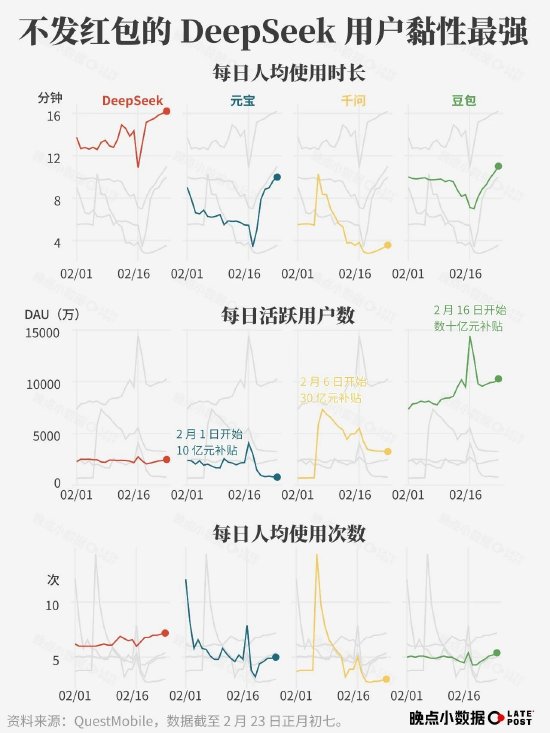
Core Insights - The article discusses the impact of significant cash subsidies by major internet companies on user engagement and retention for AI applications during the Chinese New Year period. Group 1: User Engagement and Subsidies - Major internet companies invested over 100 billion RMB in cash subsidies during the Spring Festival to attract users to their AI applications [10][21]. - At the peak of the subsidies, ByteDance's Doubao had 140 million daily active users (DAU), Alibaba's Qianwen had 73 million, and Tencent's Yuanbao had 40 million [21]. - However, after the subsidies ceased, user engagement dropped sharply, with Yuanbao returning to pre-subsidy levels and Qianwen experiencing a smaller decline due to ongoing but reduced subsidies [10][21]. Group 2: User Retention Challenges - Despite the initial surge in user numbers, the retention of these users is contingent on the product's ability to meet user needs, as evidenced by the lower average usage time of AI applications compared to established platforms like WeChat and Douyin [22][23]. - The average usage time for Doubao, Yuanbao, and Qianwen during the Spring Festival was only around 10 minutes, significantly lower than the 2 hours for WeChat and Douyin [22][23]. Group 3: Competitive Landscape - The competition among AI companies intensified during the Spring Festival, with firms releasing new models and increasing application updates to capture market share [5][22]. - Companies are aware that the spike in daily active users is temporary and are focused on maintaining a competitive edge rather than expecting a permanent transformation from a single promotional event [23].
港交所今年来新受理IPO申请177宗
Zhong Guo Xin Wen Wang· 2026-02-27 13:43
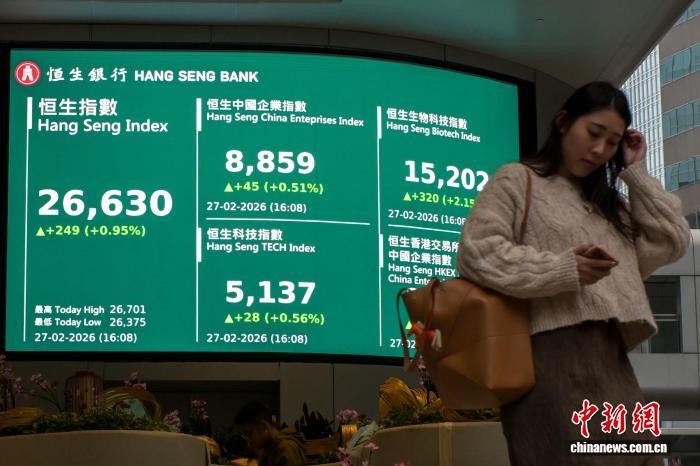
(机遇香港)港交所今年来新受理IPO申请177宗 香港特区政府财经事务及库务局局长许正宇26日表示,当前香港股市持续向好,市场总市值已升至50万 亿港元,新股上市活跃度提升,资金持续流入并带动资产及财富管理行业发展。 广告等商务合作,请点击这里 中新社香港2月27日电 (记者 戴小橦)港股市场2月行情27日正式收官,截至当日收盘,三大指数集体收 涨,恒生指数报26630.54点,上涨249.52点,涨0.95%,恒生科技指数涨0.56%,国企指数涨0.51%。 2月27日,香港恒生指数收市报26630.54点,上涨249.52点,升幅为0.95%,全日成交金额为2884.2亿港 元。 中新社记者 陈永诺 摄 当日,香港交易及结算所有限公司(简称"港交所")公布,截至2月27日,港交所今年以来新增上市公司 24家;2026年以来,港交所新受理首次公开招股(IPO)申请共计177宗。 板块方面,27日市场呈现结构性行情。科网股多数上涨,商汤涨4.92%,网易涨2.4%,腾讯控股涨 1.17%,美团涨0.87%,百度集团涨0.24%。煤炭股走高,中国秦发涨8.09%,中煤能源涨6.82%,兖矿能 源涨4.09%,首 ...

2月27日南向资金追踪:盈富基金、恒生中国企业、南方恒生科技净买入额居前,分别为83.85亿港元、24.82亿港元、20.39亿港元





Jin Rong Jie· 2026-02-27 13:25
恒生指数今日涨0.95%,报26630.54点,大市成交2884.20亿港元。 披露的南向资金成交股中,盈富基金、恒生中国企业、南方恒生科技分别获净买入83.85亿港元、24.82 亿港元、20.39亿港元;长飞光纤光缆、快手-W、华虹半导体分别遭净卖出5.05亿港元、3.82亿港元、 2.72亿港元。 港股通成交数据披露(沪深合计) 证券简称成交金额净买入额收盘价涨跌幅盈富基金 0280084.74亿港元83.85亿港元26.90港元1.20%恒生中国企业 0282824.83亿港元24.82亿港元90.92港元0.87%南方恒生科技 0303320.51亿港元20.39亿港元5.03港元0.60%腾讯控股 0070056.47亿港元12.32亿港元518.00港元1.17%小米集团-W 0181018.21亿港元3.44亿港元34.90港元-0.80%阿里巴巴-W 0998851.56亿港元3.39亿港元142.90港元-0.07%中国海洋石油 0088311.44亿港元-0.90亿港元25.32港元2.68%钧达股份 0286518.70亿港元-1.04亿港元40.20港元23.69%中芯国际 0098 ...
(机遇香港)港交所今年来新受理IPO申请177宗
Zhong Guo Xin Wen Wang· 2026-02-27 13:25
板块方面,27日市场呈现结构性行情。科网股多数上涨,商汤涨4.92%,网易涨2.4%,腾讯控股涨 1.17%,美团涨0.87%,百度集团涨0.24%。煤炭股走高,中国秦发涨8.09%,中煤能源涨6.82%,兖矿能 源涨4.09%,首钢资源涨3.37%。 当日,香港交易及结算所有限公司(简称"港交所")公布,截至2月27日,港交所今年以来新增上市公司 24家;2026年以来,港交所新受理首次公开招股(IPO)申请共计177宗。 香港特区政府财经事务及库务局局长许正宇26日表示,当前香港股市持续向好,市场总市值已升至50万 亿港元,新股上市活跃度提升,资金持续流入并带动资产及财富管理行业发展。 中新社香港2月27日电 (记者戴小橦)港股市场2月行情27日正式收官,截至当日收盘,三大指数集体收 涨,恒生指数报26630.54点,上涨249.52点,涨0.95%,恒生科技指数涨0.56%,国企指数涨0.51%。 2月27日,香港恒生指数收市报26630.54点,上涨249.52点,升幅为0.95%,全日成交金额为2884.2亿港 元。中新社记者陈永诺摄 中国工商银行(亚洲)证券业务部分析员叶泽恒接受中新社记者采访时表 ...
AI应用爆发背后存“同质化”问题 “小而美”智能体或成突围关键
Mei Ri Jing Ji Xin Wen· 2026-02-27 12:52
Core Insights - The AI industry is transitioning from a "technology frenzy" to a "value realization" phase, with a focus on developing specialized intelligent agents to overcome challenges of application homogenization and low ROI [1][4][9] Group 1: Industry Trends - By 2025, China's AI core industry is projected to exceed 900 billion yuan, with over 5,300 companies, making AI applications a crucial driver for digital transformation [2] - The AI application market saw over 23,000 new companies in 2023, with 80% concentrated in common areas like intelligent customer service and voice assistants, leading to a high similarity in product interfaces [2][3] - The market is experiencing a surge in AI shopping, exemplified by Alibaba's 3 billion yuan promotional campaign, which has sparked competition among major players like Tencent and ByteDance [1] Group 2: Challenges in AI Applications - The industry faces three main bottlenecks: application homogenization, difficulties in commercial monetization, and mismatched supply and demand for computing power [2][3][7] - AI applications are struggling with low user engagement, with quality content reaching less than 0.3% of the target audience, resulting in a 65% overall loss rate in the domestic AI application market in 2023 [3][6] - Many AI products rely on similar underlying logic, leading to minimal perceived differences for users, which contributes to the homogenization issue [3][4] Group 3: Financial and Operational Insights - Despite high demand, many AI companies have not achieved substantial financial transformation, with token consumption in industrial AI applications showing significant scale compared to consumer-level products [6] - The average utilization rate of computing power in AI data centers is below 20%, leading to high energy consumption and operational inefficiencies [7] - Companies are currently facing a mismatch between high investment in AI capabilities and low revenue generation, indicating a need for better monetization strategies [7][8] Group 4: Future Directions - Experts suggest a shift from general models to specialized intelligent agents in high-value sectors like healthcare and education to address the challenges of homogenization and improve ROI [7][8] - The future of AI competition will depend on the ability to solve specific problems rather than merely utilizing large models, emphasizing the importance of industry-specific knowledge [9]