
海螺水泥

Search documents
建材行业2024年和2025年一季报综述:部分细分行业最差的情况存在改善迹象
Dongxing Securities· 2025-05-16 10:45
Investment Rating - The report maintains a "Positive" outlook for the building materials industry [2] Core Insights - The building materials sector continues to experience historical lows in 2024 and 2025, but signs of improvement are emerging [4][12] - Revenue for the building materials sector in 2024 is projected at CNY 682.93 billion, a year-on-year decline of 12.41%, ranking second to last among 31 industries [4][16] - In Q1 2025, the sector's revenue decline narrowed to 1.60%, with a revenue of CNY 129.83 billion, improving its ranking to 18th among industries [5][40] - The net profit margin and return on equity (ROE) are at historical lows, with the sector's net profit margin dropping to 2.61% in 2024 [25][28] Summary by Sections 1. Industry Performance Overview - The building materials sector's revenue and net profit continue to decline in 2024, remaining at the bottom of industry rankings [4][16] - Q1 2025 shows a narrowing revenue decline and improvements in net profit and cash flow, with a net profit of -CNY 243 million, a 74.02% year-on-year increase [5][44] 2. Segment Performance - In Q1 2025, segments like cement and glass fiber show positive revenue growth, with cement revenue up 0.11% and glass fiber up 25.24% [6][55] - Most segments, except for pipes, show improvements in net profit year-on-year, with cement, glass fiber, refractory materials, and coatings ending their respective revenue declines [6][58] 3. Investment Strategy - The report suggests that leading companies in the sector can achieve better growth in a challenging environment through internal and external development strategies [8][81] - The anticipated recovery of the real estate sector is expected to stabilize demand for building materials, leading to valuation recovery in the industry [8][84] - Recommended companies include Beixin Building Materials, Weixing New Materials, Shandong Pharmaceutical Glass, and others [8][84]



【港股收评】三大股指齐跌!消费、科网股现分化,机器人概念大涨
Jin Rong Jie· 2025-05-16 09:12
Market Overview - The Hong Kong stock market indices continued to decline, with the Hang Seng Index down 0.46%, the Hang Seng China Enterprises Index down 0.49%, and the Hang Seng Tech Index down 0.31% [1] Sector Performance - Consumer sectors such as automotive dealers, holiday concepts, cosmetics, beer, and sports goods experienced significant declines, with notable drops including Yongda Auto down 3.88%, Zhongsheng Group down 3.13%, and Haidilao down 2.27% [1] - Real estate stocks, property management stocks, and building materials/cement stocks also saw widespread declines, with China Overseas Land & Investment down 6.2% and Vanke down 1.85% [1] - Brokerage stocks collectively fell, with China International Capital Corporation down 2.28% and CITIC Securities down 1.73% [2] Notable Stock Movements - Star tech stocks showed mixed performance, with Alibaba down 4.27% and Meituan down 2.95%, while NetEase surged 13.03% [3] - Luxury goods, Hong Kong retail, tobacco, food, aviation, and dairy sectors saw gains, with Prada up 1.22% and China Southern Airlines up 2.02% [3] - The automotive supply chain, including lithium batteries and Tesla concepts, saw increases, with Nexperia up 9.79% and BYD up 3.28% [3] Healthcare and Technology Stocks - Healthcare-related stocks performed well, with 3SBio up 11.36% and JD Health up 3.85% [4] - Some chip and robotics concept stocks also strengthened, with Horizon Robotics up 5.26% and SMIC up 1.09% [4]

2024年和2025年一季报综述:建材行业:部分细分行业最差的情况存在改善迹象
Dongxing Securities· 2025-05-16 08:16
Investment Rating - The report maintains a "Positive" outlook for the building materials industry [2] Core Insights - The building materials sector continues to experience historical lows in 2024 and early 2025, but signs of improvement are emerging [4][40] - Revenue for the building materials sector in 2024 was 682.93 billion, a year-on-year decline of 12.41%, ranking second to last among 31 industries [4][16] - In Q1 2025, revenue decreased by only 1.60% to 129.83 billion, showing a significant improvement in ranking to 18th among industries [5][40] - The net profit margin and return on equity (ROE) remain at historical lows, with the sector's net profit margin dropping to 2.61% in 2024 [25][28] Summary by Sections 1. Industry Performance Overview - The building materials sector's revenue and net profit continued to decline in 2024, remaining at the bottom of industry rankings [4][16] - Q1 2025 showed a narrowing revenue decline and improvements in net profit and cash flow [5][40] 2. Segment Performance - In Q1 2025, cement and glass fiber segments showed positive revenue growth, ending long streaks of decline [6][55] - Most segments, except for pipes, showed year-on-year improvements in net profit, with notable recoveries in cement, glass fiber, refractory materials, and coatings [6][58] 3. Investment Strategy - The report suggests focusing on valuation recovery and a new supply-demand balance as the real estate sector stabilizes [8][82] - Recommended companies include Beixin Building Materials, Weixing New Materials, Shandong Pharmaceutical Glass, and others, highlighting their potential for performance recovery [8][84]
海螺水泥(600585):25Q1业绩符合预期,看好全年利润修复弹性
Tianfeng Securities· 2025-05-15 15:17
Investment Rating - The report maintains a "Buy" rating for the company, indicating an expected relative return of over 20% within the next six months [5][20]. Core Views - The company's Q1 2025 performance met expectations, with a revenue of 19.051 billion yuan and a net profit attributable to shareholders of 1.810 billion yuan, reflecting a year-on-year decrease in revenue of 10.67% but an increase in net profit of 20.51% [1]. - The industry is experiencing marginal improvements in supply and demand, with a national cement production decrease of 1.4% year-on-year in the first quarter, while the company's main region, East China, saw a decline of 2.9% [2]. - The company plans to achieve a total cement and clinker sales volume of 268 million tons for the year, with capital expenditures of 11.98 billion yuan, a decrease of 23% from the previous year [2]. Financial Performance - In Q1 2025, the overall gross margin was 22.88%, an increase of 5.13 percentage points year-on-year, with a net profit margin of 9.32%, up 2.34 percentage points year-on-year [2]. - The company's operating cash flow net amount reached 503 million yuan, an increase of 343 million yuan year-on-year, indicating improved cash flow [2]. - The forecast for net profit attributable to shareholders for 2025-2027 is set at 10.1 billion, 11.6 billion, and 12.5 billion yuan respectively [3]. Production Capacity and Market Position - As of the end of 2024, the company has a clinker production capacity of 27.4 million tons and a cement production capacity of 40.3 million tons, showcasing significant scale advantages [3]. - The average cement price in East China for Q1 was 393 yuan per ton, reflecting an increase of 8% year-on-year, with expectations for continued price increases in Q2 [2][3]. Financial Data and Valuation - The projected revenue for 2025 is 100.62 billion yuan, with an expected growth rate of 10.54% [4]. - The earnings per share (EPS) for 2025 is estimated at 1.91 yuan, with a price-to-earnings (P/E) ratio of 12.48 [4].
机构:价值、低波、红利等因子有效性或提升,300红利低波ETF(515300)最新规模创近1年新高!
Sou Hu Cai Jing· 2025-05-15 03:03
Group 1 - The CSI 300 Dividend Low Volatility Index decreased by 0.07% as of May 15, 2025, with mixed performance among constituent stocks [1] - China Shenhua led the gains with an increase of 1.48%, followed by China Life Insurance at 1.21% and Hangzhou Bank at 0.85%, while GF Securities experienced the largest decline [1] - The CSI 300 Dividend Low Volatility ETF (515300) saw a trading volume of 32.31 million yuan during the session, with an average daily trading volume of 114 million yuan over the past week [1] Group 2 - The latest size of the CSI 300 Dividend Low Volatility ETF reached 5.631 billion yuan, marking a one-year high [1] - Over the past five trading days, there were net inflows on four days, totaling 66.32 million yuan [1] - As of April 30, 2025, the top ten weighted stocks in the index accounted for 37.43% of the total, including China Shenhua, Gree Electric, and China Petroleum [1] Group 3 - Huatai Securities anticipates that a series of policies aimed at stabilizing the market and expectations will support risk appetite, with resilient inflation and export data for April [2] - The recent issuance of the "Action Plan for Promoting High-Quality Development of Public Funds" by the CSRC is expected to reshape the A-share market ecosystem [2] - Sectors such as large-cap stocks, financials, public utilities, and oil & petrochemicals are likely to benefit from the guidance towards long-term capital inflow and asset allocation [2]





上峰水泥:双轮驱动战略开启发展新篇章,2025年挖潜预计可增加利润超1.2亿元
Zheng Quan Shi Bao Wang· 2025-05-15 01:03
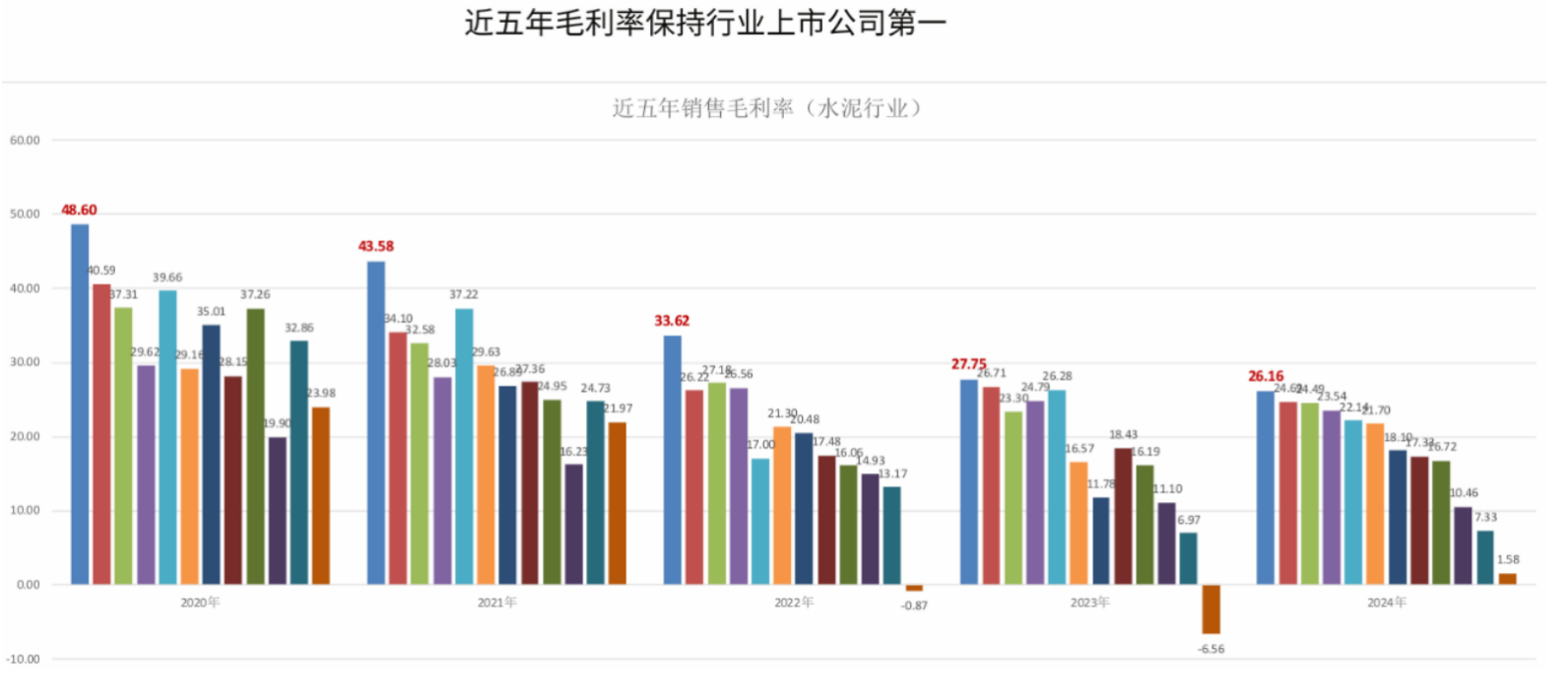
Core Viewpoint - The cement industry in 2024 faces challenges with a nationwide sales decline of approximately 10%, but the company, Shangfeng Cement, demonstrates strong anti-cyclical capabilities through its dual-driven strategy of stable core business and investment expansion [1] Group 1: Financial Performance - In 2024, Shangfeng Cement achieved revenue of 5.448 billion yuan and a net profit of 627 million yuan, ranking among the top three in the industry [1] - The company reported a sales gross margin that has ranked first among listed companies in the industry for five consecutive years [1] - In Q1 2025, revenue grew by 4.64% year-on-year, and net profit surged by 447.61%, with gross margin increasing by 5.05 percentage points to 27.41% [1] Group 2: Operational Efficiency - Shangfeng Cement's average ROE over the past five years is 17.83%, the highest in the industry, with net profit margin also ranking first for five consecutive years [3] - The company has a well-structured production capacity, with 60% in East China and 20% each in Northwest and Southwest regions, allowing it to maintain a sales decline of only 1.48% in 2024, significantly better than the industry average [5] - The company has limestone resource reserves exceeding 900 million tons, ensuring a stable supply for 30 years and enhancing its competitive edge [5] Group 3: Strategic Initiatives - The company is actively expanding its aggregate business, achieving sales of 9.6337 million tons in 2024 with a gross margin of 66.15% [6] - Shangfeng Cement's investment in the new economy, particularly in the semiconductor sector, has reached 1.785 billion yuan, accounting for 20% of its net assets [7] - The company plans to invest an additional 300 million yuan in 2025, continuing to explore opportunities in new economic sectors [7] Group 4: Future Plans - The company has a three-year dividend plan, committing to a minimum annual cash dividend of 400 million yuan, which is at least 35% of net profit [9] - The new five-year strategic plan (2025-2029) aims to transition to a dual-driven model, focusing on both core business and equity investment [11] - The company anticipates reaching a total production capacity of 20 million tons of clinker, 30 million tons of cement, and 40 million tons of aggregates by 2029 [12]


建筑材料行业深度报告2024年年报及2025年一季报综述:需求继续承压,行业竞争出现缓和信号
Soochow Securities· 2025-05-14 10:31
Investment Rating - The report maintains an "Accumulate" rating for the construction materials industry [1] Core Viewpoints - The construction materials industry is experiencing a downturn in demand, with revenue continuing to face pressure in Q4 2024 and Q1 2025, indicating that profitability remains at historical lows [1][17] - Despite the ongoing challenges, there are signs of easing competition within the industry as supply-side adjustments take place, leading to a stabilization of overall gross margins [1][18] - The cash flow situation has shown improvement, with operating cash flow for the sample companies in the infrastructure and real estate chain reaching 616.28 billion yuan in Q4 2024, a year-on-year increase of 33.8% [19] Summary by Sections 1. Overview - The construction materials industry is at the bottom of the economic cycle, with continued pressure on demand and profitability [1][17] 2. Profit and Loss Analysis - Revenue continues to decline, but the rate of decline has slightly narrowed compared to Q3 2024, primarily due to insufficient new construction projects in infrastructure and real estate [2][17] - The overall gross margin is stabilizing, reflecting a reduction in competitive pressures, particularly in the cement sector where supply-side discipline has improved [2][18] - Return on Equity (ROE) remains at historical lows, but there are signs of improvement in certain sub-sectors like cement and glass fiber [2][18] 3. Cash Flow and Balance Sheet - Operating cash flow for the sample companies improved significantly, with a net cash flow of 616.28 billion yuan in Q4 2024, indicating effective cash flow management [19] - The asset-liability ratio remained stable in Q1 2025, reflecting improvements in cash flow and capital expenditure control [19] - Accounts receivable turnover days have increased, indicating that outstanding receivables still need to be addressed [19] 4. Economic Outlook - The demand for bulk construction materials like cement and glass remains under pressure, but there are signs of demand stabilization due to improved pricing strategies [20][21] - The consumer building materials sector continues to face challenges from real estate demand pressures, but some leading companies may see revenue improvements due to low base effects [21] - Infrastructure investment growth is expected to stabilize, supported by fiscal policy measures and increased funding for key projects [21]
中国海外投资概览(2025年Q1)-安永中国
2025-05-14 05:08
Summary of Key Points from the Conference Call Industry Overview - The report focuses on the **Chinese overseas investment landscape** in the first quarter of 2025, highlighting trends in **overseas mergers and acquisitions (M&A)**, **foreign direct investment (FDI)**, and **contract engineering** [1][2][4]. Core Insights and Arguments Economic Performance - China's GDP grew by **5.4%** year-on-year in Q1 2025, surpassing the **5%** growth rate of 2024 [2][13]. - Merchandise exports increased by **7.2%** year-on-year, with trade with "Belt and Road" countries accounting for over **50%** of total trade [2][13]. Foreign Direct Investment (FDI) - Total FDI from China reached **$40.9 billion**, a **6.2%** increase year-on-year [7][21]. - Non-financial FDI was **$35.7 billion**, up **4.4%** year-on-year, with investments in "Belt and Road" countries amounting to **$8.9 billion**, marking a **15.6%** increase [7][21]. Overseas Mergers and Acquisitions (M&A) - Chinese companies announced overseas M&A deals totaling **$8.9 billion**, a significant **77%** increase year-on-year, with the number of transactions rising by **7%** to **108** [8][29]. - In "Belt and Road" countries, M&A transactions amounted to **$3.5 billion**, a **33%** increase, although the number of deals decreased by **15%** [29]. Contract Engineering - New contracts signed for overseas engineering projects reached **$58.7 billion**, a **26%** increase year-on-year, with **$47.1 billion** of this in "Belt and Road" countries, representing **80%** of the total [10][44]. Additional Important Insights Industry Trends - The **TMT (Technology, Media, and Telecommunications)** sector, consumer goods, and real estate were the top three sectors for M&A, each showing over **100%** growth year-on-year [12][34]. - Asia remains the primary destination for Chinese overseas M&A, with significant growth in Latin America, while North America and Oceania saw declines [12][35]. Geopolitical Challenges - The report highlights the impact of rising trade protectionism and geopolitical risks, particularly from the U.S., which has imposed significant tariffs and restrictions on Chinese goods and technology [13][16]. - The International Monetary Fund (IMF) has downgraded global growth forecasts for 2025 to **2.8%**, reflecting increased uncertainty in the global economic landscape [16][17]. Future Outlook - Despite challenges, the report suggests that Chinese companies are likely to accelerate their shift towards high-end manufacturing and innovation, indicating a more resilient phase of globalization [2][13]. Notable Projects - Significant investments include TikTok's **$8.8 billion** data center project in Thailand and TSMC's **$100 billion** investment in advanced semiconductor manufacturing in the U.S. [23]. This summary encapsulates the key points from the conference call, providing a comprehensive overview of the current state and future outlook of Chinese overseas investments.
建材、建筑及基建公募REITs周报:周专题:建筑建材行业年报一季报表现如何?
EBSCN· 2025-05-14 00:30
Investment Rating - The report suggests a positive outlook for the construction and building materials industry, with specific recommendations for companies like Honglu Steel Structure, China Jushi, Puyang Refractories, Hainan Huatie, Beixin Building Materials, China Chemical, China State Construction, Shanghai Port, and China National Materials [3]. Core Insights - The cement industry shows signs of improvement in the fundamentals from Q4 2024 to Q1 2025, with a focus on corporate discipline and peak production implementation, as well as cement price trends [3][10]. - The glass industry experienced widespread losses in Q4 2024, but there was a significant improvement in Q1 2025, driven by the price of photovoltaic glass [3][15]. - The fiberglass sector saw a general improvement in profitability from Q4 2024 to Q1 2025, with all sample companies achieving profitability due to stable price increases and effective industry self-discipline [3][16]. - The consumer building materials sector continues to face declining revenues and profits, with expectations of sustained pressure on downstream demand from construction completions [3][20]. - The construction industry is experiencing a decline in revenue and profits among major companies, indicating weak operational data [3][24]. Summary by Sections Cement Industry - The cement industry's fundamentals improved from Q4 2024 to Q1 2025, with a narrowing decline in production growth rates and a recovery in net profits for leading companies [10]. - The national average cement price in early May 2025 was slightly lower than the same period last year, indicating a need to monitor price trends closely [10]. Glass Industry - The glass sector faced significant losses in Q4 2024, but Q1 2025 showed marked improvement, particularly in photovoltaic glass pricing [15]. - Key variables to watch include glass price trends and downstream demand changes [15]. Fiberglass Industry - Fiberglass companies reported improved profitability in Q1 2025, attributed to stable price increases and effective supply-side management [16]. - The inventory levels remained stable, indicating a weak balance in supply and demand [16]. Consumer Building Materials - The consumer building materials sector is experiencing a downward trend in revenue and profits, with expectations of continued pressure on demand from construction completions [20]. - The report highlights the correlation between construction completions and downstream demand [20]. Construction Industry - The construction sector is seeing a decline in revenue and profits among major companies, with many reporting weak operational data [24]. - The report notes that most central construction enterprises experienced a decline in orders, revenue, and profits in Q1 2025 [24].
建材、建筑及基建公募REITs周报:周专题:建筑建材行业年报一季报表现如何?-20250513
EBSCN· 2025-05-13 14:45
Investment Rating - The report suggests a positive outlook for the construction and building materials industry, with specific recommendations for companies like Honglu Steel Structure, China Jushi, Puyang Refractories, Hainan Huatie, Beixin Building Materials, China Chemical, China State Construction, Shanghai Port, and China National Materials [3]. Core Views - The cement industry shows signs of improvement in the fundamentals from Q4 2024 to Q1 2025, with a focus on corporate discipline and peak production implementation, as well as cement price trends [3][10]. - The glass industry experienced widespread losses in Q4 2024, but there was a significant improvement in Q1 2025, driven by the price of photovoltaic glass [3][15]. - The fiberglass sector saw a general improvement in profitability from Q4 2024 to Q1 2025, with all sample companies achieving profitability due to stable price increases and effective industry self-discipline [3][16]. - The consumer building materials sector continues to face declining revenues and profits, with expectations of sustained pressure on downstream demand from construction completions [3][20]. - The construction industry is experiencing a decline in revenue and profits among leading companies, indicating weak operational data [3][24]. Summary by Sections Cement Industry - The cement industry's fundamentals improved from Q4 2024 to Q1 2025, with a narrowing decline in quarterly cement production growth rates and a general recovery in net profits for leading companies [10]. - The national average cement price in early May 2025 was slightly lower than the same period last year, indicating a need to monitor corporate discipline and price trends [10]. Glass Industry - The glass industry faced significant losses in Q4 2024, but Q1 2025 showed marked improvement, particularly in photovoltaic glass prices [15]. - Key variables to watch include glass price trends and downstream demand changes [15]. Fiberglass Industry - Fiberglass companies reported improved profitability from Q4 2024 to Q1 2025, with all sample companies achieving profits due to stable price increases and effective supply-side management [16]. - The inventory levels remained stable, indicating a weak balance in supply and demand [16]. Consumer Building Materials - Leading companies in the consumer building materials sector reported widespread revenue declines, with expectations of continued pressure on downstream demand linked to construction completions [20]. - The report anticipates a narrowing decline in new construction demand over the next year [20]. Construction Industry - The construction sector is seeing a decline in revenue and profits among major companies, with many reporting weak operational data [24]. - The report highlights a significant drop in orders and revenues for central state-owned enterprises in Q1 2025 [24].